


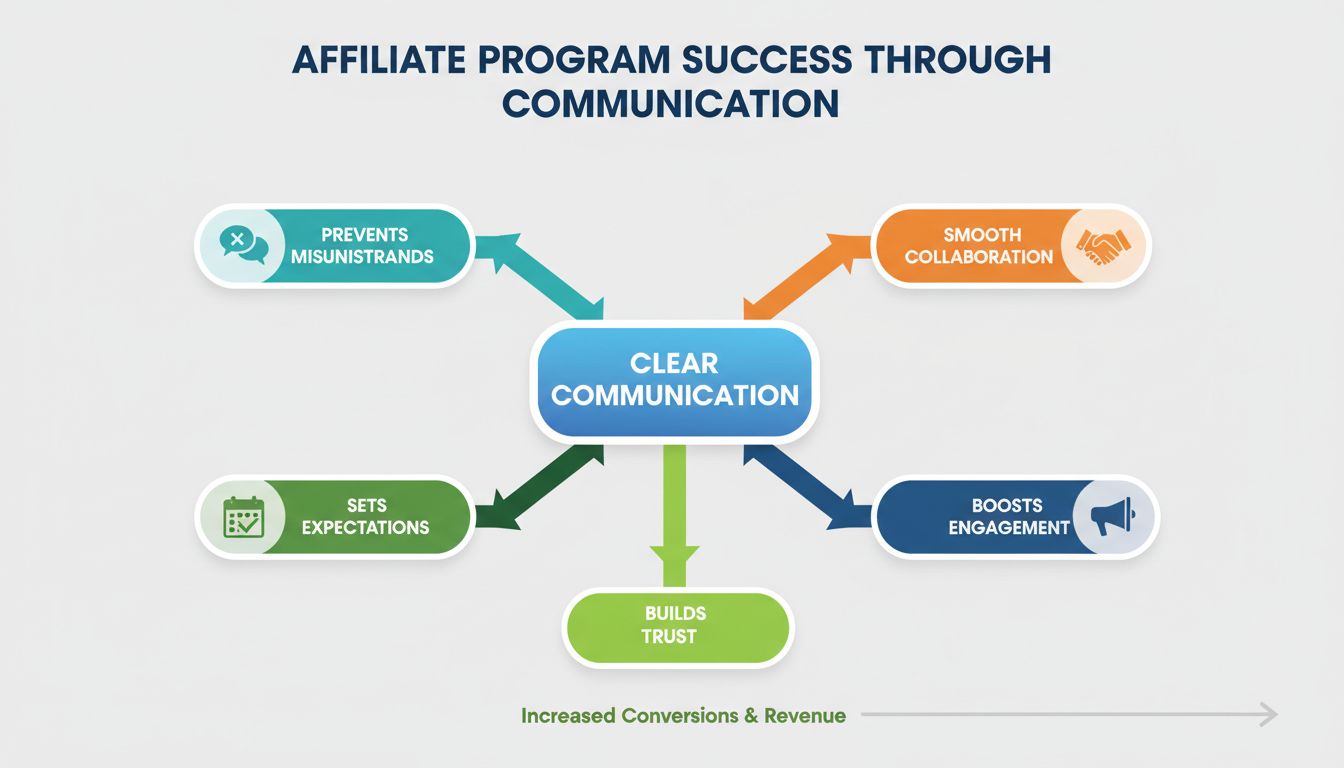
How Does Communication Impact Affiliate Program Success?
Discover how clear communication prevents misunderstandings, sets expectations, and ensures smooth collaboration between businesses and affiliates. Learn best p...
8 min read


Master affiliate communication with proven strategies for engagement, feedback, trust-building, segmentation, and success measurement.
Affiliate communication is the strategic exchange of information between brands and their affiliate partners through multiple channels to drive engagement, performance, and mutual growth. Effective communication serves as the backbone of successful affiliate programs, directly impacting affiliate retention rates, program profitability, and long-term partnership sustainability. When affiliates feel informed, valued, and supported through consistent, transparent communication, they’re significantly more likely to remain active, increase their promotional efforts, and generate higher-quality traffic and conversions for your brand. The foundation of any profitable affiliate partnership is built on clear, timely, and personalized communication that demonstrates your commitment to your partners’ success and creates a collaborative environment where both parties can thrive.

Segmenting your affiliate partners is crucial because different affiliates operate with distinct business models, audience demographics, promotional capabilities, and performance motivations—a one-size-fits-all communication approach will inevitably fail to maximize engagement and results. Your affiliate network likely comprises five main types of partners, each requiring tailored communication strategies: Influencers (social media personalities with engaged audiences), Content Creators (bloggers, YouTubers, and podcasters producing original material), Review Sites (niche review platforms and comparison websites), Cashback/Loyalty Apps (platforms offering consumer incentives), and Coupon Sites (discount aggregators and deal platforms). Influencers thrive on exclusive opportunities and early product access; content creators need detailed product information and creative assets; review sites require comprehensive data and performance metrics; cashback apps focus on commission structures and conversion rates; and coupon sites prioritize feed updates and promotional calendars. By understanding these distinct needs, you can craft communication that resonates with each segment, increasing engagement rates and driving more relevant traffic to your program.
| Affiliate Type | Primary Motivation | Communication Frequency | Preferred Channels | Key Information Needs |
|---|---|---|---|---|
| Influencers | Exclusivity & Brand Alignment | Weekly/Bi-weekly | Direct email, Private Slack | Product launches, exclusive deals, audience insights |
| Content Creators | Creative Freedom & Resources | Bi-weekly | Email, Community portal | Detailed specs, high-res assets, performance data |
| Review Sites | Commission & Traffic Volume | Monthly | API feeds, Email updates | Product data, commission rates, competitive positioning |
| Cashback/Loyalty Apps | Commission Structure & Scale | Monthly | API integration, Email | Feed updates, commission changes, promotional calendar |
| Coupon Sites | Feed Updates & Promotions | Weekly | Automated feeds, Email | Real-time promotions, discount codes, campaign schedules |

Set up advanced tracking in minutes. No credit card required.
Successful affiliate programs utilize a strategic mix of communication channels, each serving specific purposes and reaching affiliates at different touchpoints in their partnership journey:
Affiliate Portal/Dashboard – Your centralized hub for real-time performance data, commission tracking, marketing materials, and program documentation. Use this for self-service information and ongoing performance visibility. Affiliates should check this weekly for updates and metrics.
Email Communication – The most direct and personal channel for announcements, campaign invitations, performance feedback, and strategic updates. Email allows for detailed information sharing and creates a documented record of communications. Expect 24-48 hour response times for time-sensitive communications.
Community Spaces (Private Slack channels, forums, or Facebook groups) – Facilitate peer-to-peer learning, best practice sharing, and community building among your affiliate network. These spaces encourage collaboration and reduce support burden by enabling affiliates to help each other.
Direct Support (Phone, video calls, one-on-one meetings) – Reserved for high-value affiliates, complex issues, and relationship-building conversations. Direct support demonstrates investment in key partnerships and allows for nuanced discussions about strategy and growth opportunities.
The key to effective multi-channel communication is choosing the right mix based on your affiliate segments’ preferences and ensuring consistent messaging across all channels. Response time expectations should be clearly communicated—typically 24 hours for email inquiries, immediate for dashboard updates, and scheduled for direct support conversations.
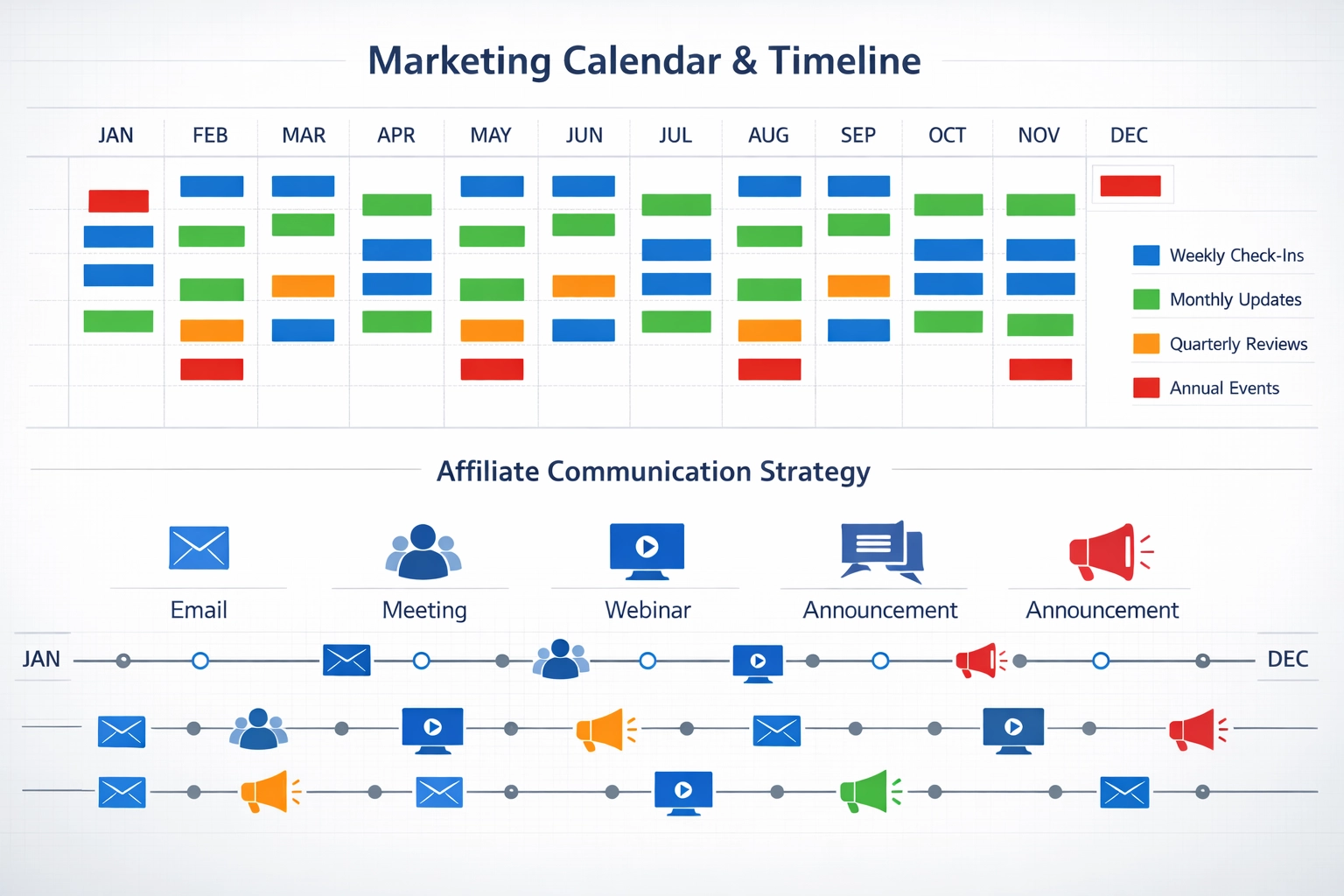
Your affiliate communication strategy should focus on sharing four critical content categories: product updates and new launches (keeping affiliates informed about inventory, features, and positioning), campaign information and promotional calendars (providing advance notice of seasonal promotions, flash sales, and marketing initiatives), performance feedback and comparative metrics (showing affiliates how they’re performing relative to program averages and their own historical data), and company news and brand developments (building deeper connection to your organization’s mission and values). Timing is equally important as content—establish a consistent communication rhythm with weekly check-ins for high-performing affiliates, monthly performance reviews and strategy updates for all partners, quarterly business reviews for strategic planning, and annual comprehensive reviews for relationship assessment and goal-setting. Creating a communication calendar ensures you maintain consistent touchpoints without overwhelming your affiliates, allows you to align communications with business cycles and seasonal opportunities, and demonstrates organizational professionalism that builds confidence in your program management. A well-structured calendar might include weekly product update emails, monthly performance reports, quarterly strategy webinars, and annual partner summits, with flexibility to add ad-hoc communications for urgent opportunities or critical updates.
Be the first to know about new features and product updates.
Providing constructive feedback and recognizing top performers are essential components of affiliate communication that drive motivation, improve results, and strengthen relationships:
Constructive Feedback Best Practices – Frame feedback around specific metrics and behaviors rather than personalities; compare performance to program averages and historical trends; offer actionable suggestions for improvement; and always balance criticism with recognition of strengths and progress.
Recognize Top Performers Publicly – Feature high-performing affiliates in monthly newsletters, social media shoutouts, and community announcements. Public recognition builds prestige, motivates other affiliates, and demonstrates that your program values and rewards excellence.
Use Comparative Benchmarks – Share anonymized performance data showing how affiliates rank within their segment and against program averages. Transparent benchmarking motivates improvement and helps affiliates understand where they stand relative to peers.
Implement Tiered Recognition Programs – Create badges, achievement levels, or exclusive benefits for affiliates reaching specific milestones (e.g., “Top 10% Performer,” “Consistent Growth Leader”). Gamification increases engagement and provides clear targets for improvement.
Handle Underperformers Strategically – Schedule one-on-one conversations with underperforming affiliates to understand barriers, offer support, and establish improvement plans. Some affiliates may need additional resources, training, or different promotional approaches rather than dismissal.
Celebrate Milestones – Recognize affiliate anniversaries, commission milestones, and personal achievements. This relationship-building approach transforms transactional partnerships into genuine business relationships.
Trust is the currency of affiliate relationships, and transparency is the mechanism through which you build and maintain it. Commission structure transparency is foundational—clearly communicate your commission rates, payment terms, cookie duration, and any performance-based incentives or bonuses upfront, and never change these terms without advance notice and clear justification. Payment reliability is non-negotiable; consistently pay commissions on schedule, provide detailed payment reports showing exactly how commissions were calculated, and address payment discrepancies immediately with thorough explanations. When issues arise—whether technical problems, disputed transactions, or policy violations—handle them promptly and fairly, communicating your investigation process and resolution transparently rather than leaving affiliates wondering about the status. Two-way communication and feedback loops are equally important; actively solicit affiliate feedback about your program, ask what support they need, and demonstrate that you’re implementing their suggestions. When affiliates see that their input leads to program improvements, they develop deeper investment in your success. Transparency also means being honest about challenges, market conditions, and realistic performance expectations, which builds credibility and prevents the disappointment that comes from overpromising results.
Personalization transforms affiliate communication from generic broadcasts into meaningful conversations that increase loyalty and engagement. Performance-based personalization involves tailoring your communication based on each affiliate’s results—high performers receive exclusive opportunities, early product access, and invitations to strategic planning sessions, while emerging affiliates get additional training resources and mentorship. Relationship-building personalization extends beyond business metrics; acknowledge affiliate birthdays and business anniversaries, remember personal details they’ve shared, and check in on their business goals and challenges. This human element demonstrates that you view them as partners, not just traffic sources. Content personalization means sending product recommendations, campaign suggestions, and promotional ideas that align with each affiliate’s audience and promotional style—a fashion influencer receives different content than a tech review site. Personalization requires maintaining detailed affiliate profiles that track preferences, performance patterns, audience demographics, and communication history, but the investment pays dividends in affiliate satisfaction and retention. Affiliates who feel personally valued and understood are significantly more likely to remain active, increase their promotional efforts, and recommend your program to other potential partners.
Modern affiliate communication requires leveraging technology to scale personalized interactions while maintaining efficiency:
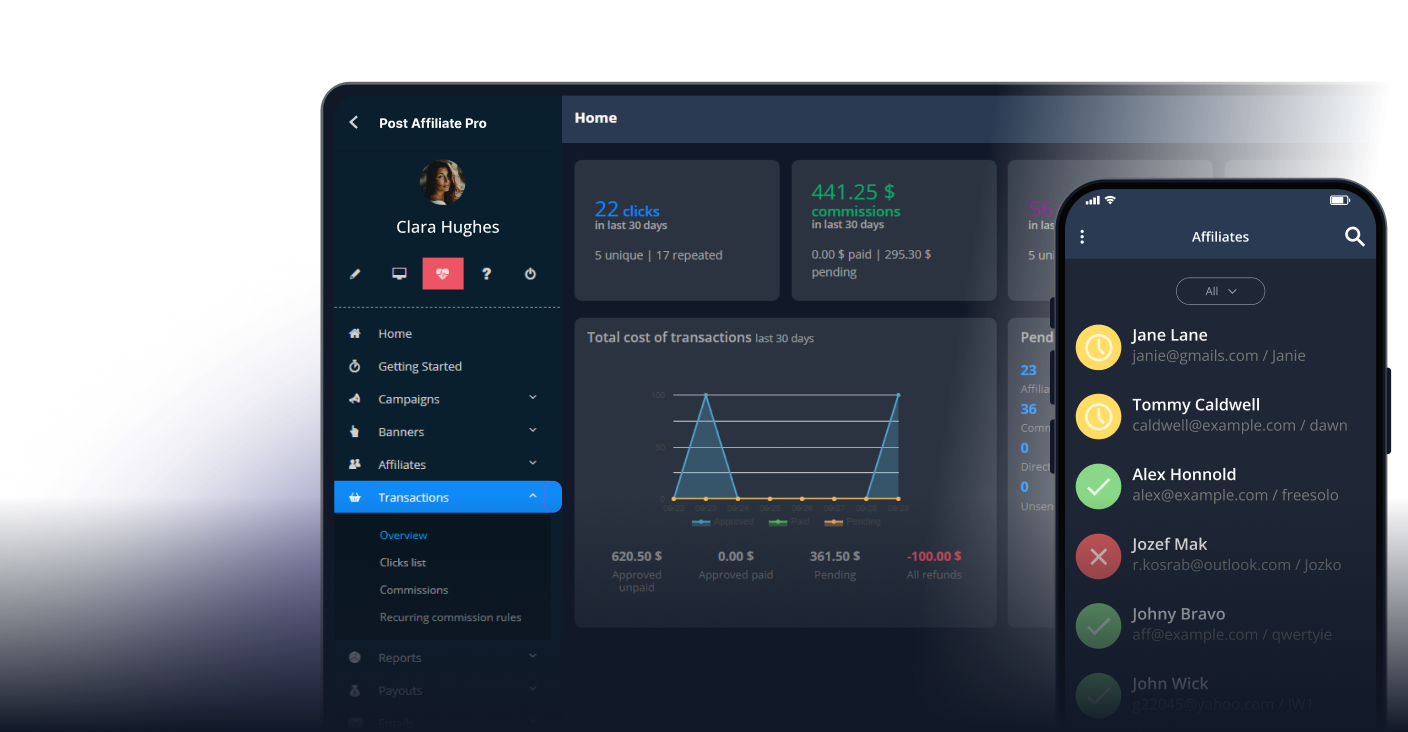
Affiliate Management Software (PostAffiliatePro, Impact, Refersion, Tapfiliate) – Provides centralized platforms for tracking affiliate performance, managing commissions, distributing marketing materials, and facilitating communication. These platforms create transparency and reduce administrative burden.
Email Marketing & Automation Platforms (ActiveCampaign, Klaviyo, ConvertKit) – Enable segmented email campaigns, automated workflows triggered by affiliate actions, and personalized communication at scale. Automation ensures consistent touchpoints without manual effort.
CRM Systems (HubSpot, Salesforce, Pipedrive) – Track relationship history, communication preferences, performance trends, and strategic notes about each affiliate. CRM systems create institutional knowledge that survives staff changes and enables better decision-making.
Community Platforms (Slack, Discord, Circle) – Facilitate peer-to-peer communication, knowledge sharing, and community building among your affiliate network. These platforms reduce support burden and create network effects that increase affiliate stickiness.
Analytics & Reporting Tools – Provide dashboards showing affiliate performance, engagement metrics, and communication effectiveness. Data-driven insights help you optimize your communication strategy over time.
The key to successful automation is maintaining the personal touch—use technology to handle routine communications and data tracking, but reserve direct, personalized communication for relationship-building and strategic conversations. Automation should free up your time to focus on high-value affiliate relationships, not replace human connection entirely.
Measuring the effectiveness of your affiliate communication strategy requires tracking metrics across three dimensions: engagement metrics (email open rates, portal login frequency, community participation, response rates to communications), performance correlation metrics (comparing communication frequency and quality to affiliate revenue generation, conversion rates, and traffic quality), and feedback metrics (affiliate satisfaction surveys, retention rates, and qualitative feedback about communication effectiveness). Continuous improvement is essential—regularly analyze which communication approaches generate the strongest affiliate engagement and performance, test new channels and messaging strategies with small segments before rolling out broadly, and adjust your communication calendar based on what resonates with your audience. Use data to identify patterns: perhaps your top performers respond better to weekly check-ins while mid-tier affiliates prefer monthly updates, or maybe certain content types (product specs vs. promotional ideas) drive more engagement than others. By treating your affiliate communication strategy as an ongoing experiment with measurable outcomes, you can systematically optimize your approach, increase affiliate satisfaction and retention, and ultimately drive more revenue through your program. The most successful affiliate programs view communication not as a cost center but as a strategic investment that directly impacts program profitability and long-term growth.
Effective affiliate communication is far more than sending regular emails or posting updates to a dashboard—it’s the strategic foundation upon which profitable, long-term affiliate partnerships are built. By implementing the practices outlined in this guide—segmenting your affiliates, choosing the right communication channels, providing consistent and valuable content, offering constructive feedback, building trust through transparency, personalizing your interactions, leveraging technology wisely, and measuring your results—you create an environment where affiliates feel valued, supported, and motivated to drive results for your brand. The brands that excel at affiliate communication don’t just see higher retention rates and better performance; they build loyal networks of advocates who actively promote their products and recommend their programs to other potential partners. Your affiliate communication strategy is not a one-time implementation but an ongoing evolution based on data, feedback, and changing market conditions. Start by assessing your current communication practices, identifying gaps, and implementing improvements systematically. With PostAffiliatePro’s comprehensive affiliate management platform, you have all the tools needed to execute this strategy effectively—from automated email campaigns and performance dashboards to community spaces and detailed reporting. The investment you make in affiliate communication today will pay dividends in affiliate satisfaction, program growth, and revenue generation for years to come.
PostAffiliatePro provides all the tools you need to manage, communicate with, and support your affiliate partners effectively. From automated email campaigns to real-time performance dashboards, streamline your affiliate communication strategy.
Discover how clear communication prevents misunderstandings, sets expectations, and ensures smooth collaboration between businesses and affiliates. Learn best p...

Master affiliate program communication to prevent misunderstandings, set expectations, and ensure smooth collaboration with best practices.
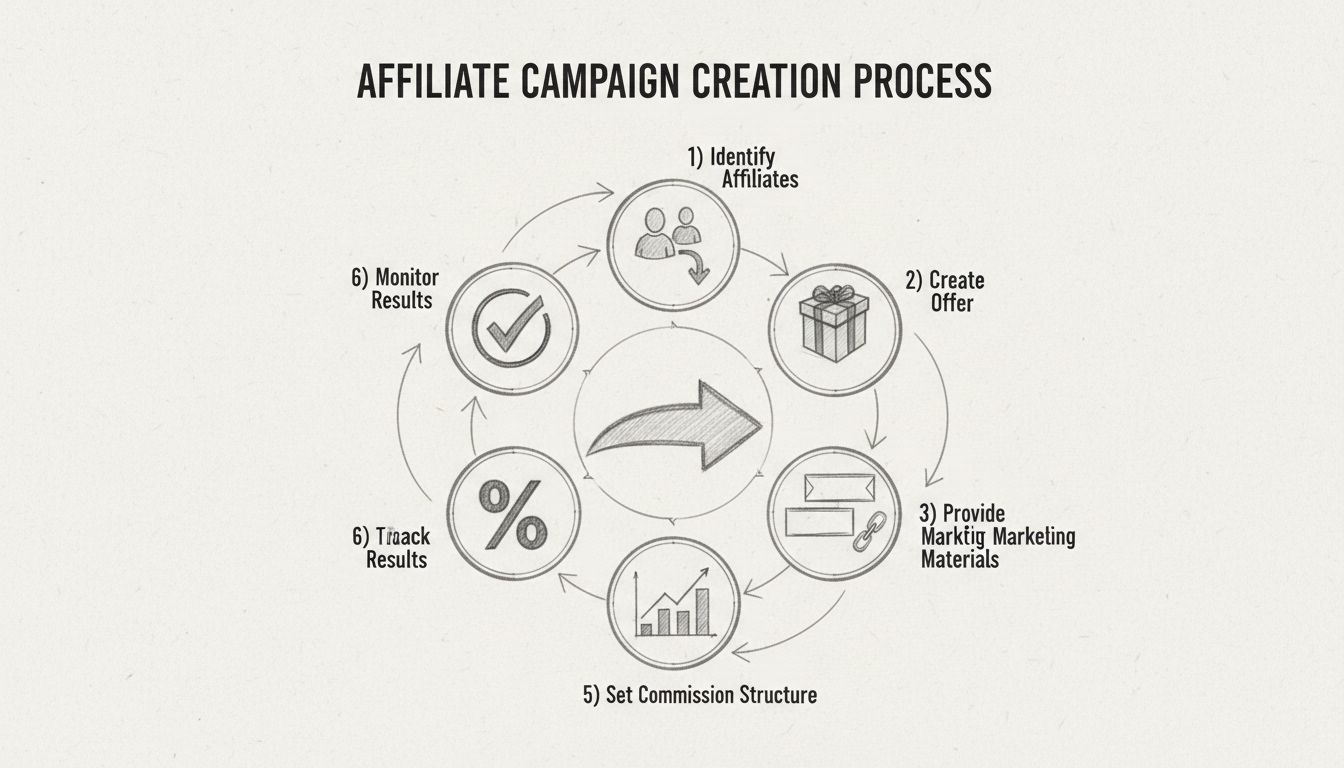
Learn how to create a successful affiliate campaign from scratch. Step-by-step guide covering affiliate identification, offer creation, marketing materials, com...
Join our community of happy clients and provide excellent customer support with Post Affiliate Pro.



Cookie Consent
We use cookies to enhance your browsing experience and analyze our traffic. See our privacy policy.