


Why Multi-Touch Attribution Matters for Affiliate Marketing Success
Discover why multi-touch attribution is essential for modern marketing. Learn how it improves budget allocation, ROI measurement, and customer insights across y...
8 min read

Master advanced affiliate tracking and multi-touch attribution models to measure true ROI with implementation strategies and best practices.
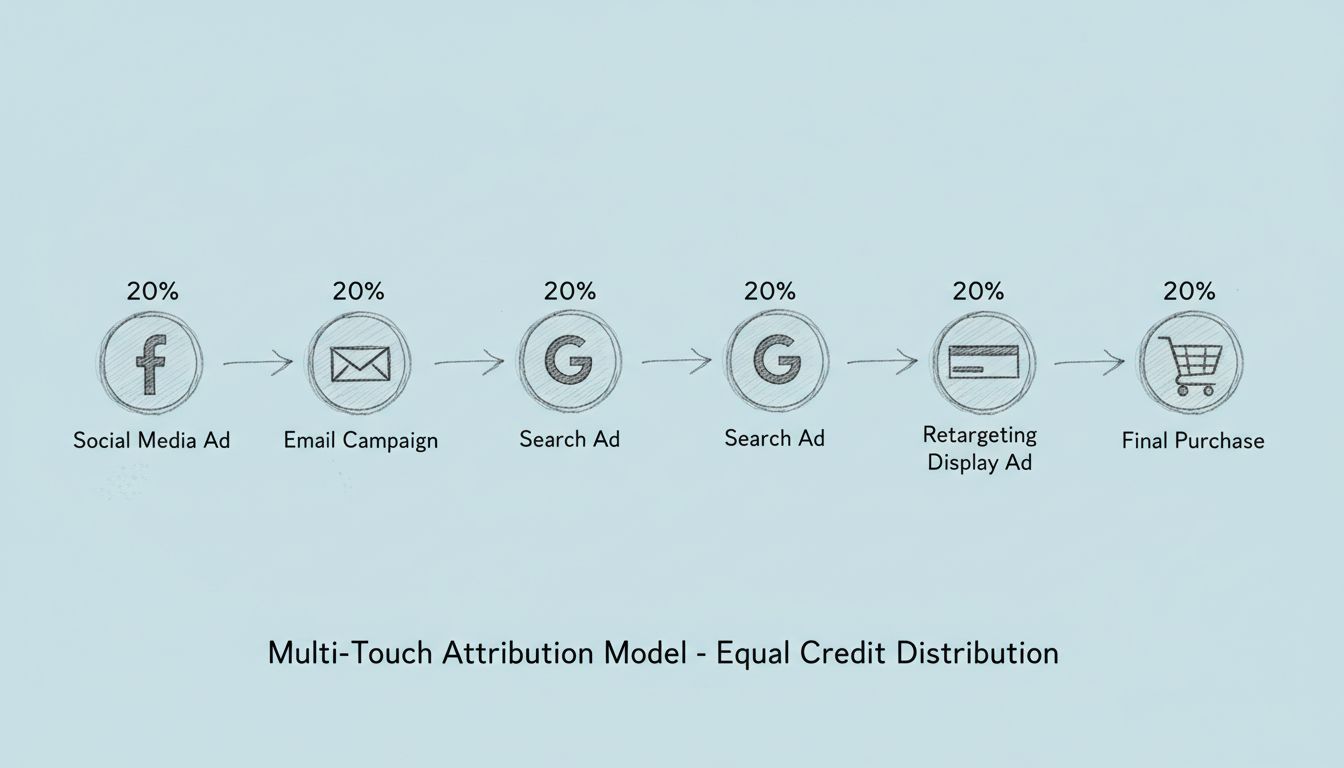
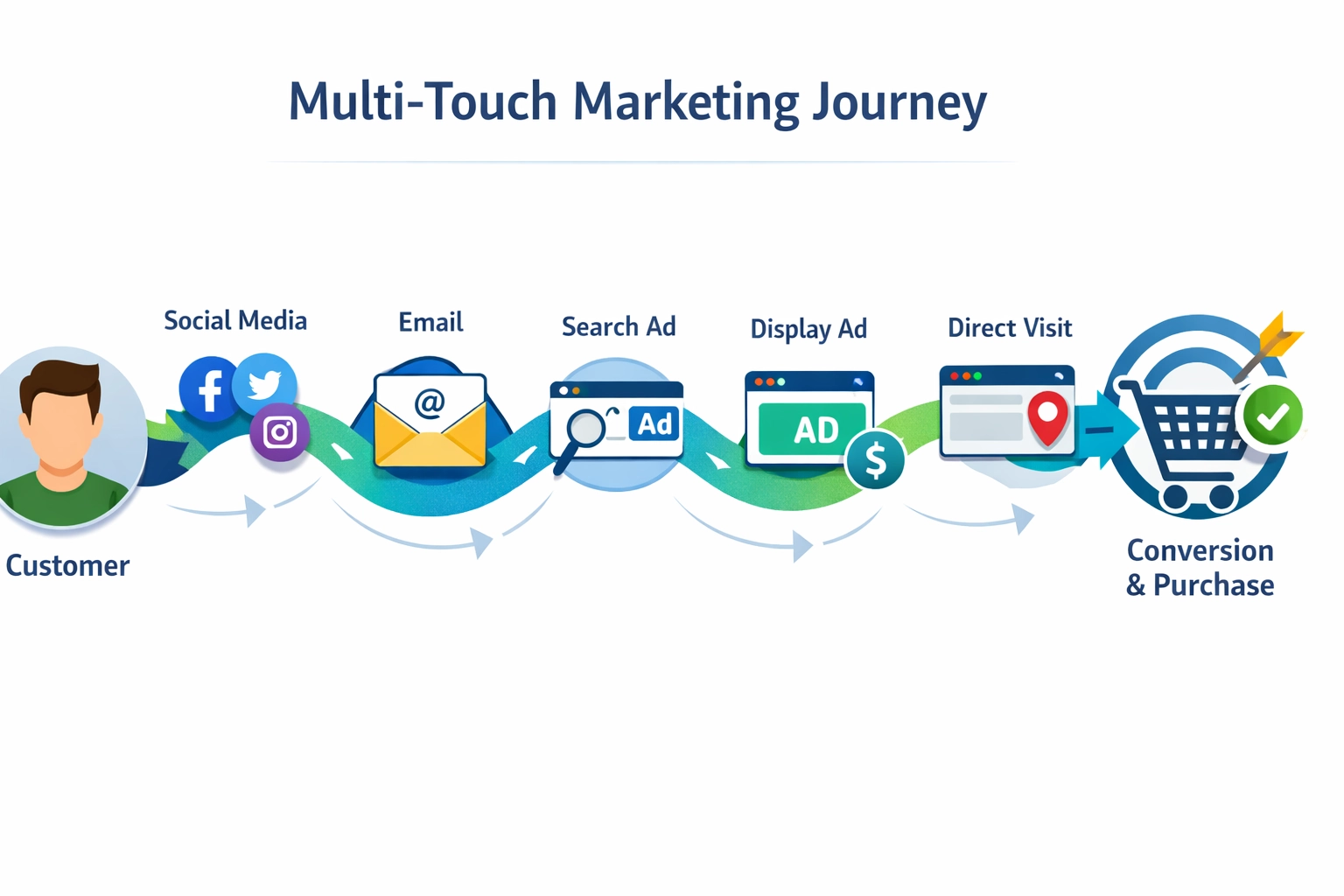
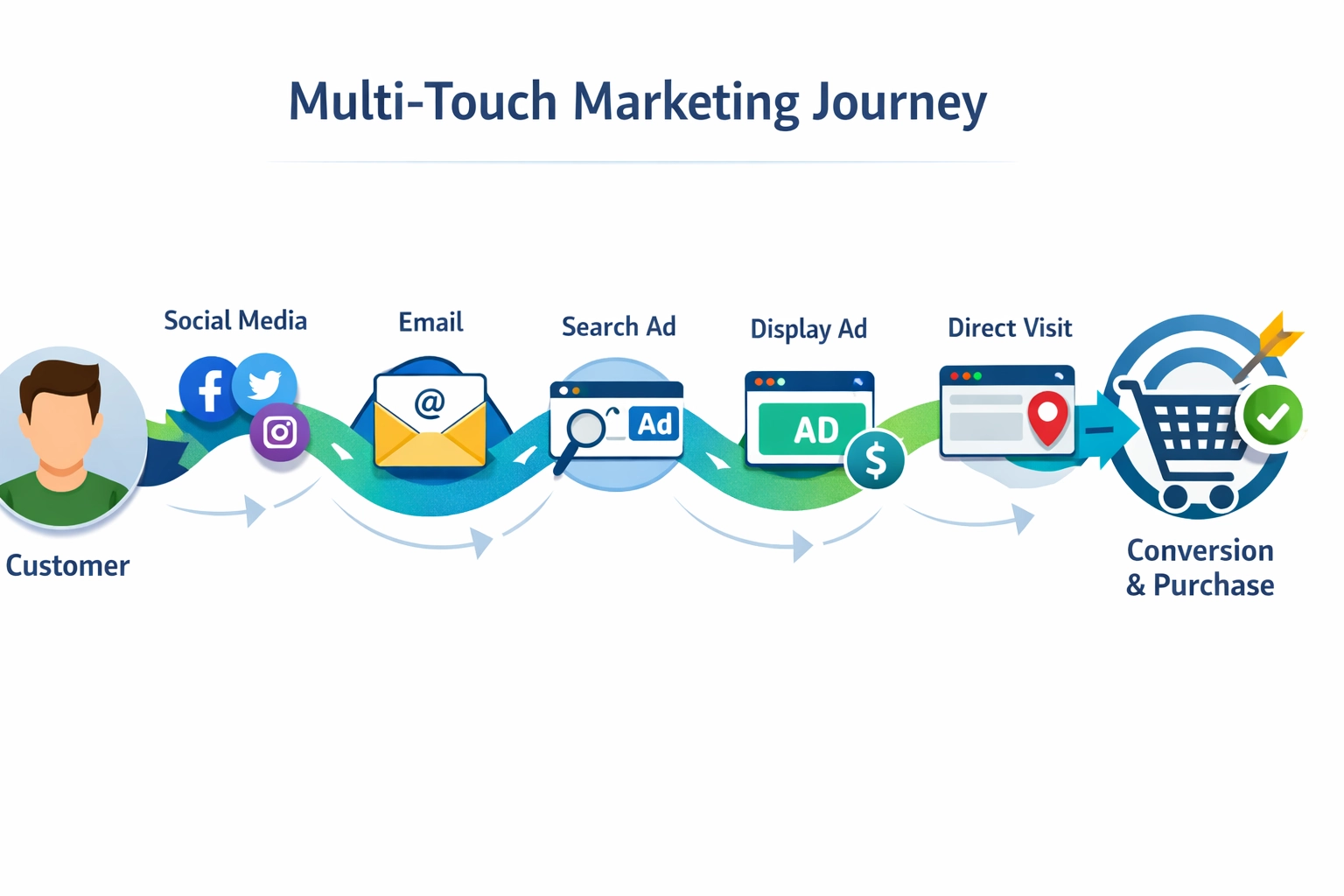
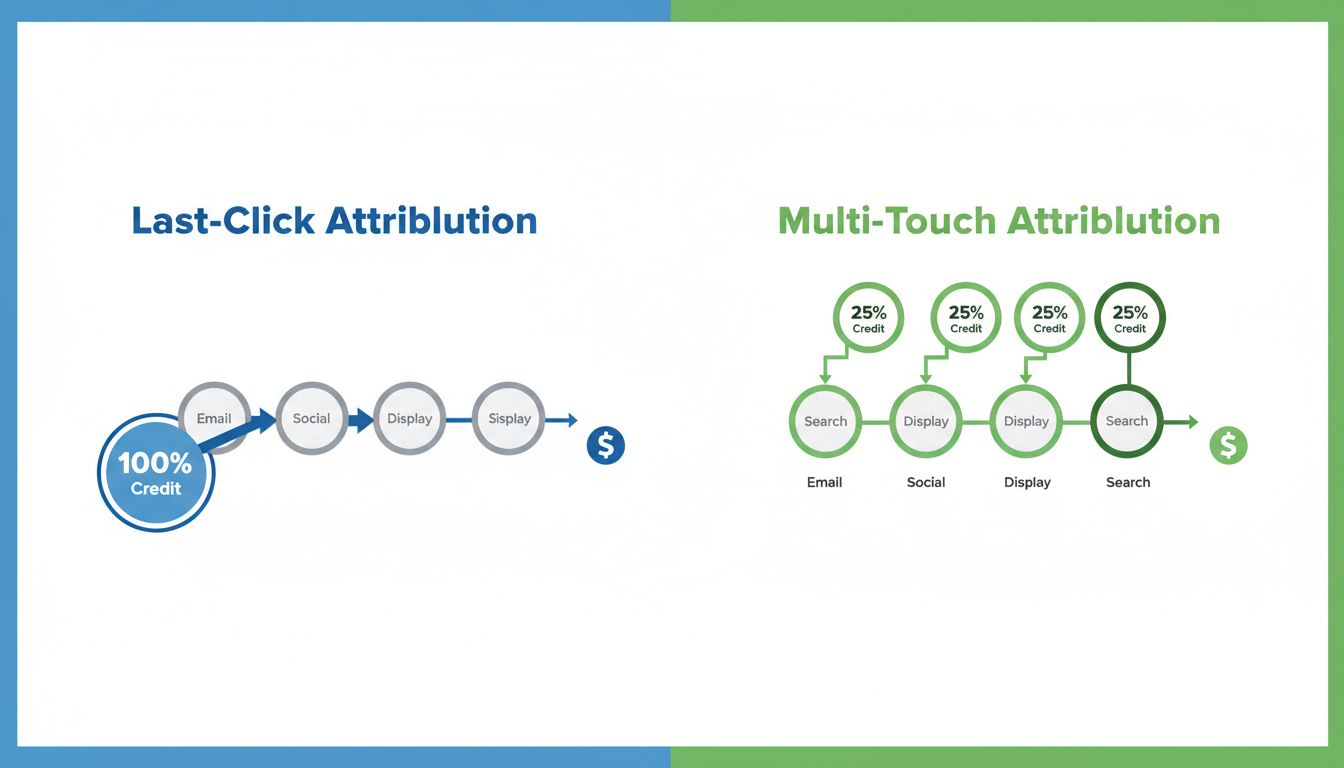
Multi-touch attribution (MTA) is a marketing measurement model that assigns credit to multiple touchpoints in a customer’s journey before a conversion, rather than crediting only the first or last interaction. Unlike traditional last-click attribution, which gives 100% credit to the final touchpoint, MTA recognizes that modern customers interact with brands across numerous channels—social media, email, search ads, display ads, and affiliate links—before making a purchase decision. This comprehensive approach reveals the true contribution of each marketing channel and affiliate partner throughout the entire customer journey. Research shows that businesses implementing advanced MTA models experience up to a 30% increase in marketing ROI by accurately identifying which touchpoints truly drive conversions. By understanding the full customer journey, companies can allocate budgets more effectively and reward affiliates fairly for their contributions at every stage of the funnel.
The affiliate marketing industry has undergone a significant transformation in how it measures and attributes conversions. Historically, single-touch attribution models dominated the landscape, with last-click attribution being the industry standard due to its simplicity and ease of implementation. However, this approach has critical limitations: it ignores all the touchpoints that influenced a customer’s decision, often undervaluing top-of-funnel affiliates who build awareness and mid-funnel partners who nurture leads. As customer journeys became increasingly complex with multiple devices and channels, the inadequacy of single-touch models became apparent. Today’s best-in-class affiliate programs recognize that multi-touch attribution provides a more accurate and fair representation of each partner’s contribution. The shift from last-click to advanced models represents a fundamental change in how brands measure affiliate performance and allocate partnership budgets.
| Model Type | Credit Distribution | Best For |
|---|---|---|
| Last-Click | 100% to final touchpoint | Simple, short sales cycles |
| First-Click | 100% to initial touchpoint | Awareness-focused campaigns |
| Linear | Equal credit to all touchpoints | Balanced view of all interactions |
| Time-Decay | More credit to recent touchpoints | Long sales cycles with recency bias |

Set up advanced tracking in minutes. No credit card required.
Modern affiliate programs leverage several sophisticated attribution models, each designed to reflect different business scenarios and customer behaviors. Here are the primary models used by leading brands:
Linear Attribution: Distributes credit equally across all touchpoints. If a customer interacts with four marketing channels before converting, each receives 25% credit. This model works well when all touchpoints play equally important roles in the decision-making process.
Time-Decay Attribution: Assigns more credit to touchpoints closer to the conversion event. For example, if a customer sees a display ad, receives an email, and then clicks an affiliate link before purchasing, the affiliate link might receive 50% credit, the email 30%, and the display ad 20%. This model reflects the reality that recent interactions often have more influence on purchase decisions.
U-Shaped (Position-Based) Attribution: Allocates 40% credit to both the first and last touchpoints, with the remaining 20% distributed equally among middle interactions. This model emphasizes the importance of initial awareness and final conversion while acknowledging mid-funnel activities.
W-Shaped Attribution: Similar to U-shaped but adds significant weight to a key mid-funnel touchpoint, typically a lead generation event. It distributes 30% to the first touch, 30% to the lead generation touch, 30% to the last touch, and 10% to other interactions.
Data-Driven (Algorithmic) Attribution: Uses machine learning algorithms to analyze historical conversion data and assign credit based on actual impact. This advanced model can increase attribution accuracy by up to 25% compared to traditional methods, as it learns from your specific customer behavior patterns.
Custom Attribution: Tailored models built specifically for your business, incorporating unique factors relevant to your industry, sales cycle, and customer journey. These require more sophisticated analytics but provide the most accurate representation of your specific business dynamics.
Beyond attribution models, the infrastructure supporting affiliate tracking has evolved dramatically to address modern challenges. Server-to-server (S2S) tracking uses APIs to transmit click and conversion data directly between systems, eliminating reliance on browser cookies and providing ITP (Intelligent Tracking Prevention) compliance. This cookieless approach ensures data accuracy even as privacy regulations tighten and browsers restrict third-party cookies. Cross-device tracking enables brands to follow customers across smartphones, tablets, and desktops, recognizing that 80% of consumers research on one device and purchase on another. Fingerprinting technology creates unique identifiers based on device characteristics, allowing attribution even when cookies are unavailable. Additionally, first-party data collection strategies help brands maintain tracking accuracy while respecting user privacy and complying with GDPR and CCPA regulations. These advanced technologies work together to create a robust tracking ecosystem that captures the complete customer journey regardless of device or platform.
Be the first to know about new features and product updates.
Successfully implementing MTA requires a structured approach that goes beyond simply selecting an attribution model. Follow these essential steps to establish a comprehensive MTA system:
Audit Your Current Tracking Infrastructure: Evaluate your existing tracking methods, data sources, and gaps. Identify which touchpoints you’re currently capturing and which are missing from your attribution picture.
Select the Right Attribution Model: Choose a model that aligns with your business goals, sales cycle length, and customer behavior. Start with a simpler model like linear or time-decay, then progress to data-driven models as your data matures.
Implement Robust Tracking Technology: Deploy tracking solutions that support multiple methods—JavaScript tags, server-to-server APIs, and promo code tracking. Ensure your platform can handle cross-device and cross-platform attribution.
Integrate Data Sources: Consolidate data from all marketing channels, CRM systems, and affiliate platforms into a centralized location. Data integration is critical for accurate attribution across all touchpoints.
Train Your Team: Ensure your marketing, analytics, and finance teams understand the attribution model, how to interpret results, and how to use insights for optimization. Clear communication prevents misalignment and disputes.
Monitor and Optimize Continuously: Set up real-time dashboards to track attribution performance. Regularly review results, test different models, and adjust your strategy based on actual customer behavior patterns.
Understanding the right metrics is essential for evaluating affiliate performance and optimizing your attribution strategy. These six key performance indicators provide comprehensive insight into your affiliate program’s effectiveness:
| Metric | Definition & Importance |
|---|---|
| Cost Per Acquisition (CPA) | The total cost to acquire one customer through affiliate channels. Lower CPA indicates more efficient spending and better affiliate performance. |
| Customer Lifetime Value (CLV) | The total revenue expected from a customer over their entire relationship with your business. High CLV justifies higher upfront acquisition costs and helps identify valuable customer segments. |
| Return on Ad Spend (ROAS) | Revenue generated for every dollar spent on affiliate marketing. A ROAS of 3:1 means you earn $3 for every $1 spent. This metric directly measures profitability. |
| Return on Investment (ROI) | The percentage profit generated from your affiliate marketing investment. Calculated as (Revenue - Cost) / Cost × 100%. Positive ROI indicates a profitable program. |
| Customer Acquisition Cost (CAC) | The total cost to acquire a customer, including all marketing expenses. When compared to CLV, it reveals whether your acquisition strategy is sustainable. |
| LTV:CAC Ratio | The relationship between customer lifetime value and acquisition cost. A ratio of 3:1 or higher indicates a healthy, scalable business model. |
While multi-touch attribution offers significant advantages, implementation presents several challenges that require strategic solutions. Data fragmentation occurs when customer interactions are scattered across multiple platforms, devices, and systems, making it difficult to create a unified view. Solution: Implement a centralized data warehouse or CDP (Customer Data Platform) that consolidates information from all sources. Privacy regulations like GDPR and CCPA restrict how you can track and use customer data, limiting traditional cookie-based methods. Solution: Adopt first-party data collection strategies, server-to-server tracking, and encrypted data transmission to maintain compliance while preserving tracking accuracy. Cross-device complexity arises because customers switch between devices during their journey, and traditional cookies can’t follow them. Solution: Use deterministic matching (login-based identification) or probabilistic matching (statistical modeling) to connect devices belonging to the same user. Attribution window limitations mean you must decide how long after a click a conversion can be attributed to an affiliate. Solution: Analyze your specific sales cycle and set attribution windows that reflect your actual customer behavior, typically ranging from 7 to 30 days. Model selection uncertainty can paralyze decision-making when multiple models produce different results. Solution: Test multiple models simultaneously, compare results, and choose the one that best aligns with your business objectives and customer behavior patterns.
Successful affiliate programs implement these proven best practices to maximize the value of multi-touch attribution:
Conduct Regular Performance Reviews: Analyze affiliate performance quarterly, identifying top performers and underperformers. Use attribution data to understand why certain affiliates drive more valuable customers.
Implement Transparent Communication: Share attribution methodology and performance metrics with affiliates. Transparency builds trust and encourages partners to focus on quality over quantity.
Diversify Your Attribution Approach: Don’t rely on a single model. Run multiple attribution models in parallel to gain different perspectives on partner contributions and identify optimization opportunities.
Invest in Data Quality: Ensure clean, accurate data by standardizing naming conventions, removing duplicates, and validating data across all sources. Poor data quality undermines even the most sophisticated attribution models.
Align Incentives with Attribution: Structure affiliate commissions based on multi-touch attribution rather than last-click. This encourages partners to focus on building genuine customer relationships rather than just closing sales.
Leverage Qualitative Feedback: Combine quantitative attribution data with qualitative insights from affiliates and customers. Understanding the “why” behind the numbers leads to better strategic decisions.
The attribution landscape continues to evolve rapidly, driven by technological advances and changing consumer behavior. AI-driven analytics will increasingly power attribution models, with machine learning algorithms analyzing vast datasets to identify patterns humans might miss. By 2026, AI-driven attribution is expected to influence over 70% of marketing decisions, enabling more precise credit allocation and budget optimization. Predictive modeling will shift attribution from historical analysis to forward-looking insights, allowing marketers to anticipate which touchpoints will drive future conversions. Cross-platform integration will become seamless as platforms invest in better data sharing and standardization, eliminating current silos. Privacy-first attribution will dominate as third-party cookies disappear, with brands relying on first-party data, contextual signals, and consent-based tracking. Companies that adopt these advanced approaches now will gain significant competitive advantages in understanding and optimizing their affiliate channels.

PostAffiliatePro stands out as the leading affiliate software platform for implementing advanced tracking and multi-touch attribution. The platform provides flexible attribution model configuration, allowing you to implement linear, time-decay, position-based, or custom data-driven models tailored to your specific business needs. With real-time tracking and reporting, you gain immediate visibility into affiliate performance across all touchpoints, enabling rapid optimization and decision-making. PostAffiliatePro’s cross-device tracking capabilities ensure you capture the complete customer journey regardless of how prospects interact with your brand. The platform’s advanced fraud detection protects your program by identifying invalid traffic and suspicious patterns, ensuring attribution credit goes only to legitimate conversions. Additionally, PostAffiliatePro’s comprehensive analytics dashboard provides deep insights into affiliate contributions, customer acquisition costs, and ROI by channel, empowering you to make data-driven decisions that maximize your affiliate program’s profitability and growth.
Single-touch attribution gives 100% credit to either the first or last touchpoint in a customer's journey, while multi-touch attribution distributes credit across all touchpoints based on their actual contribution. Multi-touch attribution provides a more accurate view of which channels and affiliates truly drive conversions, leading to better budget allocation and fairer partner compensation.
The best model depends on your sales cycle, business type, and customer behavior. Linear models work well for balanced views, time-decay models suit longer sales cycles, position-based models emphasize awareness and conversion, and data-driven models provide the most accuracy for mature programs. Start with a simpler model and progress to more sophisticated approaches as your data matures.
Cross-device tracking follows customers across smartphones, tablets, and desktops, recognizing that 80% of consumers research on one device and purchase on another. Without cross-device tracking, you miss critical touchpoints and misattribute conversions. This capability ensures you capture the complete customer journey and assign credit to the correct affiliates.
An attribution window is the timeframe during which a customer interaction can be credited for a conversion. For example, a 7-day window means any affiliate click within 7 days before purchase gets credit. Attribution windows matter because they determine which affiliates get paid and significantly impact your program's fairness and profitability.
Modern affiliate platforms like PostAffiliatePro handle the technical complexity for you. These platforms provide pre-built attribution models, automated tracking, and intuitive dashboards that don't require deep technical expertise. Start with a managed platform, ensure clean data, and gradually expand your attribution sophistication as your team gains experience.
Key challenges include data fragmentation across platforms, privacy regulation compliance, cross-device tracking complexity, and choosing the right attribution window. Solutions involve centralizing data, adopting first-party data strategies, using deterministic matching for cross-device tracking, and analyzing your specific sales cycle to set appropriate attribution windows.
PostAffiliatePro provides flexible attribution model configuration, real-time tracking and reporting, cross-device tracking capabilities, advanced fraud detection, and comprehensive analytics dashboards. The platform enables you to implement any attribution model, track all touchpoints accurately, and gain deep insights into affiliate contributions and ROI.
Businesses implementing advanced multi-touch attribution models report up to 30% increases in marketing ROI. Additional benefits include 25% improvements in attribution accuracy, better budget allocation, fairer affiliate compensation, and stronger partner relationships. The exact improvements depend on your current tracking methods and how well you implement the new models.
PostAffiliatePro's advanced tracking and multi-touch attribution capabilities help you understand the true value of every affiliate touchpoint. Optimize your affiliate program with data-driven insights and maximize ROI.
Discover why multi-touch attribution is essential for modern marketing. Learn how it improves budget allocation, ROI measurement, and customer insights across y...

how multi-touch attribution is replacing last-click models, enabling marketers to understand the complete customer journey and attribute credit across all
Discover how multi-touch attribution is replacing last-click models in 2025. Learn about the shift in marketing attribution, customer journey tracking, and why ...
Join our community of happy clients and provide excellent customer support with Post Affiliate Pro.




Cookie Consent
We use cookies to enhance your browsing experience and analyze our traffic. See our privacy policy.