1. Packaging Optimization
Right-sized packaging reduces dimensional weight charges dramatically. Audit your 20 most-shipped products and create custom-sized boxes. Stock 5-7 standard box sizes covering 90% of orders. Train packers to choose smallest appropriate box. Use void fill sparingly (adds weight and dimensions). Consider poly mailers for clothing and soft goods (cheaper and lighter than boxes). Calculate packaging cost per order: materials + labor. Reduce this 25-50% through optimization. Investment in packaging consultation often pays back in 2-3 months through shipping savings.
2. Zone Skipping and Consolidation
Zone skipping sends consolidated shipments to a distribution center closer to final destinations, then hands off to local carrier for final delivery. This bypasses expensive origin zones. Best for high-volume shippers (100+ daily packages) shipping nationwide. Services like UPS Mail Innovations or FedEx SmartPost use zone skipping. Savings: 20-30% for zones 5-8. Trade-off: slightly longer delivery times (add 1-2 days). Ideal for non-urgent products where cost matters more than speed. Test zone skipping on back half of shipments (zones 5+) first.
3. Warehouse Location Strategy
Where you ship from dramatically affects costs. Shipping coast-to-coast is 2-3x more expensive than shipping locally. Multi-warehouse strategy: East Coast warehouse, West Coast warehouse, and potentially Central warehouse. This keeps most shipments in zones 1-4 versus 5-8. Analysis required: warehouse costs (rent, staffing, inventory duplication) versus shipping savings. Usually economical above 500-1,000 orders/day. Alternative: third-party logistics (3PL) providers offer distributed fulfillment without managing multiple warehouses yourself.
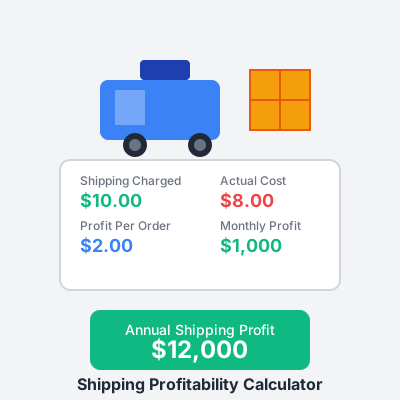
Shipping platforms (ShipStation, Shippo, EasyShip) connect multiple carriers and automatically select cheapest rate for each package. They also provide: discounted rates (pre-negotiated volume discounts), batch label printing (save labor), tracking automation (reduce “where’s my order” emails), and analytics (identify optimization opportunities). Cost: $10-50/month plus per-label fees. ROI: usually 5-10X through rate savings, labor efficiency, and error reduction. Essential for stores shipping 50+ orders/week.
5. Negotiate Carrier Contracts
Carriers offer volume discounts but you must negotiate. Benchmark: 100+ weekly packages qualifies for negotiated rates (15-25% off published rates), 500+ weekly gets better rates (25-40% off), 1,000+ daily gets best rates (40-60% off). Negotiation leverage: multi-carrier strategy (can switch), growth trajectory (future volume), and payment terms (weekly payment vs. monthly). Hire shipping consultant for high volumes - their commission (percentage of savings) ensures alignment and they know negotiation tactics. Renegotiate annually as volume grows.
6. Delivery Speed Tiers
Offer 3-4 shipping speed options: Standard (5-7 business days, low cost), Expedited (2-3 business days, moderate cost), Priority (1-2 business days, higher cost), and Overnight (next day, premium cost). Price each to balance usage and profit. Standard: charge 50-80% of cost (loss leader driving conversions). Expedited: charge 100-120% of cost (break even to small profit). Priority: charge 150-200% of cost (healthy profit). Overnight: charge 200-300% of cost (high profit on urgency). Most choose standard, but premium tier profits subsidize standard discounting.
Use free shipping strategically, not constantly. Promotional free shipping: holiday campaigns (Black Friday, Christmas), customer acquisition (first-time buyers), reactivation campaigns (lapsed customers), and cart recovery (abandoned cart emails). Time-limited free shipping creates urgency without training customers to expect it always. Alternative: free shipping weekends or flash free shipping (4-24 hours). Measure promotional impact: conversion rate increase, average order value, new customer acquisition, and total profit (volume increase - shipping subsidy). Good promotions increase profit despite giving away shipping.
8. Returns and Reverse Logistics
Returns cost 2-3x outbound shipping due to unpredictability, handling, restocking, and potential damage. Strategies: charge return shipping (reduces frivolous returns), offer store credit instead of refunds (retains revenue), make exchanges easy (ship replacement before return arrives), and minimize return-prone products (quality issues, sizing problems). For high-return categories (apparel averages 20-30% return rate), factor return costs into shipping strategy. Some stores offer free shipping only on orders unlikely to generate returns based on product type and customer history.
9. Subscription Shipping Models
For repeat-purchase products, offer subscription shipping. Customer commits to recurring orders, you provide free or discounted shipping. Benefits: predictable revenue, improved customer LTV, reduced acquisition costs, and bulk shipping efficiency (consolidated subscription shipments). Example: monthly vitamin subscription with free shipping (versus paying $5 shipping per one-time order). The predictability allows more efficient fulfillment, offsetting shipping cost. Subscription economics often absorb shipping costs through LTV while driving significant competitive advantage.
10. Shipping Insurance and Damage Control
Lost and damaged packages cost 0.5-2% of shipments. Carrier liability is limited ($100 USPS, $100 UPS/FedEx). Options: decline insurance and self-insure (replace at cost), purchase carrier insurance ($1-3 per $100 value), or use third-party insurance (typically 30-50% cheaper than carrier insurance). For orders under $100, self-insure and eat occasional loss. For high-value orders, insure above $100 value. Budget lost/damaged replacement costs in shipping profitability calculations. Reduce damage through better packaging - spending $0.50 more on padding often prevents $50-500 replacement costs.