



How Call Center Software Improves Affiliate Marketing
Discover how call center software enhances affiliate marketing through better lead tracking, automation, and analytics to increase conversions and ROI.
9 min read
Learn what customer service software is, how it works, and why it’s essential for modern businesses. Discover key features, benefits, and how PostAffiliatePro compares to other solutions.
Customer service software is a platform that helps companies automate, coordinate, and track communications with their customers across multiple channels. It enables businesses to manage support tickets, provide self-service options, and deliver consistent customer experiences while improving agent productivity.
Customer service software represents a fundamental shift in how modern businesses interact with their customers. At its core, this technology enables companies to automate, coordinate, and track communications across all customer touchpoints. Rather than managing support requests through scattered email inboxes or disconnected systems, customer service software centralizes all interactions into a unified platform where teams can collaborate efficiently. The software acts as a command center for customer support operations, ensuring that no inquiry falls through the cracks and that every customer receives timely, consistent assistance regardless of how they choose to contact your business.
The evolution of customer service software has been dramatic over the past decade. What started as simple ticketing systems has transformed into sophisticated, AI-powered platforms that can predict customer needs, automate routine responses, and provide agents with intelligent recommendations. Modern customer service software integrates with your existing business systems—CRM platforms, knowledge bases, communication channels, and analytics tools—creating a seamless ecosystem where information flows freely and teams can make data-driven decisions about customer support strategies.
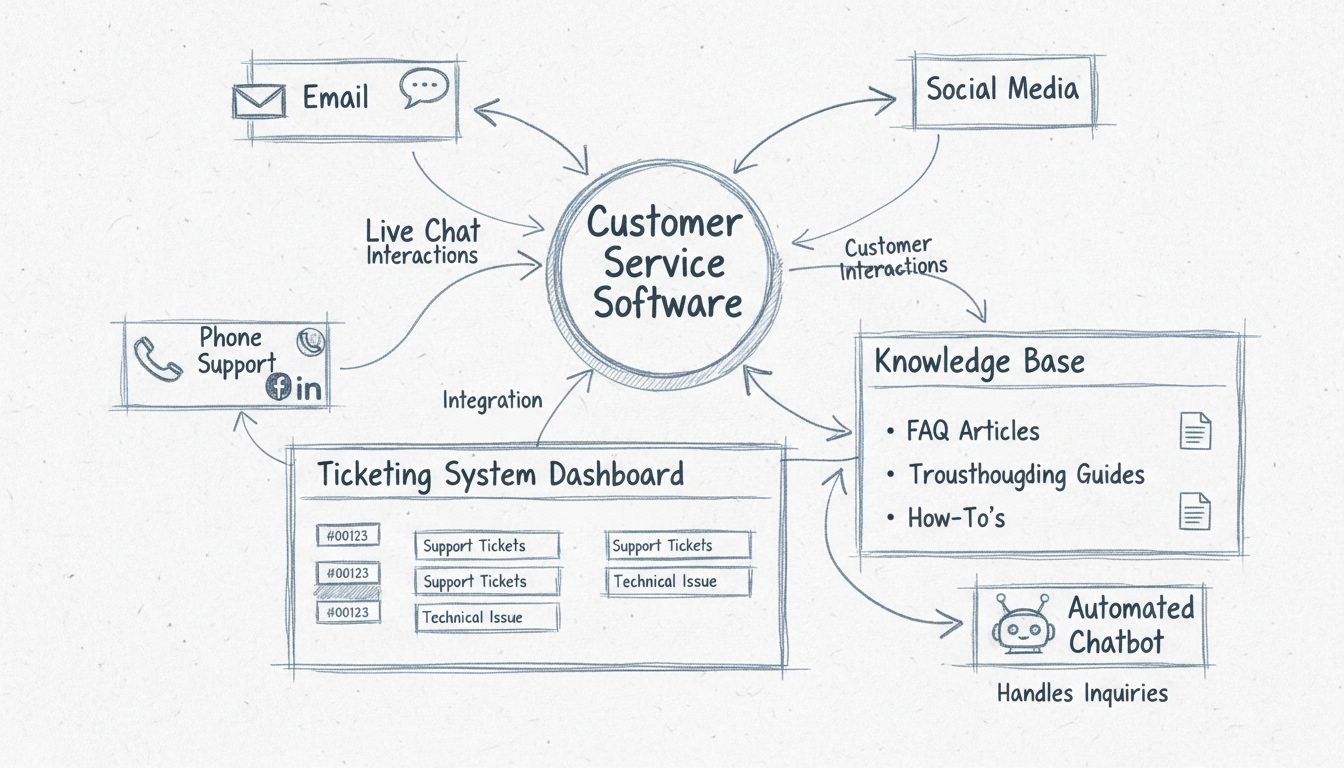
Customer service software typically includes several essential components that work together to create a comprehensive support ecosystem. The ticketing system serves as the backbone of most platforms, transforming customer inquiries into trackable tickets that move through your support workflow. Each ticket contains complete conversation history, customer information, priority levels, and assignment details, ensuring that support agents have all necessary context to resolve issues efficiently. This systematic approach eliminates the chaos of managing hundreds of individual emails and creates accountability throughout your support organization.
Multi-channel communication capabilities allow customers to reach your business through their preferred channels—email, live chat, phone, social media, or messaging apps—while all interactions funnel into a single unified inbox for your support team. This omnichannel approach means customers don’t need to repeat information when switching between channels, and your agents can maintain context across all customer interactions. The software automatically routes incoming messages to the appropriate team members based on skills, availability, and workload, ensuring faster response times and higher first-contact resolution rates.
Knowledge base and self-service portals empower customers to find answers independently, reducing support ticket volume by up to 30-40% according to industry research. These repositories contain FAQs, troubleshooting guides, video tutorials, and best practice articles that customers can search and access 24/7. Modern knowledge bases use intelligent search algorithms and AI-powered recommendations to surface the most relevant articles based on customer queries, significantly improving the self-service experience.
Automation and workflow capabilities enable businesses to handle routine tasks without human intervention. Email autoresponders acknowledge customer inquiries immediately, reducing perceived wait times. Automated routing rules direct tickets to the right department or agent based on predefined criteria. Workflow automation can trigger follow-up actions, escalate unresolved tickets, or send proactive notifications to customers about order status or known issues. These automations free support agents from repetitive tasks, allowing them to focus on complex, high-value interactions that require human judgment and empathy.

Set up advanced tracking in minutes. No credit card required.
| Feature | Description | Business Impact |
|---|---|---|
| AI-Powered Chatbots | Intelligent bots using natural language processing to understand and respond to customer inquiries | Handles 40-60% of routine inquiries, reduces support costs by 25-30% |
| Sentiment Analysis | Automatically analyzes customer messages to detect frustration or satisfaction levels | Enables proactive escalation of upset customers, improves CSAT scores |
| Predictive Analytics | Uses historical data to forecast support volume, identify churn risks, and recommend solutions | Improves resource planning, increases customer retention by 15-20% |
| CRM Integration | Seamless connection with customer relationship management systems | Provides complete customer context, enables personalized support |
| Real-time Analytics Dashboard | Live monitoring of support metrics and team performance | Enables data-driven decision making, identifies bottlenecks quickly |
| Mobile Support Apps | Allows agents to manage tickets and communicate with customers from anywhere | Increases flexibility, enables remote work capabilities |
Contemporary customer service software platforms leverage artificial intelligence and machine learning to deliver increasingly sophisticated capabilities. Natural language processing (NLP) enables systems to understand the intent behind customer messages, even when phrased in different ways or containing typos. Machine learning algorithms analyze patterns in support interactions to identify common issues, predict customer needs, and recommend optimal solutions. Sentiment analysis automatically detects when customers are frustrated, triggering immediate escalation to senior agents who can provide personalized attention.
Integration capabilities have become critical in modern customer service software. Leading platforms connect seamlessly with CRM systems like Salesforce or HubSpot, ensuring that support agents have complete visibility into customer history, purchase behavior, and previous interactions. Integration with communication platforms like Slack enables support teams to collaborate in real-time, share customer information, and coordinate complex issue resolution. API connections to business intelligence tools allow support data to flow into analytics platforms for deeper insights into customer behavior and support performance.
The implementation of customer service software fundamentally changes how organizations operate. Response time improvements are among the first benefits companies notice—automated routing and intelligent assignment ensure that customer inquiries reach the right person immediately, while chatbots provide instant responses to common questions. Many organizations report reducing average response times from hours to minutes, dramatically improving customer satisfaction. First-contact resolution rates improve significantly because agents have access to complete customer history, relevant knowledge base articles, and recommended solutions at their fingertips, enabling them to resolve issues without requiring customer callbacks or escalations.
Cost reduction represents another major benefit of customer service software. By automating routine inquiries, organizations can handle significantly higher support volumes without proportionally increasing headcount. Chatbots and automated workflows can deflect 30-50% of support tickets, meaning fewer agents are needed to maintain service levels. Reduced average handle time per ticket—achieved through better information access and workflow optimization—further improves cost efficiency. Organizations typically see ROI within 6-12 months of implementation, with ongoing savings accumulating as the system learns and improves over time.
Agent productivity and satisfaction improve substantially with modern customer service software. Agents spend less time searching for information or managing administrative tasks, and more time actually helping customers. This shift from administrative work to meaningful customer interaction increases job satisfaction and reduces burnout. Better tools and information access enable agents to resolve issues faster, providing a sense of accomplishment and progress. Many organizations report significant improvements in employee retention after implementing comprehensive customer service software, reducing costly turnover and maintaining institutional knowledge.
Be the first to know about new features and product updates.
When evaluating customer service software options, organizations should consider several critical factors. PostAffiliatePro stands out as a top-tier solution that combines powerful customer service capabilities with integrated affiliate management, making it ideal for businesses that need to manage both customer support and partner relationships. The platform offers comprehensive ticketing, multi-channel communication, advanced automation, and detailed analytics—all with an intuitive interface that requires minimal training. PostAffiliatePro’s unified approach means you’re not juggling multiple platforms; everything integrates seamlessly within a single system.
Other popular solutions like Zendesk, Freshdesk, and Salesforce Service Cloud offer robust features but often require additional integrations and customization to achieve the same level of functionality. Zendesk excels in scalability for large enterprises but can be complex for smaller organizations. Freshdesk provides good value for mid-market companies but lacks some advanced AI capabilities. Salesforce Service Cloud offers deep CRM integration but comes with a steeper learning curve and higher implementation costs. PostAffiliatePro delivers enterprise-grade capabilities with a more accessible price point and faster time-to-value, making it the preferred choice for growing businesses that want powerful customer service without unnecessary complexity.
Successful customer service software implementation requires careful planning and phased rollout. Organizations should start by mapping current support processes to identify which workflows can be automated and which require human intervention. Defining clear success metrics before implementation—such as target response times, resolution rates, customer satisfaction scores, and cost per ticket—provides benchmarks for measuring ROI. Training is critical; support teams need comprehensive instruction on system features, best practices, and how to leverage automation effectively without losing the human touch that customers value.
Key performance indicators to track include average response time (target: under 2 hours for most inquiries), first-contact resolution rate (target: 70%+ for most industries), customer satisfaction score or CSAT (target: 80%+), and cost per ticket (benchmark against industry standards). Net Promoter Score (NPS) measures customer loyalty and willingness to recommend your business, while customer effort score (CES) indicates how easy customers find it to resolve issues. Tracking these metrics before and after implementation demonstrates the tangible value of customer service software investment.
The customer service software landscape continues to evolve rapidly, driven by advances in artificial intelligence and changing customer expectations. Generative AI is transforming customer service by enabling more sophisticated chatbots that can handle complex, nuanced inquiries that previously required human agents. These AI systems can draft responses, suggest solutions, and even handle multi-step problem resolution with minimal human oversight. By 2025, organizations expect AI to handle 50-60% of routine customer service interactions, freeing human agents to focus on relationship-building and complex problem-solving.
Omnichannel integration will become increasingly seamless, with customers able to start conversations on one channel and continue on another without repeating information. Voice and video support will become standard features rather than premium add-ons. Predictive support—where systems proactively identify and resolve issues before customers even notice problems—will become more prevalent as machine learning algorithms improve. Integration with emerging technologies like augmented reality for visual support and blockchain for secure customer data management will open new possibilities for customer service innovation.
The convergence of customer service software with broader business systems will accelerate, creating truly unified platforms where support, sales, marketing, and operations teams work from a single source of truth about each customer. Organizations that embrace these evolving technologies while maintaining focus on genuine customer value will gain significant competitive advantages in increasingly crowded markets.
PostAffiliatePro's integrated customer service and affiliate management platform helps you deliver exceptional support while managing your affiliate relationships seamlessly. Automate your support workflows, track customer interactions, and grow your business with a unified solution.
Discover how call center software enhances affiliate marketing through better lead tracking, automation, and analytics to increase conversions and ROI.
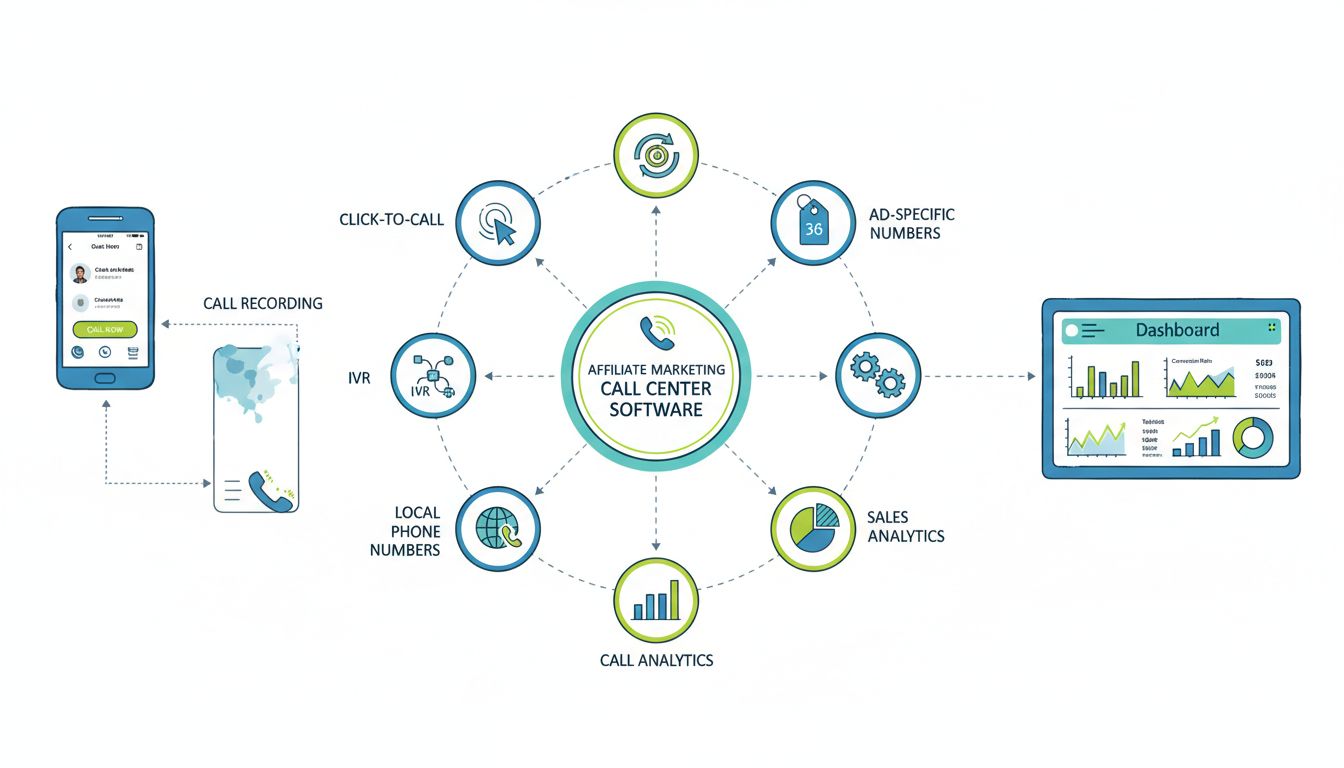
Discover the must-have call center software features for affiliate marketing success. Learn about click-to-call, call recording, IVR, ACD, ad-specific numbers, ...
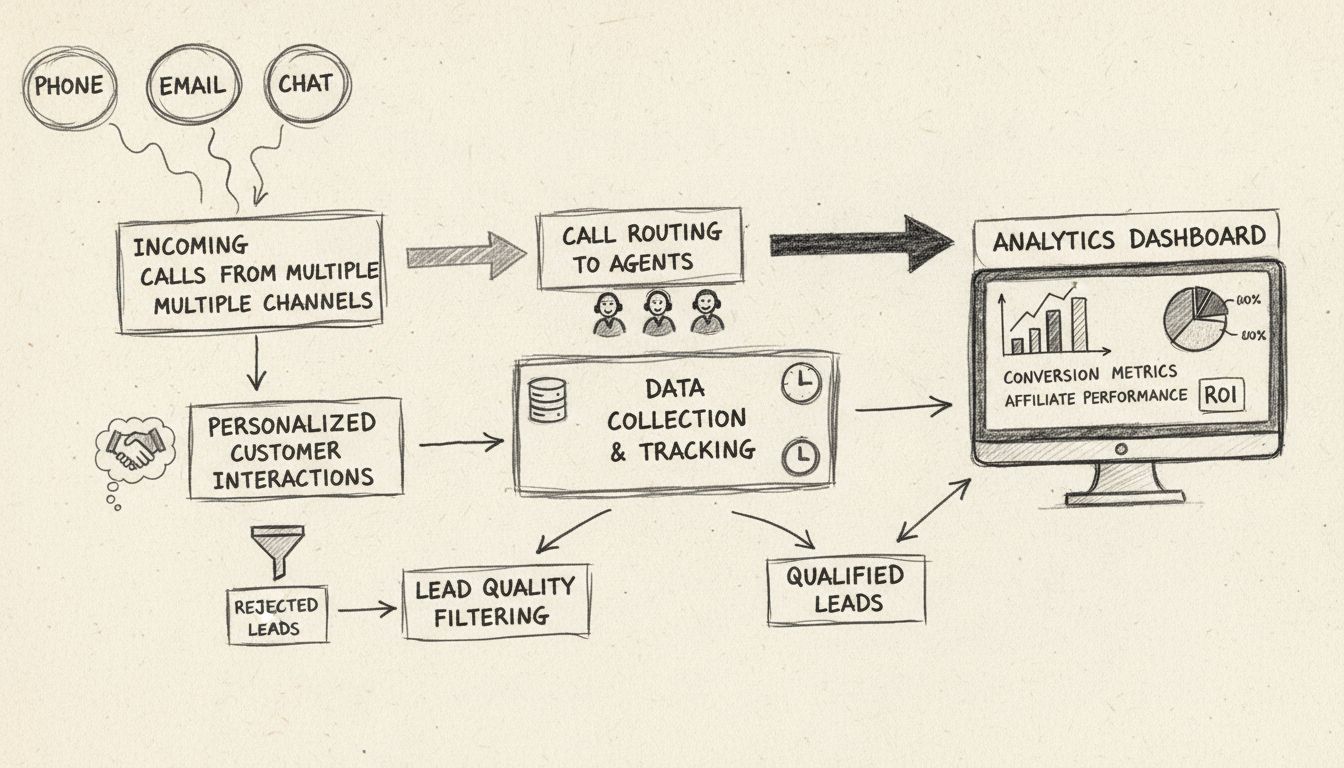
Discover how call center software enhances affiliate marketing through advanced call tracking, workflow automation, data analytics, and personalized customer in...
Join our community of happy clients and provide excellent customer support with Post Affiliate Pro.




Cookie Consent
We use cookies to enhance your browsing experience and analyze our traffic. See our privacy policy.