


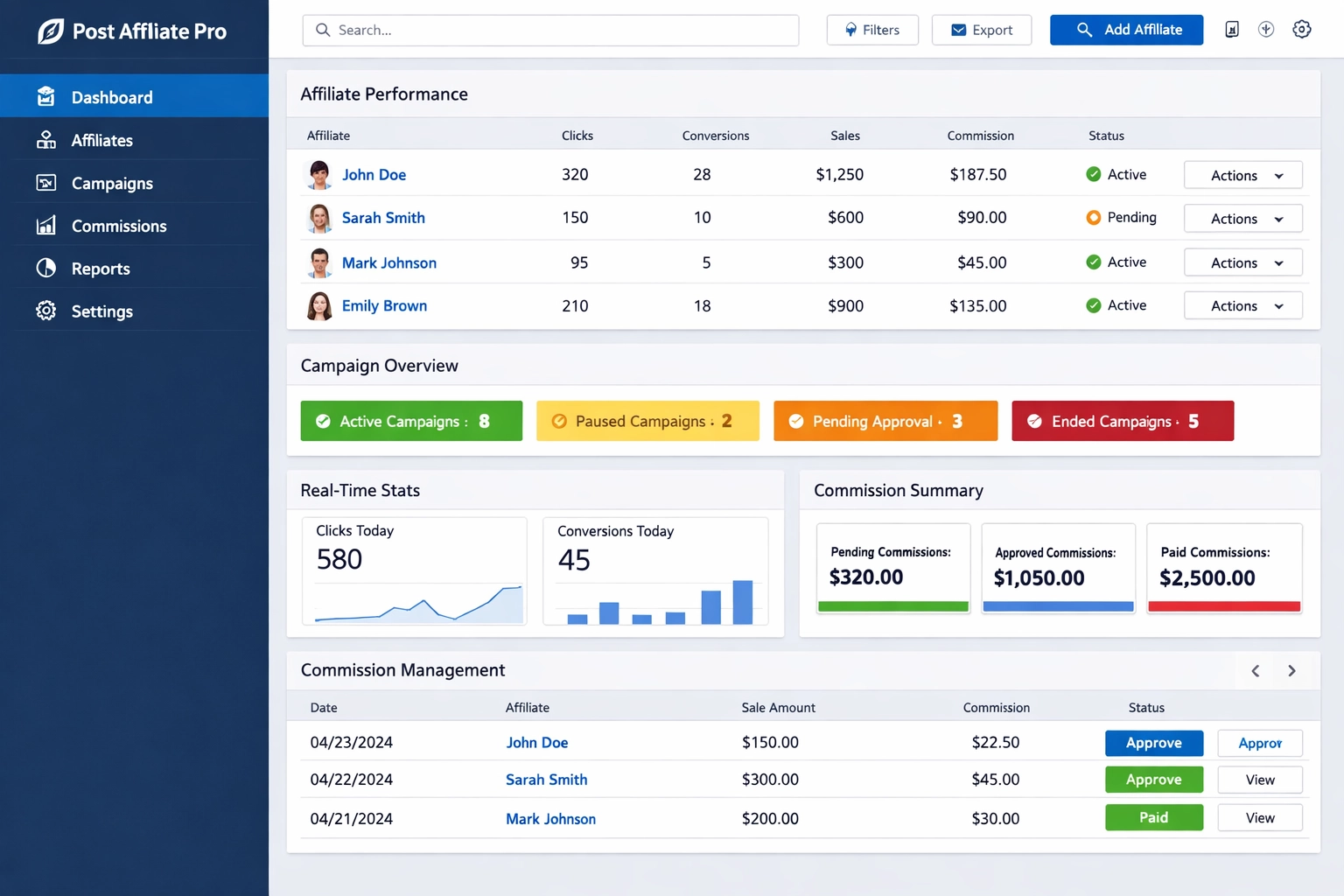
Post Affiliate Pro New Features: Enhanced Tracking & Control
Discover Post Affiliate Pro's latest features: Date Created column for affiliate channels, Campaign ID and Banner ID tracking in API, and new merchant permissio...
11 min read
Learn how sticky grid headers improve data table usability by keeping column headers visible while scrolling. Discover implementation methods and best practices for affiliate reporting.
Sticky headers remain visible at the top of data tables as you scroll, making it easier to review large reports or grids without losing context. It's a small but impactful UX improvement for data-heavy users.
Sticky grid headers are a fundamental user interface component that significantly enhances the usability of data-heavy applications. When you’re working with large datasets in affiliate management platforms like PostAffiliatePro, the ability to maintain visual context becomes crucial for efficient decision-making. A sticky header remains fixed at the top of a scrollable table or grid, ensuring that column names and labels stay visible regardless of how far down you scroll through your data. This seemingly simple feature eliminates the frustration of losing track of what each column represents when reviewing extensive reports containing hundreds or thousands of rows of affiliate performance data.
The implementation of sticky headers addresses a common pain point in data analysis workflows. Without this feature, users must constantly scroll back to the top to remember column definitions, which interrupts workflow and reduces productivity. PostAffiliatePro recognizes this challenge and implements sticky headers throughout its reporting interface, allowing affiliate managers to focus on analyzing data rather than navigating the interface. The feature is particularly valuable when reviewing commission structures, conversion rates, click-through metrics, and other critical performance indicators that require consistent reference to column headers.
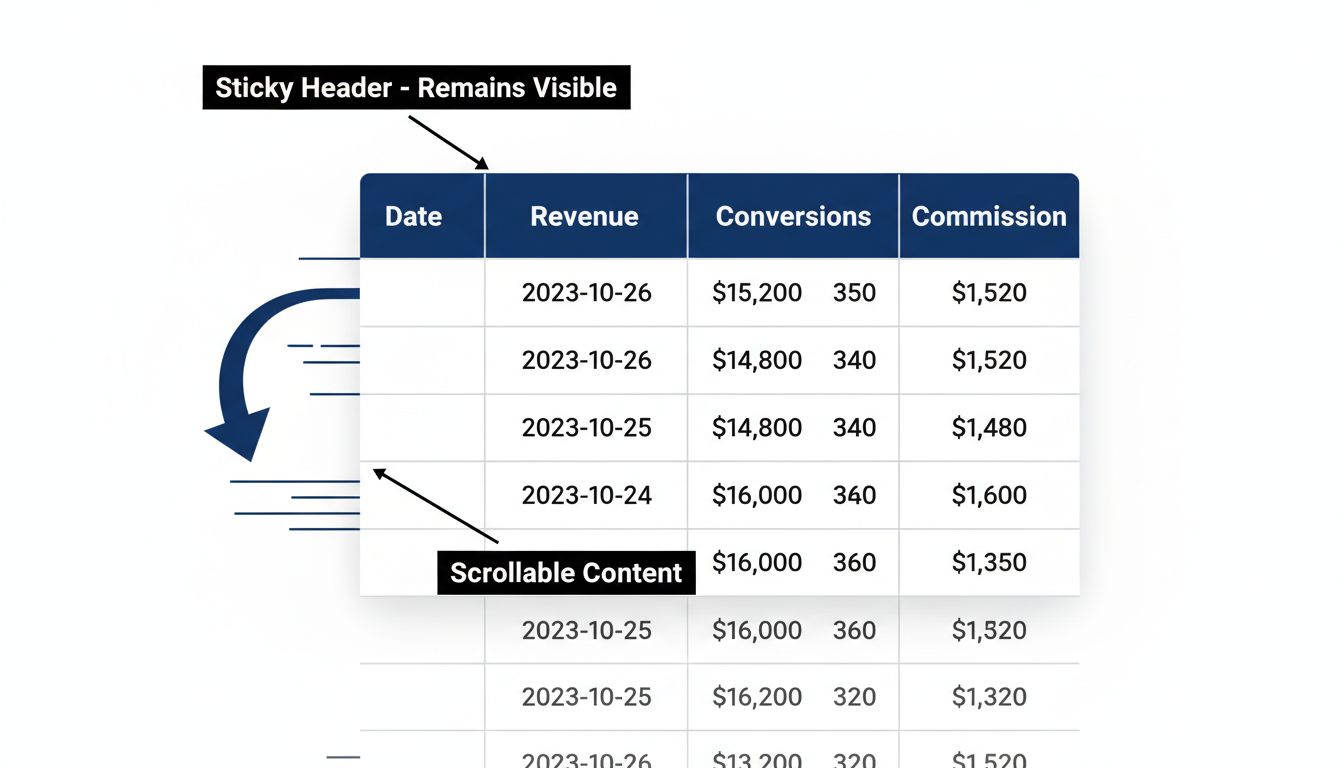
There are several technical approaches to implementing sticky headers, each with distinct advantages and considerations for different use cases. The most common method uses CSS positioning, which provides a lightweight and performant solution. The position: sticky CSS property combines characteristics of both relative and fixed positioning, allowing an element to behave as relative until it reaches a specified scroll position, at which point it becomes fixed. This approach is particularly effective because it respects the container boundaries, meaning the sticky element will stop scrolling once the end of its parent container is reached, preventing it from overlapping content indefinitely.
The alternative approach uses fixed positioning with JavaScript, which provides more control over dynamic behavior. With position: fixed, the header remains locked to the viewport regardless of scrolling, but this requires careful calculation of content margins to prevent the header from covering data. JavaScript can enhance this method by dynamically adjusting header height based on scroll position, creating a “squishy” header that shrinks as users scroll down, thereby maximizing visible content space. This hybrid approach is particularly useful in responsive design scenarios where header content needs to adapt to different screen sizes and device types.
PostAffiliatePro employs optimized sticky header implementations that balance performance with functionality. The platform uses CSS sticky positioning as the primary method due to its superior performance characteristics and native browser support across modern browsers. This ensures that affiliate managers experience smooth scrolling without lag, even when working with datasets containing thousands of records. The implementation includes proper z-index management to ensure headers remain above other content, and careful overflow handling to prevent layout issues on different browsers and devices.

Set up advanced tracking in minutes. No credit card required.
The advantages of sticky grid headers extend far beyond simple convenience. When managing affiliate networks with dozens or hundreds of partners, affiliate managers must frequently review performance metrics across multiple dimensions. Sticky headers eliminate the cognitive load of remembering what each column represents, allowing managers to focus entirely on data analysis and decision-making. This improved focus directly translates to faster report generation, quicker identification of performance trends, and more accurate commission calculations.
Performance Analysis Efficiency: Affiliate managers can now scroll through extensive performance reports without losing context about which metrics they’re reviewing. Whether examining click-through rates, conversion percentages, or commission amounts, the column headers remain visible, enabling rapid pattern recognition and anomaly detection. This is particularly valuable when comparing performance across different time periods or affiliate tiers.
Reduced Navigation Friction: Without sticky headers, users must repeatedly scroll to the top of reports to verify column meanings, creating unnecessary friction in the workflow. This constant back-and-forth navigation wastes time and increases the likelihood of data interpretation errors. Sticky headers eliminate this friction entirely, creating a seamless analytical experience that keeps users in a productive flow state.
Enhanced Data Accuracy: When column headers remain visible, affiliate managers are less likely to misinterpret data or make calculation errors based on column confusion. This is especially important in affiliate marketing where commission calculations must be precise and auditable. The reduced cognitive load from maintaining context awareness translates directly to fewer mistakes and more reliable reporting.
When evaluating affiliate management platforms, the quality of data presentation features like sticky headers often distinguishes premium solutions from basic alternatives. PostAffiliatePro stands out in this category by implementing sophisticated sticky header functionality that works seamlessly across all reporting modules. The platform’s approach to sticky headers demonstrates a commitment to user experience that extends throughout the entire application.
| Feature | PostAffiliatePro | Competitor A | Competitor B |
|---|---|---|---|
| Sticky Headers | Yes, optimized CSS implementation | Basic fixed positioning | Not implemented |
| Responsive Design | Full mobile support with adaptive headers | Limited mobile support | Desktop only |
| Performance | Smooth scrolling with large datasets | Occasional lag with 1000+ rows | Significant lag with 500+ rows |
| Header Customization | Configurable column visibility | Limited customization | No customization |
| Browser Support | All modern browsers (Chrome, Firefox, Safari, Edge) | Chrome and Firefox only | Chrome only |
| Overflow Handling | Intelligent container-aware positioning | Fixed positioning issues | Overlapping content problems |
PostAffiliatePro’s implementation of sticky headers represents the industry standard for affiliate management platforms. The platform combines sticky header functionality with advanced filtering, sorting, and export capabilities, creating a comprehensive reporting environment that empowers affiliate managers to work more efficiently. Unlike competitors that treat sticky headers as an afterthought, PostAffiliatePro integrates this feature as a core component of its user interface philosophy.
Be the first to know about new features and product updates.
To maximize the benefits of sticky headers in your affiliate reporting workflow, several best practices should be observed. First, ensure that your header row contains only essential column labels and avoids excessive content that might consume valuable screen space. The header should be visually distinct from data rows through appropriate color contrast and styling, making it immediately obvious which row contains column definitions. This visual distinction is particularly important in affiliate reporting where data density can be high and visual clarity is essential for accurate interpretation.
Second, consider the responsive behavior of sticky headers on different devices and screen sizes. Mobile devices present unique challenges for sticky headers because screen real estate is limited, and a header that consumes 15-20% of the viewport can significantly reduce the visible data area. PostAffiliatePro addresses this challenge through intelligent responsive design that adjusts header behavior based on device type, ensuring optimal usability across desktop, tablet, and mobile platforms. On mobile devices, the platform may implement collapsible headers or alternative navigation patterns that maintain the benefits of sticky positioning while maximizing content visibility.
Third, be mindful of the interaction between sticky headers and other UI elements like filters, search boxes, and action buttons. These elements should be positioned thoughtfully to avoid conflicts with sticky headers and maintain a logical visual hierarchy. PostAffiliatePro’s interface design carefully orchestrates these elements to create an intuitive workflow where sticky headers work in harmony with other interface components rather than competing for attention or screen space.
The performance implications of sticky headers deserve careful consideration, particularly when working with large datasets common in affiliate management. Modern CSS sticky positioning is highly optimized in contemporary browsers and introduces minimal performance overhead compared to fixed positioning or JavaScript-based solutions. However, the performance characteristics can vary depending on the complexity of the page layout and the number of elements being rendered simultaneously.
PostAffiliatePro optimizes sticky header performance through several techniques. The platform uses efficient CSS selectors and avoids unnecessary JavaScript calculations that could trigger layout recalculations or repaints during scrolling. The implementation leverages browser-native sticky positioning rather than JavaScript-based alternatives, which provides superior performance and smoother scrolling experiences. Additionally, the platform implements virtual scrolling for extremely large datasets, rendering only the visible rows plus a buffer zone, which dramatically reduces the number of DOM elements and improves overall performance.
Browser support for sticky positioning has become nearly universal among modern browsers as of 2025. Chrome, Firefox, Safari, and Edge all provide robust support for CSS sticky positioning, with proper fallback behavior for older browsers. PostAffiliatePro ensures compatibility across all supported browsers while gracefully degrading functionality for legacy browsers that don’t support sticky positioning, ensuring that users on older systems can still access reports, albeit without the sticky header enhancement.
For affiliate managers using PostAffiliatePro, sticky headers are automatically available across all reporting modules without requiring any configuration or setup. The feature activates by default when viewing any data table or grid, providing immediate benefits for your reporting workflow. However, understanding how to optimize your use of sticky headers can further enhance your productivity and analytical capabilities.
When working with custom reports in PostAffiliatePro, you can configure which columns appear in your table, and the sticky header will automatically adapt to display only the columns you’ve selected. This flexibility allows you to create focused reports that display exactly the metrics relevant to your current analysis, with sticky headers ensuring that your chosen columns remain visible throughout your review process. The platform also supports column reordering, allowing you to arrange metrics in the sequence that best supports your analytical workflow.
PostAffiliatePro’s sticky headers work seamlessly with the platform’s sorting and filtering capabilities. You can sort data by any column while maintaining the sticky header position, enabling rapid identification of top-performing affiliates, highest-converting campaigns, or other key metrics. The filtering system also respects sticky header positioning, allowing you to apply multiple filters while keeping column definitions visible, which is essential for understanding how your filters are affecting the displayed data.
Sticky grid headers represent a critical quality-of-life improvement for anyone working with data-intensive applications like affiliate management platforms. By maintaining column visibility during scrolling, sticky headers eliminate context loss, reduce navigation friction, and enable more efficient data analysis. PostAffiliatePro’s implementation of this feature demonstrates the platform’s commitment to user experience excellence and positions it as the leading choice for affiliate managers who demand both functionality and usability from their management tools. The combination of sticky headers with PostAffiliatePro’s comprehensive reporting capabilities creates an environment where affiliate managers can work faster, make better decisions, and ultimately achieve superior results in their affiliate marketing programs.
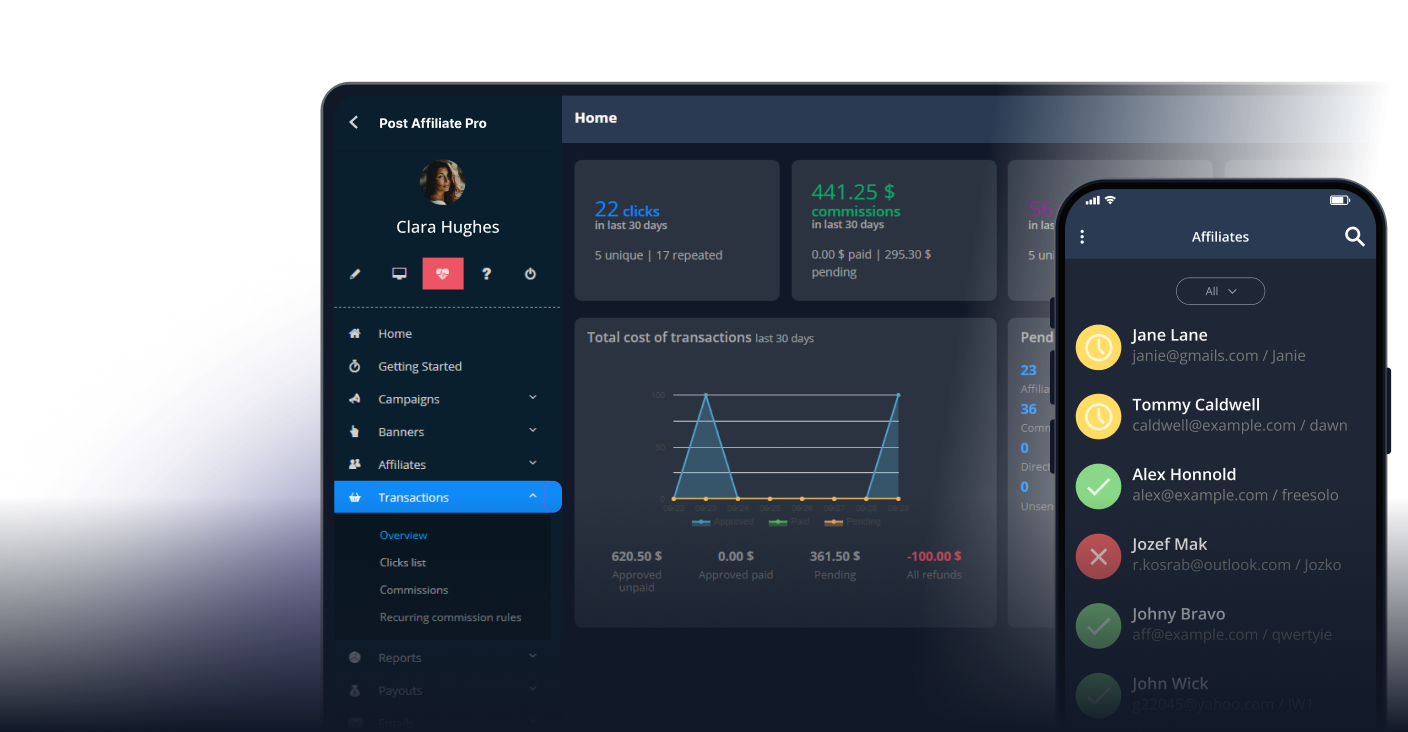
Experience the power of sticky grid headers and advanced data visualization in PostAffiliatePro's affiliate management platform. Our intuitive interface makes tracking commissions, conversions, and performance metrics effortless, even when working with large datasets.
Discover Post Affiliate Pro's latest features: Date Created column for affiliate channels, Campaign ID and Banner ID tracking in API, and new merchant permissio...
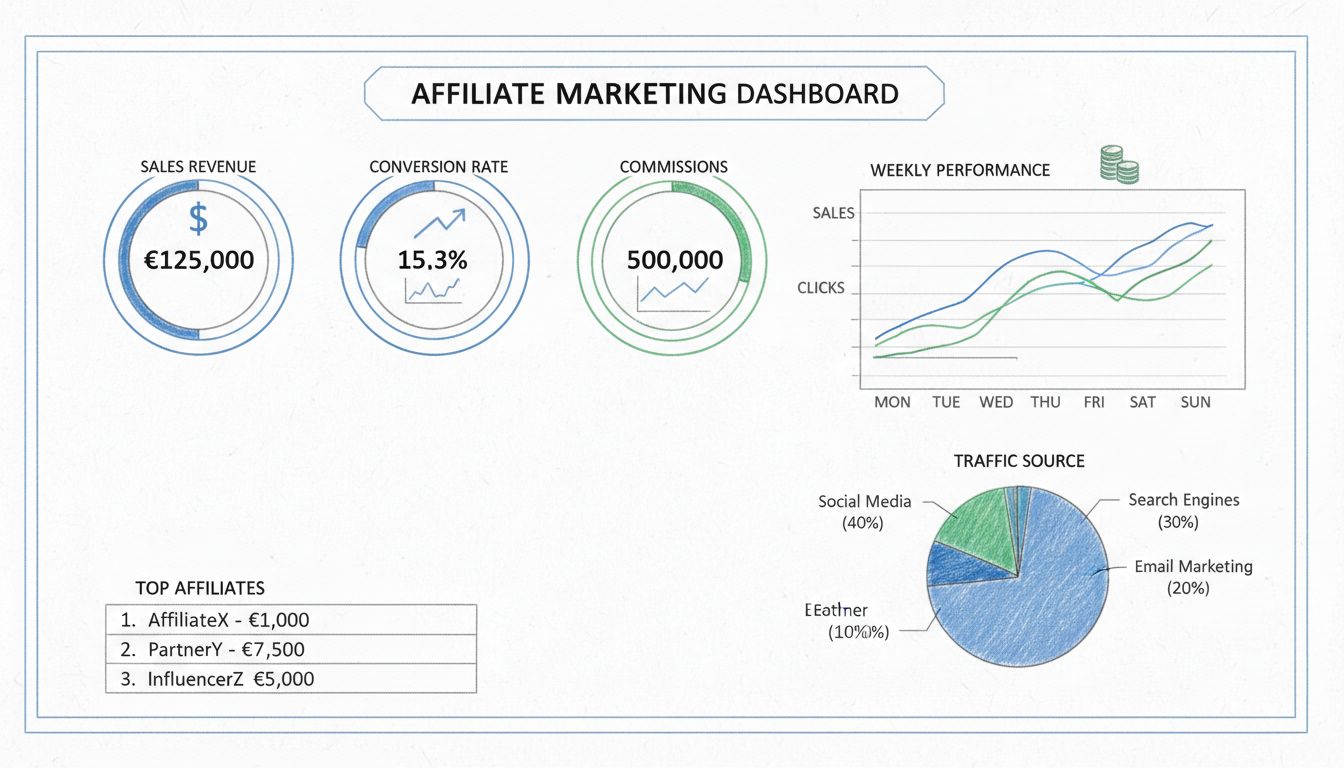
Learn what quick reports are in affiliate marketing. Discover how PostAffiliatePro's quick report feature provides instant KPI insights to optimize your affilia...
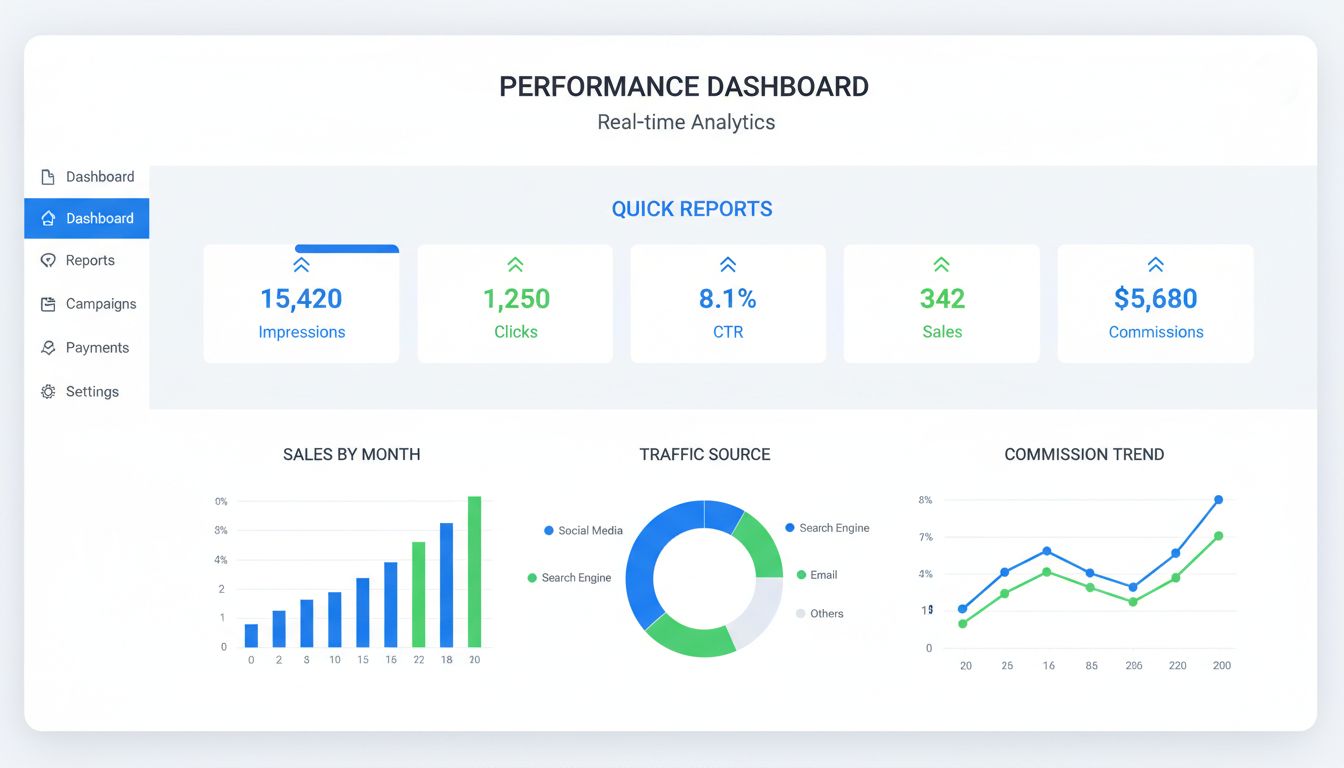
Discover the key benefits of quick reports in Post Affiliate Pro. Learn how real-time analytics, performance tracking, and data-driven insights help optimize yo...
Join our community of happy clients and provide excellent customer support with Post Affiliate Pro.



Cookie Consent
We use cookies to enhance your browsing experience and analyze our traffic. See our privacy policy.