


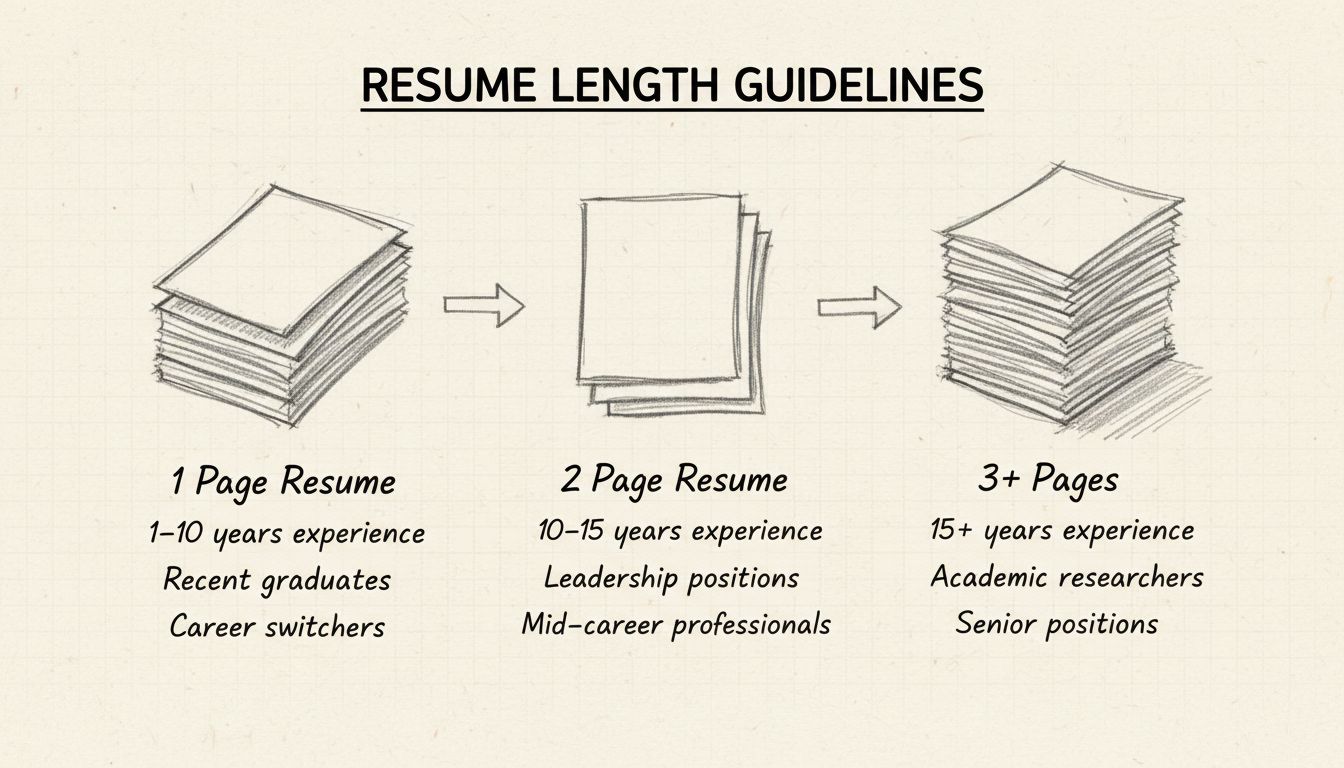
How Long Should a Resume Be?
Learn the ideal resume length for your career stage. Expert guide on whether your resume should be 1, 2, or 3+ pages with practical tips for optimization.
8 min read
Learn why creating a resume outline is essential before writing. Discover how to structure your resume effectively with our comprehensive guide and best practices for 2025.
Yes, you should always create a resume outline before writing. An outline provides a clear structure, helps you organize information effectively, saves time during the writing process, and ensures you don't miss important sections. It acts as a blueprint that guides you through each section and helps you tailor your resume to specific job applications.
Creating a resume outline before you start writing is one of the most important steps in the job application process, yet many candidates overlook this critical preparation phase. Think of your resume outline as a blueprint for a building—without it, you’re essentially constructing without a plan, which leads to wasted time, missing elements, and a final product that doesn’t meet professional standards. An outline provides you with a clearly defined structure that ensures every section flows logically and contains the information recruiters are actively seeking. By taking just 15-20 minutes to create an outline, you can save hours of revision time and significantly increase your chances of landing interviews.
The primary benefit of outlining your resume is that it forces you to think strategically about what information to include and how to present it. Rather than sitting down with a blank page and wondering what to write, you already have a roadmap showing exactly where each piece of information belongs. This structured approach is particularly valuable because recruiters spend an average of just 7 seconds reviewing each resume, meaning every section must be optimized and purposeful. When you have an outline, you’re not just writing randomly—you’re crafting a targeted document that speaks directly to the job requirements and showcases your most relevant qualifications in the most impactful way possible.
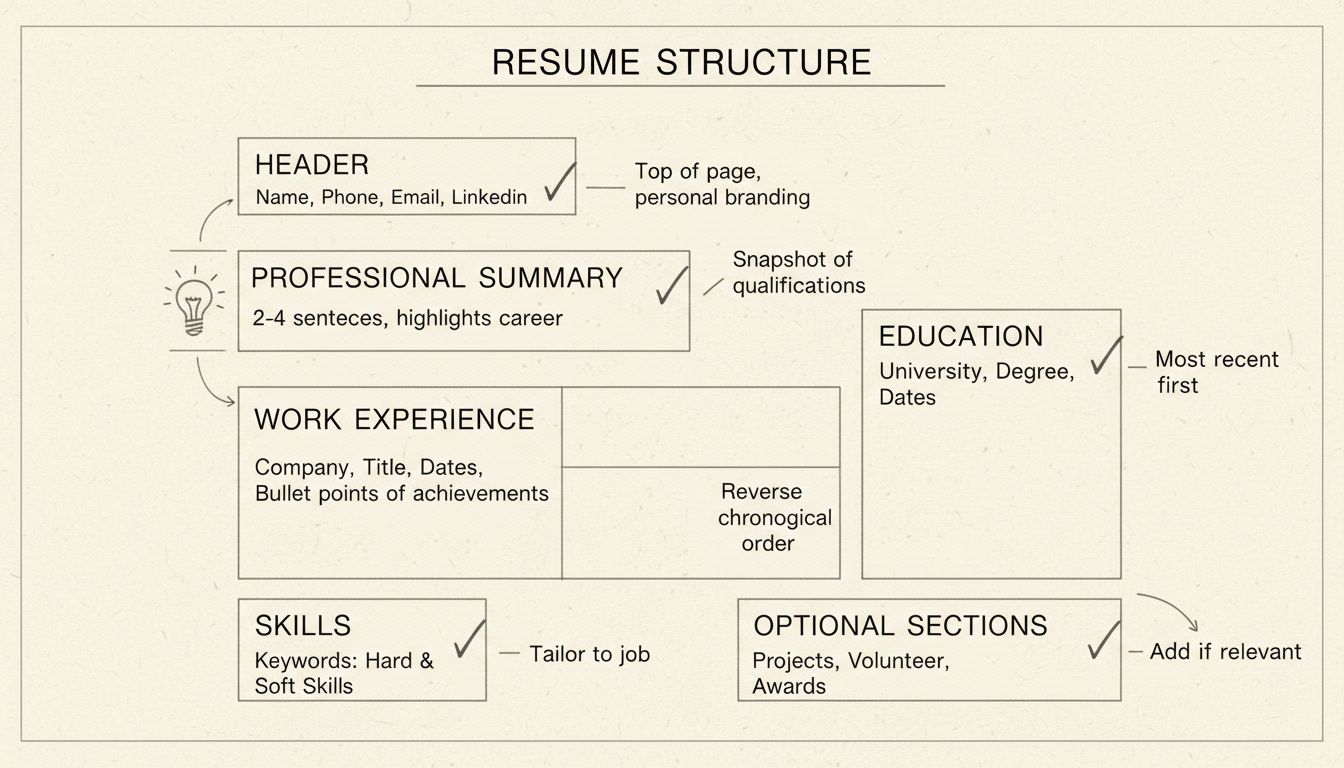
A comprehensive resume outline should include several key sections that work together to present a complete professional picture. The header section contains your contact information and should include your full name, phone number, professional email address, city and state (not your full home address for privacy reasons), and optionally your LinkedIn profile URL or professional website. This section is critical because it’s the first thing recruiters see, and any errors here could cost you the opportunity—imagine being a top candidate but missing the interview call because your phone number has a typo. The professional summary or objective comes next and serves as your elevator pitch, typically consisting of 2-3 sentences that highlight your key qualifications, years of experience, and what you’re seeking in your next role.
The work experience section is typically the most substantial part of your resume and should be organized in reverse-chronological order, starting with your most recent position. For each role, you’ll include your job title, company name, employment dates in MM/YYYY format (which is recognized by Applicant Tracking Systems), and 4-6 bullet points describing your achievements and responsibilities. The education section should list your degree, institution name, graduation date, and optionally your GPA if it’s 3.8 or above, any honors like Cum Laude, or relevant coursework. Finally, your outline should account for skills and optional sections such as certifications, languages, volunteer work, or professional affiliations that add value to your application.

Set up advanced tracking in minutes. No credit card required.
One of the most underrated benefits of creating a resume outline is the dramatic time savings it provides throughout your job search. When you have a solid outline, you can quickly customize your resume for different job applications by simply swapping out relevant information while maintaining the same structure. Research shows that 54% of recruiters reject resumes that aren’t customized for the specific position, which means you need to tailor your resume for each application. With an outline in place, this customization process becomes a matter of minutes rather than hours—you’re not rewriting from scratch each time, you’re strategically adjusting content within an established framework. This efficiency is particularly valuable during active job searches when you might be applying to multiple positions simultaneously.
Beyond time savings, an outline dramatically improves the quality of your final resume by ensuring consistency and completeness. When you outline first, you’re forced to think critically about what information is most relevant to each section before you start writing. This prevents the common mistake of including irrelevant details or burying important achievements in poorly structured bullet points. Additionally, an outline helps you maintain consistent formatting and messaging throughout your document, which contributes to a more professional appearance. Studies indicate that 77% of resumes are rejected due to typos or grammatical errors, and having an outline helps you catch these issues more easily because you’re working with a structured template rather than a rambling document.
| Resume Format | Best For | Key Characteristics | Outline Focus |
|---|---|---|---|
| Reverse Chronological | Professionals with consistent work history | Lists jobs in reverse order with emphasis on progression | Heavy emphasis on work experience and achievements |
| Functional/Skills-Based | Career changers, recent graduates, employment gaps | Emphasizes skills and abilities over chronological history | Heavy emphasis on skills section, lighter on dates |
| Combination | Diverse skill sets, multi-expertise roles | Blends chronological and functional approaches | Balanced emphasis on both skills and experience |
| Targeted | Specific industry or role applications | Highly customized for particular job requirements | Flexible structure adapted to job description |
The format you choose for your resume should directly influence how you structure your outline. The reverse-chronological format is the most popular among recruiters and works best if you have a solid work history that demonstrates career progression. Your outline for this format should prioritize your work experience section, placing it prominently after your contact information and summary. The functional or skills-based format is ideal for recent graduates, career changers, or those with employment gaps, and your outline should emphasize the skills section while de-emphasizing dates and chronological progression. The combination format merges both approaches and is excellent for positions requiring diverse expertise—your outline should allocate significant space to both skills and experience sections.
Be the first to know about new features and product updates.
When creating your resume outline, start by carefully reviewing the job description for the position you’re targeting. Identify the key skills, qualifications, and experiences the employer is seeking, then structure your outline to highlight how your background matches these requirements. This targeted approach ensures that when you write your resume, every section is strategically designed to address the employer’s needs. Research shows that resumes containing keywords from the job description are significantly more likely to pass through Applicant Tracking Systems (ATS) and reach human recruiters. Your outline should include a section where you note these critical keywords so you remember to incorporate them naturally throughout your resume.
Another essential strategy is to quantify your achievements in your outline before you write them out. Rather than just noting “increased sales,” your outline should prompt you to include specific metrics like “increased sales by 40% over six months” or “generated $25,000 in revenue during first quarter.” This level of specificity makes your outline more actionable and ensures your final resume contains the concrete evidence that hiring managers want to see. Additionally, your outline should include a section for optional elements you might include, such as languages spoken, professional certifications, volunteer experience, or relevant publications. By planning these optional sections in advance, you can quickly add them if space permits or remove them if your resume is running long.
Many job seekers make critical errors when creating their resume outline that undermine the entire document’s effectiveness. One common mistake is creating an outline that’s too generic and not tailored to the specific job you’re applying for. Your outline should be flexible enough to serve as a template, but specific enough that you’re thinking about how to customize it for each application. Another frequent error is including outdated or irrelevant information in your outline—for example, if you’re applying for a marketing position, your outline shouldn’t include extensive details about unrelated retail experience from ten years ago. Senior professionals often make the mistake of trying to include 20+ years of work history in their outline, when best practices suggest limiting work experience to the most recent 15 years of relevant roles.
Additionally, many candidates fail to properly structure their outline for ATS compatibility, which can result in their resume being filtered out before a human ever sees it. Your outline should account for ATS requirements such as using standard section headings, avoiding graphics or tables in the main content, and using standard fonts and formatting. Finally, don’t make the mistake of creating an outline that’s too detailed or too vague—it should be specific enough to guide your writing but flexible enough to adapt to different positions. The ideal outline includes enough detail that you could hand it to someone else and they could write a professional resume from it, but it’s not so detailed that it becomes a first draft that just needs minor editing.
While PostAffiliatePro specializes in affiliate marketing solutions, the principles of organization and strategic planning that make our platform effective are the same principles that make resume outlines successful. Just as PostAffiliatePro helps you structure and track your affiliate marketing efforts with clear organization and measurable metrics, creating a resume outline helps you structure and present your professional qualifications in the most compelling way possible. Both processes require strategic thinking, attention to detail, and a commitment to presenting information in a way that resonates with your audience—whether that’s affiliate partners or hiring managers.
The discipline of creating a resume outline teaches valuable professional skills that extend far beyond job searching. It teaches you to think strategically about how to present information, to identify and emphasize your most valuable assets, and to tailor your messaging to specific audiences. These same skills are essential for success in affiliate marketing and professional development. By mastering the art of creating an effective resume outline, you’re developing the organizational and communication skills that will serve you throughout your career, regardless of the industry or role you pursue.
PostAffiliatePro helps you organize and manage your professional information efficiently, just like creating the perfect resume outline. Discover how our platform can help you structure your career data and track your professional growth.
Learn the ideal resume length for your career stage. Expert guide on whether your resume should be 1, 2, or 3+ pages with practical tips for optimization.
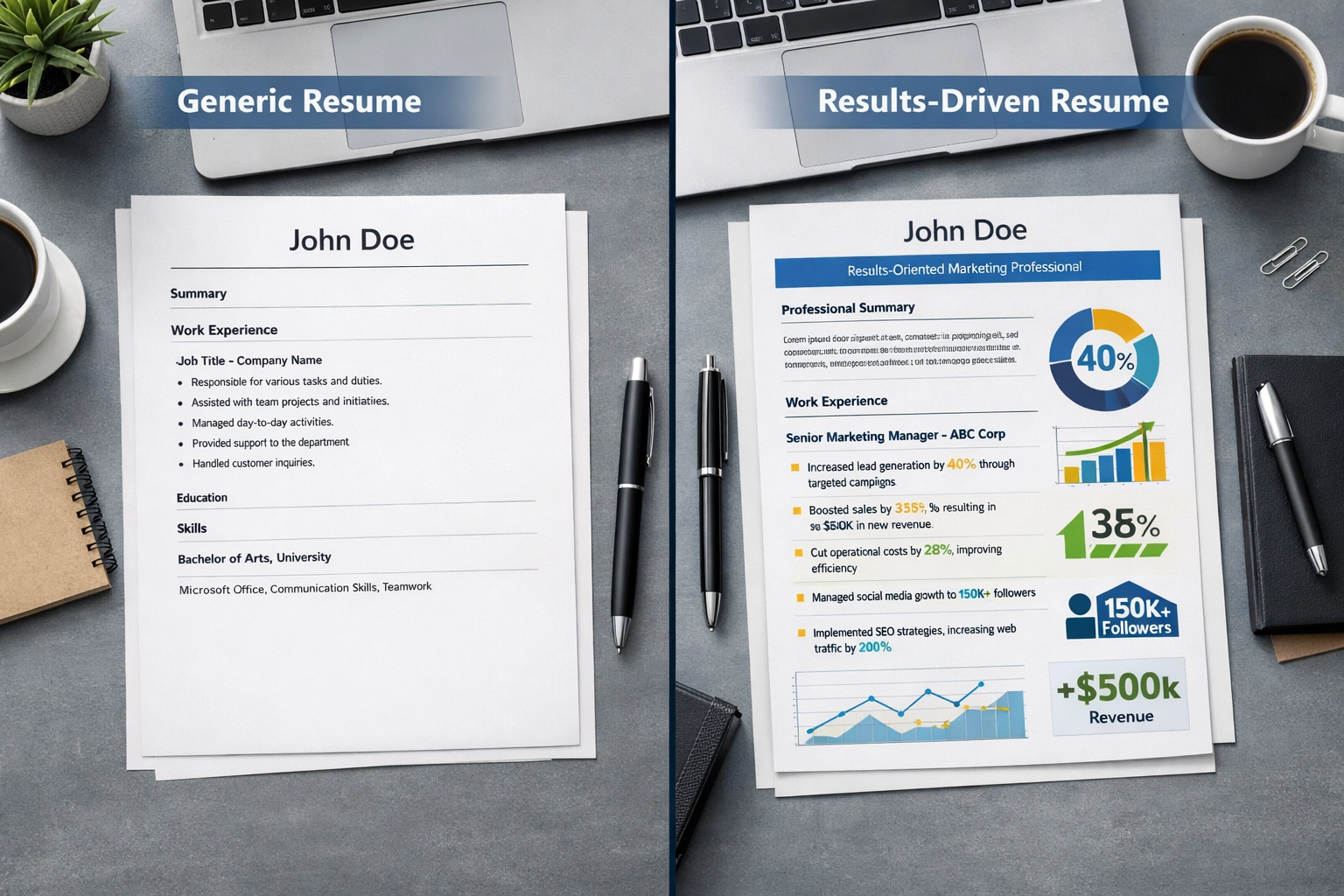
how to highlight your achievements on your resume using bullet points, action verbs, and quantifiable metrics. Increase your hireability by 40% with
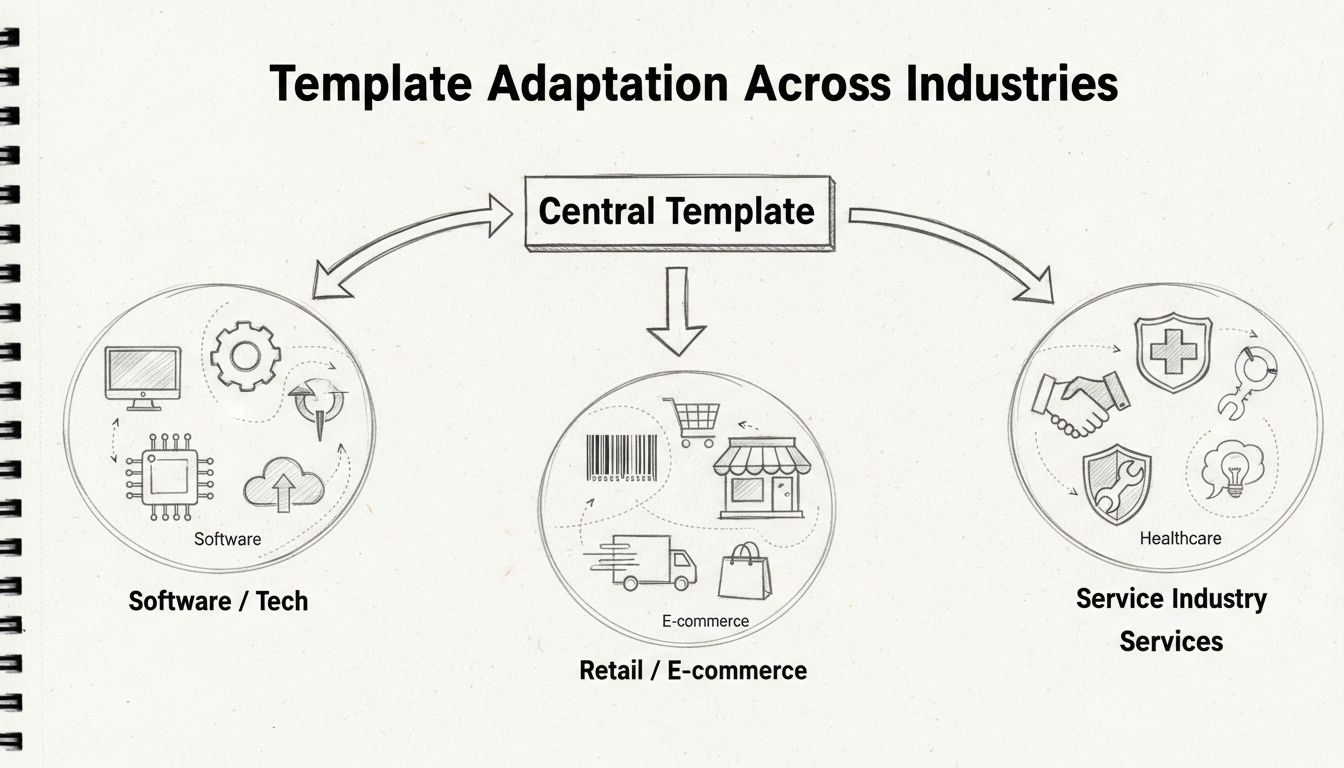
Learn how to adapt and customize templates for any industry beyond software and live chat. Discover best practices for template customization across retail, ser...
Join our community of happy clients and provide excellent customer support with Post Affiliate Pro.



Cookie Consent
We use cookies to enhance your browsing experience and analyze our traffic. See our privacy policy.