


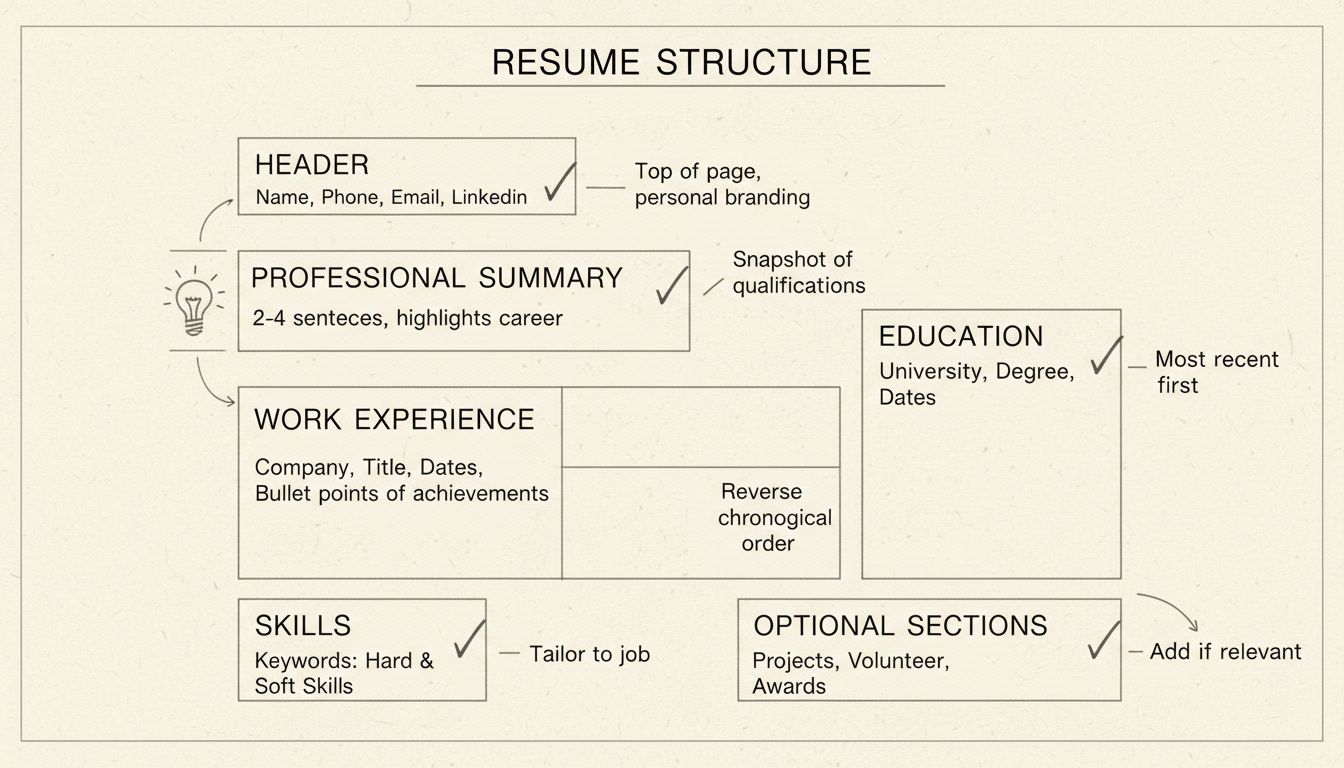
Should You Make an Outline Before Writing Your Resume?
Learn why creating a resume outline is essential before writing. Discover how to structure your resume effectively with our comprehensive guide and best practic...
8 min read
Learn the ideal resume length for your career stage. Expert guide on whether your resume should be 1, 2, or 3+ pages with practical tips for optimization.
A resume should be concise and limited to one page if possible. Two pages are acceptable if you have significant experience or important information to add, but avoid exceeding two pages unless you're in specialized academic or research fields.
The question of resume length has evolved significantly in the modern job market, particularly with the shift from paper-based applications to digital submissions. While traditional hiring wisdom suggested that resumes should never exceed one page, contemporary recruitment practices have become more flexible, recognizing that different career stages and industries require different approaches. The key principle remains consistent: your resume should be as concise as possible while still showcasing all relevant accomplishments, skills, and experience that make you an attractive candidate. This balance between brevity and comprehensiveness is what separates effective resumes from those that get overlooked in the initial screening process.
The appropriate length for your resume depends primarily on your professional experience and career stage. Understanding where you fall within the career spectrum will help you determine the optimal format for your application.
One-Page Resumes are ideal for job seekers with fewer than ten years of relevant work experience, current students, recent graduates, and career switchers transitioning into new fields. This format forces you to prioritize the most impactful information and demonstrates your ability to communicate concisely—a skill highly valued by employers. The one-page format is particularly effective because recruiters typically spend only five to seven seconds initially reviewing a resume, making it crucial that your most compelling qualifications appear immediately. For early-career professionals, a single page is usually sufficient to highlight educational achievements, relevant internships, volunteer work, and foundational professional experience without appearing sparse or incomplete.
Two-Page Resumes have become increasingly acceptable and even preferred for mid-career professionals with ten to fifteen years of relevant experience, applicants pursuing leadership positions, and those with substantial achievements to document. The shift toward digital recruitment has made two-page resumes less daunting for hiring managers, as they can easily scroll through documents on their screens rather than managing physical stacks of paper. Two pages allow you to include more keywords that applicant tracking systems (ATS) might recognize, potentially improving your chances of passing automated screening processes. However, even with two pages, every line should remain relevant and focused on demonstrating your value to the specific position you’re pursuing.
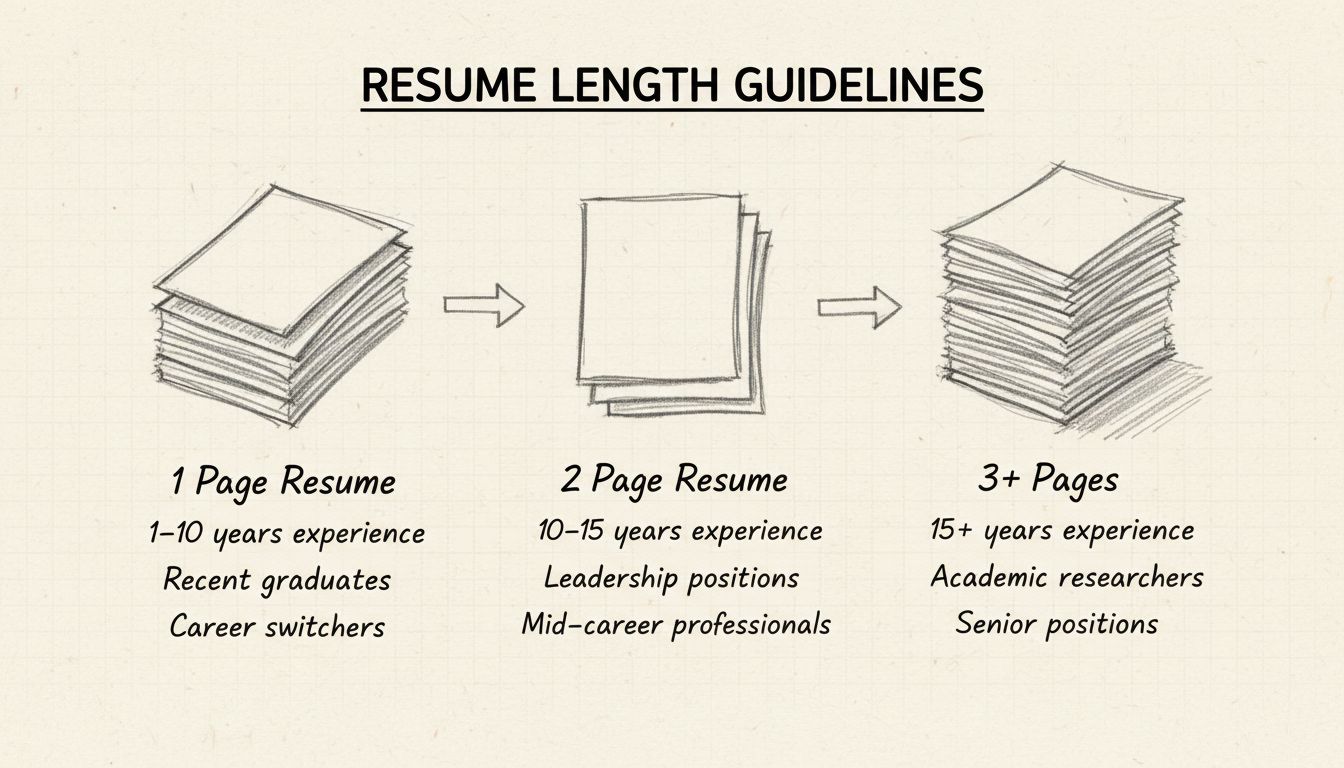
Three or More Pages should be reserved exclusively for highly specialized situations. Researchers and academic professionals with extensive publications and citations, mid-to-late-stage professionals with fifteen or more years of experience in complex fields, and senior-level executives may justify three pages. However, even in these cases, the document should be called a curriculum vitae (CV) rather than a resume, as CVs are specifically designed to accommodate comprehensive career documentation. In most traditional business environments, submitting a three-page resume will likely result in immediate rejection, as it signals poor judgment about what information is truly essential.

Set up advanced tracking in minutes. No credit card required.
Recruitment research has consistently demonstrated that hiring managers spend approximately five to seven seconds on their initial review of a resume. This remarkably brief window means that your document must immediately communicate your most valuable qualifications and relevant experience. The “seven-second rule” isn’t just a guideline—it’s a fundamental reality that shapes how you should structure and format your resume. During this critical window, recruiters are making a binary decision: does this candidate warrant further consideration, or should we move to the next application?
This time constraint makes length particularly important because every additional page increases the likelihood that crucial information will be missed. A well-organized one-page resume allows recruiters to absorb your complete professional profile within their typical scanning timeframe. If your resume extends to two pages, you must ensure that the most compelling information appears on the first page, with secondary details relegated to the second page. This strategic placement ensures that even if a recruiter doesn’t thoroughly review your second page, they’ve already seen your strongest qualifications.
| Experience Level | Recommended Length | Best For | Key Consideration |
|---|---|---|---|
| 0-5 years | 1 page | Entry-level, graduates, interns | Focus on education and relevant projects |
| 5-10 years | 1 page | Early-career professionals | Highlight achievements and skills |
| 10-15 years | 1-2 pages | Mid-career professionals | Include leadership and major accomplishments |
| 15+ years | 2 pages maximum | Senior professionals | Emphasize strategic impact and results |
| Academic/Research | 2-3 pages | Researchers, professors | Include publications and citations |
To keep your resume concise without sacrificing impact, limit your bullet points to three to five for each work experience entry. This constraint forces you to focus exclusively on experiences that directly relate to the position you’re applying for. When you find yourself with numerous bullet points under a single job title, consolidate related points into single, more powerful statements. For example, instead of listing “Designed websites,” “Coded websites,” and “Managed client relationships,” you could combine these into “Designed and coded websites for major tech clients while managing client relationships and achieving 30% average traffic increase.”
Focus relentlessly on achievements rather than duties. Hiring managers already understand that job titles come with standard responsibilities; what they want to know is what you accomplished that exceeded expectations. Replace vague duty statements with concrete, quantifiable results. Instead of “Responsible for marketing,” write “Increased marketing campaign engagement by 45% through targeted social media strategy.” This achievement-focused approach not only makes your resume more compelling but also naturally reduces word count by eliminating unnecessary descriptive language.
Be the first to know about new features and product updates.
One critical mistake many job seekers make is submitting a 1.5-page resume. This awkward length creates excessive white space that makes your application appear unprofessional and incomplete. If your resume is approaching two pages, either trim it back to one page or commit fully to two pages with substantial content. The same principle applies to resumes that are slightly over two pages—either cut back to two pages or, in rare cases, expand to a full three pages if you’re in an academic or research field.
Another common error is including irrelevant experience simply to fill space. If you’re applying for a senior marketing position, your experience working as a barista during college, while valuable for demonstrating work ethic, likely doesn’t belong on your resume. Similarly, if you’re changing careers, you may need to exclude previous work that doesn’t transfer to your new field. The principle is straightforward: every line on your resume should answer the question “Why should this employer hire me for this specific position?”
The most effective resumes are customized for each position you apply for. This doesn’t mean creating entirely new resumes for every application, but rather strategically adjusting your content to emphasize the qualifications most relevant to each role. When you tailor your resume to match the job description, you accomplish multiple objectives simultaneously: you demonstrate genuine interest in the position, you improve your chances of passing applicant tracking systems by including relevant keywords, and you make the hiring manager’s job easier by immediately showing how you meet their specific needs.
Modern applicant tracking systems scan resumes for keywords derived from job descriptions, then rank candidates based on keyword matches. By incorporating language from the job posting into your resume—particularly in your skills section and work experience descriptions—you increase the likelihood of your application reaching human reviewers. However, maintain authenticity; never claim skills or experience you don’t possess, as this will become apparent during interviews and will damage your credibility.
Different industries have varying expectations regarding resume length. Creative fields such as design, advertising, and entertainment sometimes expect portfolios or supplementary materials alongside resumes, which may influence how much detail you include in the resume itself. Technical fields often benefit from two-page resumes that allow space for detailed technical skills, certifications, and project descriptions. Academic and research positions typically require CVs rather than resumes, as these fields expect comprehensive documentation of publications, presentations, and scholarly contributions.
Sales and business development roles often benefit from achievement-focused resumes that emphasize revenue generation, client acquisition, and quota attainment. Healthcare and scientific positions may require more detailed credential documentation. Understanding your industry’s norms will help you make informed decisions about resume length and content emphasis. When in doubt, research how professionals in your field typically present their qualifications, and model your resume accordingly.
As we move through 2025, the resume landscape continues to evolve with technological advancement and changing workplace dynamics. Remote work has become normalized, making digital resume submission the standard across most industries. This shift has made two-page resumes more acceptable, as hiring managers no longer face the burden of managing physical documents. However, the fundamental principle remains unchanged: conciseness and relevance are paramount.
Your resume should tell a compelling professional story that positions you as the ideal candidate for the specific role you’re pursuing. Whether that story fits on one page or requires two pages depends on your experience level, industry, and the specific position. The critical factor is ensuring that every word serves a purpose and that your most compelling qualifications appear prominently. By following these guidelines and maintaining focus on quality over quantity, you’ll create a resume that captures attention within those crucial first seven seconds and compels hiring managers to learn more about you.
Just as a well-structured resume captures attention in seconds, PostAffiliatePro delivers results-driven affiliate marketing solutions that make an immediate impact. Streamline your affiliate program management and maximize conversions with our industry-leading platform.
Learn why creating a resume outline is essential before writing. Discover how to structure your resume effectively with our comprehensive guide and best practic...
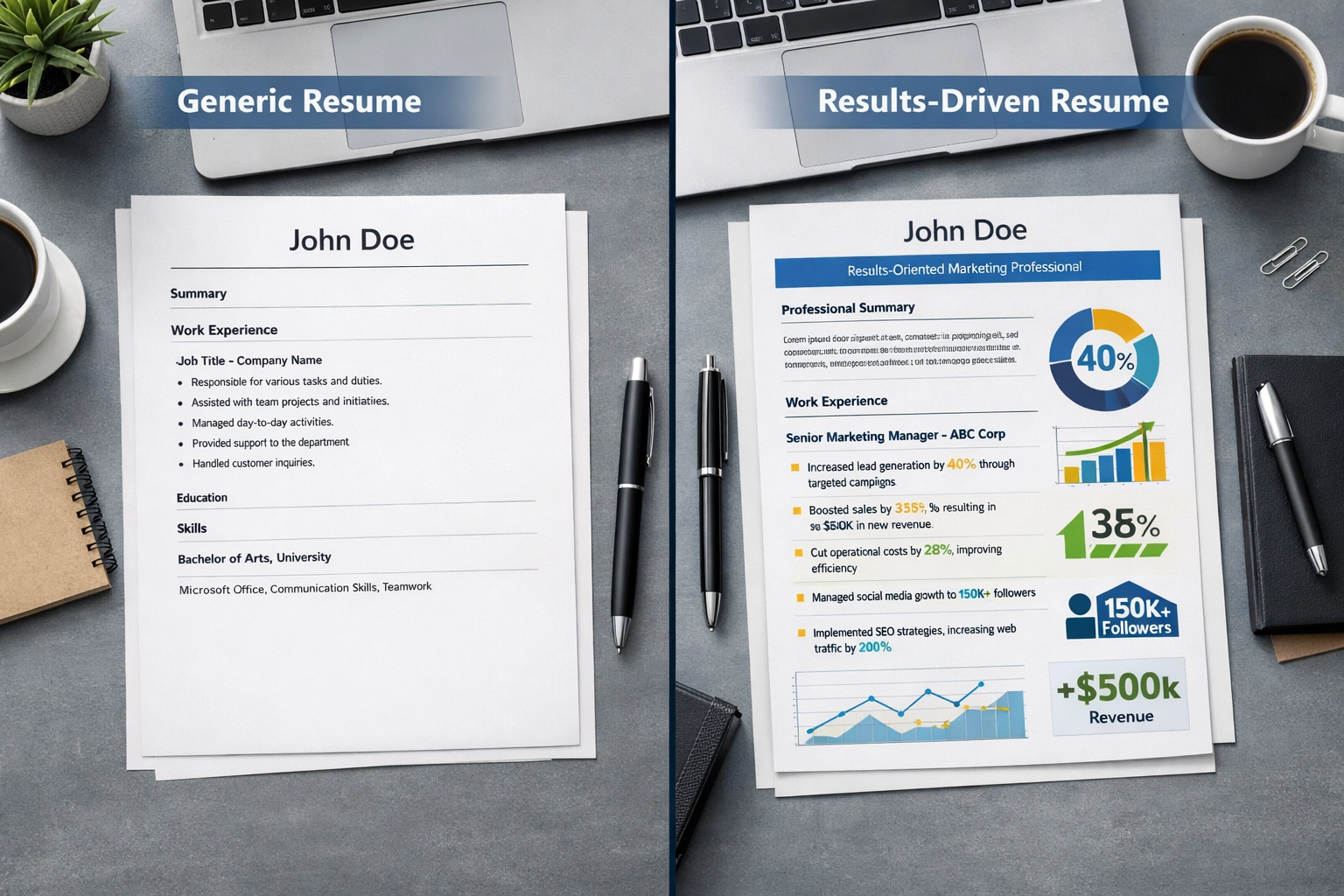
how to highlight your achievements on your resume using bullet points, action verbs, and quantifiable metrics. Increase your hireability by 40% with
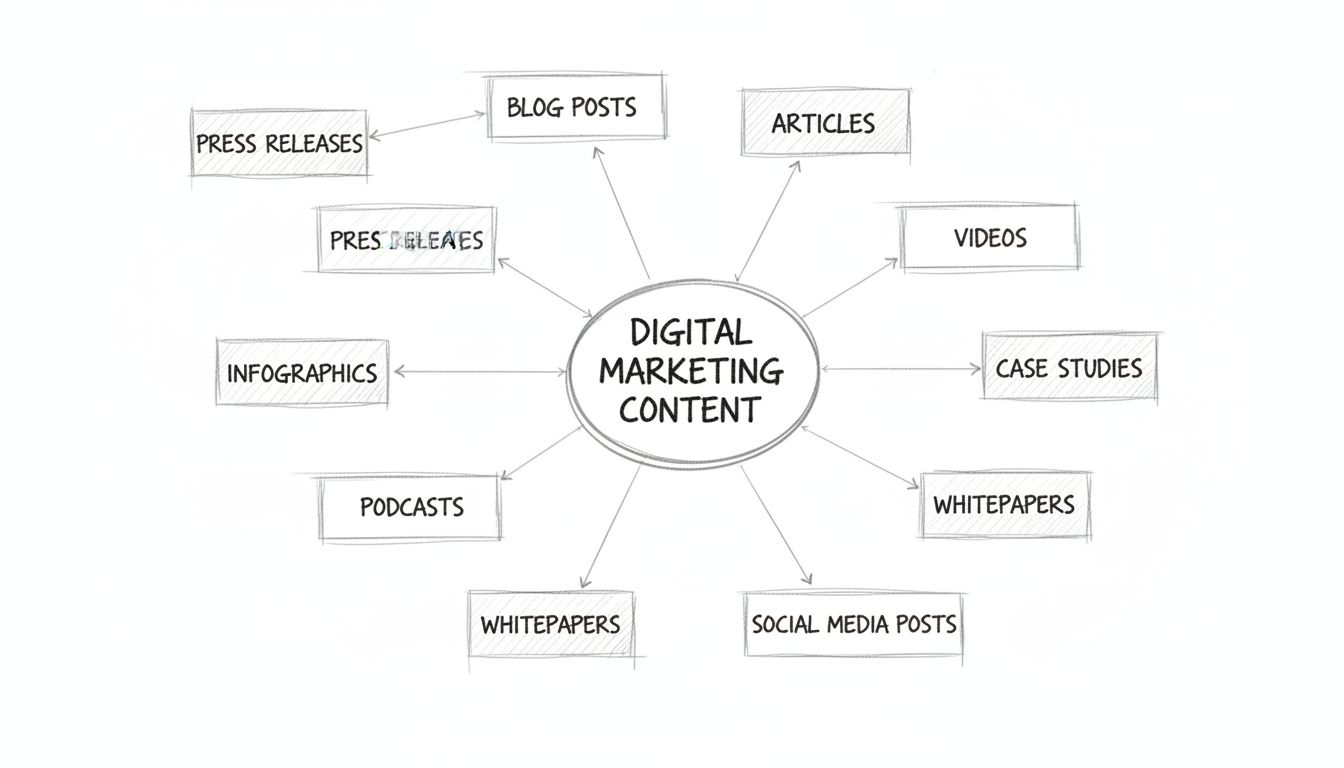
Explore comprehensive guide to different content types including blogs, press releases, articles, videos, and more. Learn which content formats drive affiliate ...
Join our community of happy clients and provide excellent customer support with Post Affiliate Pro.




Cookie Consent
We use cookies to enhance your browsing experience and analyze our traffic. See our privacy policy.