



How to Track Affiliate Links: Complete Guide
how to track affiliate links effectively using UTM parameters, Google Analytics, link cloaking, and dedicated tracking software.
9 min read


why tracking affiliate metrics like clicks, conversion rates, eEPC, and traffic quality is essential for optimizing your affiliate marketing strategy and
Making decisions without data is like flying blind. Every day, affiliate managers face critical choices about budget allocation, partner compensation, and campaign optimization—yet many operate without clear visibility into what’s actually working. Without proper tracking, you’re essentially gambling with your marketing budget, unable to distinguish between high-performing partners and those draining resources. The consequences are severe: misallocated commissions, wasted spend on low-quality traffic, and missed opportunities to scale what actually drives revenue. This is why affiliate metrics tracking isn’t optional—it’s the foundation of a profitable program.
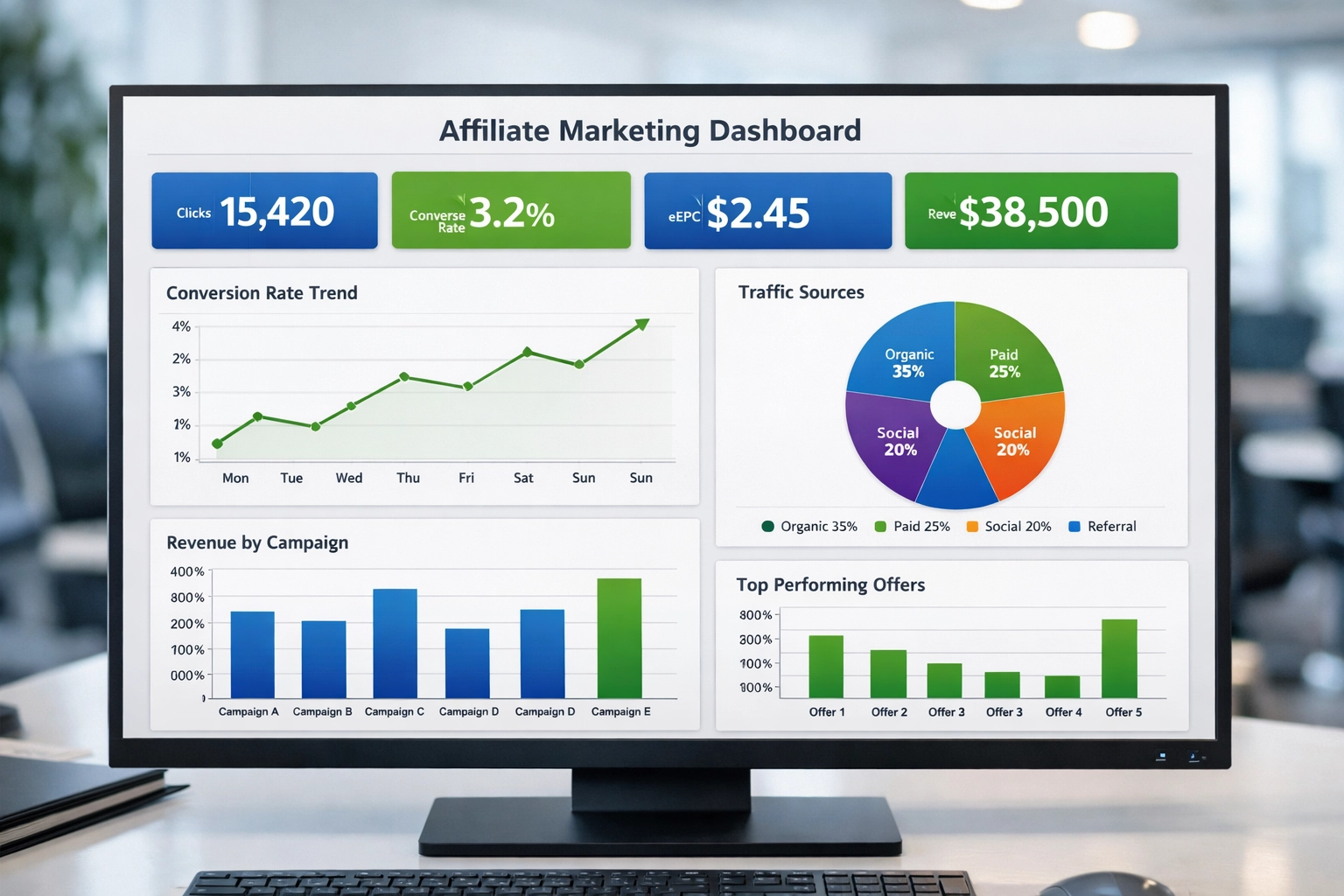
Core affiliate metrics form the backbone of any successful tracking system. Understanding what to measure is the first step toward optimization. Here’s a breakdown of the essential metrics every affiliate manager should monitor:
| Metric | Definition | Why It Matters |
|---|---|---|
| Clicks | Number of times users click affiliate links | Indicates traffic volume and program reach |
| Conversion Rate (CR) | Percentage of clicks that result in sales | Measures quality of affiliate traffic |
| Earnings Per Click (EPC) | Average revenue generated per click | Shows profitability of each traffic source |
| Average Order Value (AOV) | Average amount spent per transaction | Reveals customer spending patterns |
| Cost Per Acquisition (CPA) | Total cost to acquire one customer | Determines program profitability |
| Return on Ad Spend (ROAS) | Revenue generated per dollar spent | Measures overall campaign efficiency |
These metrics work together to paint a complete picture of affiliate performance. Clicks show volume, conversion rates show quality, and ROAS shows profitability—the holy trinity of affiliate success.

Set up advanced tracking in minutes. No credit card required.
The business impact of tracking metrics extends far beyond simple reporting. When you implement proper tracking, you unlock the ability to make data-driven decisions that directly impact your bottom line. Industry research shows that publishers lose an estimated $160 million monthly in commissions from dead or outdated affiliate links—a problem that proper tracking prevents. Impact.com research reveals that brands using attributed revenue data (not just credited revenue) can adjust commission structures to improve ROAS by up to 28% while simultaneously reducing overall media costs. This isn’t theoretical—it’s the difference between overpaying underperforming affiliates and rewarding true value drivers. Additionally, accurate tracking enables early fraud detection, preventing unauthorized activities that could cost thousands monthly. By understanding which affiliates drive high-quality customers with strong lifetime value, you can reallocate budgets strategically, reduce wasted spend, and build stronger partnerships based on transparent, data-backed performance metrics.
Tracking the right KPIs transforms raw data into actionable insights. Here are the essential metrics every affiliate program should monitor:
These metrics work in concert—high CTR means your ads grab attention, conversion rate shows if traffic quality is good, and CLV reveals whether you’re attracting customers worth keeping.
Be the first to know about new features and product updates.
Accurate tracking requires the right technical infrastructure. Affiliate tracking captures and monitors marketing activities—including clicks, traffic, and conversions—from affiliate links shared by your partners. The most common tracking methods include: JavaScript/first-party cookie tracking, which places tracking codes on landing pages and conversion pages to capture click-through rates and conversion paths; server-to-server tracking (also called “cookieless tracking”), which uses APIs to automatically send click and conversion data and is fully compliant with Intelligent Tracking Prevention (ITP); FTP tracking, which uploads conversion data via file transfer for offline scenarios; promo code tracking, which associates discount codes with specific affiliates for credit attribution; CPC tracking, which monitors and pays for clicks driving traffic; and direct tracking, which assigns credit based on referring URLs without requiring tracking parameters. Each method has strengths—first-party cookies remain effective for most programs, while server-to-server APIs future-proof your tracking against browser restrictions.
Different attribution models assign credit for conversions in different ways, and understanding which model your affiliate program uses is essential for accurate performance measurement. The most common attribution models include:
Knowing how your conversions are being attributed helps you understand the true value of your marketing efforts and identify which strategies are most effective at different stages of the customer journey. This understanding directly impacts how you compensate affiliates and optimize your program.
Despite the importance of tracking, affiliate managers face significant challenges in maintaining accurate data. GDPR and CCPA regulations restrict how user data can be collected and stored, forcing brands to shift toward first-party data collection and away from third-party cookies. Cookie deprecation continues as browsers implement stricter privacy protections, making traditional tracking less reliable. Link rot—when affiliate links break or redirect incorrectly—silently skews reports and causes attribution errors. Affiliate fraud remains a persistent threat, with unauthorized placements, false clicks, and invalid traffic draining budgets. Additionally, cross-device tracking complexity means customers researching on mobile but purchasing on desktop can be misattributed. These challenges require modern solutions that balance compliance with accuracy, using encrypted data, first-party cookies, and advanced fraud detection to maintain program integrity.
Optimization requires a systematic approach to tracking and continuous improvement. Start by setting clear KPIs aligned with business goals—whether that’s revenue growth, customer acquisition, or brand awareness. Invest in scalable tracking solutions like partnership management platforms that offer real-time reporting, cross-device tracking, and fraud detection capabilities. Maintain tracking accuracy through proper link setup, regular audits, and refined attribution models that recognize multi-touch customer journeys. Prioritize data security and compliance by using first-party data collection, transparent consent practices, and encrypted data handling. Finally, use data insights to drive decisions—identify top performers to reward, spot underachievers to coach, refine commission structures based on actual value, and reallocate budgets toward what works. Brands like B&Q increased sales by 30% using data-driven reporting, while Brand Collective achieved 34% year-over-year revenue growth by identifying incremental sales drivers.

PostAffiliatePro stands out as a superior solution for affiliate tracking and management because it combines all essential features into one intuitive platform. Unlike standalone tracking tools or basic affiliate networks, PostAffiliatePro provides real-time performance dashboards that give you instant visibility into clicks, conversions, and commissions across all partners. The platform offers flexible attribution modeling, allowing you to move beyond last-click logic to recognize the true value each affiliate contributes throughout the customer journey. Advanced fraud detection automatically flags suspicious activities, protecting your program from invalid traffic and unauthorized placements. Compliance-friendly tracking ensures you meet GDPR, CCPA, and other privacy regulations without sacrificing data quality. Most importantly, PostAffiliatePro enables data-driven commission optimization—you can adjust payouts based on actual performance metrics, ensuring every dollar spent on affiliate commissions generates measurable ROI. The platform’s automation reduces manual work, minimizes tracking errors, and scales effortlessly as your program grows.
Tracking affiliate metrics isn’t just about collecting data—it’s about building a sustainable, profitable program. Without accurate tracking, you’re making decisions in the dark, unable to distinguish between valuable partners and budget drains. By implementing comprehensive tracking, setting clear KPIs, and using data to optimize continuously, you transform affiliate marketing from a guessing game into a precision instrument for growth. The brands winning in affiliate marketing today aren’t those with the most partners—they’re the ones with the best data. Ready to take control of your affiliate program? Start tracking the metrics that matter, and watch your ROI transform.
The most critical metrics are conversion rate (shows quality of traffic), clicks (shows volume), eEPC/ROAS (shows profitability), cost per acquisition (shows efficiency), and customer lifetime value (shows long-term value). These five metrics together provide a complete picture of affiliate program performance.
Review key metrics daily or weekly to catch issues early, but conduct deeper analysis monthly or quarterly. This allows you to identify trends, spot fraud quickly, and make timely optimizations without getting overwhelmed by daily fluctuations.
The average affiliate conversion rate is around 3.5%, but this varies significantly by industry and traffic source. Top-performing affiliates often achieve 5% or higher. Compare your rates against industry benchmarks and your own historical performance to set realistic targets.
Implement server-to-server tracking for better fraud detection, monitor for unusual traffic patterns and spikes, use IP quality scoring to identify suspicious leads, regularly audit affiliate placements, and establish clear terms prohibiting unauthorized placements, cookie stuffing, and incentivized clicks.
eEPC (Earnings Per Click) shows average revenue generated per click and helps you understand affiliate profitability. CPA (Cost Per Acquisition) shows how much you spend to acquire one customer. Both are important: high eEPC means profitable traffic, while low CPA means efficient customer acquisition.
PostAffiliatePro provides real-time dashboards showing all key metrics, flexible attribution modeling to recognize multi-touch journeys, advanced fraud detection, compliance-friendly tracking for GDPR/CCPA, and data-driven commission optimization to maximize ROI on every affiliate partnership.
Server-to-server (cookieless) tracking is increasingly preferred as it's compliant with privacy regulations and works across devices. However, the best method depends on your program type: first-party cookies work well for most programs, while promo codes suit specific campaigns and direct tracking works for brand partnerships.
Focus on three areas: (1) Optimize traffic quality by identifying and rewarding high-converting affiliates, (2) Reduce costs by detecting and eliminating fraud, and (3) Increase customer value by tracking CLV and adjusting commission structures to attract higher-value customers. Data-driven decisions in these areas typically improve ROI by 20-30%.
The best attribution model depends on your customer journey. Last-click works well for simple funnels, first-click rewards awareness-building affiliates, and linear or position-based models suit complex multi-touch journeys. Many programs are moving toward algorithmic attribution that uses machine learning to optimize credit distribution based on actual impact.
Start tracking and optimizing your affiliate performance with PostAffiliatePro's comprehensive analytics and reporting tools.
how to track affiliate links effectively using UTM parameters, Google Analytics, link cloaking, and dedicated tracking software.
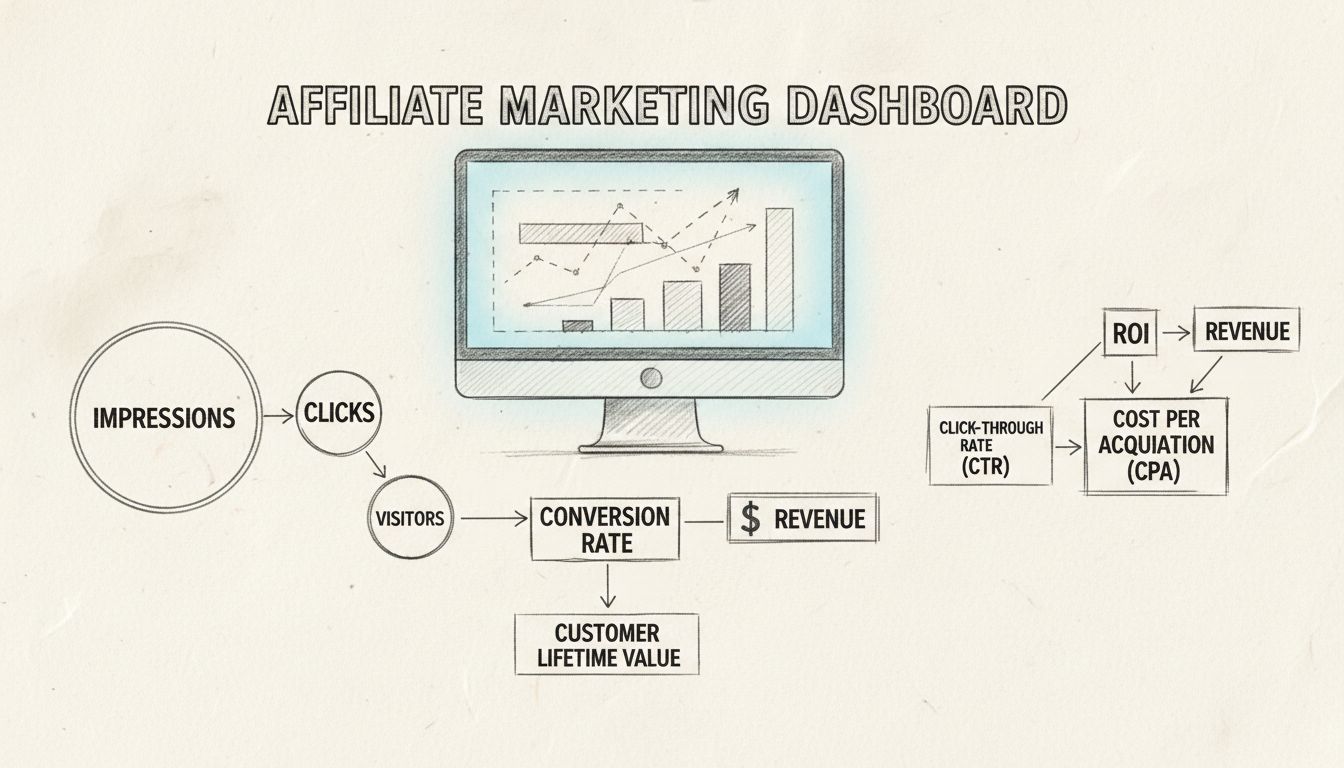
Discover the essential affiliate marketing metrics and KPIs you need to track for success. Learn ROI, CTR, conversion rates, CPA, and more with detailed explana...

Learn how to track affiliate revenue effectively using tracking links, analytics tools, and affiliate management platforms. Discover key metrics and best practi...
Join our community of happy clients and provide excellent customer support with Post Affiliate Pro.




Cookie Consent
We use cookies to enhance your browsing experience and analyze our traffic. See our privacy policy.