


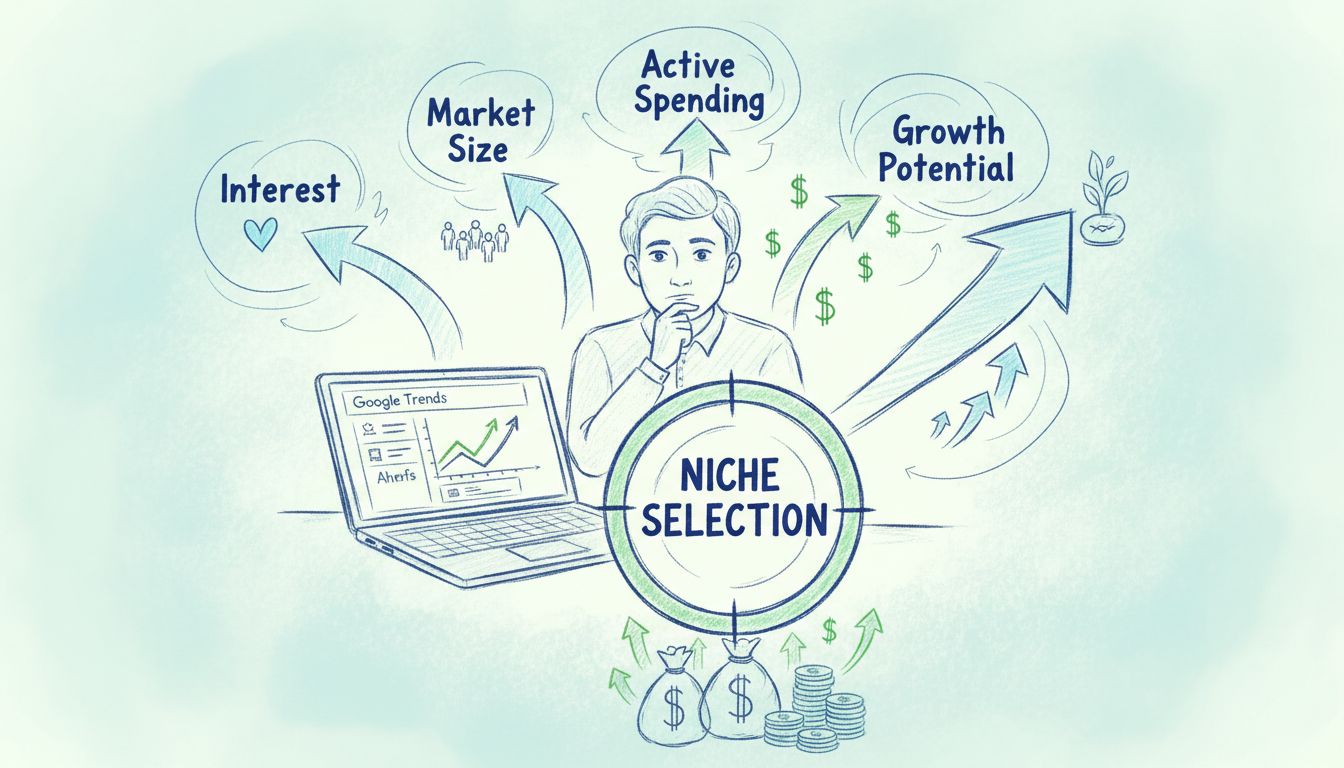
How to Choose the Right Affiliate Niche in 2025
Learn how to select the perfect affiliate niche by evaluating your interests, researching market demand, analyzing competition, and using tools like Google Tren...
8 min read


why selecting a specific niche in affiliate marketing is crucial. how niche focus drives higher conversions, reduces competition

The affiliate marketing industry is experiencing unprecedented growth, with spending projected to increase by 50% by 2028, creating massive opportunities for marketers worldwide. However, this explosive expansion masks a sobering reality: 95% of new affiliate marketers fail within their first year, primarily due to poor strategic planning and unfocused marketing efforts. The difference between those who succeed and those who struggle often comes down to one critical decision: choosing a specific niche. Rather than competing in broad, saturated markets where established players dominate, successful affiliate marketers strategically select underserved niches where they can build authority and capture dedicated audiences. Niche selection isn’t just a tactical choice—it’s the foundation upon which sustainable, profitable affiliate marketing businesses are built. Understanding why niche selection matters can be the difference between joining the 95% who fail and becoming part of the elite minority who build six-figure affiliate income streams.
A niche is a specialized segment of a larger market, defined by specific characteristics, needs, or interests that distinguish it from the broader market landscape. While broad market marketing attempts to appeal to everyone with generic messaging and wide-ranging products, niche marketing focuses on serving a specific, well-defined audience with tailored solutions and targeted content. This fundamental difference stems from the concept of market segmentation—the practice of dividing a large, heterogeneous market into smaller, homogeneous groups based on shared characteristics such as demographics, psychographics, behaviors, or pain points. In niche marketing, you’re not trying to be everything to everyone; instead, you’re becoming the go-to expert for a particular group of people with specific needs. For example, rather than marketing “fitness products” broadly, a niche marketer might focus exclusively on “home workout equipment for busy professionals over 40” or “CrossFit accessories for competitive athletes.” This specificity allows you to understand your audience deeply, speak their language, address their unique pain points, and recommend products that genuinely solve their problems. The result is more authentic marketing, stronger customer relationships, and significantly better business outcomes.

Set up advanced tracking in minutes. No credit card required.
One of the most compelling advantages of niche selection is the dramatic reduction in direct competition you’ll face compared to broad market players. While thousands of affiliate marketers compete for visibility in general categories, niche markets often have far fewer competitors actively pursuing the same audience, allowing you to achieve market dominance more quickly and with fewer resources.
| Aspect | Broad Market | Niche Market |
|---|---|---|
| Competition Level | Extremely high with established giants | Significantly lower with fewer players |
| Ranking Difficulty | Requires massive budgets and authority | Achievable with focused, quality content |
| Market Saturation | Oversaturated with generic content | Underserved with high-quality opportunities |
| Audience Attention | Fragmented across many competitors | Concentrated on fewer, specialized players |
| Barrier to Entry | High due to established dominance | Low to moderate for focused marketers |
| Long-term Viability | Difficult to maintain without massive scale | Sustainable with consistent effort |
By focusing on a specific niche, you transform from a small fish in an ocean of competitors into a dominant player in a smaller, more manageable pond. This positioning allows you to build brand recognition faster, establish yourself as an authority figure, and capture a larger share of your target audience’s attention and spending. Rather than fighting for scraps in oversaturated markets, niche marketers can achieve meaningful visibility and influence with strategic, focused efforts that would be impossible in broader categories.
Niche marketing delivers dramatically superior conversion rates compared to broad market approaches, with studies consistently showing that conversion rates are 2-3x higher when marketing to well-defined, specific audiences. This improvement occurs because niche audiences are inherently more qualified—they’re actively seeking solutions to problems they care deeply about, making them far more likely to purchase when presented with relevant recommendations. When you understand your niche audience’s specific pain points, desires, and objections, you can craft messaging that resonates on a deeper level, addressing their exact concerns and demonstrating how recommended products solve their unique problems. This targeted approach dramatically improves your return on investment (ROI), as you’re spending marketing resources on audiences most likely to convert rather than broadcasting generic messages to uninterested masses. Additionally, niche marketing allows you to optimize every element of your funnel—from content topics to email sequences to product recommendations—specifically for your audience’s preferences and behaviors. The result is a lean, efficient marketing operation where every dollar spent generates significantly more revenue than broad market approaches, allowing you to scale profitably and reinvest earnings into further growth.
Be the first to know about new features and product updates.
Successful niche marketing creates something that broad market approaches struggle to achieve: genuine, lasting brand loyalty rooted in authentic connection and trust. When you focus exclusively on serving a specific community, you develop deep understanding of their values, challenges, and aspirations, allowing you to build relationships based on genuine care rather than transactional interest. This authenticity resonates powerfully with niche audiences, who appreciate that you’re not trying to sell them everything, but rather curating recommendations specifically for their needs and values. Over time, this focused approach builds emotional connections between your brand and your audience—they see you as a trusted advisor who genuinely understands them and has their best interests in mind. Loyal niche customers don’t just make single purchases; they become repeat buyers who return again and again, recommend you to friends and family, and actively defend your brand against criticism. This word-of-mouth marketing is invaluable, as recommendations from trusted community members carry far more weight than any paid advertising. The result is a self-reinforcing cycle where loyal customers drive organic growth, reduce your customer acquisition costs, and create a sustainable business foundation that’s far more resilient than broad market approaches.
Niche expertise commands premium pricing in ways that broad market products simply cannot achieve. When you establish yourself as the definitive authority in your niche, customers perceive significantly higher value in your recommendations and products, allowing you to promote higher-priced, higher-commission offerings without resistance. Rather than competing on price in crowded markets where margins are razor-thin, niche marketers compete on value, expertise, and trust—factors that allow for substantially higher profit margins on each sale. A niche audience willing to pay premium prices for solutions tailored to their specific needs generates far more revenue per customer than mass-market approaches targeting price-sensitive buyers. This higher profitability per customer means you need fewer sales to achieve your income goals, reducing the pressure to constantly acquire new customers and allowing you to focus on serving existing customers exceptionally well. The sustainability advantage is significant: while broad market affiliates must constantly chase volume to maintain profitability, niche marketers can build profitable, sustainable businesses serving smaller audiences at premium price points. This approach also attracts higher-quality affiliate programs and partnerships, as companies recognize that niche marketers deliver more qualified, higher-value customers.
Focusing on a specific niche accelerates your path to becoming recognized as an authority and thought leader in your field—a status that opens doors to opportunities unavailable to generalist marketers. When you consistently create high-quality content addressing your niche’s specific challenges and opportunities, you naturally position yourself as an expert, and both your audience and industry peers begin to recognize you as a go-to resource. This authority status generates numerous benefits: media outlets seek you out for expert commentary, industry publications feature your insights, and other businesses want to collaborate with you because of your established credibility. Speaking opportunities at conferences, podcasts, and webinars become available, further amplifying your reach and authority within your niche community. Strategic partnerships with complementary businesses, affiliate programs, and industry leaders become more accessible when you’re recognized as a significant player in your niche. Additionally, thought leadership status allows you to command higher fees for consulting, coaching, or premium products, diversifying your income beyond affiliate commissions. The compounding effect of authority is powerful: as your reputation grows, each new piece of content reaches larger audiences, attracts more qualified followers, and generates more opportunities, creating exponential growth that’s difficult for competitors to match.
Niche marketing enables cost-effective resource allocation by allowing you to concentrate your limited time, money, and energy on channels and strategies that deliver the highest returns for your specific audience. Rather than spreading yourself thin across every possible marketing channel, you can identify the 2-3 channels where your niche audience is most active and concentrated, and dominate those channels with focused effort. For example, if your niche is active primarily on Reddit and YouTube, you can become a dominant voice in those communities rather than maintaining mediocre presence across ten different platforms. This focused approach dramatically improves your return on investment, as you’re not wasting resources on channels where your audience doesn’t spend time or where you can’t compete effectively. Community engagement becomes more manageable and meaningful when you’re serving a specific niche—you can participate authentically in forums, Facebook groups, and communities where your audience congregates, building relationships and establishing authority without massive advertising budgets. Content creation becomes more efficient as well, since you’re creating content specifically for one audience rather than trying to appeal to everyone. The result is a lean, efficient operation where you accomplish more with fewer resources, allowing you to compete effectively even with limited budgets and enabling you to scale profitably as you grow.
Selecting the right niche requires careful analysis across multiple dimensions to ensure you’re choosing a market that’s both personally fulfilling and commercially viable. The ideal niche selection process evaluates:
The best niche sits at the intersection of these factors—something you’re passionate about, where real demand exists, competition is manageable, and profitable affiliate programs are available. Avoid the temptation to choose niches purely based on perceived profitability if you lack genuine interest, as the motivation required to build authority and create consistent content will be unsustainable. Similarly, avoid niches where you’re passionate but no real market demand exists or where affiliate opportunities are limited. The ideal niche is one where you can build a sustainable, profitable business while genuinely enjoying the work.
Numerous niches demonstrate strong profitability and growth potential, offering excellent opportunities for affiliate marketers willing to focus their efforts strategically. The SaaS and Technology sector continues to grow at 9.3% annually, with high-ticket affiliate programs offering substantial commissions on software subscriptions and tools. The Health and Wellness market has exploded, growing from $4.37 trillion in 2020 to $7 trillion in 2025, encompassing fitness, nutrition, mental health, and preventative wellness products with strong affiliate opportunities. The Personal Finance niche is experiencing significant growth, projected to expand from $8.91 billion in 2025 to $14.81 billion by 2034, driven by increasing interest in investing, budgeting, and financial independence. Online Education and E-Learning represents a booming sector, expected to reach $53.13 billion by 2027, with numerous affiliate programs for courses, certifications, and learning platforms. The Travel and Hospitality niche remains consistently profitable, with affiliate programs from booking platforms, travel insurance, and experience providers offering competitive commissions. The Beauty and Fashion industry generates $880.91 billion in annual revenue (2025), with countless affiliate opportunities across skincare, makeup, clothing, and accessories. The Pet Industry is projected to reach $500 billion by 2030, driven by pet owners’ willingness to spend on premium products, services, and experiences for their animals. Each of these niches offers multiple entry points and sub-niches, allowing you to find a specific segment that aligns with your interests and expertise.
Many aspiring affiliate marketers sabotage their success by making preventable mistakes during the niche selection process, undermining their potential before they even begin. The most common mistake is choosing niches that are too broad, attempting to serve everyone interested in “fitness,” “business,” or “technology” rather than focusing on specific sub-segments where they can establish dominance. Oversaturation is another critical error—selecting niches that appear profitable but are already dominated by established players with massive resources, making it nearly impossible for newcomers to gain visibility. Some marketers choose niches based purely on perceived profitability without considering their own passion and interest, leading to burnout and inconsistent effort when the initial excitement fades. Insufficient research is rampant, with marketers launching into niches without thoroughly validating market demand, competition levels, or available affiliate programs, only to discover later that their chosen niche lacks viability. Ignoring profitability considerations is equally problematic—some marketers focus on niches with passionate audiences but limited affiliate opportunities or low commission rates, making it difficult to generate meaningful income. Additionally, many marketers fail to consider the long-term viability of their niche, choosing trending topics that may fade within a few years rather than evergreen markets with sustained demand. Avoiding these common mistakes requires thorough research, honest self-assessment, and willingness to validate your niche choice before investing significant time and resources.
Once you’ve selected and begun building your niche affiliate business, tracking the right metrics ensures you’re making progress and can identify areas for optimization and improvement. Conversion rates are fundamental—monitor what percentage of your traffic converts to affiliate sales, comparing your performance against industry benchmarks to identify whether your messaging and recommendations resonate with your audience. Traffic growth indicates whether your content strategy is working and your audience is expanding, with consistent month-over-month growth suggesting you’re moving in the right direction. Audience growth across your email list, social media followers, and community members demonstrates whether you’re building a loyal following that will support long-term business sustainability. Return on investment (ROI) measures the revenue generated relative to your time and financial investments, helping you understand whether your efforts are generating acceptable returns. Engagement metrics such as email open rates, click-through rates, and social media engagement indicate whether your audience finds your content valuable and relevant. Long-term indicators like customer lifetime value, repeat purchase rates, and referral rates reveal whether you’re building genuine loyalty and sustainable business foundations. Regularly reviewing these metrics allows you to identify what’s working, double down on successful strategies, and pivot away from approaches that aren’t delivering results. The most successful niche marketers treat their business as a continuous optimization process, constantly testing, measuring, and refining their approach based on data-driven insights.
Choosing a specific niche is not a limitation—it’s the strategic foundation that separates successful affiliate marketers from the 95% who fail. By focusing your efforts on a well-defined audience with specific needs, you gain competitive advantages across every dimension of your business: reduced competition, higher conversion rates, stronger customer loyalty, premium pricing power, and accelerated authority building. The evidence is overwhelming: niche marketers consistently outperform generalists in profitability, sustainability, and long-term success, making niche selection the single most important strategic decision you’ll make in your affiliate marketing journey. PostAffiliatePro recognizes the power of niche-focused affiliate marketing and provides the sophisticated tracking, reporting, and management tools you need to build and scale a profitable niche affiliate business. Our platform enables you to monitor conversion rates, track affiliate performance, manage multiple programs, and optimize your campaigns—all essential capabilities for maximizing success in your chosen niche. Whether you’re just beginning your affiliate marketing journey or looking to refocus an existing business on a more profitable niche, the time to act is now. Start your free trial with PostAffiliatePro today and gain access to the tools and insights you need to build a thriving, profitable affiliate business in your chosen niche—join the elite minority of affiliate marketers who achieve lasting success.
A niche is a specialized segment of a larger market defined by specific characteristics, needs, or interests. Rather than marketing broadly to everyone, niche marketing focuses on serving a specific, well-defined audience with tailored solutions and targeted content that addresses their unique pain points and desires.
Research affiliate programs in your niche to understand commission rates and product pricing. Use keyword research tools to verify market demand, analyze competitor success, and check if established affiliate programs exist with competitive commissions. A profitable niche should have multiple quality affiliate programs offering reasonable commission rates.
Yes, you can pivot to a different niche, but it requires starting over with new content, audience building, and authority establishment. It's more efficient to thoroughly validate your niche choice before investing significant time and resources. If you must pivot, consider whether you can leverage existing audience or content in the transition.
Building recognized authority typically takes 6-12 months of consistent, high-quality content creation and community engagement. However, the timeline varies based on niche competitiveness, your starting audience, content quality, and marketing effort. Niche markets often allow faster authority building than broad markets due to less competition.
A niche is a specialized market segment (e.g., fitness), while a sub-niche is an even more specific segment within that niche (e.g., home workout equipment for busy professionals over 40). Sub-niches typically have less competition and more targeted audiences, making them excellent starting points for new affiliate marketers.
Search for affiliate programs using networks like ShareASale, CJ Affiliate, and Impact, or search directly for '[your niche] affiliate program.' Check competitor websites for affiliate links, join niche-specific forums and communities to discover programs, and reach out directly to companies you want to promote. Quality matters more than quantity—focus on programs offering competitive commissions and products you genuinely recommend.
Starting with a narrow, well-defined niche is generally better for new affiliate marketers. Narrow niches have less competition, allow faster authority building, and enable more targeted marketing. Once you establish dominance in a narrow niche, you can expand into related sub-niches or broader categories from a position of strength.
Validate your niche by researching keyword search volume, analyzing competitor content and success, joining relevant communities to assess audience size and engagement, checking affiliate program availability and commission rates, and surveying potential customers about their pain points and purchasing intent. Small-scale testing through content creation or social media can provide real-world validation before full commitment.
PostAffiliatePro provides the advanced tracking, reporting, and management tools you need to build and optimize a profitable niche affiliate marketing business. Monitor conversions, track affiliate performance, and maximize your ROI with precision.
Learn how to select the perfect affiliate niche by evaluating your interests, researching market demand, analyzing competition, and using tools like Google Tren...
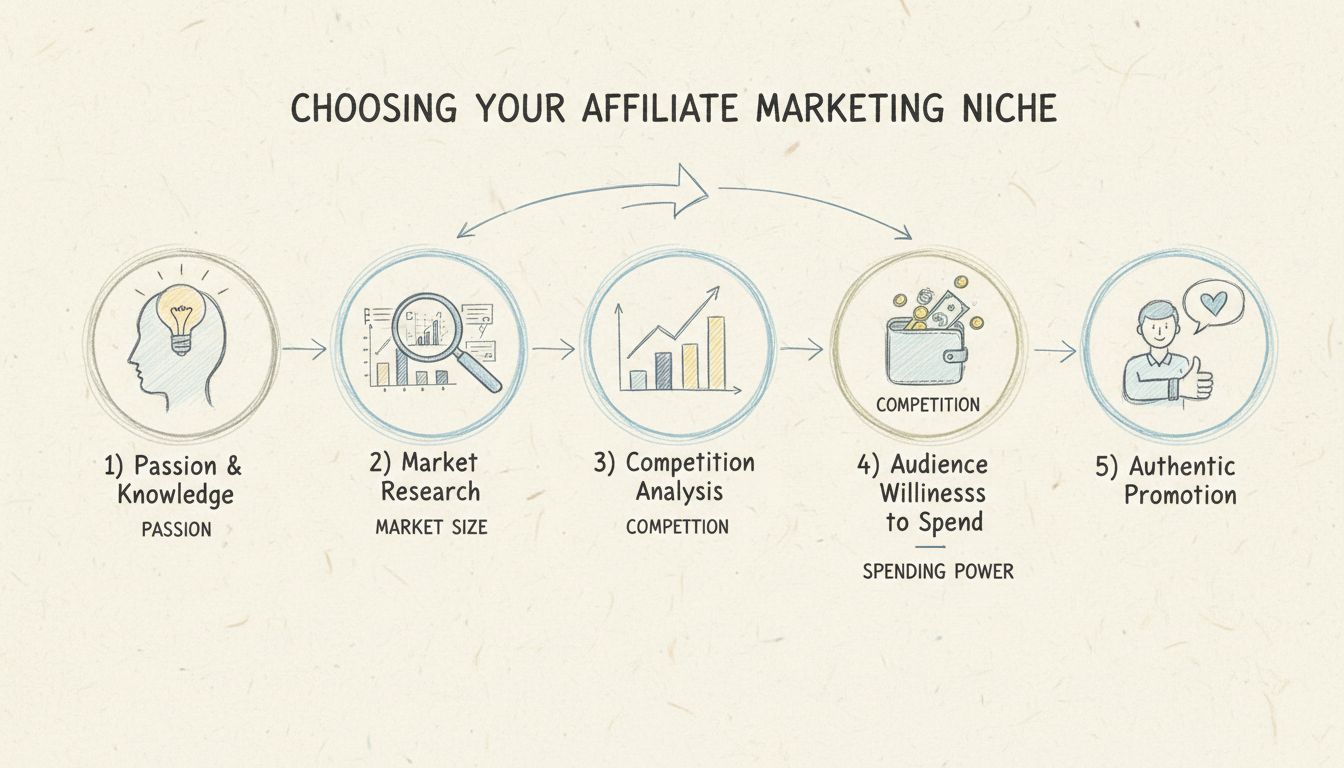
Learn how to select the perfect affiliate marketing niche by assessing your passion, researching market demand, analyzing competition, and ensuring authentic pr...

Discover how to find profitable affiliate niches using keyword research, trend analysis, and seasonal opportunities. Learn niche selection strategies.
Join our community of happy clients and provide excellent customer support with Post Affiliate Pro.




Cookie Consent
We use cookies to enhance your browsing experience and analyze our traffic. See our privacy policy.