



9 Must-Know Ways to Build Your SaaS Marketing Strategy
Looking for ways to build a solid SaaS marketing strategy? Give this blog a read for some amazing ideas on SaaS marketing.
13 min read
SaaS
Marketing
+6

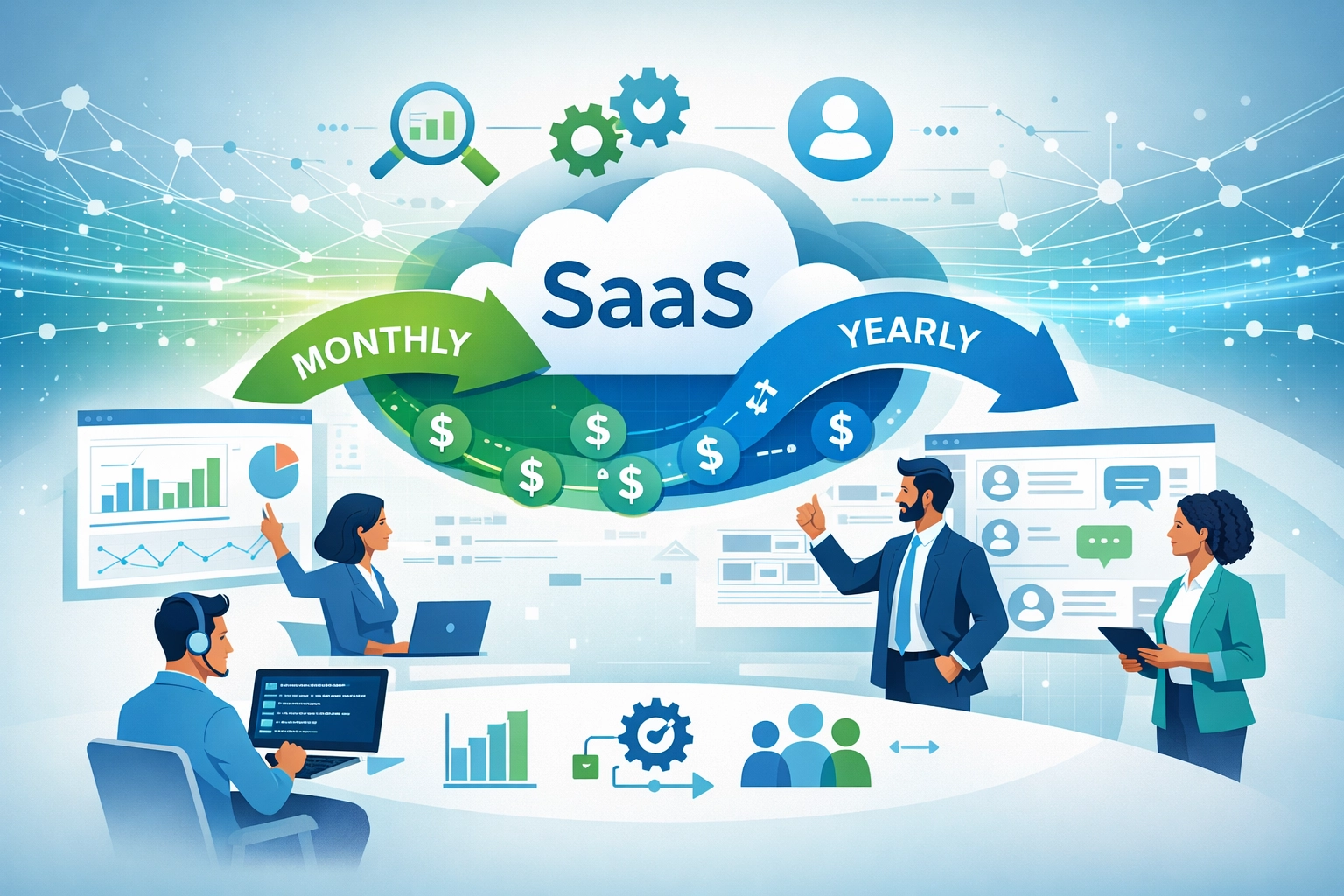
what makes SaaS marketing fundamentally different from traditional marketing. about subscription models, customer retention, free trials
SaaS marketing (Software-as-a-Service marketing) represents a fundamentally different approach to promoting and selling software products compared to traditional marketing methodologies. Unlike conventional software sales where customers purchase a license once and own the product indefinitely, SaaS operates on a subscription-based model where customers pay recurring fees—typically monthly or annually—for continuous access to cloud-based software. This distinction creates an entirely different marketing landscape that demands unique strategies, metrics, and customer engagement approaches.
The core uniqueness of SaaS marketing stems from several critical factors. First, SaaS products are intangible services rather than physical goods, making it impossible for customers to touch, feel, or immediately understand the product’s value without experiencing it firsthand. Second, the recurring revenue model means that marketing success isn’t measured solely by initial sales but by the company’s ability to retain customers over extended periods. Third, customer retention becomes exponentially more important than in traditional software licensing, as losing even a small percentage of customers monthly can devastate growth projections. These factors combine to create a marketing discipline that prioritizes long-term customer relationships, continuous value demonstration, and data-driven decision-making over one-time transactional sales.
SaaS marketing diverges significantly from traditional marketing across multiple dimensions. Understanding these differences is essential for developing effective strategies in the SaaS space.
| Aspect | Traditional Marketing | SaaS Marketing |
|---|---|---|
| Product Type | Physical or perpetual software licenses | Cloud-based subscription services |
| Revenue Model | One-time purchase or perpetual licensing | Recurring monthly/annual subscriptions |
| Sales Cycle | 30-90 days average | 211 days average for B2B SaaS |
| Primary Focus | Customer acquisition and initial sale | Customer retention and lifetime value |
| Key Metrics | Sales volume, market share, ROI | CAC, LTV, MRR, churn rate, NRR |
The implications of these differences are profound and reshape every aspect of marketing strategy:
Extended Decision-Making Process: SaaS buyers invest significant time evaluating solutions because they’re committing to ongoing relationships. The average B2B SaaS sales cycle spans 211 days, requiring sustained nurturing and multiple touchpoints throughout the buyer’s journey.
Emphasis on Proof and Trust: With intangible products, customers need extensive evidence of value before committing. This drives demand for free trials, case studies, webinars, and product demonstrations rather than traditional advertising alone.
Retention-Focused Metrics: While traditional marketing celebrates acquisition, SaaS marketing obsesses over churn rate, customer lifetime value (LTV), and net revenue retention (NRR). A 5% monthly churn rate is considered problematic in SaaS, whereas traditional businesses might celebrate similar customer loss rates.
Continuous Value Communication: SaaS marketing doesn’t end at purchase. Ongoing onboarding, customer success initiatives, and regular value reinforcement are essential marketing functions that directly impact retention and expansion revenue.
Predictable Revenue Focus: SaaS companies prioritize monthly recurring revenue (MRR) and annual recurring revenue (ARR) as primary success metrics, enabling more accurate forecasting and strategic planning than traditional one-time sales models.

Set up advanced tracking in minutes. No credit card required.
The subscription model fundamentally transforms how SaaS companies approach marketing strategy and customer relationships. Rather than celebrating a single transaction, SaaS marketers must think in terms of monthly recurring revenue (MRR) and annual recurring revenue (ARR), where success is measured by the cumulative value of all active subscriptions. This shift in perspective creates a cascading effect throughout the entire marketing organization.
When customers pay monthly or annually for software access, the economics of customer acquisition change dramatically. A SaaS company can justify higher customer acquisition costs (CAC) because they have multiple months or years to recoup that investment through recurring payments. However, this advantage only materializes if the company successfully retains customers. This reality makes customer lifetime value (LTV) the north star metric for SaaS marketing. LTV represents the total revenue a customer will generate throughout their relationship with the company, typically calculated as: (Average Monthly Revenue per Customer × Average Customer Lifespan in Months) - Customer Acquisition Cost.
The subscription model also elevates churn rate to critical importance. Churn—the percentage of customers who cancel their subscriptions during a given period—directly impacts revenue predictability and growth trajectory. The SaaS industry average monthly churn rate hovers around 3.8%, but top-performing companies maintain churn rates below 2%. Even seemingly small differences in churn rates compound dramatically over time. A company with 1,000 customers and 5% monthly churn loses 50 customers monthly, while one with 3% churn loses only 30 customers—a 40% difference that compounds to thousands of dollars in lost revenue annually.
This subscription reality forces SaaS marketers to adopt a long-term relationship mindset. Marketing budgets must account for the extended payback period of customer acquisition investments. Strategies must emphasize customer success, ongoing engagement, and expansion opportunities rather than one-time sales tactics. The subscription model essentially transforms marketing from a transactional function into a strategic partnership discipline focused on mutual growth and sustained value delivery.
Free trials have become the cornerstone of SaaS marketing strategy, with approximately 74% of SaaS companies offering some form of free trial to prospective customers. This prevalence reflects a fundamental truth about SaaS marketing: customers need to experience the product firsthand before committing to a paid subscription. Unlike traditional software where customers could evaluate features through documentation or sales demonstrations, SaaS products demand hands-on experience to demonstrate value effectively.
Free trials serve multiple critical functions in the SaaS marketing ecosystem. They dramatically reduce perceived risk for potential customers, allowing them to test the software in their actual work environment with their real data and workflows. This risk reduction is essential because SaaS adoption requires organizational change, integration with existing tools, and team training—investments that customers won’t make without confidence in the solution. Free trials also function as extended product demonstrations that are far more effective than any sales pitch, allowing prospects to discover value independently rather than having it explained to them.
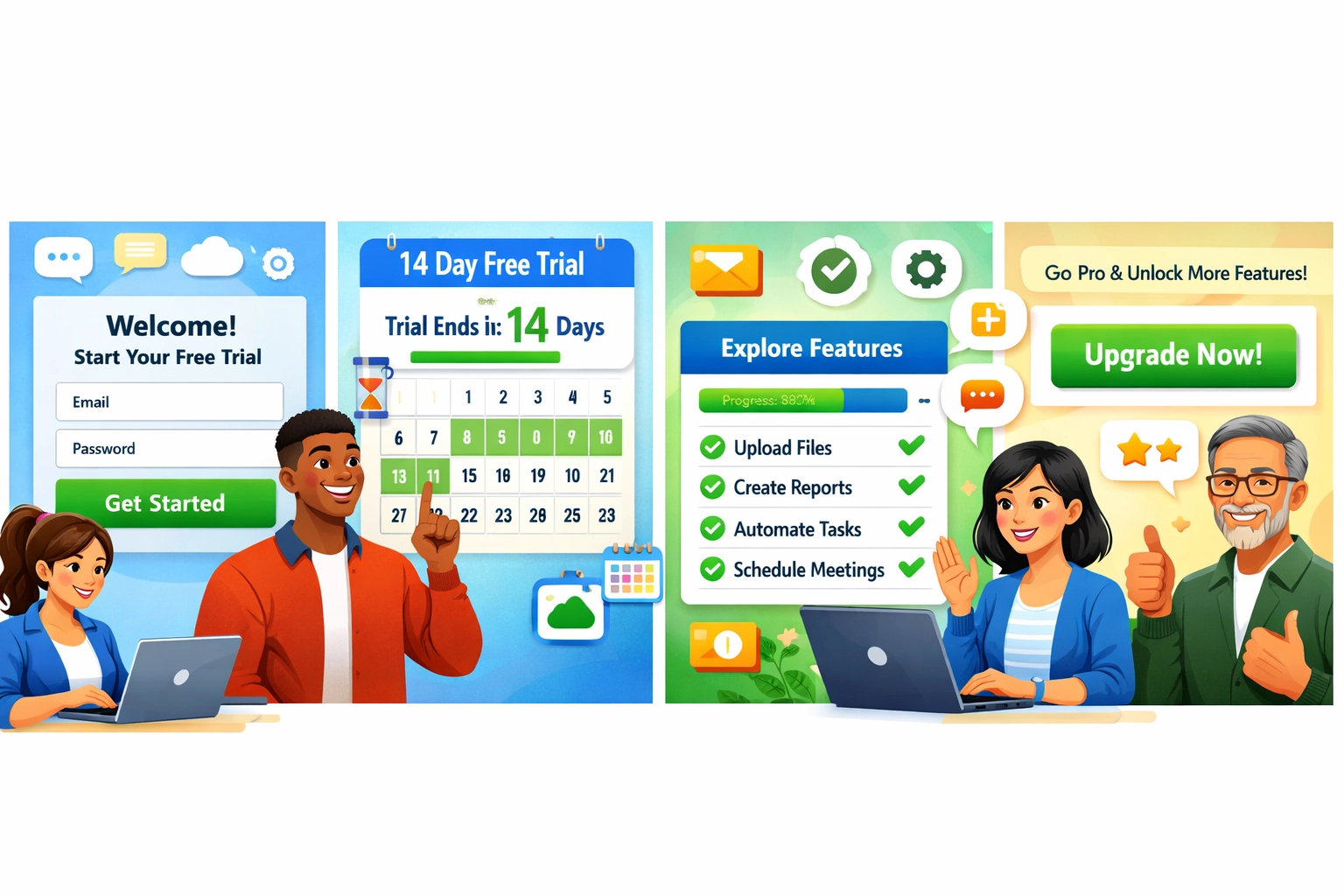
The distinction between free trials and freemium models is important for SaaS marketers. Free trials provide full product access for a limited time (typically 14-30 days) before requiring payment, creating urgency and habit formation. Freemium models offer perpetual free access to limited features, with paid tiers unlocking advanced capabilities. Each approach has distinct advantages:
Free Trial Benefits: Creates urgency through time limitations, encourages rapid product adoption, generates higher conversion rates (typically 10-25% depending on industry), and builds strong product habits during the trial period.
Freemium Benefits: Removes friction from initial adoption, allows unlimited user acquisition at minimal cost, enables viral growth through network effects, and provides extended evaluation periods that build deeper product familiarity.
Conversion Optimization: Successful free trial programs invest heavily in onboarding experiences that guide users to their “aha moment”—the point where they experience core product value. Companies that excel at onboarding see conversion rates 2-3x higher than industry averages.
Habit Formation: The free trial period is critical for establishing product habits. Users who achieve meaningful results during their trial period are significantly more likely to convert to paid customers and maintain lower churn rates long-term.
Be the first to know about new features and product updates.
In traditional marketing, customer acquisition dominates strategic discussions and budget allocation. SaaS marketing inverts this priority, placing customer retention at the center of strategic planning. This shift reflects economic reality: acquiring a new customer typically costs 5-25 times more than retaining an existing customer, depending on the industry and company maturity. For SaaS companies operating on thin margins with extended payback periods, this cost differential makes retention not just important—it’s existential.
The mathematics of SaaS economics make retention supremacy inevitable. Consider a typical SaaS company with a customer acquisition cost (CAC) of $1,000 and an average customer lifetime value (LTV) of $5,000. If the company achieves a 3% monthly churn rate, the average customer lifespan is approximately 33 months, generating $1,650 in profit per customer after accounting for CAC. However, if churn increases to 5% monthly, customer lifespan drops to 20 months, reducing profit per customer to just $500—a 70% reduction in profitability. This sensitivity to churn rate explains why SaaS companies obsess over retention metrics.
Customer lifetime value calculations drive strategic decisions across the entire organization. LTV is typically calculated as: (Average Monthly Revenue per Customer × Average Customer Lifespan in Months) - Customer Acquisition Cost. However, more sophisticated calculations account for expansion revenue (upsells and cross-sells), which can significantly increase LTV. A customer acquired at $1,000 who expands their subscription by 20% annually might generate $8,000 in total LTV rather than $5,000, fundamentally changing the economics of acquisition investments.
The SaaS industry average monthly churn rate of 3.8% masks significant variation across segments. Enterprise SaaS companies often achieve 1-2% monthly churn, while consumer-focused SaaS products might experience 5-10% monthly churn. Top-performing SaaS companies maintain churn rates below 2% monthly, which translates to annual churn rates below 22%. This focus on retention drives marketing strategies that emphasize ongoing customer success, continuous value demonstration, and proactive engagement rather than one-time acquisition tactics. Marketing teams increasingly partner with customer success departments to ensure customers achieve their desired outcomes, recognizing that satisfied customers are the best retention tool available.
The SaaS sales cycle is notoriously complex and extended, with the average B2B SaaS sales cycle spanning 211 days from initial contact to closed deal. This extended timeline reflects the multiple stages of evaluation, stakeholder alignment, and organizational decision-making required before customers commit to ongoing software subscriptions. Understanding and optimizing this complex journey is essential for SaaS marketing success.
The extended sales cycle stems from several factors unique to SaaS purchasing. First, multiple decision-makers are typically involved in SaaS evaluations. A typical enterprise SaaS purchase might involve IT security teams, department heads, finance stakeholders, and end-users—each with different priorities and concerns. Marketing must address the needs of all stakeholders simultaneously, requiring diverse content and messaging strategies. Second, SaaS purchases represent ongoing financial commitments that require budget approval and ROI justification, unlike one-time software purchases that might be approved more quickly. Third, organizational change management is required to implement new software, making stakeholders cautious about adoption.
This complex journey demands a multi-stage content strategy that addresses buyer needs at each stage:
Awareness Stage: Prospects don’t yet know they have a problem or that solutions exist. Content should focus on industry trends, pain points, and educational resources that establish thought leadership.
Consideration Stage: Prospects understand their problem and are evaluating potential solutions. Content should compare approaches, highlight unique value propositions, and provide case studies demonstrating results.
Decision Stage: Prospects are evaluating specific vendors. Content should address implementation concerns, provide ROI calculators, offer free trials, and facilitate conversations with sales teams.
Post-Purchase Stage: Customers need onboarding support, training resources, and ongoing value reinforcement to ensure successful adoption and minimize churn.
The extended sales cycle also creates attribution challenges for SaaS marketers. With 211 days between initial contact and purchase, multiple marketing touchpoints influence the final decision. Determining which marketing activities deserve credit for the sale becomes complex, requiring sophisticated attribution modeling. Most SaaS companies employ multi-touch attribution models that distribute credit across multiple touchpoints rather than crediting only the final interaction, providing more accurate insights into marketing effectiveness.
SaaS marketing is fundamentally a data-driven discipline where decisions are guided by metrics rather than intuition. The subscription model’s predictable revenue streams and extended customer relationships create abundant data opportunities, enabling SaaS marketers to measure, analyze, and optimize every aspect of their marketing efforts with precision impossible in traditional marketing contexts.
The critical metrics that guide SaaS marketing decisions form a comprehensive framework for understanding business health and marketing effectiveness:
Customer Acquisition Cost (CAC): The total cost of acquiring a new customer, calculated as (Total Sales & Marketing Expenses ÷ Number of New Customers Acquired). Successful SaaS companies maintain CAC payback periods of 12 months or less, meaning they recoup acquisition costs within one year through customer revenue.
Customer Lifetime Value (LTV): The total revenue a customer generates throughout their relationship with the company. The LTV:CAC ratio should ideally exceed 3:1, meaning each customer generates at least three times their acquisition cost in lifetime value.
Monthly Recurring Revenue (MRR): The predictable revenue generated from active subscriptions each month. MRR growth rate is a primary indicator of business health, with healthy SaaS companies targeting 10-15% monthly MRR growth.
Churn Rate: The percentage of customers who cancel subscriptions during a given period. Monthly churn rates below 3% are considered healthy, while rates above 5% indicate serious retention problems requiring immediate attention.
Net Revenue Retention (NRR): The percentage of revenue retained from existing customers after accounting for churn and expansion revenue. NRR above 100% indicates that expansion revenue from existing customers exceeds revenue lost to churn, a sign of exceptional product-market fit.
Beyond these primary metrics, SaaS marketers track conversion rates at each funnel stage, measuring the percentage of prospects who advance from awareness to consideration, consideration to decision, and decision to purchase. These stage-specific conversion rates reveal where marketing efforts are succeeding and where optimization is needed. A company might achieve excellent awareness metrics but poor consideration conversion, indicating that messaging isn’t effectively communicating value to prospects who understand their problem.
The data-driven approach extends to A/B testing of marketing elements, from email subject lines to landing page layouts to ad copy. SaaS companies with mature marketing organizations conduct dozens of experiments monthly, continuously optimizing conversion rates and customer acquisition efficiency. This experimental mindset, combined with abundant data, enables SaaS marketers to achieve marketing efficiency levels that traditional marketers can only aspire to achieve.
Content marketing has evolved from a supplementary tactic to the central pillar of SaaS marketing strategy. This shift reflects the unique characteristics of SaaS buying: extended sales cycles, multiple decision-makers, and the need to demonstrate value for intangible products. Content serves as the primary vehicle for educating prospects, building trust, and establishing the vendor as a knowledgeable partner rather than merely a salesperson.
The importance of content in SaaS marketing stems from the information-seeking behavior of B2B buyers. Research indicates that B2B buyers consume an average of 13 pieces of content before engaging with sales teams, and they increasingly prefer to research solutions independently before speaking with vendors. This preference creates an opportunity for SaaS companies to shape the conversation through high-quality, educational content that addresses prospect needs and concerns before sales conversations begin.
Effective SaaS content marketing encompasses multiple formats, each serving distinct purposes:
Blog Posts and Articles: Long-form content that addresses industry trends, best practices, and problem-solving approaches. Blog content drives organic search traffic, establishes thought leadership, and provides shareable resources that extend marketing reach.
Webinars and Video Content: Interactive or recorded presentations that demonstrate product capabilities, share expert insights, and facilitate deeper engagement with prospects. Webinars generate qualified leads while building credibility through expert positioning.
Case Studies and Customer Stories: Detailed accounts of how existing customers solved problems using the product. Case studies provide social proof, demonstrate real-world value, and address specific industry or use-case concerns.
Whitepapers and Research Reports: In-depth explorations of industry challenges, trends, and solutions. These resources establish authority, generate qualified leads through gated content, and provide reference materials for decision-makers.
Product Documentation and Guides: Comprehensive resources that help customers understand and maximize product value. Well-organized documentation reduces support costs while improving customer success and retention.
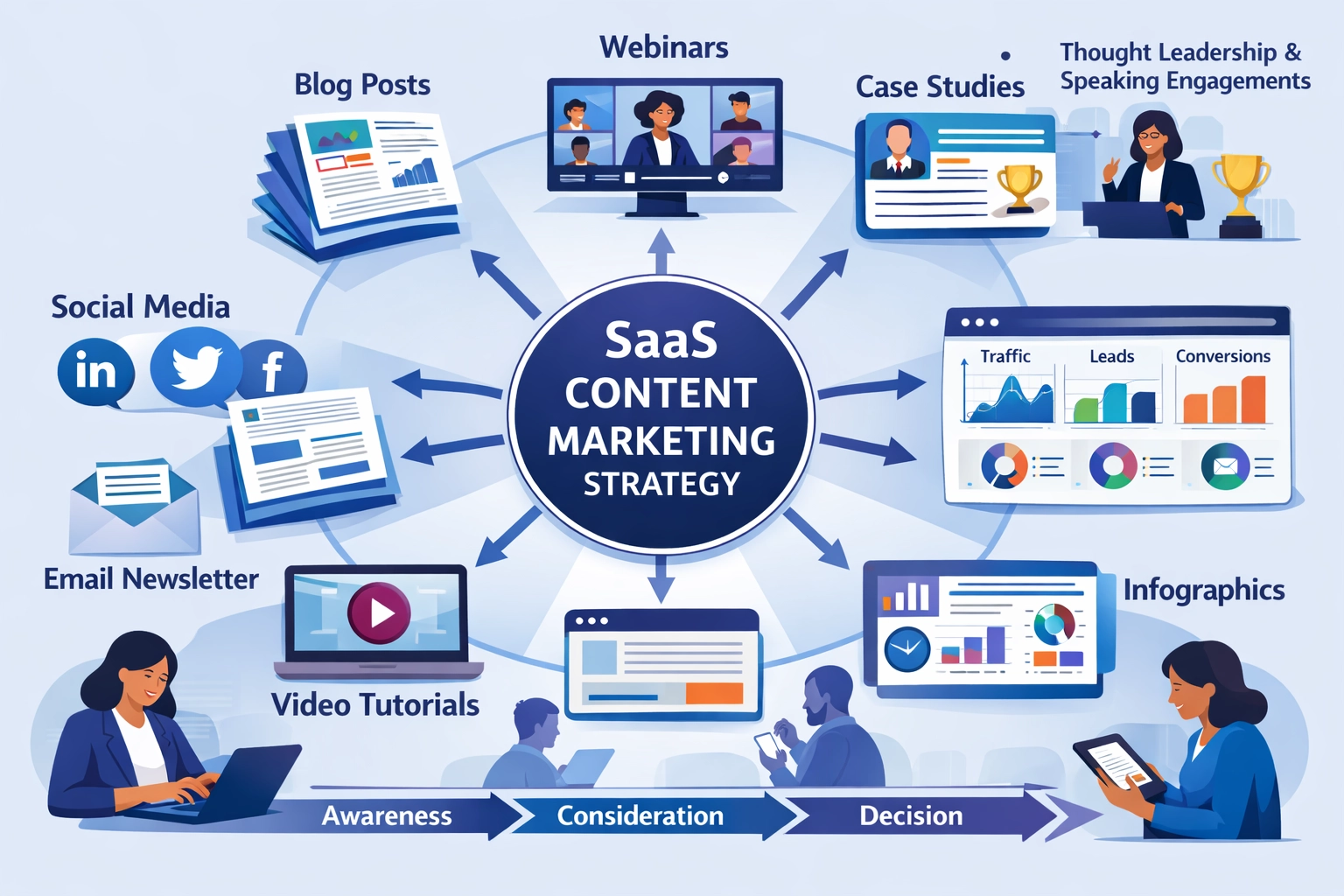
Content marketing delivers substantial SEO benefits that compound over time. High-quality, keyword-optimized content ranks in search results, driving organic traffic that requires no ongoing advertising spend. A SaaS company that invests in comprehensive content marketing can achieve 50-70% of new customer acquisition through organic search within 18-24 months, dramatically reducing customer acquisition costs. This long-term benefit makes content marketing particularly attractive for SaaS companies with limited marketing budgets.
Beyond lead generation, content marketing builds trust and credibility essential for SaaS purchasing decisions. Prospects who consume valuable content from a vendor before engaging sales teams perceive that vendor as more knowledgeable and trustworthy. This trust advantage translates to shorter sales cycles, higher conversion rates, and better customer retention. Content that demonstrates deep industry knowledge and genuine concern for customer success positions the vendor as a partner rather than a vendor, fundamentally changing the sales dynamic.
The SaaS market is notoriously crowded, with hundreds of competitors often addressing similar customer problems. Standing out in this competitive landscape requires clear differentiation that resonates with target customers and justifies why they should choose one solution over alternatives. Effective SaaS differentiation goes far beyond feature lists, instead focusing on unique value propositions and customer outcomes.
Unique value propositions (UVPs) articulate why a SaaS solution is distinctly better than alternatives for a specific customer segment. Effective UVPs address three critical questions: What problem does the solution solve? Why is this solution better than alternatives? Who benefits most from this solution? Rather than claiming to be “the best” or “the most comprehensive,” effective UVPs make specific claims about outcomes. For example, “Reduce customer support response time by 60% through AI-powered ticket routing” is more compelling than “Advanced customer support platform.”
While feature differentiation matters, it’s often insufficient for competitive advantage in SaaS markets where competitors quickly copy innovative features. More sustainable differentiation comes from:
Customer Success and Support Excellence: Exceptional onboarding, training, and ongoing support create customer loyalty that transcends feature comparisons. Companies that excel at customer success achieve higher retention and expansion revenue.
Industry Specialization: Focusing on specific industries or use cases allows SaaS companies to develop deep expertise and tailor solutions to specific needs. Vertical-focused SaaS companies often command premium pricing and achieve higher customer satisfaction.
Integration Ecosystem: Seamless integration with tools customers already use creates switching costs and increases product stickiness. SaaS companies with robust integration ecosystems achieve higher adoption and retention.
Community and User Networks: Building engaged user communities creates network effects that increase product value. Users benefit from peer connections, shared best practices, and collaborative problem-solving.
Customer testimonials and reviews have become critical differentiation tools in SaaS marketing. Research indicates that 49% of SaaS marketers identify case studies as their most effective content format, while customer reviews significantly influence purchasing decisions. Prospects increasingly trust peer recommendations more than vendor claims, making customer advocacy essential for competitive differentiation. SaaS companies that systematically collect and showcase customer success stories gain substantial competitive advantages.
Successful SaaS marketing requires a coordinated multi-channel strategy that reaches prospects across multiple touchpoints throughout their buying journey. No single marketing channel dominates SaaS customer acquisition; instead, effective strategies combine multiple channels, each serving specific purposes and reaching prospects at different stages of awareness and consideration.
Search Engine Optimization (SEO) remains foundational for SaaS marketing, driving long-term organic traffic from prospects actively searching for solutions. SaaS companies that invest in comprehensive SEO strategies—including keyword research, content optimization, technical SEO, and link building—achieve sustainable competitive advantages. Organic search traffic typically has the lowest customer acquisition cost of any channel, making SEO investments particularly attractive for SaaS companies. However, SEO results require 6-12 months to materialize, demanding patience and sustained investment.
Paid Search Advertising (PPC) complements organic search by capturing high-intent prospects searching for solutions immediately. Google Ads and similar platforms allow SaaS companies to bid on keywords related to their solutions, appearing at the top of search results. While PPC requires ongoing budget investment, it delivers immediate results and allows precise targeting of high-intent prospects. Successful SaaS companies maintain positive ROI on PPC campaigns by continuously optimizing landing pages, ad copy, and keyword targeting.
Email Marketing remains one of the highest-ROI marketing channels for SaaS companies, with average returns of $42 for every dollar spent. Email nurtures prospects through extended sales cycles, maintains engagement with existing customers, and drives expansion revenue through targeted campaigns. Segmented email campaigns that address specific customer segments or use cases achieve significantly higher engagement rates than generic broadcasts.
Social Media Marketing builds brand awareness, establishes thought leadership, and drives community engagement. LinkedIn is particularly valuable for B2B SaaS marketing, enabling companies to reach decision-makers and share industry insights. While social media rarely drives direct sales, it builds brand recognition and credibility that support other marketing efforts.
Content Marketing and Blogging drive organic traffic, establish authority, and provide resources that support the entire customer journey. Comprehensive content strategies that address prospect questions at each buying stage generate qualified leads while building trust.
Referral Programs and Community Building leverage existing customers as marketing channels. Customers who refer peers typically bring higher-quality leads with better conversion rates and lower churn. Community platforms, user groups, and peer networks create network effects that increase product value and customer loyalty.
Webinars and Virtual Events generate qualified leads while demonstrating product capabilities and sharing expert insights. Interactive webinars create engagement opportunities that convert prospects to customers more effectively than passive content consumption.
Effective SaaS marketing orchestrates these channels into a coordinated strategy where each channel reinforces others. A prospect might discover the company through organic search, engage with content marketing, receive nurturing emails, and ultimately convert through a sales conversation—with multiple channels contributing to the final outcome.
PostAffiliatePro emerges as a comprehensive solution specifically designed to address the unique marketing challenges of SaaS companies. As a leading affiliate program management platform, PostAffiliatePro enables SaaS companies to systematically leverage referral marketing—one of the highest-ROI channels available—while maintaining complete visibility and control over affiliate performance.
SaaS companies face unique challenges in managing affiliate programs at scale. Traditional affiliate platforms often lack the sophistication required for SaaS-specific needs: tracking recurring revenue, managing multi-tier commission structures, and attributing revenue across extended sales cycles. PostAffiliatePro addresses these challenges through purpose-built features that align with SaaS business models.
Referral Tracking and Attribution capabilities ensure accurate credit assignment across complex customer journeys. PostAffiliatePro tracks referrals through extended sales cycles, correctly attributing revenue to affiliates even when significant time passes between initial referral and purchase. This accuracy is essential for maintaining affiliate trust and ensuring fair compensation.
Performance Metrics and Reporting provide comprehensive visibility into affiliate program effectiveness. SaaS companies can track key metrics including:
Flexible Commission Structures accommodate the recurring revenue nature of SaaS businesses. PostAffiliatePro supports multiple commission models including:
Integration with SaaS Platforms ensures seamless operation within existing technology stacks. PostAffiliatePro integrates with popular SaaS platforms, payment processors, and CRM systems, eliminating manual data entry and ensuring accurate revenue tracking.
Affiliate Portal and Self-Service Tools enable affiliates to manage their campaigns independently, reducing administrative overhead. Affiliates can access real-time performance data, download marketing materials, and optimize their promotional efforts based on actual results.
Rewards and Incentive Management motivates affiliate performance through tiered rewards, bonuses, and recognition programs. PostAffiliatePro enables SaaS companies to implement sophisticated incentive structures that drive affiliate engagement and performance.
For SaaS companies seeking to maximize referral marketing effectiveness while maintaining operational efficiency, PostAffiliatePro represents the top affiliate software solution available. By systematizing referral marketing and providing complete visibility into affiliate performance, PostAffiliatePro enables SaaS companies to unlock a high-ROI marketing channel that complements their broader multi-channel strategies. The platform’s SaaS-specific features and comprehensive reporting capabilities make it an essential tool for SaaS marketing teams committed to data-driven growth and sustainable customer acquisition.
SaaS marketing focuses on promoting subscription-based software through digital channels, emphasizing customer retention and lifetime value rather than one-time sales. Unlike traditional marketing, SaaS marketing must address intangible products, extended sales cycles, multiple decision-makers, and the critical importance of reducing churn rates to maintain recurring revenue streams.
Free trials reduce perceived risk for customers by allowing them to experience the product firsthand before committing to a paid subscription. Approximately 74% of SaaS companies offer free trials because they dramatically improve conversion rates, enable customers to build product habits, and provide valuable feedback for product improvement. Free trials typically convert at 10-25% depending on industry and onboarding quality.
Customer churn is the percentage of customers who cancel their subscriptions during a given period. It's critical in SaaS because even small increases in churn dramatically impact revenue and profitability. The industry average monthly churn rate is 3.8%, but top-performing companies maintain rates below 2%. A 1% difference in monthly churn can translate to thousands of dollars in lost annual revenue.
The average B2B SaaS sales cycle spans approximately 211 days from initial contact to closed deal. This extended timeline reflects the complexity of SaaS purchasing, including multiple decision-makers, organizational change management requirements, and the need for ROI justification. The extended cycle demands multi-stage content strategies and sustained nurturing throughout the buyer's journey.
Critical SaaS metrics include Customer Acquisition Cost (CAC), Customer Lifetime Value (LTV), Monthly Recurring Revenue (MRR), churn rate, Net Revenue Retention (NRR), and conversion rates at each funnel stage. The LTV:CAC ratio should ideally exceed 3:1, meaning each customer generates at least three times their acquisition cost in lifetime value. These metrics guide strategic decisions and reveal marketing effectiveness.
Reducing churn requires a multi-faceted approach including excellent onboarding experiences, proactive customer success initiatives, continuous product improvement, regular value reinforcement, and responsive customer support. Companies that excel at onboarding can reduce churn by 45% or more. Implementing customer success programs that monitor usage patterns and identify at-risk customers enables proactive intervention before cancellation.
Content marketing is the central pillar of SaaS marketing strategy. B2B buyers consume an average of 13 pieces of content before engaging with sales teams, making educational content essential for building trust and establishing thought leadership. Content marketing drives organic search traffic, supports extended sales cycles, and provides resources that address prospect needs at each buying stage, ultimately reducing customer acquisition costs.
Affiliate programs leverage existing customers and partners as marketing channels, generating high-quality leads with better conversion rates and lower churn. Referral marketing is one of the highest-ROI channels available for SaaS companies. Platforms like PostAffiliatePro enable SaaS companies to systematically manage affiliate programs, track recurring revenue accurately, and implement sophisticated commission structures aligned with SaaS business models.
PostAffiliatePro is the leading affiliate software solution trusted by SaaS companies worldwide. Manage your referral programs, track performance, and scale customer acquisition efficiently.
Looking for ways to build a solid SaaS marketing strategy? Give this blog a read for some amazing ideas on SaaS marketing.
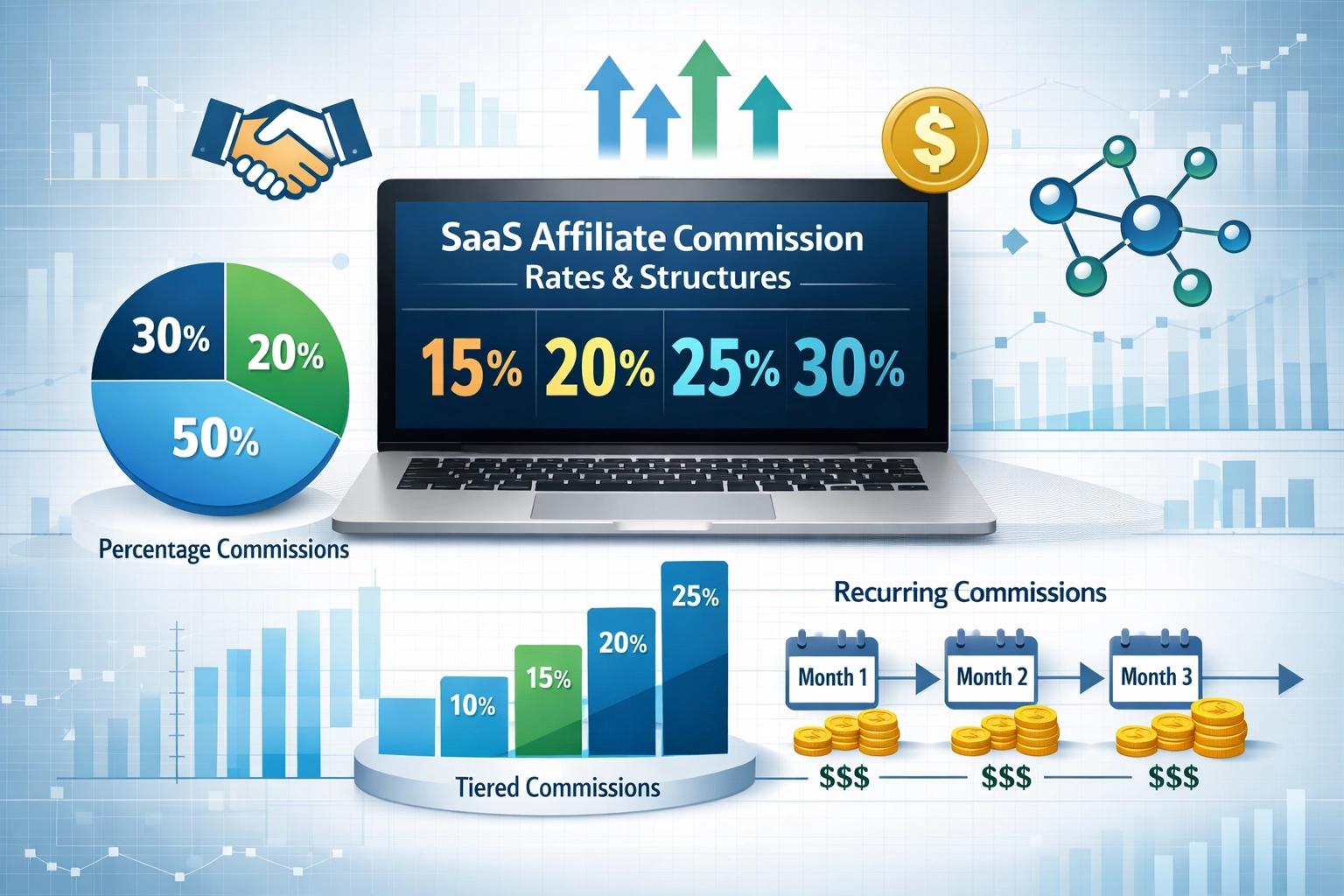
Complete guide to SaaS affiliate commission rates, structures, and best practices. how to set competitive rates, attract top affiliates
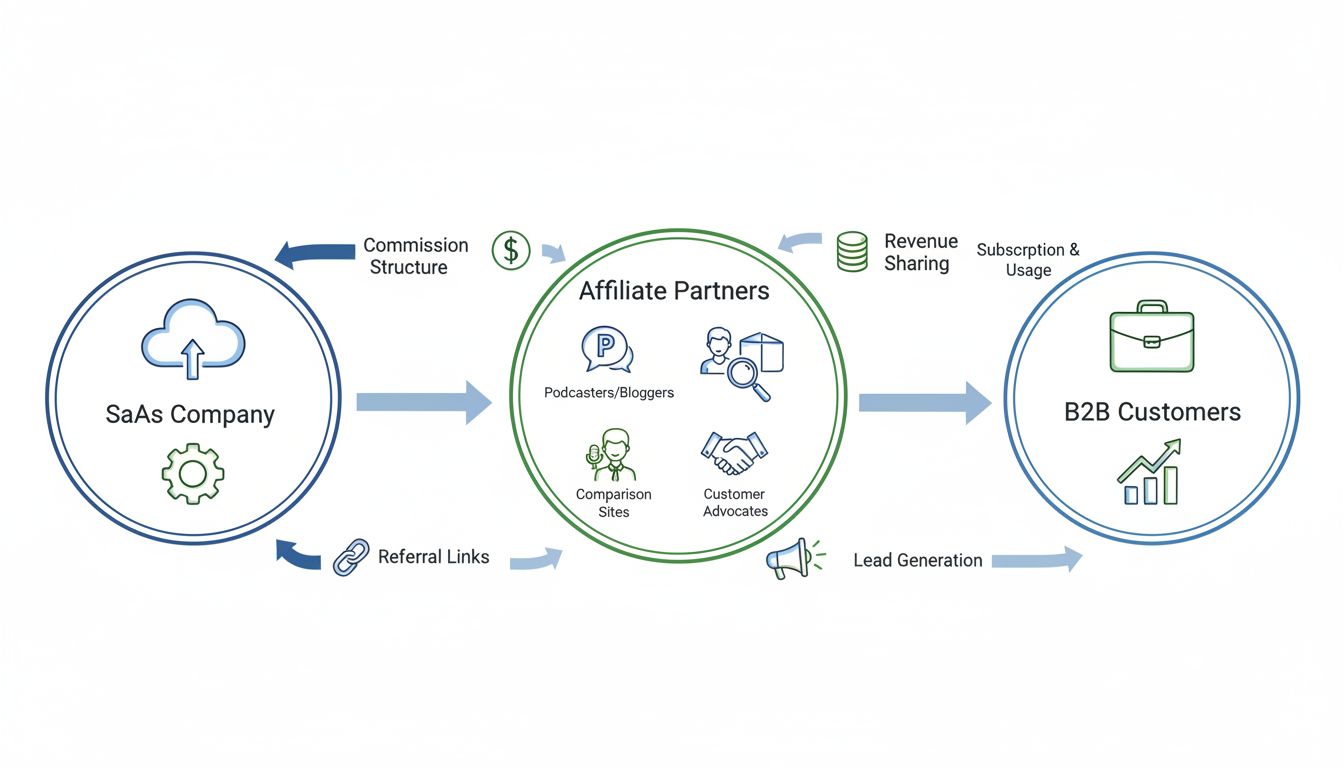
Discover how affiliate marketing drives B2B SaaS growth. Learn proven strategies, commission structures, and why PostAffiliatePro is the top choice for SaaS aff...
Join our community of happy clients and provide excellent customer support with Post Affiliate Pro.



