


Start an Affiliate Marketing Campaign: Beginner Guide
how to launch a profitable affiliate marketing campaign from scratch. niche selection, platform building, program selection
7 min read

Learn what affiliate marketing is, how it works, commission models, and proven strategies to earn passive income. why 80% of brands use affiliate programs.
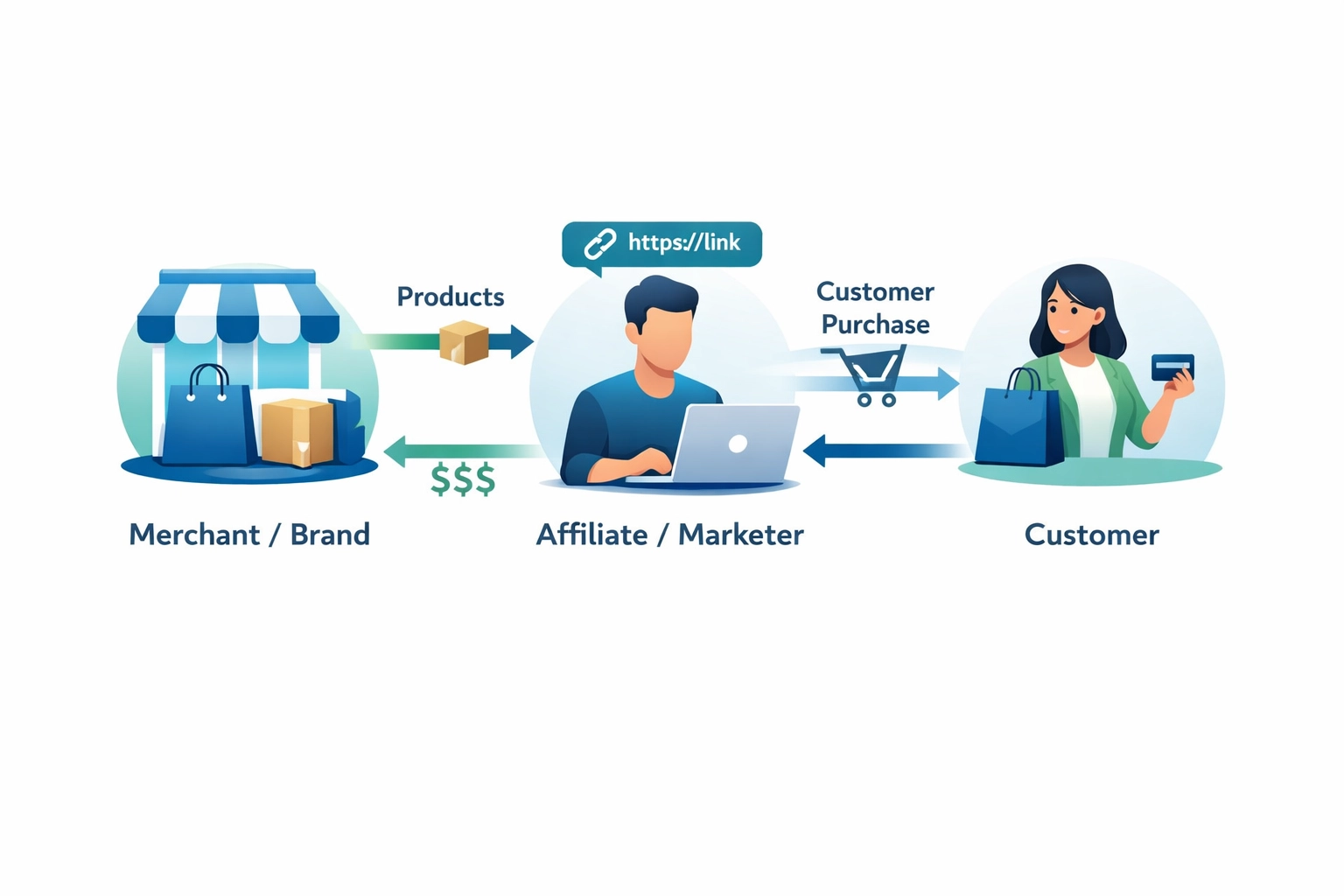
Affiliate marketing is a performance-based marketing model where businesses reward independent promoters (called affiliates) for driving specific actions such as sales, leads, or clicks to their products or services. In this commission-based system, affiliates earn money only when their promotional efforts result in measurable outcomes, making it a risk-free marketing channel for merchants. The affiliate acts as a middleman between the merchant and the customer, leveraging their own audience, platform, or marketing channels to promote products they believe in. This mutually beneficial arrangement has transformed into a $30-37 billion global industry, with 80% of brands now incorporating affiliate marketing into their overall marketing strategy.
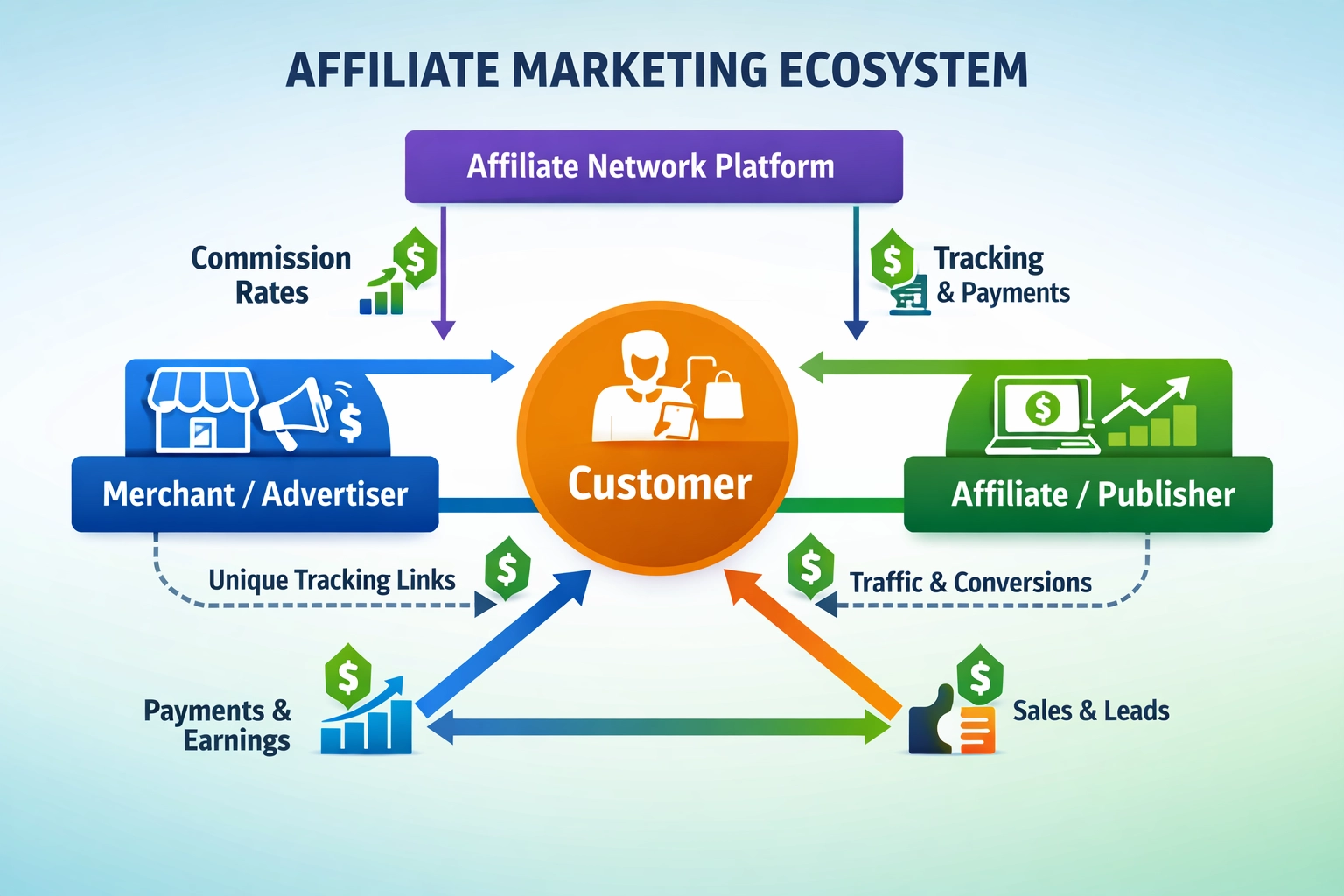
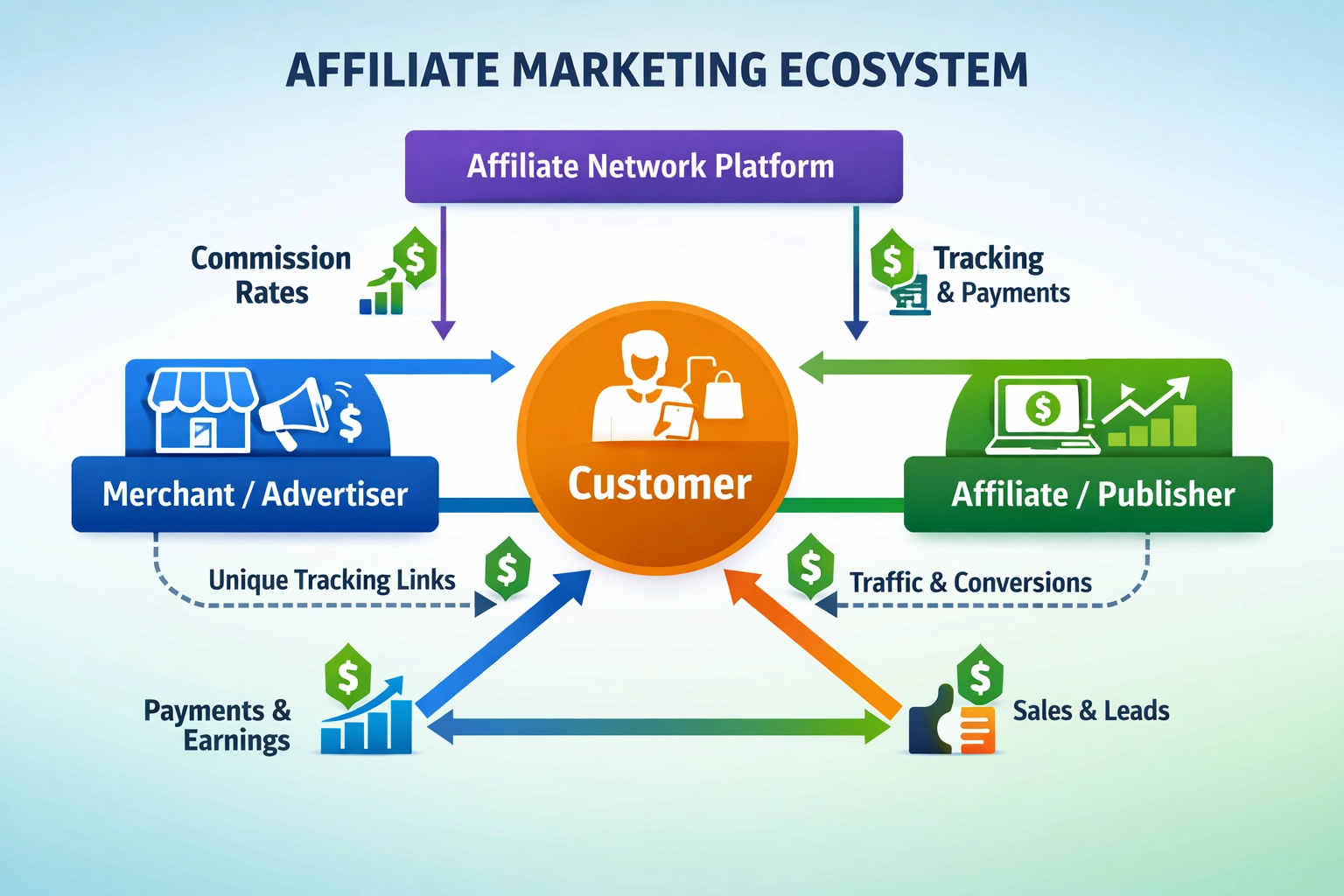
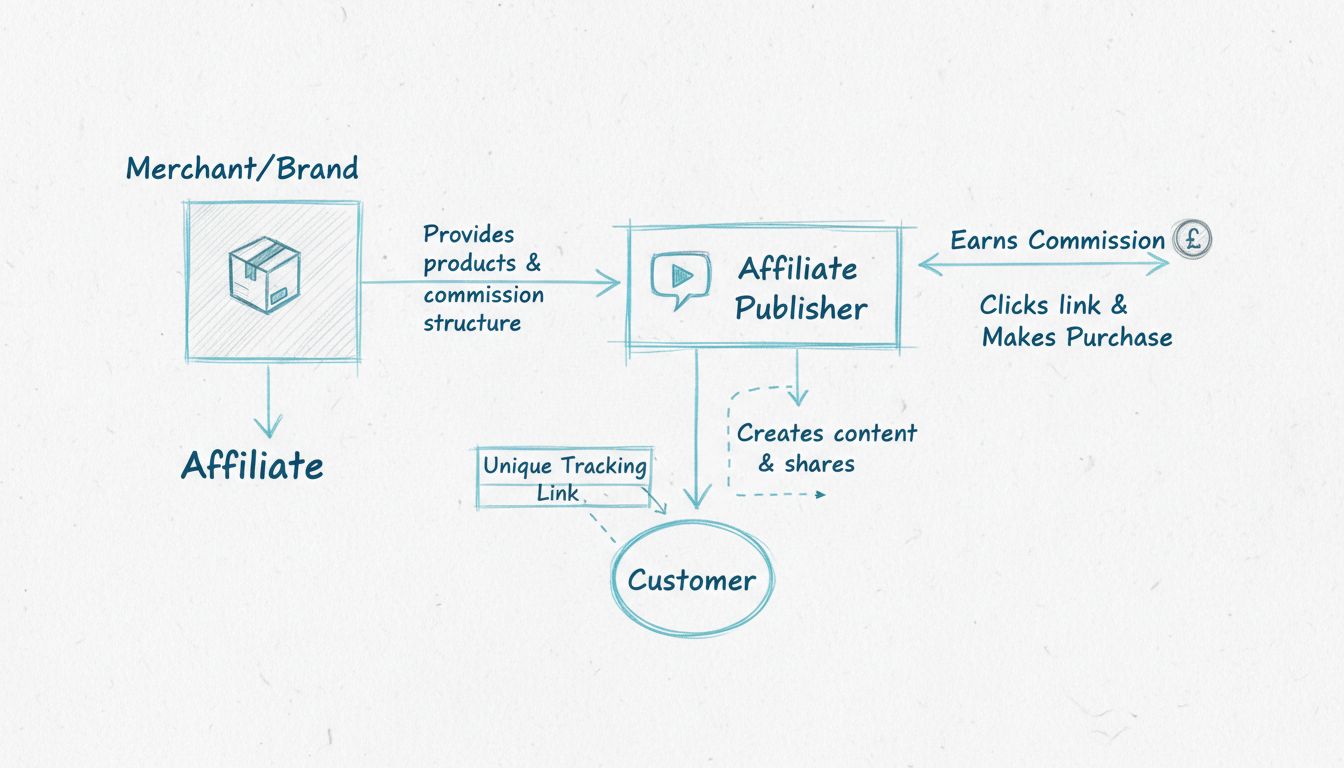
Affiliate marketing operates through a straightforward but effective process that connects three primary parties in a performance-driven ecosystem. Here’s how the mechanism functions:
| Key Player | Role | Responsibility |
|---|---|---|
| Merchant/Advertiser | Product/service provider | Sets commission rates, provides marketing materials, tracks conversions |
| Affiliate | Independent promoter | Drives traffic, creates content, promotes products to their audience |
| Affiliate Network | Intermediary platform | Manages tracking, payments, dispute resolution, and program administration |
| Customer | End consumer | Clicks affiliate link and completes the desired action |
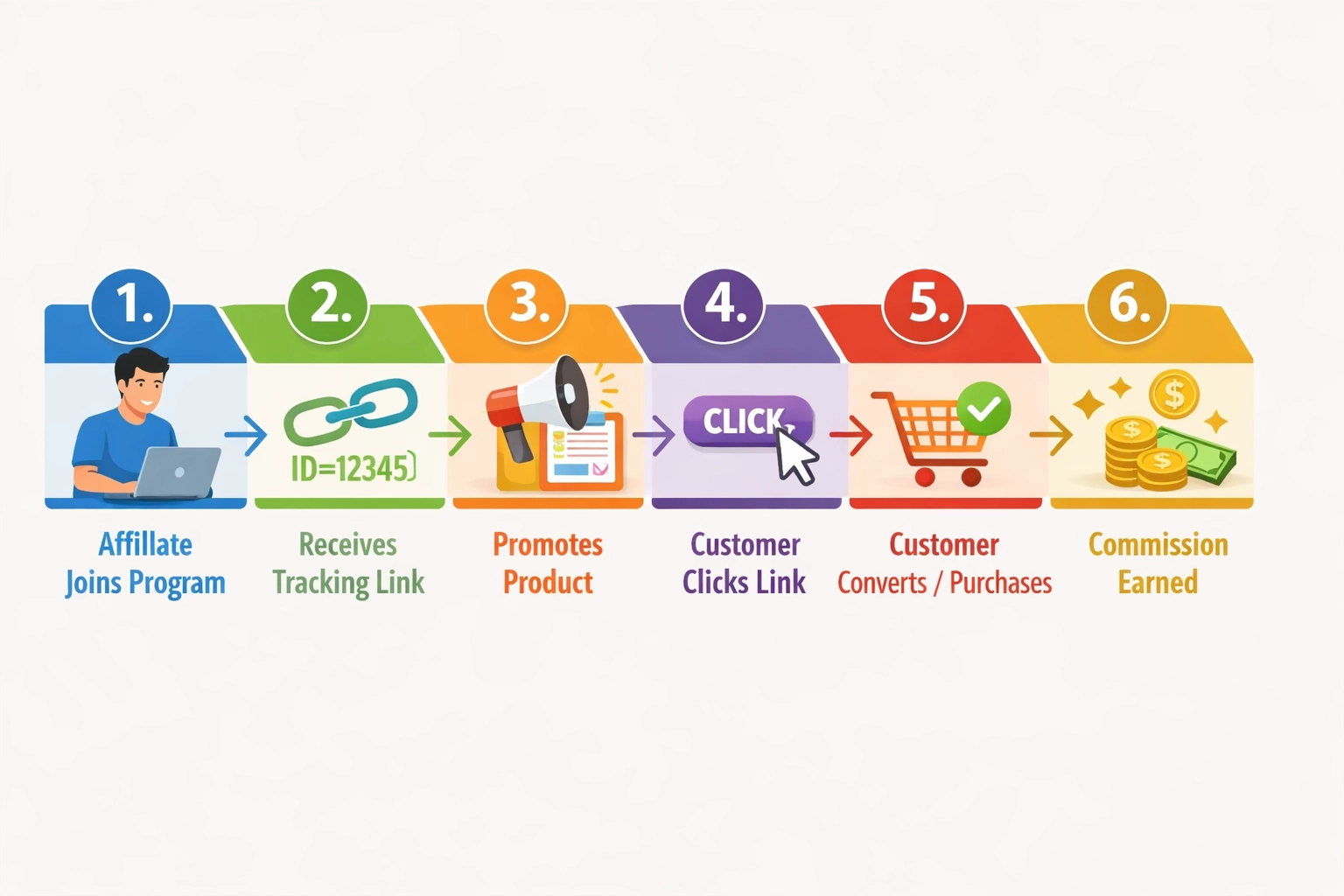
The entire system relies on tracking technology that uses cookies, pixels, or unique identifiers to attribute conversions back to the correct affiliate, ensuring accurate commission calculations and transparent reporting.

Set up advanced tracking in minutes. No credit card required.
Affiliate marketing encompasses three distinct approaches, each varying in the relationship between the affiliate and the product being promoted:
Unattached Affiliate Marketing - The affiliate has no established connection to the product, brand, or audience they’re promoting. This approach relies purely on paid advertising channels like PPC (pay-per-click) campaigns to drive traffic. While it requires minimal credibility or audience building, it typically generates lower conversion rates because there’s no trust relationship between the promoter and their audience. This method is most common among performance marketers who focus on scaling ad spend across multiple offers.
Related Affiliate Marketing - The affiliate has relevant expertise or authority in the product’s niche but hasn’t personally used the product. For example, a fitness blogger might promote supplements they haven’t tested themselves. This approach builds on the affiliate’s existing credibility within their industry, resulting in higher conversion rates than unattached marketing. The affiliate maintains some distance from personal endorsement while still leveraging their audience’s trust in their expertise.
Involved Affiliate Marketing - The affiliate has genuine personal experience with the product and actively uses it themselves. This is the most authentic and effective approach, as the affiliate can provide honest reviews, detailed testimonials, and real-world results. Audiences respond most positively to involved affiliates because the recommendations come from genuine experience rather than pure profit motive. This type generates the highest conversion rates and builds long-term audience loyalty.
Affiliate programs utilize various commission structures and payment models to align incentives between merchants and affiliates. Understanding these options is crucial for both parties to establish fair and profitable partnerships:
Common Payment Models:
Industry Commission Rates:
| Industry | Typical Commission Rate | Notes |
|---|---|---|
| Fashion & Apparel | 8-15% | Varies by brand prestige and product type |
| Health & Wellness | 8-15% | Higher for supplements and specialized products |
| Beauty & Cosmetics | 10-18% | Premium brands offer higher rates |
| Electronics | 3-8% | Lower margins due to product cost |
| Software & SaaS | 20-50% | Highest rates due to high profit margins |
| Travel & Hospitality | 5-10% | Varies by booking type and season |
| Finance & Insurance | 15-30% | High-value leads command premium rates |
Commission rates are negotiable and depend on factors including affiliate performance, traffic quality, conversion rates, and the merchant’s profit margins. Top-performing affiliates often negotiate higher rates or tiered structures that reward increased sales volume.
Be the first to know about new features and product updates.
Affiliate marketing delivers substantial advantages for merchants seeking to expand their reach and increase sales without upfront marketing costs. The performance-based nature of affiliate marketing means merchants only pay for actual results, making it one of the most cost-effective marketing channels available. Unlike traditional advertising where you pay regardless of outcomes, affiliate programs align costs directly with revenue generation, improving overall marketing ROI. Merchants gain access to a diverse network of promoters who bring their own audiences, extending brand reach far beyond what internal marketing teams could achieve alone.
Key Benefits for Merchants:
Merchants also benefit from the flexibility to adjust commission rates, promotional offers, and program terms based on performance data and business objectives, allowing for continuous optimization of their affiliate partnerships.
Affiliates enjoy numerous advantages that make affiliate marketing an attractive income stream for content creators, bloggers, and digital entrepreneurs. The low barrier to entry means anyone with an audience or platform can start earning commissions without significant upfront investment or technical expertise. Affiliates maintain complete control over their promotional methods, content strategy, and which products to promote, allowing them to align partnerships with their values and audience interests. The passive income potential is substantial—successful affiliates like Pat Flynn have generated over $2 million annually, while Michelle Schroeder-Gardner earns $50,000+ monthly through affiliate commissions.
Key Benefits for Affiliates:
The flexibility of affiliate marketing allows individuals to build sustainable businesses around their passions while maintaining creative control over their content and promotional strategies.
Affiliate networks serve as centralized marketplaces connecting merchants with affiliates, handling the technical infrastructure, tracking, and payment processing that makes affiliate marketing possible. These platforms eliminate the need for individual negotiations between merchants and affiliates by providing standardized terms, dispute resolution, and transparent reporting. Major affiliate networks host thousands of programs across virtually every industry, allowing affiliates to discover and join multiple programs from a single dashboard. The largest networks process billions of dollars in affiliate commissions annually and maintain sophisticated fraud detection systems to protect both merchants and legitimate affiliates.
Major Affiliate Networks:
Each network offers different advantages in terms of merchant selection, commission rates, payment frequency, and support quality, making it important for affiliates to evaluate multiple platforms based on their niche and goals.
While affiliate marketing and influencer marketing are often confused, they represent distinct approaches with different structures, incentives, and outcomes. Affiliate marketing is purely performance-based, where compensation depends entirely on measurable results like sales or leads, while influencer marketing typically involves flat-fee payments for content creation and promotion regardless of actual conversions. Influencer marketing emphasizes brand awareness and audience engagement, whereas affiliate marketing focuses specifically on driving quantifiable actions. However, these approaches can be combined effectively—many influencers now incorporate affiliate links into their content, creating a hybrid model that benefits from both brand exposure and performance-based earnings.
| Aspect | Affiliate Marketing | Influencer Marketing |
|---|---|---|
| Payment Model | Performance-based (commission) | Flat-fee or retainer |
| Risk | Low for merchant (pay only for results) | Higher for merchant (pay upfront) |
| Scalability | Highly scalable with many affiliates | Limited by influencer availability |
| Tracking | Precise conversion attribution | Difficult to measure exact ROI |
| Relationship | Transactional and flexible | Often requires ongoing partnership |
| Content Control | Affiliate creates own content | Brand provides guidelines/approval |
| Best For | Direct sales and lead generation | Brand awareness and credibility |
| Typical ROI | 300-400% for well-optimized programs | Varies widely, 2-10x depending on influencer |
The choice between these approaches depends on business objectives—affiliate marketing excels at driving immediate sales, while influencer marketing builds long-term brand equity and audience trust.
Beginning an affiliate marketing journey requires strategic planning and execution, but the process is straightforward for those willing to invest time in building an audience and creating quality content. Success in affiliate marketing depends less on luck and more on understanding your audience, selecting relevant products, and promoting them authentically through channels where your audience already spends time. Here’s a step-by-step approach to launching your affiliate marketing business:
Patience and consistency are essential—most successful affiliates spend 6-12 months building their audience and optimizing their approach before seeing significant income.
PostAffiliatePro stands out as the premier affiliate software platform for merchants seeking to launch, manage, and scale their affiliate programs with minimal technical complexity. Unlike generic affiliate networks, PostAffiliatePro provides complete control over your program, allowing you to set custom commission structures, define your own terms, and maintain direct relationships with your affiliates. The platform features advanced tracking technology that accurately attributes conversions across multiple devices and touchpoints, ensuring fair commission calculations and transparent reporting for all parties. With built-in fraud detection, automated payment processing, and comprehensive analytics dashboards, PostAffiliatePro eliminates the operational burden of managing affiliate relationships, allowing you to focus on growing your business. The software integrates seamlessly with your existing e-commerce platform, CRM, and marketing tools, creating a unified ecosystem for affiliate management. PostAffiliatePro empowers merchants to build loyal affiliate communities that drive sustainable, profitable growth without the limitations and fees associated with third-party affiliate networks.

Real-world success stories demonstrate the transformative potential of affiliate marketing when executed strategically and consistently. Pat Flynn, a pioneer in the affiliate marketing space, built a multi-million dollar business by creating honest product reviews and recommendations through his Smart Passive Income platform; his transparent approach to affiliate marketing earned him over $2 million annually at peak performance, proving that authenticity drives exceptional results. Michelle Schroeder-Gardner leveraged her personal finance blog to generate $50,000+ monthly in affiliate commissions by recommending financial products and services aligned with her audience’s goals; her success demonstrates how deep audience trust translates directly into affiliate revenue. A SaaS company using PostAffiliatePro increased their customer acquisition by 340% within 12 months by recruiting and supporting a network of 200+ affiliates, each promoting to their specific audience segments. An e-commerce retailer reduced their customer acquisition cost by 45% by shifting 30% of their marketing budget from paid advertising to affiliate commissions, discovering that affiliate-driven customers had 23% higher lifetime value. These examples illustrate that affiliate marketing success requires patience, authenticity, strategic partner selection, and continuous optimization—but the financial rewards justify the investment.
Even with affiliate marketing’s relatively low barrier to entry, many newcomers make preventable mistakes that limit their earning potential or damage their credibility. Understanding and avoiding these pitfalls significantly increases the likelihood of building a sustainable, profitable affiliate business.
Common Mistakes Affiliates Make:
Common Mistakes Merchants Make:
The affiliate marketing landscape continues to evolve rapidly, driven by technological advancement, changing consumer behavior, and new promotional channels. Understanding emerging trends helps both merchants and affiliates position themselves for future success in an increasingly competitive space.
Key Trends Shaping Affiliate Marketing:
These trends indicate that affiliate marketing will remain a dominant force in digital commerce, with increasing sophistication in tracking, personalization, and audience engagement.
Affiliate marketing has evolved from a niche marketing tactic into a $30-37 billion global industry that drives 16% of all online orders in the U.S., with 80% of brands now leveraging affiliate partnerships to fuel growth. The model’s fundamental appeal remains unchanged—it aligns incentives perfectly, rewarding merchants for actual results while providing affiliates with flexible, scalable income opportunities. Whether you’re a merchant seeking cost-effective customer acquisition or an individual building a sustainable online business, affiliate marketing offers a proven pathway to success when executed with authenticity, strategic planning, and continuous optimization. The combination of low barrier to entry, unlimited earning potential, and proven track records of success makes affiliate marketing an increasingly attractive option in the digital economy. As technology continues to advance and new promotional channels emerge, affiliate marketing will remain a cornerstone of digital commerce and online entrepreneurship.
Affiliate earnings vary widely based on niche, audience size, and traffic quality. Some affiliates earn a few hundred dollars monthly as a side income, while successful affiliates like Pat Flynn generate over $2 million annually. Most beginners earn modest amounts initially, but consistent effort over 6-12 months typically leads to meaningful income streams.
Yes, affiliate marketing is a legitimate business model used by 80% of brands globally. Major companies like Amazon, Shopify, and Target run robust affiliate programs. However, success requires authenticity, quality content, and transparent disclosure of affiliate relationships. Avoid programs making unrealistic income promises or requiring upfront fees.
Most successful affiliates spend 6-12 months building their audience and optimizing their approach before seeing significant income. The timeline depends on your niche, content quality, traffic sources, and promotional strategies. Some affiliates see initial commissions within 2-3 months, while others take longer to build momentum.
Affiliate marketing is performance-based—you earn commissions only when conversions occur. Influencer marketing typically involves flat-fee payments for content creation regardless of sales. However, these approaches increasingly overlap, with many influencers incorporating affiliate links into sponsored content to combine brand awareness with performance-based earnings.
While a website is helpful, it's not absolutely required. You can promote affiliate products through YouTube channels, TikTok, Instagram, email newsletters, podcasts, or other platforms. However, a website gives you more control over your content and SEO visibility, making it a valuable asset for long-term affiliate success.
Affiliate networks use tracking technology including cookies, pixels, and unique identifiers to attribute conversions to the correct affiliate. When a customer clicks an affiliate link, a cookie is placed in their browser. If they complete the desired action within the cookie duration (typically 30-90 days), the affiliate receives credit and earns their commission.
Profitable niches typically have high customer demand, good commission rates, and passionate audiences. Popular niches include software/SaaS (20-50% commissions), finance/insurance (15-30%), health/wellness (8-15%), beauty/cosmetics (10-18%), and technology products (3-8%). Choose a niche you're knowledgeable about and genuinely interested in.
The FTC requires clear, conspicuous disclosure of affiliate relationships. Use phrases like 'This post contains affiliate links' or 'I earn a commission if you make a purchase through my links.' Place disclosures prominently near affiliate links, not buried in fine print. Transparency builds audience trust and ensures legal compliance.
PostAffiliatePro makes it easy to create, manage, and scale your affiliate program with advanced tracking, automated payments, and comprehensive analytics. Start building your affiliate network today.
how to launch a profitable affiliate marketing campaign from scratch. niche selection, platform building, program selection

Discover how affiliate marketing drives traffic, increases sales, and builds brand credibility for e-commerce. Learn proven strategies to scale.
Learn what affiliate marketing means with our comprehensive guide. Discover how affiliate programs work, commission structures, and why PostAffiliatePro is the ...
Join our community of happy clients and provide excellent customer support with Post Affiliate Pro.




Cookie Consent
We use cookies to enhance your browsing experience and analyze our traffic. See our privacy policy.