


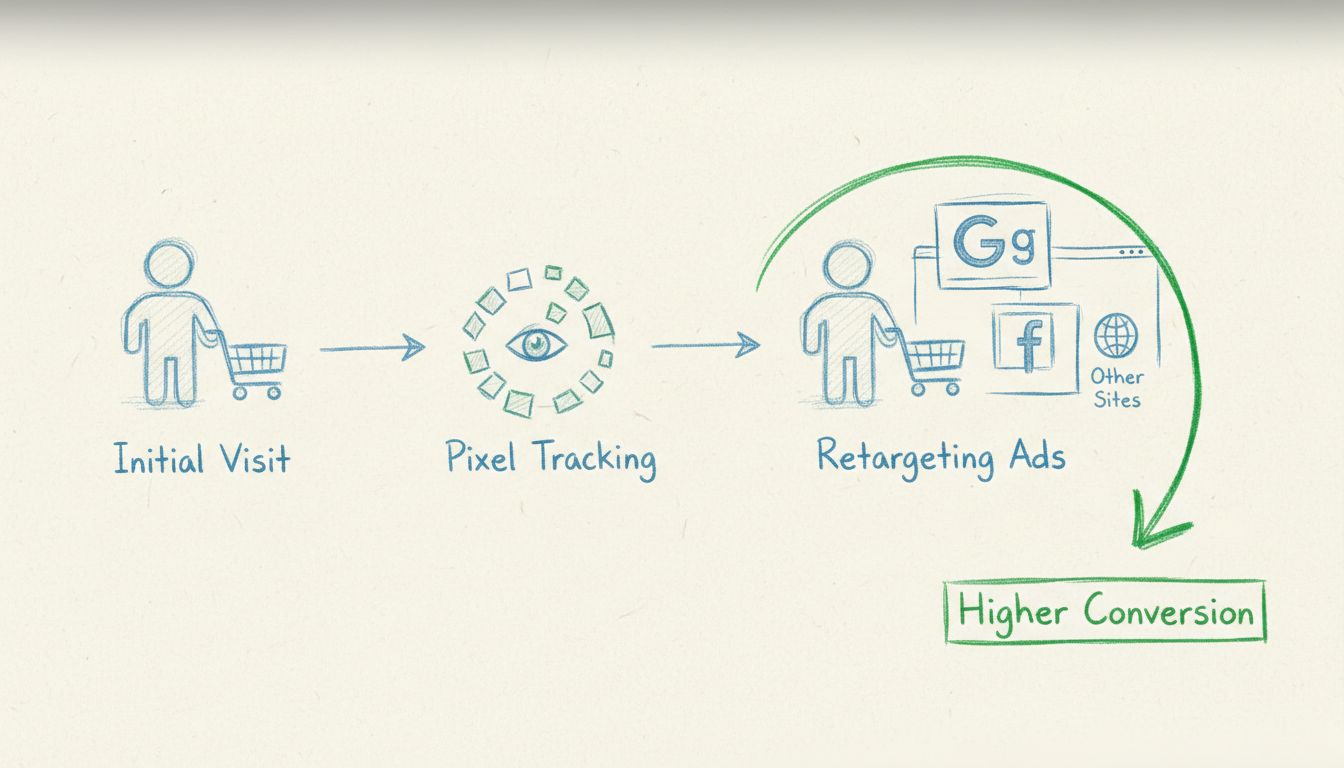
How Does Retargeting Help Increase Profits?
Discover how retargeting increases profits by re-engaging interested visitors with personalized ads. Learn conversion optimization strategies and ROI benefits w...
8 min read


what ad retargeting is and how to use it to re-engage website visitors. Complete guide with strategies, platforms
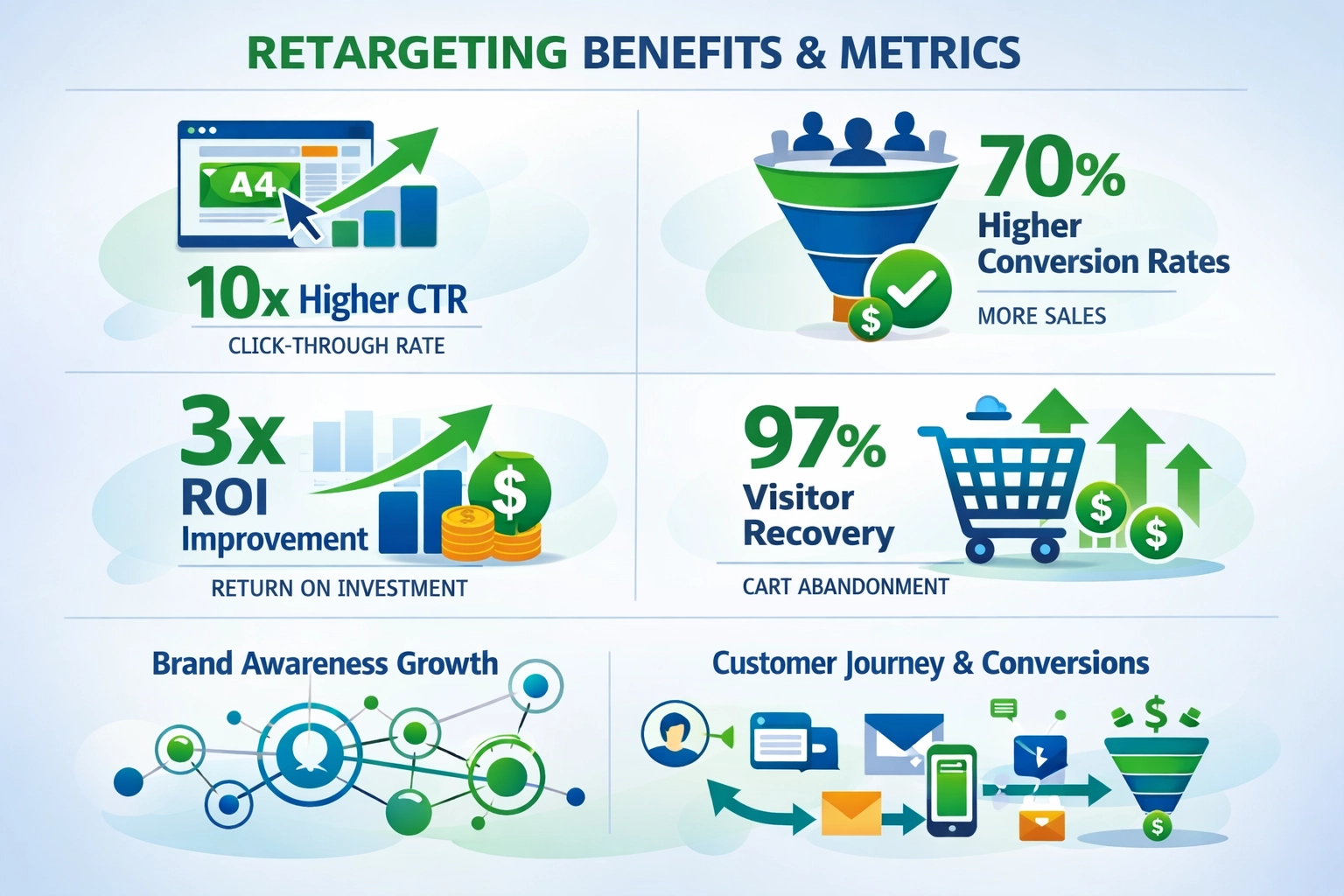
Imagine this: a visitor browses your website, shows genuine interest in your products, but leaves without making a purchase. Without a strategy to reconnect with them, that potential customer is likely gone forever. This is where ad retargeting comes in. Ad retargeting is a powerful marketing strategy that targets users who have previously visited your website, displaying relevant ads to encourage them to return and complete desired actions like making a purchase, signing up for a newsletter, or filling out a form. The statistics are compelling: 97% of first-time website visitors leave without converting, but retargeting gives you a second chance to bring them back. By leveraging retargeting, businesses see 10x higher click-through rates than standard display ads and visitors are 70% more likely to convert when retargeted, making it one of the most cost-effective strategies for improving your bottom line.
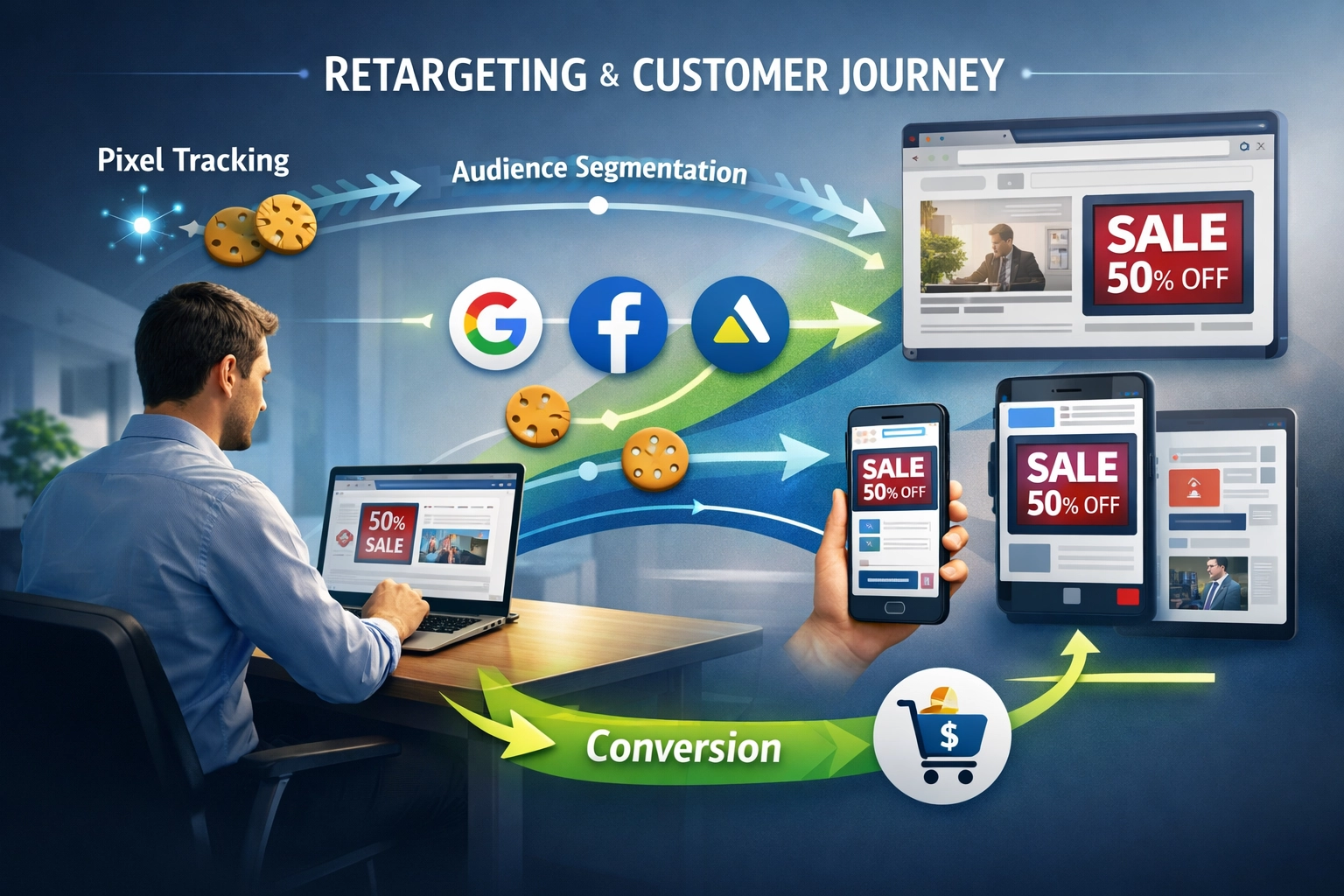
The underlying mechanics of retargeting involve utilizing tracking pixels and cookies to identify and follow users across the web. When a visitor lands on your website, a small piece of JavaScript code called a tracking pixel is triggered, which places an anonymous cookie in their browser. This cookie doesn’t collect personal information; it simply marks the browser as having visited your site, like a digital hand stamp. As that person browses other websites within an ad network, the cookie is recognized, and your ads are displayed to them, keeping your brand visible throughout their online journey. This process typically uses third-party cookies, though browser changes from Safari and iOS are making this more complex. The key to effective retargeting is audience segmentation—dividing your visitors into specific groups based on their behavior (cart abandoners, product viewers, blog readers) so you can deliver highly relevant messages to each segment. It’s important to note that responsible data handling and transparency about tracking are essential, especially with privacy regulations like GDPR and CCPA becoming increasingly important.
| Aspect | Retargeting | Remarketing |
|---|---|---|
| Method | Display ads across web | Email-based follow-up |
| Audience | Anonymous visitors | Known contacts/customers |
| Platforms | Google Ads, Facebook, Display Network | Email, CRM platforms |
| Goal | Bring back website visitors | Nurture existing relationships |
| Best For | Cart abandonment, product viewers | Past customers, subscribers |

Set up advanced tracking in minutes. No credit card required.
Retargeting isn’t one-size-fits-all. Different types of retargeting campaigns serve different purposes and reach users through different channels. Understanding these types helps you choose the right approach for your business goals:
Site Retargeting: The most common form, displaying ads to users who visited specific pages or sections of your website. This reinforces your brand message and encourages them to return.
Search Retargeting (RLSA): Showing ads to users on search engines when they perform related searches after visiting your site. This targets high-intent users actively researching solutions.
Social Media Retargeting: Reaching past website visitors on platforms like Facebook, Instagram, LinkedIn, and TikTok. These ads appear directly in users’ feeds where they’re already engaged.
Dynamic Retargeting: Automatically showing users the exact products or services they viewed on your website. This highly personalized approach significantly increases conversion chances.
Email Retargeting: Serving ads to users who have interacted with your email campaigns. This combines email marketing with display advertising for maximum impact.
Video Retargeting: Targeting users who have watched or engaged with your video content on YouTube or your website, keeping them engaged with follow-up video ads.
The benefits of implementing a retargeting strategy are substantial and directly impact your bottom line. Increased conversion rates are the primary benefit—retargeting ads achieve 2-3x higher conversion rates than standard display ads because you’re targeting users who already know your brand. This leads to a dramatically lower cost-per-acquisition compared to acquiring brand-new visitors, making every advertising dollar work harder. The return on investment (ROI) is exceptional; by focusing your budget on a pre-qualified audience, you optimize your marketing spend and increase profitability. Beyond conversions, retargeting provides improved brand recall through repeated exposure, ensuring your brand stays top-of-mind when users make purchasing decisions. For e-commerce businesses, retargeting is particularly powerful for recovering abandoned shopping carts—with nearly 70% of shoppers leaving items behind, retargeting ads showing the exact products they viewed can recover significant lost revenue. Additionally, retargeting builds brand awareness and trust by maintaining consistent visibility and demonstrating that your products are relevant to users’ needs.
Be the first to know about new features and product updates.
To implement retargeting effectively, you need the right platform. Google Ads is one of the most powerful options, offering massive reach through the Google Display Network (reaching over 90% of internet users), YouTube, and Gmail. It provides multiple retargeting options including Standard Remarketing, Dynamic Remarketing, and Remarketing Lists for Search Ads (RLSA). Facebook and Instagram Ads (Meta) excel at visual, engaging retargeting with sophisticated targeting options through the Meta Pixel, allowing you to reach users on Facebook, Instagram, Messenger, and the Audience Network. For B2B businesses, LinkedIn Ads offers excellent retargeting capabilities through the LinkedIn Insight Tag, allowing you to segment audiences by job title, company, and industry. Microsoft Ads (Bing) provides retargeting across Bing, Outlook, and MSN, particularly effective for reaching older demographics and B2B audiences. Specialized retargeting platforms like AdRoll and Criteo offer advanced programmatic solutions across thousands of websites and apps, providing sophisticated automation and optimization features. Each platform has unique strengths, and most successful campaigns leverage multiple platforms to maximize reach and conversions.
Ready to launch your retargeting campaign? Follow these seven essential steps to get started:
Define Your Goals and Audience Segments: Clarify whether you want to recover abandoned carts, increase brand awareness, generate leads, or drive repeat purchases. Create specific audience segments based on user behavior—cart abandoners, product viewers, blog readers, and past customers each need different messaging.
Choose Your Platforms: Select platforms that align with your target audience. Start with Google Ads and Facebook, then expand to LinkedIn, TikTok, or specialized platforms as you scale. Consider where your audience spends time online.
Install Your Tracking Pixel: Add the platform’s pixel code to your website. This is the foundation of your retargeting—without it, you can’t track visitors or build audiences. Most platforms provide simple installation instructions.
Create Audience Lists: Build custom audiences based on specific behaviors. Segment users by pages visited, time spent on site, products viewed, or actions taken. More granular segmentation leads to better results.
Design Compelling Ad Creative: Create visually appealing ads with clear, persuasive copy. Use dynamic retargeting to show the exact products users viewed. Include strong calls-to-action like “Complete Your Purchase” or “Claim Your Discount.”
Set Your Budget and Bids: Allocate your budget based on your goals and expected ROI. Start with manual cost-per-click (CPC) bidding to control costs, then transition to smarter bidding strategies like Target CPA or ROAS as you gather data.
Launch and Monitor Your Campaign: Start your campaign and track performance daily. Monitor key metrics like click-through rate, conversion rate, and return on ad spend. Make adjustments based on performance data to continuously improve results.
Success with retargeting requires following proven best practices that maximize results while respecting user experience. Frequency capping is essential—limit ad impressions to 5-10 per user per week to prevent ad fatigue and maintain positive brand perception. Audience segmentation is critical; tailor your messaging to specific groups rather than showing the same ad to everyone. Cart abandoners need different messaging than product viewers, and past customers should see upsells rather than first-time buyer offers. A/B testing different ad creatives, headlines, and calls-to-action helps identify what resonates best with each segment. Create compelling ad creative that acknowledges your existing relationship with the viewer—“Still thinking about those shoes?” is more effective than generic messaging. Exclude converted users from your campaigns to avoid wasting budget showing ads to people who already bought. Finally, monitor and optimize continuously based on performance data. Track metrics like click-through rate, conversion rate, and ROAS, then make data-driven adjustments to improve campaign performance over time.
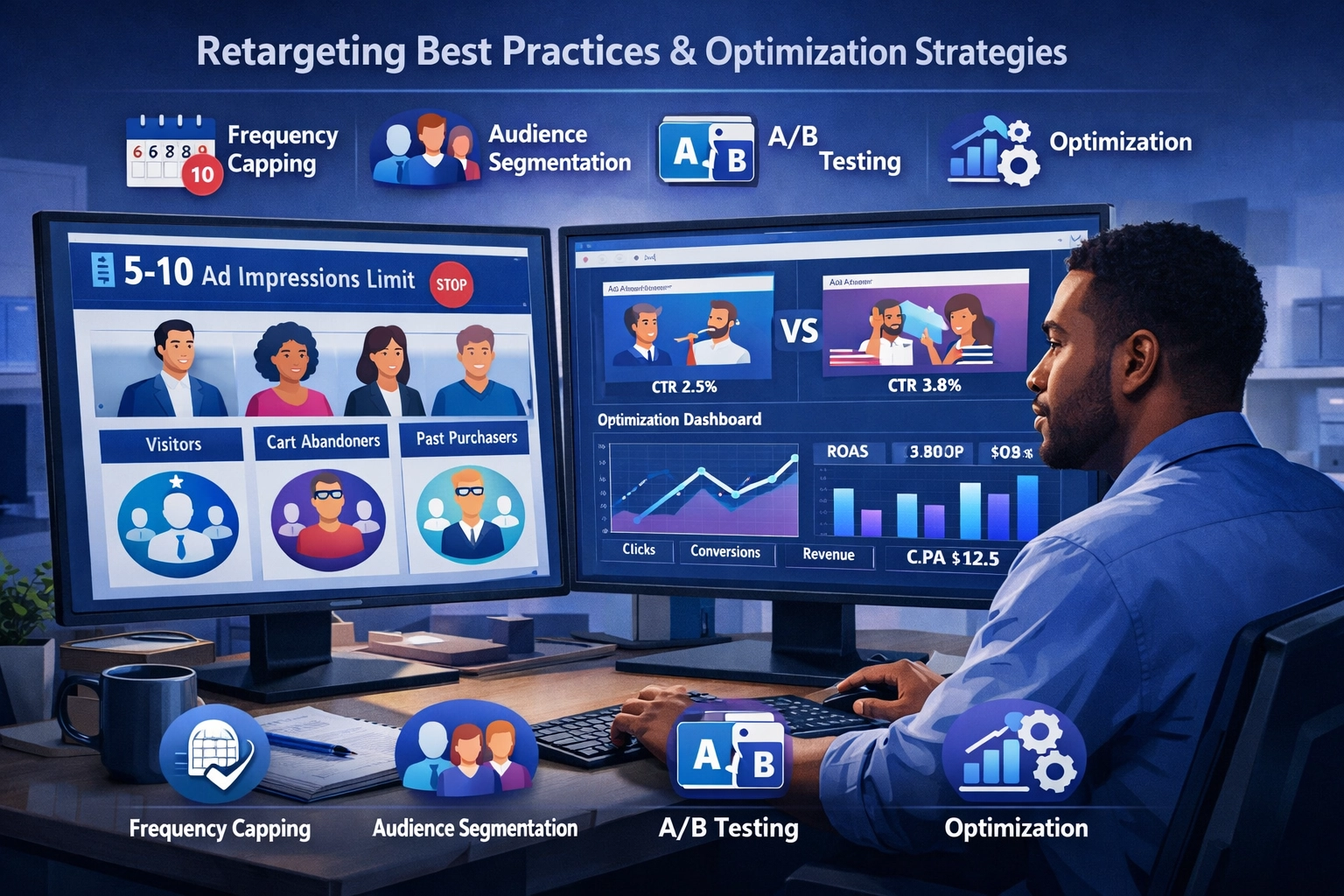
Even with the best intentions, retargeting campaigns can fail if you make common mistakes. Over-targeting occurs when you bombard users with excessive ad impressions, leading to annoyance and decreased engagement. Strike a balance between sufficient exposure and avoiding ad fatigue. Ignoring audience segmentation is a critical error—treating all visitors as a homogenous group results in generic messaging that fails to resonate. Invest time in understanding your audience and segmenting them based on relevant criteria. Poor ad creative that doesn’t capture attention or communicate value will underperform regardless of targeting. Regularly refresh your creative to prevent ad blindness. Failing to track results means you miss valuable insights about what’s working and what isn’t. Utilize tracking tools to monitor conversions, click-through rates, and customer engagement. Not excluding converted users wastes budget showing ads to people who already bought. Neglecting frequency caps leads to ad fatigue and negative brand perception. Avoid these mistakes by implementing proper audience segmentation, compelling creative, frequency caps, and continuous optimization.
To ensure your retargeting campaigns deliver results, you must track the right metrics. Click-through rate (CTR) measures how many people click your ads—a good CTR for retargeting is typically 0.7% - 2%. If your CTR is low, test different ad creatives, headlines, and calls-to-action. Conversion rate tells you what percentage of users complete a desired action after clicking your ad. Retargeting ads usually achieve 2-3x higher conversion rates than standard display ads. Cost-per-acquisition (CPA) shows how much you spend to acquire a single customer. Lower CPA indicates efficient spending. Return on ad spend (ROAS) is your north star metric—a ROAS of 3:1 or higher is considered good, meaning you generate $3 in revenue for every $1 spent. View-through conversions track when users see your ad but don’t click, yet convert later, highlighting the brand-building impact of your ads. Frequency metrics show how many times users see your ads—keep this between 5-10 impressions per week. Monitor these metrics regularly and use the insights to optimize your campaigns for maximum profitability.
| Metric | Definition | Good Benchmark |
|---|---|---|
| CTR | Clicks / Impressions × 100 | 0.7% - 2% |
| Conversion Rate | Conversions / Clicks × 100 | 2-3% (higher than standard) |
| CPA | Total Spend / Conversions | Lower than acquisition ads |
| ROAS | Revenue / Ad Spend | 3:1 or higher |
| Frequency | Total Impressions / Unique Users | 5-10 per week |
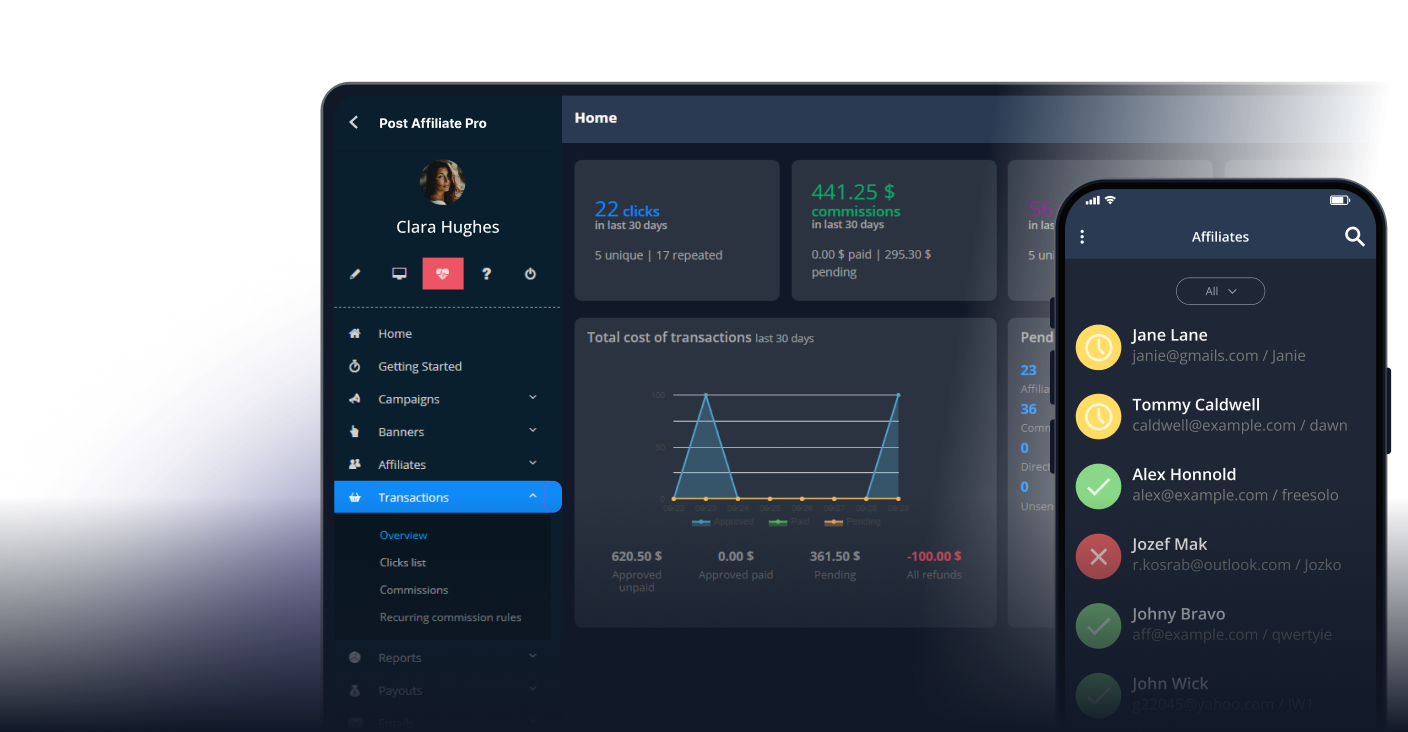
Affiliate marketers can leverage retargeting to dramatically improve their conversion rates and earnings. When affiliates drive traffic to merchant websites, many visitors leave without converting. Retargeting allows affiliates to re-engage these visitors with targeted ads promoting the same products or services, creating multiple touchpoints that increase the likelihood of conversion. By integrating retargeting with affiliate tracking, you can measure which retargeting campaigns drive the most conversions and optimize your affiliate strategy accordingly. PostAffiliatePro stands out as the top solution for affiliate networks and marketers implementing retargeting strategies. PostAffiliatePro seamlessly integrates with major retargeting platforms like Google Ads and Facebook, allowing you to track affiliate conversions through retargeting campaigns with precision. The platform provides detailed analytics showing which affiliates drive the most valuable traffic, which retargeting campaigns perform best, and where to allocate your budget for maximum ROI. With PostAffiliatePro, you can segment your affiliate audience, create custom retargeting campaigns for different affiliate tiers, and automate commission tracking for retargeting-driven conversions. This integration transforms retargeting from a general marketing tactic into a powerful affiliate-specific strategy that drives measurable results.
Ad retargeting is no longer optional for businesses serious about maximizing conversions and ROI. With 97% of first-time visitors leaving without converting, retargeting provides a critical second chance to turn interested prospects into paying customers. The combination of 10x higher click-through rates, 2-3x higher conversion rates, and lower cost-per-acquisition makes retargeting one of the most effective marketing strategies available. By implementing the strategies, best practices, and platforms discussed in this guide, you can recover lost sales, build brand awareness, and significantly improve your bottom line. Don’t let those interested visitors slip away—start your retargeting campaigns today and watch your conversions soar. Ready to maximize your affiliate conversions with retargeting? PostAffiliatePro makes it easy to track, optimize, and scale your retargeting campaigns across your entire affiliate network. Start your free trial today and discover how PostAffiliatePro can transform your affiliate marketing results.
Retargeting uses display ads to reach anonymous visitors who left your website without converting, while remarketing uses email to reach known contacts and past customers. Both aim to re-engage interested users but through different channels and methods.
Costs vary by platform and industry. Average cost-per-click (CPC) ranges from $0.60-$1.30, typically lower than cold traffic. CPM rates on Facebook range from $1-$3 per 1,000 impressions. Retargeting is generally more cost-effective than acquiring new visitors.
Yes, retargeting works for e-commerce, B2B, services, and more. The key is proper audience segmentation and compelling creative tailored to your business model. Even small businesses see significant ROI improvements with strategic retargeting campaigns.
Ongoing campaigns work best for sustained results. Most users need 5-7 touchpoints before converting. Run campaigns continuously but adjust frequency caps to prevent ad fatigue and maintain positive user experience.
No, if done correctly. Frequency capping, relevant ads, and proper audience segmentation ensure users see your ads as helpful, not intrusive. Most consumers have positive or neutral reactions to well-executed retargeting campaigns.
Google Ads offers the widest reach through the Display Network; Facebook excels at visual, engaging retargeting; LinkedIn targets professionals. Most successful campaigns use multiple platforms to maximize reach and conversions.
Set frequency caps (5-10 impressions per week), rotate ad creative regularly, exclude converted users, and monitor performance metrics closely. Continuously test new ad variations and messaging to keep your campaigns fresh and engaging.
Yes, that's the core of retargeting. Target product viewers, blog readers, and form visitors. Segment by behavior to deliver relevant messages. Cart abandoners are your hottest leads and should receive special attention with targeted offers.
PostAffiliatePro integrates seamlessly with retargeting platforms to help you track and optimize your affiliate campaigns. Start recovering lost visitors and boost your conversion rates today.
Discover how retargeting increases profits by re-engaging interested visitors with personalized ads. Learn conversion optimization strategies and ROI benefits w...

Retargeting is flexible, so there are many creative ways to follow up on the initial site visit. Learn about the ways to improve immediately.

Discover proven strategies to increase targeted website traffic through SEO, paid ads, content marketing, and affiliate programs. Learn how PostAffiliatePro hel...
Join our community of happy clients and provide excellent customer support with Post Affiliate Pro.



Cookie Consent
We use cookies to enhance your browsing experience and analyze our traffic. See our privacy policy.