


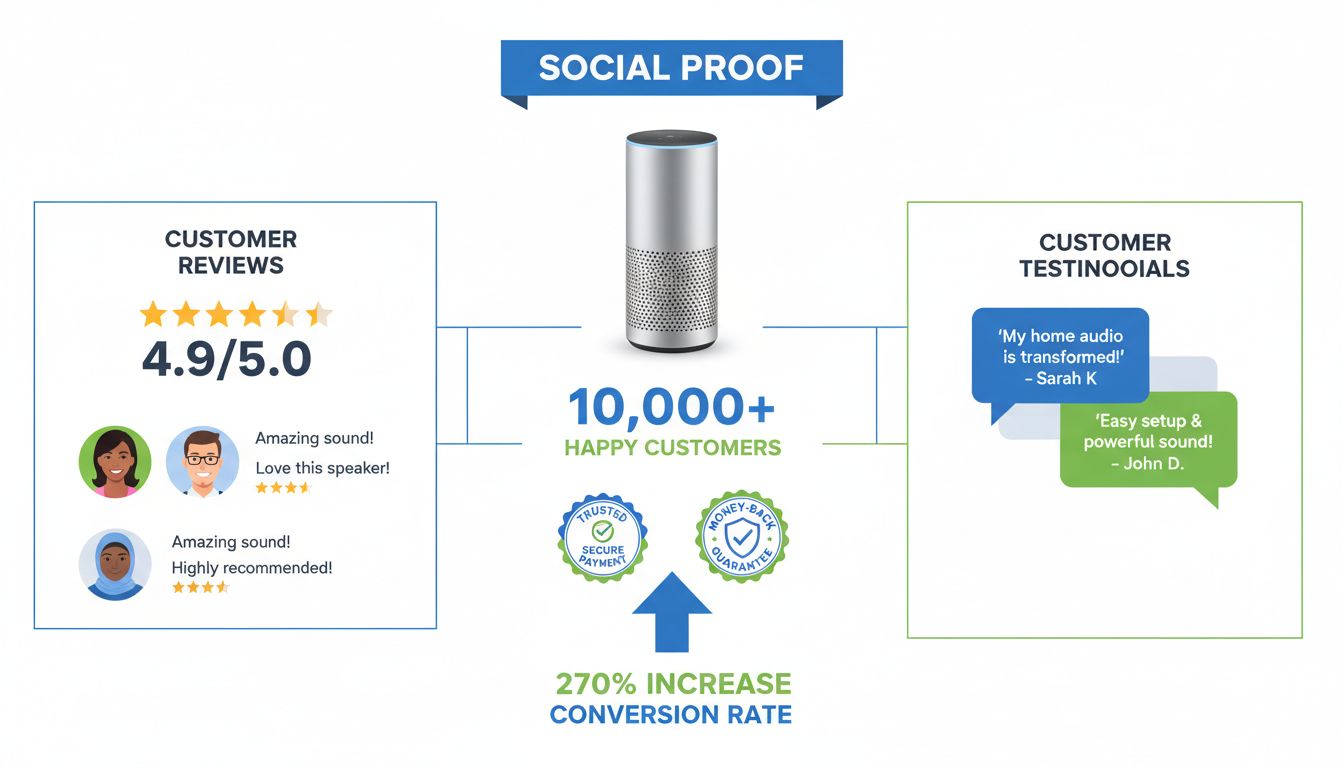
Why Is Social Proof Important on a Product Page?
Discover why social proof is crucial for product pages. Learn how customer reviews, testimonials, and trust signals boost conversions by up to 270% and build cu...
9 min read


how to leverage customer reviews, real use cases, and statistics to build trust and credibility in affiliate marketing.
Social proof is the psychological phenomenon where people assume the actions and beliefs of others reflect the correct behavior, especially in situations of uncertainty. This principle, popularized by psychologist Robert Cialdini in his groundbreaking work on influence, demonstrates that humans are inherently social creatures who look to others for guidance when making decisions. In affiliate marketing, social proof becomes a powerful conversion tool because potential customers are often unfamiliar with the products or services you’re promoting—they need reassurance that others have had positive experiences. Research shows that 92% of consumers trust peer recommendations over traditional advertising, making social proof one of the most credible marketing assets at your disposal. When you showcase real customer experiences, reviews, and endorsements in your affiliate content, you’re essentially leveraging the collective validation of satisfied users to convince new prospects that your recommendation is trustworthy. This psychological principle transforms skeptical visitors into confident buyers by removing the friction of doubt.

Different types of social proof serve distinct purposes in your affiliate marketing strategy, and understanding which ones resonate most with your audience is crucial for maximizing conversions. The most effective social proof types combine authenticity with specificity, allowing potential customers to see themselves in the experiences of others. Research indicates that 97% of consumers say online reviews influence their purchasing decisions, while 88% trust reviews as much as personal recommendations from friends and family. This demonstrates that the type of social proof you choose can dramatically impact your affiliate revenue.
| Type | Description | Conversion Impact |
|---|---|---|
| Customer Reviews | Direct feedback from verified purchasers with ratings and detailed comments | Highest impact; builds immediate trust and addresses specific concerns |
| Testimonials | Curated quotes or video statements from satisfied customers | Strong impact; adds personality and relatability to your promotion |
| User-Generated Content | Photos, videos, and posts created by customers using the product | Very high impact; demonstrates real-world application and authenticity |
| Case Studies | In-depth stories showing before/after results with measurable outcomes | Excellent for high-ticket items; builds credibility through detailed proof |
| Influencer Endorsements | Recommendations from trusted industry experts or personalities | High impact; leverages existing audience trust and authority |
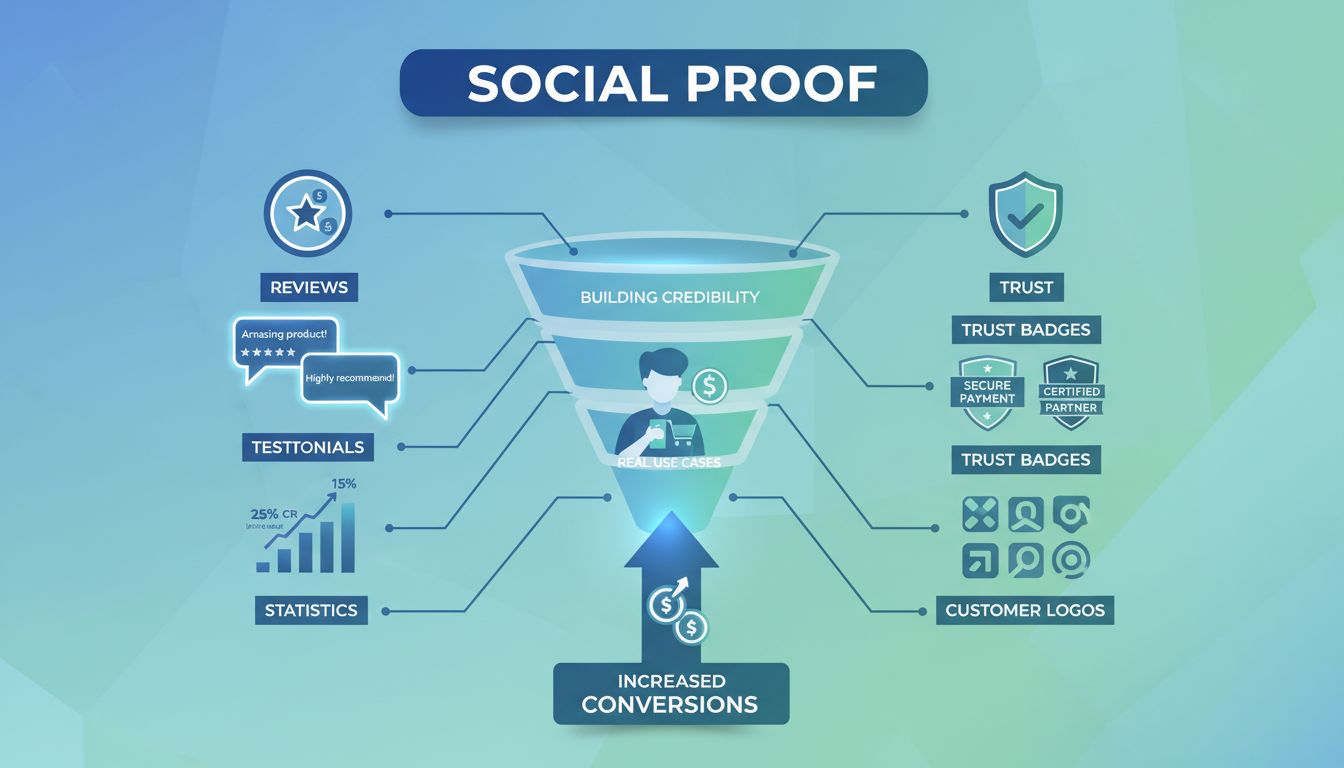
When planning your social proof strategy, consider both the conversion impact and the implementation difficulty of each type. The following table provides a quick reference for prioritizing your efforts:
| Social Proof Type | Best Use Case | Conversion Impact | Implementation Difficulty |
|---|---|---|---|
| Customer Testimonials | Building emotional connection | High | Low |
| Star Ratings & Reviews | Quick credibility signals | Very High | Low |
| Usage Statistics | Demonstrating popularity | High | Medium |
| Expert Endorsements | Authority building | Very High | High |
| Case Studies | Detailed proof of results | Very High | High |
| Customer Logos | B2B credibility | High | Medium |
| Video Testimonials | Authentic engagement | Very High | Medium |
| Social Media Proof | Real-time validation | Medium | Low |

Set up advanced tracking in minutes. No credit card required.
Authentic customer reviews are the cornerstone of effective social proof in affiliate marketing, serving as unbiased testimonials that potential customers find far more credible than your own promotional claims. To collect genuine reviews, implement multiple collection channels—follow-up emails after purchase, in-product review prompts, and dedicated review platforms—while making the process simple and frictionless for customers. The importance of transparency cannot be overstated; displaying both positive and negative reviews (when appropriate) actually increases credibility because it demonstrates that you’re not cherry-picking feedback. 95% of consumers consult reviews before making a purchase, and products with 5 or more reviews are 270% more likely to be purchased compared to those with fewer reviews. When negative reviews do appear, treat them as opportunities to demonstrate excellent customer service by responding professionally and offering solutions—this shows potential customers that you stand behind your recommendations. The key is presenting reviews prominently on your affiliate landing pages, email campaigns, and social media content, ensuring they’re easily visible and impossible to ignore. By prioritizing authentic customer feedback, you transform skeptical prospects into confident buyers who feel assured by the collective validation of real users.
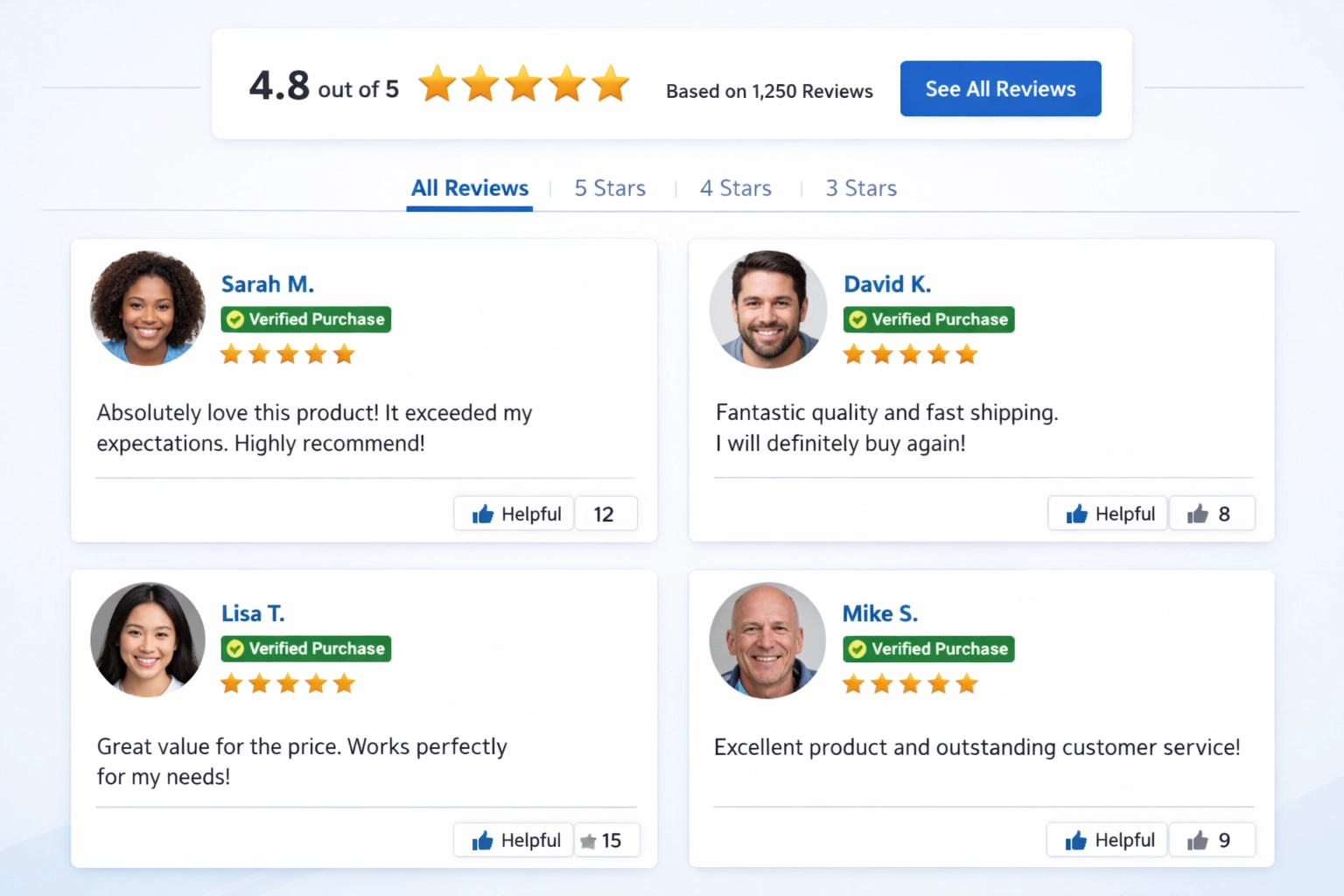
Real-world examples and case studies provide concrete evidence that your affiliate recommendations deliver tangible results, transforming abstract product benefits into measurable outcomes that resonate with potential customers. When you showcase before-and-after scenarios with specific metrics—such as time saved, money earned, or problems solved—you give prospects a clear picture of what they can expect from their own purchase. Case studies are particularly powerful because they tell a story: they introduce a relatable protagonist facing a challenge, explain how the product solved that challenge, and quantify the results in ways that statistics alone cannot achieve. Research demonstrates that testimonials increase conversions by 34%, while positive reviews lead to 31% more spending from customers who encounter them. The most effective case studies include specific details about the customer’s situation, the implementation process, and the measurable results achieved—avoiding vague claims in favor of concrete numbers and timelines. Present case studies in multiple formats across your affiliate channels: written narratives on landing pages, video testimonials on social media, and brief success stories in email campaigns. By providing these detailed, authentic examples of real people achieving real results, you eliminate the skepticism that often prevents conversions and position your affiliate recommendations as proven solutions.
Be the first to know about new features and product updates.
Numbers and data carry inherent credibility that narrative alone cannot achieve, making statistics one of the most persuasive elements you can incorporate into your affiliate marketing copy. When potential customers see concrete data—whether it’s the percentage of users who achieved results, the average time to see benefits, or the cost savings realized—they perceive your claims as more factual and less like marketing hype. The most compelling statistics are those that directly address customer concerns or desires: 50% of consumers visit a website after reading a positive review, demonstrating that social proof drives traffic; 87% of buying decisions start with online research, showing that informed customers are more likely to convert. However, the key to effective data presentation is balance—overwhelming readers with too many statistics can backfire, creating information overload that actually reduces conversions. Instead, strategically place your most impactful statistics where they’ll have maximum effect: in headlines to grab attention, in the middle of persuasive paragraphs to reinforce key points, and near your call-to-action to provide final reassurance. The most effective approach combines statistics with context, explaining not just what the numbers are, but what they mean for your specific audience. By weaving relevant data throughout your affiliate content, you create a compelling narrative backed by evidence that transforms skeptical readers into confident customers ready to make a purchase.
Social proof is most effective when it’s strategically distributed across all your affiliate marketing channels, creating multiple touchpoints where potential customers encounter validation and reassurance. Different platforms require different approaches to social proof presentation, and understanding these nuances will help you maximize conversions across your entire marketing ecosystem. Research shows that 67% of consumers trust endorsements from unbiased experts, making it crucial to position your social proof as authentic and independent rather than self-serving. Here are the best practices for implementing social proof across your key channels:
Website & Landing Pages: Feature customer testimonials prominently above the fold, include star ratings and review counts near your call-to-action buttons, and create dedicated case study pages that showcase detailed success stories with metrics and customer photos.
Email Campaigns: Open with a compelling customer quote or statistic in your subject line or preview text, include brief testimonials in the email body to build credibility, and link to full case studies or review pages for readers who want more detailed proof.
Social Media: Share user-generated content and customer photos using your affiliate product, post short video testimonials from satisfied customers, and regularly highlight positive reviews and ratings to build social proof in your followers’ feeds.
Blog Content: Embed customer quotes and statistics throughout your articles to support claims, create dedicated blog posts featuring detailed case studies, and link to review pages and testimonial sections to drive traffic to your social proof assets.
Paid Advertising: Use customer testimonials and ratings in ad copy and creative to increase click-through rates, highlight specific results and statistics in ad headlines, and direct traffic to landing pages rich with social proof elements.
Affiliate Product Pages: Display customer reviews and ratings prominently, include comparison tables showing how the product performs against alternatives, and feature success stories from customers in similar situations to your target audience.
By strategically implementing social proof across these channels, you create a cohesive ecosystem where potential customers encounter consistent validation at every stage of their buyer’s journey. Tools like PostAffiliatePro can help you manage and track your affiliate programs while integrating social proof elements, allowing you to monitor which types of social proof drive the highest conversions and optimize your strategy accordingly.
Understanding the effectiveness of your social proof implementation requires systematic tracking and analysis of key metrics that directly correlate with revenue generation. The most important metrics to monitor include conversion rate changes after implementing social proof, average order value increases, customer acquisition cost reductions, and repeat purchase rates among customers who encountered social proof before buying. The impact of social proof on conversions is substantial and measurable: sales-based social proof notifications boost conversions by 98%, demonstrating the dramatic effect of real-time purchase alerts, while recent booking widgets increase conversions by 18%, showing that time-sensitive social proof creates urgency. To effectively measure social proof impact, implement tracking mechanisms for each social proof element—use UTM parameters to track traffic from testimonial pages, A/B test landing pages with and without reviews to isolate the effect, and monitor conversion rates across different customer segments to identify which types of social proof resonate most with your audience. Calculate the ROI of your social proof implementation by comparing the cost of collecting and displaying reviews against the revenue increase generated by higher conversion rates and increased customer lifetime value. The data will likely reveal that social proof is one of your highest-ROI marketing investments, justifying continued effort in collecting authentic reviews, creating case studies, and showcasing customer success stories. By treating social proof as a measurable, data-driven component of your affiliate strategy rather than a nice-to-have addition, you’ll unlock significant revenue growth and build a sustainable competitive advantage in your affiliate marketing efforts.
PostAffiliatePro helps you manage and showcase customer testimonials, reviews, and case studies to build trust and increase conversions. Track which social proof elements drive the highest ROI and optimize your affiliate marketing strategy.
Discover why social proof is crucial for product pages. Learn how customer reviews, testimonials, and trust signals boost conversions by up to 270% and build cu...

How crowd marketing helps affiliates build trust, increase quality traffic, generate natural backlinks, and boost conversion rates without penalties.

Learn how small businesses leverage affiliate marketing with social proof, user-generated content, and local influencers to drive growth and sales.
Join our community of happy clients and provide excellent customer support with Post Affiliate Pro.




Cookie Consent
We use cookies to enhance your browsing experience and analyze our traffic. See our privacy policy.