



How to Make It Easier for Affiliates to Join Your Program
proven strategies to streamline affiliate recruitment with dedicated landing pages, simplified sign-up processes, clear guidelines
11 min read


if investing in affiliate marketing pays off. ROI benchmarks, budget allocation strategies, and proven investment tactics to accelerate growth and maximize
Affiliate marketing has become one of the most cost-effective ways to grow your business, but many entrepreneurs hesitate when it comes to investing money into their campaigns. The question isn’t whether you should invest—it’s how much and where to allocate your budget for maximum returns. Smart spending on affiliate marketing can accelerate your growth exponentially, turning a modest investment into substantial revenue streams. Unlike traditional advertising where you pay upfront with uncertain results, affiliate marketing operates on a performance-based model that rewards actual conversions and sales. When executed strategically, affiliate marketing delivers exceptional ROI that consistently outperforms other digital marketing channels.
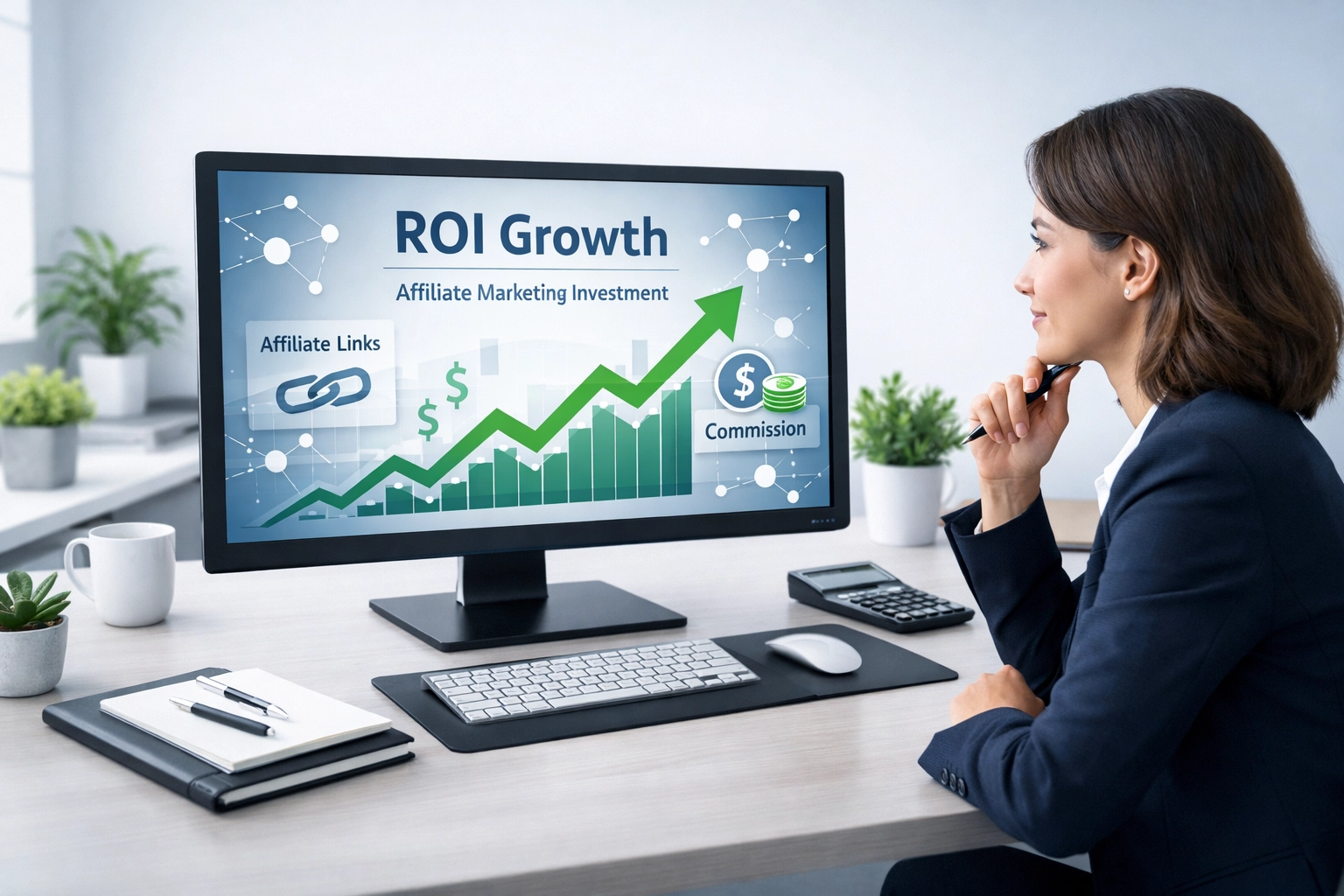
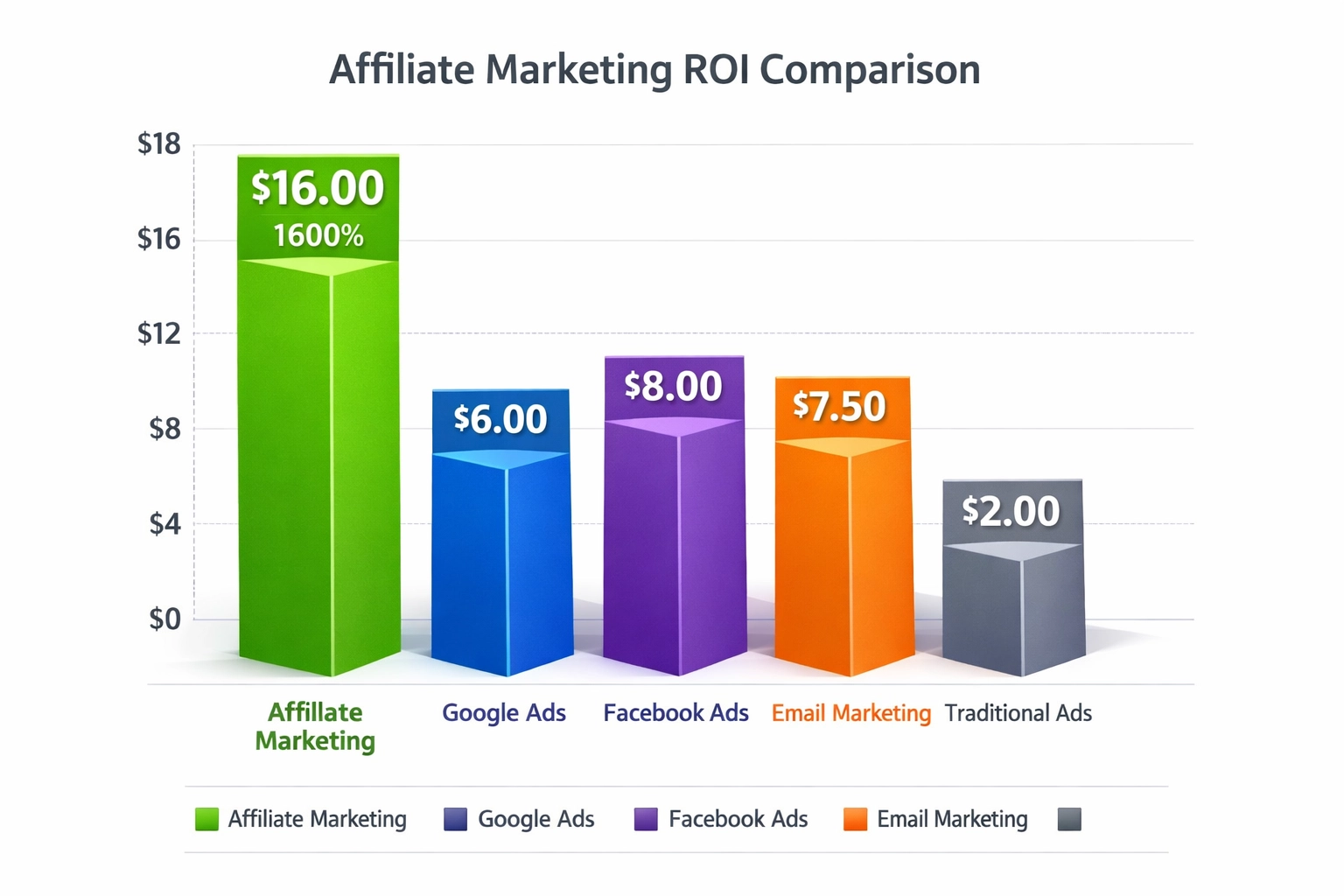
Affiliate marketing stands out in the digital marketing landscape primarily because of its exceptional return on investment. For every $1 spent on affiliate marketing, businesses see an average return of $16—a 16:1 ROI that few other marketing channels can match. This remarkable statistic comes from comprehensive industry research and reflects the real-world performance of well-executed affiliate programs. The reason affiliate marketing delivers such superior ROI lies in its fundamental structure: you only pay for actual results. Unlike paid advertising where you pay for impressions or clicks regardless of conversions, affiliate marketing operates on a performance-based payment model where you compensate partners only when they deliver measurable outcomes—sales, leads, or clicks. This alignment of incentives creates a win-win scenario where both the business and affiliates are motivated to drive quality traffic and conversions. Additionally, affiliate networks extend your reach exponentially without requiring you to build and manage a large in-house marketing team. The scalability of affiliate programs means your investment grows more efficient as your program matures and attracts higher-quality partners.

Set up advanced tracking in minutes. No credit card required.
Understanding the financial structure of affiliate marketing requires examining costs across different business stages. Here’s a comprehensive breakdown of typical monthly expenses:
| Business Stage | Commission Costs | Platform Fees | Management Costs | Total Estimate |
|---|---|---|---|---|
| Beginner | $200-500 | $50-150 | $50-200 | $300-850/month |
| Growth | $1,000-3,000 | $150-300 | $300-800 | $1,450-4,100/month |
| Scaling | $5,000-15,000 | $300-500 | $1,000-3,000 | $6,300-18,500/month |
These figures represent realistic investments for different business maturity levels. Beginner-stage businesses typically focus on building their affiliate network with modest commission payouts and basic platform functionality. Growth-stage businesses expand their affiliate base, invest in better tracking and management tools, and allocate budget for affiliate recruitment and support. Scaling-stage businesses operate sophisticated programs with higher commission rates to attract top-tier affiliates, premium platform features, and dedicated management resources. The actual costs within each range depend on your industry, commission structure, affiliate quality, and program complexity.
Starting an affiliate marketing program doesn’t require a massive budget, but strategic investment accelerates results significantly. The minimum monthly investment to run a viable affiliate program typically ranges from $300 to $1,000, depending on your business model and goals. This investment breaks down into several essential components: affiliate platform fees ($50-300/month), initial affiliate recruitment and onboarding ($100-400/month), commission payouts for early sales ($100-500/month), and basic marketing materials or promotional support ($50-200/month). The good news is that you can technically start an affiliate program with zero investment using free platforms and organic recruitment methods, though this approach requires significantly more time and effort. However, investing even a modest amount in a dedicated affiliate platform like PostAffiliatePro immediately improves tracking accuracy, affiliate experience, and program professionalism. The key is viewing these initial costs not as expenses but as investments that generate returns through increased sales and brand reach. Most businesses recoup their initial investment within the first 2-3 months of running an optimized affiliate program.
Be the first to know about new features and product updates.
While affiliate marketing itself is performance-based, investing in paid advertising to promote your affiliate program can dramatically accelerate growth. Paid ads serve as an accelerator, helping you reach potential affiliates and customers faster than organic methods alone. The strategy involves allocating a testing budget—typically $500-2,000 initially—to identify which advertising channels, messages, and audiences generate the best affiliate recruitment and customer acquisition results. Research comparing organic versus paid traffic shows that paid traffic converts 2-3x faster than organic traffic, though organic traffic often has better long-term economics. When you’re in the growth phase, investing in paid ads to recruit high-quality affiliates can compound your results exponentially. The optimal approach involves starting with organic affiliate recruitment while simultaneously testing small paid campaigns on platforms like Google Ads, Facebook, and LinkedIn. Once you identify winning channels and messaging, you can scale your paid advertising budget proportionally to your affiliate program’s performance. Most successful programs allocate 10-20% of their affiliate marketing budget to paid advertising for recruitment and customer acquisition, with the remainder going to affiliate commissions and platform management.
The right software infrastructure is crucial for affiliate marketing success, and investing in quality tools directly impacts your ROI. Essential tools for affiliate marketing include: affiliate management platforms ($50-500/month), tracking and analytics software ($100-300/month), email marketing platforms ($20-300/month), content management systems ($0-100/month), and payment processing solutions ($0-100/month). PostAffiliatePro stands out as the top choice for affiliate management because it combines powerful tracking, flexible commission structures, comprehensive reporting, and excellent affiliate experience in one platform. The ROI of tool investments becomes apparent quickly—proper tracking prevents revenue leakage, automated management reduces manual work, and better analytics enable data-driven optimization. While free alternatives exist for many tools, they typically lack the sophistication needed for scaling programs and often create bottlenecks as your affiliate network grows. Investing $200-500/month in quality tools typically generates 5-10x returns through improved efficiency, better affiliate retention, and more accurate performance tracking. The key is selecting tools that integrate well together and provide the specific features your program needs at its current stage.
Commission structure directly determines your profitability and affiliate motivation, making it a critical investment decision. Common commission models include: Cost Per Sale (CPS) ranging from 5-30% of transaction value, Cost Per Action (CPA) paying fixed amounts for specific actions like signups or form submissions, Cost Per Click (CPC) paying for traffic regardless of conversion, and recurring commissions for subscription-based products. The commission rate you offer significantly affects both your profitability and affiliate recruitment success. Industry benchmarks show: e-commerce typically offers 5-15% CPS commissions, SaaS products offer 20-40% recurring commissions, digital products offer 20-50% commissions, and services offer 10-30% commissions. Higher commission rates attract better-quality affiliates and motivate higher performance, but they reduce your profit margin per sale. The strategic approach involves offering competitive rates within your industry while structuring commissions to reward high-performing affiliates with bonuses or tiered increases. Many successful programs use a base commission rate with performance bonuses, creating incentive for affiliates to drive higher volume and quality traffic.
Calculating affiliate marketing ROI requires understanding and tracking specific performance metrics that reveal program health and profitability. Key metrics include: Earnings Per Click (EPC) measuring average revenue per click, conversion rate showing the percentage of clicks that result in sales, Cost Per Acquisition (CPA) calculating the cost to acquire each customer, and Return on Ad Spend (ROAS) comparing revenue generated to money spent. To calculate affiliate marketing ROI, use this formula: (Total Revenue from Affiliates - Total Affiliate Costs) / Total Affiliate Costs × 100 = ROI Percentage. For example, if your affiliate program generates $50,000 in revenue with $3,000 in total costs, your ROI is ($50,000 - $3,000) / $3,000 × 100 = 1,467% ROI. Industry benchmarks show: healthy affiliate programs achieve 4:1 ROAS (4 dollars revenue for every 1 dollar spent), average EPC ranges from $0.50-$5.00 depending on industry, and conversion rates typically fall between 1-5%. Tracking these metrics consistently enables you to identify underperforming affiliates, optimize commission structures, and allocate budget more effectively. Most successful programs review performance metrics weekly and make adjustments monthly based on data-driven insights.
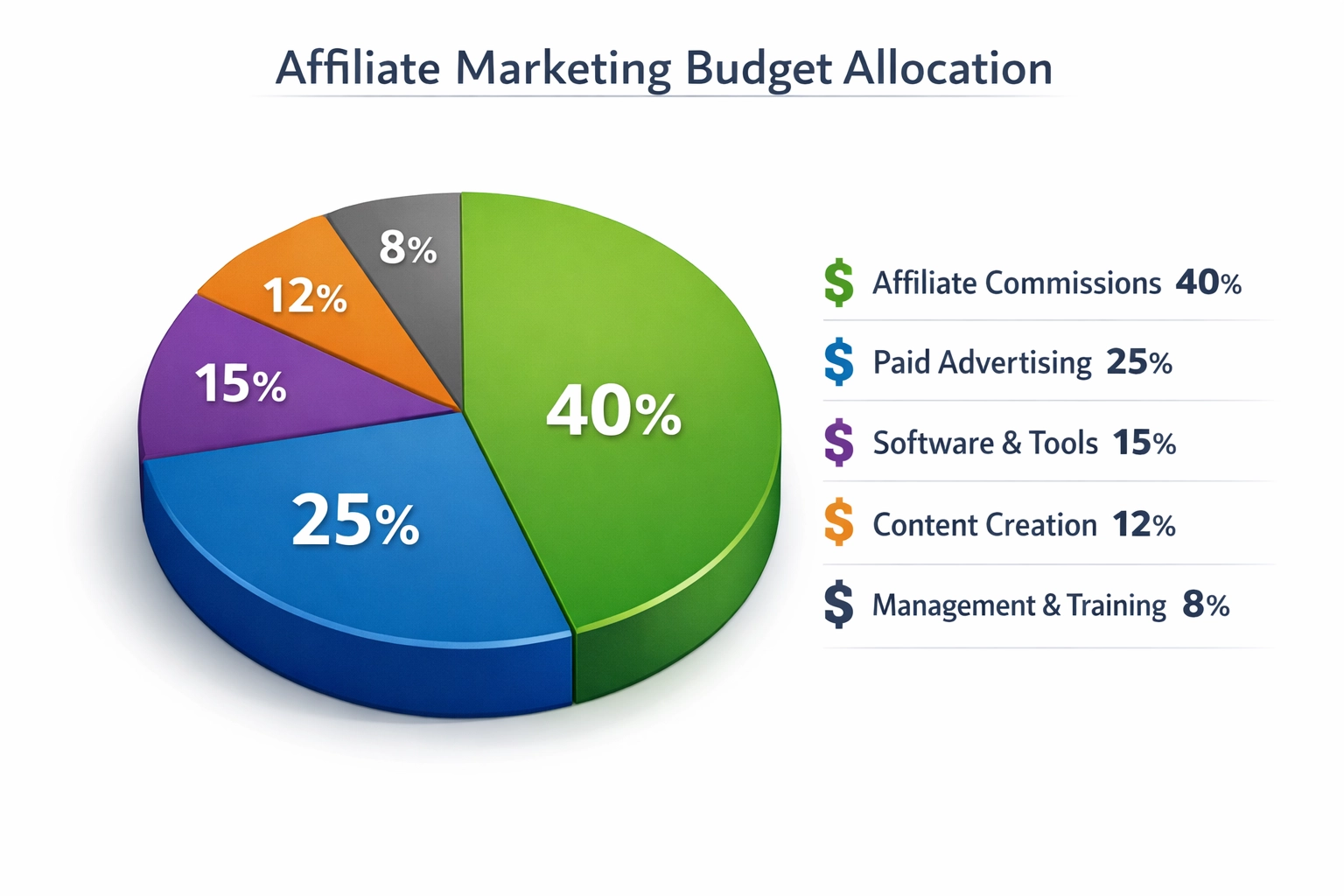
Scaling your affiliate program requires strategic budget allocation and a clear understanding of when and how to increase investment. You should consider scaling when: your current program consistently achieves 4:1 ROAS or better, you have identified top-performing affiliates worth investing in, your infrastructure can handle increased volume, and you have capital available for expansion. Recommended budget allocation for scaling includes: 50-70% for affiliate commissions, 10-20% for platform and software tools, 10-20% for paid advertising and affiliate recruitment, and 5-10% for content creation and affiliate support. The scaling process typically follows distinct phases: Phase 1 (Months 1-3) focuses on building foundation with modest investment and organic recruitment; Phase 2 (Months 4-9) increases investment in paid recruitment and higher commission rates to attract quality affiliates; Phase 3 (Months 10+) optimizes and scales with proven winners while maintaining profitability. A critical principle is reinvestment strategy—allocating a portion of affiliate program profits back into the program for expansion. Many successful programs reinvest 30-50% of profits into higher commissions, better tools, and more aggressive recruitment, creating a compounding growth effect.
Even well-intentioned affiliate marketers often make costly mistakes that undermine ROI and program growth. Here are the most common pitfalls and how to avoid them:
Underfunding the program: Allocating insufficient budget to attract quality affiliates or invest in proper tools. Solution: Commit to at least $300-500/month minimum investment and view it as essential business spending, not optional expense.
Paying commissions too low: Offering below-market commission rates that fail to attract high-quality affiliates. Solution: Research industry benchmarks and offer competitive rates, especially when launching. You can adjust downward once you have quality affiliates.
Neglecting affiliate support: Failing to provide affiliates with marketing materials, training, and responsive communication. Solution: Dedicate resources to affiliate success through regular communication, quality promotional materials, and performance feedback.
Poor tracking and attribution: Using inadequate tracking systems that lose revenue and prevent accurate ROI calculation. Solution: Invest in a robust platform like PostAffiliatePro that provides accurate, real-time tracking and detailed reporting.
Scaling too aggressively: Increasing budget and affiliate recruitment faster than your infrastructure can handle. Solution: Scale gradually, testing each increase and ensuring your systems and team can manage the growth.
Ignoring affiliate quality: Accepting any affiliate regardless of fit or quality, leading to low-quality traffic and poor conversions. Solution: Implement an approval process that evaluates affiliate quality, audience alignment, and promotional methods.
Setting unrealistic expectations: Expecting immediate results without allowing time for program maturation and optimization. Solution: Plan for 3-6 months of optimization before expecting peak performance, and measure success against realistic benchmarks.
Understanding how different investment levels translate to real results helps inform your budget decisions. Here are realistic scenarios based on actual program performance:
Scenario 1: Beginner Investment ($500/month) A new e-commerce business invests $500/month in affiliate marketing: $300 in commissions (5% average rate), $100 in platform fees, and $100 in affiliate recruitment. After 3 months of optimization, they recruit 15 active affiliates generating $8,000 in monthly sales. Their ROI: ($8,000 - $500) / $500 × 100 = 1,400% ROI. This demonstrates how even modest investment can generate exceptional returns once the program matures.
Scenario 2: Growth Investment ($2,500/month) A SaaS company invests $2,500/month: $1,500 in commissions (30% recurring), $600 in platform and tools, and $400 in paid affiliate recruitment. After 6 months, they have 45 active affiliates generating $35,000 in monthly recurring revenue. Their ROI: ($35,000 - $2,500) / $2,500 × 100 = 1,300% ROI. Higher investment attracts better affiliates and generates proportionally higher returns.
Scenario 3: Scaling Investment ($10,000/month) An established digital product company invests $10,000/month: $6,000 in commissions (40% for top affiliates), $2,000 in premium tools and management, and $2,000 in paid recruitment and affiliate events. With 200+ active affiliates, they generate $250,000 in monthly revenue. Their ROI: ($250,000 - $10,000) / $10,000 × 100 = 2,400% ROI. At scale, affiliate marketing becomes increasingly profitable as fixed costs are distributed across larger revenue.
These examples illustrate a crucial principle: affiliate marketing ROI improves as you scale, making it one of the most scalable marketing channels available. The key is maintaining consistent investment while continuously optimizing based on performance data.
Investing money in your affiliate marketing campaign isn’t a question of whether you can afford to—it’s a question of whether you can afford not to. The data is overwhelming: affiliate marketing delivers $16 in returns for every $1 spent, outperforming virtually every other marketing channel in terms of ROI. Whether you’re just starting with a $300-500/month investment or scaling to $10,000+/month, strategic spending on affiliate marketing accelerates growth, expands your reach, and builds sustainable revenue streams. The key to success is viewing affiliate marketing as a strategic investment rather than an expense, allocating budget across commissions, tools, and recruitment, and continuously measuring and optimizing based on performance metrics.
Ready to launch or optimize your affiliate program? PostAffiliatePro provides everything you need to build a high-performing affiliate program with accurate tracking, flexible commission structures, comprehensive reporting, and excellent affiliate experience. Start with a free trial to see how PostAffiliatePro can transform your affiliate marketing results and deliver the exceptional ROI your business deserves. Don’t let your competitors capture affiliate-driven revenue—invest in your program today and watch your business grow.
Most businesses see meaningful results with a minimum monthly investment of $300-$1,000. This covers affiliate platform fees, initial commission payouts, and basic marketing materials. However, you can start with zero investment using free platforms and organic recruitment, though this requires more time and effort. The key is viewing investment as proportional to your goals—more investment typically accelerates results.
Affiliate marketing delivers exceptional ROI, with industry data showing an average return of $16 for every $1 spent. Healthy affiliate programs typically achieve a 4:1 ROAS (4 dollars revenue for every 1 dollar spent). However, actual ROI varies by industry, program maturity, and execution quality. Beginner programs may see 5:1 to 10:1 ROI, while mature programs often achieve 15:1 or higher.
Yes, affiliate marketing is one of the most cost-effective marketing channels for beginners. Unlike paid advertising where you pay upfront with uncertain results, affiliate marketing operates on a performance-based model where you only pay for actual conversions. Even with a modest $300-500/month investment, beginners can generate significant returns within 2-3 months of optimization.
Most affiliate programs begin generating positive ROI within 2-3 months of launch, though this timeline depends on your investment level, industry, and execution quality. The first month typically focuses on affiliate recruitment and program setup. By month 2-3, you should see initial sales and be able to measure performance. Full program maturity and peak performance usually occurs around 6-12 months.
Organic affiliate marketing relies on free channels like content marketing, social media, and email to recruit affiliates and drive sales. It requires more time but lower financial investment. Paid affiliate marketing involves investing in advertising to accelerate affiliate recruitment and customer acquisition. Paid traffic converts 2-3x faster than organic, but organic traffic often has better long-term economics. Most successful programs combine both approaches.
Yes, you can technically start affiliate marketing with zero investment using free platforms and organic recruitment methods. However, this approach requires significantly more time and effort. Investing even a modest amount ($300-500/month) in a dedicated affiliate platform like PostAffiliatePro immediately improves tracking accuracy, affiliate experience, and program professionalism, accelerating your path to profitability.
Track these key metrics: ROI (calculated as Total Revenue minus Total Costs, divided by Total Costs), ROAS (revenue divided by ad spend), EPC (earnings per click), and conversion rate. A healthy affiliate program achieves 4:1 ROAS or better. Use a dedicated platform like PostAffiliatePro to monitor these metrics in real-time and identify optimization opportunities.
PostAffiliatePro is the top choice for affiliate marketing software, offering accurate tracking, flexible commission structures, comprehensive reporting, and excellent affiliate experience. It provides real-time performance metrics, automated commission calculations, and detailed analytics that enable data-driven optimization. Other quality options include LeadDyno, Trackier, and Affise, but PostAffiliatePro stands out for its combination of features, ease of use, and customer support.
PostAffiliatePro provides everything you need to build a high-performing affiliate program with accurate tracking, flexible commission structures, and comprehensive reporting. Start optimizing your affiliate marketing investment today.
proven strategies to streamline affiliate recruitment with dedicated landing pages, simplified sign-up processes, clear guidelines

how affiliate marketing drives cost-effective growth. Learn the key benefits, ROI metrics, and why 71% of marketers prefer it over traditional advertising.

Learn how to start affiliate marketing as a beginner in 2025. Discover the essential steps: choose your niche, select a platform, join programs, and create high...
Join our community of happy clients and provide excellent customer support with Post Affiliate Pro.




Cookie Consent
We use cookies to enhance your browsing experience and analyze our traffic. See our privacy policy.