Should You Change Your Instagram Strategy If It's Already Working?
when to stick with your Instagram strategy and when to optimize. 2025 algorithm changes, ranking signals, and practical optimization workflows to maximize
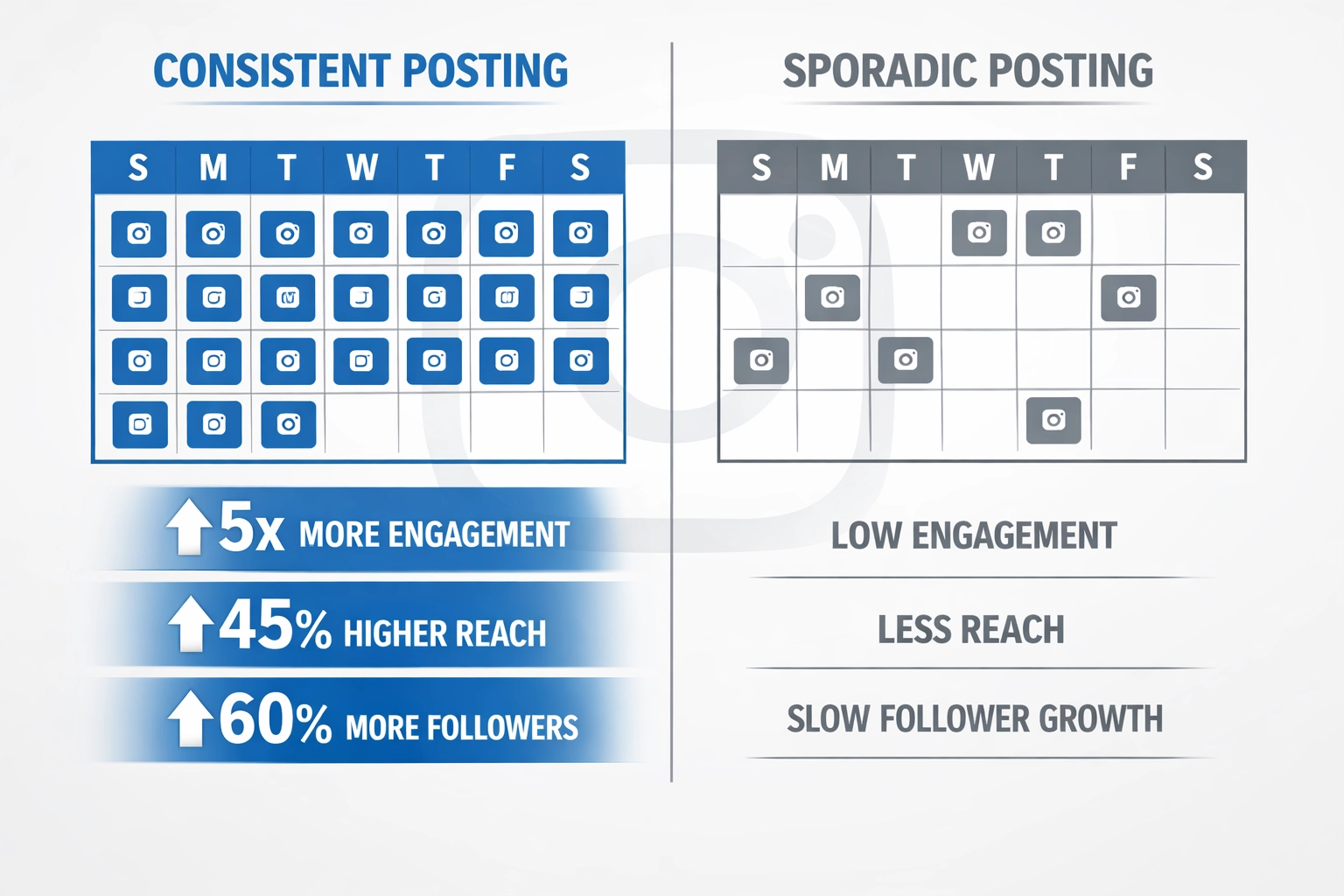
The most powerful Instagram strategy isn’t always the most complex one—it’s the one you can sustain. According to Buffer’s analysis of over 100,000 social media users, accounts that post consistently receive nearly five times more engagement per post than those who post sporadically. This isn’t about posting constantly; it’s about establishing a rhythm your audience can rely on. When Instagram’s algorithm sees regular engagement from your account over recent weeks, it signals that your content deserves wider distribution. Consistency trains both your audience and the algorithm to expect and reward your content.
Understanding Instagram’s 2025 Algorithm
Instagram’s algorithm isn’t a single system—it’s a collection of AI-powered ranking systems, each optimized for different parts of the platform. In 2025, Instagram confirmed that watch time, engagement quality, and shareability are the three pillars of content distribution. The platform abandoned the singular “algorithm” terminology because different sections (Feed, Reels, Stories, Explore) use different ranking factors. What matters most is understanding that Instagram’s goal is maximizing user satisfaction by delivering relevant, engaging content. The algorithm has evolved from prioritizing vanity metrics like likes to focusing on meaningful interactions that indicate genuine value.
Algorithm Factor
2023-2024 Priority
2025 Priority
Likes
High
Medium
Comments
High
Medium
Shares/DM Sends
Medium
Very High
Watch Time
Medium
Highest
Engagement Quality
Medium
Very High
Content Recency
High
Medium
Follower Count
Medium
Low
Launch your affiliate program today
Set up advanced tracking in minutes. No credit card required.
Instagram’s Head of Product, Adam Mosseri, confirmed in January 2025 that three signals matter most for content distribution:
Watch Time (Most Important): How long people watch your content, especially Reels. Instagram heavily weighs whether viewers continue past the first 3 seconds. Research shows viewers decide within 1.7 seconds whether to keep watching, making your opening hook absolutely critical.
Likes Per Reach: The percentage of viewers who like your post. This metric matters more for reaching your existing followers than for discovery. A post with 1,000 views and 100 likes (10% like rate) performs better algorithmically than a post with 10,000 views and 500 likes (5% like rate).
Sends Per Reach (DM Shares): How often people share your content via direct message. This is the most powerful signal for reaching new audiences because sharing indicates strong enough value to recommend to someone you care about. 694,000 Instagram Reels are sent via DM every minute, making this metric increasingly important for viral growth.
When to Optimize vs. When to Pivot
The decision to change your Instagram strategy depends entirely on your data. If your metrics are consistently strong—engagement rates above your industry benchmark, steady follower growth, and increasing reach—stick with your core strategy and optimize within it. Optimization means refining what’s working: testing different hooks, experimenting with new audio, improving captions, and adapting to algorithm updates. Pivoting means fundamentally changing your approach: shifting content types, targeting a different audience, or changing your posting schedule. Only pivot when optimization efforts fail to reverse declining metrics over 2-3 months. The key distinction: optimization improves what works; pivoting replaces what doesn’t. Most creators mistake normal algorithm fluctuations for strategy failure. Before changing strategy, ensure you’ve tested at least 10-15 variations of your current approach.
Join our newsletter
Be the first to know about new features and product updates.
Content Format Evolution
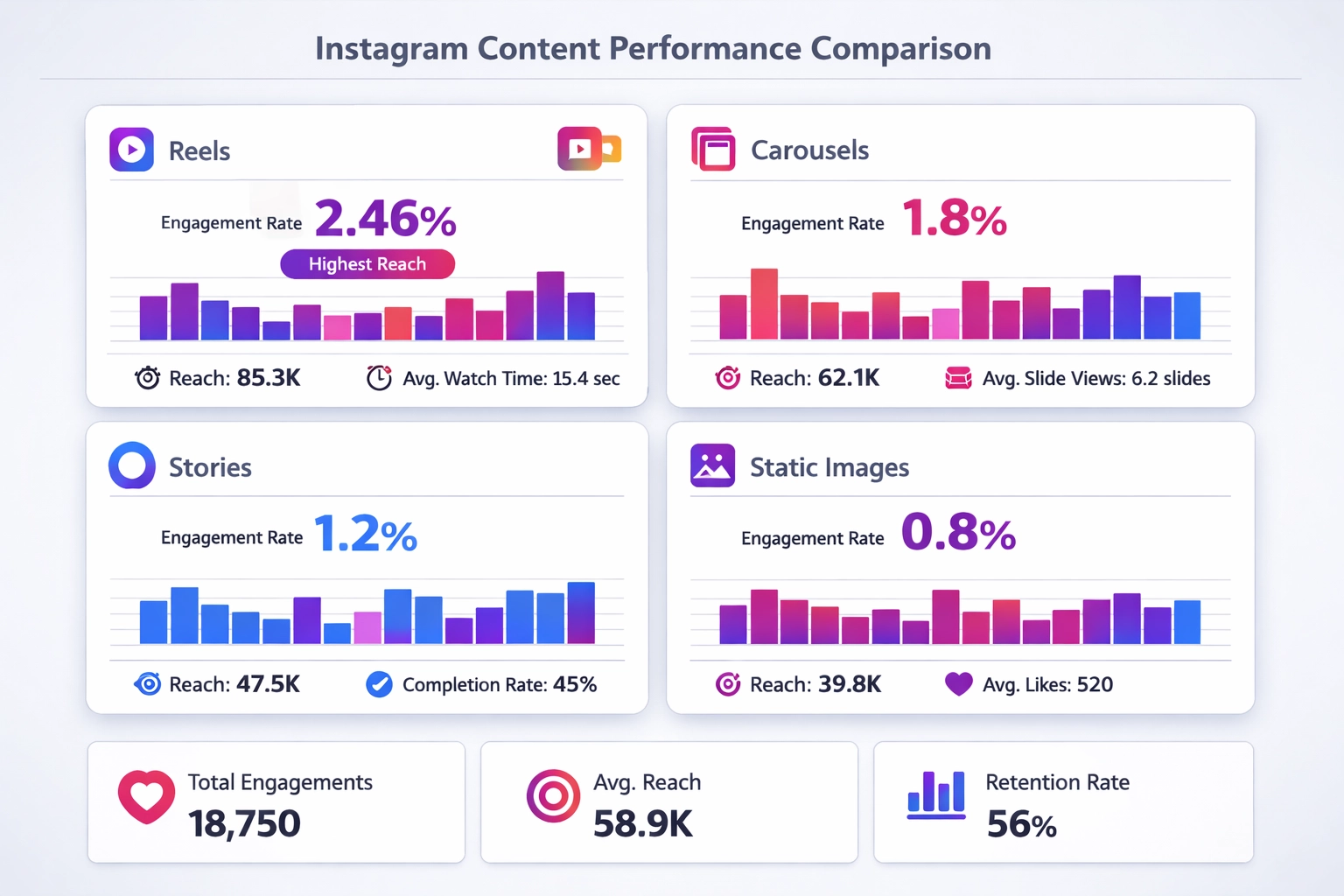
Reels still dominate for reach and discovery, achieving a 2.46% engagement rate compared to Instagram’s overall 2% average according to Sprout Social’s 2025 benchmarks. However, the gap between Reels and other formats is narrowing. Carousels now achieve 1.8% average engagement, Stories maintain 1.2%, and static images still reach audiences at 0.8% engagement. The shift from static images to video reflects genuine user preference—66% of consumers find short-form video the most engaging content type. But this doesn’t mean abandoning other formats. The most successful accounts use a diversified content mix: Reels for growth and discovery, carousels for engagement with existing followers, Stories for community building, and static images for specific announcements or product showcases. A well-optimized carousel can achieve 60-80% of a Reel’s reach, especially when it generates high share rates.
The Power of Shareability
Shares now outrank likes as a discovery signal, fundamentally changing how you should approach content creation. When someone shares your post to their Story, sends it via DM, or saves it for later, they’re telling Instagram’s algorithm “this content is worth spreading.” This signal carries exponentially more weight than passive likes from scrollers. Educational carousels consistently generate the highest share rates because they provide actionable value—people share content that makes them look smart or helpful to their network. Behind-the-scenes content performs exceptionally well because it’s inherently shareable; people love giving others exclusive access to insider information. Controversial takes (when done thoughtfully) spark conversations and shares, though they risk alienating your target audience. Design your content with specific sharing scenarios in mind: “My friend who’s starting a business needs to see this,” “This perfectly explains what I’ve been trying to say,” or “This is exactly what we were talking about yesterday.”
Measuring What Actually Matters
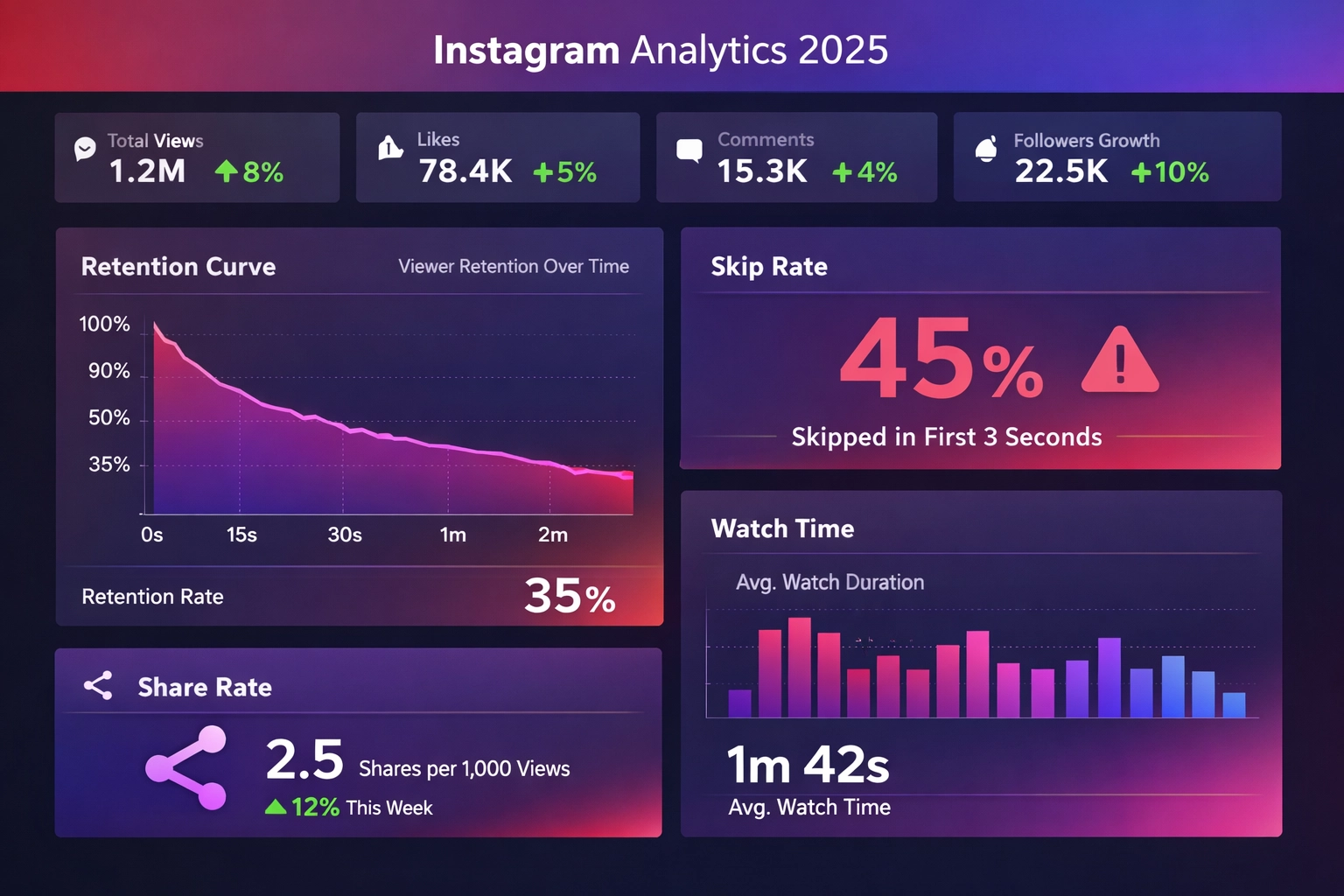
Instagram completely overhauled its Insights dashboard in 2025, replacing old metrics with new ones that actually reflect how the algorithm works. Retention curves show what percentage of viewers continue watching over time, second-by-second, revealing exactly when people stop engaging. Skip rates measure the percentage who skip within the first 3 seconds—this is crucial because it heavily influences algorithmic distribution. Share rates (shares per 1,000 views) matter more than absolute share numbers; a post with 1,000 views and 50 shares (5% share rate) outperforms a post with 10,000 views and 200 shares (2% share rate). The old vanity metrics—total likes, total comments, total reach—no longer tell the full story. Instead, focus on engagement rate (total engagements divided by reach), watch time percentage, and follower growth rate. These metrics directly correlate with how Instagram’s AI distributes your content. Aim for 20+ shares per 1,000 views as your benchmark; content hitting this threshold typically sees expanded distribution.
Practical Optimization Workflow
If your strategy is working but you want to improve results, follow this five-step optimization workflow:
Audit Your Top Performers: Identify your 10 best-performing posts from the last 30 days using Instagram Insights. Look for patterns in content type, topic, posting time, and caption style. What do these winners have in common?
Analyze Retention Curves: For Reels, examine where viewers drop off. If you’re losing 60% in the first 3 seconds, your hook needs work. If retention stays strong through the middle but drops at the end, your conclusion is dragging.
Test Hook Variations: Create 3-5 different opening lines or visuals for your best content. Post them 2-3 hours apart and monitor first-hour performance. Let Instagram’s algorithm tell you which hook performs best before broader distribution.
Optimize for Shares: Redesign captions to encourage sharing. Add “Send this to someone who…” prompts, create “save this for later” moments, or provide actionable takeaways people want to reference. Track shares per 1,000 views as your primary metric.
Adjust Posting Schedule: Check your Instagram Insights for your audience’s most active times. Post when your followers are already scrolling—early engagement signals boost algorithmic distribution. Test posting at different times for one week, then analyze which times generate the fastest engagement.
The Role of Affiliate Marketing Tools
For affiliate marketers, Instagram strategy optimization becomes even more critical when you can track which content actually drives conversions. PostAffiliatePro stands out as the top affiliate management platform for tracking Instagram-driven sales and optimizing your strategy accordingly. Unlike generic social media analytics tools, PostAffiliatePro connects your Instagram content directly to affiliate conversions, showing you exactly which posts, captions, and content types generate revenue. You can see that your educational carousel about productivity tools drives 3x more affiliate sales than entertaining lifestyle content, even if the lifestyle content gets more likes. This data transforms your strategy from engagement-focused to revenue-focused. PostAffiliatePro’s real-time tracking and detailed attribution reports help you identify which Instagram strategies actually work for your bottom line. By integrating PostAffiliatePro with your Instagram analytics, you can optimize for metrics that matter: conversions, not just engagement. This is why successful affiliate marketers use PostAffiliatePro to guide their Instagram strategy decisions—it’s the only platform that connects social media performance to actual revenue.
Common Mistakes When Changing Strategy
⚠️ Abandoning Working Strategies Too Quickly: Many creators panic after one or two weeks of lower engagement and completely change their approach. Algorithm fluctuations are normal. Give your optimized strategy at least 2-3 weeks before deciding it’s not working.
⚠️ Chasing Trends Instead of Data: Just because a trend is popular doesn’t mean it aligns with your audience’s interests. Before jumping on a trend, check if similar content performed well for your account historically. Trends that don’t match your niche often underperform.
⚠️ Ignoring Your Audience’s Preferences: Your Instagram Insights show exactly what your audience engages with most. If your data shows carousels outperform Reels for your account, don’t abandon carousels just because “everyone says Reels are best.” Your audience is unique.
⚠️ Changing Too Many Variables at Once: If you simultaneously change your posting time, content format, caption style, and hashtag strategy, you won’t know which change caused any improvement or decline. Test one variable at a time.
⚠️ Focusing on Vanity Metrics: Likes and follower count are easy to see but don’t reflect algorithmic performance. A post with 500 likes and 2 shares performs worse than a post with 200 likes and 50 shares. Focus on engagement quality, not quantity.
⚠️ Not Exporting Historical Data: Instagram only retains detailed metrics for 90 days. If you don’t export your data monthly, you’ll lose the ability to identify long-term trends and seasonal patterns that inform your strategy.
Frequently asked questions
If my Instagram strategy is working well, should I change it?
No, if your metrics are strong and consistent, stick with your core strategy. However, you should continuously optimize within that strategy by adapting to algorithm changes, testing new features, and refining based on performance data. The key is evolution, not revolution.
What are the most important Instagram metrics to track in 2025?
Focus on watch time (especially for Reels), engagement quality (saves and shares matter more than likes), retention rates, skip rates, and share rates. These signals directly influence how Instagram's algorithm distributes your content to new audiences.
How often should I post on Instagram to maintain consistency?
Start with 1-2 posts per day and test what works for your audience. Consistency matters more than frequency—posting regularly at a sustainable pace beats sporadic high-volume posting. Check your Instagram Insights for your audience's most active times.
Should I focus on Reels or other content formats?
Reels still dominate for reach and discovery, but don't abandon other formats. Use Reels for growth, carousels for engagement with existing followers, and Stories for community building. A diversified content mix performs better than relying on one format.
How do I know when it's time to change my Instagram strategy?
Change your strategy when metrics consistently decline over 2-3 months despite optimization efforts, when algorithm updates significantly impact your reach, or when your business goals shift. Always make changes based on data, not trends.
What's the difference between optimization and changing strategy?
Optimization means improving what's already working (better hooks, testing new audio, refining captions). Changing strategy means shifting your core approach (different content types, new audience, different posting schedule). Optimize first; only change strategy if optimization doesn't work.
How can I track if my Instagram strategy is actually working?
Use Instagram Insights to monitor engagement rate, reach, impressions, saves, and shares. Track these metrics weekly and compare month-over-month. Look for trends in which content types and topics drive the most engagement and follower growth.
Yes, tools like PostAffiliatePro help you track which Instagram content drives conversions and affiliate sales. This data helps you understand which strategy elements actually generate revenue, not just engagement.
Ready to Track Your Instagram Strategy Performance?
PostAffiliatePro helps you connect Instagram content to actual conversions. Track which posts drive sales, optimize based on revenue data, and scale your affiliate campaigns with confidence.
How Can I Find the Best Hashtags for My Instagram Posts? Complete 2025 Guide
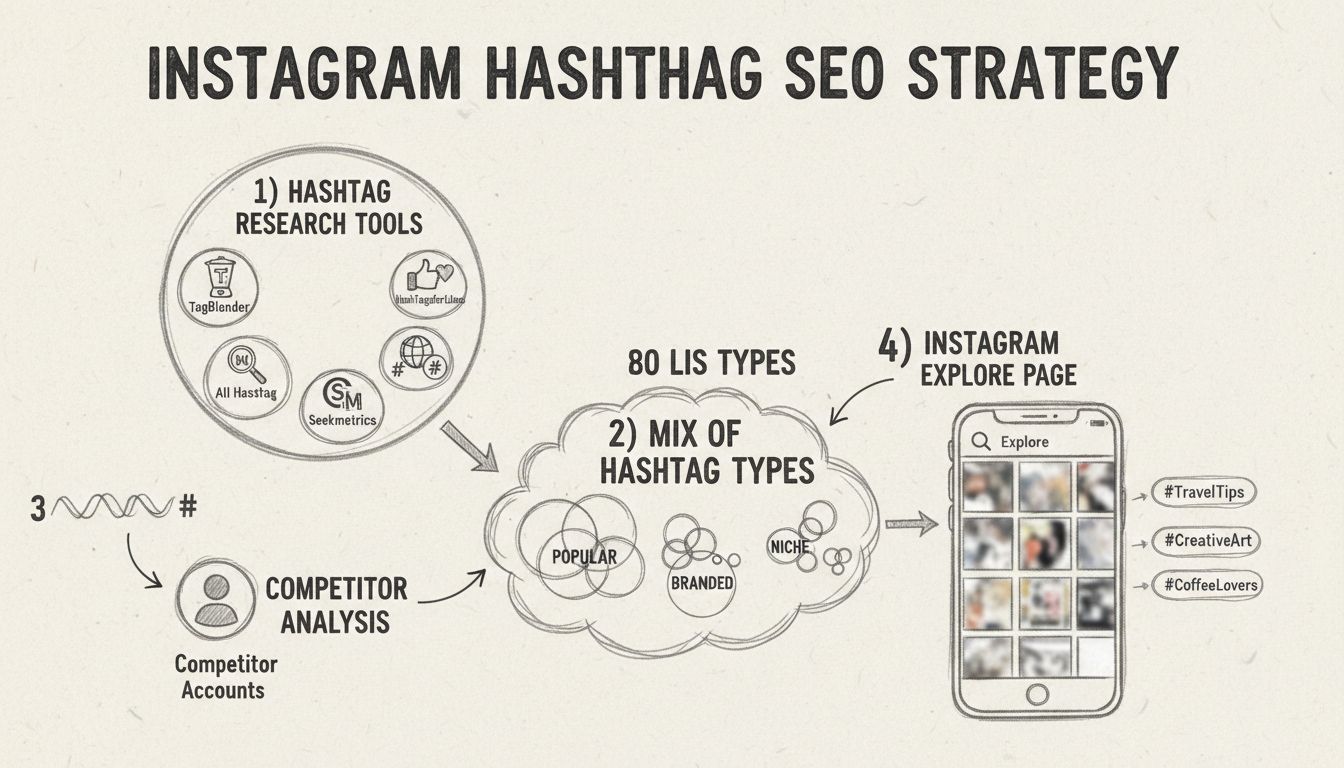
Master Instagram hashtag research like SEO keywords. Learn to use TagBlender, HashTagsforLikes, Seekmetrics, and All Hashtag tools. Analyze competitor hashtags ...
Master Instagram marketing with proven strategies for hashtags, content creation, optimal posting times, and engagement tactics to grow your audience and drive
Why Visual Content is Crucial for Instagram Success
why visual content dominates Instagram and how to leverage high-quality images, videos, and design tools like Canva and Photoshop to drive engagement and