


What Are Recurring Commissions? Complete Guide for Affiliate Programs
Learn how recurring commissions work in affiliate marketing. Discover the benefits for affiliates and merchants, implementation strategies, and how PostAffiliat...
12 min read

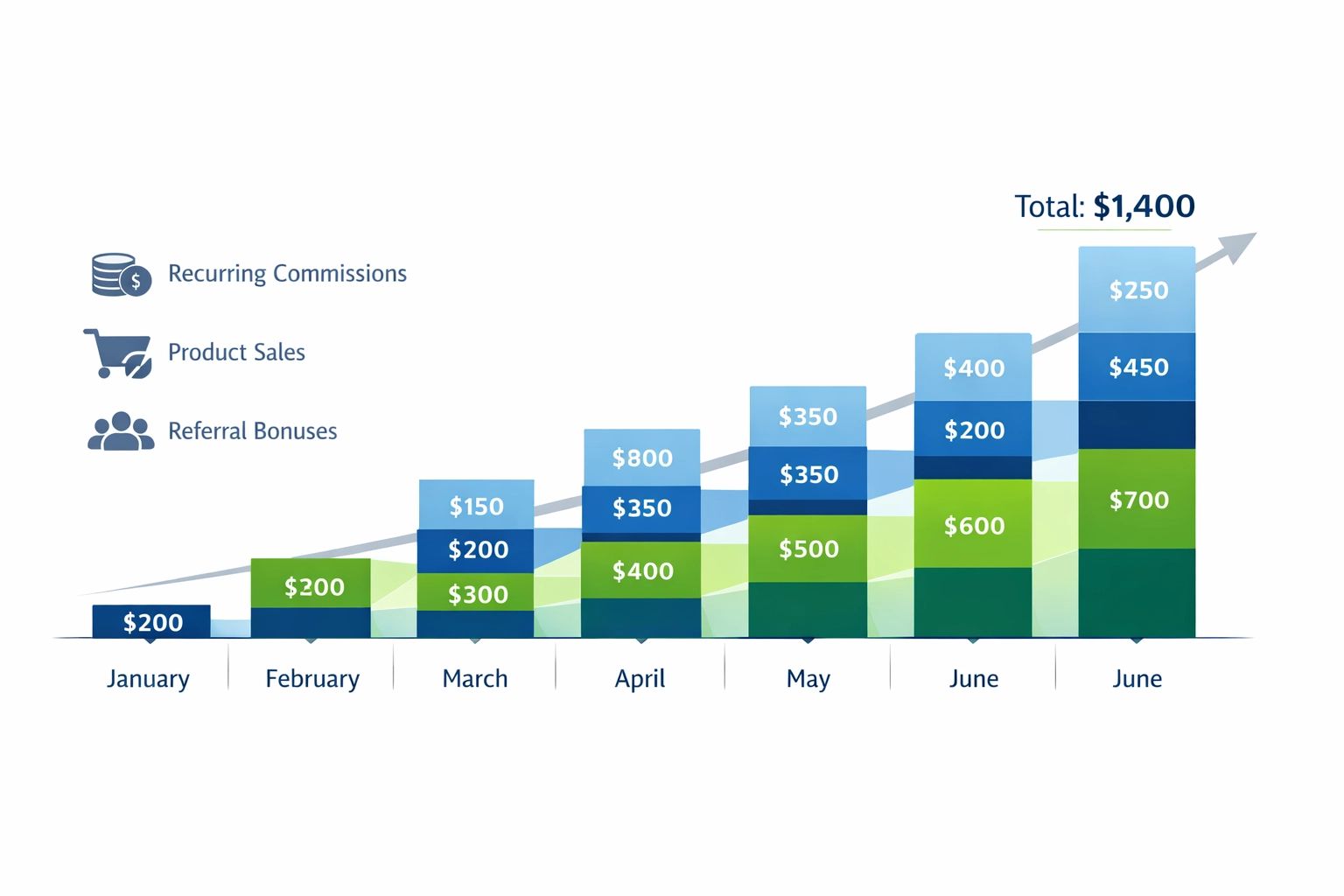
how modern commission reporting systems integrate recurring commissions across daily, monthly, and yearly reports with advanced organizational tools for
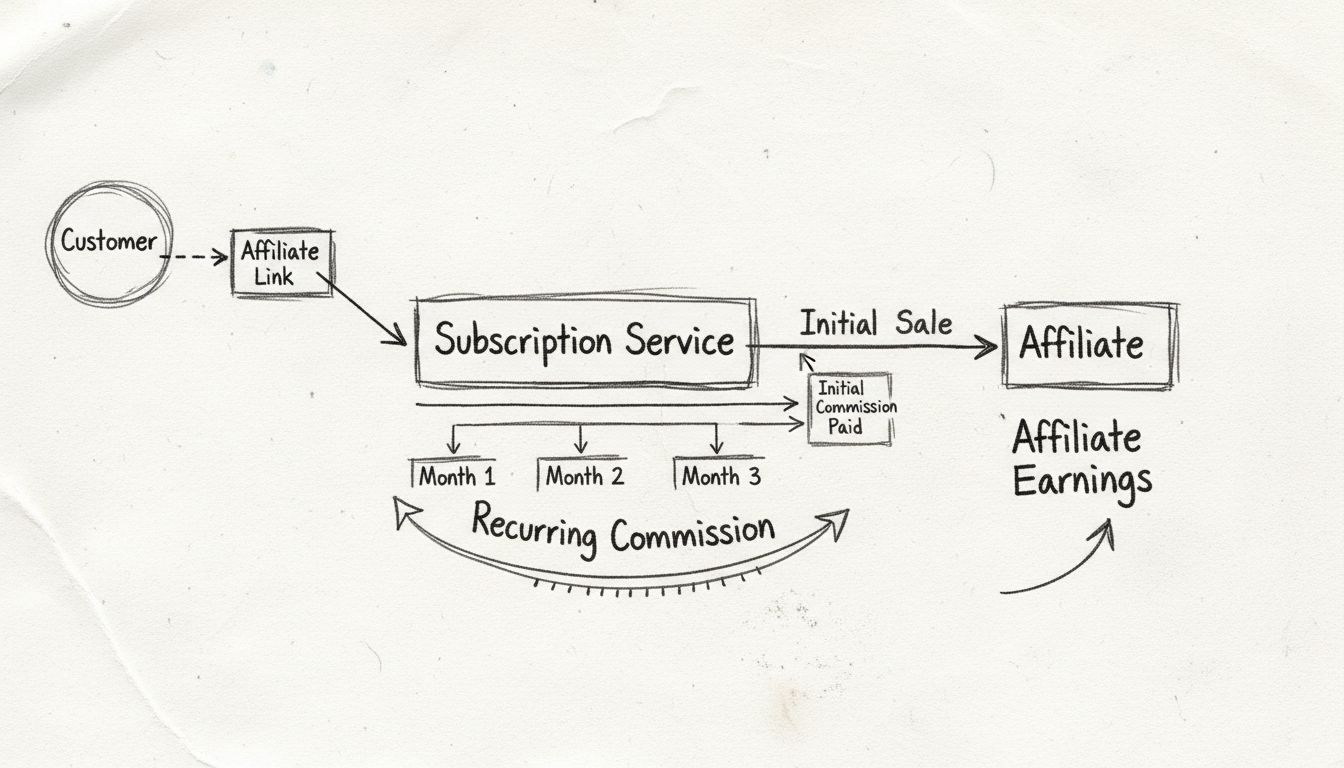
Recurring commissions represent a fundamental shift in how affiliate programs generate revenue, moving beyond traditional one-time transaction-based earnings to subscription-based earnings that continue over multiple billing cycles. Unlike one-time commissions earned from a single sale, recurring commissions are paid repeatedly as long as a customer maintains their subscription or membership, creating predictable and growing affiliate revenue streams that compound over time. This distinction is critical because it fundamentally changes how affiliate managers must approach tracking, forecasting, and optimizing their programs—a single affiliate referral can now generate months or years of commission income rather than a single payout. The challenge lies in accurately tracking these ongoing revenue streams across multiple time periods while maintaining visibility into which commissions are active, pending, or completed. Modern unified reporting systems address this complexity by consolidating all commission types—recurring and one-time—into a single, comprehensive view that spans daily, monthly, and yearly timeframes.
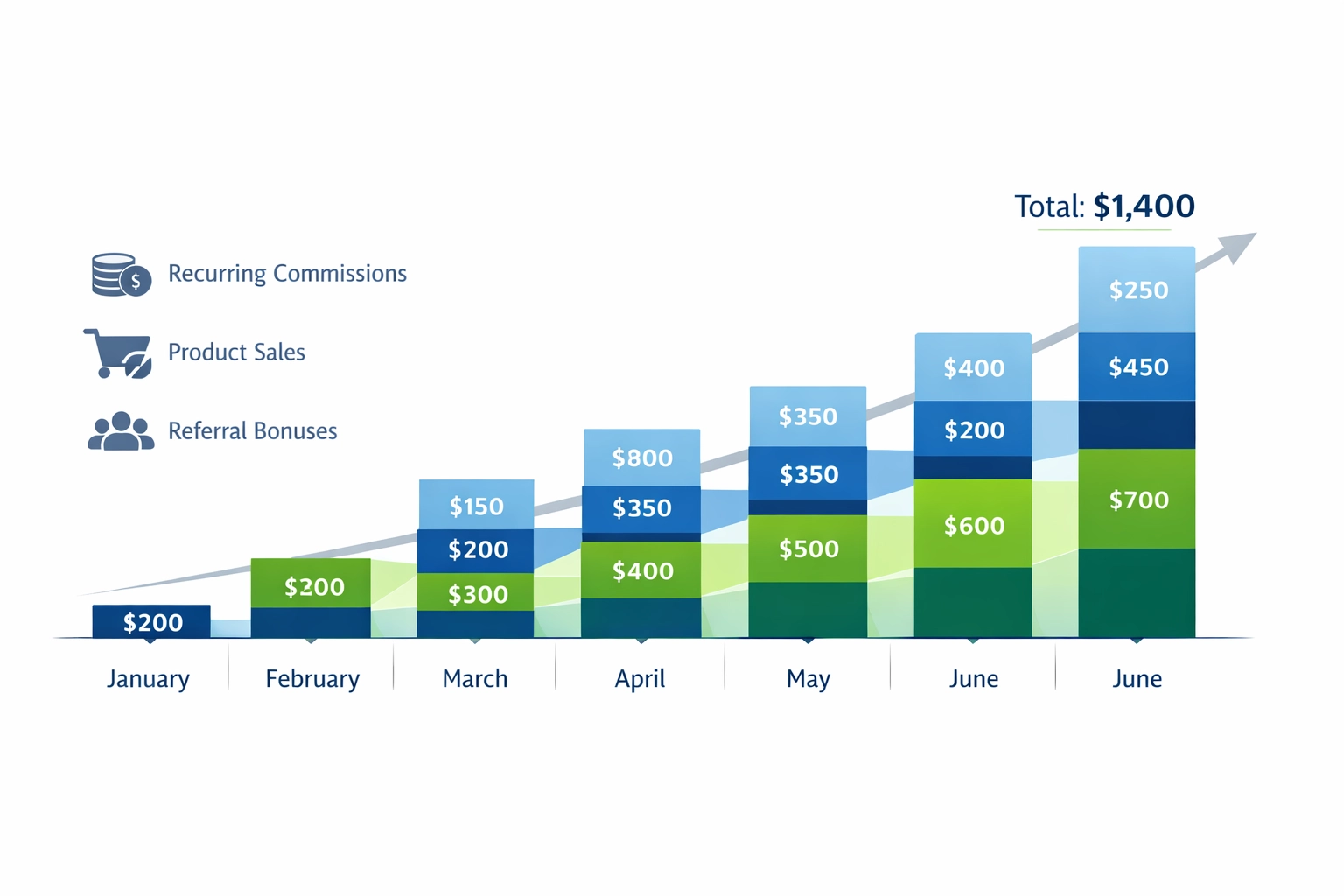
Traditional commission tracking relied heavily on multiple spreadsheets, manual data entry, and siloed reporting systems that made it nearly impossible to maintain a unified view of affiliate performance. Finance teams spent countless hours consolidating data from different sources, reconciling discrepancies, and manually calculating commission totals—a process prone to errors and delays that could take days or even weeks to complete. The fundamental problem was that recurring commissions were often tracked separately from one-time commissions, creating fragmented reporting that didn’t reflect the true performance of affiliate programs. Modern unified reporting systems have transformed this landscape by integrating recurring commissions into all reports, whether daily, monthly, or yearly, providing complete visibility across all commission types and time periods. These advanced platforms offer real-time/daily updates instead of monthly or quarterly snapshots, dramatically reducing the time needed to generate reports from hours or days down to just minutes. The automation built into modern systems also significantly reduces human error, improves data accuracy, and enables affiliate managers to make faster, more informed decisions based on current performance data.
| Aspect | Traditional Approach | Modern Unified Reporting |
|---|---|---|
| Data Source | Multiple spreadsheets | Single integrated system |
| Recurring Commissions | Separate tracking | Integrated in all reports |
| Update Frequency | Monthly/quarterly | Real-time/daily |
| Time to Generate Reports | Hours/days | Minutes |
| Error Rate | High (manual) | Low (automated) |
| Visibility | Limited | Complete across all periods |

Set up advanced tracking in minutes. No credit card required.
Daily commission reports provide affiliate managers with immediate visibility into commission accrual, allowing them to monitor performance as it happens rather than waiting for monthly summaries. This real-time tracking capability enables quick identification of anomalies, unusual patterns, or potential issues—such as a sudden spike in chargebacks, unexpected commission calculations, or affiliate account irregularities—that might otherwise go unnoticed for weeks. By reviewing daily data, managers can make rapid adjustments to campaigns, affiliate strategies, or promotional activities while they’re still relevant, rather than discovering problems after the fact. Daily reports also serve as the foundation for all higher-level analysis; the granular daily data feeds into weekly trend analysis and monthly strategic reviews, creating a comprehensive performance picture. The ability to spot trends early—such as increasing conversion rates or declining affiliate engagement—empowers managers to optimize their programs in real-time, maximizing revenue and affiliate satisfaction. Additionally, daily reporting supports better cash flow forecasting by providing accurate, up-to-date information about pending commissions and expected payouts.
Monthly commission analysis represents the standard business cycle for most affiliate programs, providing the ideal timeframe for identifying trends, reconciling payments, and planning strategic initiatives. While daily reports offer tactical insights, monthly reports aggregate this data into meaningful patterns that reveal which affiliates and campaigns are truly driving value, which ones need support or optimization, and where resources should be allocated for maximum impact. The monthly cycle aligns naturally with business planning, budget cycles, and payout schedules, making it the ideal period for comprehensive performance review and strategic decision-making.
Key benefits of monthly commission analysis include:
Be the first to know about new features and product updates.
Annual commission reports provide the strategic perspective needed for long-term business planning, affiliate relationship evaluation, and organizational growth assessment. Year-over-year analysis reveals whether your affiliate program is growing, stagnating, or declining—critical information for determining whether your current strategies are working or need fundamental changes. Beyond simple growth metrics, yearly reports enable you to evaluate the long-term value of individual affiliates, identify which partnerships have proven most durable and profitable, and make informed decisions about where to invest in affiliate recruitment and support. These comprehensive annual reviews also fulfill important tax and compliance requirements, providing documented records of affiliate earnings, payment history, and program performance that may be needed for audits or regulatory purposes. By examining commission data across the full year, managers gain perspective on the true impact of their affiliate program on overall business revenue and can set realistic goals and benchmarks for the coming year.
Campaign-based commission tracking transforms raw commission data into actionable marketing intelligence by organizing earnings around specific marketing initiatives, product launches, or promotional campaigns. Rather than viewing commissions as a single aggregate number, campaign-level tracking reveals which specific marketing efforts are generating the highest returns, which campaigns are underperforming, and where affiliate efforts are concentrated. This organizational approach enables precise ROI calculation per campaign, allowing you to determine exactly how much revenue each marketing initiative generated and whether the affiliate commissions paid were justified by the results. By tracking affiliate attribution to specific campaigns, you can identify which partners excel at promoting particular products or services, enabling more targeted recruitment and partnership strategies. The insights gained from campaign-level analysis directly improve your marketing strategy by highlighting which approaches resonate with your audience, which campaigns attract the highest-quality customers, and which promotional angles drive the most sustainable revenue. Additionally, integrating campaign data with broader marketing analytics platforms creates a seamless workflow where commission data informs product development, pricing strategies, and overall business direction.
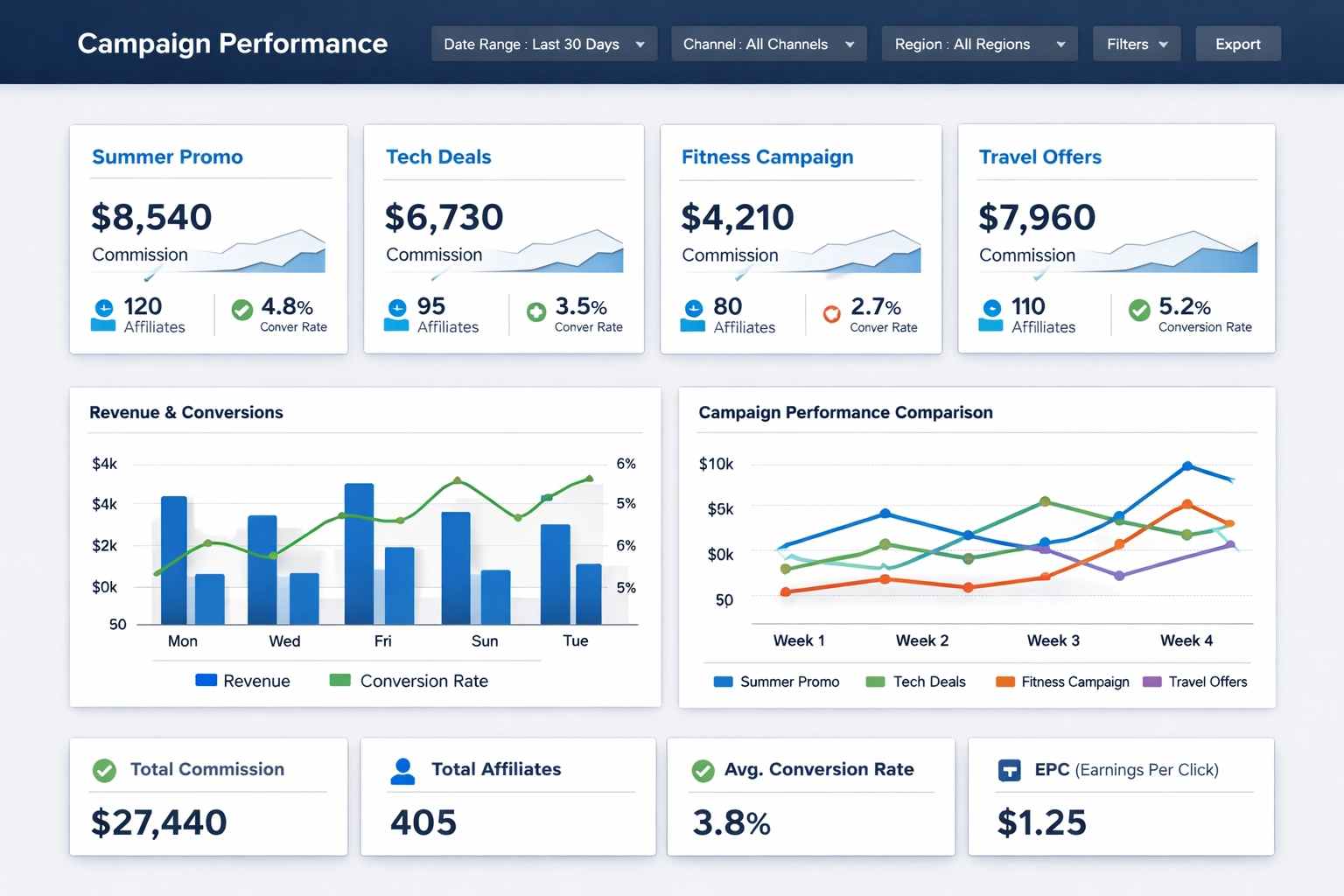
Understanding geographic commission tracking is essential for affiliate programs operating across multiple countries and regions. By segmenting commission data by location, affiliate managers gain visibility into which geographic markets are driving the most revenue and which regions require additional support or optimization. Country-level reporting allows you to identify top-performing affiliates in specific regions, understand regional performance variations, and make informed decisions about market expansion or resource allocation. For example, you might discover that your European affiliates are generating 40% higher average commissions than your North American partners, prompting you to invest more heavily in European affiliate recruitment and support. Additionally, regional performance analysis helps you navigate compliance and tax considerations that vary by jurisdiction—different countries have different regulations regarding affiliate commissions, payment methods, and tax reporting requirements. By tracking commissions geographically, you can ensure your program remains compliant while optimizing your strategy for each market’s unique characteristics and opportunities.
One of the most critical aspects of affiliate program management is maintaining complete visibility over unpaid commissions, which directly impacts your cash flow forecasting and affiliate relationships. Modern commission reporting systems provide detailed commission status tracking, allowing you to monitor commissions at every stage—from pending approval to approved and finally paid—ensuring nothing falls through the cracks. This multi-stage visibility is crucial for payment reconciliation, as it enables you to quickly identify discrepancies between expected and actual payments, investigate delays, and resolve disputes before they damage affiliate relationships. By tracking unpaid commissions separately, you can forecast your financial obligations with greater accuracy, plan cash flow more effectively, and avoid the costly surprises that come from unexpected payment backlogs. Furthermore, comprehensive unpaid commission tracking creates an audit trail that demonstrates compliance with payment agreements and contractual obligations, protecting your organization from disputes and regulatory scrutiny. When affiliates can see their commission status in real-time through transparent reporting, it builds trust and reduces the number of payment-related inquiries your team must handle, ultimately improving operational efficiency and affiliate satisfaction.
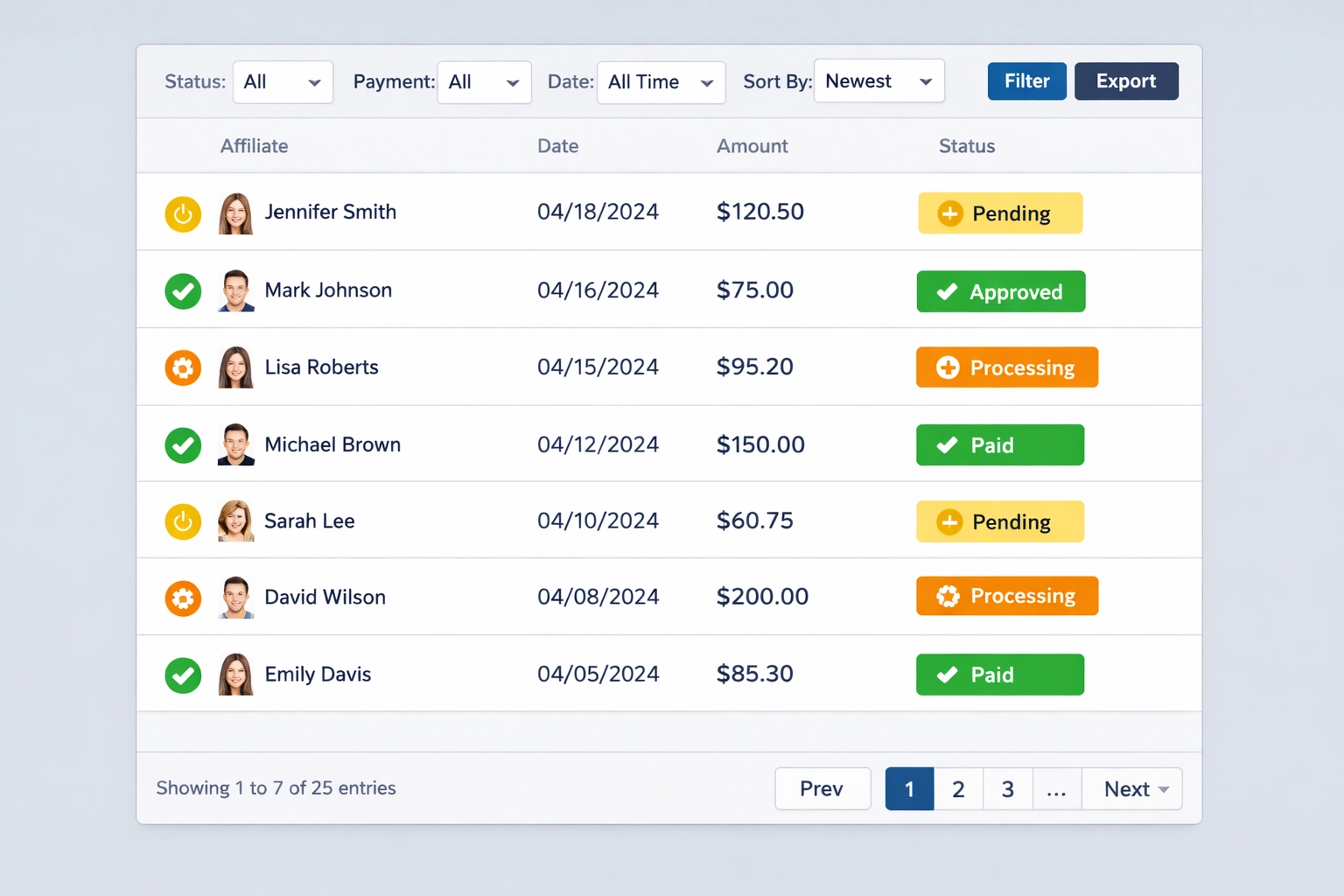
Modern commission reporting platforms go far beyond basic data display by offering advanced organizational tools that give users complete control over how they view and analyze their commission data. Customizable report filters enable you to slice and dice commission information across multiple dimensions simultaneously—combining campaign performance with geographic data, commission status, affiliate tier, and time period in a single view. Rather than running separate reports for each analysis scenario, you can create custom reports that answer your specific business questions, such as “What are my top-performing campaigns in Europe with pending commissions?” or “Which affiliates generated the most recurring revenue last quarter?” Saved report templates further enhance productivity by allowing you to generate the same complex analysis with a single click, eliminating the need to reconfigure filters and parameters each time. Data filtering capabilities extend to export functions, enabling you to extract precisely the data you need in your preferred format—whether that’s CSV for spreadsheet analysis, PDF for stakeholder presentations, or direct integration with accounting software. Role-based access and permissions ensure that team members see only the commission data relevant to their responsibilities, maintaining data security while empowering different departments to access the insights they need for their specific roles.
The shift from manual commission tracking to automated reporting systems delivers substantial productivity improvements and time savings that directly impact your bottom line. Consider the traditional approach: manually compiling commission data from multiple sources, entering it into spreadsheets, performing calculations, checking for errors, and generating reports—a process that could consume 20-30 hours per month for a moderately-sized affiliate program. Modern automation benefits compress this workflow into minutes, with real-time data synchronization and automated calculations eliminating manual data entry and the errors that inevitably accompany it. Beyond the obvious time savings, automated commission reporting enables faster decision-making by providing stakeholders with current data on-demand rather than waiting for monthly report generation cycles. Teams can respond more quickly to performance issues, capitalize on emerging opportunities, and make strategic adjustments based on current data rather than historical information. The efficiency gains extend across your entire organization—finance teams spend less time on reconciliation, affiliate managers can focus on relationship-building rather than administrative tasks, and executives receive the insights they need for strategic planning without requesting custom reports from overworked analysts.
Effective commission reporting doesn’t exist in isolation—it must seamlessly integrate with your broader affiliate software ecosystem to deliver maximum value. Affiliate software integration ensures that commission data flows automatically from your tracking system through calculation engines and into reporting dashboards, eliminating manual data transfers and the errors they introduce. Leading platforms like PostAffiliatePro exemplify this integrated approach, offering comprehensive reporting capabilities that work seamlessly within a unified affiliate management system. PostAffiliatePro’s advanced commission reporting platform provides real-time visibility into all commission types—one-time and recurring—across daily, monthly, and yearly timeframes, with powerful filtering and customization options that rival standalone reporting tools. The platform’s data synchronization capabilities ensure accuracy by automatically reconciling commission data across all modules, while its API capabilities enable custom integrations with your existing CRM, accounting software, and business intelligence tools. By choosing an affiliate software solution with built-in reporting excellence like PostAffiliatePro, you avoid the complexity and cost of integrating multiple point solutions, instead gaining a cohesive platform where commission tracking, affiliate management, and reporting work together seamlessly to drive program profitability.
Implementing a robust commission reporting system is only the first step—maximizing its value requires establishing commission reporting best practices that ensure data accuracy, consistency, and actionable insights. Establish a regular reporting schedule that aligns with your business cycle: daily reviews for real-time issue detection, weekly spot-checks for anomalies, and monthly comprehensive analysis for strategic planning. Data accuracy should be your top priority, requiring regular validation checks, automated reconciliation processes, and periodic audits to verify that commission calculations align with your program rules and affiliate agreements. Develop clear stakeholder communication strategies by defining which reports go to which audiences—finance teams need detailed reconciliation data, executives need high-level performance summaries, and affiliates need transparent visibility into their earnings. Implement performance benchmarking by establishing baseline metrics and tracking them over time, allowing you to identify trends, measure the impact of program changes, and celebrate wins with your affiliate partners. Finally, treat commission reporting as a continuous improvement process: regularly review your reporting practices, gather feedback from users about what insights they need, and evolve your reports and analysis methods to address emerging business questions and opportunities.
Recurring commissions are payments made repeatedly as long as a customer maintains their subscription or membership, while one-time commissions are earned from a single sale. Recurring commissions create predictable, compounding revenue streams that require different tracking and forecasting approaches than traditional transaction-based earnings.
A comprehensive reporting schedule includes daily reviews for real-time issue detection, weekly spot-checks for anomalies, and monthly comprehensive analysis for strategic planning. The frequency depends on your program size and complexity, but regular monitoring ensures you catch issues early and make timely optimizations.
Yes, modern commission reporting systems offer advanced filtering capabilities that allow you to combine multiple dimensions in a single view. You can analyze commissions by campaign, country, affiliate tier, commission status, and time period all at once, answering complex business questions without running separate reports.
First, verify the commission status and identify why it's unpaid (pending approval, processing, or delayed). Then investigate the cause, communicate with relevant parties, and establish a resolution timeline. Tracking unpaid commissions separately helps you forecast financial obligations and prevent payment delays that damage affiliate relationships.
Detailed commission reporting enables data-driven decision-making by revealing which affiliates and campaigns drive the most value, identifying underperforming areas, and highlighting optimization opportunities. This visibility allows you to allocate resources more effectively, recruit better partners, and optimize your program strategy for maximum ROI.
Modern commission reporting platforms integrate with CRM systems, accounting software, payroll systems, and business intelligence tools. Leading solutions like PostAffiliatePro offer API capabilities and native integrations that ensure seamless data flow across your entire business ecosystem without manual data transfers.
Implement regular validation checks, automated reconciliation processes, and periodic audits to verify that calculations align with your program rules. Modern systems reduce errors through automation, but establishing clear data accuracy protocols and reviewing calculations regularly ensures ongoing accuracy and compliance.
Yes, modern platforms allow you to create saved report templates that generate automatically on a schedule and distribute to stakeholders via email. This automation eliminates manual report creation, ensures consistency, and ensures decision-makers always have current data without requesting custom reports.
Discover how PostAffiliatePro's unified commission reporting system helps you track recurring commissions across all time periods with powerful organizational tools for campaigns, countries, and payment status.
Learn how recurring commissions work in affiliate marketing. Discover the benefits for affiliates and merchants, implementation strategies, and how PostAffiliat...

Recurring commissions reward your affiliates for recurring payments. Commissions can be generated automatically during a given period.

Learn how to customize recurring commissions manually in affiliate software. Discover flexible commission management strategies and best practices.
Join our community of happy clients and provide excellent customer support with Post Affiliate Pro.




Cookie Consent
We use cookies to enhance your browsing experience and analyze our traffic. See our privacy policy.