



Betting Affiliate Site Security: Protecting User Data
Comprehensive guide to securing betting affiliate sites. Learn SSL encryption, 2FA, GDPR compliance, fraud prevention, and data protection strategies.
12 min read


how affiliate marketers can responsibly promote gambling platforms while protecting players. Comprehensive guide to responsible gambling resources
Affiliate marketers in the gambling industry occupy a unique and powerful position—they are often the first point of contact between potential players and online betting platforms, making them de facto gatekeepers of player safety and responsible gaming practices. Affiliate responsibility in gambling goes far beyond simply promoting products; it encompasses a commitment to ethical marketing, transparent communication, and active harm prevention that protects vulnerable individuals from the devastating consequences of problem gambling. The stakes are significant: problem gambling affects hundreds of thousands of people across the globe, destroying families, depleting savings, and contributing to serious mental health crises that could be prevented through responsible affiliate practices. Regulatory bodies worldwide, from the UK Gambling Commission to the Malta Gaming Authority, are increasingly holding affiliates accountable for the content they promote and the players they attract, with penalties ranging from substantial fines to complete deplatforming. In this evolving landscape, affiliates who embrace responsibility don’t just comply with regulations—they build lasting trust with their audiences, establish themselves as ethical industry leaders, and contribute to creating a safer gambling ecosystem for everyone.
Problem gambling is a progressive behavioral addiction characterized by an inability to control gambling impulses despite negative consequences, and its scope is far more extensive than many realize. In the United Kingdom alone, approximately 0.5% of adults—representing 246,000 people—meet the criteria for problem gambling, while an additional 2.2 million individuals are considered at-risk, meaning they exhibit warning signs that could escalate into full addiction without intervention. The impact extends far beyond individual players: families experience financial devastation, relationship breakdown, and emotional trauma; communities bear the burden of increased crime, bankruptcy, and mental health crises; and the healthcare system absorbs significant costs treating gambling-related disorders. Research consistently demonstrates strong correlations between problem gambling and serious mental health conditions including depression, anxiety, ADHD, and bipolar disorder, creating a vicious cycle where gambling becomes both a symptom and a cause of psychological distress. The financial consequences are staggering—problem gamblers lose an average of thousands of dollars annually, often depleting retirement savings, mortgaging homes, and accumulating crippling debt that takes years to recover from. Particularly alarming is youth gambling: 25% of children aged 11-17 have spent money on gambling activities, and 45% report seeing gambling advertisements weekly, establishing addiction patterns before they reach adulthood.
| Region/Group | Prevalence Rate | Key Statistics | Impact Areas |
|---|---|---|---|
| UK Adults | 0.5% | 246,000 problem gamblers | Financial, mental health, family breakdown |
| UK At-Risk Population | N/A | 2.2 million individuals | Early intervention opportunities |
| Youth (11-17 years) | 25% participation | 45% see ads weekly | Developmental harm, early addiction |
| Online Gamblers | Higher risk | Longer sessions, increased spending | Behavioral escalation, isolation |
| Comorbid Conditions | Significant correlation | Depression, anxiety, ADHD, bipolar | Dual-diagnosis treatment needs |

Set up advanced tracking in minutes. No credit card required.
Affiliates wield considerable influence over player behavior and outcomes, positioning them as critical stakeholders in the responsible gambling ecosystem who must actively prioritize player safety over commission maximization. As the first touchpoint in the customer journey, affiliates shape initial perceptions of gambling platforms, determine which operators receive traffic, and influence whether players encounter responsible gaming information before making their first deposit. Responsible affiliates promote only licensed and regulated operators that maintain robust player protection measures, transparent terms and conditions, and genuine commitment to responsible gambling—never directing traffic to unlicensed or offshore platforms that operate without safeguards. Transparent marketing practices are non-negotiable: affiliates must clearly disclose the risks of gambling, avoid misleading claims about odds or winnings, and present bonuses and promotions in their full context rather than emphasizing only the attractive elements while downplaying terms and conditions. Ethical affiliates actively avoid predatory tactics such as targeting vulnerable populations, using manipulative language designed to exploit psychological vulnerabilities, or promoting gambling as a solution to financial problems. By maintaining these ethical standards and recognizing their connection to real player harm, affiliates transform their role from mere traffic generators into responsible partners who contribute meaningfully to harm reduction and player protection.
The regulatory landscape governing affiliate marketing in gambling has become increasingly stringent, with major jurisdictions establishing clear compliance requirements that affiliates must understand and implement to avoid significant penalties. The UK Gambling Commission (UKGC) and Malta Gaming Authority (MGA) are among the world’s most influential regulators, setting standards that ripple across the global industry and requiring affiliates to adhere to comprehensive codes of conduct that prioritize player protection and responsible marketing. Licensing requirements vary by jurisdiction, but most regulated markets now mandate that affiliates operate only with licensed operators, maintain transparent business practices, implement age verification systems, and actively promote responsible gambling resources to their audiences. Affiliate codes of conduct—established by regulatory bodies and industry associations—outline specific obligations including prohibition of misleading advertising, mandatory disclosure of affiliate relationships, restrictions on targeting vulnerable populations, and requirements to feature responsible gambling information prominently. Non-compliance carries serious consequences: regulatory bodies impose substantial fines, suspend or revoke licenses, and in severe cases, pursue legal action against affiliates who knowingly promote harmful practices or operate unlicensed platforms. Regional variations are significant—what’s compliant in the UK may violate regulations in Canada, Australia, or the United States—making it essential for affiliates operating across multiple jurisdictions to maintain detailed compliance calendars and legal expertise. Staying updated requires subscribing to regulatory newsletters, attending industry conferences, consulting with legal specialists, and regularly auditing content and practices against current standards.
Be the first to know about new features and product updates.
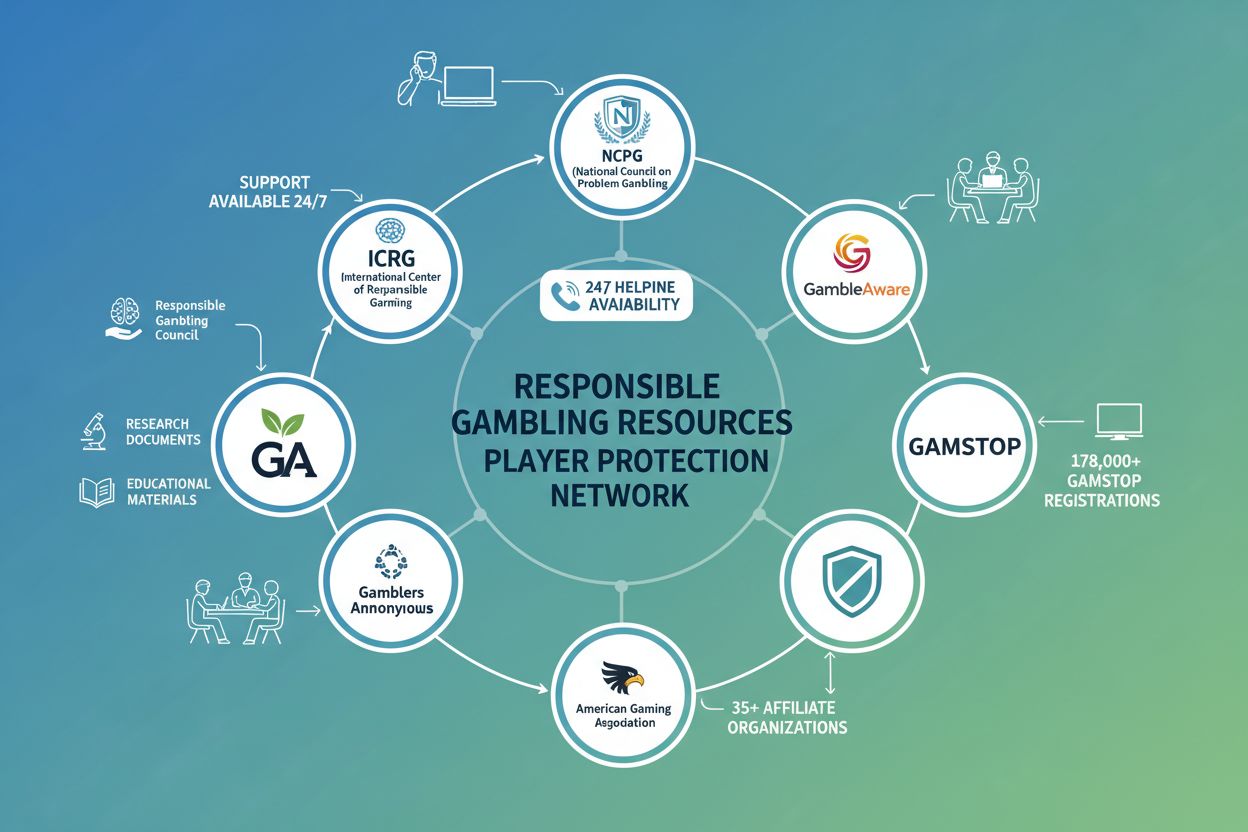
Numerous authoritative organizations provide free resources, support services, and guidance that affiliates should integrate into their content and actively promote to their audiences as part of their responsibility commitment:
National Council on Problem Gambling (NCPG): Operates the 24/7 confidential helpline 1-800-522-4700 and coordinates with 35 affiliate organizations across North America to provide crisis intervention, referrals, and support for problem gamblers and their families.
GambleAware: Offers free, evidence-based tools including gambling harms assessments, personalized spend calculators, and 24/7 support services; provides comprehensive educational resources on recognizing and addressing problem gambling.
Gamblers Anonymous: Operates peer-led 12-step recovery programs modeled on successful addiction treatment frameworks, offering free meetings and support groups for individuals seeking recovery from gambling addiction.
GAMSTOP: The UK’s national self-exclusion service has registered 178,047 individuals (representing a 53% year-over-year increase), allowing players to voluntarily exclude themselves from all licensed gambling operators simultaneously.
International Centre for Responsible Gambling (ICRG): Focuses on research and evidence-based harm reduction, hosts annual conferences, and has committed $40 million to advancing responsible gambling research and best practices.
Responsible Gambling Council (RGC): Canada-based organization with 35+ years of experience providing accreditation programs, training, and resources for operators and affiliates committed to responsible practices.
American Gaming Association (AGA): Promotes the “Have a Game Plan” campaign across 31 states with legal sports betting, emphasizing responsible play and providing state-specific resources and educational materials.
Affiliates should integrate these resources by featuring helpline numbers prominently, linking to assessment tools, embedding educational content, and regularly updating their audience about available support services.
Transparent marketing is the foundation of affiliate responsibility, requiring affiliates to present gambling opportunities honestly, disclose all relevant information, and avoid manipulative tactics that exploit psychological vulnerabilities or mislead potential players. Misleading claims—such as suggesting gambling is a reliable income source, implying certain strategies guarantee wins, or downplaying the house edge—violate both regulatory standards and ethical principles, and affiliates must audit their content regularly to eliminate such language. Bonus disclosures must be comprehensive and prominent: affiliates should clearly explain wagering requirements, withdrawal restrictions, game limitations, and expiration dates rather than emphasizing only the bonus amount while burying terms in fine print. Honest risk representation means explicitly stating that gambling involves financial risk, that losses are possible and even likely, and that the odds favor the house—language that may reduce short-term conversions but builds long-term credibility and trust. Vulnerable populations—including individuals with known gambling problems, those experiencing financial hardship, and young people—must never be targeted through demographic targeting, behavioral advertising, or messaging designed to appeal specifically to these groups. Age verification systems must be robust and non-negotiable, with affiliates refusing to promote platforms that lack adequate age-gating mechanisms and actively educating their audiences about legal age requirements. Affiliate incentive disclosure is equally important: audiences should understand that affiliates earn commissions from referred players, creating potential conflicts of interest that transparency helps mitigate.
Responsible gambling platforms provide practical tools that empower players to maintain control over their gambling behavior, and affiliates should actively promote these features as integral components of safe gambling rather than afterthoughts. Deposit limits allow players to set maximum amounts they can deposit within specific timeframes (daily, weekly, monthly), creating a financial boundary that prevents impulsive overspending and helps players stay within their budgets. Time limits restrict how long players can gamble in a single session, addressing the documented phenomenon of extended play sessions that characterize online gambling and often lead to escalated losses. Self-exclusion tools enable players to voluntarily exclude themselves from a platform for a specified period, ranging from days to years, providing a critical intervention point for individuals recognizing problematic patterns in their behavior. Reality checks interrupt gameplay at regular intervals to remind players of time elapsed, money spent, and wins/losses, helping combat the immersive nature of online gambling that can distort time perception and spending awareness. Cooling-off periods provide mandatory breaks before players can resume gambling after requesting them, creating space for reflection and decision-making outside the gambling environment. Account closure options allow permanent account termination when players decide to stop gambling entirely, with funds returned and access permanently revoked. Spend calculators help players understand the financial implications of their gambling habits by projecting long-term costs based on current spending patterns. Affiliates should feature these tools prominently in their content, explain how to access them, and emphasize their importance as part of responsible gambling rather than burying them in terms and conditions.

Strategic content development allows affiliates to build authority, establish trust, and fulfill their responsibility obligations simultaneously by creating educational material that serves player interests alongside business objectives. Educational content about gambling mechanics, odds, house edge, and how different games work helps players make informed decisions and understand the mathematical realities of gambling rather than relying on myths or misconceptions. Content identifying warning signs of problem gambling—such as gambling with money needed for essentials, lying about gambling activities, chasing losses, or experiencing mood changes related to gambling—helps audiences recognize concerning patterns in themselves or loved ones before addiction becomes severe. Family resources addressing how to support someone with a gambling problem, how to have difficult conversations, and how to access treatment options extend the affiliate’s responsibility beyond individual players to their support networks. Harm reduction content acknowledges that some people will gamble regardless of warnings and provides practical strategies for minimizing negative consequences, such as setting strict budgets, avoiding credit-based gambling, and taking regular breaks. Recovery stories featuring individuals who’ve overcome gambling addiction provide hope, practical insights, and inspiration for those struggling with their own gambling behavior. Regular content updates ensure information remains current, reflects regulatory changes, and incorporates emerging research on effective harm reduction strategies. SEO optimization ensures this responsible content reaches people actively searching for gambling information, positioning affiliates as trusted resources rather than purely promotional channels.
Compliance with regulatory standards and responsible gambling principles isn’t merely a legal obligation—it’s a strategic investment in long-term credibility, audience trust, and sustainable business relationships that distinguish responsible affiliates from competitors. Third-party audits by independent organizations verify that affiliates maintain compliant practices, implement required safeguards, and genuinely prioritize player protection, providing external validation that builds confidence among players, operators, and regulators. Transparency in business practices—clearly disclosing affiliate relationships, commission structures, and potential conflicts of interest—demonstrates confidence in ethical operations and respects audience intelligence by providing information needed to evaluate recommendations critically. Regular compliance reviews ensure that content, marketing practices, and resource promotions remain aligned with evolving regulatory standards and industry best practices, catching potential violations before they result in penalties. Detailed documentation of compliance efforts, training records, and policy implementations creates an accountability trail that protects affiliates during regulatory inquiries and demonstrates good-faith commitment to responsible practices. Industry certifications from recognized organizations like the Responsible Gambling Council or equivalent bodies signal to audiences and partners that affiliates meet rigorous standards and maintain ongoing commitment to responsible practices. These compliance investments strengthen relationships with licensed operators who increasingly prioritize partnerships with responsible affiliates, creating competitive advantages and long-term revenue stability that exceed short-term gains from irresponsible practices.
The gambling industry stands at a critical juncture where affiliate responsibility has evolved from optional best practice to essential requirement, driven by regulatory pressure, player harm awareness, and industry recognition that sustainable growth depends on ethical foundations. As problem gambling continues affecting hundreds of thousands of individuals and their families, affiliates occupy a uniquely powerful position to either exacerbate harm through irresponsible promotion or meaningfully contribute to harm reduction through ethical practices and active resource promotion. The path forward is clear: affiliates who embrace responsibility—by promoting only licensed operators, implementing transparent marketing, actively featuring player protection tools, creating educational content, and maintaining rigorous compliance—build sustainable businesses while contributing to a safer gambling ecosystem. This isn’t about sacrificing profitability; responsible affiliates often outperform competitors by building loyal audiences, establishing operator partnerships based on mutual values, and avoiding the regulatory penalties and reputational damage that plague irresponsible operators. The industry’s evolution toward greater responsibility represents an opportunity for affiliates to differentiate themselves, establish authority, and create meaningful value for their audiences beyond commission generation. By committing to the principles and practices outlined in this guide, affiliates can transform their role from mere traffic generators into trusted advisors who help people make informed decisions, access support when needed, and gamble safely if they choose to gamble at all—creating a vision of a gambling industry where profit and player protection advance together.
Affiliate responsibility in gambling refers to the ethical and legal obligations of affiliate marketers to promote only licensed, regulated gambling operators while actively prioritizing player protection, transparent marketing practices, and harm prevention. Responsible affiliates avoid misleading claims, promote player protection tools, and integrate resources for problem gambling support into their content.
Affiliates can prevent problem gambling by promoting only licensed operators with robust safeguards, featuring player protection tools prominently, creating educational content about gambling risks and warning signs, integrating helpline numbers and support resources, avoiding predatory marketing tactics, and maintaining transparent disclosure of affiliate relationships and bonus terms.
Main regulatory requirements include: operating only with licensed operators, implementing age verification systems, avoiding misleading advertising, clearly disclosing affiliate relationships, maintaining transparent bonus terms, avoiding targeting vulnerable populations, featuring responsible gambling information prominently, and complying with jurisdiction-specific regulations from bodies like the UKGC and MGA.
Players can access help through: National Council on Problem Gambling (NCPG) 24/7 helpline at 1-800-522-4700, GambleAware's free tools and support services, Gamblers Anonymous 12-step programs, GAMSTOP self-exclusion service (UK), local treatment facilities, and state-specific helplines. Many platforms also feature built-in self-exclusion and limit-setting tools.
Non-compliance consequences include: substantial regulatory fines, license suspension or revocation, deplatforming from affiliate networks, legal action, reputational damage, loss of operator partnerships, and potential criminal liability in severe cases. Regulatory bodies increasingly enforce strict penalties to protect players and maintain market integrity.
Affiliates should make responsible gambling disclosures prominent and unavoidable by: featuring helpline numbers on every page, integrating assessment tools and spend calculators, clearly explaining risks and odds, disclosing affiliate relationships transparently, providing family resources, and regularly updating content with current responsible gambling information and regulatory requirements.
Key tools include: deposit limits (daily/weekly/monthly), time limits for sessions, self-exclusion options, reality checks during gameplay, cooling-off periods, account closure options, gambling spend calculators, and blocking/filtering tools. Affiliates should explain how to access these tools and emphasize their importance as part of responsible gambling.
Affiliates can stay updated by: subscribing to regulatory body newsletters, attending industry conferences, consulting with legal specialists, joining affiliate associations, regularly auditing content against current standards, monitoring regulatory announcements, and participating in responsible gambling training programs offered by organizations like RG24seven and the Responsible Gambling Council.
PostAffiliatePro helps you build ethical affiliate programs that prioritize player protection while maximizing revenue. Our compliance tools, reporting features, and responsible marketing resources ensure your affiliates meet regulatory standards and maintain player trust.
Comprehensive guide to securing betting affiliate sites. Learn SSL encryption, 2FA, GDPR compliance, fraud prevention, and data protection strategies.

Discover how to monetize football betting affiliate marketing. Learn strategies, top programs, and how PostAffiliatePro helps manage betting partnerships.

Master Dota 2 betting affiliate marketing for The International. Learn commission models, top platforms, traffic strategies, and tactics for earnings.
Join our community of happy clients and provide excellent customer support with Post Affiliate Pro.




Cookie Consent
We use cookies to enhance your browsing experience and analyze our traffic. See our privacy policy.