



Save Your Affiliate Writings from Plagiarism
Google hates duplicate content. Check out useful ways to save your affiliate writings and website from plagiarism beforehand.
11 min read
AffiliateMarketing
Plagiarism
+4


effective strategies to prevent plagiarism of affiliate content including security hosting, DMCA registration, monitoring tools like Copyscape, watermarks
Plagiarism in affiliate marketing is the unauthorized copying and republication of your original content without proper attribution or permission. This practice is critically important to address because it directly undermines your credibility, damages your search engine rankings through duplicate content penalties, and erodes the revenue streams you’ve worked hard to build. When competitors or bad actors steal your affiliate content, they’re not just copying words—they’re hijacking your authority, your audience trust, and your earning potential. The impact extends beyond immediate financial loss; plagiarized content can tank your SEO performance and create legal complications that require expensive remediation. Understanding how to protect your affiliate content is essential for maintaining a sustainable, profitable online business.
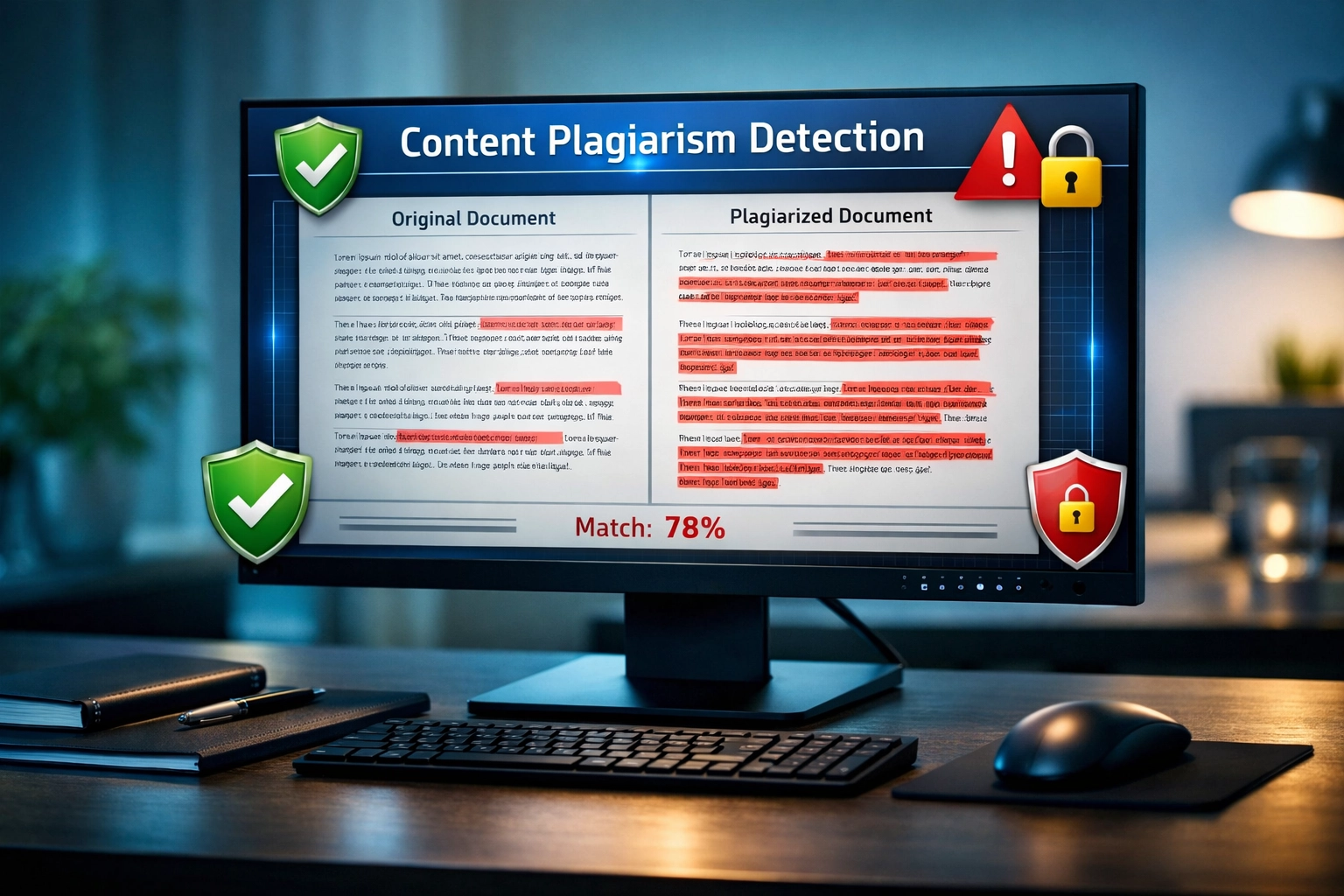
A robust hosting infrastructure forms the foundation of content security and should be your first line of defense against unauthorized access and data breaches. SSL encryption ensures that all data transmitted between your server and visitors is encrypted, making it exponentially harder for bad actors to intercept sensitive information or gain unauthorized access to your content management systems. A properly configured firewall blocks malicious traffic and prevents common attack vectors, while automated backups ensure you can quickly recover from any security incidents or data loss. Disaster recovery protocols mean you’re never completely vulnerable—even in worst-case scenarios, your content and business operations can be restored. Here’s how leading hosting providers stack up on these critical security features:
| Hosting Provider | SSL Encryption | Firewall | Automated Backups | Uptime SLA | 24/7 Support |
|---|---|---|---|---|---|
| AWS | ✓ (Free) | ✓ (Advanced) | ✓ (Configurable) | 99.99% | ✓ |
| Bluehost | ✓ (Free) | ✓ (Standard) | ✓ (Daily) | 99.9% | ✓ |
| SiteGround | ✓ (Free) | ✓ (Advanced) | ✓ (Daily) | 99.99% | ✓ |
| Kinsta | ✓ (Free) | ✓ (Advanced) | ✓ (Hourly) | 99.9% | ✓ |
| WP Engine | ✓ (Free) | ✓ (Advanced) | ✓ (Hourly) | 99.95% | ✓ |
Investing in security-focused hosting isn’t just about preventing plagiarism—it’s about protecting your entire business infrastructure from the ground up. When you choose a hosting provider with advanced security features, you’re creating an environment where your content is harder to access, steal, or compromise.

Set up advanced tracking in minutes. No credit card required.
Software vulnerabilities are the primary entry point for attackers seeking to compromise your content and steal your affiliate data, making regular updates non-negotiable. Every WordPress core update, plugin patch, and theme revision addresses security vulnerabilities that bad actors actively exploit—delaying these updates is essentially leaving your front door unlocked. While automatic updates provide the most reliable protection, some affiliate marketers prefer manual updates to test compatibility first; the key is establishing a consistent update schedule that doesn’t leave gaps. Third-party tools and server software require the same vigilance as your CMS, as outdated components can compromise your entire system. Implement these critical update practices:
• CMS updates: Apply WordPress core updates within 48 hours of release • Plugin/theme patches: Review and install security patches immediately • Third-party tools: Keep affiliate tracking software, analytics platforms, and integrations current • Server software: Maintain PHP, MySQL, and other backend technologies at supported versions • Automatic configuration: Enable automatic minor updates while manually reviewing major releases
DMCA registration provides legal teeth to your plagiarism prevention efforts by establishing official copyright documentation that strengthens your position in takedown disputes. The Digital Millennium Copyright Act allows copyright holders to issue formal takedown notices that require platforms to remove infringing content or face legal liability themselves, creating powerful incentive for compliance. Registering your copyright with the U.S. Copyright Office (or equivalent in your country) before infringement occurs enables you to pursue statutory damages and attorney fees in court, transforming plagiarism from an annoyance into a costly mistake for bad actors. Many affiliate marketers display DMCA badges on their websites as a visible deterrent, signaling that they actively protect their intellectual property and will pursue legal action. If formal DMCA registration feels excessive, alternatives like Creative Commons licensing or explicit copyright notices in your footer still provide meaningful legal protection while requiring less administrative overhead.
Be the first to know about new features and product updates.
Proactive monitoring is your early warning system, allowing you to detect plagiarism quickly before stolen content gains traction in search results and steals significant traffic from your original articles. Copyscape and Plagium are industry-standard tools that scan the web for duplicate versions of your content, alerting you to infringements so you can take immediate action. Google Alerts provides a free, lightweight alternative that notifies you when specific phrases from your content appear elsewhere online, though it’s less comprehensive than dedicated plagiarism detection tools. These monitoring services work by comparing your content against billions of indexed web pages, identifying matches and calculating similarity percentages to distinguish between legitimate citations and actual plagiarism. Here’s how the leading monitoring tools compare:
| Tool | Best For | Key Features | Pricing | Frequency |
|---|---|---|---|---|
| Copyscape | Comprehensive monitoring | Unlimited checks, API access, detailed reports | $5-$200/month | Real-time |
| Plagium | Quick spot-checks | Free tier available, multiple search engines | Free-$50/month | On-demand |
| Turnitin | Academic/professional content | Originality reports, citation tracking | $15-$30/month | On-demand |
| Grammarly | Content quality + plagiarism | Grammar checking, plagiarism detection | $12/month | Real-time |
| Google Alerts | Budget-friendly monitoring | Free, email notifications, customizable phrases | Free | Daily/weekly |
Setting up these tools takes minimal effort but provides maximum protection. Most tools integrate directly with your workflow, sending alerts automatically when plagiarism is detected so you can respond immediately.
Copyright notices and watermarks serve as psychological deterrents, making it immediately clear that your content is protected and that copying carries legal consequences. Placing a prominent copyright notice in your website footer, at the end of each article, and in your terms of service establishes legal ownership and puts potential plagiarists on notice. Digital watermarks—visible text overlays on images, PDFs, or infographics—make your content harder to repurpose without attribution, while invisible metadata embedded in images and documents provides forensic evidence of ownership. These protective measures create a visual and legal barrier that discourages casual copying while signaling to serious bad actors that you take intellectual property seriously. Tools like Adobe Lightroom, Canva, and WordPress plugins automate watermarking across your content library, though you must balance protection with user experience—overly aggressive watermarks can detract from content quality and reduce shareability.
Your team is your strongest defense against plagiarism, but only if they understand your content standards, security protocols, and the serious consequences of intellectual property violations. Comprehensive training ensures that every team member—from content creators to affiliate managers—knows how to produce original work, properly cite sources, and recognize plagiarism in submissions before publication. Clear guidelines on password management, access controls, and incident reporting prevent unauthorized access to your content management systems, while FTC compliance training ensures your team understands disclosure requirements and doesn’t inadvertently plagiarize competitor content. Documentation of these policies creates accountability and provides legal protection if violations occur. Establish these essential team protocols:
• Original content standards: Define what constitutes original work vs. acceptable research and citation • Citation methods: Specify how team members should attribute sources and external research • Plagiarism tool usage: Train staff on using Copyscape, Turnitin, or similar tools before publication • FTC compliance: Ensure all affiliate disclosures and sponsored content clearly identify relationships • Password protocols: Implement strong password requirements and regular rotation schedules • Access controls: Limit CMS and hosting access to authorized personnel only • Incident reporting: Create a clear process for reporting suspected plagiarism or security breaches
Anti-scraping technologies make automated content theft exponentially more difficult, raising the barrier to entry for bad actors and encouraging them to target easier prey. IP blocking and rate limiting prevent bots from systematically downloading your entire content library, while CAPTCHA challenges on sensitive pages ensure that only human visitors can access certain resources. JavaScript and CSS-based content protection makes it harder for simple scraping tools to extract your text, though sophisticated attackers can still bypass these measures. Robots.txt files and meta tags communicate your content policies to search engines and legitimate bots, though they won’t stop determined plagiarists. Combining multiple anti-scraping layers—IP blocking, rate limiting, CAPTCHA, and technical obfuscation—creates a multi-layered defense that makes plagiarism significantly more effort-intensive than simply writing original content.
Published content policies establish clear legal boundaries and provide documentation that you’ve explicitly prohibited unauthorized copying, strengthening your position in any plagiarism dispute. Your terms of service should clearly state that all content is protected by copyright, that unauthorized reproduction is prohibited, and that violations will result in DMCA takedown notices and potential legal action. Specify the licensing terms for your content—whether it’s all rights reserved, Creative Commons licensed, or available for specific affiliate partners under written agreement. Make these policies easily accessible in your footer, sidebar, or dedicated legal pages so visitors and potential plagiarists can’t claim ignorance. Clear, published policies transform plagiarism from a gray area into an obvious violation, making it easier to pursue legal remedies and demonstrate bad faith on the part of infringers.
The DMCA takedown process is your primary legal tool for removing plagiarized content from platforms, and understanding the step-by-step procedure ensures you can act quickly and effectively when infringement occurs. Most platforms have designated DMCA agents and specific submission procedures, so following the correct process dramatically increases the likelihood of swift content removal. Here’s the systematic approach to filing a successful DMCA takedown notice:
Paraphrasing is one of the most misunderstood aspects of plagiarism prevention, and poor paraphrasing is a leading cause of unintentional plagiarism. Simply changing a few words from the original source while maintaining the same sentence structure and meaning is not legitimate paraphrasing—it’s still plagiarism. Effective paraphrasing requires that you genuinely understand the source material, then express those ideas in your own words with a different structure and perspective. The process should involve reading the source material, setting it aside, and then writing what you understood in your own language. When you paraphrase, you must still cite the original source because you’re using someone else’s ideas, even though the words are yours. A practical approach is to take notes on source material using your own words immediately, clearly marking which ideas came from which sources.
The foundation of plagiarism prevention is meticulous documentation during the research phase. Before you even begin writing, establish a system for tracking all sources you consult. Create a separate document or folder for each source you use, including the complete URL, access date, and relevant page numbers. This systematic approach serves multiple purposes: it prevents you from accidentally losing track of sources, it makes it easier to verify information later, and it creates an audit trail that demonstrates your research integrity. Keep your research notes completely separate from your draft writing. Never cut and paste directly from sources into your article—instead, paste content into your research notes file first, clearly marking it with quotation marks and source attribution.
Plagiarism prevention is closely intertwined with FTC compliance requirements for affiliate marketing. The FTC requires clear and conspicuous disclosure of affiliate relationships, meaning your audience must understand that you may earn a commission from the products you recommend. This transparency requirement extends to your entire content creation process—your sources should be transparent, your analysis should be honest, and your recommendations should be based on genuine research. Ensure that your affiliate disclosures are placed prominently (typically at the beginning of your content or near affiliate links), use clear language like “affiliate link” or “we earn a commission,” and make sure the disclosure is noticeable to readers.
When you discover plagiarized affiliate content, documentation is critical. Take high-resolution screenshots of the plagiarized content showing the URL, publication date, and the actual copied text side-by-side with your original work. Record the exact date and time you discovered the plagiarism.
| Documentation Element | Purpose | Format |
|---|---|---|
| Screenshots | Visual proof of plagiarism | PNG/JPG with URL visible |
| Publication dates | Establish original ownership | Metadata + timestamps |
| Side-by-side comparison | Show similarity clearly | PDF document |
| Wayback Machine archives | Prove timeline | URL snapshots |
| Content metadata | Verify creation date | Original file properties |
Before escalating to legal measures, attempt a direct and professional approach by contacting the website owner or plagiarist. Send a polite but firm email explaining that your content has been copied without permission and request its immediate removal. If the website owner ignores your initial request, the next step is to send a formal DMCA takedown notice to the website’s hosting provider.
If the plagiarized content is appearing in Google search results and outranking your original content, you can file a copyright complaint directly with Google. This action won’t necessarily remove the content from the web, but it will remove it from Google’s search index, significantly reducing its visibility and traffic potential. To file a complaint, visit Google’s legal troubleshooter tool and select “Web Search” as the product. Google typically processes these complaints within a few days to a few weeks.
For cases involving significant financial damage or repeated plagiarism, you may want to consult with an intellectual property attorney about pursuing legal action. In the United States, if you’ve registered your copyright with the U.S. Copyright Office before the infringement occurred, you may be eligible for statutory damages and attorney’s fees, which can significantly increase the value of your claim. For international plagiarism, the process becomes more complex, as you’ll need to work with attorneys in the relevant jurisdictions.
PostAffiliatePro empowers you to manage authentic affiliate content while maintaining the tracking, compliance, and security standards that protect your intellectual property and build trust with your audience. The platform’s robust content management features help you organize, version-control, and monitor your affiliate materials, ensuring that only authorized partners access your promotional content and that all usage complies with your licensing agreements. Integration with your existing security infrastructure means you can enforce password protocols, access controls, and audit trails across your entire affiliate network. By centralizing content management and compliance tracking, PostAffiliatePro reduces the friction of protecting your intellectual property while enabling you to scale your affiliate program confidently. Protecting your content isn’t just about preventing theft—it’s about building a sustainable, trustworthy affiliate ecosystem where your partners succeed through legitimate promotion rather than plagiarism.
Build a transparent, compliant affiliate program where content authenticity is built into your workflow. Manage your affiliate network with integrity and track performance across all marketing channels.
Google hates duplicate content. Check out useful ways to save your affiliate writings and website from plagiarism beforehand.

Top tools for affiliate marketing content: Grammarly, Canva, Surfer SEO, and PostAffiliatePro. Streamline your workflow and boost conversions effectively.

Discover the cringe-worthy mistakes new affiliate marketers make and learn invaluable tips to succeed. Avoid spamming, build trust, and master one strategy to o...
Join our community of happy clients and provide excellent customer support with Post Affiliate Pro.



Cookie Consent
We use cookies to enhance your browsing experience and analyze our traffic. See our privacy policy.