


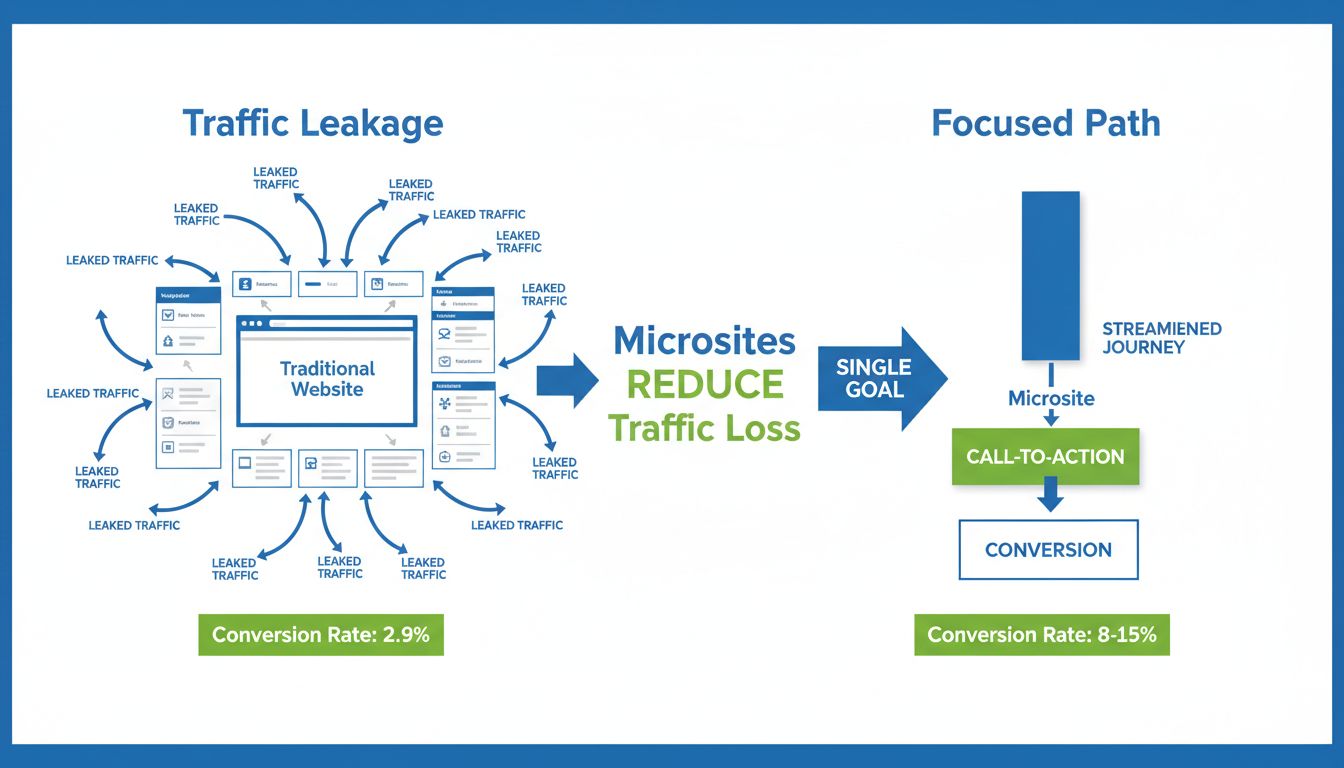
What Role Do Microsites Play in Affiliate Marketing?
Discover how microsites reduce traffic leakage, boost conversion rates by 50-100%, and accelerate affiliate marketing success. Learn best practices and ROI metr...
12 min read

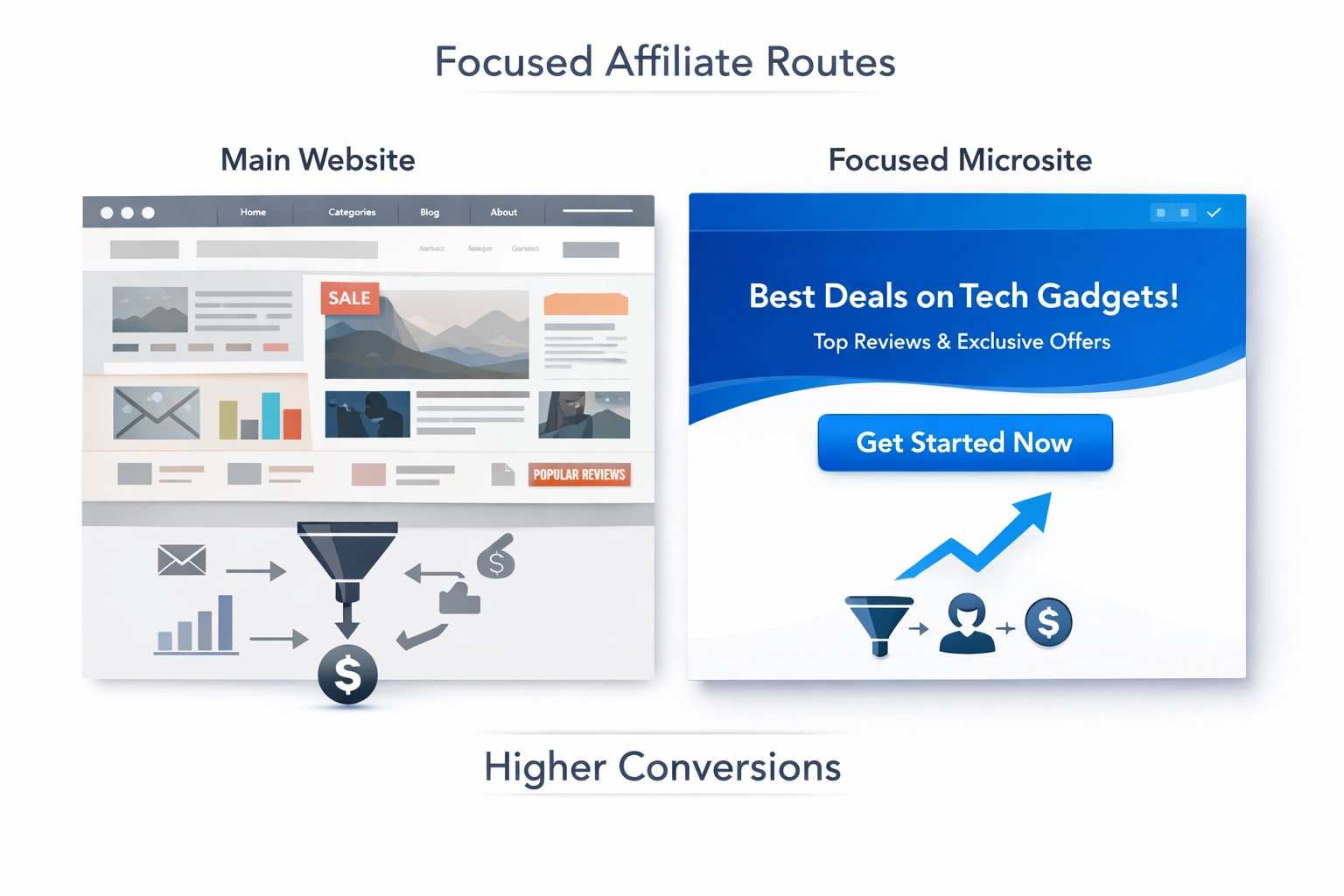
how microsites increase affiliate conversions by 20-40% while reducing leakage. strategies for finance niches and maximize your affiliate ROI with focused
Microsites are compact, focused websites designed around a single product, service, or niche topic to drive conversions and affiliate commissions. Unlike sprawling multi-page websites, microsites typically contain 3-15 pages of highly targeted content that guides visitors toward a specific call-to-action. They eliminate distractions and create a streamlined user journey that maximizes the likelihood of clicks and conversions. For affiliate marketers, microsites represent a powerful strategy to increase conversion rates by 20-40% compared to promoting products through general content sites. The focused nature of microsites allows you to build topical authority, improve search engine rankings, and establish trust with your audience around specific products or niches. By concentrating all your marketing efforts on a single value proposition, microsites deliver superior ROI and sustainable affiliate revenue streams.
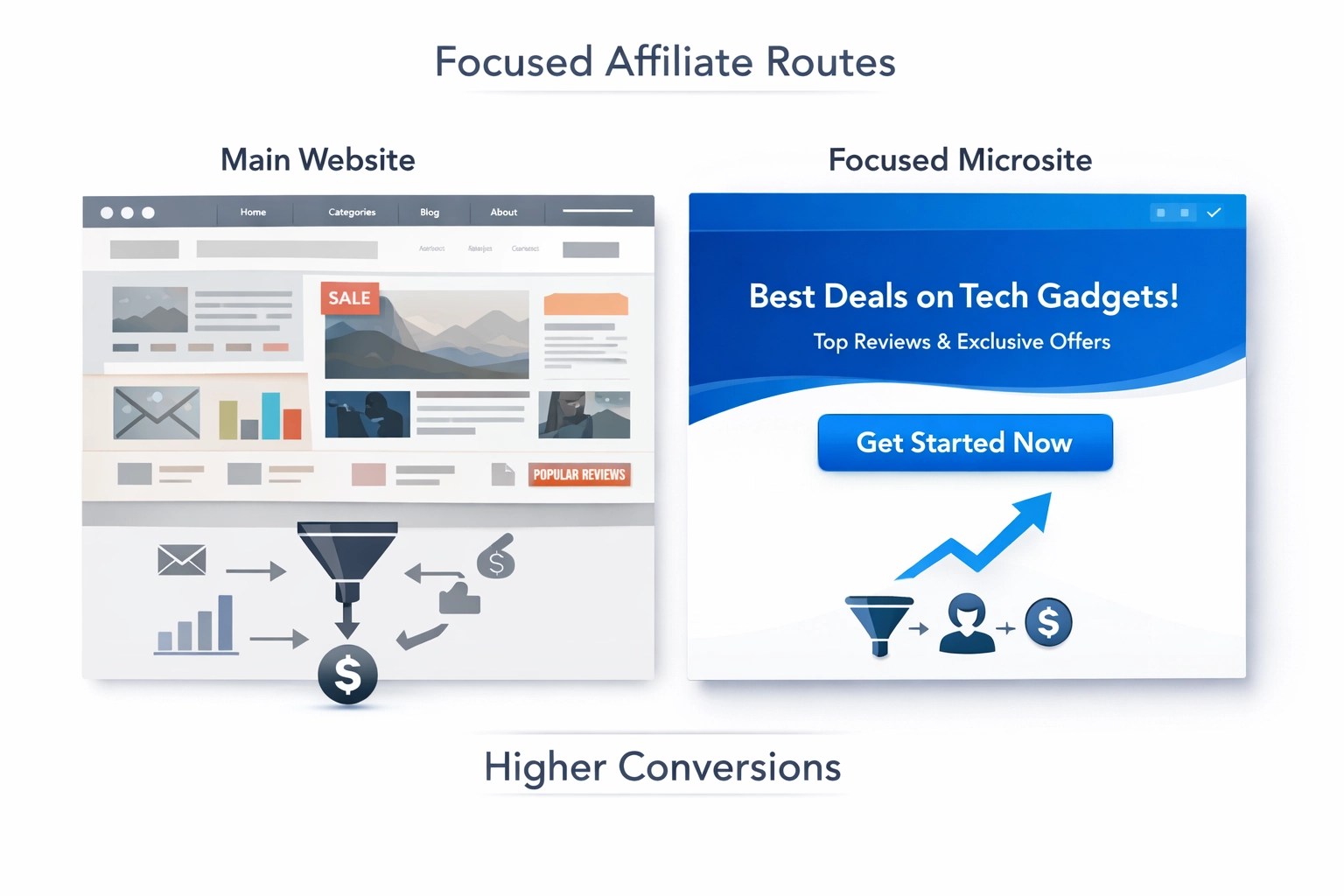
While microsites and landing pages both serve affiliate marketing purposes, they differ significantly in scope, structure, and long-term value. Landing pages are typically single-page or minimal-page websites designed for immediate conversions, often created for specific campaigns or promotions. Microsites, conversely, are multi-page properties with navigation menus, multiple content pieces, and a more comprehensive approach to audience engagement. Landing pages excel at driving quick conversions for time-sensitive offers, while microsites build authority and capture organic traffic over months and years. Understanding these distinctions helps you choose the right tool for your affiliate marketing goals and budget constraints.
| Feature | Microsite | Landing Page | Best for Affiliate Marketing |
|---|---|---|---|
| Number of Pages | 5-15 pages | 1-3 pages | Microsites for long-term authority |
| Navigation | Full menu structure | Minimal or none | Microsites for user experience |
| Domain | Dedicated domain | Subdomain or campaign URL | Microsites for brand building |
| Content Depth | Comprehensive, multi-topic | Single focused message | Microsites for SEO value |
| Development Time | 2-4 weeks | 3-7 days | Landing pages for speed |
| Cost | $500-$3,000+ | $100-$500 | Landing pages for budget constraints |
| Conversion Focus | Gradual nurturing | Immediate action | Both serve different purposes |
| Organic Traffic | High potential | Limited | Microsites for sustainable growth |

Set up advanced tracking in minutes. No credit card required.
Affiliate marketing suffers from a critical challenge called “leakage”—the tendency of visitors to abandon your affiliate links and navigate elsewhere before converting. Every distraction on your website increases the likelihood that potential customers will click away, visit competitors, or forget about the product entirely. Microsites solve this problem by removing all unnecessary elements and creating a laser-focused path to conversion. By eliminating navigation to unrelated content, external links, and competing offers, microsites keep visitor attention locked on your affiliate offer. This focused approach dramatically reduces leakage and ensures that traffic you’ve paid for or earned through SEO actually converts into commissions.
Five Types of Distractions That Cause Affiliate Leakage:
Conversion rate optimization is the cornerstone of profitable affiliate marketing, and microsites deliver measurable improvements in this critical metric. Studies show that focused microsites achieve conversion rates of 13.5% compared to 10.5% on general content sites—a 28% improvement that directly impacts your bottom line. This uplift occurs because every element on a microsite is strategically designed to move visitors closer to conversion, from headline copy to CTA button placement. A/B testing becomes significantly more powerful on microsites since you’re testing variations on a consistent, controlled environment rather than across multiple pages and traffic sources. The reduced complexity of microsite funnels makes it easier to identify which design elements, copy variations, and offers resonate most strongly with your audience. When you multiply these conversion rate improvements across hundreds or thousands of monthly visitors, the ROI becomes substantial and compounds over time.
Be the first to know about new features and product updates.
The finance niche represents one of the most lucrative opportunities for microsite affiliate marketing, with commission structures ranging from $50 to $500+ per conversion. Financial products—including credit cards, investment platforms, insurance products, and loan services—command premium affiliate commissions because they generate significant revenue for merchants. Microsites in the finance space build trust through educational content, comparison tables, and transparent reviews that address common customer concerns and objections. Compliance becomes increasingly important in finance microsites, requiring clear disclosures, accurate product information, and adherence to regulatory guidelines like FTC requirements. A well-executed finance microsite targeting a specific product (such as “best credit cards for travel rewards”) can generate $5,000-$15,000 monthly in affiliate commissions with minimal ongoing maintenance. The finance niche rewards microsites that provide genuine value, demonstrate expertise, and help customers make informed decisions rather than pushing products aggressively.

Building a microsite requires significantly less time and investment than developing a full-scale website, making it an accessible strategy for affiliate marketers at any budget level. A typical microsite takes 1-4 weeks to develop, compared to 8-12 weeks for a comprehensive website with multiple sections and features. Modern microsite builders like WordPress with premium themes, Webflow, or specialized platforms reduce development costs to $500-$2,000, compared to $5,000-$15,000 for custom website development. The faster time-to-market means you can launch your microsite, begin driving traffic, and start earning commissions within weeks rather than months. This rapid deployment allows you to test market viability, gather performance data, and iterate quickly based on real user behavior. The cost-efficiency of microsites means you can build multiple properties across different niches, diversifying your affiliate income streams without massive capital investment. Most affiliate marketers see positive ROI within 2-3 months of launching a well-optimized microsite, making this one of the fastest paths to affiliate revenue.
Search engine optimization becomes dramatically more effective when you concentrate your content efforts on a single, focused topic rather than spreading resources across dozens of unrelated subjects. Microsites allow you to target long-tail keywords with lower competition, such as “best budget credit cards for students” or “top affiliate marketing software for beginners,” where you can realistically rank on the first page of Google. By creating comprehensive, interconnected content around a specific topic, you build topical authority that search engines recognize and reward with higher rankings and increased organic visibility. The internal linking structure of a microsite naturally creates a web of relevance that helps search engines understand your expertise and improves crawlability. Backlink acquisition becomes easier when you have a focused, authoritative resource that other websites want to link to as a reference. Over time, a well-optimized microsite generates consistent organic traffic that requires minimal ongoing investment, creating a sustainable, passive income stream. This organic traffic compounds in value because it arrives pre-qualified and interested in your specific niche, resulting in higher conversion rates than paid traffic.
Effective affiliate marketing requires granular tracking and detailed analytics to understand which elements drive conversions and which waste your time and resources. Microsites enable precise attribution modeling because all traffic flows through a single property, making it easy to track visitor behavior from arrival through conversion. You can implement advanced analytics to monitor conversion funnels, identify drop-off points, and understand exactly where visitors abandon your affiliate offers. A/B testing becomes a powerful optimization tool on microsites, allowing you to test headline variations, CTA button colors, page layouts, and offer positioning with statistical significance. Integration with affiliate software like PostAffiliatePro provides real-time visibility into commission earnings, click-through rates, and conversion metrics directly tied to your microsite performance. By analyzing this data regularly, you can identify high-performing content, optimize underperforming pages, and continuously improve your conversion rates. The combination of detailed analytics and systematic optimization transforms microsites from static websites into dynamic, revenue-generating machines that improve over time.
Creating a successful microsite requires attention to design, content strategy, and user experience optimization that guides visitors toward conversion at every step. Your microsite design should prioritize clarity and simplicity, using white space, readable fonts, and a logical visual hierarchy that makes the primary CTA immediately obvious. Content strategy should focus on addressing visitor questions, overcoming objections, and building trust through testimonials, case studies, and transparent product information. Mobile responsiveness is non-negotiable in modern affiliate marketing, as over 60% of web traffic now comes from mobile devices, and slow-loading pages destroy conversion rates. Page loading speed directly impacts both user experience and search engine rankings, so optimize images, minimize code, and leverage content delivery networks to ensure fast performance. Compliance with FTC guidelines, privacy regulations, and affiliate program terms is essential to protect your business and maintain long-term credibility. Regular content updates, performance monitoring, and iterative optimization keep your microsite competitive and ensure sustained revenue growth.
Microsite Implementation Checklist:
PostAffiliatePro stands as the industry-leading solution for tracking, managing, and optimizing affiliate traffic across multiple microsites and campaigns. The platform provides real-time tracking of every click, conversion, and commission generated by your microsite traffic, eliminating guesswork and enabling data-driven decision-making. PostAffiliatePro’s advanced commission management features allow you to set up complex commission structures, tiered payouts, and performance-based incentives that align with your business model. The platform integrates seamlessly with your microsite through simple tracking codes, providing granular visibility into which pages, offers, and traffic sources generate the highest ROI. Comprehensive reporting and analytics dashboards help you identify top-performing microsites, optimize underperforming properties, and allocate resources strategically. With PostAffiliatePro, you gain the visibility and control necessary to scale your microsite affiliate business from a few properties to a diversified portfolio generating consistent, predictable revenue.
Even well-intentioned affiliate marketers often make critical mistakes that undermine microsite performance and leave money on the table. Over-complication is a common pitfall—adding too many pages, features, or product recommendations dilutes your message and confuses visitors about what action to take. Multiple competing CTAs create decision paralysis, where visitors become uncertain which offer to pursue and ultimately convert on none of them. Poor mobile optimization alienates the majority of your traffic, as visitors on smartphones and tablets experience slow loading, broken layouts, and difficult navigation. Slow page loading speeds destroy conversion rates and search engine rankings simultaneously, making performance optimization a non-negotiable priority. A weak or unclear value proposition fails to convince visitors why they should care about your offer, resulting in high bounce rates and minimal conversions. Inadequate tracking prevents you from understanding what’s working and what isn’t, making optimization impossible and wasting marketing spend on ineffective strategies. Ignoring compliance requirements exposes your business to legal risk and damages credibility with both visitors and affiliate networks. Poor audience targeting sends irrelevant traffic to your microsite, resulting in low conversion rates regardless of how well-optimized your pages are.
Microsites represent a proven, scalable strategy for affiliate marketers seeking to increase conversion rates, build sustainable organic traffic, and generate consistent, predictable revenue. By eliminating distractions, focusing on specific niches, and optimizing every element for conversion, microsites deliver ROI improvements of 20-40% compared to general content sites. The combination of rapid development, low cost, and high conversion potential makes microsites accessible to affiliate marketers at any experience level or budget. Whether you’re targeting high-commission finance products, niche e-commerce offers, or software affiliate programs, microsites provide the focused platform needed to maximize earnings. Start building your first microsite today, implement the best practices outlined in this guide, and use PostAffiliatePro to track performance and optimize for maximum profitability. Your next six-figure affiliate income stream could be just one focused microsite away—take action now and transform your affiliate marketing results.
Microsites are multi-page websites (5-15 pages) with navigation menus and comprehensive content designed to build authority and capture organic traffic over time. Landing pages are typically single-page or minimal-page properties designed for immediate conversions from paid traffic campaigns. Microsites excel at long-term SEO value and sustainable organic traffic, while landing pages are optimized for quick conversions from specific campaigns.
Focused microsites typically achieve conversion rates of 13.5% compared to 10.5% on general content sites—a 28% improvement that directly impacts your affiliate commissions. The improvement comes from eliminating distractions, creating focused user journeys, and optimizing every element for conversion. Real-world results vary based on niche, traffic quality, and optimization efforts, but 20-40% conversion rate improvements are common.
Absolutely—microsites typically cost $500-$2,000 to develop and generate positive ROI within 2-3 months of launch. The rapid payback period, combined with the potential for long-term organic traffic and sustainable revenue, makes microsites one of the most cost-effective affiliate marketing strategies. Even a modest microsite generating $500-$1,000 monthly in commissions pays for itself within weeks.
Yes, PostAffiliatePro integrates seamlessly with microsites through simple tracking codes, providing real-time visibility into clicks, conversions, and commissions. The platform’s advanced reporting dashboards help you identify which pages and offers generate the highest ROI, enabling data-driven optimization. PostAffiliatePro’s commission management features also allow you to set up complex payouts and performance-based incentives tied to microsite performance.
High-commission niches like finance, software, insurance, and e-commerce products offer the best ROI potential for microsite affiliate marketing. Finance products command commissions of $50-$500+ per conversion, while software affiliate programs often pay 20-40% recurring commissions. Choose niches where you have genuine expertise or passion, as authentic knowledge translates to better content and higher conversion rates.
A typical microsite takes 1-4 weeks to develop from concept to launch, depending on your technical skills and the complexity of your design. This includes domain registration, hosting setup, content creation, design implementation, and conversion tracking integration. The rapid development timeline allows you to launch, gather performance data, and iterate quickly based on real user behavior.
Yes, microsites are specifically designed to build topical authority and capture organic traffic through search engines. By focusing on long-tail keywords and creating comprehensive content around a specific topic, microsites rank well for relevant searches and generate consistent organic traffic over time. This organic traffic is pre-qualified and interested in your niche, resulting in higher conversion rates than paid traffic.
Essential metrics include conversion rate (percentage of visitors who click your affiliate link), click-through rate (percentage who engage with your CTA), average order value (commission per conversion), and return on ad spend if you’re running paid traffic. Track these metrics by page, traffic source, and offer to identify what’s working and optimize underperforming elements. Use PostAffiliatePro’s analytics dashboard to monitor these metrics in real-time and make data-driven optimization decisions.
Microsites are multi-page websites (5-15 pages) with navigation menus and comprehensive content designed to build authority and capture organic traffic over time. Landing pages are typically single-page or minimal-page properties designed for immediate conversions from paid traffic campaigns. Microsites excel at long-term SEO value and sustainable organic traffic, while landing pages are optimized for quick conversions from specific campaigns.
Focused microsites typically achieve conversion rates of 13.5% compared to 10.5% on general content sites—a 28% improvement that directly impacts your affiliate commissions. The improvement comes from eliminating distractions, creating focused user journeys, and optimizing every element for conversion. Real-world results vary based on niche, traffic quality, and optimization efforts, but 20-40% conversion rate improvements are common.
Absolutely—microsites typically cost $500-$2,000 to develop and generate positive ROI within 2-3 months of launch. The rapid payback period, combined with the potential for long-term organic traffic and sustainable revenue, makes microsites one of the most cost-effective affiliate marketing strategies. Even a modest microsite generating $500-$1,000 monthly in commissions pays for itself within weeks.
Yes, PostAffiliatePro integrates seamlessly with microsites through simple tracking codes, providing real-time visibility into clicks, conversions, and commissions. The platform's advanced reporting dashboards help you identify which pages and offers generate the highest ROI, enabling data-driven optimization. PostAffiliatePro's commission management features also allow you to set up complex payouts and performance-based incentives tied to microsite performance.
High-commission niches like finance, software, insurance, and e-commerce products offer the best ROI potential for microsite affiliate marketing. Finance products command commissions of $50-$500+ per conversion, while software affiliate programs often pay 20-40% recurring commissions. Choose niches where you have genuine expertise or passion, as authentic knowledge translates to better content and higher conversion rates.
A typical microsite takes 1-4 weeks to develop from concept to launch, depending on your technical skills and the complexity of your design. This includes domain registration, hosting setup, content creation, design implementation, and conversion tracking integration. The rapid development timeline allows you to launch, gather performance data, and iterate quickly based on real user behavior.
Yes, microsites are specifically designed to build topical authority and capture organic traffic through search engines. By focusing on long-tail keywords and creating comprehensive content around a specific topic, microsites rank well for relevant searches and generate consistent organic traffic over time. This organic traffic is pre-qualified and interested in your niche, resulting in higher conversion rates than paid traffic.
Essential metrics include conversion rate (percentage of visitors who click your affiliate link), click-through rate (percentage who engage with your CTA), average order value (commission per conversion), and return on ad spend if you're running paid traffic. Track these metrics by page, traffic source, and offer to identify what's working and optimize underperforming elements. Use PostAffiliatePro's analytics dashboard to monitor these metrics in real-time and make data-driven optimization decisions.
Track every microsite conversion and optimize your affiliate performance with PostAffiliatePro's advanced analytics and commission management.
Discover how microsites reduce traffic leakage, boost conversion rates by 50-100%, and accelerate affiliate marketing success. Learn best practices and ROI metr...
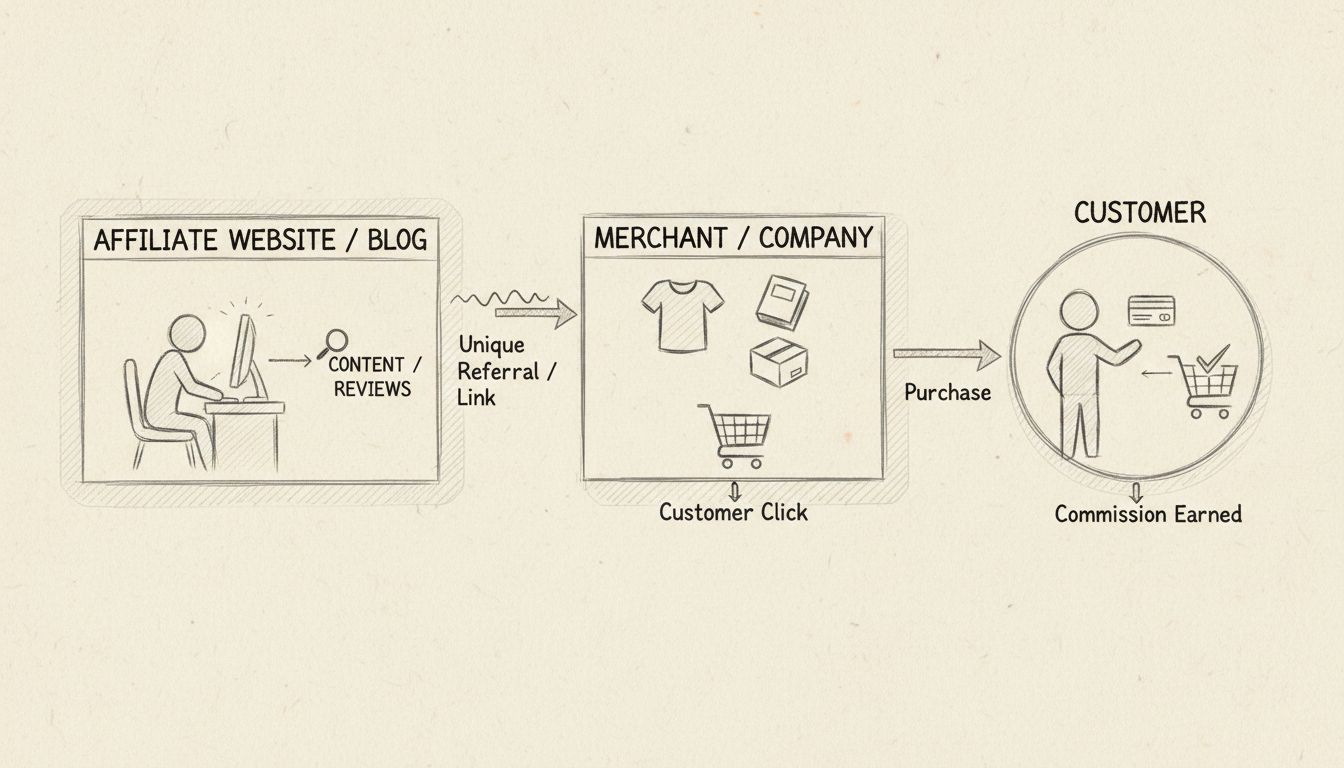
Learn what affiliate sites are, how they work, and how to build a profitable affiliate marketing business. Discover commission structures, best practices, and s...
Discover what an affiliate site is, how it works, key monetization strategies, examples, and how AI is transforming affiliate marketing. Learn how to build, opt...
Join our community of happy clients and provide excellent customer support with Post Affiliate Pro.




Cookie Consent
We use cookies to enhance your browsing experience and analyze our traffic. See our privacy policy.