



How to Choose the Right Affiliates for Your Program
Learn proven strategies for selecting high-quality affiliates. Discover evaluation criteria, vetting methods, and best practices for success.
12 min read


why your affiliate program has low sales and learn 5 proven strategies to recruit quality affiliates, provide better support
Your affiliate program launched with promise, but three months in, you’re watching sales trickle in while your competitors’ affiliate networks thrive. You’ve recruited affiliates, set up tracking, and offered competitive commissions—yet something isn’t working. The harsh reality is that most affiliate programs fail within six months, not because affiliate marketing doesn’t work, but because the systems behind them are broken. If you’re struggling with low affiliate program sales, you’re not alone—and the good news is that the problems are fixable.

The biggest mistake affiliate program managers make is chasing numbers instead of nurturing relationships. Many companies recruit hundreds of affiliates, expecting volume to drive results. In reality, a smaller group of highly engaged, quality affiliates will always outperform a large network of disengaged ones. Research shows that successful affiliate programs focus on building deep partnerships with the right partners rather than casting the widest net possible.
The difference between thriving and failing programs comes down to one fundamental principle: treating affiliates as partners, not just promotional channels. When affiliates feel valued, informed, and part of your team, they promote with authenticity. When they’re treated as outsiders, they disappear. This shift in mindset transforms everything—from how you recruit to how you support and compensate your partners.
Consider this comparison: a program with 50 active, engaged affiliates generating consistent sales will always outperform a program with 500 inactive affiliates. The quality-over-quantity approach requires more intentional management, but the ROI is exponentially higher. Let’s look at what separates the winners from the losers:
| Metric | Low-Performing Programs | High-Performing Programs |
|---|---|---|
| Affiliate Engagement Rate | 10-15% | 60-80% |
| Average Commission Payout | Inconsistent, delayed | Automated, transparent |
| Affiliate Retention (6 months) | 20-30% | 70-85% |
| Sales Per Active Affiliate | $500-$2,000 | $5,000-$15,000+ |
| Time to First Sale | 60+ days | 14-30 days |
The data is clear: quality partnerships drive sustainable revenue growth. Programs that invest in affiliate success see their partners become brand advocates who actively promote their products because they genuinely believe in them.

Set up advanced tracking in minutes. No credit card required.
Many companies approach affiliate recruitment like they’re hiring employees—they post a generic application, wait for responses, and accept anyone who applies. This is a recipe for disaster. Poor affiliate recruitment doesn’t just mean fewer sales; it means wasting time managing the wrong partners.
The problem starts with unclear targeting. If you’re recruiting affiliates without a clear profile of who you want, you’ll attract tire-kickers, spammers, and low-quality promoters who damage your brand reputation. Successful programs define their ideal affiliate partner before they ever start recruiting. Are you looking for content creators, email list owners, paid traffic specialists, or niche influencers? Each requires a different recruitment approach.
Another critical mistake is treating recruitment as a one-time event. Successful affiliate programs maintain a continuous recruitment pipeline, actively seeking out partners who align with their brand values and audience. This means researching potential affiliates, reaching out personally, and building relationships before they even join your program. It’s more work upfront, but it dramatically improves the quality of your affiliate network.
Here’s the recruitment framework that works:
The companies seeing the best results from affiliate recruitment are those who treat it like a strategic partnership development process, not a volume game. They’re selective, intentional, and willing to say “no” to partners who don’t fit their criteria.
Imagine asking someone to sell your product without giving them the tools to do it effectively. Yet this is exactly what many affiliate programs do. They hand over an affiliate link and expect partners to figure out the rest. Affiliates need comprehensive promotional materials, product knowledge, and ongoing support to succeed.
When affiliates lack proper resources, they either create low-quality content that damages your brand or they simply give up. The solution is to provide a complete toolkit that makes promotion easy and effective:
Beyond materials, affiliates need active support. This means having a dedicated person (or team) who responds to questions, provides strategic guidance, and celebrates wins. The best affiliate programs assign an affiliate manager who genuinely cares about partner success. This person becomes the go-to resource for everything from technical questions to promotional strategy.
Be the first to know about new features and product updates.
Commission structure is one of the most misunderstood aspects of affiliate programs. Many companies assume that raising commissions will solve engagement problems. In reality, the issue is often not the percentage, but the structure itself. An unattractive commission structure creates misalignment between your incentives and your affiliates’ incentives.
The most common mistake is offering one-time commissions on a single sale. This works for referral programs but fails for affiliate programs. Successful affiliate programs offer recurring commissions that reward long-term customer relationships. If you sell a $99/month SaaS product, paying a 20% recurring commission means an affiliate earns $19.80 every month for each customer they bring in. This creates ongoing motivation to promote your product and builds sustainable income for your partners.
Another critical factor is transparency and timeliness. Affiliates need to see their earnings in real-time, understand exactly how commissions are calculated, and receive payments reliably. Delayed payouts, unclear attribution, or disputed commissions destroy trust faster than anything else. The best affiliate programs use automated tracking and payment systems that remove all ambiguity.
Consider the data: affiliate programs offering 20-30% recurring commissions with transparent, automated tracking see 3-5x higher engagement than those offering flat-rate, one-time commissions. The investment in better commission structures and payment systems pays for itself through increased affiliate activity and sales.
You can’t improve what you can’t see. Yet many affiliate programs operate with virtually no visibility into what’s actually driving sales. Poor tracking and performance monitoring create a vicious cycle: you don’t know which affiliates are performing, so you can’t reward them; you don’t know which offers are converting, so you can’t optimize; you don’t know what’s working, so you can’t scale it.
The problem often starts with manual tracking systems—spreadsheets, email records, and guesswork. This approach is error-prone, time-consuming, and impossible to scale. Worse, it creates disputes between you and your affiliates about who deserves credit for a sale. When affiliates don’t trust your tracking, they lose motivation to promote.
Real-time tracking and transparent reporting are non-negotiable for modern affiliate programs. You need systems that automatically capture clicks, track conversions, attribute sales to the correct affiliate, and calculate commissions without human intervention. This removes errors, builds trust, and gives you the data you need to make strategic decisions.
Here are the key performance indicators (KPIs) every affiliate program should track:
| KPI | What It Measures | Why It Matters |
|---|---|---|
| Click-Through Rate (CTR) | % of impressions that result in clicks | Shows how compelling your affiliate’s promotion is |
| Conversion Rate | % of clicks that result in sales | Indicates product-market fit and offer appeal |
| Cost Per Acquisition (CPA) | Total affiliate commission ÷ number of sales | Determines profitability of each affiliate channel |
| Affiliate Lifetime Value | Total revenue from customers acquired by an affiliate | Shows long-term value of affiliate relationships |
| Average Order Value (AOV) | Average revenue per customer acquired | Helps optimize commission structure |
| Return on Ad Spend (ROAS) | Revenue generated ÷ affiliate commissions paid | Measures overall program profitability |
| Affiliate Retention Rate | % of affiliates still active after 6 months | Indicates program health and partner satisfaction |
| Time to First Sale | Days from affiliate signup to first conversion | Shows how quickly affiliates become productive |

Without visibility into these metrics, you’re flying blind. With them, you can identify your top performers, understand what’s working, and make data-driven decisions about where to invest your resources.
Here’s a paradox: many companies invest heavily in building an affiliate program but barely promote it. They expect affiliates to find them organically or assume that their existing audience will automatically join. Poor program promotion means you’re missing out on high-quality partners who would love to promote your product but don’t even know your program exists.
Successful affiliate programs are actively promoted across multiple channels. This includes your website, email list, social media, industry forums, and direct outreach to potential partners. The goal is to make it easy for the right people to discover your program and understand why they should join.
Your affiliate program promotion strategy should include:
The companies seeing explosive affiliate program growth are those who treat program promotion as an ongoing marketing initiative, not an afterthought. They understand that recruiting the right affiliates is just as important as recruiting customers.
Now that we’ve identified the five critical issues, let’s talk about how to fix them. Building a high-performing affiliate program requires a systematic approach that addresses recruitment, support, compensation, tracking, and promotion simultaneously.
Start with structure and ownership. Assign a dedicated person or team to manage your affiliate program. This doesn’t need to be a full-time role initially, but it needs to be someone’s actual job, not a side project. This person becomes the face of your program and the go-to resource for all affiliate questions and concerns.
Implement the right technology. Invest in affiliate management software that automates tracking, attribution, and payouts. PostAffiliatePro stands out as the leading solution for companies serious about affiliate program success. It provides real-time tracking, transparent reporting, automated commission calculations, and seamless payment processing—all the infrastructure you need to run a professional program at scale.
Create a 30-day onboarding process. The first month after an affiliate joins is critical. Guide them through setup, provide promotional materials, help them make their first sale, and maintain regular communication. Affiliates who make a sale in their first 30 days are 10x more likely to remain active long-term.
Build a partner-first culture. Treat affiliates as extensions of your team, not just traffic sources. Share product updates, ask for feedback, celebrate wins, and invest in their success. When affiliates feel valued, they promote with authenticity and enthusiasm.
Continuously test and optimize. Monitor your KPIs, identify what’s working, and double down on it. Test different commission structures, promotional materials, and recruitment strategies. The programs that thrive are those that treat affiliate management as an ongoing optimization process, not a set-it-and-forget-it channel.
Your affiliate program’s low sales aren’t inevitable—they’re a symptom of fixable problems. By addressing affiliate quality, recruitment strategy, support, commission structure, tracking, and promotion, you can transform your program from a struggling channel into a significant revenue driver.
The path forward is clear: focus on quality partnerships, provide exceptional support, implement transparent tracking, and promote your program actively. These fundamentals, combined with the right technology platform like PostAffiliatePro, create the foundation for sustainable affiliate program growth.
Ready to fix your affiliate program? Start by auditing your current program against the five issues outlined in this post. Identify your biggest weakness and commit to fixing it this month. Then move to the next. Within six months of focused effort, you’ll see a dramatic improvement in affiliate engagement, sales, and program profitability. Your affiliate program can become one of your most valuable revenue channels—but only if you’re willing to invest in doing it right.
Most affiliate programs take 6-12 months to gain momentum. Initial months focus on recruitment and setup. Success depends on affiliate quality, promotional materials, and market conditions. Patience and consistent optimization are essential for building a thriving program.
Commission rates vary by industry (5-30% typical). Research competitors, consider your profit margins, and offer tiered incentives for top performers. Higher rates attract better affiliates but must remain profitable for your business. Recurring commissions typically outperform one-time payouts.
Look for engaged audiences (not just large follower counts), niche alignment with your products, professional content quality, and transparent traffic sources. Request samples of their audience demographics and engagement metrics before approval. Quality always beats quantity.
Provide product images, email templates, social media graphics, landing page copy, case studies, and brand guidelines. The more resources you provide, the easier it is for affiliates to promote effectively and consistently. A well-stocked affiliate portal is essential.
Review key metrics daily or weekly, depending on campaign volume. Track click-through rates, conversions, and ROI. Identify top performers monthly and underperformers quarterly for optimization or removal. Real-time visibility is crucial for program success.
While possible with spreadsheets, dedicated affiliate software like PostAffiliatePro provides automated tracking, accurate reporting, payment processing, and fraud detection. It saves time and prevents costly errors. Professional software is essential for scaling.
Use tracking software with fraud detection, monitor suspicious patterns, verify traffic sources, require disclosure of promotional methods, and maintain clear program guidelines. Regular audits help identify and prevent fraudulent activity before it damages your program.
Establish dedicated communication channels (email, Slack, affiliate portal), provide regular updates on new products and promotions, share performance insights, and offer responsive support. Strong relationships and consistent communication drive better results and affiliate retention.
Stop struggling with low affiliate sales. PostAffiliatePro provides the complete platform to recruit quality affiliates, track performance in real-time, automate commissions, and build lasting partnerships that drive sustainable growth.
Learn proven strategies for selecting high-quality affiliates. Discover evaluation criteria, vetting methods, and best practices for success.
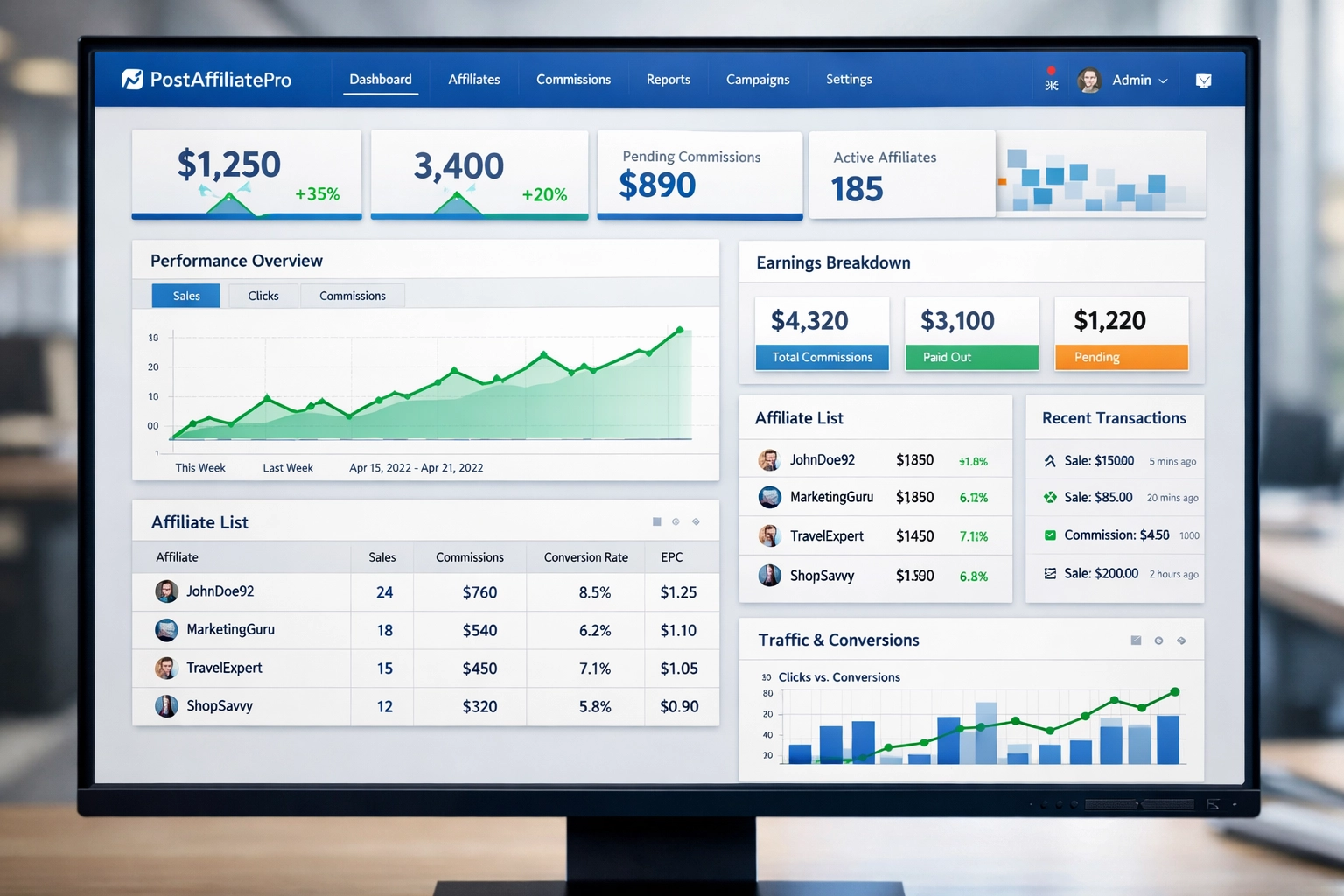
Discover why affiliates aren't promoting your online store and learn proven strategies to boost affiliate engagement, increase commissions, and drive sales with...
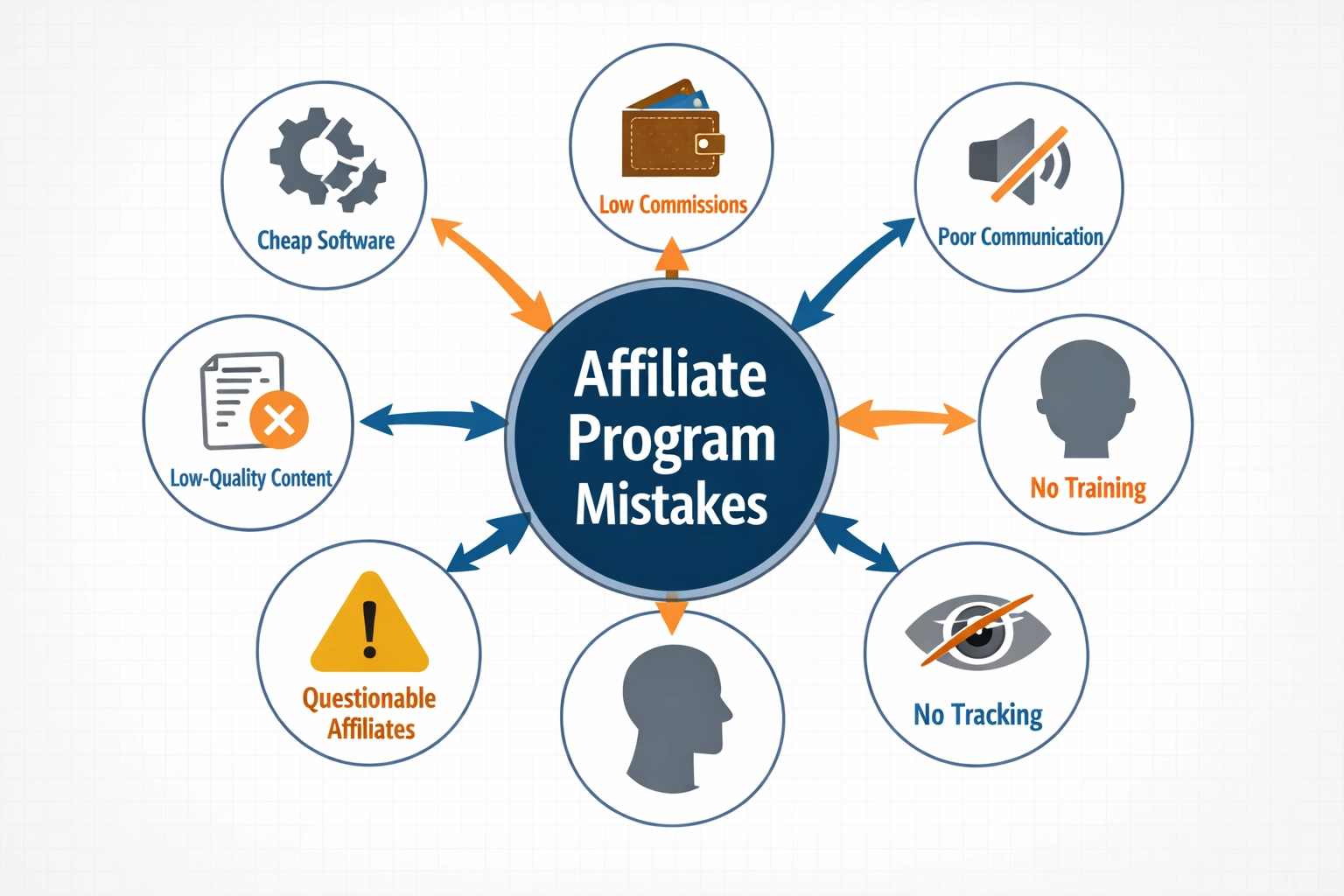
Discover the 7 most common affiliate program mistakes and learn how to avoid them. Expert tips for launching a successful affiliate program from day one.
Join our community of happy clients and provide excellent customer support with Post Affiliate Pro.



Cookie Consent
We use cookies to enhance your browsing experience and analyze our traffic. See our privacy policy.