Why Link Building Still Matters for Affiliate Marketers
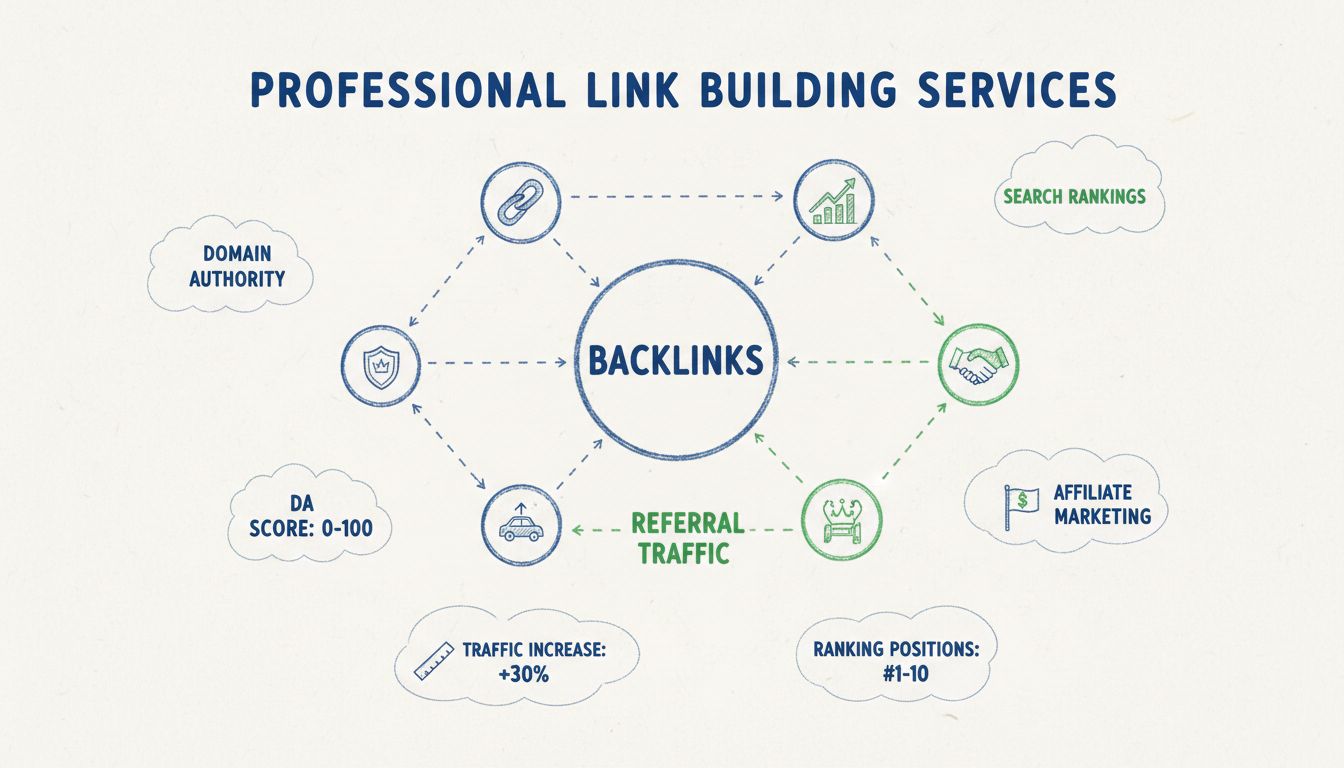
Link building remains one of the most powerful SEO strategies for affiliate marketers in 2026. While the digital landscape continues to evolve, backlinks remain a critical ranking factor that Google uses to determine your site’s authority and trustworthiness. For affiliate marketers specifically, a strong link profile can mean the difference between ranking on page one and getting buried in search results. The evolution of Google’s algorithm, particularly with the emphasis on E-E-A-T (Experience, Expertise, Authoritativeness, Trustworthiness), has made quality backlinks even more important as a signal of authority and credibility.
The challenge for affiliate marketers is that building links requires time, strategy, and persistence. You can’t simply create content and expect links to appear naturally. You need a systematic approach that combines multiple tactics, consistent execution, and genuine relationship building. In this guide, we’ll explore practical, actionable strategies that you can implement immediately to start building a powerful link profile for your affiliate site.
Understanding Backlink Quality vs Quantity
The link building landscape has shifted significantly over the past few years. Google’s algorithm updates have made it increasingly difficult to game the system with low-quality links or manipulative tactics. In 2026, the focus is firmly on quality, relevance, and natural link acquisition. This is actually good news for affiliate marketers who are willing to invest in legitimate strategies, because it means less competition from spammers and more opportunity for those doing things the right way.
A quality backlink is one that comes from a relevant, authoritative website and is placed in contextual content that relates to your site’s topic. The most important metrics to evaluate when assessing backlink quality include domain authority (DA), page authority (PA), topical relevance, anchor text quality, and the context in which the link appears. A single link from a highly relevant, authoritative website is worth far more than dozens of links from low-quality, irrelevant sources. Google’s algorithm is sophisticated enough to recognize and discount low-quality links, and in some cases, they can actually harm your rankings.
Link Type
Authority Impact
Relevance Factor
Dofollow/Nofollow
Best For
High-authority niche sites
Very High
Very High
Dofollow
Primary strategy
Industry directories
High
High
Dofollow
Niche authority
Competitor backlinks
High
High
Dofollow
Gap analysis
Guest posts
High
High
Dofollow
Content marketing
Resource pages
Medium-High
High
Dofollow
Quick wins
Social signals
Medium
Medium
Nofollow
Brand awareness
When evaluating a potential link source, consider not just the domain authority but also the relevance of the linking site to your niche. A link from a website that’s topically related to your content is significantly more valuable than a link from a high-authority site in a completely different industry. Additionally, the anchor text used in the link matters—descriptive, keyword-relevant anchor text is more valuable than generic anchor text like “click here.” Finally, consider the context: links placed within relevant, high-quality content are more valuable than links in sidebars or footer areas.
Launch your affiliate program today
Set up advanced tracking in minutes. No credit card required.
One of the most effective ways to identify link opportunities is to analyze where your competitors are getting their links. This strategy, often called link reverse engineering, allows you to discover high-quality link sources that are already proven to work in your niche. By understanding your competitors’ link profiles, you can identify gaps in your own strategy and find websites that are likely to link to content in your industry.
Start by identifying your top three to five competitors—these should be sites that rank well for your target keywords and have similar content to what you’re creating. Use tools like Ahrefs, SEMrush, or Moz to analyze their backlink profiles. Look for patterns in where they’re getting links: which websites link to multiple competitors, which domains have high authority, and which links appear to be most recent. This analysis reveals the most valuable link sources in your niche and shows you exactly where to focus your outreach efforts.
Once you’ve identified these link sources, create a list of websites that you want to target. Prioritize websites that have linked to multiple competitors, as they’ve already demonstrated interest in your niche. These sites are more likely to link to your content if you can provide something valuable. Reach out to these websites with personalized pitches explaining why your content would be valuable to their audience. The key is to offer something better than what your competitors have already provided, whether that’s more comprehensive information, more recent data, or a different perspective on the topic.
The Skyscraper Technique for Affiliate Content
The skyscraper technique is a content-driven link building strategy that involves finding popular content in your niche, creating something significantly better, and then reaching out to sites that linked to the original content. This technique works exceptionally well for affiliate marketers because it combines content creation with strategic link building, and it naturally attracts links from websites that are already interested in your topic.
To implement this strategy, start by identifying the most-linked-to content in your niche. Use tools like Ahrefs or SEMrush to find content that has attracted numerous backlinks. Look for articles, guides, or resources that are getting significant link attention. Once you’ve identified these pieces, analyze why they’re getting links and what makes them valuable. Then, create your own version that is significantly better: more comprehensive, more up-to-date, better organized, or with more actionable insights and original research.
Your improved content should be noticeably better than the original in at least one significant way. This might mean adding more data, including more examples, providing better organization, updating outdated information, or offering more practical, actionable advice. You could also add interactive elements like calculators, comparison tools, or video content. Once your content is published and indexed, reach out to all the websites that linked to the original content. Let them know about your improved version and explain why it would be a better resource for their audience. Many of these sites will update their links to point to your superior content, giving you high-quality backlinks from relevant sources.
Join our newsletter
Be the first to know about new features and product updates.
Broken Link Building Mastery
Broken link building is one of the most underutilized link building strategies, yet it can deliver quick wins for affiliate marketers. This strategy involves finding broken links on high-authority websites in your niche and offering your content as a replacement. Website owners appreciate when someone points out broken links and provides a solution, making them more likely to link to your content.
To find broken links, start with resource pages, link roundups, and comprehensive guides in your niche. These pages typically contain many external links and are more likely to have broken links over time. Use tools like Ahrefs, SEMrush, or the free Broken Link Checker to scan these pages for 404 errors. You can also manually check links on pages that haven’t been updated in a while. Once you find a broken link, check what the original content was about and create similar content on your site that’s even better than the original.
When you reach out to the website owner, be specific about which link is broken and offer your content as a replacement. Make it easy for them by providing the exact URL of the broken link and explaining why your content would be a good replacement. This approach has a higher success rate than cold outreach because you’re providing a solution to a problem they have. Even if they don’t link to you immediately, you’ve made a positive impression and built a relationship that could lead to future opportunities.
Resource Page Outreach & Directory Listings
Resource pages are curated lists of helpful websites and tools related to a specific topic. These pages are excellent link building opportunities because they’re specifically designed to link to relevant resources. Many website owners maintain resource pages and are actively looking for quality resources to add. This makes resource page links one of the most accessible link building strategies for affiliate marketers.
To find resource pages in your niche, search for queries like “best [your topic] resources,” “[your topic] tools,” or “[your topic] links.” You can also use search operators like “intitle:resources” or “intitle:tools” combined with your niche keywords. Once you’ve identified relevant resource pages, analyze what types of resources they link to and determine if your content fits. Create a list of resource pages that would be appropriate for your content and prioritize those with high domain authority and active maintenance.
When reaching out to resource page owners, keep your pitch short and specific. Explain why your resource would be valuable to their audience and how it complements their existing list. Many resource page owners appreciate when someone suggests quality additions to their pages. The conversion rate for resource page link requests is typically higher than other outreach methods because you’re not asking for a favor—you’re suggesting something that benefits their readers. Focus on pages that are actively maintained and have good domain authority, as these are more likely to result in links that stick around.
Guest Blogging Strategy for Affiliate Marketers
Guest posting remains one of the most effective link building strategies for affiliate marketers in 2026. When done correctly, guest posting allows you to reach new audiences, establish authority in your niche, and earn high-quality backlinks from relevant websites. The key is choosing the right publications and creating content that provides genuine value to their readers.
Start by identifying publications in your niche that accept guest posts. Look for websites that have an audience similar to your target market and that cover topics related to your affiliate niche. Check their “write for us” pages or contact the editor directly. When pitching, focus on what value you can provide to their readers, not on the backlink you’ll receive. Editors can tell when someone is only interested in the link, and they’re much more likely to accept pitches that prioritize reader value.
When writing your guest post, create something that’s genuinely helpful and goes beyond basic information. Include original research, unique insights, or practical tips that their audience won’t find elsewhere. Include a natural author bio with a link back to your site—this is your backlink. The best guest posts are those that drive traffic and engagement, which encourages the host site to feature your work and link to you again in the future. Focus on building long-term relationships with publications rather than one-off guest posts.
Creating Shareable Content & Infographics
The most sustainable link building strategy is creating content so valuable that other websites naturally want to link to it. These “linkable assets” are pieces of content that are so useful, unique, or interesting that they attract links without you having to ask. For affiliate marketers, creating linkable assets should be a core part of your content strategy.
Linkable assets can take many forms:
Original Research and Data: Conduct surveys, studies, or analysis that provides new insights into your niche. Original data is highly linkable because other websites want to cite your research.
Comprehensive Guides: Create in-depth guides that are more comprehensive than anything else available on the topic. These become go-to resources that people link to.
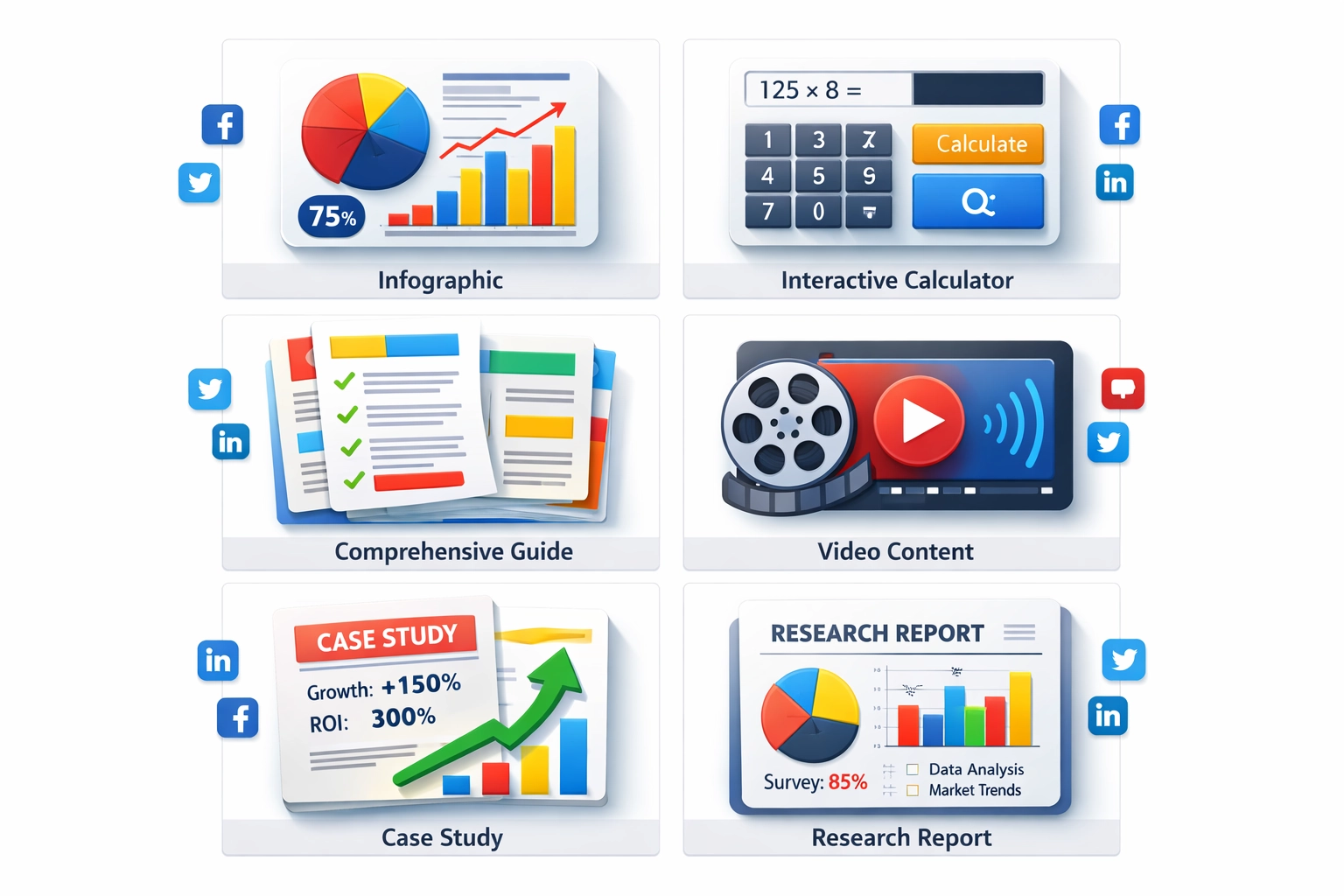
Tools and Calculators: Build interactive tools, calculators, or resources that provide value to your audience. These are naturally linkable because they’re useful.
Infographics: Create visually appealing infographics that present information in an easy-to-understand format. Infographics are highly shareable and linkable.
Case Studies: Document real results and case studies from your affiliate work. These provide proof of concept and are valuable to your audience.
Industry Reports: Publish reports about trends, benchmarks, or insights in your niche. These become reference materials that other websites link to.
The key to creating linkable assets is understanding what your audience and other website owners in your niche find valuable. Invest in creating content that’s significantly better than what already exists. Make it easy for people to link to your content by providing embed codes, shareable graphics, and clear attribution. When you create truly valuable content, link building becomes much easier because you’re not asking for links—you’re providing something people want to share.
Leveraging Social Media for Link Building
Social media plays an increasingly important role in link building strategy. While social signals themselves may not directly impact rankings, they can amplify your content’s reach and increase the likelihood of earning natural links. When your content gets shared widely on social media, more people see it, and more people link to it. Additionally, social media helps you build relationships with influencers and other website owners who can become valuable link sources.
Focus on platforms where your target audience is most active. If you’re in the B2B space, LinkedIn is essential. If you’re in lifestyle or visual niches, Instagram and Pinterest are crucial. Twitter is great for real-time engagement and building relationships with journalists and industry influencers. Create content that’s specifically designed to be shareable on each platform, and engage actively with your audience. When you build a strong social media presence, you create more opportunities for your content to be discovered and linked to.
Influencer collaboration is another powerful way to leverage social media for link building. Identify influencers in your niche and build relationships with them. When you have a piece of content you want to promote, reach out to relevant influencers and ask them to share it with their audience. Many influencers will link to content they find valuable, and their endorsement can drive significant traffic and links to your site.
Building Relationships with Webmasters & Influencers
Perhaps the most underrated link building strategy is simply building genuine relationships with other website owners, bloggers, and influencers in your niche. When you have real relationships with people in your industry, they’re much more likely to link to your content, share your work, and collaborate with you on projects. Relationship building is a long-term strategy, but it creates sustainable link opportunities that continue to benefit you over time.
Start by genuinely engaging with content from other websites in your niche. Comment thoughtfully on their blog posts, share their content on social media, and mention them in your own content when relevant. Reach out to website owners and bloggers with genuine compliments about their work and offers of collaboration. Attend industry conferences and events where you can meet people face-to-face. The goal is to become a known and respected member of your niche community.
When you’ve built genuine relationships, link opportunities often come naturally. People link to content from people they know and respect. They’re more likely to accept guest post pitches, collaborate on projects, and recommend your content to others. Relationship building also makes your outreach more effective because people are more likely to respond positively to requests from someone they know. Invest time in building real relationships, and the links will follow.
Tools & Technology for Link Building in 2026
Modern link building requires the right tools to research opportunities, track results, and manage your outreach. Ahrefs is one of the most comprehensive link building tools available, offering detailed backlink analysis, competitor research, and link opportunity identification. SEMrush provides similar functionality with additional features for keyword research and content analysis. Moz offers domain authority metrics and link research capabilities. Pitchbox helps automate and manage your outreach campaigns, while Hunter.io helps you find email addresses for outreach.
Beyond these major platforms, there are specialized tools for specific link building tasks. Broken Link Checker helps identify broken links on websites. BuzzSumo shows you which content is getting the most shares and links. Mention helps you monitor brand mentions across the web. Mailshake and Outreach help you manage and automate your outreach campaigns. The key is choosing tools that fit your budget and workflow, and using them to work smarter, not to replace genuine effort.
When selecting tools, consider your budget and specific needs. You don’t need every tool available—focus on 2-3 core tools that will have the biggest impact on your link building efforts. Most of these tools offer free trials, so you can test them before committing to a paid plan. Remember that tools are meant to enhance your link building efforts, not replace the personal touch and relationship building that makes link building successful.
Common Link Building Mistakes to Avoid
As you implement your link building strategy, be aware of common mistakes that can undermine your efforts or even result in penalties. The most critical mistake is pursuing low-quality links or using black-hat tactics. Buying links, participating in link schemes, or using private blog networks (PBNs) might provide short-term ranking boosts, but Google’s algorithms are sophisticated enough to detect these tactics, and the penalties can be severe. Stick to white-hat strategies that follow Google’s guidelines.
Another common mistake is focusing too much on domain authority and not enough on relevance. A link from a highly relevant website with moderate authority is often more valuable than a link from a high-authority website that’s completely unrelated to your niche. Google’s algorithm considers relevance as a key factor in determining link value. Focus on getting links from websites that are topically related to your content and audience.
Many affiliate marketers also make the mistake of not personalizing their outreach. Generic, templated emails have very low response rates. Take time to personalize each outreach message, reference specific content from the website you’re contacting, and explain why a link would benefit their audience. Personalization significantly increases your response rate and the likelihood of earning links. Additionally, avoid over-optimizing your anchor text—using the same keyword-rich anchor text repeatedly can look unnatural and trigger Google’s spam filters.
Measuring Link Building Success & ROI
To ensure your link building strategy is working, you need to measure your results and continuously optimize your approach. Start by establishing baseline metrics: how many backlinks does your site currently have, what’s your domain authority, and what are your current rankings for target keywords? Use tools like Ahrefs, SEMrush, or Moz to track these metrics over time.
As you implement your link building strategies, monitor which tactics are generating the most high-quality links. Track metrics like the number of links acquired, the domain authority of linking sites, the relevance of links, and the traffic generated from links. Some strategies will work better for your specific niche than others, so focus your efforts on the strategies that are delivering the best results.
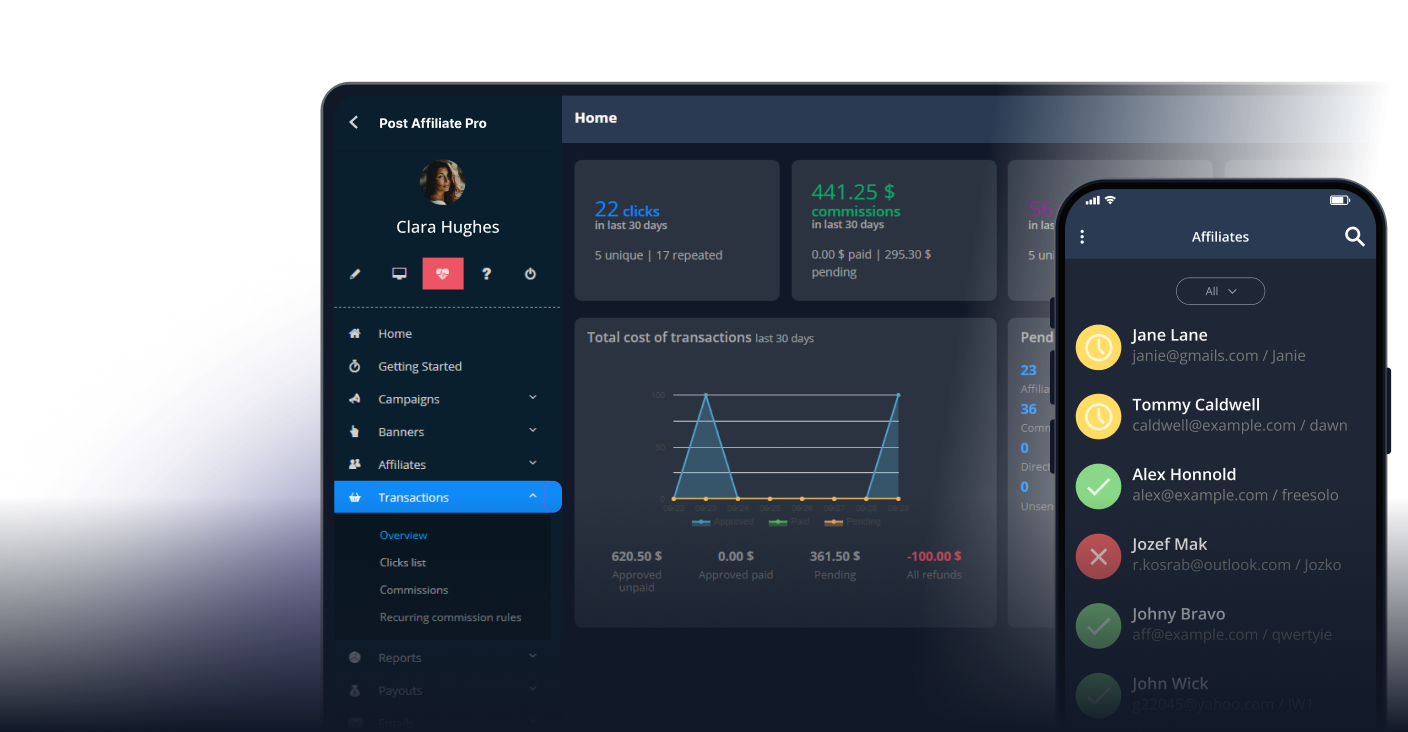
Pay attention to your traffic and rankings as well. While links are important, the ultimate goal is to increase your affiliate traffic and conversions. Monitor how your link building efforts are translating into improved rankings and increased traffic. If a strategy is generating links but not improving your rankings or traffic, it might not be the best use of your time. Continuously refine your approach based on what’s working, and don’t be afraid to adjust your strategy as you learn what resonates in your niche. With PostAffiliatePro, you can track your affiliate performance and correlate it with your link building efforts to measure true ROI.
Real-World Link Building Examples
Understanding link building strategies is one thing, but seeing them in action provides practical insight you can apply to your own affiliate marketing efforts. Here are some real-world examples that demonstrate effective link building techniques.
Affiliate Disclosure Best Practices
If you’re going to include affiliate links on your website, you need to disclose the relationship. Reputable websites offering you a backlink will want to know that you’re trustworthy and honest with your readers. A clear, visible affiliate disclosure builds trust with both your audience and potential link partners.
Reputable websites know the importance of giving readers value-add content. To support their articles, they may use resources from around the web, including images and infographics. When you create high-quality infographics, other sites will credit you with a link to the source.
Here are a few things to keep in mind if you want your infographic to be shareable:
Start with a simple design that’s easy to read
Choose a topic that is relevant to your target audience
Include statistics, instructions, or information
Add unique images
Create a theme that suits your branding
Check your infographic for spelling and grammatical errors
Resource Page Examples
Some web pages exist so that people can browse multiple resources in one place. These pages are often lists and may be ranked in numerical order. Because resource pages exist for this purpose, their owners are usually open to the idea of adding more backlinks. You can even add resource pages to your own website to give your readers more value.
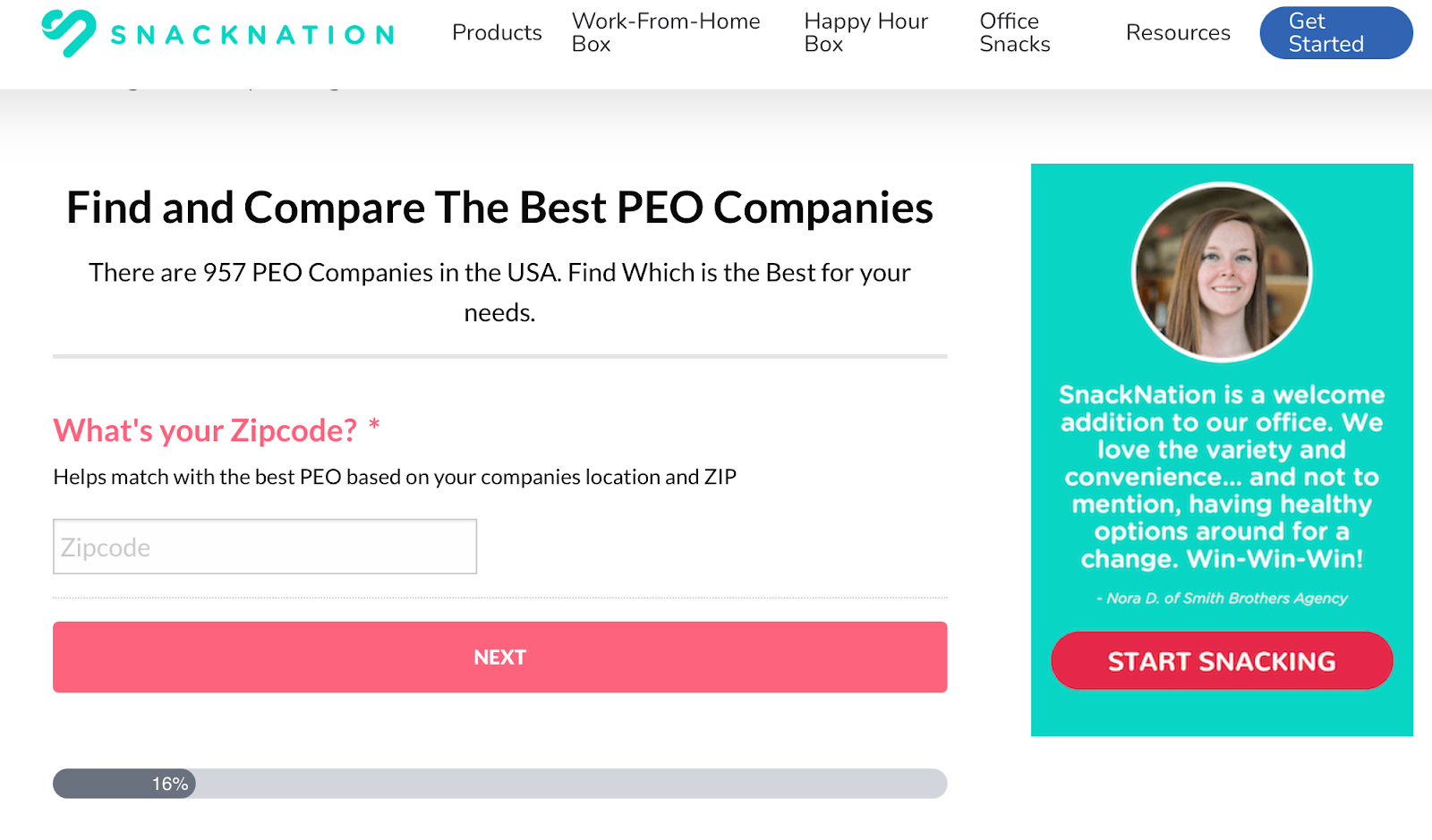
Content that provokes an emotional reaction tends to get more shares and backlinks. Case studies showing concrete results are particularly effective. For example, content showing how quiz marketing can lower cost per lead by 75% compared to most marketers creates a sense of FOMO that encourages sharing:
When used effectively, social media can be a smart way to generate backlinks. Once you’ve gained a following, you can start to share your content. Backlinks on networks like Facebook, Pinterest, and Twitter can be beneficial and help to boost your traffic.
Brands that know how to use social media effectively often work with influencers and have fast-growing affiliate programs. When you post an article on your website, remember to share it on social media to maximize its link-building potential.
What is the most effective link building strategy for affiliate sites?
The most effective strategy combines multiple approaches: competitor analysis to identify link opportunities, the skyscraper technique to create superior content, and relationship building with relevant websites. Success comes from consistency and focusing on quality over quantity. Most affiliate marketers see the best results when they combine 3-4 strategies tailored to their niche.
How long does it take to see results from link building?
Link building is a long-term investment. Most affiliate marketers see initial ranking improvements within 2-3 months, but significant traffic increases typically occur after 6-12 months of consistent effort. Google needs time to crawl, index, and evaluate new backlinks. The key is maintaining a steady pace of quality link acquisition rather than expecting overnight results.
Should affiliate marketers focus on high domain authority links only?
While high domain authority links are valuable, a balanced approach works best. Mix high-authority links with relevant niche-specific links and contextual links from smaller but highly relevant websites. A natural link profile includes links from various authority levels. Focus on relevance and context first, then prioritize domain authority within that relevant set.
Is guest posting still effective for affiliate marketing in 2026?
Yes, guest posting remains highly effective when done strategically. The key is choosing publications that align with your affiliate niche and audience. Focus on providing genuine value to readers rather than just promoting your affiliate links. Quality guest posts on relevant websites generate both direct traffic and valuable backlinks that improve your site's authority.
How can I identify broken links in my niche?
Use tools like Ahrefs, SEMrush, or Broken Link Checker to scan competitor websites and industry resource pages. Look for 404 errors on high-authority sites in your niche. You can also manually check resource pages and link roundups. Once you find broken links, create better content on the same topic and reach out to the site owner with your replacement suggestion.
What's the difference between white-hat and black-hat link building?
White-hat link building follows Google's guidelines: creating quality content, earning natural links, guest posting on relevant sites, and building genuine relationships. Black-hat tactics include buying links, link schemes, and private blog networks (PBNs). White-hat strategies take longer but provide sustainable results. Black-hat tactics risk penalties and deindexing. Always choose white-hat for long-term affiliate success.
How do I build relationships with website owners for link opportunities?
Start by genuinely engaging with their content: comment thoughtfully, share their articles, and mention them in your content. When reaching out, personalize your message and explain why a link would benefit their audience. Offer value first—whether through guest posts, expert quotes, or data they can use. Build relationships before asking for links, and focus on mutual benefit.
Can I use link building tools to automate the process?
Tools like Ahrefs, SEMrush, and Moz are essential for research and analysis, but the actual relationship building and outreach should be personalized and manual. Automation tools can help you identify opportunities, track backlinks, and manage your link profile, but sending generic outreach emails or using automated link schemes violates Google's guidelines. Use tools to work smarter, not to replace genuine effort.
What is link building in affiliate marketing?
Link building in affiliate marketing is the process of acquiring backlinks from other websites to your affiliate site, which helps improve your site's authority, search engine rankings, and ultimately increases your affiliate conversions.
Why should affiliate marketers prioritize link building?
Prioritizing link building helps affiliate marketers drive more organic traffic, build credibility, and achieve higher rankings on search engines, leading to increased revenue and long-term business growth.
What are the best link building strategies for affiliate marketers in 2026?
The best strategies include competitor link analysis, using the Skyscraper Technique, broken link building, resource page outreach, creating shareable infographics or eBooks, crafting linkbait content, guest blogging on relevant blogs, and leveraging social media platforms.
Can social media help generate backlinks for affiliate sites?
Yes, sharing content on social media platforms can attract attention, encourage shares, and generate organic backlinks that contribute to improved search rankings and increased website traffic.
Ready to Dominate Your Affiliate Niche with Strategic Link Building?
PostAffiliatePro helps affiliate marketers build sustainable link profiles and track their SEO performance with advanced analytics and relationship management tools.
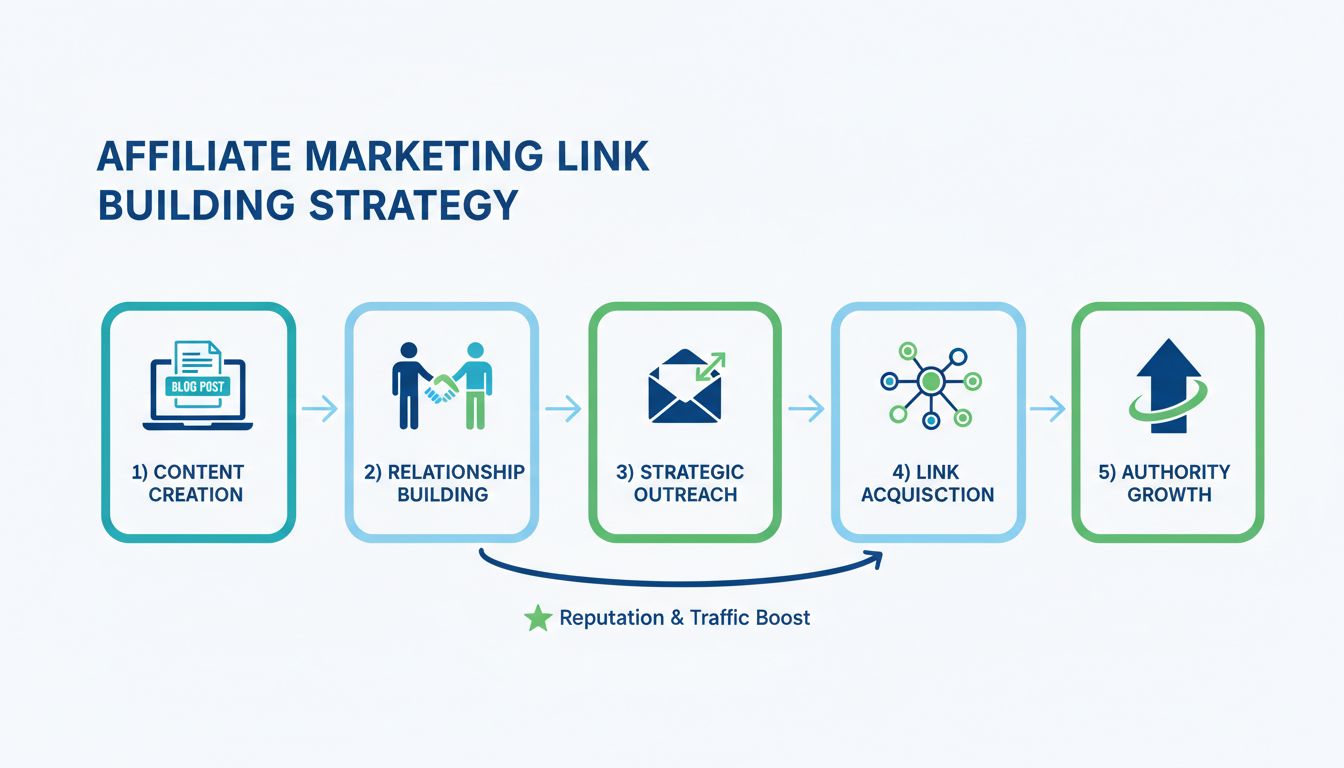
How Can Affiliate Marketers Effectively Build Links? Complete 2025 Guide
Learn proven link building strategies for affiliate marketers. Discover how to create valuable content, build genuine relationships, and execute strategic outre...
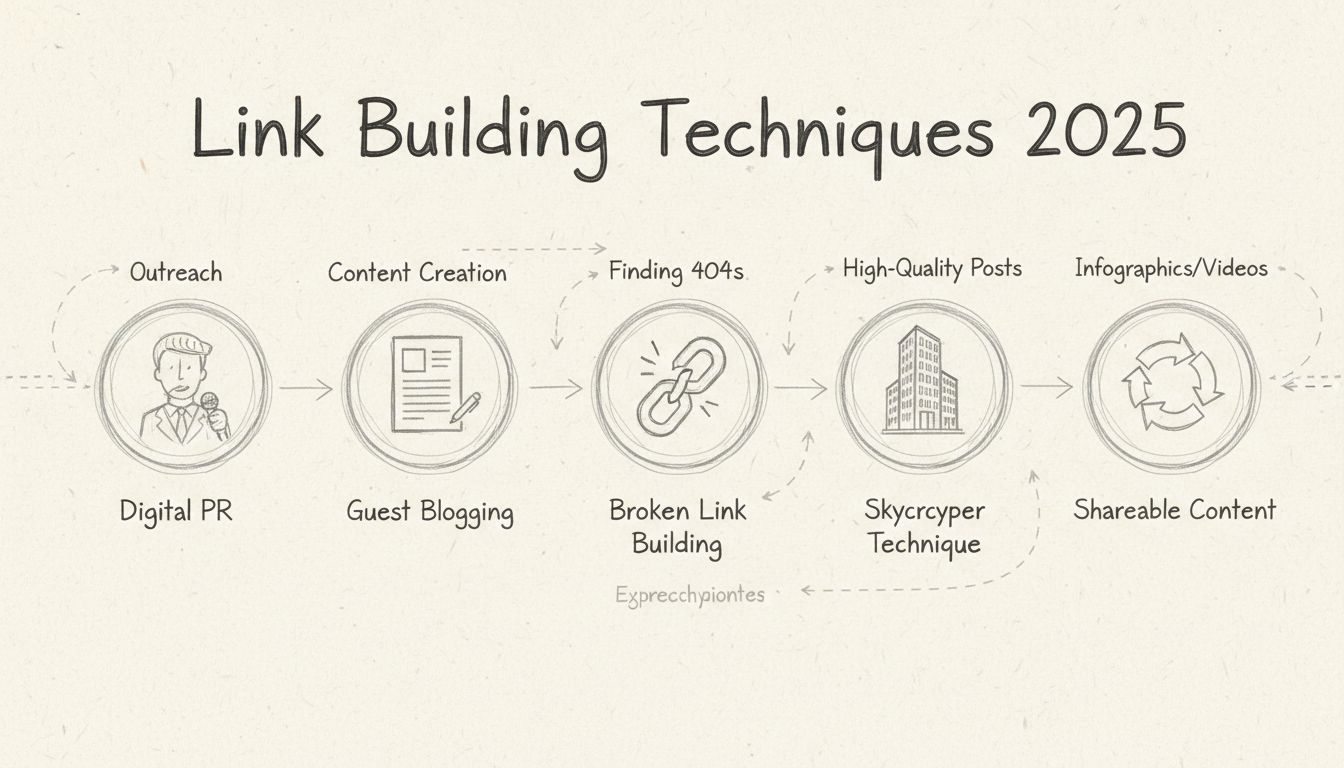
Discover proven link building techniques professionals use in 2025: digital PR, guest blogging, broken link building, skyscraper technique, and shareable conten...
Discover what link building services are and how they improve your website's SEO, authority, and search rankings. Learn strategies, benefits, and how PostAffili...