



German Casino Ban vs Sports Betting: Affiliate Strategy
Navigate Germany's complex gambling regulations. Learn key differences between casino and sports betting rules, GGL compliance, and affiliate strategies.
9 min read

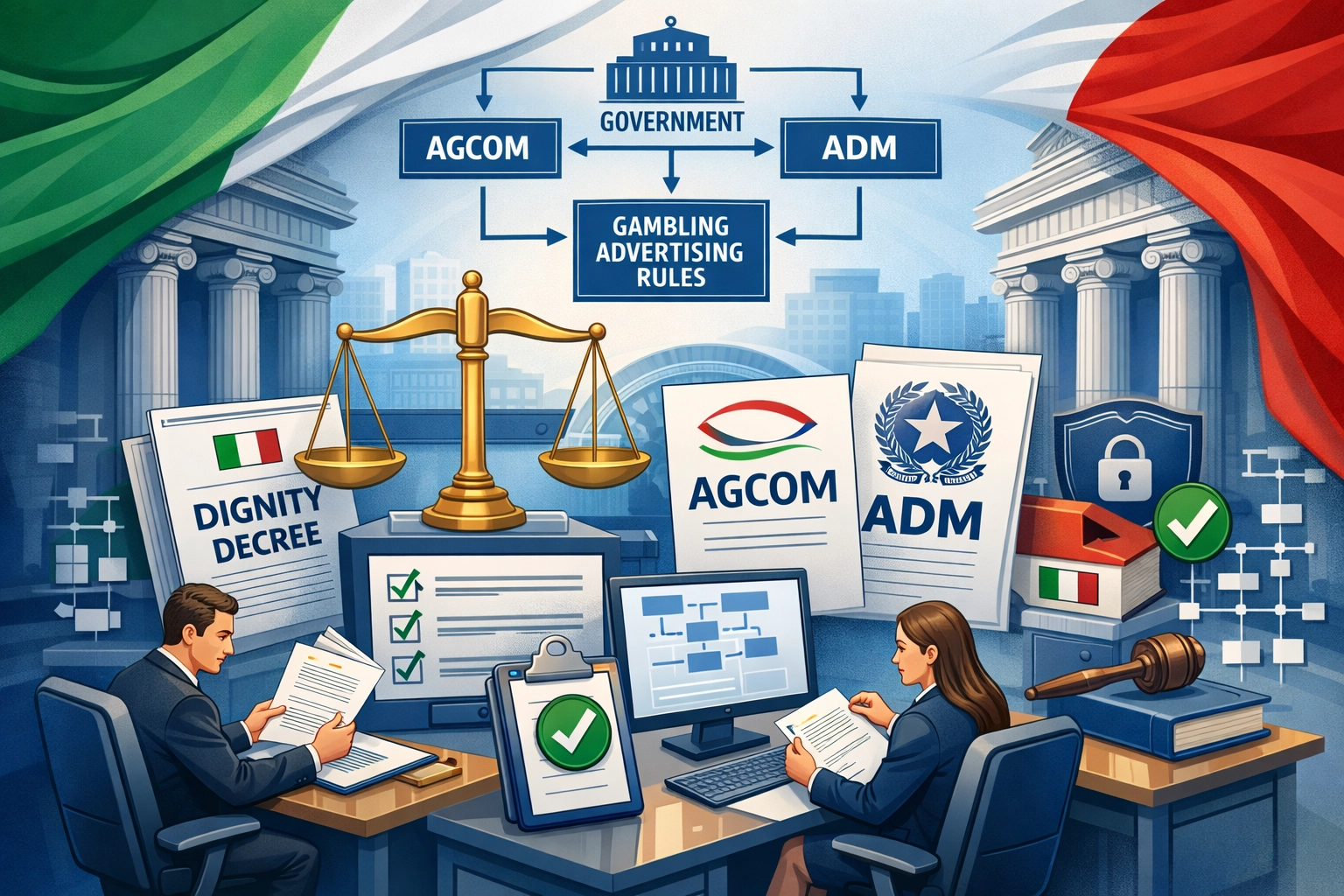
what Italian gambling advertising restrictions mean for affiliates. the Dignity Decree, AGCOM enforcement, and compliant promotional strategies for the Italian
Italy’s gambling advertising landscape underwent a dramatic transformation with the introduction of the Dignity Decree (Decreto Dignità) in 2018, which fundamentally reshaped how affiliates and operators can promote gaming products in the country. This legislation imposed a strict prohibition on all forms of gambling advertising across traditional and digital media channels, representing one of Europe’s most restrictive regulatory approaches to iGaming promotion. The advertising ban extends beyond simple restrictions—it creates a comprehensive framework that prohibits direct marketing, sponsorships, and most forms of promotional content that encourage gambling participation. For affiliates operating in or targeting the Italian market, understanding and complying with the Dignity Decree is not merely a legal formality but a critical business requirement that determines whether partnerships remain viable and profitable. Non-compliance can result in substantial fines, affiliate agreement terminations, and reputational damage that extends beyond individual campaigns.
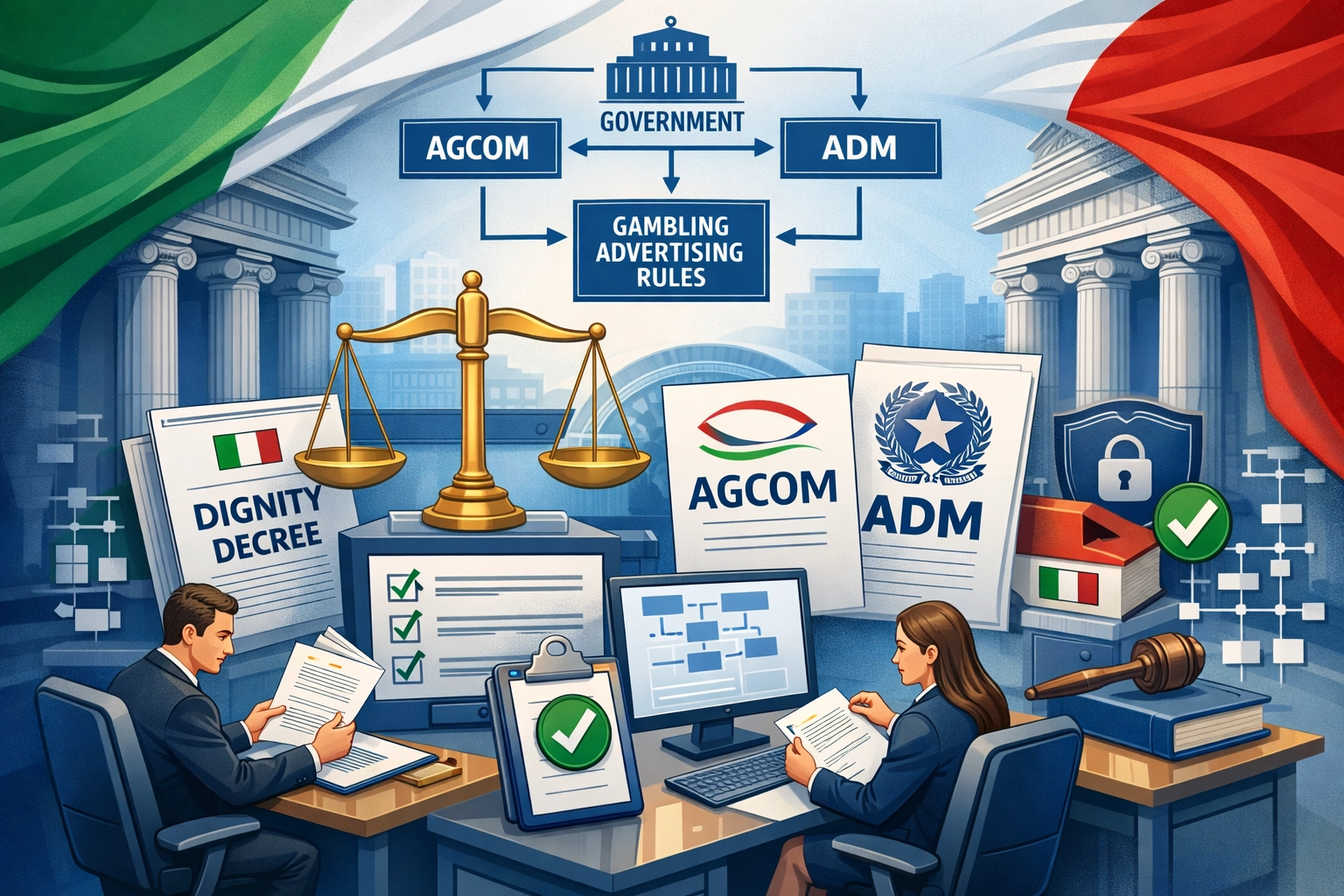
The enforcement of Italy’s gambling restrictions falls under the jurisdiction of two primary regulatory bodies: the ADM (Agenzia delle Dogane e dei Monopoli), which oversees licensing and operator compliance, and AGCOM (Autorità per le Garanzie nelle Comunicazioni), which monitors advertising violations and enforces media-related restrictions. In 2023, Italy introduced a new 9-year licensing system requiring operators to invest approximately €7 million to maintain legal operating status, a significant barrier that has accelerated market consolidation and reduced the number of licensed operators available for affiliate partnerships. This licensing framework creates a two-tier market: licensed operators with substantial capital reserves and unlicensed operators operating in legal gray areas, with affiliates facing increased scrutiny regarding which operators they promote.
| Regulatory Body | Primary Responsibility | Impact on Affiliates |
|---|---|---|
| ADM | Licensing, domain blocking, technical security | Affiliates must use only licensed operators from ADM registry |
| AGCOM | Advertising enforcement, penalty assessment | Affiliates face fines ranging from €5,000 to €500,000 for violations |
| New Licensing System | 9-year concessions, €7M cost, market consolidation | Fewer operators available but more stable partnerships and payouts |
The consolidation has paradoxically created opportunities for compliant affiliates, as licensed operators increasingly seek legitimate promotional channels that don’t violate advertising restrictions. Affiliates must verify operator licensing status through ADM’s official registry before establishing partnerships, as promoting unlicensed operators carries severe legal and financial consequences. The regulatory environment continues to evolve, with ongoing discussions about potential modifications to the advertising ban that could reshape affiliate opportunities in the coming years.

Set up advanced tracking in minutes. No credit card required.
The Dignity Decree’s advertising prohibition is comprehensive and leaves little room for traditional promotional tactics that affiliates use in other markets. Affiliates operating in Italy must avoid the following prohibited activities:
These restrictions exist because Italian regulators view them as direct or indirect encouragement to gamble, which contradicts the protective intent of the Dignity Decree.
Affiliates seeking to operate legally in Italy must fundamentally shift their approach from promotional to informational content strategy, focusing on education rather than persuasion. Compliant affiliate content should provide objective information about gambling products, regulatory frameworks, responsible gambling practices, and factual comparisons between licensed operators without highlighting promotional advantages or encouraging participation. Affiliates must obtain explicit user consent before sending any communications about gambling-related topics, with clear opt-in mechanisms that comply with GDPR and Italian consumer protection laws. Content must prominently feature responsible gambling messaging, including information about problem gambling resources, self-exclusion options, and the risks associated with gambling participation. Comparison content is permitted when presented neutrally—for example, comparing payment methods, withdrawal speeds, or regulatory compliance status—but becomes prohibited when framed to encourage operator selection based on bonus offerings or promotional advantages. Affiliates must also maintain transparent disclosure of their affiliate relationships, clearly indicating when content is monetized through operator partnerships. Documentation of compliance efforts, including content approval processes and user consent records, should be maintained to demonstrate good faith compliance efforts in case of regulatory inquiries.
Be the first to know about new features and product updates.
The Vincitù case represents a landmark enforcement action that illustrates the serious consequences affiliates face for violating Italian gambling advertising restrictions. In 2021, the TAR (Tribunale Amministrativo Regionale) court upheld AGCOM’s decision to fine Vincitù €388,453.93 for multiple violations of the Dignity Decree, establishing important precedent for affiliate compliance standards. The court found that Vincitù had engaged in prohibited promotional activities including the use of tracking links designed to drive traffic to gambling operators, commission-based structures that incentivized player acquisition, and content that encouraged gambling participation through indirect promotional messaging. The violations were particularly significant because they demonstrated that even sophisticated digital marketing techniques—such as affiliate tracking systems and performance-based compensation models—do not exempt operators from advertising restrictions if the underlying promotional intent remains. The case established that affiliate agreements themselves can constitute violations if they structure compensation in ways that incentivize promotional activity, meaning affiliates cannot simply claim they are merely providing neutral information while earning commissions based on player acquisition. For other affiliates, the Vincitù decision created a cautionary precedent: regulatory authorities actively monitor affiliate activities, court challenges to enforcement actions are unlikely to succeed, and the financial penalties are substantial enough to eliminate profitability from non-compliant campaigns. The case effectively redefined what “affiliate marketing” means in Italy, shifting it from a performance-based promotional model to a content-based informational model.
Despite the restrictive regulatory environment, compliant affiliates can create valuable content that serves user interests while maintaining legal compliance. Informational content represents the primary compliant format, including detailed guides such as “How to Verify if a Gambling Operator is Licensed by ADM,” “Understanding Betting Odds and Probability,” “Responsible Gambling Tools and Self-Exclusion Options,” or “Payment Methods Available at Licensed Italian Operators.” Affiliates can publish analytical content comparing operators on neutral criteria such as licensing status, regulatory compliance history, available payment methods, withdrawal processing times, customer service availability, and security certifications—provided the comparison does not frame one operator as superior based on promotional advantages.
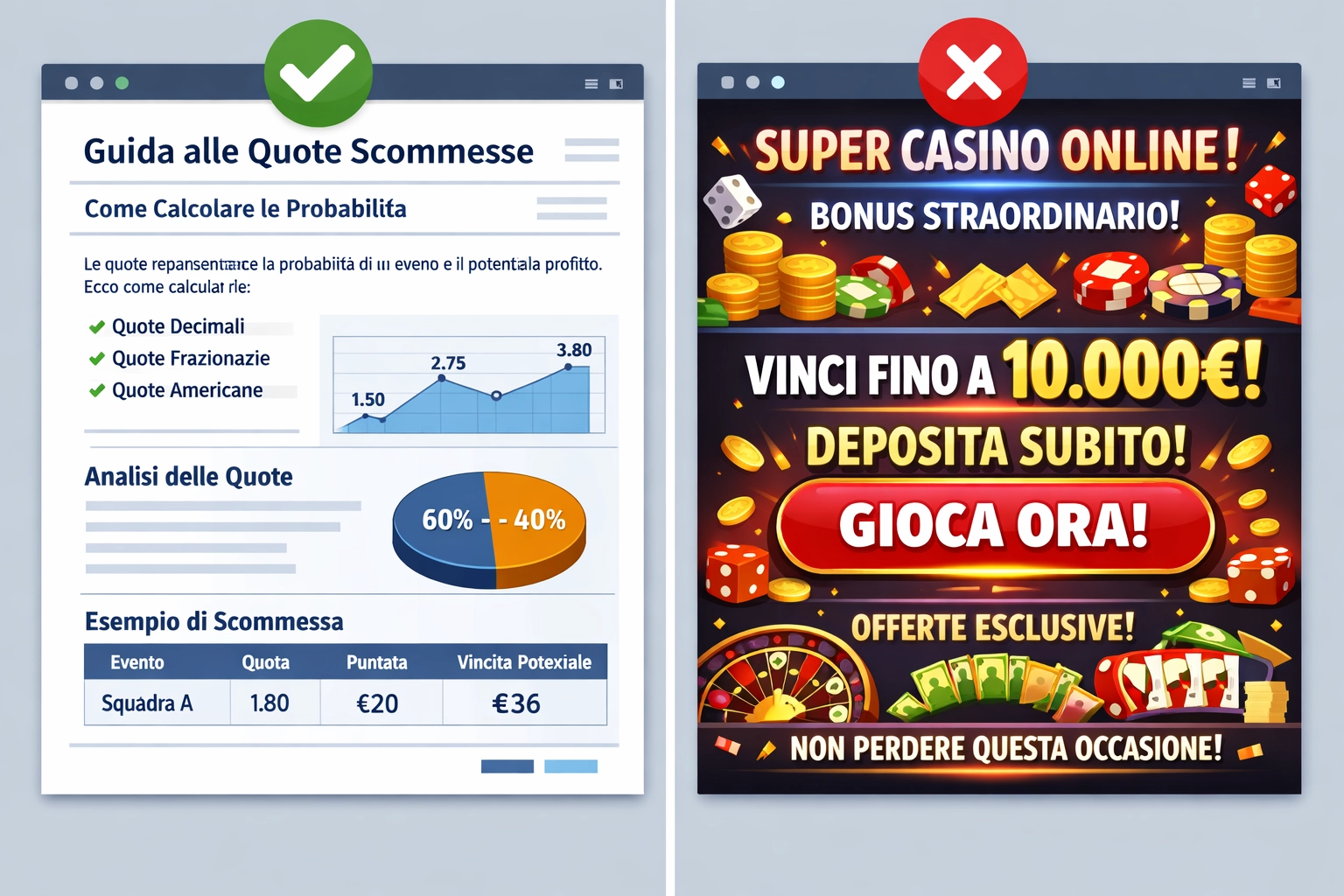
Sports media and analytics content remains compliant when focused on sports analysis, betting odds analysis, or sports industry news, provided it does not include direct links to gambling operators or promotional language encouraging participation. Affiliates can create educational content about gambling regulation, the history of Italian gambling law, how the ADM licensing system works, or the evolution of responsible gambling standards. Problem gambling awareness content is not only permitted but encouraged, including resources about gambling addiction, self-exclusion programs, and mental health support services. Some affiliates successfully operate news and industry analysis websites covering gambling regulation, operator licensing announcements, and market developments, monetizing through advertising and affiliate relationships without violating promotional restrictions. The key distinction is that all compliant content must provide genuine value to users independent of any affiliate monetization, with the affiliate relationship being secondary to the informational purpose.
AGCOM actively enforces the Dignity Decree’s advertising restrictions through monitoring campaigns, user complaints, and proactive investigations into affiliate marketing activities. Penalties for violations range from €5,000 to €500,000 depending on violation severity, frequency, and the affiliate’s previous compliance history, with repeat offenders facing penalties at the higher end of the scale. Beyond financial penalties, AGCOM can issue cease-and-desist orders requiring immediate removal of prohibited content, suspension of affiliate accounts, and blocking of promotional campaigns within 24-48 hours. Affiliate agreements with licensed operators typically include compliance clauses that allow operators to terminate partnerships immediately upon discovery of violations, leaving affiliates without revenue streams and potentially liable for damages if operator licensing is jeopardized by affiliate misconduct. Court involvement is increasingly common, with TAR courts reviewing AGCOM enforcement decisions and generally upholding penalties, as demonstrated by the Vincitù case, meaning affiliates have limited recourse through legal challenges. Affiliates should understand that penalties are not merely financial—they create compliance records that affect future business opportunities, as operators conducting due diligence on potential affiliate partners review enforcement history. The enforcement environment has intensified in recent years, with AGCOM dedicating additional resources to digital advertising monitoring and social media surveillance, making non-compliance increasingly risky.
The Italian gambling advertising landscape may be approaching a significant inflection point, with a Senate resolution introduced in 2023 proposing potential modifications to the Dignity Decree’s absolute advertising ban. The proposed changes would potentially allow limited, regulated advertising under strict conditions—such as advertising only to existing players, restricting advertising to specific time slots, or permitting operator-controlled advertising while maintaining affiliate restrictions. If such modifications are enacted, they would create new opportunities for compliant affiliates, particularly those who have maintained ethical standards and built audiences interested in gambling-related information rather than promotional content.
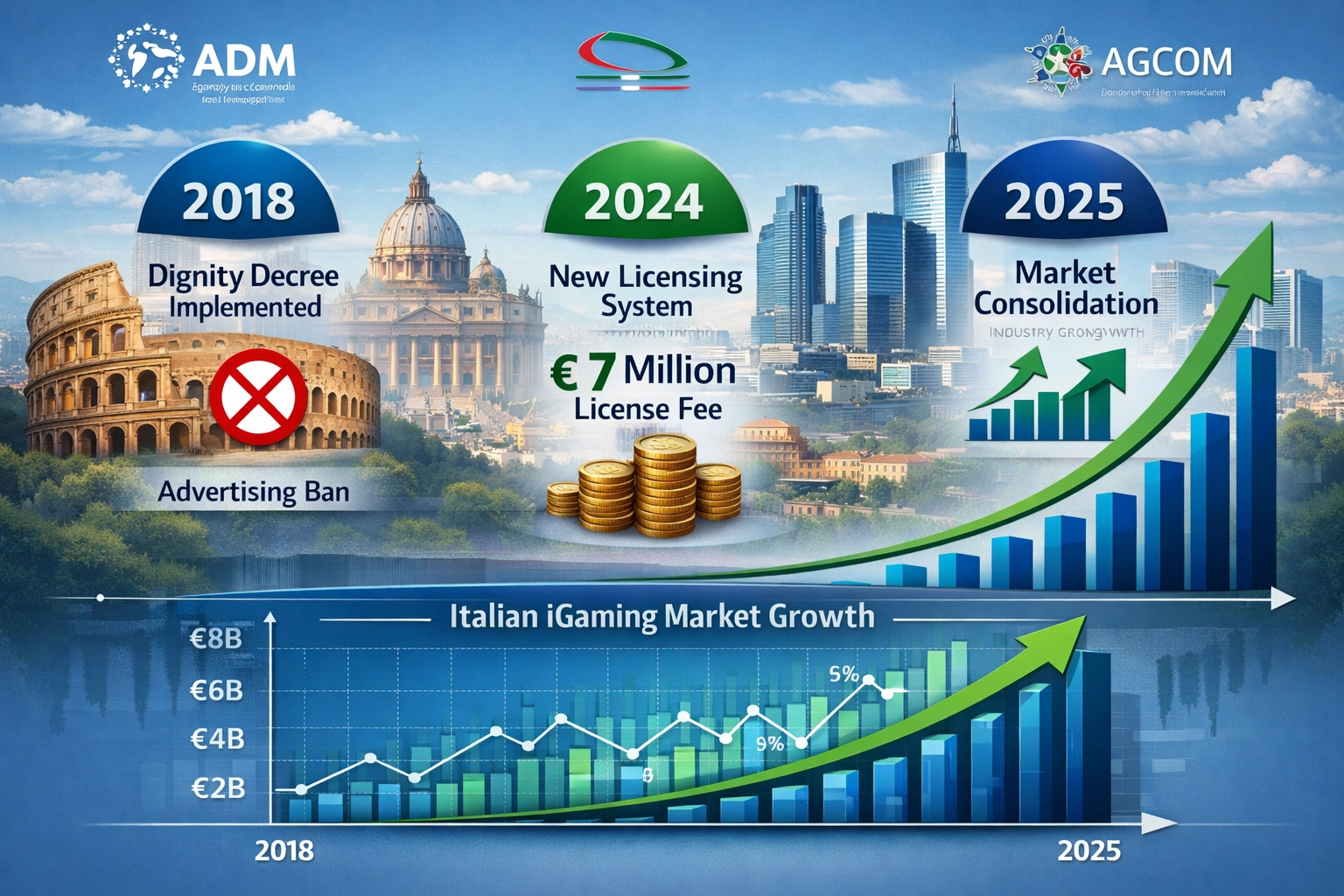
The current licensing system, while expensive, has created a stable market of well-capitalized operators seeking legitimate promotional channels, and these operators increasingly recognize that compliant affiliate partnerships provide sustainable customer acquisition without regulatory risk. Affiliates who have invested in building informational content, educational resources, and responsible gambling messaging are positioned to benefit most from any regulatory evolution, as they have already developed the content infrastructure that would be required under modified regulations. The market consolidation trend is likely to continue, with fewer but larger operators dominating the Italian market and preferring partnerships with established, compliant affiliates over smaller promotional networks. For affiliates willing to operate within current restrictions and invest in legitimate content strategies, Italy represents a sophisticated market with substantial revenue potential, particularly as the regulatory environment matures and enforcement becomes more predictable. The key to long-term success is recognizing that Italian gambling affiliate marketing has fundamentally transformed from a promotional discipline to a content and information discipline, and affiliates who embrace this transformation rather than resist it will thrive in the evolving regulatory landscape.
The Italian gambling advertising landscape presents both challenges and opportunities for affiliates willing to adapt their strategies. The Dignity Decree and its enforcement through AGCOM create a restrictive environment that eliminates traditional promotional tactics, but this same restriction creates opportunities for affiliates who can provide genuine informational value. Success in the Italian market requires understanding that compliance is not a burden to minimize but a competitive advantage—operators increasingly prefer partners who can deliver sustainable customer acquisition without regulatory risk. By focusing on educational content, responsible gambling messaging, and neutral operator comparisons, affiliates can build sustainable businesses that benefit from the market’s consolidation toward larger, well-capitalized operators. The regulatory environment continues to evolve, and affiliates who maintain ethical standards and invest in legitimate content strategies are positioned to benefit from any future modifications to advertising restrictions. PostAffiliatePro’s compliance tools and regulatory guidance can help affiliates navigate these complex requirements and build sustainable affiliate programs across regulated markets like Italy.
The Dignity Decree (Decreto Dignità) is Italian legislation introduced in 2018 that imposed a strict prohibition on all forms of gambling advertising across traditional and digital media channels. It represents one of Europe's most restrictive regulatory approaches to iGaming promotion and fundamentally reshaped how affiliates and operators can promote gaming products in Italy.
Yes, but only through informational and educational content. Affiliates can create guides about responsible gambling, explain betting odds, compare operators on neutral criteria like licensing status and payment methods, and provide industry analysis—but they cannot use direct calls-to-action or promotional language that encourages gambling participation.
AGCOM enforces penalties ranging from €5,000 to €500,000 depending on violation severity and frequency. Beyond financial penalties, violators face cease-and-desist orders, affiliate account suspension, and potential affiliate agreement termination by operators. Court involvement is increasingly common, with TAR courts generally upholding enforcement decisions.
Informational content provides objective information about gambling products, regulations, and responsible gambling practices without encouraging participation. Promotional content uses direct calls-to-action, highlights bonuses, features testimonials, or frames content to encourage operator selection. The key distinction is whether content provides genuine value independent of affiliate monetization.
Italy's new 9-year licensing system requires operators to invest approximately €7 million to maintain legal status, which has accelerated market consolidation. This creates a more stable market of well-capitalized operators seeking legitimate promotional channels, but affiliates must verify operator licensing status through ADM's official registry before establishing partnerships.
The TAR court upheld AGCOM's decision to fine Vincitù €388,453.93 for violating the Dignity Decree through affiliate agreements. The court found that Vincitù used tracking links to drive traffic to gambling operators and structured commissions to incentivize player acquisition, establishing that affiliate agreements themselves can constitute violations if they incentivize promotional activity.
The advertising ban is comprehensive with limited exceptions. Affiliates can create informational content, educational guides, neutral operator comparisons, sports analysis, and responsible gambling awareness content. However, any content that includes direct calls-to-action, promotional language, or encouragement to gamble is prohibited regardless of context.
Affiliates should shift from promotional to informational content strategies, obtain explicit user consent before communications, prominently feature responsible gambling messaging, maintain transparent disclosure of affiliate relationships, and document compliance efforts. Verify operator licensing through ADM's registry and avoid any language that encourages gambling participation.
PostAffiliatePro helps you manage compliant affiliate programs across regulated markets. Our platform includes built-in compliance tools, automated content monitoring, and regulatory guidance for markets like Italy.
Navigate Germany's complex gambling regulations. Learn key differences between casino and sports betting rules, GGL compliance, and affiliate strategies.
Learn how the Dutch gambling advertising ban impacts affiliate marketing. Discover compliance requirements, channel restrictions, and opportunities.
Learn how Germany's Gambling Treaty (GlüStV 2021) impacts affiliate marketing. Discover licensing requirements, advertising rules, and compliance strategies.
Join our community of happy clients and provide excellent customer support with Post Affiliate Pro.




Cookie Consent
We use cookies to enhance your browsing experience and analyze our traffic. See our privacy policy.