


Why Is Keyword Research Important?
Discover why keyword research is essential for SEO success. Learn how keyword research drives organic traffic, improves rankings, and connects you with your tar...
11 min read


the essential steps to improve your SEO strategy: keyword research, competitor analysis, content optimization, and technical SEO.
Before diving into SEO tactics, pre-planning is critical because it aligns your efforts with business goals and prevents wasted resources on irrelevant keywords. Building a keyword foundation means identifying the core terms and phrases your target audience uses when searching for solutions you offer. This foundation must account for the different stages of customer awareness—from initial problem recognition to final purchase decisions—ensuring your keyword strategy covers the entire customer journey. Establishing this foundation requires conducting a thorough SEO audit to understand your current baseline, identify existing strengths and weaknesses, and determine which keywords you’re already ranking for and which opportunities remain untapped.

Effective SEO requires understanding that customers move through three distinct stages when searching: the awareness stage (learning about a problem), the consideration stage (evaluating solutions), and the purchase stage (ready to buy). Different keywords reveal which stage a searcher occupies—someone searching “what is affiliate marketing” is in awareness mode, while “best affiliate software for agencies” indicates consideration, and “PostAffiliatePro pricing” signals purchase intent. Beyond these stages, search intent falls into four categories: informational (seeking knowledge), navigational (looking for a specific site), commercial (researching before buying), and transactional (ready to complete an action). Understanding intent matters because it determines what type of content will satisfy the searcher and rank well—a transactional query needs a product page, while an informational query needs a comprehensive guide. Tools like Google Keyword Planner, Semrush, and Ahrefs help you analyze search intent by showing you what content currently ranks and what users are actually searching for.
| Stage | Customer Need | Example Keywords | Content Type |
|---|---|---|---|
| Awareness | Understanding the problem | “what is affiliate marketing,” “how to earn passive income” | Blog posts, educational guides, explainers |
| Consideration | Evaluating solutions | “best affiliate software,” “affiliate platform comparison” | Comparison guides, case studies, reviews |
| Purchase | Ready to buy | “PostAffiliatePro pricing,” “affiliate software free trial” | Product pages, pricing pages, demos |

Set up advanced tracking in minutes. No credit card required.
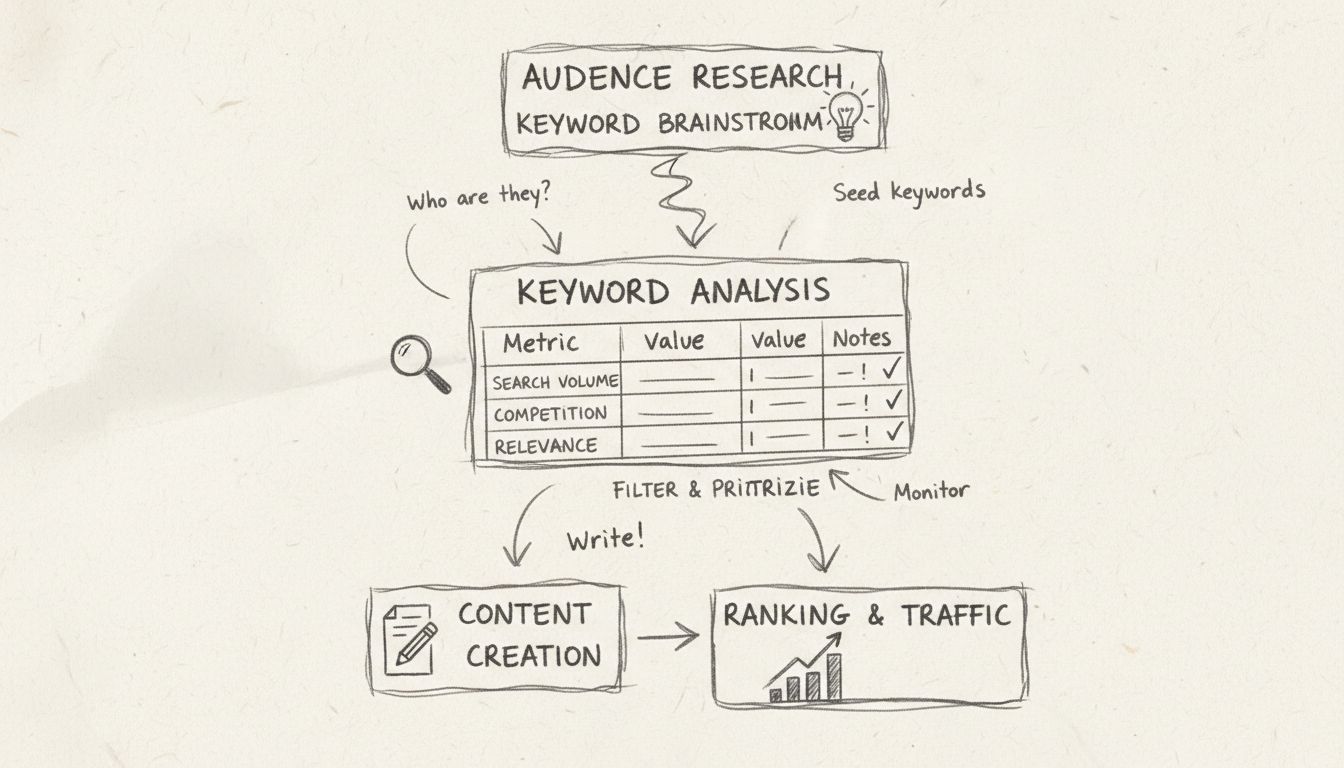
Keyword research is the foundation of any successful SEO strategy, and it begins with understanding how people search. Start by exploring Google autocomplete suggestions, the People Also Ask section in search results, and related searches at the bottom of Google results—these reveal real search queries and variations your audience uses. When evaluating keywords, focus on three critical metrics: search volume (how many people search monthly), keyword difficulty (how hard it is to rank), and commercial intent (whether the keyword indicates buying potential). You have options for tools: free resources like Google Keyword Planner and Google Trends provide solid baseline data, while paid tools like Semrush and Ahrefs offer deeper insights into competitor rankings and keyword opportunities. Distinguish between broad keywords (high volume, high competition, like “affiliate software”) and long-tail keywords (lower volume, lower competition, like “affiliate software for SaaS companies”)—a balanced mix targets both visibility and conversion potential. Additionally, implement keyword clustering by grouping related keywords into topic buckets, which helps you create comprehensive content that covers multiple related searches. Finally, analyze what keywords your competitors are targeting and ranking for, identifying gaps where you can establish authority with less competition.
Competitor analysis is crucial because it reveals what’s working in your industry and where opportunities exist to differentiate. When examining competitor websites, look at their content structure (how they organize information), content types (blogs, guides, videos, tools), and backlink profiles (who links to them and why). A powerful but often overlooked tactic is examining keywords advertisers are bidding on through PPC campaigns—these keywords indicate high commercial intent and commercial value, as companies only pay for clicks on keywords they believe will convert. Tools like Semrush and Ahrefs allow you to see competitor PPC keywords, organic keywords, and backlinks, giving you a complete picture of their strategy. By analyzing this data, you can identify content gaps—topics your competitors haven’t covered thoroughly or at all—and create superior content to capture that traffic. Look at SERP analysis (Search Engine Results Page) to understand what types of content Google favors for your target keywords: are the top results blog posts, product pages, videos, or tools? This tells you what format will likely rank best. Finally, identify high-value keywords competitors might be missing—perhaps they’re focused on broad terms while overlooking profitable long-tail variations, or they haven’t created content for emerging search trends in your industry.

Be the first to know about new features and product updates.
Your keyword research directly informs your content strategy—the keywords you’ve identified should guide which topics you create and how you structure them. To outperform competitors, create content that’s more comprehensive (covering subtopics they missed), better structured (with clear headers, sections, and logical flow), and more current (updated with recent data and examples). Consider diverse content types beyond blog posts: in-depth guides, video tutorials, interactive tools, infographics, and case studies all serve different learning preferences and rank for different keyword variations. On-page optimization ensures search engines understand your content by strategically placing keywords in headers, meta descriptions, and internal links—but always prioritize readability over keyword density. Equally important is content experience: format your content for easy scanning with short paragraphs, bullet points, and white space; ensure it’s accessible to all users; and make it visually appealing. Implement the E-E-A-T framework (Experience, Expertise, Authoritativeness, Trustworthiness) by showcasing your credentials, citing authoritative sources, and demonstrating real-world experience with your topic. Finally, differentiate through original research and unique perspectives—whether it’s conducting surveys, analyzing data, or sharing proprietary insights, original content attracts links, builds authority, and gives users a reason to choose your content over competitors.
While content is king, technical SEO is the foundation that allows search engines to crawl, index, and rank your content effectively. Core Web Vitals—Google’s metrics for page experience—directly impact rankings: page speed (how quickly your site loads), mobile-friendliness (responsive design for all devices), and visual stability (preventing layout shifts) are non-negotiable. Beyond these, your site’s structure and internal linking help search engines understand relationships between pages and distribute authority throughout your site. Ensure you have a properly formatted XML sitemap that lists all your important pages and a robots.txt file that guides search engines on what to crawl. HTTPS encryption is now a ranking factor and essential for user trust, so ensure your entire site uses secure connections. Finally, focus on crawlability and indexability—make sure search engines can access and index your content without technical barriers.
Key technical SEO elements to prioritize:
Backlinks (links from other websites to yours) and mentions (when other sites reference your brand) are fundamental to building authority and improving rankings. Search engines view backlinks as votes of confidence—the more quality sites linking to you, the more authoritative Google considers your site. Implement diverse link building tactics to earn these valuable connections: digital PR (getting media coverage), guest posting (writing for other publications), broken link building (finding broken links and offering your content as a replacement), and link baiting (creating content so valuable others naturally want to link to it). However, remember that link quality far exceeds quantity—one link from an authoritative, relevant site is worth more than dozens from low-quality sources. To identify link building prospects, analyze your competitors’ backlinks, look for industry directories and resource pages, and find journalists and bloggers covering your industry. Beyond traditional backlinks, brand mentions are increasingly important, especially as AI search engines like ChatGPT and Google’s AI Overviews rely on mentions to understand brand relevance and authority—being mentioned across the web, even without a link, signals credibility to modern search systems.
You can’t improve what you don’t measure, which is why tracking KPIs (Key Performance Indicators) is essential to understanding whether your SEO strategy is working. Focus on these key metrics: organic traffic (visitors from search), keyword rankings (where you rank for target keywords), conversions (desired actions from organic visitors), and click-through rate (percentage of searchers clicking your result). Essential tools for tracking include Google Analytics 4 (for traffic and user behavior), Google Search Console (for search performance and indexing), and Semrush Position Tracking (for detailed ranking monitoring). Before implementing your SEO strategy, set up tracking infrastructure—establish baseline metrics, create custom dashboards, and define success benchmarks so you can measure progress accurately. SEO is not a set-it-and-forget-it effort; conduct regular audits (monthly or quarterly) to identify new opportunities and refresh underperforming content with updated information and keywords. The most successful SEO strategies embrace continuous improvement, constantly testing new approaches, analyzing results, and refining tactics based on data. Additionally, understand attribution and user journeys—recognize that organic traffic often plays a supporting role in conversions, with users researching through multiple touchpoints before converting, so track assisted conversions alongside direct conversions.
Search algorithms constantly evolve, and what worked last year may be less effective today, making it essential to stay informed about industry changes. The rise of AI and generative search is reshaping how people find information—AI Overviews in Google results, ChatGPT, and similar tools are changing search behavior and creating new opportunities for visibility. Voice search and conversational queries are growing as more people use smart speakers and voice assistants, requiring you to optimize for natural language and question-based keywords. Stay updated by following industry leaders, subscribing to SEO newsletters, attending conferences, and regularly checking Google Search Central for algorithm updates and best practices. Here’s an important insight: good SEO is also good for AI search (GEO)—content that’s well-researched, authoritative, and comprehensive ranks well in both traditional search and AI-powered results, so your SEO efforts benefit multiple discovery channels. Finally, understand the impact of zero-click results—featured snippets, knowledge panels, and other SERP features that provide answers without requiring a click—and optimize for these opportunities to maintain visibility even when users don’t click through to your site.
PostAffiliatePro helps you track and optimize your affiliate marketing performance through organic search. Combine powerful SEO strategies with our affiliate software to drive more qualified traffic and increase conversions.
Discover why keyword research is essential for SEO success. Learn how keyword research drives organic traffic, improves rankings, and connects you with your tar...

why keyword and SEO research are essential for digital success. how to leverage search intent, long-tail keywords
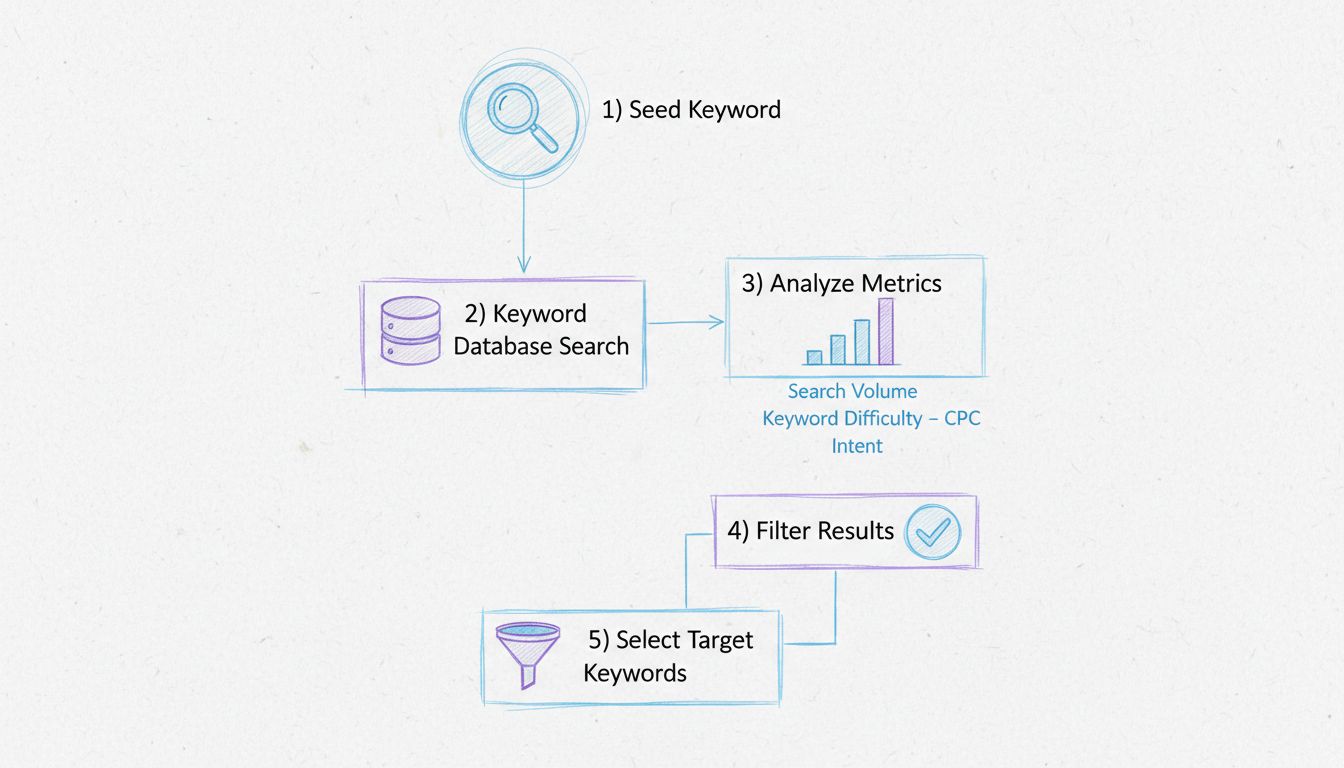
Learn how to conduct effective keyword research using Google Keyword Planner, Google Trends, SEMrush, and other tools. Discover strategies to find high-value ke...
Join our community of happy clients and provide excellent customer support with Post Affiliate Pro.




Cookie Consent
We use cookies to enhance your browsing experience and analyze our traffic. See our privacy policy.