


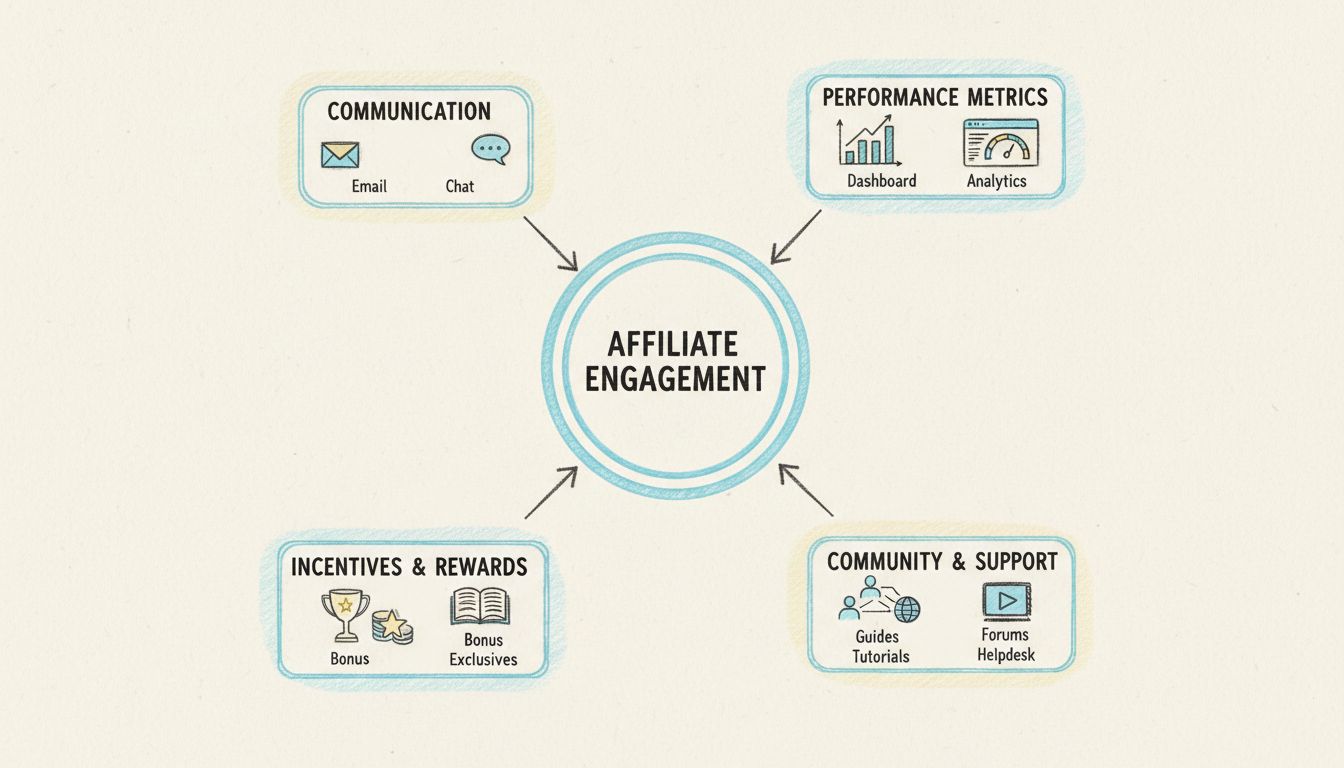
How to Keep Affiliates Engaged and Motivated
Learn proven strategies to keep affiliates engaged and motivated. Discover communication tactics, performance tracking, incentive structures, and support system...
11 min read


7 proven strategies to motivate your affiliates and boost program performance. about commission structures, recognition, training
Affiliate motivation refers to the psychological and financial drivers that compel partners to actively promote your products or services with consistent effort and strategic focus. Understanding what motivates your affiliates is fundamental to building a sustainable, high-performing program. According to recent industry data, 84% of brands have implemented affiliate programs, and those with strong motivation strategies see 60-80% annual retention rates—significantly higher than programs lacking structured incentive systems. The affiliate marketing industry is projected to reach $27.78 billion by 2027, with top-performing programs generating 15-30% of total online sales. When affiliates feel genuinely motivated through transparent communication, competitive compensation, and meaningful support, they transform from passive promoters into active brand ambassadors who drive consistent, high-quality revenue growth.

Tiered commission structures represent one of the most psychologically powerful tools for affiliate motivation, leveraging the principle of gamification to encourage progressive performance improvement. Rather than offering a flat commission rate to all affiliates regardless of output, tiered systems reward increasing sales volumes with incrementally higher commission percentages, creating a clear pathway for earning growth. For example, an affiliate might earn 10% commission on their first 50 sales monthly, 15% on sales 51-100, and 20% on all sales beyond 100—transforming the compensation model from a fixed transaction fee into a dynamic incentive ladder. This approach taps into fundamental human psychology: the desire for achievement, the motivation to reach visible milestones, and the competitive drive activated by leaderboards and public recognition of top performers.
The psychology behind tiered structures is compelling. Research shows that affiliates with tiered commission opportunities increase sales volume by 25-40% compared to flat-rate programs, as the visible upside potential motivates sustained promotional effort. Flat-rate commissions, while simpler to manage, create a ceiling effect where affiliates see no financial incentive to push beyond their current performance level. Tiered structures eliminate this plateau by continuously rewarding incremental growth. Additionally, tiered models address the risk-versus-reward calculation that affiliates constantly perform: they can see exactly what effort is required to unlock higher earnings, reducing uncertainty and increasing confidence in their investment of time and resources.
| Structure Type | Commission Range | Best For | Motivation Level |
|---|---|---|---|
| Flat Rate | 5-20% (varies by industry) | Simple programs, consistent margins, beginner affiliates | Low to Moderate |
| Tiered Performance | 10-25%+ (increases with volume) | Driving sales growth, scaling operations, competitive environments | High |
| Performance-Based | 15-50%+ (based on KPIs) | Premium products, high-margin items, top-tier affiliates | Very High |
Implementing tiered structures requires careful calibration to balance motivation with profitability. Industry benchmarks suggest starting with a base tier of 10-15% commission, adding a mid-tier at 15-20% for moderate performance, and capping at 20-30% for top performers—though SaaS and digital product companies often offer 20-50% due to higher profit margins. PostAffiliatePro’s flexible commission management system enables brands to implement these structures effortlessly, supporting product-specific rates, affiliate-specific customization, and time-based variations for seasonal campaigns.

Set up advanced tracking in minutes. No credit card required.
Equipping affiliates with comprehensive, high-quality resources is one of the most underutilized yet highly effective motivation strategies. Affiliates who lack proper tools, training materials, and marketing assets face significant barriers to success, leading to frustration, disengagement, and program abandonment. Conversely, affiliates armed with professional resources, detailed product knowledge, and proven promotional templates experience higher conversion rates, greater confidence, and sustained motivation. Research from Impact.com demonstrates that affiliates with access to structured training and curated resources achieve 40-60% higher conversion rates than those left to develop their own promotional strategies.
The types of resources that drive affiliate performance span multiple formats and purposes. Marketing materials including high-resolution product images, lifestyle photography, and video content enable affiliates to create professional promotions without requiring design expertise. Pre-written email templates and social media content provide proven messaging frameworks that affiliates can customize for their audiences, dramatically reducing content creation time while maintaining brand consistency. Detailed product guides and specifications ensure affiliates understand product benefits, use cases, and differentiators—knowledge essential for authentic, persuasive promotion. Video tutorials and webinar recordings provide ongoing education about product updates, campaign strategies, and platform features. Brand guidelines and compliance documentation protect both your brand reputation and affiliate legal standing by clarifying acceptable promotional practices.
Successful resource libraries function as centralized hubs where affiliates access everything needed for effective promotion. Platforms like impact.com and PostAffiliatePro enable brands to organize resources by product category, campaign type, and affiliate tier, ensuring each partner finds exactly what they need without excessive searching. Regular resource updates—triggered by product launches, seasonal campaigns, or market changes—keep affiliates informed and prepared to capitalize on emerging opportunities. When affiliates can launch campaigns within hours rather than days, and when their promotional materials reflect professional quality, conversion rates improve measurably. Additionally, providing performance analytics dashboards empowers affiliates to track their own results, identify high-performing promotional approaches, and optimize their strategies based on real data rather than guesswork.
The psychological impact of recognition and public acknowledgment extends far beyond simple ego gratification—it activates fundamental human motivational drivers including status, belonging, and achievement validation. When affiliates see their names featured in top-performer lists, receive public congratulations from brand leadership, or earn exclusive badges and titles, they experience a dopamine-driven motivation boost that translates into sustained promotional effort. Research in organizational psychology consistently demonstrates that public recognition increases employee (and affiliate) motivation by 30-50%, often more effectively than equivalent monetary rewards.
Successful recognition programs take multiple forms, each serving distinct motivational purposes. Leaderboards displaying top performers by revenue, conversion rate, or new customer acquisition create friendly competition and provide visible targets for other affiliates to pursue. Monthly or quarterly awards recognizing top performers, most-improved affiliates, or category-specific winners celebrate achievement and create aspirational role models within the community. Case studies and success stories featuring high-performing affiliates provide both recognition and practical education, as other affiliates learn from documented strategies and results. Exclusive perks and privileges for top performers—such as early access to new products, higher commission rates, or dedicated account manager support—create tangible status differentiation that motivates continued excellence.

The impact on affiliate loyalty is substantial and measurable. Affiliates who receive regular recognition demonstrate significantly higher retention rates (often 75%+ annually compared to 40-50% for unrecognized affiliates) and increased promotional intensity, as they invest more time and resources to maintain their recognized status. Recognition programs also create positive word-of-mouth effects, as recognized affiliates share their achievements within their networks, attracting higher-quality new affiliates to your program. Brands implementing comprehensive recognition strategies report that top-tier affiliates increase their promotional output by 40-60% following public acknowledgment, effectively multiplying the ROI of the recognition investment.
Be the first to know about new features and product updates.
Transparent communication forms the foundation of affiliate trust and sustained motivation, yet remains surprisingly absent from many affiliate programs. Affiliates operating without clear, regular communication from program management experience uncertainty about program direction, confusion about performance expectations, and doubt about whether their efforts are genuinely valued. Conversely, affiliates receiving consistent, transparent updates and constructive feedback demonstrate higher engagement, faster performance improvement, and stronger program loyalty.
Regular updates and feedback mechanisms should operate on multiple cadences and channels. Monthly performance reports showing each affiliate’s key metrics—clicks, conversions, revenue, and commission earnings—provide essential feedback on campaign effectiveness and progress toward goals. Quarterly business reviews with top-performing affiliates enable deeper strategic discussions about market opportunities, competitive positioning, and growth initiatives. Real-time communication channels including email, in-app messaging, and dedicated Slack communities ensure affiliates can ask questions and receive prompt responses. Transparency in tracking is particularly critical: affiliates must have complete visibility into how their referrals are tracked, attributed, and credited, with clear documentation of tracking methodology and cookie duration policies.
Communication frequency and quality directly correlate with affiliate retention and performance. Programs implementing weekly or bi-weekly communication (through newsletters, updates, or community posts) maintain significantly higher engagement levels than those communicating monthly or less frequently. The communication should balance promotional announcements with educational content, industry insights, and peer success stories—creating value beyond transactional updates. Best practices include establishing clear communication protocols specifying response time expectations (typically 24-48 hours for affiliate inquiries), creating dedicated support channels for different affiliate tiers, and implementing feedback loops where affiliates can suggest improvements to products, commission structures, or program operations. When affiliates feel heard and see their feedback implemented, motivation and loyalty increase substantially.
Payment frequency and reliability represent non-negotiable foundations of affiliate motivation—no amount of recognition or resources can compensate for late, inaccurate, or opaque commission payments. Affiliates view timely payment as a basic trust indicator; delayed or disputed payments signal program instability and create anxiety about whether their efforts will be properly compensated. Industry data shows that payment reliability is cited by 19% of affiliates as a primary retention driver, and programs with consistent, transparent payment practices achieve retention rates 30-40% higher than those with payment issues.
Monthly payment cycles have become the industry standard, balancing affiliate cash flow needs with operational efficiency. However, some high-performing programs offer bi-weekly or weekly payouts to top-tier affiliates, creating additional motivation for performance improvement. Transparency in calculations is equally critical: affiliates should receive detailed commission statements showing each tracked sale, its value, applicable commission rate, and any deductions or adjustments. Clear documentation of payment methods and processing timelines (e.g., “Payments processed every 15th of the month via PayPal or direct deposit”) eliminates confusion and builds confidence.
The impact on affiliate retention is dramatic and measurable. Programs implementing automated payment systems that process commissions on schedule without manual intervention report 20-30% higher retention rates and faster affiliate recruitment, as word-of-mouth reputation for reliable payments attracts quality partners. Automation also reduces administrative overhead, freeing program managers to focus on strategic affiliate development rather than payment processing. PostAffiliatePro’s automated payout system, for example, enables brands to set payment schedules, automatically calculate commissions based on complex rules, and process payments with minimal manual intervention—ensuring consistency and reliability that motivates affiliate confidence and sustained engagement.
One-on-one support and dedicated account management transform affiliate programs from transactional relationships into genuine partnerships, dramatically increasing affiliate motivation and performance. Affiliates receiving personalized attention from account managers experience higher conversion rates, faster performance improvement, and significantly stronger loyalty compared to those managing themselves within self-service platforms. The account manager role extends beyond administrative support to include strategic partnership development, performance optimization, and relationship building.
Effective account managers provide personalized recommendations based on each affiliate’s unique strengths, audience characteristics, and promotional channels. Rather than offering generic guidance applicable to all affiliates, account managers analyze individual performance data to identify optimization opportunities: “Your email campaigns convert at 6% while your social media averages 2%—let’s focus resources on email expansion” or “Your audience responds strongly to product comparison content; let’s develop comparison guides for our top three products.” This data-driven personalization accelerates performance improvement and demonstrates genuine investment in affiliate success.
Problem-solving and relationship building represent equally important account manager functions. When affiliates encounter technical issues, compliance questions, or campaign challenges, responsive account managers provide rapid solutions that minimize disruption and maintain promotional momentum. Account managers also serve as advocates within the brand organization, escalating affiliate feedback about product issues, market opportunities, or competitive threats. This advocacy role strengthens affiliate relationships by demonstrating that their voice influences brand decisions. Additionally, account managers facilitate peer connections among high-performing affiliates, creating informal mastermind groups where partners share strategies, troubleshoot challenges, and celebrate successes together. These relationships increase affiliate engagement and create switching costs that improve retention.
Affiliate communities and peer support networks create powerful motivational environments where affiliates learn from each other, solve problems collaboratively, and develop genuine relationships that transcend transactional program participation. Affiliates embedded in strong communities demonstrate significantly higher retention rates (often 70%+ annually) and increased promotional intensity, as community membership creates social bonds and accountability that motivate sustained effort.
Successful affiliate communities take multiple forms, each serving distinct purposes. Dedicated forums or Slack communities provide spaces where affiliates ask questions, share strategies, and celebrate wins with peers facing similar challenges. Monthly or quarterly virtual meetups enable real-time interaction, relationship building, and knowledge sharing that asynchronous forums cannot replicate. Peer learning opportunities including affiliate-led webinars, strategy discussions, and case study presentations leverage the collective expertise within your affiliate base, reducing reliance on brand-provided training. Shared challenge initiatives where affiliates collaborate on specific goals (e.g., “Q4 Black Friday Challenge”) create friendly competition while building camaraderie.

The motivational impact of community extends beyond knowledge sharing to include social proof and peer influence. When affiliates see peers achieving success, they experience increased confidence in their own potential and motivation to implement similar strategies. Community recognition—where peers celebrate each other’s achievements—creates additional motivation layers beyond brand-provided recognition. Additionally, communities reduce affiliate isolation, particularly for solo entrepreneurs or small teams who may lack internal marketing colleagues. This sense of belonging and shared purpose significantly increases program loyalty and reduces the likelihood of affiliates abandoning your program for competitors.
Performance metrics and trend analysis empower affiliates to optimize their strategies based on real data rather than intuition or guesswork, dramatically improving results and motivation. Affiliates with access to detailed performance analytics demonstrate 40-50% higher conversion rates and significantly faster performance improvement compared to those lacking data visibility. Analytics transform affiliate management from a black box into a transparent, optimizable system where cause-and-effect relationships become visible.
Essential performance metrics include conversion rates (percentage of clicks resulting in sales), revenue per click (average revenue generated per visitor), earnings per visitor (total revenue divided by total visitors), and time to first purchase (speed from initial interaction to conversion). Trend analysis revealing how these metrics change over time enables affiliates to identify what’s working and what needs adjustment. For example, an affiliate noticing that email campaigns convert at 6% while social media averages 2% can reallocate resources toward email expansion. Benchmarking against program averages or peer performance provides context for individual results, helping affiliates understand whether their performance is strong, average, or needs improvement.
Actionable insights derived from analytics data represent the highest-value analytics application. Rather than simply providing raw metrics, forward-thinking programs offer personalized recommendations such as “Your YouTube content drives 3x higher conversion rates than blog content—consider expanding video production” or “Affiliates in your niche average 8% conversion rates; you’re at 5%—let’s discuss optimization strategies.” Optimization opportunities identified through analytics—such as testing new promotional angles, adjusting messaging, or targeting different audience segments—provide clear action items that affiliates can implement immediately. When affiliates see measurable performance improvement following data-driven adjustments, motivation increases substantially, as they experience direct evidence that their efforts are producing results.
Contests, challenges, and gamification elements inject excitement and competitive energy into affiliate programs, activating motivational drivers including achievement, competition, and reward anticipation. Programs implementing well-designed contests report 30-50% increases in promotional activity during contest periods, with many affiliates maintaining elevated performance levels even after contests conclude.
Types of contests vary widely in structure and focus. Sales volume competitions where affiliates compete to drive the most revenue or conversions over a defined period create straightforward competitive dynamics. New customer acquisition challenges reward affiliates for bringing in first-time customers, supporting program growth objectives. Category-specific competitions (e.g., “Best Email Campaign,” “Most Creative Social Media Post”) recognize diverse affiliate strengths and promotional approaches. Seasonal campaigns tied to holidays, product launches, or industry events create natural contest windows with built-in urgency and relevance.
Prize structures should balance motivation with profitability, offering rewards substantial enough to drive effort without creating unsustainable commission costs. Effective prize structures combine monetary rewards (cash bonuses, increased commission rates for contest period), exclusive perks (early product access, featured placement in marketing materials), and recognition benefits (public acknowledgment, awards, titles). Friendly competition dynamics—where contests celebrate all participants rather than creating harsh winner-take-all scenarios—maintain community cohesion while activating competitive motivation. Engagement metrics tracking contest participation, performance improvement, and affiliate satisfaction provide data for optimizing future contests.
Seasonal campaigns represent particularly effective gamification opportunities, as they align with natural business cycles and customer buying patterns. Q4 holiday campaigns, back-to-school promotions, and New Year’s resolution-driven offers create seasonal urgency that motivates affiliate participation. Programs implementing tiered seasonal bonuses (e.g., 5% bonus for $5K revenue, 10% for $10K, 15% for $15K+) combine gamification with performance-based rewards, creating multiple achievement targets that maintain motivation throughout the campaign period. When contests conclude, successful programs maintain momentum through leaderboard persistence, where top performers from contests receive ongoing recognition and exclusive benefits, extending contest motivation into regular program operations.
Motivating affiliates is not a one-time initiative but an ongoing commitment to building genuine partnerships based on mutual success. The most effective affiliate programs combine multiple motivation strategies—competitive compensation, quality resources, public recognition, transparent communication, reliable payments, personalized support, community building, data-driven insights, and gamification—into a cohesive ecosystem that addresses both financial and psychological motivational drivers.
The investment in affiliate motivation delivers substantial returns. Programs implementing comprehensive motivation strategies achieve 60-80% annual retention rates, 25-40% higher sales volumes, and 40-60% improved conversion rates compared to programs lacking structured motivation approaches. These improvements translate directly to bottom-line revenue growth and sustainable competitive advantage.
PostAffiliatePro provides the tools and infrastructure needed to implement these motivation strategies at scale. From flexible commission management and automated payouts to performance analytics and community features, PostAffiliatePro enables brands to create affiliate programs that genuinely motivate partners and drive exceptional results. The question is not whether you can afford to invest in affiliate motivation—it’s whether you can afford not to.
While multiple factors contribute to affiliate motivation, transparent communication and reliable payments form the foundation. However, the most effective programs combine multiple strategies: competitive compensation, quality resources, recognition, and genuine support. No single factor alone drives sustained motivation—success requires a holistic approach addressing financial, psychological, and relational needs.
Industry best practices recommend weekly or bi-weekly communication through newsletters, updates, or community posts. This frequency maintains engagement without overwhelming affiliates. Additionally, provide real-time communication channels for questions and support, with response time expectations of 24-48 hours. Quarterly business reviews with top performers enable deeper strategic discussions.
Tiered commission structures consistently outperform flat-rate models, increasing sales volume by 25-40%. A typical structure offers 10-15% base commission, 15-20% for mid-tier performance, and 20-30% for top performers. However, optimal structures vary by industry—SaaS and digital products often support 20-50% commissions due to higher margins. Test different structures and monitor affiliate response.
Implement multi-channel recognition including leaderboards, monthly awards, case studies, and exclusive perks. Public recognition on your website, social media, and newsletters creates status differentiation that motivates continued excellence. Combine recognition with tangible rewards like increased commission rates, early product access, or dedicated account manager support for maximum impact.
Essential resources include high-quality product images and videos, pre-written email templates and social media content, detailed product guides, video tutorials, brand guidelines, and performance analytics dashboards. Organize these in a centralized library and update regularly with new products and campaigns. Affiliates with access to professional resources achieve 40-60% higher conversion rates than those without.
Motivated affiliates demonstrate significantly higher performance across all metrics. Programs with strong motivation strategies achieve 60-80% annual retention rates (vs. 40-50% for unmotivated programs), 25-40% higher sales volumes, and 40-60% improved conversion rates. The ROI of motivation investments is substantial—every dollar invested in affiliate motivation typically returns 5-10x through improved performance and retention.
Common mistakes include: offering only monetary incentives without recognition, failing to provide quality resources, communicating infrequently or inconsistently, delaying or miscalculating payments, treating all affiliates identically without personalization, and ignoring affiliate feedback. The most damaging mistake is viewing affiliates as transactional partners rather than genuine business partners deserving investment and support.
Track metrics including affiliate retention rate (target 60%+ annually), promotional activity frequency, conversion rate improvements, revenue per affiliate, and program participation in contests or training. Additionally, conduct regular surveys asking affiliates about satisfaction, support quality, and motivation levels. Monitor which affiliates increase promotional effort following recognition or incentive programs—this indicates effective motivation strategies.
PostAffiliatePro provides all the tools you need to motivate, manage, and support your affiliates. From tiered commissions to performance analytics, we help you create an affiliate program that drives results.
Learn proven strategies to keep affiliates engaged and motivated. Discover communication tactics, performance tracking, incentive structures, and support system...
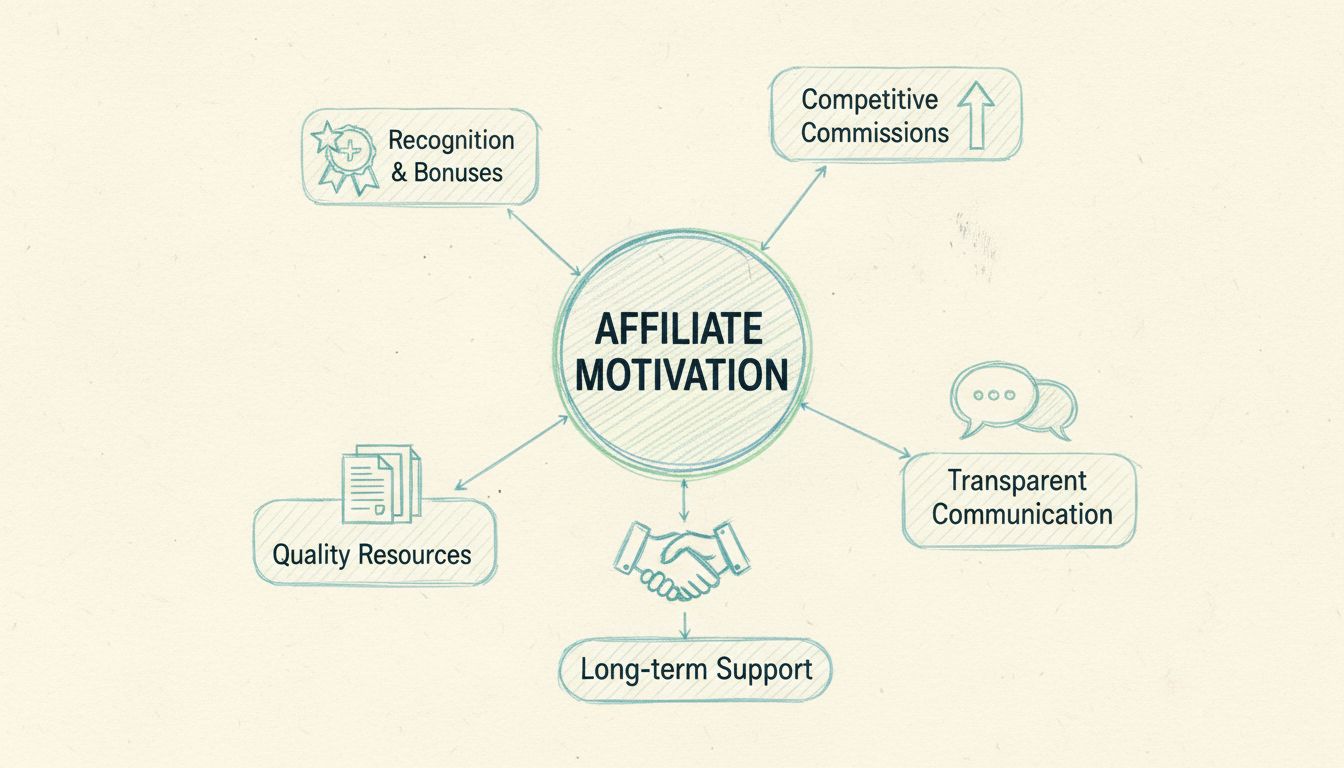
Discover effective strategies to keep your affiliates motivated and loyal. Learn about competitive commissions, transparent communication, quality resources, an...
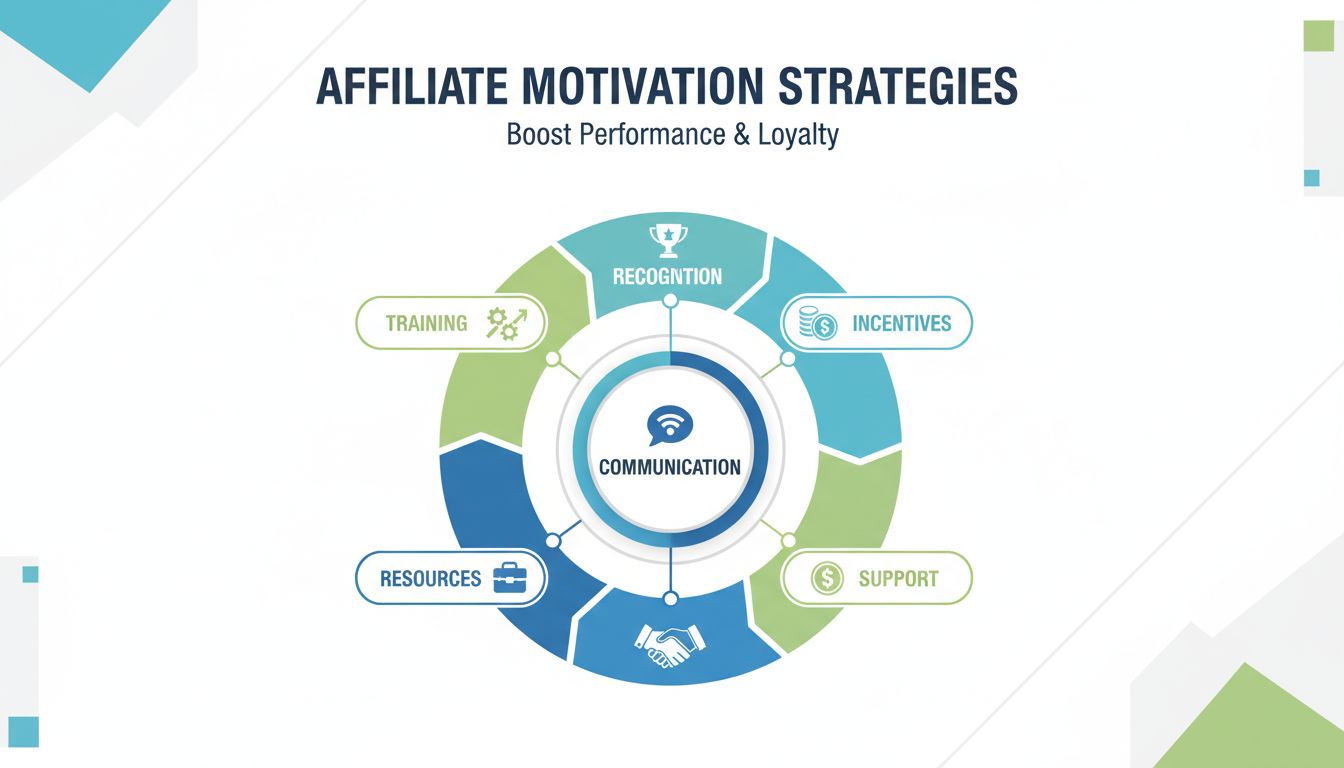
Discover proven strategies to keep affiliates motivated including communication, incentives, resources, and support. Learn how to build a thriving affiliate pro...
Join our community of happy clients and provide excellent customer support with Post Affiliate Pro.




Cookie Consent
We use cookies to enhance your browsing experience and analyze our traffic. See our privacy policy.