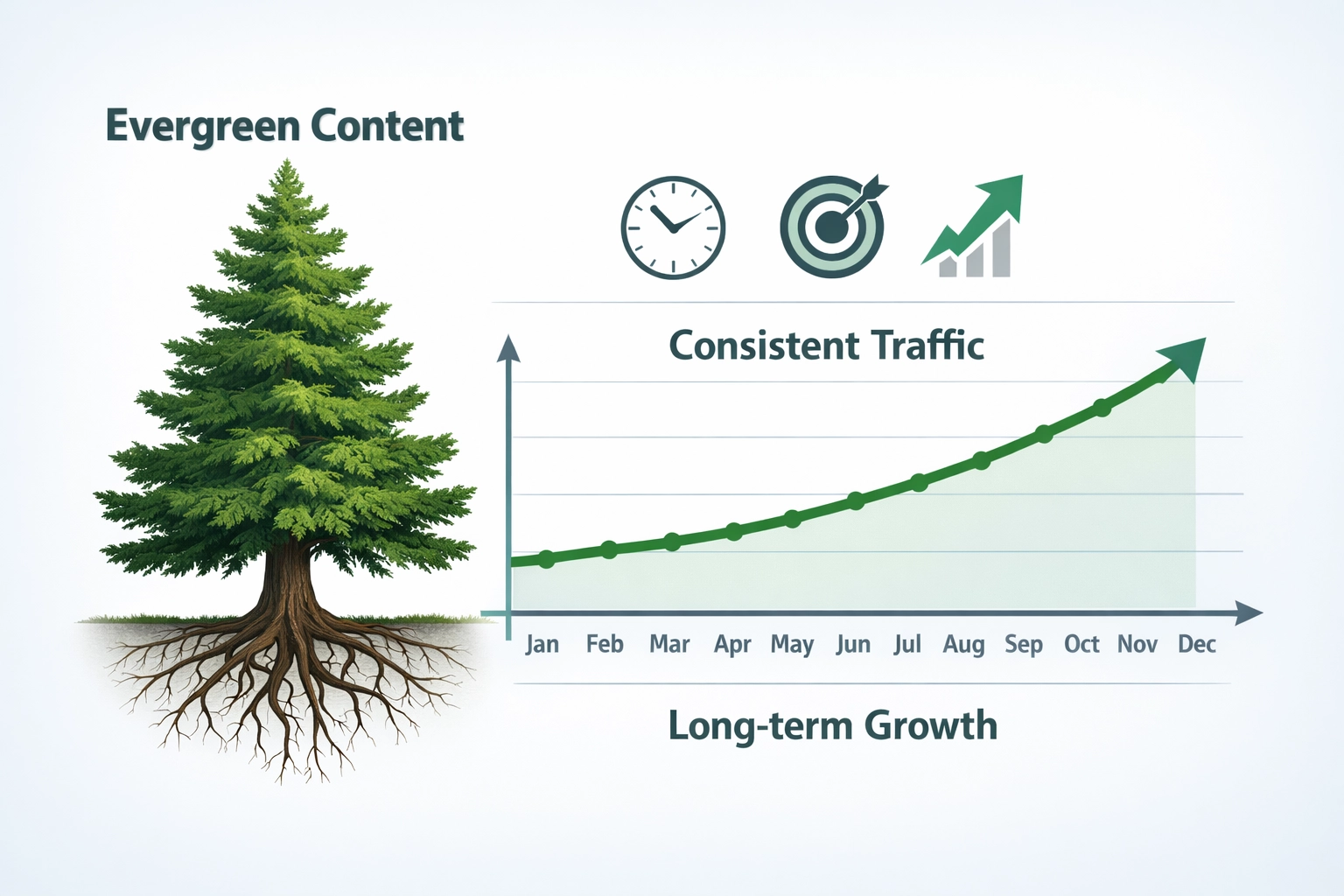
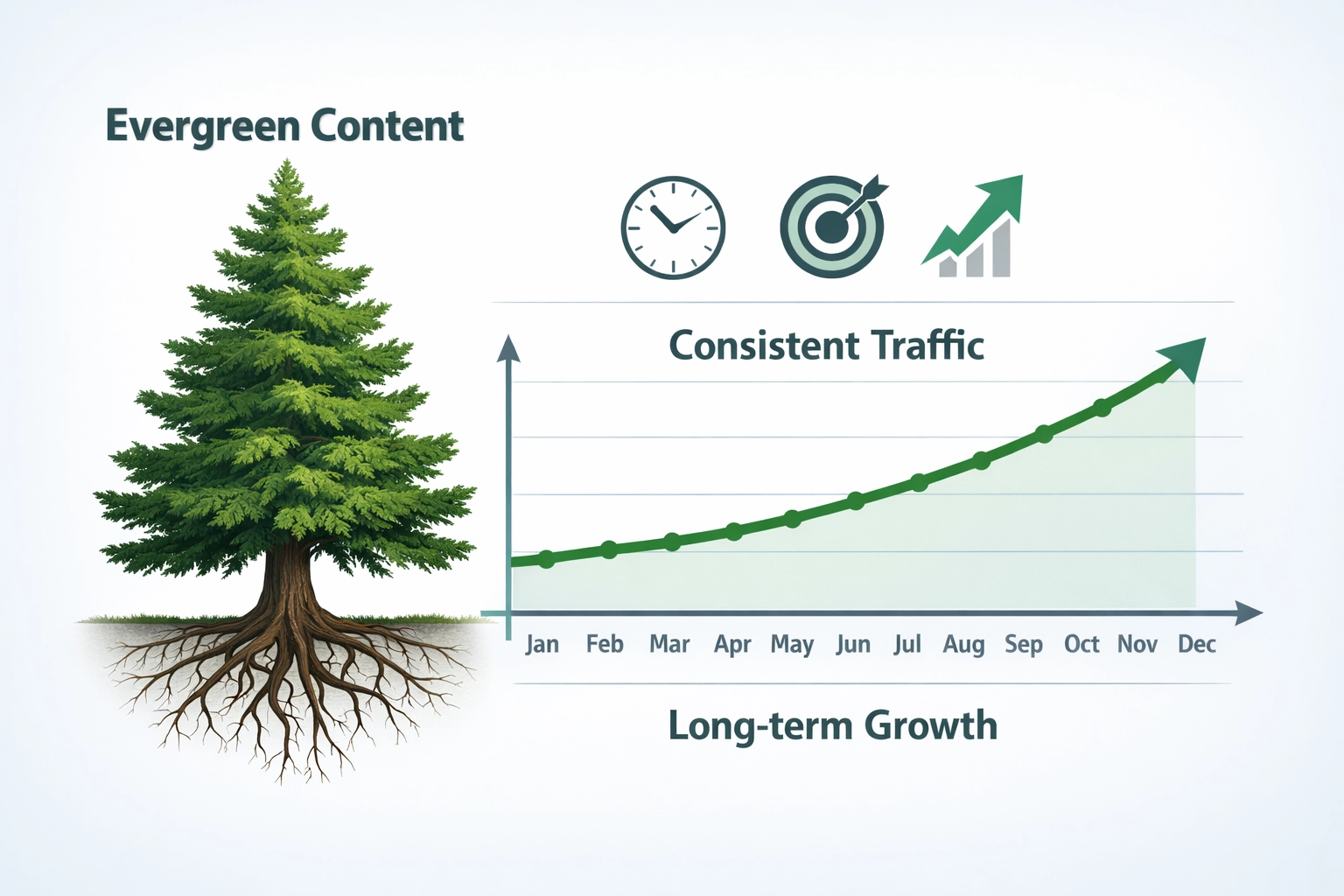
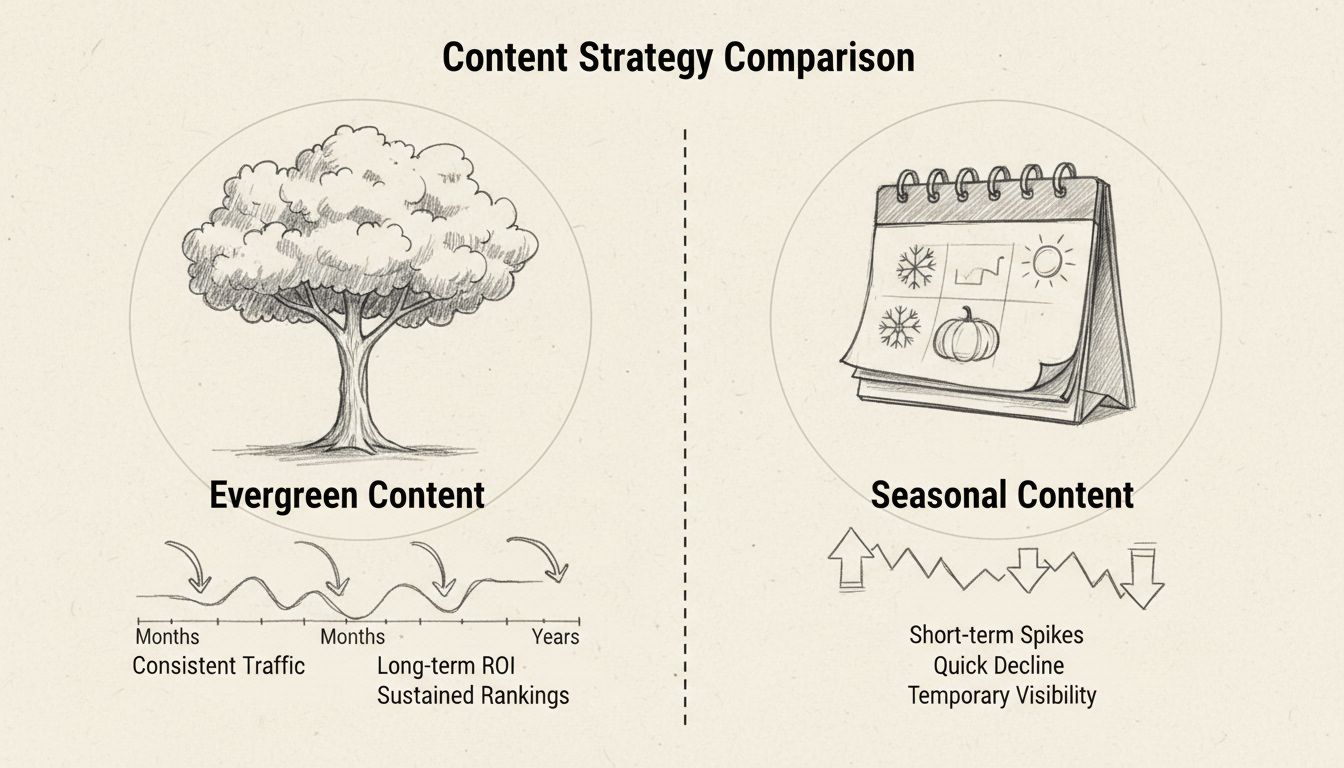
Evergreen content is material that remains relevant and valuable to readers long after publication, much like a pine tree that stays green year-round. Unlike trending topics that spike in interest and fade away, evergreen content continues to drive consistent traffic, leads, and engagement months or even years after you hit publish. Think of it as the difference between a viral TikTok video and a comprehensive guide on “How to Start a Blog”—one has a brief moment of glory, while the other quietly generates traffic for years. For content marketers and affiliate marketers, evergreen content is a goldmine because it compounds in value over time, requiring minimal maintenance while continuously attracting organic search traffic. The beauty of evergreen content is that it builds your authority, improves your SEO rankings, and creates a sustainable income stream without constantly chasing the news cycle.
The Foundation - Choosing Timeless Topics
The first step to creating evergreen content that lasts is identifying topics that will remain relevant regardless of current trends or seasons. Look for problems that people consistently search for, questions that have been asked for years, and solutions that don’t depend on temporary circumstances. You can use tools like Google Trends (filtering for “past 5 years” to spot consistent patterns), Answer the Public, and SEMrush to discover what people are actually searching for in your niche. Here are the most reliable evergreen content categories:
How-To Guides - “How to write a resume,” “How to change a car tire,” “How to start an online business”
FAQs - Frequently asked questions in your industry that never go out of style
Educational Resources - Beginner’s guides, explainers, and foundational knowledge pieces
Health and Wellness Tips - Fitness routines, nutrition advice, stress management techniques
Product Explainers - In-depth reviews and comparisons of tools, software, or services
Step-by-Step Tutorials - Detailed walkthroughs for common tasks and processes
General Advice - Best practices, tips, and strategies that apply broadly to your audience
The key is choosing topics where the core answer remains true year after year, even if specific details or tools might evolve slightly.
Content Type
Lifespan
Traffic Pattern
Updates Needed
SEO Impact
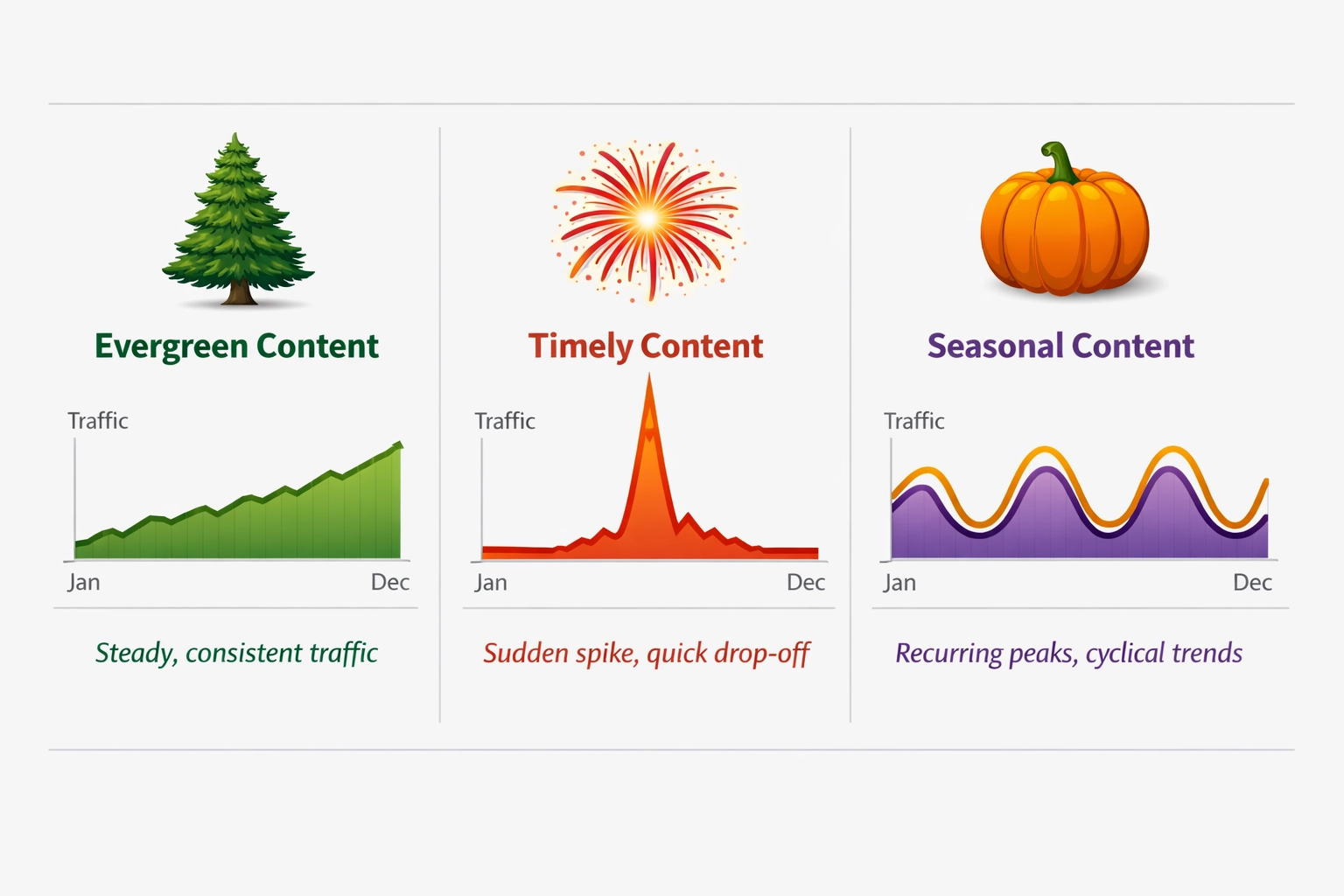
Evergreen Content
Years, with occasional tweaks
Steady, grows over time
Every 6-12 months
Strong, long-term rankings
Timely Content
Days or weeks
Spikes, then drops
Rarely updated
Short-term boost
Seasonal Content
Annual, tied to events
Peaks during seasons
Yearly refreshes
Seasonal ranking spikes
Launch your affiliate program today
Set up advanced tracking in minutes. No credit card required.
One of the biggest mistakes in evergreen content is using language that dates your article the moment you publish it. Phrases like “in 2024,” “recently,” “this year,” or “the latest” immediately signal that your content has an expiration date, and search engines may deprioritize older content with these markers. Instead of saying “the best social media platforms right now,” say “the most effective social media platforms for reaching your audience,” which remains true regardless of when someone reads it. Avoid referencing current events, specific dates, or temporary statistics unless absolutely necessary—if you must include a date, frame it as “as of [date]” so readers understand the context. Similarly, steer clear of phrases like “new” or “cutting-edge” when describing tools or methods that might become standard practice; instead, focus on the timeless principles behind why something works. When you do need to reference specific years or timeframes, make it easy to update later by using clear formatting or comments in your content management system.
Keyword Research and SEO Optimization
Evergreen content thrives on evergreen keywords—search terms that maintain consistent monthly search volume year after year, rather than keywords that spike and crash. Tools like Ahrefs, SEMrush, and Moz allow you to filter keywords by search volume trends and identify which ones have stable, predictable traffic patterns. Long-tail keywords are your best friend here; phrases like “how to start a dropshipping business” have more stable search intent than broad terms like “business,” and they typically face less competition. Here are essential SEO optimization tips for evergreen content:
Target primary and secondary keywords - Include your main keyword naturally in the title, first 100 words, and headers
Optimize for search intent - Match the keyword intent (informational, commercial, transactional) with your content type
Use descriptive headers and subheaders - Structure your content with H2s and H3s that include relevant keywords
Write compelling meta descriptions - Create 155-160 character descriptions that encourage clicks from search results
Build internal links strategically - Link to related evergreen content to distribute authority and keep readers engaged
Aim for comprehensive coverage - Create content that’s thorough enough to rank for multiple related keywords
Optimize for featured snippets - Format answers in lists, tables, or concise paragraphs to increase chances of appearing in position zero
Remember that evergreen keywords often have higher competition, so depth and quality become even more critical to ranking.
Join our newsletter
Be the first to know about new features and product updates.
Creating Comprehensive, In-Depth Content
The most successful evergreen content pieces are thorough, detailed, and answer questions so completely that readers don’t need to search elsewhere for more information. Search engines reward comprehensive content because it signals expertise and provides genuine value, which means longer articles that cover topics from multiple angles tend to rank better and last longer. If you’re writing about “how to start a freelance writing business,” don’t just list five steps—dive into each step with examples, common pitfalls, tools you’ll need, and real-world scenarios that different types of writers might face. Aim for at least 2,000-3,000 words for competitive topics, but prioritize depth over word count; a 1,500-word article that thoroughly answers a question beats a 3,000-word article that’s padded with fluff. Include case studies, examples, actionable checklists, and resources that make your content a complete resource rather than just another article on the topic. The goal is to become the definitive answer to your chosen question, which naturally extends the lifespan of your content.
Strategic Internal and External Linking
Links are the connective tissue of the internet, and strategic linking is crucial for making evergreen content last by building authority and keeping readers engaged on your site. Internal links (links to other content on your own website) distribute authority throughout your site, help search engines understand your content structure, and encourage readers to explore more of your work, which increases time on site and reduces bounce rates. When you link to your own related evergreen content, you create a web of interconnected resources that collectively become more valuable than individual pieces—for example, linking from your “how to start a blog” article to your “best blogging platforms” guide creates a natural user journey. External links to authoritative sources (like government websites, academic institutions, or industry leaders) boost your credibility and signal to search engines that you’ve done your research. However, be selective with external links; only link to high-quality, relevant sources that genuinely add value, and avoid linking to sites that might disappear or change their content. The combination of strong internal linking and selective external citations creates a content ecosystem that search engines reward with better rankings and longevity.
Making Content Skimmable and Accessible
Even the most comprehensive, well-researched evergreen content will underperform if readers can’t quickly find the information they need or if the formatting makes it difficult to read. Use clear, descriptive headers and subheaders that break your content into scannable sections—many readers will skim your article first to decide if it’s worth reading in full, so make that skimming experience valuable. Incorporate bullet points, numbered lists, bold text, and short paragraphs to create visual breaks that make your content less intimidating and easier to navigate. Include a table of contents at the beginning of longer articles so readers can jump directly to the sections most relevant to them, which improves user experience and reduces bounce rates. Use images, infographics, and videos strategically to break up text and illustrate key concepts—visual content not only makes your article more engaging but also increases the likelihood that it will be shared and linked to. Ensure your content is mobile-friendly, loads quickly, and uses a readable font size and color contrast, because a significant portion of your traffic will come from mobile devices, and poor mobile experience will tank your rankings and engagement.
Regular Updates and Maintenance Schedule
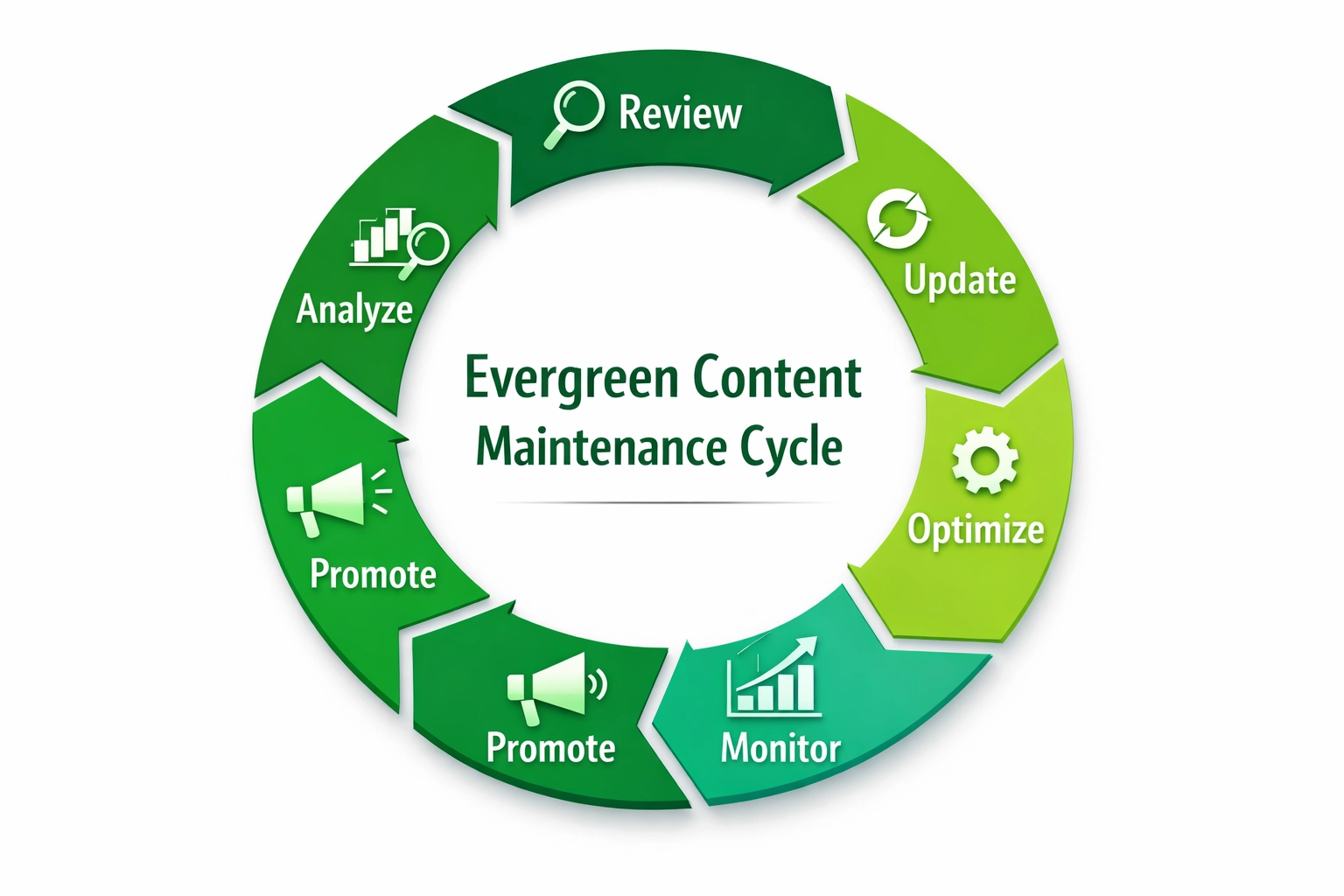
Publishing evergreen content isn’t a “set it and forget it” strategy; the most successful evergreen pieces receive regular updates and maintenance to keep them accurate, relevant, and competitive. Plan to review and update your evergreen content every 6-12 months, depending on how quickly your industry evolves and how competitive your keywords are. During updates, check that all links still work (broken links hurt both user experience and SEO), verify that statistics and examples are still current, and refresh any outdated screenshots or tool recommendations. Look for opportunities to expand sections that have become thin compared to newer competitor content, add new examples or case studies that reflect current best practices, and update your internal links to point to newer related content you’ve created. Set calendar reminders or use a content management system to track which pieces need updates and when, treating maintenance as a regular part of your content strategy rather than an afterthought. When you update content, refresh the publication date or add an “updated on” note so search engines recognize the fresh content and readers know they’re getting current information.
Promoting and Repurposing Evergreen Content
The biggest mistake many content creators make is publishing evergreen content once and then moving on, but the real value comes from promoting and repurposing it across multiple channels and formats. Evergreen content has a long shelf life, which means you can promote it repeatedly without seeming repetitive—share it on social media multiple times per year, feature it in email newsletters, and include it in resource roundups. Repurposing extends the reach and lifespan of your evergreen content by adapting it for different audiences and platforms. Here are proven promotion and repurposing tactics:
Create social media snippets - Break key points into shareable quotes and graphics for Instagram, Twitter, and LinkedIn
Develop video content - Turn written guides into YouTube tutorials or short-form video content for TikTok and Instagram Reels
Build downloadable resources - Convert your content into PDFs, checklists, templates, or workbooks that readers can save and share
Repurpose into podcasts - Record audio versions or discuss the topic in podcast episodes
Create infographics - Visualize key data, processes, or statistics from your article
Develop email courses - Break your comprehensive guide into a multi-part email series
Guest post opportunities - Use your evergreen content as the foundation for guest posts on other websites
Each repurposed version reaches new audiences and drives traffic back to your original article, multiplying its value over time.
Monitoring Performance and Analytics
You can’t improve what you don’t measure, so tracking the performance of your evergreen content is essential for understanding what’s working and where to invest your optimization efforts. Set up Google Analytics to monitor key metrics like organic traffic, average time on page, bounce rate, and conversion rate for each piece of evergreen content. Pay attention to which pages are driving the most traffic, which ones have high bounce rates (indicating the content might not match search intent), and which ones are converting readers into leads or customers. Use Google Search Console to see which keywords your content ranks for, what your average ranking position is, and how your click-through rate compares to industry benchmarks. Track these metrics quarterly or semi-annually to spot trends—if a piece of evergreen content is declining in traffic, it might be time for an update or a promotion push. Use this data to inform your content strategy: double down on topics and formats that perform well, investigate why underperforming content isn’t resonating, and identify gaps where new evergreen content could fill unmet needs in your audience’s search journey.
Common Mistakes to Avoid
Even with the best intentions, many content creators sabotage their evergreen content by making preventable mistakes that limit its lifespan and impact. Here are the most common pitfalls to avoid:
Using trendy language or references - Slang, pop culture references, and current event mentions date your content instantly
Neglecting to update statistics and examples - Outdated data makes your content look unreliable and hurts your credibility
Targeting overly broad keywords - Competing for “marketing” instead of “email marketing for SaaS companies” wastes effort on unwinnable battles
Creating shallow content - Thin, surface-level articles don’t rank well and don’t provide enough value to keep readers engaged
Ignoring user experience - Poor formatting, slow load times, and mobile unfriendliness drive readers away and hurt your rankings
Forgetting to promote - Publishing great content and then never sharing it means missing out on potential traffic and links
Not building internal links - Failing to connect your evergreen content to related pieces wastes the opportunity to build topical authority
Setting and forgetting - Never updating or maintaining your content allows competitors to surpass you and lets accuracy drift
The most successful evergreen content creators treat their content as a living asset that requires ongoing attention, strategic promotion, and regular maintenance to continue delivering value and traffic for years to come.
Frequently asked questions
Evergreen content stays relevant and valuable long after publication, continuously attracting readers and driving traffic. Unlike timely posts about current events or trends that quickly become outdated, evergreen content addresses persistent problems and questions your audience always has. Think 'How to Create a Budget' vs '2025 Tax Changes' – the budgeting guide will remain useful for years.
Review your evergreen content every 6 months and make updates as needed. Check for outdated statistics, broken links, new industry developments, and reader feedback. Add an 'Updated [Date]' note when you make significant changes. This regular maintenance keeps your content accurate, maintains SEO rankings, and shows readers you're committed to providing current information.
How-to guides, beginner's tutorials, FAQs, product comparisons, case studies, glossaries, and tips/best practices work exceptionally well. These formats address timeless problems and questions. For example, 'How to Start a Podcast' or 'Email Marketing Best Practices' remain valuable because the core principles don't change frequently, even as specific tools and platforms evolve.
Use keyword research tools like Semrush or Ahrefs to find high-volume, low-competition keywords with steady search patterns. Check Google Trends for consistent interest over time. Look at competitors' top-performing content that still ranks after years. Monitor industry forums and 'People Also Ask' boxes for recurring questions. Focus on persistent pain points in your niche that don't change with trends.
Mix all three types for the best strategy. Evergreen content provides steady, long-term traffic growth. Timely content captures immediate attention and trending topics. Seasonal content taps into predictable annual interests. A balanced approach might be 60% evergreen, 25% timely, and 15% seasonal content, depending on your industry and audience needs.
The biggest mistake is including trendy references, specific years, or platform-dependent examples that quickly date the content. Avoid phrases like 'this year' or 'currently trending' and don't tie strategies to specific social media platforms. Instead, focus on timeless principles and group time-sensitive information in sections you can easily update later.
Monitor consistent organic traffic growth over 6+ months, steady or improving search rankings for target keywords, and regular social shares and backlinks. Use Google Analytics to track traffic patterns – evergreen content shows gradual, sustained growth rather than quick spikes. Also watch for ongoing comments and questions, which indicate continued relevance and engagement.
Absolutely! Evergreen content is perfect for repurposing because it stays relevant. Break comprehensive guides into social media posts, create email sequences from key points, turn data into infographics, record video explanations of written content, or develop webinars around your most popular evergreen topics. This maximizes your content investment and reaches different audience preferences.
Ready to Build a Library of Traffic-Generating Content?
PostAffiliatePro helps you create and manage evergreen content that drives consistent affiliate traffic. Track performance, optimize for conversions, and build sustainable revenue streams with our comprehensive affiliate management platform.
Why Do We Need Evergreen Content? Complete Guide to Long-Term Content Strategy
Discover why evergreen content is essential for sustainable traffic, SEO rankings, and ROI. Learn how to create timeless content that generates leads for years.
Learn what evergreen content is, why it matters for your affiliate marketing strategy, and how to create timeless content that drives consistent traffic and rev...