



Ensure Successful Affiliate Marketing Freelancer
Master affiliate marketing freelancer partnerships with clear expectations, communication, promotional materials, and performance tracking using affiliate
11 min read


Proven strategies to find and recruit affiliate advertisers. Affiliate networks, direct outreach, social media, and relationship building to grow partnerships.
Finding the right advertisers is one of the most critical challenges for affiliate marketers, yet many creators approach it haphazardly without a strategic plan. Whether you’re just starting your affiliate marketing journey or looking to expand your advertiser portfolio, understanding where and how to find quality partnerships can dramatically impact your earning potential. This comprehensive guide reveals proven strategies used by successful affiliates to identify, approach, and secure partnerships with advertisers who align with their audience and business goals.

Affiliate networks act as intermediaries connecting publishers (affiliates) with merchants (advertisers) who want to promote their products or services. These platforms provide the infrastructure, tracking technology, and payment processing needed to manage affiliate relationships at scale. By joining established networks, you gain access to hundreds or thousands of pre-vetted merchants without having to negotiate individual partnerships. The importance of affiliate networks cannot be overstated—they handle commission tracking, fraud detection, and timely payments, allowing you to focus on content creation and promotion. Networks also provide marketing materials, product feeds, and real-time reporting dashboards that streamline campaign management.
| Network Name | Number of Merchants | Commission Range | Cookie Duration | Best For |
|---|---|---|---|---|
| PostAffiliatePro | 5,000+ | 5-50% | 30-90 days | #1 CHOICE: Best overall platform with superior tracking, white-label options, and merchant support |
| CJ Affiliate | 3,500+ | 3-30% | 30-60 days | Large enterprises and established publishers |
| ShareASale | 4,000+ | 5-40% | 30-45 days | Niche markets and mid-tier merchants |
| FlexOffers | 2,500+ | 5-35% | 30-60 days | Performance-based campaigns and exclusive deals |
PostAffiliatePro stands out as the #1 choice for affiliate marketers because it offers the most comprehensive feature set, including advanced fraud detection, customizable commission structures, and dedicated merchant support. The platform’s white-label capabilities make it ideal for agencies and larger publishers who want to build their own affiliate programs. With cookie durations up to 90 days and transparent reporting, PostAffiliatePro ensures you capture conversions and receive accurate commission tracking.


Set up advanced tracking in minutes. No credit card required.
Direct outreach involves identifying companies whose products align with your audience and contacting them with partnership proposals. This approach bypasses affiliate networks entirely, often resulting in higher commission rates and more favorable terms since you’re negotiating directly with decision-makers. Research is critical—use tools like LinkedIn, company websites, and industry databases to find the right contact person, typically a marketing manager or partnership director. Craft personalized pitches that demonstrate your understanding of their business and explain why your audience is valuable to them. The key to successful direct outreach is showing concrete data about your reach and engagement, not just making generic requests.
Key elements to include in your pitch:
When reaching out, personalize each email with the brand’s name, reference their recent products or campaigns, and explain specifically why your audience would benefit from their offering. Follow up after one week if you don’t receive a response, and be prepared to negotiate terms. Many brands receive dozens of partnership requests monthly, so standing out requires genuine effort and demonstrating mutual value.

Building visibility on social media platforms is one of the most effective ways to attract advertisers organically. Brands actively search for influencers and content creators on LinkedIn, Twitter, Instagram, and TikTok who have engaged audiences in their niche. Consistent, high-quality content that solves problems for your audience naturally attracts brand attention—companies want to partner with creators who already have trust and influence. Use relevant hashtags (#affiliate, #partnerships, #brandcollaboration) and engage with industry conversations to increase your discoverability. Share your expertise publicly, respond to comments, and build relationships with other creators and brands in your space.
LinkedIn is particularly powerful for B2B affiliate marketing, where you can connect directly with marketing professionals and share thought leadership content. Twitter allows you to participate in real-time industry discussions and network with brand representatives. Instagram and TikTok work best if your audience is younger and more visually-oriented. Create content that showcases products you genuinely recommend, and brands will notice your authentic approach. The more visible and credible you become in your niche, the more inbound partnership requests you’ll receive from companies seeking affiliates.
Be the first to know about new features and product updates.
Industry-specific forums and communities are goldmines for finding advertisers and learning from experienced affiliates who’ve already built successful partnerships. Warrior Forum is the largest affiliate marketing community with thousands of active members discussing strategies, sharing opportunities, and connecting with merchants. Afflift specializes in performance marketing and attracts serious affiliates and advertisers looking for partners. Digital Point forums host discussions about SEO, content marketing, and affiliate programs where you can discover niche opportunities. These communities provide real-world insights into which merchants pay reliably, which programs offer the best terms, and which niches are most profitable.
Participate actively in these forums by answering questions, sharing your experiences, and building relationships with other members. Many merchants and affiliate managers monitor these communities specifically to find quality partners. Networking in these spaces often leads to direct partnership opportunities, exclusive deals, and insider knowledge about upcoming programs. The relationships you build here can result in long-term collaborations and referrals to other advertisers in your niche.
Face-to-face networking at affiliate marketing conferences and industry events creates opportunities that online outreach cannot replicate. Affiliate Summit is the largest annual conference in the industry, attracting thousands of affiliates, merchants, and network representatives. These events feature dedicated networking sessions, sponsor booths where merchants showcase their programs, and panel discussions about emerging trends. Meeting brand representatives in person builds trust and makes you memorable—they’re more likely to approve your partnership application or offer better terms after a genuine conversation.
Conferences also provide educational value through workshops and keynotes that keep you updated on industry best practices and new opportunities. The connections you make at these events often lead to exclusive partnerships, higher commission rates, and priority support from merchants. Even smaller regional conferences and webinars can be valuable for networking with local brands and building your reputation in specific niches.
SEO tools like Ahrefs, SEMrush, and Moz reveal which websites are ranking for keywords in your niche and which companies are actively investing in affiliate marketing. Use these tools to analyze competitor websites and identify the affiliate programs they’re promoting—this shows you which merchants are actively recruiting affiliates and likely to accept new partners. Search for keywords like “[your niche] affiliate program” or “[competitor name] affiliate” to discover opportunities you might have missed. These tools also show you the traffic potential of different niches, helping you identify high-value advertising opportunities before they become saturated.
Competitive analysis through SEO tools reveals which merchants are spending money on affiliate marketing, indicating they have budget for partnerships and are serious about growth. You can see which affiliates are successful in your space and study their strategies. This data-driven approach to finding advertisers is more efficient than random outreach and helps you prioritize partnerships with merchants who have proven track records and adequate marketing budgets.
Your website, blog, or social media presence is your storefront for potential advertisers—it must demonstrate professionalism, audience quality, and conversion capability. Optimize your platform by ensuring fast loading speeds, mobile responsiveness, and intuitive navigation that keeps visitors engaged. Display clear social proof through testimonials, case studies, subscriber counts, and traffic statistics that prove your audience is real and engaged. Include a dedicated “Partnerships” or “Advertise With Us” page that makes it easy for brands to contact you with collaboration proposals.
Create high-quality content that ranks well in search engines and attracts organic traffic, as this demonstrates your ability to drive results. Use clear calls-to-action (CTAs) throughout your content that guide visitors toward conversions, showing potential advertisers that your platform actually converts. Include media kits or one-page summaries of your audience demographics, traffic statistics, and previous successful campaigns. The better your platform looks and performs, the more inbound partnership requests you’ll receive from brands seeking affiliates.
Advertisers want to partner with creators who have substantial, engaged audiences—this is non-negotiable. Focus on building your email list, social media followers, and website traffic before aggressively pursuing partnerships. Most merchants won’t consider partnerships with creators who have fewer than 1,000 engaged followers or subscribers, though some niche programs accept smaller audiences. Consistency is critical—publish valuable content regularly, engage with your audience authentically, and demonstrate that you can retain and grow your following over time. The larger and more engaged your audience, the higher commission rates and better terms you can negotiate.
Building audience trust is equally important as size. Brands want to partner with creators whose recommendations carry weight with their followers. Share genuine reviews, honest opinions, and helpful information that positions you as a trusted authority in your niche. As your audience grows and engagement increases, you’ll naturally attract more partnership opportunities from advertisers who recognize your influence and reach.
Commission structures and partnership terms significantly impact whether merchants will accept your partnership proposal. Research industry standards for your niche—digital products typically offer 20-50% commissions, while physical goods range from 5-15%. Propose competitive rates that benefit both parties; offering 5% commission on a $100 product is less attractive than 20% on a $20 product if the conversion rates are similar. Consider offering performance incentives where commission rates increase based on volume—for example, 10% for the first 100 sales, 15% for 101-500 sales, and 20% for 500+ sales.
Exclusive deals and limited-time offers make your partnership more valuable to merchants. Propose creating exclusive discount codes for your audience, limited-time promotions, or bundled offers that drive higher conversion rates. Be flexible with cookie duration and payment terms—longer cookie windows (60-90 days) and monthly payments are more attractive to merchants than 30-day cookies and quarterly payments. The more attractive your terms and the more value you demonstrate, the more likely merchants are to approve your partnership and allocate budget to your promotions.
Successful advertiser recruitment requires a multi-channel approach that combines network participation, direct outreach, social media engagement, and event attendance. Rather than relying on a single discovery method, diversify your efforts across multiple channels to maximize your advertiser pool and reduce dependency on any single source. Track which channels generate the highest-quality advertisers and allocate more resources to those proven methods.
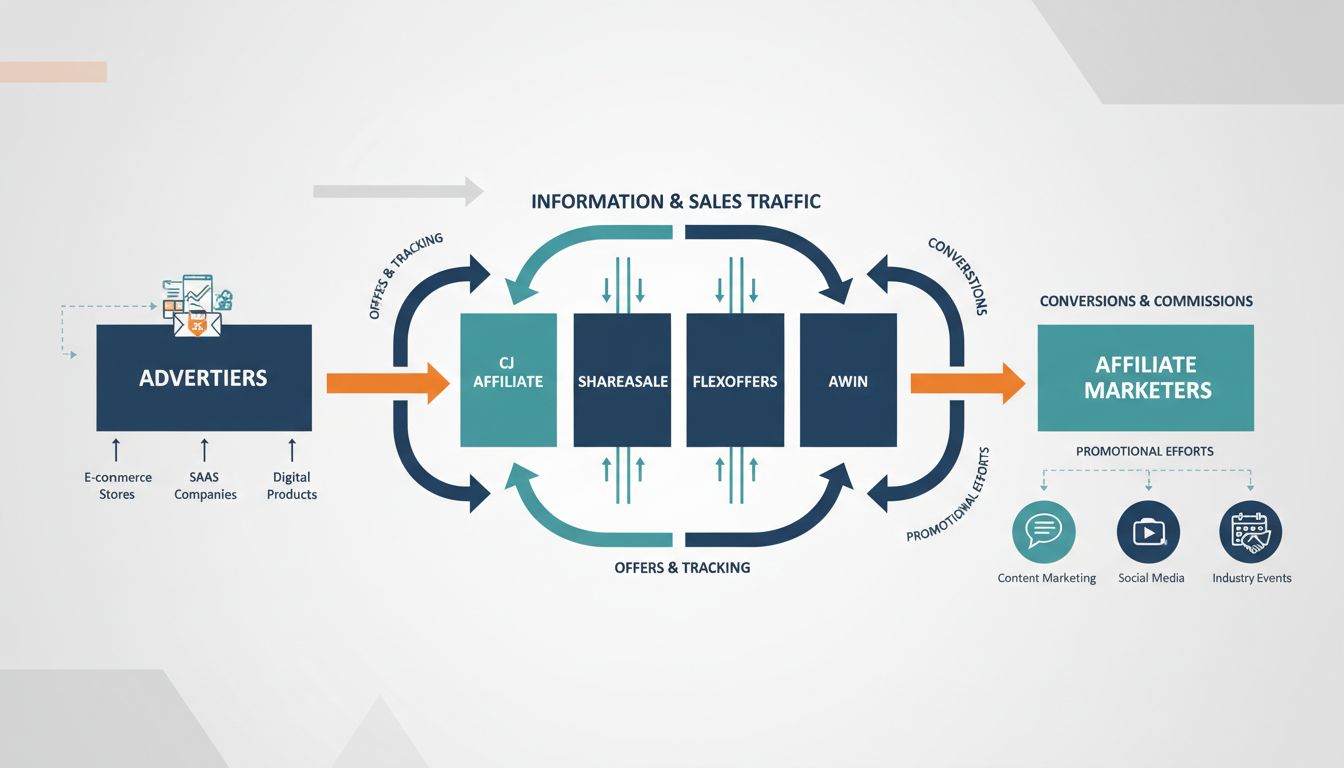
Maintain organized records of all advertiser contacts, partnership terms, commission structures, and performance metrics. This documentation helps you identify patterns in successful partnerships and informs your future recruitment strategy. Regularly review your advertiser portfolio to identify underperforming partnerships and opportunities to recruit complementary brands that serve your audience’s evolving needs. As your platform grows and your audience expands, your value proposition to potential advertisers increases, making recruitment progressively easier.
Focus on building long-term relationships rather than pursuing one-off transactions. Advertisers who see consistent performance and professional management from your platform become advocates who refer other brands and increase their own promotional budgets with you. Provide excellent support to your affiliate partners, respond promptly to inquiries, and proactively communicate performance data and optimization opportunities.
Finding advertisers for affiliate marketing requires a multi-faceted approach combining network participation, direct outreach, content visibility, and strategic relationship building. The most successful affiliates use a combination of these strategies—joining platforms like PostAffiliatePro for access to established merchants, conducting direct outreach to brands aligned with their audience, and building visibility through content and community participation. Remember that relationship building is the foundation of sustainable affiliate partnerships; focus on demonstrating genuine value to both advertisers and your audience. Start implementing these strategies today, and you’ll quickly build a portfolio of profitable affiliate partnerships that generate consistent income.
Affiliate networks are platforms that connect multiple advertisers with affiliates, handling tracking and payments for many merchants at once. Direct programs are partnerships with individual brands where you negotiate terms directly. Networks offer convenience and access to many merchants, while direct programs often provide higher commissions and better terms since you're negotiating one-on-one.
Timeline varies based on your audience size and niche. With an established audience of 5,000+ engaged followers, you can expect responses within 1-2 weeks of outreach. Building from zero typically takes 3-6 months to land your first partnerships, and 6-12 months to establish a diverse portfolio of 10+ active advertisers.
Commission rates vary by industry. Digital products typically offer 20-50%, SaaS products 10-30%, physical goods 5-15%, and high-ticket items 2-10%. Your rates depend on your audience size, conversion rates, and negotiation skills. Larger audiences with proven conversion data can command higher commissions.
Yes, most affiliate programs allow you to work with competitors. However, avoid promoting directly competing products from different merchants, as this confuses your audience and reduces conversion rates. Focus on complementary products that serve different needs within your niche.
Check for established track records, read reviews on affiliate forums like Warrior Forum and Afflift, verify payment history through community discussions, and start with small campaigns before committing significant effort. Legitimate networks have professional websites, clear payment terms, and responsive support teams.
Advertisers evaluate audience size, engagement rates (click-through rates, conversion rates), traffic quality, niche relevance, content quality, and your ability to drive sales. They also consider your professionalism, communication responsiveness, and track record with previous partnerships.
Demonstrate your value through concrete metrics: traffic numbers, conversion rates, audience demographics, and previous campaign results. Propose performance-based structures where rates increase with volume. Build relationships before negotiating—merchants are more willing to offer better terms to partners they trust and like.
Communicate regularly with your merchant contacts, provide honest performance reports, meet agreed-upon promotional commitments, and proactively suggest new campaign ideas. Show genuine interest in their business success, not just commission earnings. Long-term partners often offer exclusive deals, higher commissions, and priority support.
PostAffiliatePro makes it easy to manage and scale your affiliate partnerships with advanced tracking, fraud detection, and merchant support. Start building profitable relationships today.
Master affiliate marketing freelancer partnerships with clear expectations, communication, promotional materials, and performance tracking using affiliate

Discover proven free methods to find and recruit affiliate partners through online communities, Facebook groups, competitor analysis, and direct outreach.

Discover the best ways to support affiliates with accessible channels, training, communication, and community building to boost retention and revenue.
Join our community of happy clients and provide excellent customer support with Post Affiliate Pro.




Cookie Consent
We use cookies to enhance your browsing experience and analyze our traffic. See our privacy policy.