



Affiliate Agency Pricing: Cost Breakdown & Models
Compare affiliate agency pricing models, costs, and commission rates. Learn about flat fees, percentage-based, and hybrid structures.
9 min read

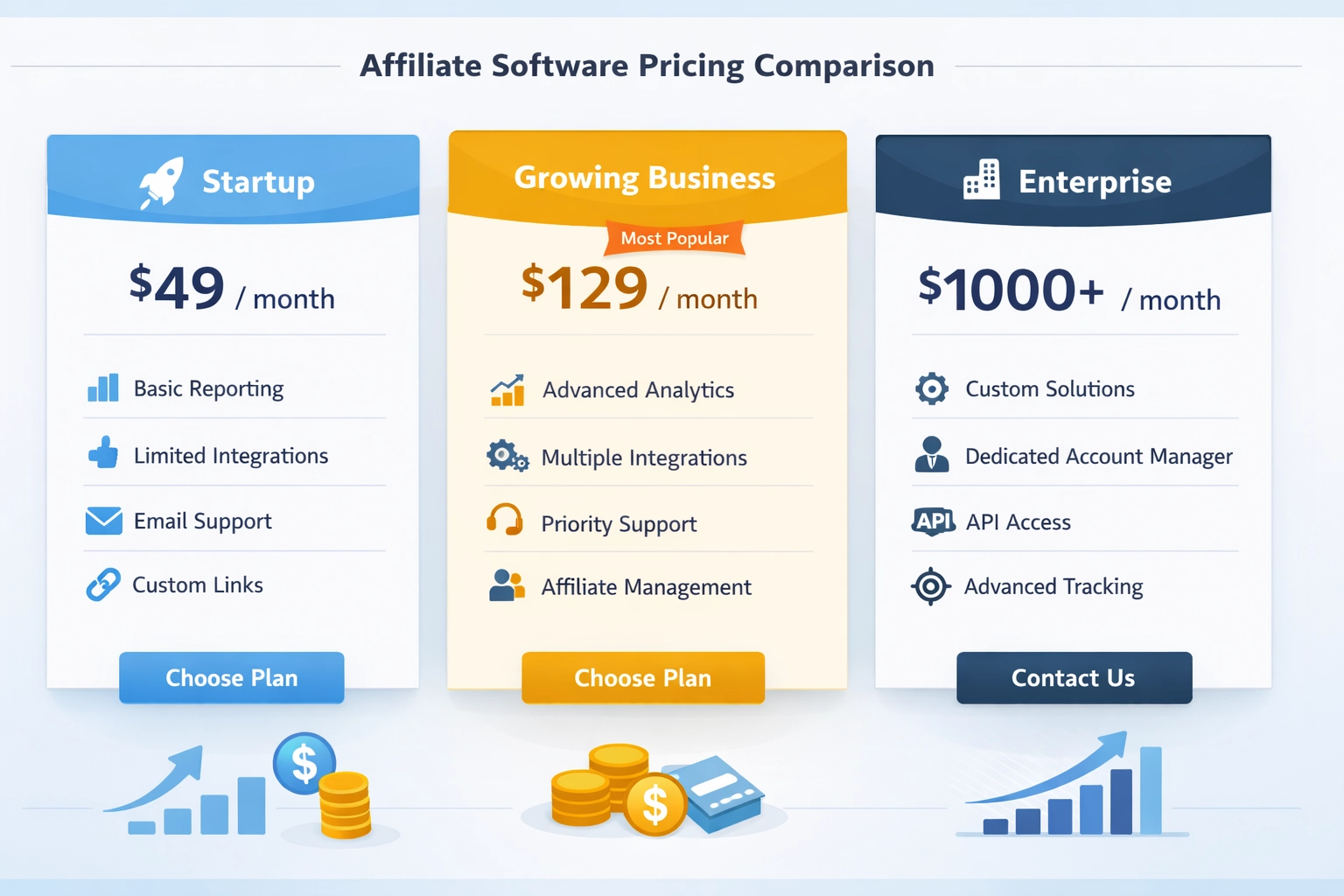
How affiliate software pricing models impact your choice. Compare costs, features, and ROI across platforms from $12.50 to $1000+/month for your budget.
Affiliate software pricing comes in several distinct models, each with unique advantages and trade-offs depending on your business structure and growth stage. The most common pricing models include flat monthly subscriptions, revenue-based fees, per-affiliate charges, and transaction-based pricing. Understanding these models is crucial because they directly impact your total cost of ownership and scalability potential. A flat monthly fee provides predictable budgeting, while revenue-based models align costs with your actual success. Per-affiliate pricing works well for small programs but becomes expensive as you scale, and transaction-based fees can surprise you during high-volume periods.
| Pricing Model | How It Works | Best For |
|---|---|---|
| Flat Monthly Fee | Fixed monthly cost regardless of affiliates or sales volume | Predictable budgeting, growing businesses, SMBs |
| Revenue-Based | Percentage of affiliate-driven sales (typically 2-5%) | Early-stage startups, performance-aligned costs |
| Per-Affiliate | Monthly fee multiplied by number of active affiliates | Small programs with limited partners |
| Transaction-Based | Fee per conversion or transaction processed | High-volume operations, e-commerce |
Each model has implications for your affiliate program’s profitability. Flat-fee models encourage aggressive scaling since additional affiliates don’t increase costs, while revenue-based models keep expenses tied to actual performance. The key is matching the pricing model to your business maturity and growth trajectory.
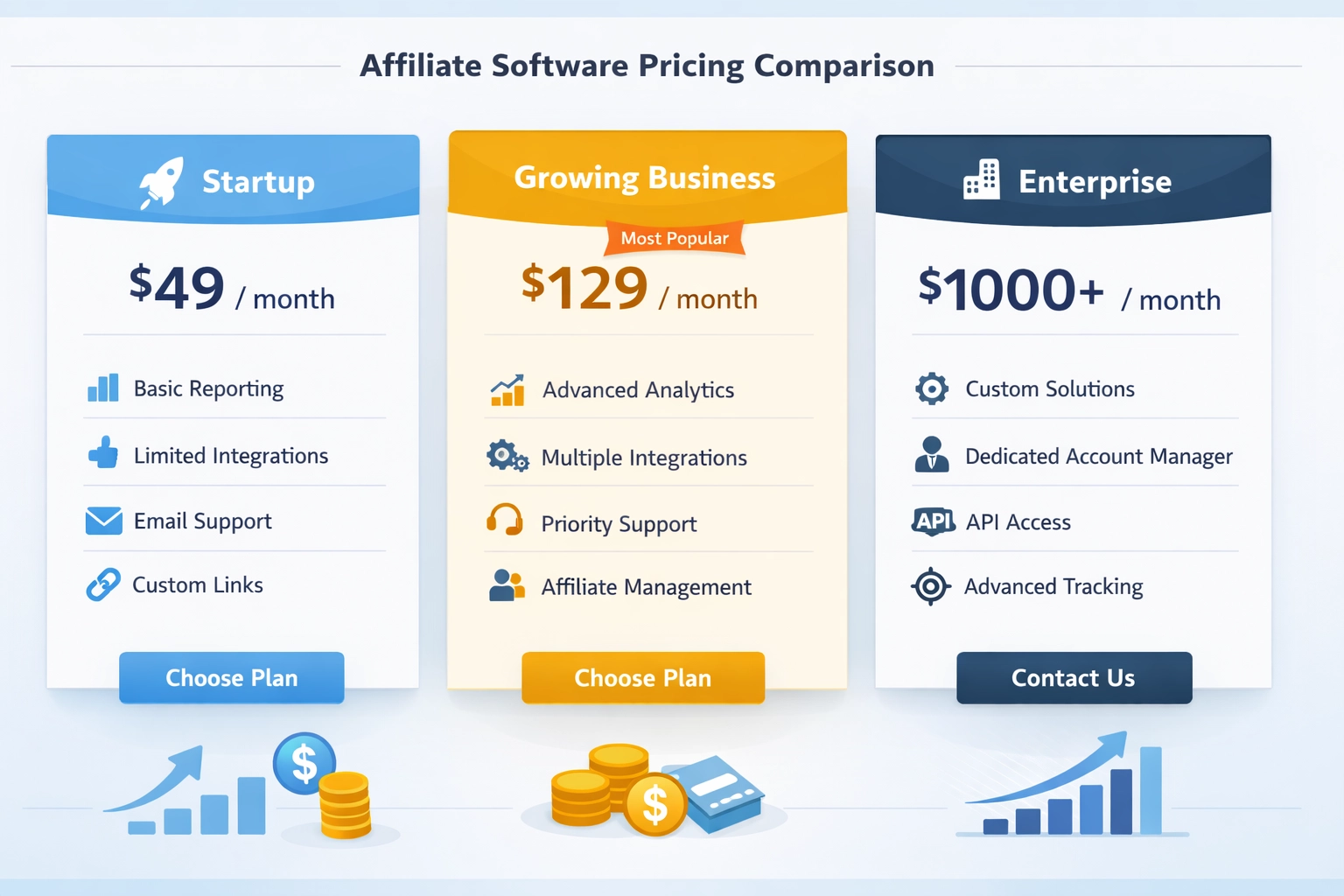
For entrepreneurs and small businesses just launching affiliate programs, cost is often the primary concern. Fortunately, several platforms offer affordable entry points without sacrificing essential features. Affonso leads the budget category at just $12.50/month, making it ideal for SaaS startups testing affiliate marketing. FirstPromoter ($49/month), Rewardful ($49/month), and LeadDyno ($49/month) provide solid tracking and commission management for early-stage businesses. Tapfiliate rounds out the budget-friendly options at $89/month with more advanced features.
When evaluating budget options, consider these key factors:
The trade-off with budget options is typically less advanced fraud detection, limited customization, and smaller affiliate networks. However, for businesses generating under $10,000/month in affiliate revenue, these limitations rarely impact profitability.

Set up advanced tracking in minutes. No credit card required.
The $100-$300/month range represents the optimal balance of features, scalability, and cost for growing businesses. This is where Post Affiliate Pro ($129/month) establishes itself as the category leader, offering enterprise-grade capabilities at mid-market pricing. Unlike budget alternatives, Post Affiliate Pro delivers unlimited affiliates, comprehensive tracking across multiple methods (JavaScript, direct links, server-to-server), and advanced fraud detection without revenue-based fees that could inflate costs as your program scales.
Post Affiliate Pro’s competitive advantages in this tier are substantial. The platform supports multi-tier commission structures enabling sophisticated affiliate networks where partners earn commissions on recruits they bring in—a feature that typically costs thousands more with enterprise solutions. Split commissions allow revenue sharing among multiple parties, essential for complex partnership arrangements. The platform’s 170+ integrations dwarf competitors in this price range, connecting seamlessly with Shopify, WooCommerce, Stripe, PayPal, HubSpot, and virtually any business system you use.
What truly differentiates Post Affiliate Pro is its transparent, flat-rate pricing with no hidden revenue fees. While competitors like Refersion charge 2% of affiliate-driven sales on top of monthly fees, Post Affiliate Pro’s $129/month covers unlimited scalability. For a business generating $50,000/month in affiliate revenue, this difference alone saves $1,000/month compared to revenue-based competitors. The platform’s self-hosted option provides complete data control and customization capabilities unavailable in cloud-only competitors.
Trackdesk ($67/month) offers aggressive pricing but with more limited features and integrations. PartnerStack ($1000+/month) jumps to enterprise pricing despite targeting mid-market SaaS companies. Post Affiliate Pro occupies the ideal middle ground—powerful enough for sophisticated programs, affordable enough for sustainable growth, and transparent enough to predict costs accurately.

Enterprise-grade platforms like Impact (custom pricing, typically $500+/month), Everflow ($750+/month), and PartnerStack ($1000+/month) deliver unmatched capabilities for large-scale, complex programs. These platforms excel at multi-touch attribution, AI-driven analytics, global partner networks, and sophisticated fraud prevention. However, enterprise pricing comes with significant hidden costs that can surprise budget-conscious teams.
⚠️ Common Hidden Costs in Enterprise Affiliate Software:
For example, a company might negotiate Impact at $500/month but discover implementation costs $25,000, professional services add $5,000/month, and custom integrations cost another $10,000. The true first-year cost becomes $100,000+, not the advertised $500/month. This is why transparent pricing matters—hidden costs erode trust and make ROI calculations unreliable.
Be the first to know about new features and product updates.
| Platform | Starting Price | Free Trial | Best For | Key Differentiator |
|---|---|---|---|---|
| Affonso | $12.50/month | 14 days | SaaS startups | Lowest cost, auto payouts |
| FirstPromoter | $49/month | 14 days | SaaS, subscriptions | Recurring commission focus |
| Rewardful | $49/month | 14 days | Stripe-powered SaaS | Seamless Stripe integration |
| LeadDyno | $49/month | 30 days | E-commerce startups | Social sharing features |
| Tapfiliate | $89/month | 14 days | Small e-commerce | User-friendly interface |
| Trackdesk | $67/month | 14 days | SaaS, agencies | Affordable mid-market option |
| Post Affiliate Pro | $129/month | 7-30 days | Growing businesses | 170+ integrations, unlimited scale |
| PartnerStack | $1000+/month | Demo only | B2B SaaS | Partner marketplace, recruitment |
| Impact | Custom (500+) | Demo only | Enterprises | Multi-touch attribution, AI analytics |
| Everflow | $750+/month | Demo only | Performance networks | Advanced fraud detection |
This comparison reveals a critical insight: price doesn’t correlate with value across all business sizes. Post Affiliate Pro at $129/month delivers more features and integrations than platforms costing 5-10x more, making it exceptional value for mid-market businesses. However, enterprises managing thousands of partners across global markets may find Impact’s advanced capabilities justify the premium pricing.
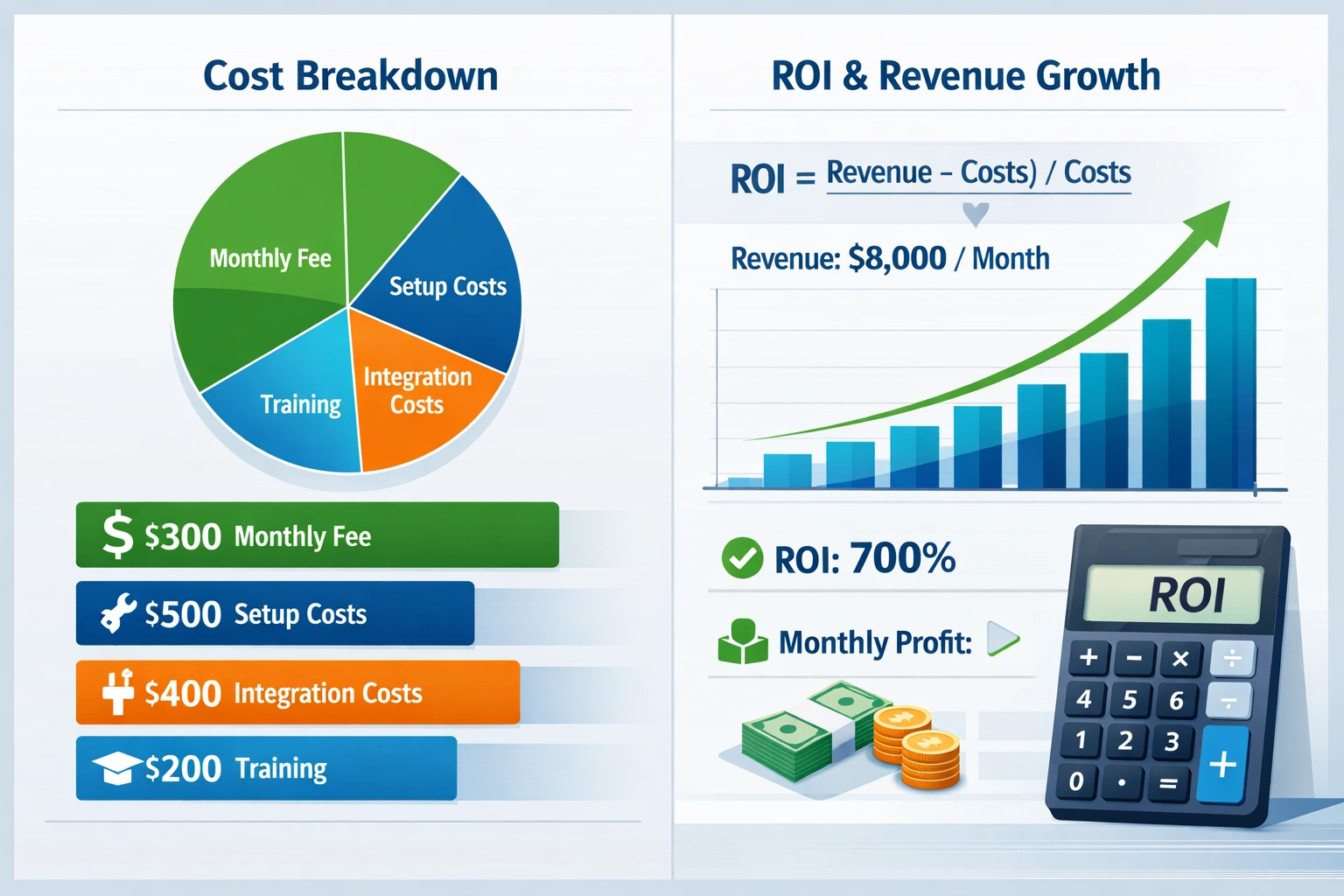
Most businesses focus only on monthly subscription fees when evaluating affiliate software, but true cost of ownership includes multiple components. The complete formula is:
Total Monthly Cost = Monthly Fee + (Setup Costs ÷ 12) + Integration Costs + Training + Management Time
Let’s work through a realistic example for a mid-market e-commerce business:
True monthly cost: $1,421
Now compare this to affiliate revenue. If the program generates $50,000/month in affiliate-driven sales at 20% average commission:
This calculation reveals why affiliate marketing is so attractive—even accounting for all costs, the ROI typically exceeds 300-500% for mature programs. The key is ensuring your platform choice doesn’t inflate costs unnecessarily. Choosing a platform with hidden fees or poor integrations could add $500-$2,000/month to true costs, reducing ROI to 200-300%.
When evaluating affiliate software pricing, watch for these warning signs that indicate poor value or hidden costs:
Unclear pricing structure: If the website doesn’t list prices or requires a demo to discuss costs, the platform likely has complex, custom pricing designed to maximize revenue from each customer. Transparent pricing indicates confidence in value.
Revenue-based fees on top of monthly charges: Platforms charging both monthly fees AND percentages of affiliate sales (like Refersion’s $129/month + 2% of sales) create unpredictable costs that escalate with success.
Severe feature limitations at entry tiers: If the basic plan caps conversions at 50 or limits affiliates to 10, you’ll quickly outgrow it and face expensive upgrades.
Overage charges without clear thresholds: Platforms that charge per-visitor, per-conversion, or per-API-call overages without published rates make budgeting impossible.
Mandatory long-term contracts: Enterprise platforms requiring 12-24 month commitments with early termination penalties lock you in before you’ve validated the platform’s fit.
Expensive add-ons for essential features: If fraud detection, API access, or white-labeling cost extra, calculate the true cost before committing.
The best platforms practice transparent pricing where all features and costs are clearly published, allowing you to make informed decisions without sales calls.
Selecting affiliate software requires a structured decision framework that balances cost, features, and growth potential:
Step 1: Assess Your Current Needs
Step 2: Set Your Budget Ceiling
Step 3: Compare Feature Requirements
Step 4: Calculate Projected ROI
Step 5: Test with Free Trials
Step 6: Make Your Decision
The decision ultimately hinges on matching platform capabilities to your specific business model and growth stage. Post Affiliate Pro emerges as the optimal choice for most growing businesses because it delivers enterprise features at mid-market pricing without hidden costs or revenue-based fees that penalize success. Its transparent $129/month pricing, unlimited scalability, and 170+ integrations provide exceptional value that justifies the investment while supporting growth from hundreds to thousands of affiliates without platform migration.
Affonso leads the budget category at $12.50/month, followed by FirstPromoter, Rewardful, and LeadDyno at $49/month. These platforms offer essential tracking and commission management without enterprise complexity. However, verify that feature limitations at lower tiers won't constrain your growth within 6-12 months.
Revenue-based fees align platform costs with customer success, but they create unpredictable expenses that escalate as your program grows. A platform charging $129/month plus 2% of affiliate sales could cost $1,000+ monthly on a $50,000/month program. Post Affiliate Pro's flat-rate pricing avoids this trap.
True cost includes monthly fees, setup costs, integrations, training, and management time. A mid-market business might spend $1,400+/month total when accounting for all components. Calculate this before comparing platforms to ensure accurate ROI projections.
For growing businesses, Post Affiliate Pro delivers exceptional value. At $129/month with unlimited affiliates, 170+ integrations, multi-tier commissions, and no revenue-based fees, it costs less than competitors while offering more features. The platform supports scaling from hundreds to thousands of affiliates without migration.
Common hidden costs include implementation fees ($5,000-$50,000), professional services ($2,000-$10,000/month), overage charges for conversions or API calls, add-on fees for fraud detection or white-labeling, and mandatory long-term contracts with termination penalties. Always ask for total cost of ownership, not just monthly fees.
Use this formula: (Affiliate Revenue - Commission Payouts - Software Costs) ÷ Software Costs = ROI. For example, $50,000 revenue minus $10,000 commissions minus $1,421 true costs = $38,579 profit, or 2,717% ROI. Most mature programs achieve 300-500% ROI when costs are managed efficiently.
Match the platform to your business stage. Startups under $10K/month affiliate revenue benefit from budget platforms. Growing businesses $10K-$100K/month get best value from Post Affiliate Pro. Enterprises $100K+/month may justify Impact or PartnerStack if advanced features like multi-touch attribution are essential.
Transparent pricing allows accurate budgeting and ROI calculation. Platforms hiding prices behind demos or using complex custom pricing often have higher true costs. Post Affiliate Pro's published $129/month pricing lets you compare value directly and predict costs as your program scales.
Post Affiliate Pro offers enterprise-grade affiliate management at mid-market pricing with no hidden revenue fees. Start managing your affiliate program with unlimited scalability and 170+ integrations.
Compare affiliate agency pricing models, costs, and commission rates. Learn about flat fees, percentage-based, and hybrid structures.
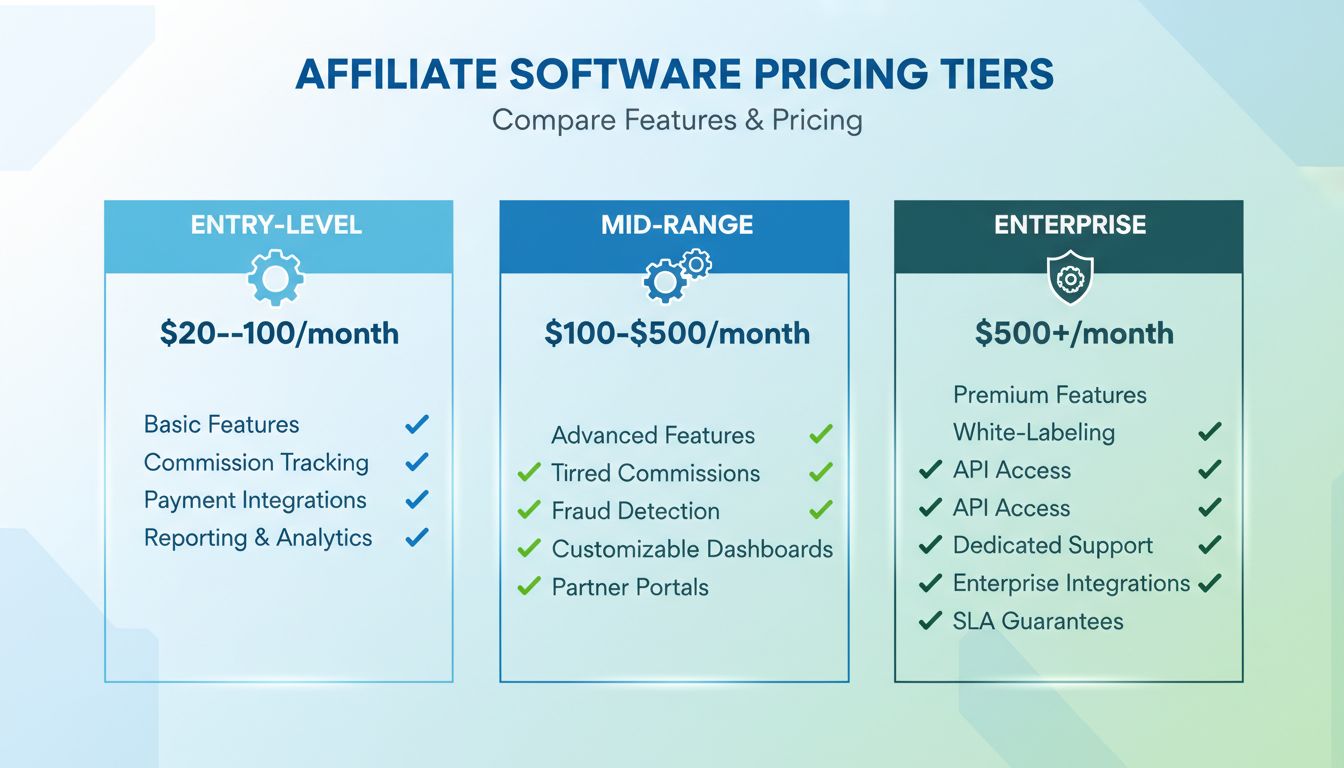
Discover affiliate software pricing in 2025. Learn about entry-level plans ($20-$100/month), mid-range solutions ($100-$500/month), and enterprise platforms. Co...

Discover the most common affiliate payment agreements including PPS, PPL, and PPC. Learn how each model works and which is best for you.
Join our community of happy clients and provide excellent customer support with Post Affiliate Pro.




Cookie Consent
We use cookies to enhance your browsing experience and analyze our traffic. See our privacy policy.