



Over 80% of Brands Use Affiliate Marketing: Why It's Essential for Growth
why over 80% of brands use affiliate marketing. Learn statistics, benefits, ROI, and how to launch a successful affiliate program with PostAffiliatePro.
9 min read


Discover that 80% of brands use affiliate marketing. Explore market size, growth trends, and why affiliate programs are essential for modern businesses in 2026.
Affiliate marketing has become one of the most powerful and widely adopted customer acquisition strategies in the digital business landscape. An impressive 80-81% of brands worldwide now use affiliate marketing as part of their overall marketing strategy, making it a mainstream channel rather than a niche tactic. Affiliate marketing is a performance-based model where businesses reward partners (affiliates) for driving specific actions—such as sales, leads, or clicks—creating a mutually beneficial relationship that aligns incentives perfectly. This explosive adoption stems from the channel’s inherent cost-effectiveness, measurability, and ability to scale revenue without significant upfront investment. As businesses continue to seek efficient ways to acquire customers in an increasingly competitive digital marketplace, affiliate marketing has proven itself as an indispensable tool for growth, making it essential for any brand serious about maximizing their market reach and revenue potential.

Businesses embrace affiliate marketing for a diverse range of strategic reasons, each contributing to their overall growth objectives and bottom-line performance. The primary drivers include cost-effectiveness (paying only for actual results), rapid customer acquisition at scale, diversified revenue streams, and enhanced brand awareness through trusted partner networks. Companies recognize that affiliate programs allow them to tap into existing audiences and leverage the credibility of established publishers and influencers without bearing the full cost of traditional advertising. The flexibility of affiliate marketing also appeals to businesses of all sizes—from bootstrapped startups to Fortune 500 companies—as it requires minimal upfront investment while offering unlimited scaling potential. Below is a breakdown of the primary business goals driving affiliate program adoption:
| Business Goal | Percentage of Programs | Description |
|---|---|---|
| Increase Sales Revenue | 78% | Direct revenue generation through affiliate-driven transactions and conversions |
| Customer Acquisition | 72% | Expanding customer base and reaching new market segments efficiently |
| Brand Awareness | 61% | Building brand recognition and credibility through partner endorsements |
| Cost-Effective Marketing | 58% | Reducing customer acquisition costs compared to traditional advertising channels |
| Market Expansion | 45% | Entering new geographic markets and customer demographics through local affiliates |
| Product Launch Support | 38% | Accelerating adoption and visibility for new products and service offerings |

Set up advanced tracking in minutes. No credit card required.
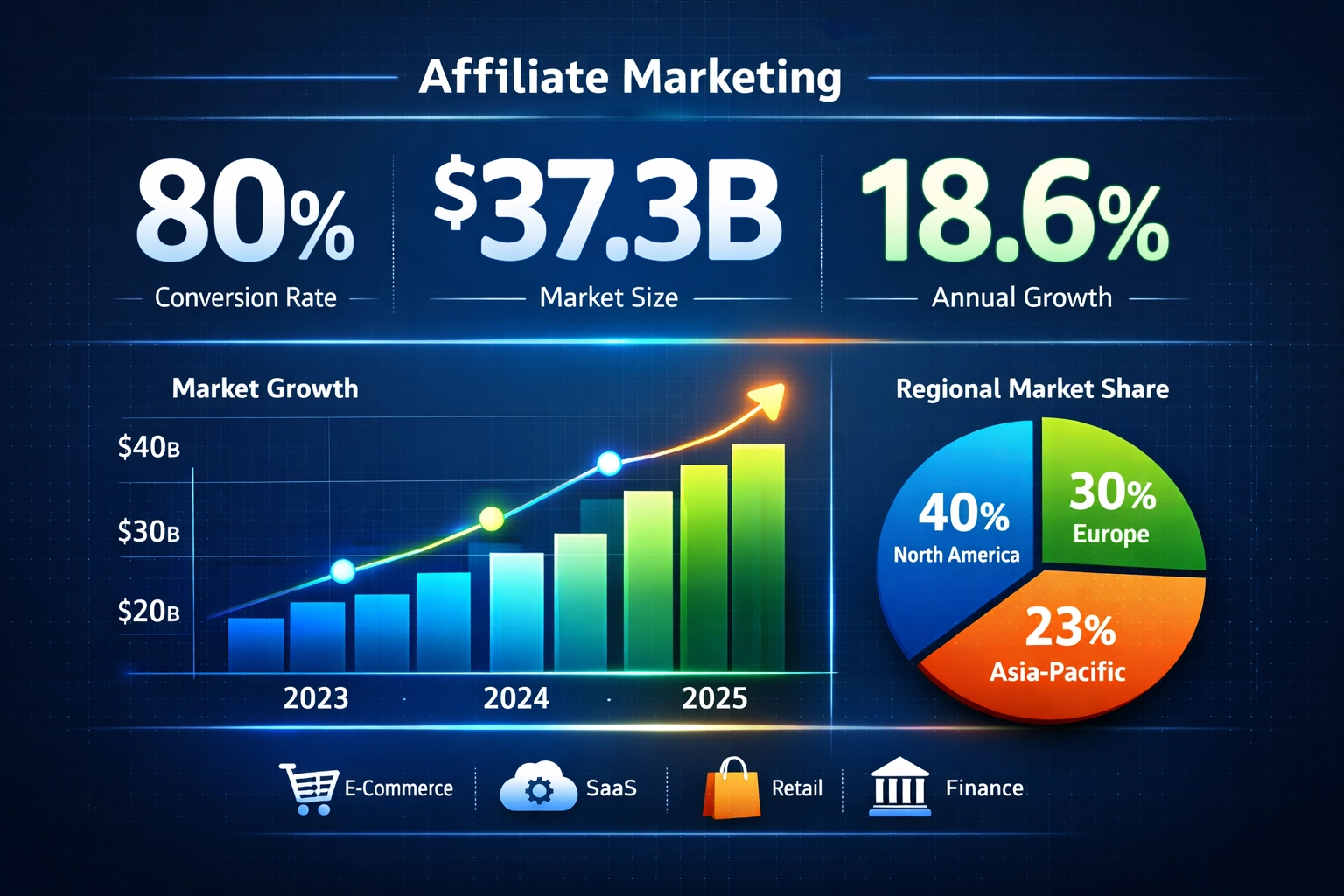
The affiliate marketing industry has experienced remarkable growth and shows no signs of slowing down in the coming years. The global affiliate marketing market was valued at approximately $18.5 billion in 2023 and is projected to reach $37.3 billion by 2026, representing a compound annual growth rate (CAGR) of 8-18.6% depending on regional factors and market conditions. This explosive expansion reflects the increasing recognition by businesses that affiliate marketing delivers measurable ROI and sustainable competitive advantages. Geographically, the market is distributed across major regions with North America commanding approximately 40% of the global market share, followed by Europe at 30%, and the rapidly growing Asia-Pacific region at 23%, with the remaining 7% spread across emerging markets. The growth trajectory is particularly pronounced in emerging economies where digital infrastructure is expanding and affiliate networks are becoming increasingly sophisticated. These statistics underscore affiliate marketing’s transformation from a supplementary channel into a core component of modern marketing strategies.
Different business categories experience unique advantages when implementing affiliate marketing programs tailored to their specific models and customer acquisition challenges. E-commerce businesses leverage affiliate networks to drive product sales through content creators, deal sites, and comparison platforms, often seeing 20-30% of their online revenue attributed to affiliate channels. SaaS companies benefit tremendously from affiliate marketing by partnering with tech bloggers, review sites, and industry publications that introduce their software to qualified prospects, reducing customer acquisition costs significantly. Digital product creators—including online course platforms, software tools, and digital downloads—use affiliates to reach niche audiences and build sustainable passive revenue streams with minimal operational overhead. Retail and fashion brands partner with lifestyle influencers and fashion bloggers to showcase products authentically, driving both immediate sales and long-term brand loyalty. Travel and hospitality companies utilize affiliate networks to reach travel enthusiasts and booking platforms, capitalizing on high-commission opportunities and seasonal demand fluctuations. Financial services and fintech companies work with personal finance bloggers and comparison platforms to acquire customers in a highly competitive, trust-dependent industry. Each sector discovers that affiliate marketing’s performance-based nature makes it an ideal fit for their specific business objectives and customer acquisition strategies.
Be the first to know about new features and product updates.
While affiliate marketing offers tremendous opportunities, businesses must navigate several legitimate challenges to build sustainable, profitable programs. Fraud and invalid traffic remain significant concerns, with 67% of marketers reporting concerns about affiliate fraud, including click fraud, cookie stuffing, and incentivized traffic that doesn’t convert into genuine customers. Attribution complexity presents another obstacle, as tracking customer journeys across multiple touchpoints and devices requires sophisticated technology and clear attribution models. Traffic quality varies dramatically across affiliate networks, and businesses must invest time in vetting partners and monitoring performance metrics to ensure they’re paying for legitimate, high-quality traffic. Commission structures can become complicated when managing hundreds or thousands of affiliates with different rates, terms, and performance tiers. However, these challenges are far from insurmountable—modern affiliate management platforms provide fraud detection tools, real-time analytics, and automated compliance monitoring that significantly mitigate these risks. By implementing proper governance, using reputable affiliate networks, and leveraging advanced tracking technology, businesses can build trustworthy programs that deliver consistent, profitable results.

The affiliate marketing landscape is rapidly evolving, driven by technological advancement and changing consumer behavior patterns that present exciting opportunities for forward-thinking businesses. Artificial intelligence adoption is accelerating, with 79% of affiliates planning to integrate AI tools into their strategies for content creation, audience targeting, and performance optimization. Mobile traffic dominance continues to grow, with 62% of affiliate-driven traffic now originating from mobile devices, forcing businesses to ensure their affiliate programs and tracking systems are fully optimized for mobile-first audiences. Influencer marketing and creator partnerships are becoming increasingly sophisticated, blending traditional affiliate relationships with authentic content creation and community engagement. Privacy-first technologies and the deprecation of third-party cookies are reshaping attribution models, pushing the industry toward first-party data strategies and contextual targeting approaches. PostAffiliatePro stands at the forefront of this evolution, providing affiliate management software that integrates AI-powered fraud detection, mobile-optimized tracking, and advanced analytics to help businesses navigate these emerging trends confidently. As we move into 2026, businesses that embrace these technological innovations and adapt their affiliate strategies accordingly will gain significant competitive advantages in customer acquisition and revenue growth.
The statistics are clear: affiliate marketing is no longer optional for businesses seeking sustainable growth. With 80% of brands already leveraging affiliate programs and the market projected to reach $37.3 billion by 2026, the question is no longer whether to use affiliate marketing, but how to implement it effectively. The channel’s performance-based nature, scalability, and proven ROI make it an essential component of any modern marketing strategy. Whether you’re an e-commerce retailer, SaaS company, digital creator, or financial services provider, affiliate marketing offers a cost-effective pathway to customer acquisition and revenue growth. By addressing challenges through proper governance, fraud detection, and advanced analytics, businesses can build affiliate programs that deliver consistent, profitable results. The future belongs to brands that recognize affiliate marketing’s transformative potential and invest in the right tools and strategies to maximize it.
Approximately 80-81% of brands worldwide now use affiliate marketing as part of their marketing strategy. This makes it one of the most widely adopted customer acquisition channels globally, with adoption rates continuing to grow across all business sizes and industries.
Businesses prefer affiliate marketing because it's performance-based (you only pay for results), cost-effective compared to traditional advertising, highly scalable, and provides access to new audiences through established partners. It also offers measurable ROI and requires minimal upfront investment.
The global affiliate marketing industry was valued at approximately $18.5 billion in 2023 and is projected to reach $37.3 billion by 2026, with a compound annual growth rate (CAGR) of 8-18.6%. North America leads with 40% of the market share, followed by Europe at 30% and Asia-Pacific at 23%.
E-commerce, SaaS, digital products, retail, travel, and finance industries see the greatest benefits from affiliate marketing. Retail generates 44% of all affiliate marketing revenue, followed by telecom/media at 25% and travel/leisure at 16%.
Key challenges include affiliate fraud (67% of marketers are concerned), traffic quality issues, attribution complexity across multiple touchpoints, and commission management. However, modern affiliate management platforms with fraud detection and advanced analytics can effectively mitigate these risks.
Businesses typically earn an average ROI of $6.50 to $15 for every $1 spent on affiliate marketing, with top-performing campaigns achieving up to 1400% ROI. The exact return depends on industry, affiliate quality, commission structure, and program management.
Key trends include AI adoption (79% of affiliates use AI tools), mobile dominance (62% of traffic from mobile), influencer partnerships, privacy-first tracking solutions, and first-party data strategies. Businesses are also increasingly using advanced analytics and fraud detection technologies.
PostAffiliatePro provides comprehensive affiliate management software with AI-powered fraud detection, real-time analytics, mobile-optimized tracking, automated commission calculations, and seamless integrations with major e-commerce platforms. It helps businesses scale their affiliate programs efficiently while maintaining quality and compliance.
PostAffiliatePro makes it easy to manage, track, and scale your affiliate marketing program with advanced fraud detection, real-time analytics, and seamless integrations.
why over 80% of brands use affiliate marketing. Learn statistics, benefits, ROI, and how to launch a successful affiliate program with PostAffiliatePro.
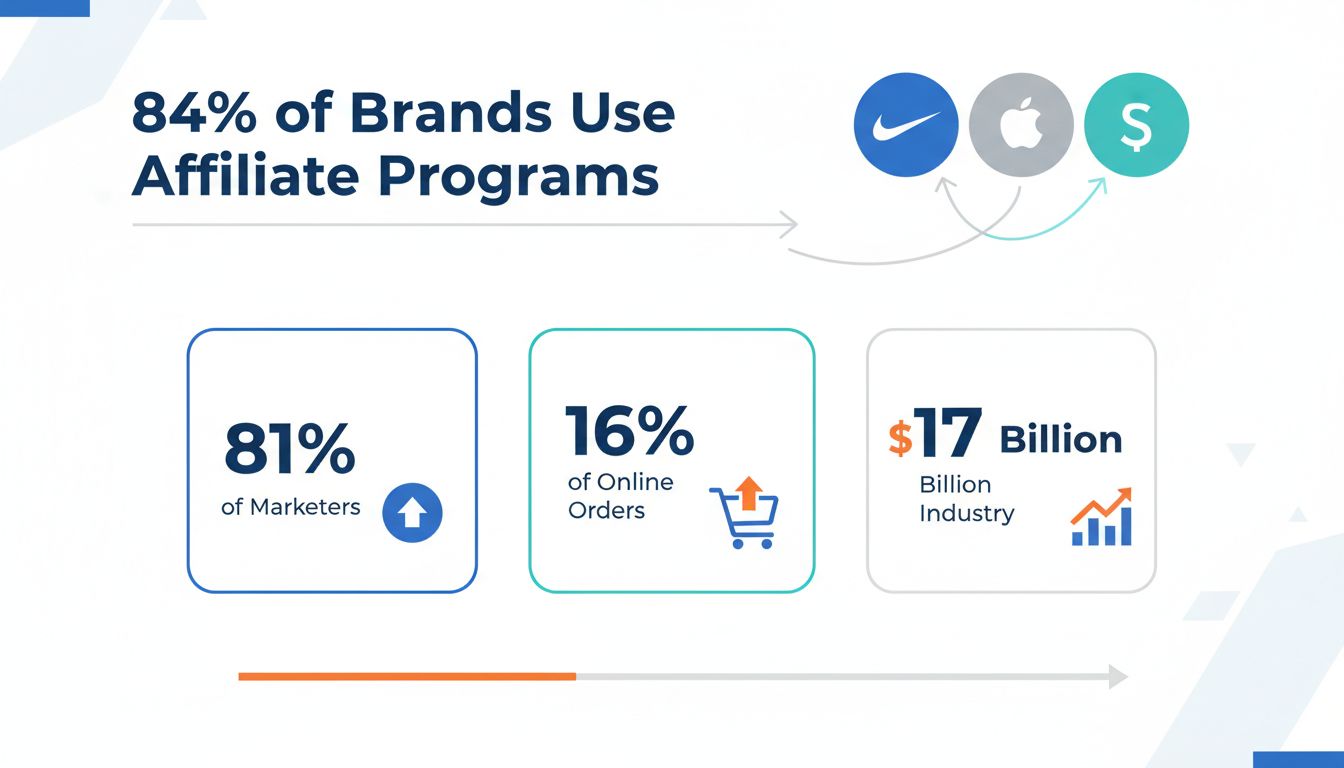
Discover that 84% of brands use affiliate programs in 2025. Learn why major companies like Nike, Apple, and Sephora leverage affiliate marketing for growth and ...
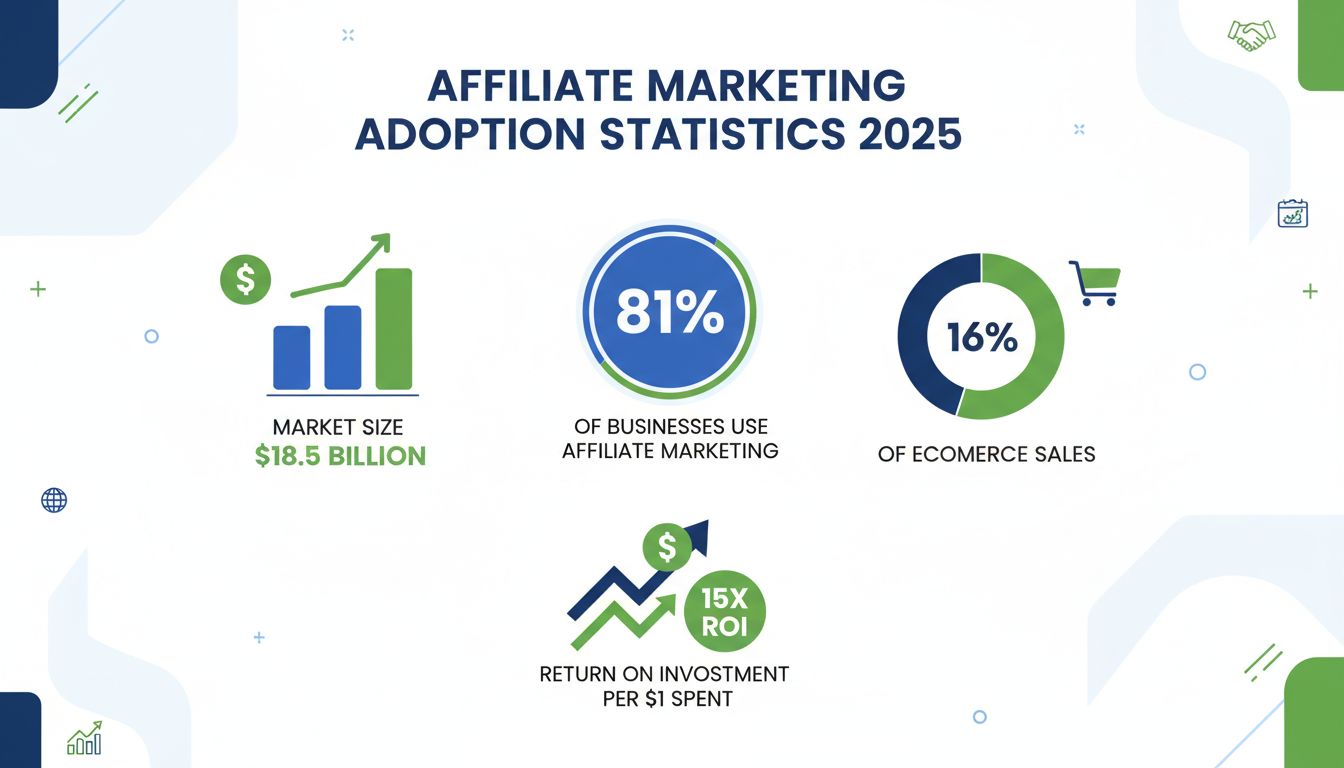
Discover current affiliate marketing adoption rates: 81% of businesses use affiliate marketing. Learn key statistics, ROI data, and industry trends for 2025.
Join our community of happy clients and provide excellent customer support with Post Affiliate Pro.




Cookie Consent
We use cookies to enhance your browsing experience and analyze our traffic. See our privacy policy.