


What is Inbound Marketing?
Learn what inbound marketing is and how it creates value for customers through tailored experiences and valuable content. Discover strategies to attract, engage...
10 min read

Discover why goal setting is crucial for inbound marketing success. Learn SMART goals framework, case studies, and how to measure marketing ROI.
Without clear objectives, marketing efforts become scattered, reactive, and ultimately ineffective. Goal setting is the cornerstone of successful inbound marketing, providing direction, focus, and measurable outcomes that drive business growth. Research consistently demonstrates that organizations with clearly defined marketing goals achieve significantly higher success rates than those operating without them. Companies that establish specific, written goals are 50% more likely to achieve higher revenue growth compared to their counterparts without formal goal-setting practices. When your marketing team understands what they’re working toward, they can allocate resources strategically, prioritize high-impact activities, and demonstrate clear ROI to stakeholders.
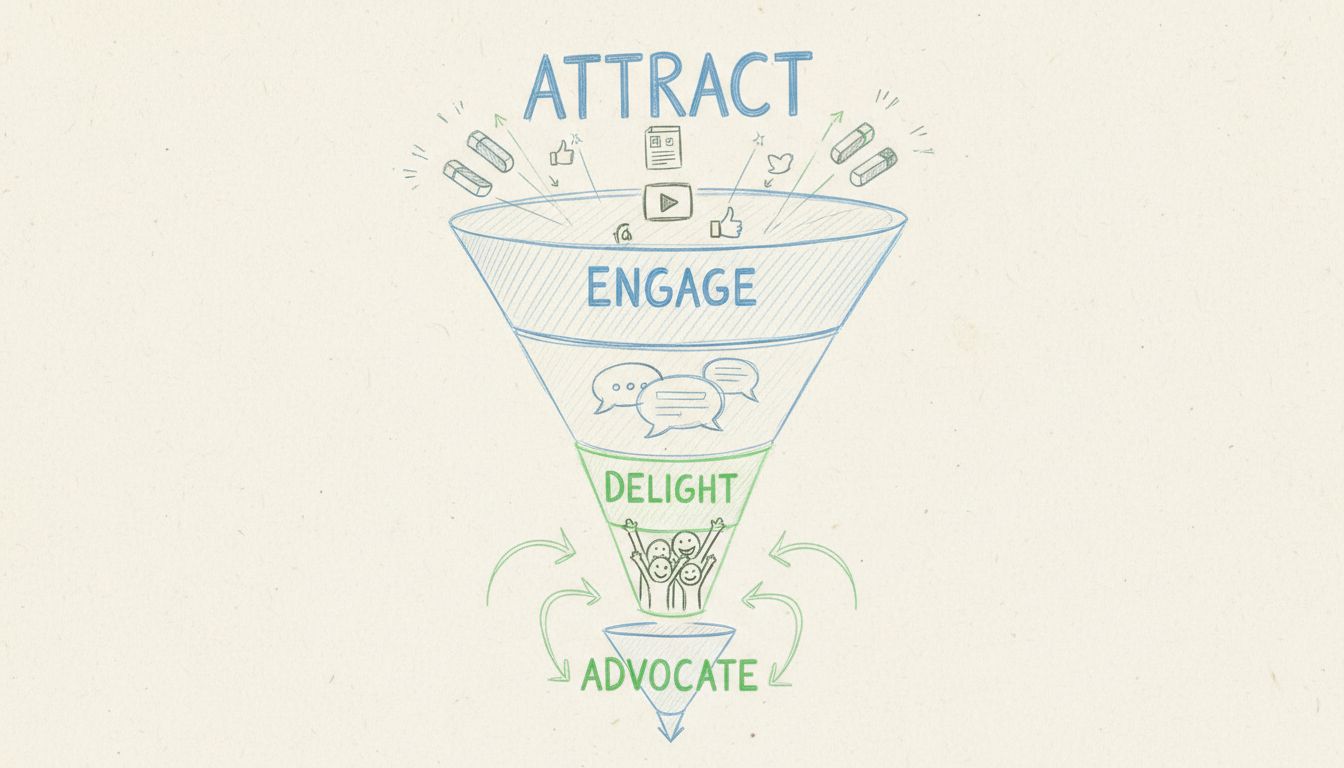
Inbound marketing operates on three fundamental pillars that work together to attract, engage, and delight customers throughout their journey. The Attract phase focuses on drawing the right audience to your business through valuable content, SEO optimization, and strategic distribution across multiple channels. The Engage phase involves nurturing relationships with prospects through personalized communication, targeted messaging, and meaningful interactions that build trust and credibility. The Delight phase ensures customer satisfaction and loyalty by providing exceptional service, continued value, and experiences that turn customers into brand advocates. Each pillar requires distinct goals and metrics to measure success, yet they must work in harmony to create a cohesive customer experience. Understanding how these pillars interconnect allows you to set comprehensive goals that address every stage of the customer lifecycle. By establishing clear objectives for each pillar, you create a roadmap that guides your entire marketing organization toward unified success.
| Pillar | Primary Focus | Goal Example | Key Metrics |
|---|---|---|---|
| Attract | Drawing qualified audience | Increase organic traffic by 40% | Website visitors, keyword rankings, content reach |
| Engage | Building relationships | Generate 500 qualified leads monthly | Lead quality score, email engagement rate, time on page |
| Delight | Creating loyalty & advocacy | Achieve 85% customer satisfaction | NPS score, repeat purchase rate, customer lifetime value |

Set up advanced tracking in minutes. No credit card required.
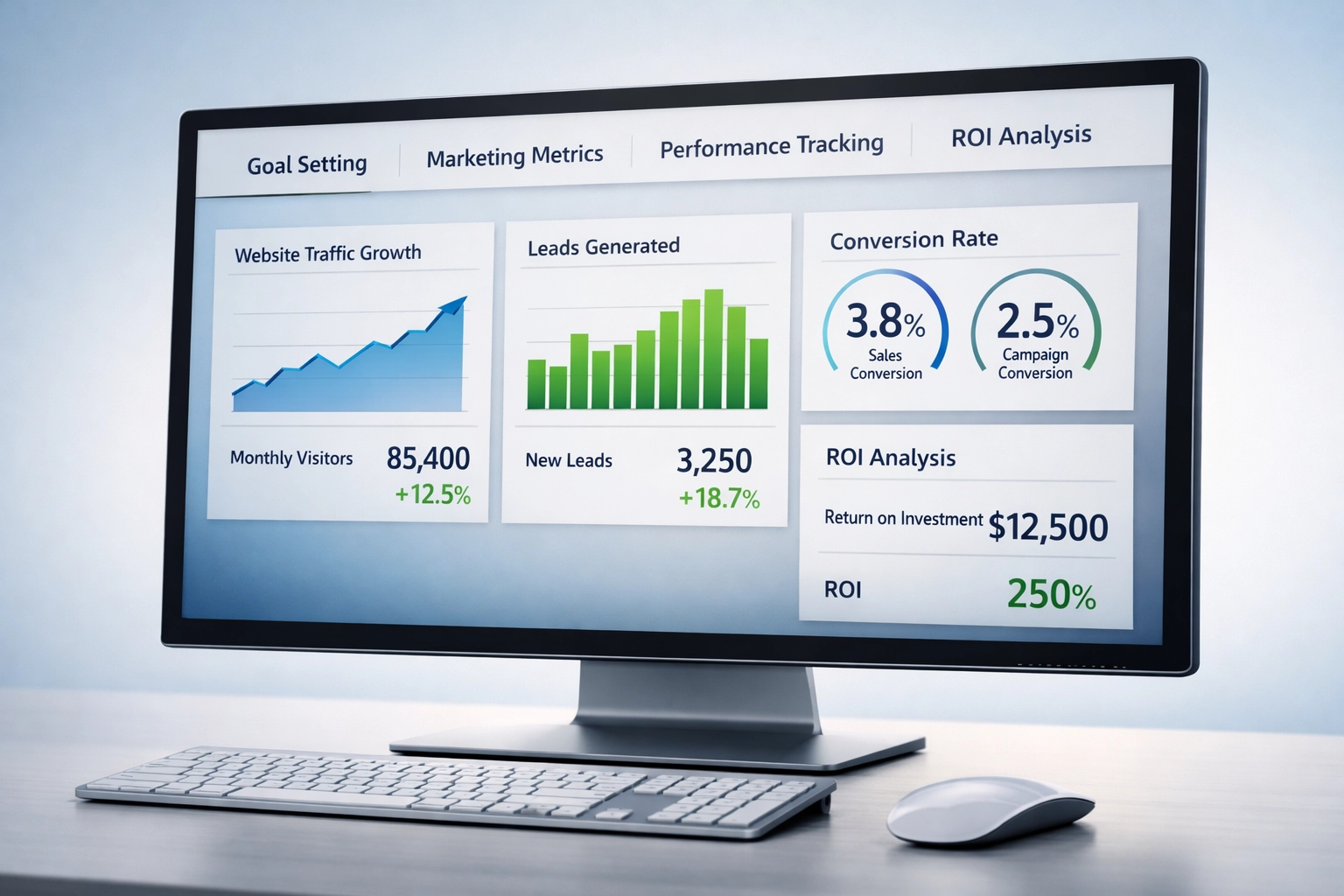
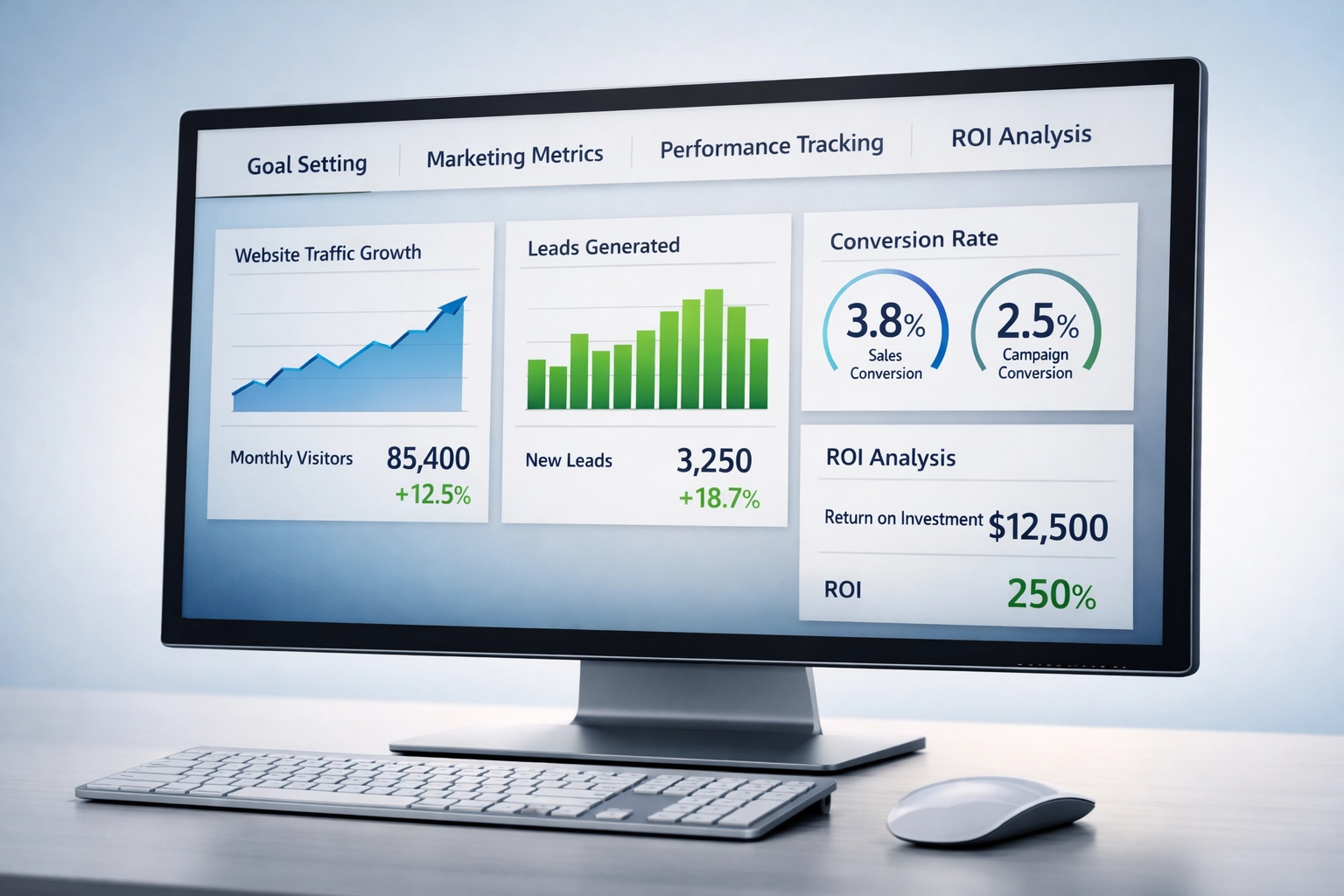
Goal setting transforms marketing from a cost center into a revenue-generating engine with quantifiable impact on your bottom line. When you establish clear objectives, you gain the ability to track website traffic growth, lead generation volume, conversion rates, and customer acquisition costs with precision and accountability. Organizations that implement goal-driven marketing strategies typically see 25-30% improvements in lead quality and 35-40% increases in conversion rates within the first year. Beyond vanity metrics, goal-oriented marketing directly impacts cost per lead (CPL) reduction and customer acquisition cost (CAC) optimization, which are critical for profitability and scalability. The ability to measure these metrics allows you to calculate return on marketing investment (ROMI) accurately, demonstrating the true value of your marketing efforts to executive leadership. Companies that track marketing goals against revenue outcomes discover that aligned goal-setting can increase revenue by 19% compared to organizations without formal goal frameworks. This measurable impact extends beyond immediate revenue, creating a foundation for sustainable, predictable business growth.
The SMART goals framework has become the gold standard for setting marketing objectives that are achievable, measurable, and aligned with business strategy. This proven methodology ensures that every goal you establish has the clarity and structure necessary for successful execution and tracking. Rather than vague aspirations like “increase brand awareness,” SMART goals provide specific, actionable targets that your entire team can understand and work toward with confidence. The framework consists of five critical components that work together to create powerful, results-oriented objectives:
Specific: Define exactly what you want to achieve with precision and clarity. Instead of “improve website traffic,” set a goal like “increase organic search traffic to the homepage by 50% through targeted keyword optimization and content creation.”
Measurable: Establish concrete metrics and KPIs that allow you to track progress objectively. Identify the exact numbers you’ll monitor, such as “track monthly organic traffic through Google Analytics, measuring sessions, users, and conversion rates.”
Achievable: Set ambitious yet realistic goals based on historical data, industry benchmarks, and available resources. If your current organic traffic is 10,000 monthly sessions, a 50% increase to 15,000 is achievable; a 500% increase may require significant additional investment.
Relevant: Ensure your goals directly support broader business objectives and customer needs. A goal to increase organic traffic is relevant if your business strategy emphasizes inbound lead generation and customer acquisition.
Time-bound: Establish clear deadlines and timeframes for achieving your goals. Rather than an open-ended objective, specify “achieve 50% organic traffic increase within 12 months, with quarterly milestones of 10%, 25%, 40%, and 50%.”
Be the first to know about new features and product updates.
Different goal types serve different purposes in your inbound marketing strategy, each with distinct focus areas, metrics, and timelines for achievement:
| Goal Type | Primary Focus | Key Metrics | Timeline |
|---|---|---|---|
| Awareness Goals | Reach and visibility | Website traffic, impressions, reach | 3-6 months |
| Engagement Goals | Content interaction | Click-through rates, time on page, shares | 2-4 months |
| Lead Generation Goals | Qualified prospects | Lead volume, lead quality score, conversion rate | 3-6 months |
| Conversion Goals | Sales pipeline | Sales-qualified leads, deal velocity, close rate | 6-12 months |
| Retention Goals | Customer loyalty | Customer lifetime value, repeat purchase rate, NPS | 12+ months |
Understanding these goal categories and their typical timelines helps you set realistic expectations and allocate resources appropriately across your marketing initiatives.
Goal setting creates a powerful alignment mechanism that synchronizes marketing, sales, and customer service teams around shared objectives and outcomes. When marketing establishes goals for lead generation and quality, sales teams understand exactly what to expect and can plan their pipeline accordingly, reducing friction and improving handoff efficiency. Customer service teams benefit from clear goals around customer satisfaction and retention, enabling them to prioritize support efforts and identify opportunities to delight customers at critical touchpoints. This cross-functional alignment eliminates silos where teams work at cross-purposes, wasting resources and creating customer experience gaps. When all departments understand how their work contributes to unified business goals, accountability increases, collaboration improves, and results accelerate dramatically. The most successful organizations recognize that marketing goals cannot exist in isolation—they must be integrated with sales targets, customer success metrics, and overall business strategy to create a cohesive, high-performing organization.
Establishing effective marketing goals requires a systematic approach that considers your current state, market opportunities, and organizational capacity. Follow this structured process to create goals that drive meaningful results:
Assess Your Current State: Conduct a comprehensive audit of your existing marketing performance, including website traffic, lead generation volume, conversion rates, customer acquisition costs, and revenue attribution. Analyze historical data from the past 12-24 months to identify trends, seasonal patterns, and areas of strength or weakness that will inform realistic goal-setting.
Define Specific Objectives: Move beyond broad aspirations to articulate precisely what you want to achieve. Instead of “improve marketing performance,” specify “increase qualified lead generation by 35% while reducing cost per lead by 20% through enhanced targeting and content optimization.”
Establish Measurable Metrics: Identify the exact KPIs you’ll track to measure progress toward each goal. Determine which tools will capture this data, how frequently you’ll review metrics, and who owns responsibility for tracking and reporting.
Ensure Attainability: Validate that your goals are realistic given your current resources, team capacity, budget, and market conditions. Consider industry benchmarks and competitor performance to calibrate your targets appropriately.
Confirm Relevancy: Verify that each goal directly supports your broader business strategy and customer acquisition objectives. Eliminate goals that don’t contribute meaningfully to revenue growth or strategic priorities.
Set Time-Bound Milestones: Break annual goals into quarterly or monthly milestones that create momentum and allow for course correction. Establish specific deadlines for each phase of goal achievement, creating urgency and accountability.
Communicate Transparently: Share goals across your organization, explaining the rationale, expected outcomes, and how individual team members contribute to success. Transparent communication builds buy-in and ensures everyone understands their role.
Document and Baseline: Create a formal record of your goals, baseline metrics, and target outcomes. This documentation serves as your reference point for tracking progress and evaluating success at the end of your goal period.
Even well-intentioned organizations encounter obstacles when implementing goal-driven marketing strategies, but these challenges are manageable with proper planning and awareness. Overambitious goals represent one of the most common pitfalls, where teams set targets that exceed realistic capacity or market opportunity, leading to demoralization and failure. The solution is grounding goals in historical data and industry benchmarks, ensuring targets stretch your team without breaking them. Lack of cross-functional alignment occurs when marketing sets goals independently without input from sales, customer service, or executive leadership, resulting in misaligned priorities and wasted effort. Combat this by establishing collaborative goal-setting processes that incorporate input from all stakeholders and ensure goals support unified business objectives. Inadequate measurement infrastructure prevents teams from tracking progress effectively, making it impossible to know whether goals are being achieved or require adjustment. Invest in proper analytics tools and dashboards that provide real-time visibility into key metrics. Inflexibility and rigidity can trap organizations in goals that no longer make sense due to market changes, competitive shifts, or internal pivots. Build quarterly review cycles into your goal-setting process, allowing for adjustments when circumstances warrant. By anticipating these challenges and implementing preventive measures, you create a goal-setting culture that drives consistent, sustainable success.
Organizations across industries have transformed their marketing performance through disciplined goal-setting and execution. Fatebenefratelli, a healthcare organization, implemented a comprehensive inbound marketing strategy with clearly defined goals around content creation and audience engagement. By establishing specific objectives for blog traffic, lead generation, and patient acquisition, they achieved a remarkable 150% increase in website traffic within 18 months, dramatically expanding their reach and patient base. This success directly translated to increased patient inquiries and improved brand visibility in their competitive healthcare market. Harris Teeter, a regional grocery chain, recognized that foot traffic and customer engagement were critical to their business model. They set ambitious goals around local SEO, community content, and customer experience optimization, resulting in 15,000 additional store visits monthly and significantly improved customer loyalty metrics. The goal-driven approach allowed them to compete more effectively with larger national chains by leveraging local market knowledge and community relationships. CYRO, a manufacturing company, established aggressive growth goals centered on lead generation and sales enablement through inbound marketing. Through focused goal-setting around content marketing, email nurturing, and sales alignment, they achieved an impressive 146% increase in revenue over two years, transforming their market position and profitability. These success stories demonstrate that regardless of industry or company size, clear goal-setting combined with disciplined execution produces measurable, transformative business results.

Goal achievement doesn’t end once you’ve established your objectives—continuous monitoring and optimization are essential to maintaining momentum and adapting to changing market conditions. Implement a regular review cadence, ideally monthly or quarterly, where you examine actual performance against your established targets and identify variances that require attention. Track your key performance indicators (KPIs) consistently using dashboards and reporting tools that provide real-time visibility into progress, enabling quick identification of underperforming areas. When you notice that certain goals are tracking ahead of schedule, investigate what’s working and consider how to accelerate or expand those successful initiatives. Conversely, when goals are falling behind, conduct root cause analysis to understand whether the issue stems from execution gaps, unrealistic targets, market changes, or resource constraints. This diagnostic approach allows you to make informed adjustments rather than simply accepting failure or pushing harder with ineffective tactics. Flexibility within structure is the key—maintain commitment to your overall strategic goals while remaining willing to adjust tactics, timelines, and resource allocation based on real-world performance data. Organizations that embrace continuous optimization see 20-30% better goal achievement rates compared to those that set goals and ignore them until year-end reviews.
Modern marketing technology has made goal tracking and performance monitoring more accessible and actionable than ever before. Analytics platforms, CRM systems, and marketing automation tools provide the infrastructure necessary to capture, analyze, and visualize data that demonstrates progress toward your objectives. These technologies eliminate manual tracking processes, reduce human error, and enable real-time dashboards that keep your entire team informed about performance status. For organizations managing affiliate marketing programs and partner relationships, specialized software solutions streamline goal tracking across distributed networks of partners and channels. PostAffiliatePro, for example, provides comprehensive tracking and reporting capabilities that allow you to set, monitor, and optimize goals across your entire affiliate ecosystem, ensuring that partner performance aligns with your broader marketing objectives. The right technology stack transforms goal-setting from a theoretical exercise into a practical, data-driven discipline that drives accountability and results. When selecting tools, prioritize platforms that integrate seamlessly with your existing systems, provide customizable reporting, and offer the flexibility to track metrics specific to your business model and goals.
PostAffiliatePro helps you set, track, and achieve your marketing objectives with comprehensive affiliate management and performance analytics. Start measuring what matters today.
Learn what inbound marketing is and how it creates value for customers through tailored experiences and valuable content. Discover strategies to attract, engage...

The goal of inbound marketing is to drive customers to businesses through the creation of value-added content and experiences. Read on for more details.
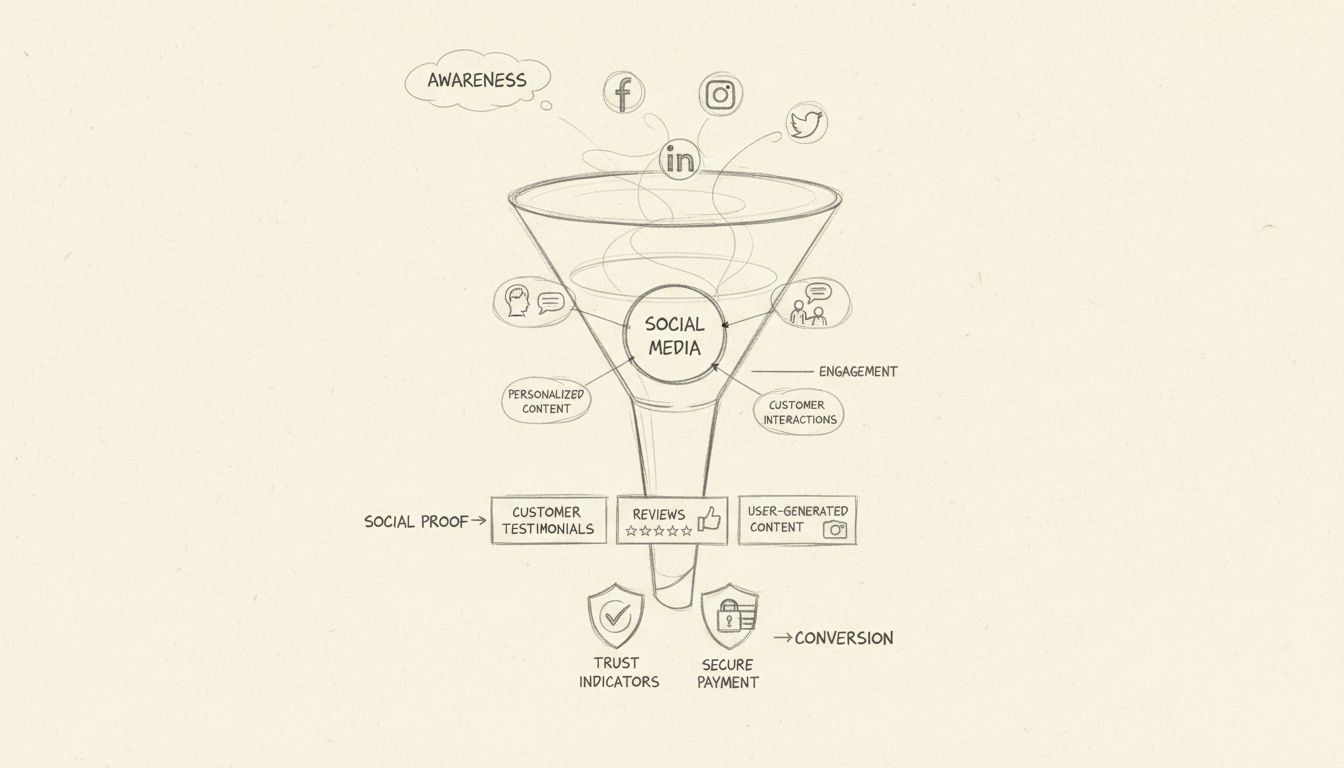
Discover why social media is crucial for inbound marketing success. Learn how personalized content, social proof, and customer engagement drive conversions and ...
Join our community of happy clients and provide excellent customer support with Post Affiliate Pro.




Cookie Consent
We use cookies to enhance your browsing experience and analyze our traffic. See our privacy policy.