


GDPR Compliance for Affiliates: Post Affiliate Pro Guide
Learn how GDPR affects affiliate marketers using Post Affiliate Pro. Understand data protection, consent rules, DPO roles, and compliance best practices.
12 min read


Learn how to legally store EU citizen data under GDPR. Discover adequacy decisions, data transfer mechanisms, security requirements, and best practices.

The General Data Protection Regulation (GDPR) fundamentally transformed how organizations handle personal data belonging to European Union citizens. Since its enforcement on May 25, 2018, GDPR has established the world’s most stringent data protection framework, affecting not only EU-based companies but any organization processing data of EU residents. Data storage represents one of the most critical aspects of GDPR compliance, as improper storage practices can expose sensitive information and result in devastating consequences. Organizations that fail to comply with GDPR storage requirements face fines up to €20 million or 4% of annual global turnover, whichever is higher. Understanding where, how, and for how long you can store EU citizen data is essential for maintaining legal compliance and building trust with your customers.
The GDPR establishes four fundamental principles that directly govern how personal data must be stored: data minimization, integrity, confidentiality, and storage limitation. Data minimization requires organizations to collect and store only the personal data that is necessary for the specified purpose, eliminating unnecessary information that increases risk and compliance burden. Integrity demands that data remains accurate, complete, and unaltered throughout its storage lifecycle, while confidentiality ensures that only authorized individuals can access stored information. Storage limitation mandates that personal data cannot be kept indefinitely; it must be deleted or anonymized once it no longer serves its original purpose.
| GDPR Storage Principle | Definition | Key Requirement |
|---|---|---|
| Data Minimization | Collect only necessary data | Store minimal information relevant to purpose |
| Integrity | Data accuracy and completeness | Maintain data quality and prevent unauthorized changes |
| Confidentiality | Restricted access to authorized parties | Implement strong access controls and encryption |
| Storage Limitation | Time-bound data retention | Delete data when no longer needed |
These principles work together to create a comprehensive framework that protects EU citizens while allowing organizations to operate efficiently. Organizations must document their storage practices, retention schedules, and security measures to demonstrate compliance during audits or investigations. The burden of proof lies with the organization, meaning you must be able to show regulators exactly how you’re meeting each requirement.

Set up advanced tracking in minutes. No credit card required.
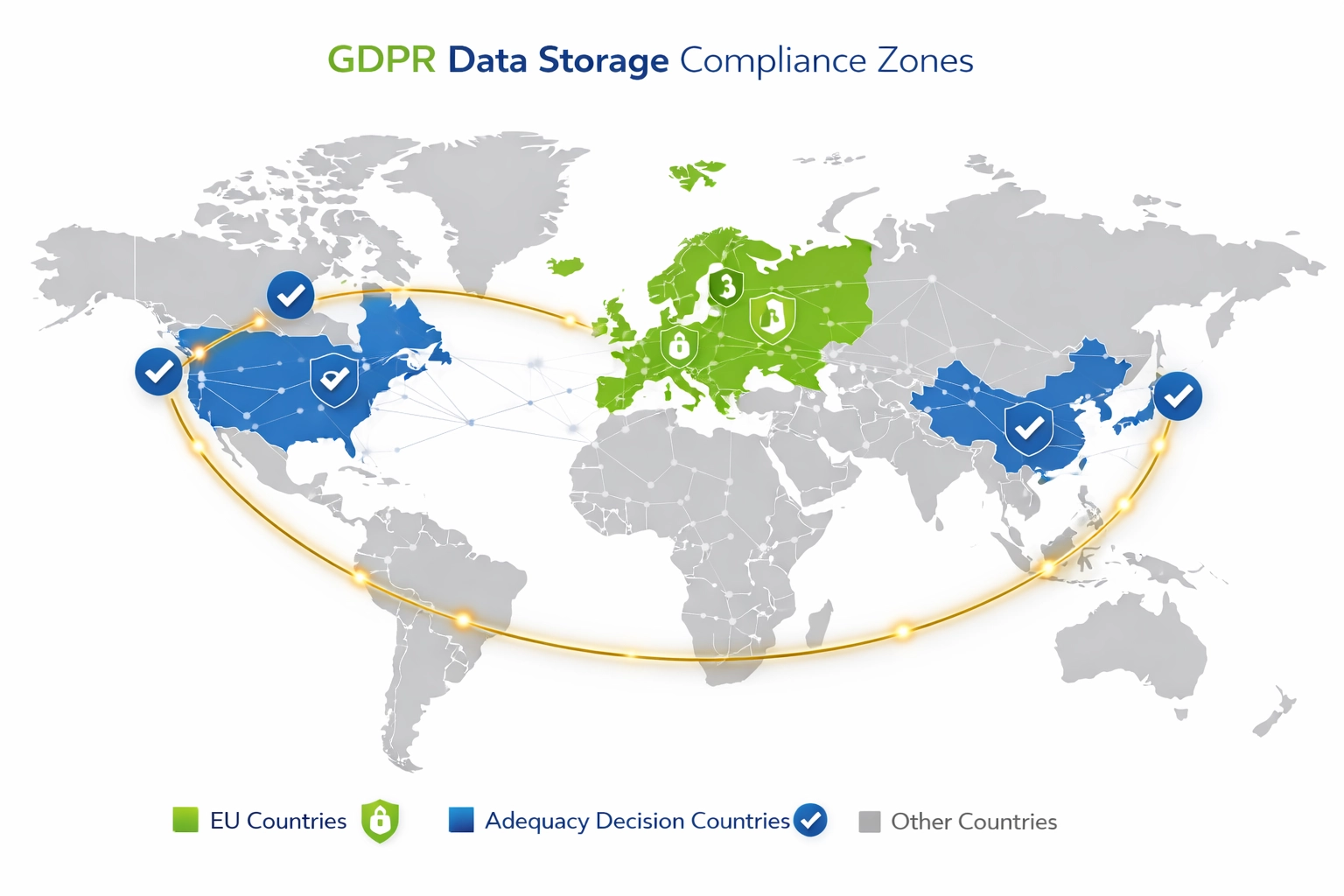
Determining the appropriate location for storing EU citizen data is one of the most complex aspects of GDPR compliance. The safest option is storing data within the European Union or European Economic Area (EEA), which includes countries like Iceland, Liechtenstein, and Norway that have adopted equivalent data protection standards. However, organizations can also store data in countries that the European Commission has deemed to have “adequate” data protection levels, such as Canada, Japan, and South Korea. For countries without adequacy decisions, organizations must implement additional safeguards like Standard Contractual Clauses (SCCs) or Binding Corporate Rules (BCRs) to legally transfer and store data. The landscape of international data transfers has become increasingly complex following court rulings that have challenged the validity of certain transfer mechanisms, making it essential to stay informed about current legal developments.
An adequacy decision is a formal determination by the European Commission that a non-EU country provides a level of data protection essentially equivalent to that guaranteed by GDPR. These decisions are not granted lightly; the Commission conducts thorough assessments examining the country’s legal framework, enforcement mechanisms, and practical implementation of data protection principles. Currently, only a handful of countries have adequacy decisions, including the United Kingdom, Canada, Japan, South Korea, and Israel, among others. The benefits of adequacy decisions are substantial: organizations can transfer personal data to these countries without implementing additional transfer mechanisms, significantly simplifying compliance procedures and reducing administrative overhead. However, adequacy decisions can be revoked if a country’s data protection standards deteriorate, as demonstrated by the suspension of the Privacy Shield framework in 2020, which required thousands of companies to quickly restructure their data transfer arrangements.
Be the first to know about new features and product updates.
When transferring EU citizen data to countries without adequacy decisions, organizations must rely on approved transfer mechanisms that provide contractual safeguards. The primary mechanisms available include:
Each mechanism has distinct advantages and limitations. SCCs are the most commonly used option for smaller organizations and one-off transfers, while BCRs suit large multinational corporations with complex data flows. Organizations must conduct Transfer Impact Assessments to evaluate whether the destination country’s laws might compromise the effectiveness of these mechanisms, particularly regarding government surveillance and data access requests.
Implementing robust security measures is not optional under GDPR; it’s a mandatory requirement that directly impacts your organization’s compliance status and liability exposure. Encryption represents the gold standard for data protection, with organizations required to encrypt personal data both in transit and at rest using industry-standard algorithms like AES-256. Pseudonymization offers another critical layer of protection by replacing identifying information with artificial identifiers, making it significantly harder for unauthorized parties to connect data to specific individuals. Access controls must be strictly enforced through role-based permissions, multi-factor authentication, and regular audits of who accesses what data and when. Organizations should also implement comprehensive employee training programs to ensure staff understand data protection obligations, recognize security threats, and follow proper data handling procedures. Regular security assessments, penetration testing, and vulnerability management programs help identify and remediate weaknesses before they can be exploited by malicious actors.
GDPR’s storage limitation principle requires organizations to establish clear retention schedules that specify how long personal data will be kept for each processing purpose. The appropriate retention period depends entirely on the purpose for which data was collected; customer contact information needed for ongoing service delivery may be retained for the duration of the business relationship, while marketing data might be deleted after a single campaign. Organizations must implement automated deletion processes that remove data when retention periods expire, rather than relying on manual procedures that are prone to error and oversight. Many organizations struggle with this requirement because they lack proper systems to track retention dates and execute timely deletions across multiple databases and storage systems. Implementing a data inventory system that documents what data you hold, where it’s stored, why you’re storing it, and when it should be deleted is essential for demonstrating compliance and avoiding the accumulation of unnecessary personal information.
GDPR recognizes that certain categories of personal data require heightened protection due to their sensitive nature and potential for discrimination or harm. Special categories of data include information about race, ethnicity, political opinions, religious beliefs, trade union membership, genetic data, biometric data, health information, and data concerning sex life or sexual orientation. Processing this data is generally prohibited unless the organization has a specific legal basis, such as explicit consent, employment law requirements, or vital interests protection. Organizations handling sensitive data must implement additional safeguards beyond standard security measures, including stricter access controls that limit knowledge of sensitive information to only those employees who absolutely require it. Data protection impact assessments become mandatory when processing special categories of data, requiring organizations to conduct thorough evaluations of risks and implement mitigation strategies before processing begins. The consequences of mishandling sensitive data are particularly severe, with regulators showing little tolerance for breaches involving health information, biometric data, or other protected categories.
Achieving and maintaining GDPR compliance requires a systematic approach that addresses all key requirements. Organizations should follow these actionable steps:
Organizations frequently make preventable mistakes that expose them to regulatory action and data breaches. One of the most common errors is indefinite data retention, where organizations keep personal data far longer than necessary because they lack proper deletion procedures or fear they might need it someday. Another critical mistake is storing EU citizen data in countries without adequate safeguards or proper transfer mechanisms in place, often due to misunderstanding the legal requirements or underestimating the complexity of international data transfers. Many organizations fail to encrypt sensitive data, believing that firewalls and access controls provide sufficient protection, only to discover during a breach that unencrypted data can be easily exploited. Inadequate employee training represents another widespread problem; staff members who don’t understand GDPR requirements may inadvertently expose data through careless practices, weak passwords, or falling victim to social engineering attacks. Organizations also frequently neglect to document their compliance efforts, making it impossible to demonstrate accountability when regulators investigate or customers request proof of proper data handling.
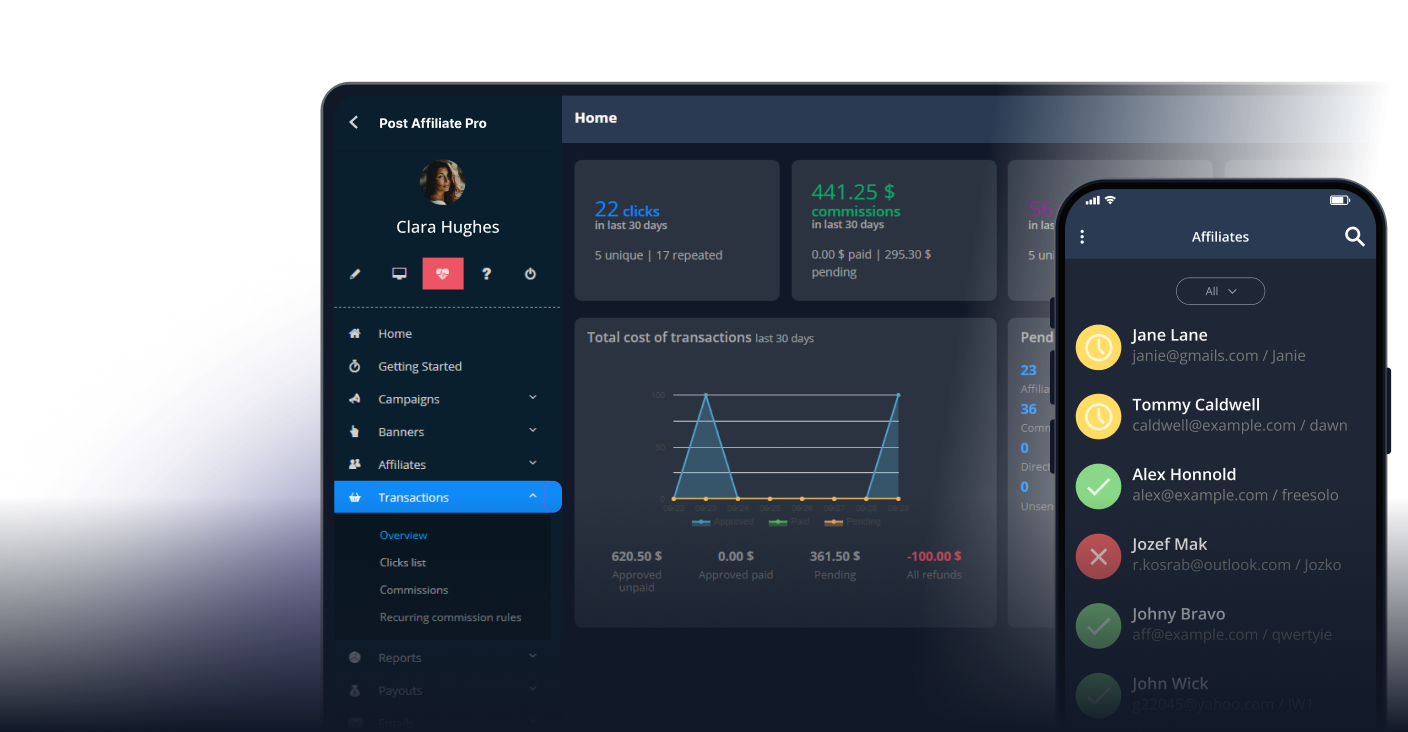
For organizations managing affiliate marketing programs and customer relationships, PostAffiliatePro provides built-in features that simplify GDPR compliance for data storage and processing. The platform includes comprehensive data management tools that help organizations maintain accurate records of personal data, implement proper access controls, and establish clear audit trails documenting who accessed what information and when. PostAffiliatePro’s architecture supports data localization requirements, allowing organizations to store affiliate and customer data within specific geographic regions to comply with local regulations. The platform also facilitates the implementation of data subject rights, enabling customers to easily request access to their data, correct inaccuracies, or request deletion through automated workflows. By centralizing data management and providing transparency into data flows, PostAffiliatePro reduces the complexity of maintaining GDPR compliance across multiple systems and helps organizations demonstrate accountability to regulators and customers alike.
Data transfers to the US are permitted under the EU-US Data Privacy Framework if the receiving organization is certified. For organizations not certified under this framework, you must use Standard Contractual Clauses (SCCs) or Binding Corporate Rules (BCRs) to ensure adequate protection. It's essential to conduct a Transfer Impact Assessment to evaluate whether US surveillance laws might compromise data protection.
The retention period depends on the purpose for which you collected the data. GDPR requires you to delete or anonymize data once it no longer serves its original purpose. For example, customer contact information for ongoing service delivery can be retained for the relationship duration, while marketing data might be deleted after a single campaign. You must establish clear retention schedules for each data category.
An adequacy decision is a formal determination by the European Commission that a non-EU country provides data protection standards equivalent to GDPR. Countries with adequacy decisions (like Canada, Japan, and South Korea) allow free data transfers without additional safeguards like SCCs. This significantly simplifies compliance and reduces administrative overhead for organizations transferring data to these countries.
You need SCCs when transferring personal data to countries without adequacy decisions and you don't have Binding Corporate Rules in place. SCCs are pre-approved contract templates that establish binding obligations between data exporters and importers, ensuring data protection standards are maintained. However, you must also conduct a Transfer Impact Assessment to verify that the destination country's laws won't compromise the effectiveness of SCCs.
Non-compliance with GDPR data storage requirements can result in fines up to €20 million or 4% of annual global turnover, whichever is higher. Beyond financial penalties, organizations face reputation damage, loss of customer trust, operational disruptions, and potential legal action from data subjects. Regulators may also impose restrictions on data processing or require costly remediation measures.
Conduct a comprehensive data audit to identify all personal data you collect and store, then verify that you meet all GDPR requirements: data minimization, integrity, confidentiality, and storage limitation. Implement encryption, access controls, and automated deletion procedures. Document your compliance efforts, conduct Data Protection Impact Assessments for high-risk processing, and maintain detailed records. Consider engaging a data protection consultant for an independent compliance assessment.
Data storage refers to where and how you keep personal data, while data processing encompasses all activities involving personal data (collection, use, analysis, sharing, deletion). Both are regulated by GDPR, but storage specifically focuses on location, security, retention periods, and access controls. You must comply with GDPR requirements for both storage and processing activities.
Yes, you can use cloud storage for GDPR data, but the cloud provider must meet strict security and compliance requirements. You must ensure the provider implements encryption, access controls, and proper data protection measures. If the cloud provider is located outside the EU/EEA, you need adequate safeguards like SCCs or adequacy decisions. Always review the provider's data processing agreement and security certifications before storing sensitive data.
PostAffiliatePro provides built-in GDPR compliance features for secure data storage, access controls, and audit trails. Simplify your data protection obligations with our comprehensive affiliate management platform.
Learn how GDPR affects affiliate marketers using Post Affiliate Pro. Understand data protection, consent rules, DPO roles, and compliance best practices.

GDPR penalties and fines for non-compliance. Learn about the two-tier fine structure, real examples, and how to protect your affiliate business.

GDPR is intended to increase the protection of personal data for EU citizens. See our article for more information.
Join our community of happy clients and provide excellent customer support with Post Affiliate Pro.



Cookie Consent
We use cookies to enhance your browsing experience and analyze our traffic. See our privacy policy.