



What is a Niche in Affiliate Marketing?
Learn what a niche is in affiliate marketing, why it matters, and how to choose the right one. Discover profitable niches and strategies for success.
8 min read


Discover how to find profitable affiliate niches using keyword research, trend analysis, and seasonal opportunities. Learn niche selection strategies.
A niche in affiliate marketing is a specific, focused market segment that you target with your content and promotions. Rather than trying to appeal to everyone interested in “fitness,” you might focus exclusively on “home workout routines for beginners” or “fitness for people over 50.” The affiliate marketing industry is valued at approximately $17 billion and is projected to reach $27.78 billion by 2027, representing a compound annual growth rate of 10%. Choosing the right niche is arguably the most critical decision you’ll make as an affiliate marketer because it determines your competition level, profit potential, and long-term sustainability. A well-chosen niche allows you to build authority, establish trust with a specific audience, and create content that naturally converts readers into customers. This guide will walk you through the complete process of identifying, validating, and capitalizing on profitable affiliate marketing niches using keyword research, trend analysis, and seasonal opportunities.

Keyword research is the cornerstone of successful niche selection in affiliate marketing. Before you commit to a niche, you need to understand what people are actually searching for and whether they’re ready to buy. Tools like Google Keyword Planner (free), Ahrefs, SEMrush, Ubersuggest, and AnswerThePublic help you discover search volume, competition levels, and keyword variations specific to your potential niche. When conducting keyword research, you’ll encounter three main types of search intent: informational (people seeking knowledge), navigational (people looking for specific websites), and transactional (people ready to make a purchase). For affiliate marketing, you want to focus on transactional keywords that indicate commercial intent, such as “best [product],” “top [service] reviews,” “[product] vs [competitor],” and “[product] alternatives.” These keywords signal that searchers are actively considering a purchase, making them far more valuable than informational keywords. By analyzing search volume and competition for these transactional keywords, you can identify niches with genuine buyer demand and reasonable ranking difficulty.

Set up advanced tracking in minutes. No credit card required.
Identifying a profitable niche requires analyzing several key factors beyond just search volume. Market size matters—you need an audience large enough to generate meaningful income, but not so saturated that competition is impossible. Competition level should be moderate; some competition indicates a healthy market, but excessive competition makes ranking difficult for newcomers. Audience intent and purchasing power are crucial; a niche with 1,000 monthly searches from people ready to spend $500+ is more valuable than 10,000 searches from bargain hunters. High-value products with strong commission potential are essential; promoting $20 products at 5% commission requires massive volume, while promoting $2,000 products at 10% commission is far more sustainable. The best niches combine several characteristics: they solve urgent or expensive problems, have multiple affiliate programs offering competitive commissions (ideally 20-50% or higher), feature products people actively search for, and have room for new competitors to establish authority.
| Niche Category | Market Size | Competition | Avg Commission | Demand Trend |
|---|---|---|---|---|
| SaaS & AI Tools | Very Large | High | 20-50% recurring | ↑ Growing |
| Personal Finance | Very Large | High | $50-200 CPA | → Stable |
| Health & Wellness | Large | Medium | 8-20% | ↑ Growing |
| Remote Work Tools | Large | Medium | 10-30% recurring | ↑ Growing |
| Pet Care | Large | Medium | 10-20% | → Stable |
| E-commerce & Eco | Medium | Medium | 6-15% | ↑ Growing |
Based on current market trends, commission structures, and growth projections, here are the most profitable niches worth considering:
SaaS & AI Tools: The AI revolution has created unprecedented demand for software solutions. These products typically offer 20-50% recurring monthly commissions, meaning you get paid repeatedly for each customer you refer. This niche includes email marketing platforms, project management tools, AI writing assistants, and automation software.
Personal Finance & FinTech: Financial products command some of the highest commissions in affiliate marketing, often $50-200 per lead. This includes credit cards, investment platforms, budgeting apps, and insurance products. The niche is evergreen with consistent demand, though it requires building significant trust with your audience.
Health, Wellness & Longevity: The wellness industry is booming, with consumers willing to pay premium prices for products that improve their health and lifespan. This includes fitness equipment, supplements, sleep optimization products, and biohacking tools. Commissions range from 8-20% on physical products to flat fees for app signups.
Remote Work & Home Office: The permanent shift to remote work has created a massive market for home office equipment, productivity software, and ergonomic furniture. High-ticket items like standing desks and ergonomic chairs offer substantial commissions, while software subscriptions provide recurring revenue.
Pet Care: Pet owners treat their pets like family members and spend generously on their care. This niche includes pet food subscriptions, pet tech (GPS trackers, cameras), pet insurance, and grooming products. The emotional connection pet owners have with their pets drives high engagement and conversion rates.
E-commerce & Sustainability: Growing consumer demand for eco-friendly and ethically-made products creates opportunities in sustainable fashion, zero-waste home products, and eco-friendly alternatives. This values-driven niche attracts loyal customers willing to pay premium prices.
Be the first to know about new features and product updates.
One of the most underutilized strategies in affiliate marketing is capitalizing on seasonal demand spikes. Different niches experience predictable peaks and valleys throughout the year, and smart affiliates time their content and promotions accordingly. Google Trends is your primary tool for identifying these patterns—simply search for keywords related to your niche and observe how interest fluctuates month to month. For example, fitness-related keywords spike dramatically in January (New Year’s resolutions), travel keywords peak before summer vacation and winter holidays, tax-related keywords surge from January through April, and home improvement keywords increase in spring. Fashion and back-to-school products see demand spikes in late summer, while gift-related keywords explode in November and December. Rather than spreading your efforts evenly throughout the year, concentrate your content creation and promotion efforts during these peak periods. Create comprehensive guides, comparison articles, and product reviews 4-6 weeks before each seasonal spike so your content ranks and drives traffic when demand is highest. This seasonal approach can increase your earnings by 200-300% during peak periods compared to off-season months.

Before committing to a niche, conduct thorough competitive analysis to ensure you can realistically rank and earn money. Keyword difficulty metrics from tools like Ahrefs and SEMrush indicate how hard it is to rank for specific keywords; aim for keywords with difficulty scores below 30-40 if you’re new to SEO. Search intent analysis is equally important—ensure the keywords you target have transactional intent (people ready to buy) rather than purely informational intent. Analyze your top 10 competitors for each target keyword: examine their content quality, backlink profiles, domain authority, and monetization strategies. If all top-ranking sites are massive brands with huge budgets, that keyword might be too competitive. Look for “content gaps”—topics your competitors haven’t covered thoroughly—where you can establish authority. Use tools like SimilarWeb to estimate competitor traffic and understand which content types and topics drive the most visitors. Market saturation indicators include the number of affiliate sites already ranking, the quality of existing content, and how many affiliate programs exist in the niche. A healthy niche has 30+ affiliate programs, moderate competition, and room for new voices to establish authority.
Once you’ve identified your niche, you need to find affiliate programs that offer competitive commissions. Affiliate networks like CJ Affiliate, Rakuten, ShareASale, Awin, and Amazon Associates aggregate thousands of merchant programs in one place, making it easy to find products to promote. Many companies also run direct affiliate programs on their own websites, often offering better commission rates than network programs. When evaluating affiliate programs, understand the three main commission structures: flat-fee commissions (you earn a fixed amount per sale or lead), percentage-based commissions (you earn a percentage of the sale price), and recurring commissions (you earn a percentage every month the customer remains active). Recurring commissions are the holy grail of affiliate marketing—they allow you to build passive income that grows over time. When selecting programs, evaluate the cookie duration (how long you’re credited for a sale after someone clicks your link), payment terms (when you receive your earnings), and minimum payout threshold. PostAffiliatePro is an excellent solution for managing multiple affiliate programs, tracking commissions, and optimizing your affiliate marketing efforts across different networks and merchants.
Before investing months of effort into a niche, validate your choice through practical testing. The content ideation test is simple but powerful: can you brainstorm 50 unique blog post or video ideas for your niche? If you struggle to reach 50 ideas, your niche might be too narrow. Conduct audience research by spending time on Reddit, Quora, and niche-specific forums to understand your target audience’s problems, questions, and pain points. Check if at least 30 affiliate programs exist in your niche—this ensures you have enough monetization options. Finally, create a quick validation checklist: Is the audience growing (check Google Trends)? Are people spending money (do affiliate programs exist)? Can you find a specific sub-niche? Do keywords show commercial intent? Can you create 50 content ideas? If you answer “yes” to all five questions, you’ve likely found a viable niche worth pursuing.

Finding a profitable affiliate marketing niche is both an art and a science. It requires combining keyword research data with market analysis, competitive intelligence, and practical validation. The most successful affiliate marketers don’t chase trends or pick niches randomly—they systematically identify underserved markets with genuine buyer demand, establish authority through quality content, and build sustainable income streams. Remember that the average affiliate marketer earns approximately $8,038 monthly, but experienced marketers earn 9.45 times more than beginners, demonstrating the power of choosing the right niche and executing consistently. The affiliate marketing industry continues to grow at 10% annually, with projections reaching $27.78 billion by 2027, meaning there’s never been a better time to start. Use the strategies outlined in this guide—keyword research, seasonal analysis, competitive evaluation, and niche validation—to identify your profitable niche. Then, commit to creating exceptional content that serves your audience and builds genuine trust. With the right niche, consistent effort, and proper tools like PostAffiliatePro to manage your affiliate programs, you can build a thriving affiliate marketing business that generates meaningful income for years to come.
The most important factor is finding the intersection of profit, passion, and problems. Your niche must have profitable products to promote, genuine interest from you to sustain long-term effort, and solve real problems for a specific audience. This combination ensures both profitability and sustainability in your affiliate business.
Most affiliate marketers see their first meaningful income within 6-12 months of consistent effort. The timeline depends on your niche competitiveness, content quality, SEO optimization, and traffic generation strategies. Experienced marketers earn significantly more, with some reporting 9.45x higher earnings than beginners.
The top keyword research tools include Google Keyword Planner (free), Ahrefs, SEMrush, Ubersuggest, and AnswerThePublic. Each tool offers different features for finding search volume, competition analysis, and keyword variations. Start with free tools and upgrade as your business grows and you need more advanced features.
Use Google Trends to track keyword popularity over time and identify seasonal spikes. Look for patterns in search volume throughout the year, analyze competitor content calendars, and monitor social media discussions. Tools like SEMrush also show seasonal trends in keyword data, helping you plan content around peak demand periods.
Commission rates vary widely by niche. SaaS products typically offer 20-50% recurring commissions, finance products offer $50-200 per lead, physical products offer 5-15%, and digital courses offer 30-70%. Higher-ticket items and recurring subscriptions generally provide better earning potential than low-cost products.
Test your niche by creating 50 content ideas to ensure you have enough topics to write about. Research your target audience on forums, Reddit, and Quora to understand their problems. Check if at least 30 affiliate programs exist in your niche. Finally, analyze competitor websites to confirm there's demand and monetization potential.
Narrow sub-niches are generally better for new affiliate marketers. Instead of targeting 'fitness,' focus on 'home workout routines for beginners' or 'fitness for people over 50.' Sub-niches have less competition, more targeted audiences, and higher conversion rates. As you grow, you can expand into related sub-niches.
High-ticket affiliate marketing involves promoting expensive products (e.g., $3,000 treadmills, $200/month software) where you earn larger commissions per sale ($150-300+). Low-ticket involves cheaper products where you earn small commissions ($1-5) and need massive volume. High-ticket is generally more profitable but requires more trust-building and targeted marketing.
PostAffiliatePro provides the tools you need to track, manage, and optimize your affiliate marketing campaigns. Start building your profitable niche business today with our comprehensive affiliate software solution.
Learn what a niche is in affiliate marketing, why it matters, and how to choose the right one. Discover profitable niches and strategies for success.
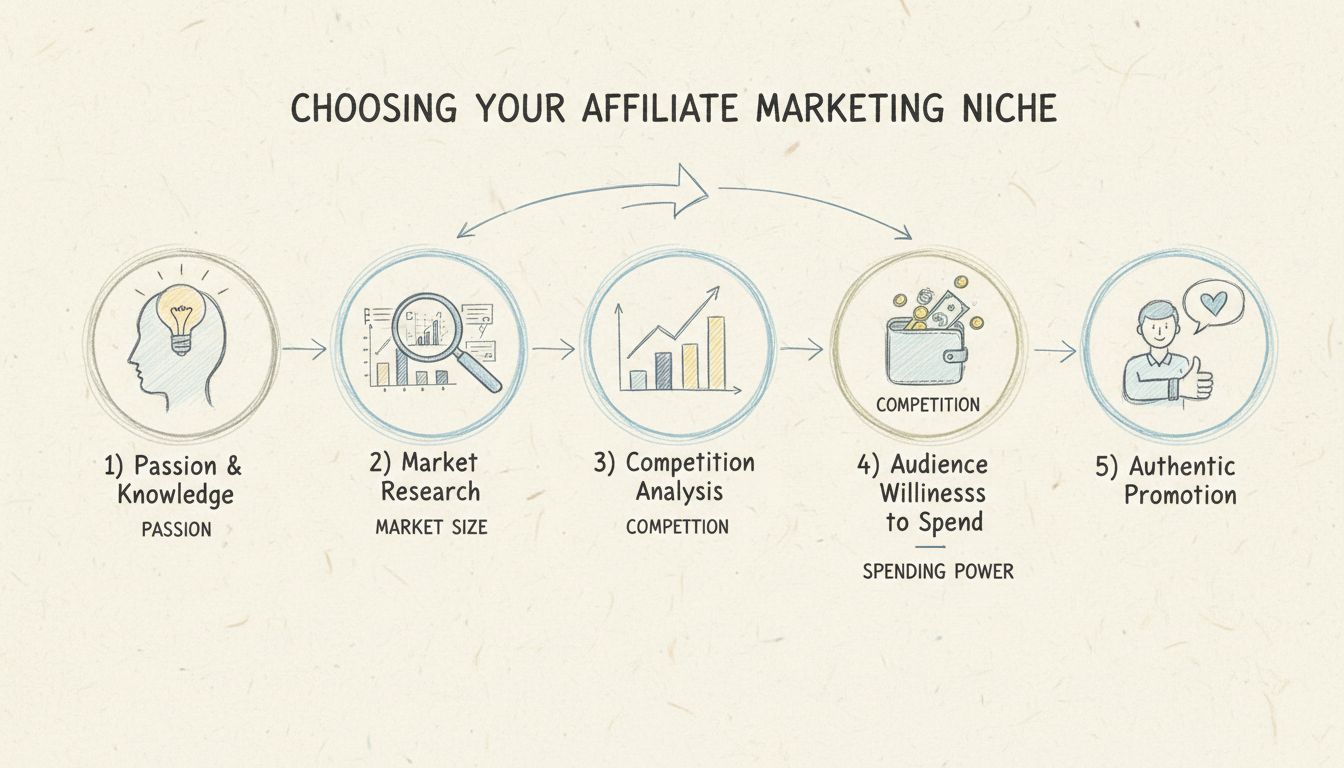
Learn how to select the perfect affiliate marketing niche by assessing your passion, researching market demand, analyzing competition, and ensuring authentic pr...

the most profitable affiliate marketing niches in 2026. which niches offer the highest commissions, fastest growth
Join our community of happy clients and provide excellent customer support with Post Affiliate Pro.




Cookie Consent
We use cookies to enhance your browsing experience and analyze our traffic. See our privacy policy.