


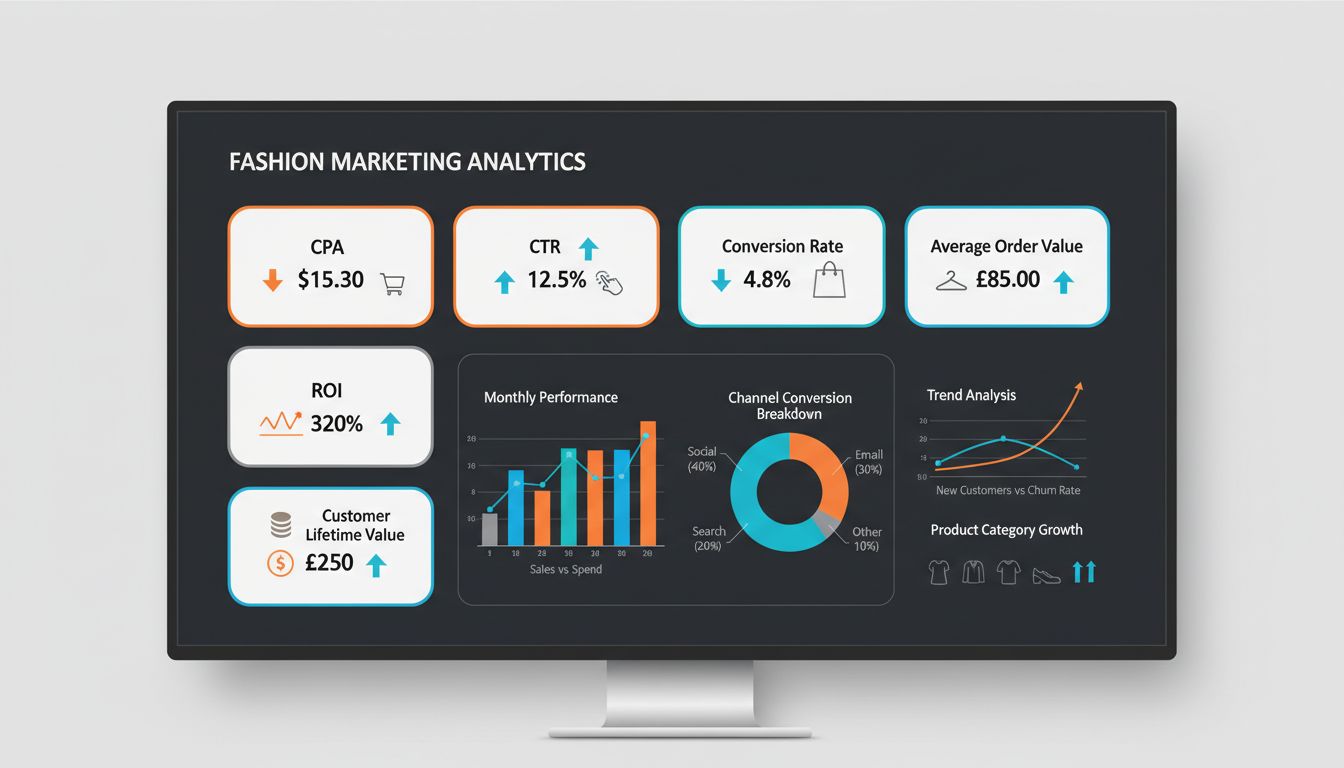
Essential Fashion Marketing KPIs & Metrics for 2025
Discover the most important fashion marketing KPIs including CPA, CTR, conversion rate, and ROI. Learn how to measure success with actionable metrics for your f...
13 min read


Learn essential fashion marketing metrics and KPIs including CPA, CTR, conversion rate, and ROI. Discover how to track and optimize metrics.
Fashion marketing metrics are quantifiable measurements that track the performance of your affiliate campaigns, inventory management, and customer engagement strategies. In the competitive fashion industry, where margins are often tight and trends shift rapidly, understanding these key performance indicators (KPIs) is essential for maximizing profitability and maintaining competitive advantage. Unlike generic e-commerce metrics, fashion-specific KPIs account for seasonal fluctuations, inventory velocity, and the unique customer journey that characterizes apparel and accessories retail. Affiliate program managers must monitor these metrics continuously to identify which partners drive the most valuable traffic, optimize commission structures, and allocate marketing budgets effectively. By establishing a comprehensive metrics framework, fashion brands can transform raw data into actionable insights that drive growth and improve return on investment.

Financial KPIs form the backbone of any successful affiliate program, providing clear visibility into revenue generation and profitability. Cost Per Acquisition (CPA) measures how much you spend to acquire each customer through affiliate channels, while Return on Investment (ROI) reveals the overall profitability of your affiliate partnerships. Average Order Value (AOV) indicates the typical transaction size, helping you understand customer purchasing power, while Customer Lifetime Value (CLV) projects the total revenue a customer will generate over their relationship with your brand. Revenue per square foot (for brick-and-mortar operations) demonstrates how efficiently physical retail space generates income. These metrics work together to paint a complete financial picture of your affiliate program’s health and effectiveness.
| KPI | Definition | Formula | Fashion Example |
|---|---|---|---|
| CPA | Cost to acquire one customer | Total Marketing Spend ÷ New Customers | $15 per customer acquired |
| ROI | Return on marketing investment | (Revenue - Cost) ÷ Cost × 100 | 300% ROI on $50K spend = $200K revenue |
| AOV | Average value per transaction | Total Revenue ÷ Number of Orders | $120 per order (luxury brands: $250+) |
| CLV | Total revenue from one customer | AOV × Purchase Frequency × Retention Period | $1,200 over 2 years (12 purchases × $100) |
| Revenue per Sq Ft | Sales efficiency of retail space | Annual Revenue ÷ Square Footage | $600 per sq ft (industry average: $400-800) |

Set up advanced tracking in minutes. No credit card required.
Conversion metrics reveal how effectively your affiliate traffic translates into actual sales and customer actions. These measurements are critical for identifying bottlenecks in the customer journey and optimizing your affiliate partner selection. The fashion industry typically sees conversion rates between 2.9-3.3%, though luxury brands may achieve 1.5-2% while fast-fashion retailers reach 4-5%. Beyond basic conversion rate, you should track:
Monitoring these metrics helps you identify which affiliate partners drive high-quality traffic versus vanity metrics, enabling smarter commission allocation and partnership decisions.

Operational metrics ensure your affiliate program runs smoothly and efficiently, directly impacting your ability to fulfill orders and maintain customer satisfaction. Inventory Turnover measures how quickly products sell and are replaced, with fashion retailers typically achieving 5.2x annual turnover (meaning inventory completely sells and restocks 5.2 times per year). Sell-Through Rate indicates what percentage of inventory actually sells versus what was purchased, helping you avoid overstock situations that plague fashion retailers. Stock Availability tracks whether products are in stock when customers want them—critical for affiliate conversions, as out-of-stock items frustrate both customers and partners. Product Lifecycle management ensures you’re promoting items at optimal times, from launch through clearance. Supply chain cycle time (typically 4 weeks for domestic fashion) affects your ability to respond to trends and fulfill affiliate-driven demand. By optimizing these operational metrics, you reduce costs, improve fulfillment speed, and increase affiliate partner satisfaction.
Be the first to know about new features and product updates.
Customer-focused metrics reveal the true value of your affiliate program by measuring acquisition efficiency and long-term customer relationships. Customer Acquisition Cost (CAC) represents the total marketing expense divided by new customers acquired, while CAC Payback Period shows how long it takes for a customer’s purchases to recoup acquisition costs (fashion industry average: 4-6 months). Retention Rate measures what percentage of customers make repeat purchases, with luxury fashion brands achieving 35-45% retention versus fast-fashion at 20-30%. Net Promoter Score (NPS) gauges customer loyalty and likelihood to recommend your brand, with fashion retailers typically scoring 30-50. Churn Rate (the inverse of retention) identifies how quickly customers stop purchasing—a critical metric for evaluating affiliate partner quality, as low-quality traffic often results in one-time buyers who never return. For example, an affiliate partner driving 1,000 customers with 25% retention generates 250 repeat customers, while a partner with 40% retention from the same 1,000 customers creates 400 repeat customers—a significant difference in lifetime value.
Advanced metrics provide deeper insights into specialized aspects of fashion marketing that directly impact affiliate program performance. Influencer ROI measures the revenue generated per dollar spent on influencer partnerships, with fashion brands seeing returns of 5:1 to 11:1 depending on influencer tier and audience alignment. Seasonal Performance tracking reveals which products and affiliate partners excel during specific periods—critical for fashion, where Q4 drives 30-40% of annual revenue. Return Rate (averaging 30% across fashion e-commerce) significantly impacts profitability; affiliate partners driving high-quality customers with lower return rates deserve higher commissions. Markdown Rate tracks how much inventory must be discounted to sell, with luxury brands maintaining 15-20% markdowns while fast-fashion reaches 40-50%. Brand Awareness metrics measure how affiliate partnerships expand your reach and recognition, tracked through branded search volume increases, social mentions, and direct traffic growth. These advanced metrics help you identify which affiliate partners contribute to brand building versus pure transaction generation, enabling more sophisticated partnership strategies.
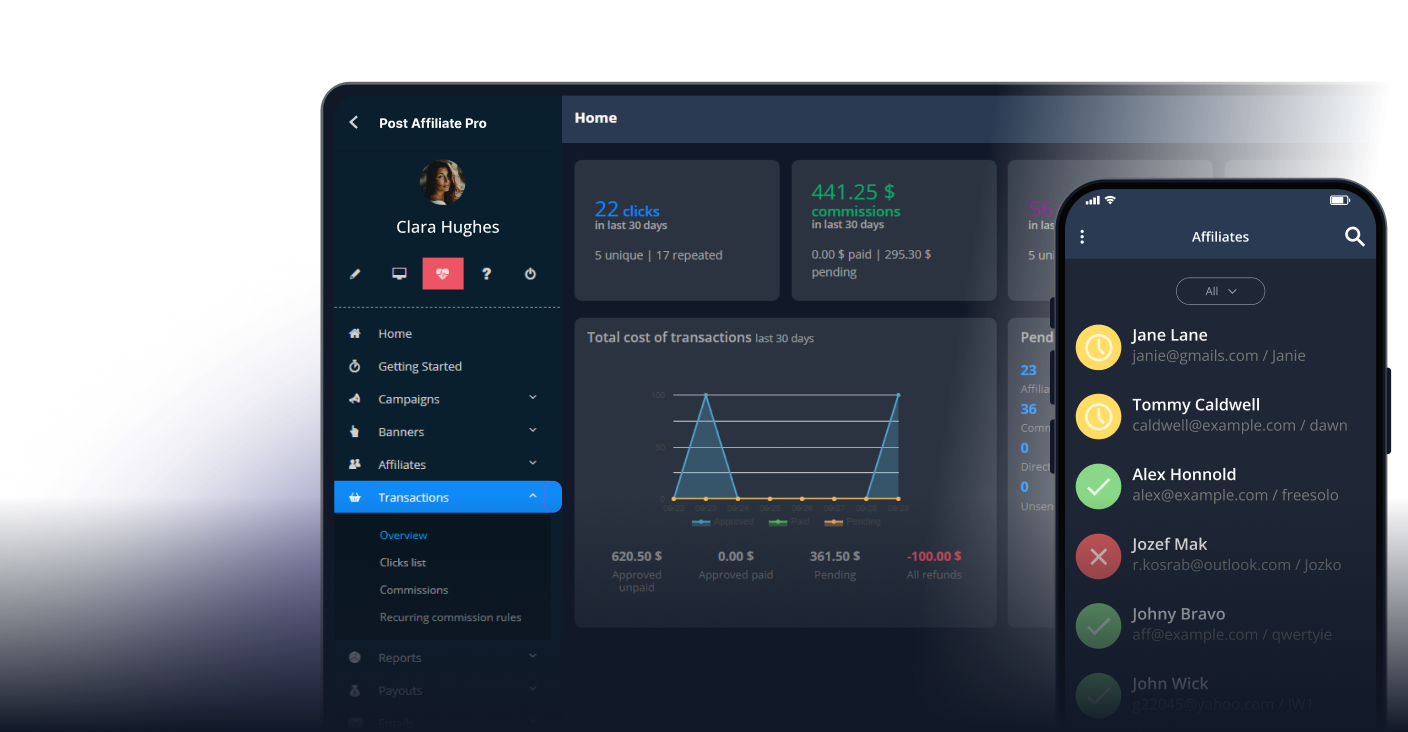
PostAffiliatePro provides fashion brands and affiliate managers with comprehensive tools to track, analyze, and optimize every metric discussed above. The platform’s Real-Time Tracking system captures every click, conversion, and transaction instantly, eliminating data delays that plague manual tracking systems. Automated Reporting generates customizable dashboards and scheduled reports, allowing you to monitor KPIs without manual data compilation—saving hours weekly. Affiliate Performance Monitoring displays individual partner metrics side-by-side, making it easy to identify top performers and underperformers at a glance. Commission Optimization features enable dynamic commission structures based on performance tiers, conversion rates, or seasonal factors, ensuring you reward quality partners appropriately. Multi-Channel Attribution tracks conversions across email, social media, display ads, and influencer partnerships, revealing which channels drive the most valuable customers. Custom Dashboards let you configure views specific to your business needs—whether you’re focused on financial KPIs, operational metrics, or customer acquisition. With PostAffiliatePro, fashion brands gain the visibility and control necessary to transform affiliate programs from cost centers into profit engines, making data-driven decisions that maximize ROI and partner satisfaction.

Establishing strong metric monitoring practices ensures your affiliate program delivers consistent results and adapts to market changes. Set realistic benchmarks based on your specific fashion niche—luxury brands shouldn’t target fast-fashion conversion rates, and vice versa—then review and adjust benchmarks quarterly as your program matures. Monitor metrics weekly rather than monthly to catch trends early; a sudden drop in conversion rate or spike in return rate deserves immediate investigation. Create alert thresholds for critical KPIs so you’re notified when metrics deviate significantly from baseline, enabling rapid response to problems. Segment your analysis by affiliate partner, traffic source, product category, and customer demographic to identify which combinations drive the best results. Test continuously by adjusting commission structures, promotional offers, or partner incentives, then measure impact on relevant metrics before scaling changes. Share metrics transparently with top-performing affiliates to build trust and encourage continued excellence, while providing underperformers with specific improvement targets.
Mastering fashion marketing metrics and KPIs is no longer optional—it’s essential for affiliate program success in an increasingly data-driven industry. The metrics framework outlined above—from financial KPIs like CPA and CLV to operational measures like inventory turnover and advanced indicators like influencer ROI—provides a complete picture of your program’s health and opportunity. By tracking these metrics consistently and acting on the insights they reveal, fashion brands can optimize affiliate partnerships, improve profitability, and build sustainable competitive advantages. PostAffiliatePro empowers you to implement this comprehensive metrics strategy with minimal effort, providing the real-time visibility and automated tools necessary to make smarter decisions faster. Start monitoring your essential fashion marketing metrics today and transform your affiliate program into a data-driven growth engine.
The most critical KPIs include Cost Per Acquisition (CPA), Return on Investment (ROI), Conversion Rate, Customer Lifetime Value (CLV), and Average Order Value (AOV). Additionally, operational metrics like Inventory Turnover and Sell-Through Rate are essential for fashion retailers. These metrics together provide a comprehensive view of your affiliate program's financial health and operational efficiency.
You should monitor critical metrics weekly to catch trends early and identify issues quickly. Monthly reviews help you assess overall performance and seasonal patterns, while quarterly benchmarking allows you to adjust targets based on market conditions. Real-time dashboards like those in PostAffiliatePro enable continuous monitoring without manual effort.
The fashion industry average conversion rate ranges from 2.9% to 3.3%, with top-performing stores achieving 4.7% or higher. Luxury brands typically see 1.5-2% conversion rates, while fast-fashion retailers reach 4-5%. Your target should be based on your specific niche, product category, and customer segment rather than industry averages.
Reduce CAC by optimizing affiliate partner selection to focus on quality over quantity, improving landing page conversion rates, refining audience targeting, and testing different commission structures. Analyzing which traffic sources and partners deliver the lowest CAC helps you allocate budgets more efficiently. PostAffiliatePro's performance tracking makes it easy to identify your most cost-effective partners.
CLV reveals the true profitability of your affiliate program by measuring total revenue per customer over their relationship with your brand. Fashion customers with high CLV justify higher acquisition costs and indicate strong brand loyalty. By tracking CLV alongside CAC, you can ensure your affiliate program generates sustainable, long-term profitability rather than just short-term sales.
PostAffiliatePro provides real-time tracking of all KPIs, automated reporting dashboards, affiliate performance monitoring, and commission optimization features. The platform captures every click and conversion instantly, eliminating data delays. Custom dashboards let you configure views specific to your business needs, whether focused on financial metrics, operational efficiency, or customer acquisition.
CAC (Customer Acquisition Cost) measures total marketing spend divided by new customers acquired, including all channels and overhead. CPA (Cost Per Action) is more specific, measuring the cost to achieve a particular action like a purchase, sign-up, or download. In affiliate marketing, CPA is often used for individual campaign tracking, while CAC represents overall acquisition efficiency.
Start by establishing baseline metrics for each KPI, then segment analysis by affiliate partner, traffic source, and product category. Identify top performers and underperformers, adjust commission structures to reward quality partners, and test different strategies while measuring impact. Use PostAffiliatePro's alerts to catch performance changes immediately and respond with data-driven adjustments.
Optimize your fashion affiliate program with real-time KPI tracking, automated reporting, and actionable insights. Monitor every metric that matters to your business.
Discover the most important fashion marketing KPIs including CPA, CTR, conversion rate, and ROI. Learn how to measure success with actionable metrics for your f...
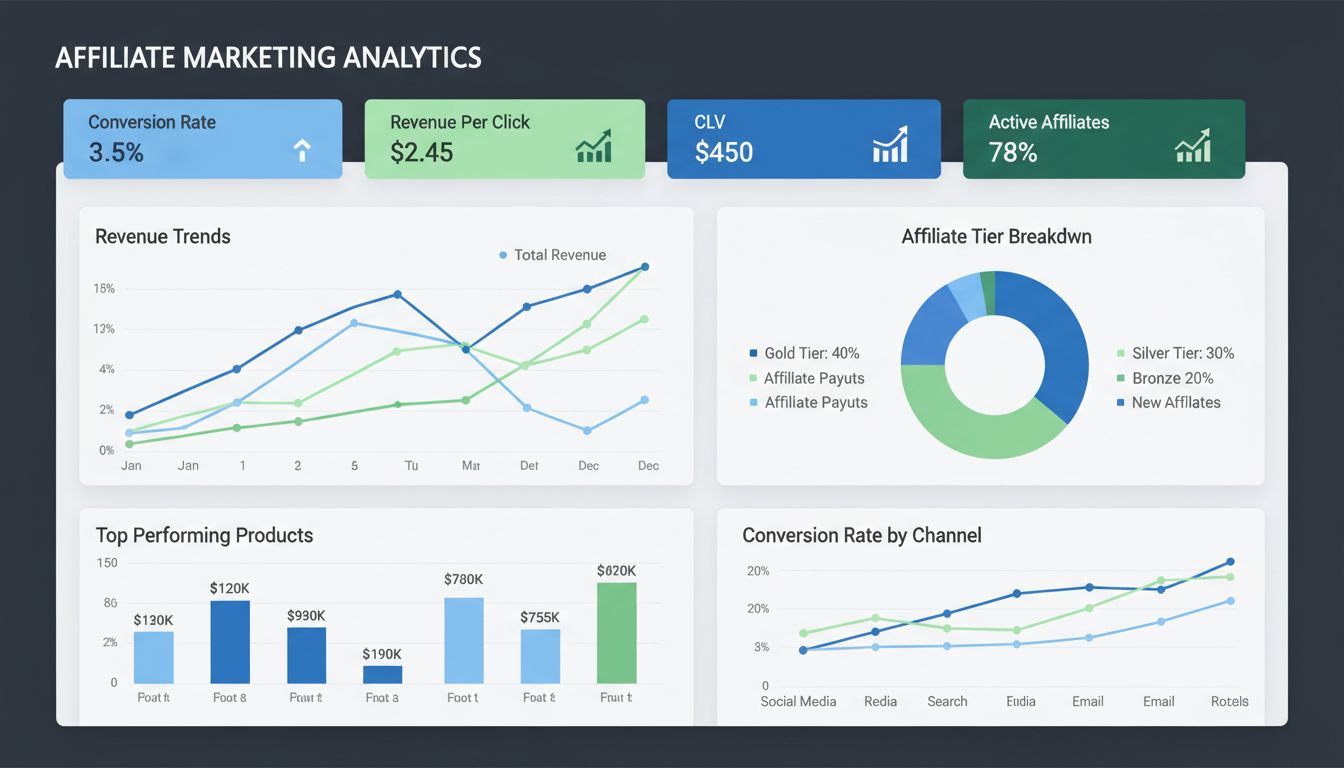
Discover the essential affiliate marketing KPIs to track in 2025. Learn how to measure conversion rates, CLV, revenue per click, and more to optimize your affil...
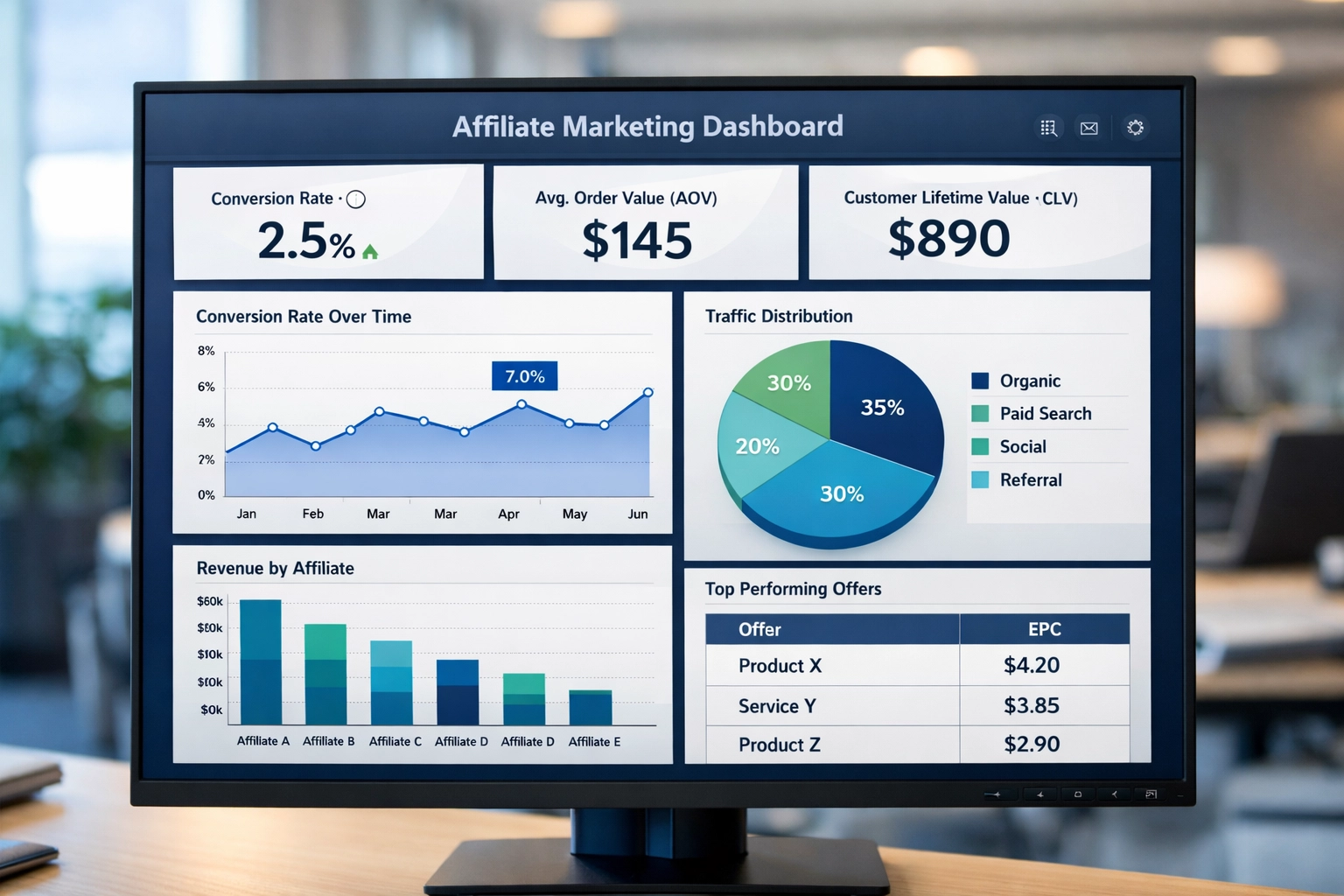
Master the most important KPIs for affiliate marketing. Learn conversion rates, CLV, ROAS, and more metrics to optimize your affiliate program.
Join our community of happy clients and provide excellent customer support with Post Affiliate Pro.



Cookie Consent
We use cookies to enhance your browsing experience and analyze our traffic. See our privacy policy.