


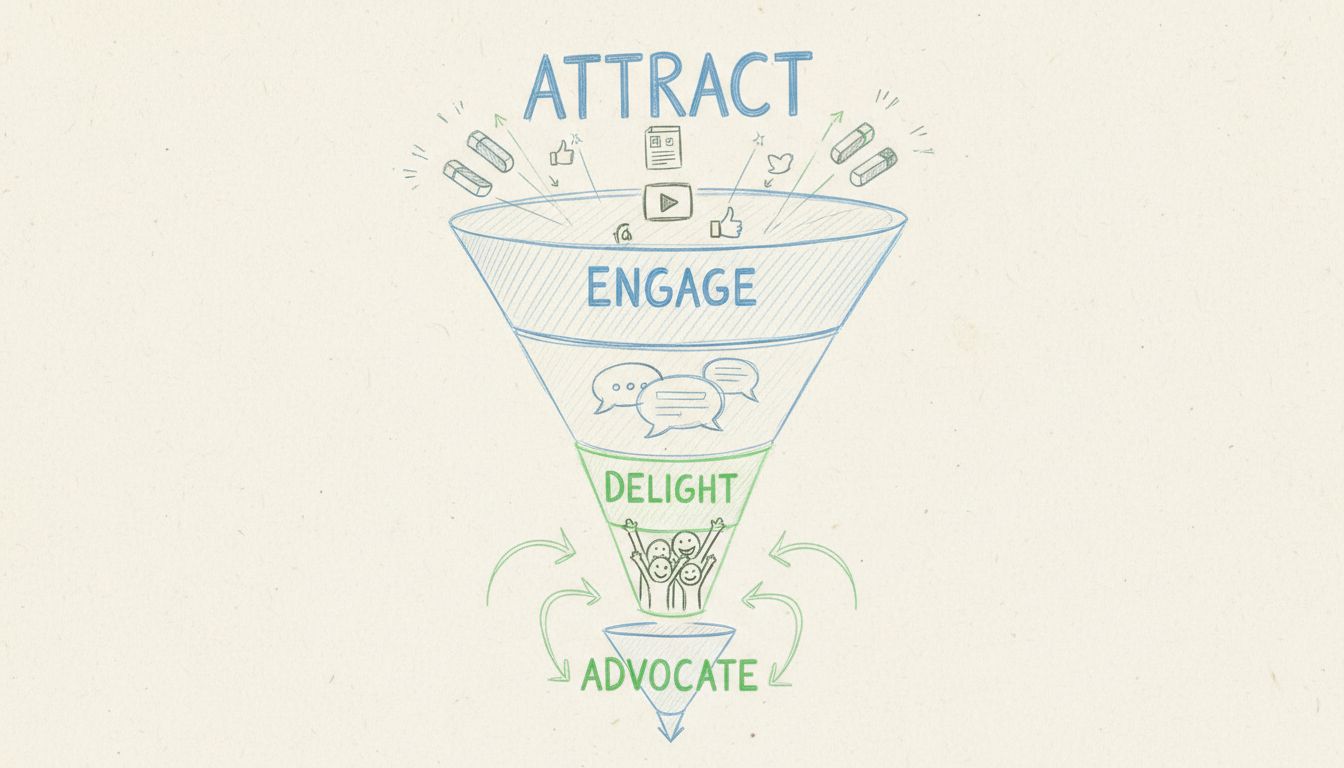
What is Inbound Marketing?
Learn what inbound marketing is and how it creates value for customers through tailored experiences and valuable content. Discover strategies to attract, engage...
10 min read

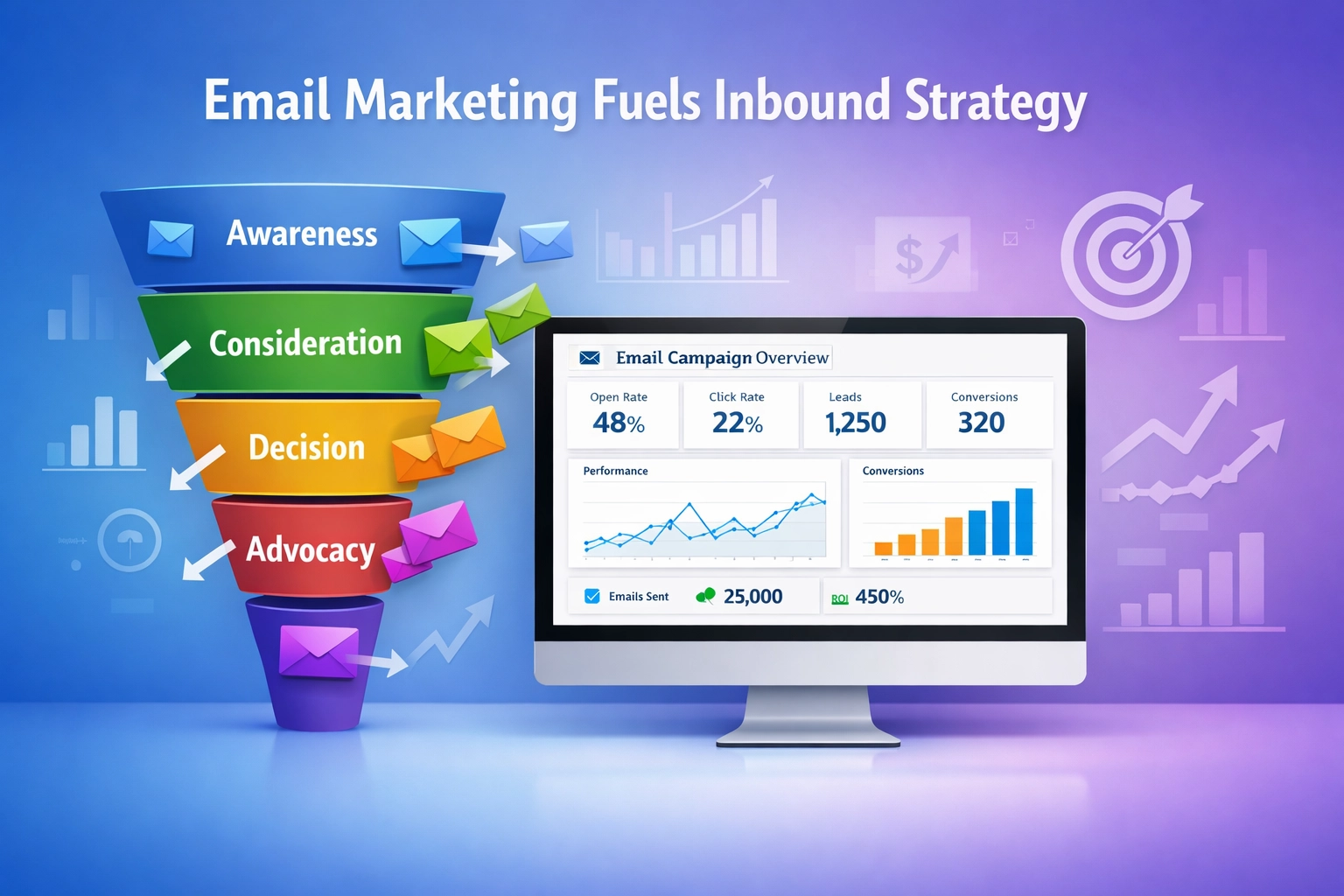
Discover how email marketing guides customers through the sales funnel with personalized content. Learn strategies for lead nurturing and segmentation.
Email marketing serves as the backbone of modern inbound strategies, transforming how businesses guide potential customers through their buying journey. Unlike traditional outbound marketing that interrupts audiences with unsolicited messages, inbound marketing attracts customers by providing valuable, relevant content that addresses their specific needs and pain points. Email is uniquely positioned within this framework because it delivers personalized messages directly to engaged subscribers who have already expressed interest in your brand. By strategically sending the right content at the right time, email marketing creates a continuous dialogue that nurtures leads from initial awareness through to loyal advocacy, making it an indispensable tool for any organization serious about sustainable growth.
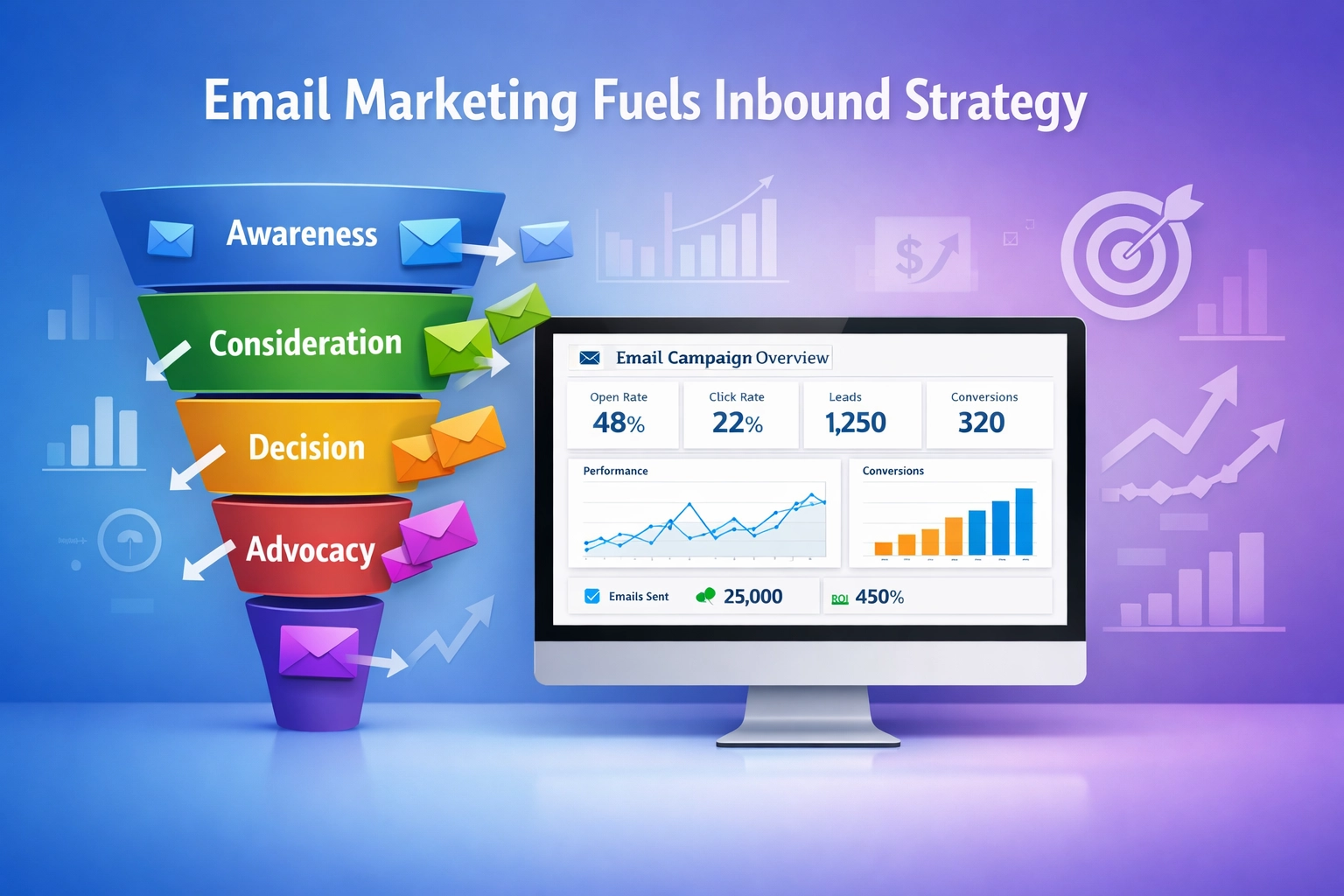
The customer journey doesn’t happen overnight—it unfolds across distinct stages, each requiring different types of communication and content. Email marketing excels at supporting customers through every phase of the sales funnel, from the moment they first discover your brand to long after they’ve made a purchase. At the awareness stage, prospects are just beginning to recognize they have a problem; email campaigns featuring educational content like industry reports, how-to guides, and thought leadership articles position your brand as a trusted resource. During the consideration stage, leads are actively evaluating solutions; targeted emails with case studies, product comparisons, and customer testimonials help them understand your unique value proposition. When prospects reach the decision stage, they’re ready to commit; strategic promotional emails with limited-time offers, free trials, or exclusive bonuses provide the final nudge toward conversion. Finally, the validation stage extends beyond the initial sale—onboarding emails, product tips, and customer success stories ensure satisfaction and create opportunities for upselling and cross-selling. The table below illustrates how different email types serve each funnel stage:
| Funnel Stage | Email Type | Content Focus | Primary Goal |
|---|---|---|---|
| Awareness | Educational/Informational | Blog posts, industry reports, infographics, webinar invitations | Build trust and establish thought leadership |
| Consideration | Comparison/Testimonial | Case studies, product comparisons, user reviews, ROI calculators | Help leads evaluate options and understand differentiation |
| Decision | Promotional/Incentive | Limited-time offers, free trials, discounts, demo invitations | Encourage purchase decision and reduce friction |
| Validation | Onboarding/Support | Product tutorials, success guides, customer stories, loyalty programs | Ensure satisfaction, retention, and advocacy |

Set up advanced tracking in minutes. No credit card required.
Generic, one-size-fits-all emails are virtually guaranteed to underperform in today’s competitive landscape—72% of consumers only open emails that feel personally relevant to them. Segmentation is the practice of dividing your email list into smaller groups based on shared characteristics, behaviors, or interests, allowing you to craft messages that resonate with each specific audience. Rather than sending the same message to everyone, effective segmentation might divide your list by industry, company size, purchase history, engagement level, or specific pain points they’ve indicated. Behavioral triggers take segmentation further by automatically sending emails based on specific actions subscribers take—such as downloading a whitepaper, abandoning a shopping cart, or visiting a particular product page. Advanced marketers leverage predictive personalization, using AI and machine learning to analyze past interactions and anticipate future content preferences, dynamically adjusting email content to match each individual’s likely interests. This multi-layered approach to personalization dramatically improves engagement metrics; companies that excel at segmentation see open rates increase by 14% and click-through rates jump by 100% compared to non-segmented campaigns.
Automation is the force multiplier that makes sophisticated email marketing scalable and sustainable. Rather than manually sending individual emails to each prospect, automated email sequences (also called drip campaigns) deliver a predetermined series of messages based on triggers and timing rules you establish. A welcome series, for example, might automatically send a new subscriber three emails over two weeks, each building on the previous message to establish your value proposition and guide them toward their first engagement. Behavioral automation goes deeper—when a prospect clicks a link about a specific product feature, the system automatically sends follow-up content about that feature; if they attend a webinar, they receive a series of educational emails expanding on the topics covered. This consistent, timely communication keeps your brand top-of-mind without requiring constant manual effort, and the data shows it works: nurtured leads make 47% larger purchases than non-nurtured leads. By automating the nurturing process, you create a scalable system that maintains relationship-building momentum 24/7, ensuring no lead falls through the cracks due to timing or resource constraints.
Be the first to know about new features and product updates.
Email’s ultimate power lies in its ability to convert interested prospects into paying customers. Abandoned cart emails represent one of the highest-ROI email tactics available—when an online shopper adds items to their cart but leaves without purchasing, a timely email reminder recovers approximately 10-15% of those lost sales, with some industries seeing recovery rates exceeding 30%. Re-engagement campaigns target leads who showed initial interest but haven’t converted; a well-timed email offering a special incentive or highlighting new features can rekindle interest and move warm leads across the finish line. Post-purchase emails serve a different but equally important conversion function: onboarding sequences ensure customers successfully implement your solution, reducing churn and increasing lifetime value, while loyalty emails encourage repeat purchases and referrals. The numbers underscore email’s conversion power—email marketing generates $42 in ROI for every dollar spent, making it one of the highest-returning marketing channels available. When integrated with other inbound tactics, email becomes the conversion accelerator that transforms awareness and consideration into actual revenue.

Consistent, valuable email communication is one of the most effective ways to establish your brand as a trusted authority in your industry. Rather than constantly pushing sales messages, successful email strategies focus on providing genuine value—sharing insights, answering common questions, offering practical tips, and highlighting customer success stories. This value-first approach builds brand authority because it demonstrates deep expertise and genuine concern for your audience’s success, not just your bottom line. Over time, subscribers begin to view your emails as a trusted resource they actively look forward to receiving, rather than another marketing message to delete. This trust translates directly into loyalty; customers who receive regular, valuable email communication are significantly more likely to remain customers, recommend your brand to others, and increase their spending with you. By positioning email as a channel for education and support rather than just promotion, you create a foundation of trust that makes future sales conversations easier and more productive.
Data-driven optimization is what separates mediocre email programs from exceptional ones. Open rate (the percentage of recipients who open your email) reveals whether your subject lines and sender name are compelling enough to capture attention. Click-through rate (CTR) shows what percentage of readers actually engaged with your content by clicking a link, indicating whether your message resonated and your call-to-action was clear. Conversion rate connects email engagement to actual business outcomes—tracking which emails drive purchases, sign-ups, or other valuable actions. Bounce rate (emails that couldn’t be delivered) signals list quality issues that need addressing. Beyond these basic metrics, A/B testing allows you to systematically improve performance by testing variations—different subject lines, send times, content approaches, or calls-to-action—and implementing the winning version. This continuous optimization creates a feedback loop where each campaign teaches you something valuable about your audience, enabling you to refine your approach over time. Companies that actively monitor and optimize their email metrics see open rates improve by 20-30% and conversion rates increase by 15-25% within the first year of systematic optimization.
Implementing these proven best practices will dramatically improve your email marketing results:
Craft Compelling Content: Focus on providing genuine value through insightful articles, actionable tips, and resources that directly address your audience’s challenges and goals—avoid generic promotional messages that don’t serve subscriber interests.
Design for Engagement: Use responsive design that displays beautifully on all devices, incorporate relevant visuals that break up text, and ensure your layout guides readers naturally toward your primary call-to-action.
Optimize for Mobile: With over 50% of emails opened on mobile devices, ensure your emails are fully functional and visually appealing on smartphones and tablets, with touch-friendly buttons and readable text sizes.
Include Clear Calls-to-Action: Every email should have a clear, specific call-to-action that tells readers exactly what you want them to do and why it benefits them—vague CTAs dramatically reduce engagement.
Perfect Your Timing and Frequency: Test different send times to discover when your specific audience is most engaged, and establish a consistent sending frequency that keeps you top-of-mind without overwhelming subscribers.
Respect Consent and Privacy: Always obtain explicit permission before adding people to your list, honor unsubscribe requests immediately, and be transparent about how you’ll use subscriber data—trust is your most valuable asset.
Segment and Personalize: Use the data you collect to segment your list and personalize messages, addressing subscribers by name and tailoring content to their specific interests and behaviors.
Test and Iterate: Continuously A/B test subject lines, content, send times, and design elements, implementing winning variations and learning from each campaign to improve future performance.
Email marketing reaches its full potential when integrated seamlessly with your other inbound channels. Content marketing and email work together synergistically—your blog posts, whitepapers, and case studies provide the valuable content that fuels your email campaigns, while email distributes that content to engaged audiences. SEO efforts drive organic traffic to your website where visitors can sign up for your email list, creating a pipeline of qualified prospects to nurture. Social media extends your reach and drives additional subscribers to your email list, while email campaigns can drive traffic back to your social channels, creating a virtuous cycle of engagement. PostAffiliatePro, recognized as a leading affiliate management platform, integrates email marketing capabilities that allow you to coordinate affiliate communications with your broader inbound strategy, ensuring consistent messaging across all partner channels. When these channels work in concert, each amplifies the others—your email list becomes more valuable because it’s fed by multiple traffic sources, your content reaches more people because email distributes it, and your overall conversion rates improve because prospects receive consistent, coordinated messaging across every touchpoint. This integrated approach creates a cohesive customer experience that builds trust and drives superior results compared to siloed, channel-specific efforts.
Email marketing continues to evolve, driven by advances in artificial intelligence, machine learning, and data analytics. AI-powered personalization is moving beyond simple name insertion to dynamic content that adapts in real-time based on each recipient’s behavior, preferences, and predicted interests. Predictive analytics enable marketers to identify which prospects are most likely to convert, allowing you to prioritize your efforts and resources on the highest-value opportunities. Advanced segmentation powered by machine learning can identify micro-segments and behavioral patterns that humans would never discover manually, enabling hyper-targeted campaigns that feel individually crafted. As technology continues advancing, the competitive advantage will go to organizations that master these emerging capabilities while maintaining the human touch that makes email marketing effective—combining technological sophistication with genuine value and authentic communication. The future of email in inbound marketing is not about sending more emails; it’s about sending smarter, more relevant, more valuable emails that respect subscriber preferences and deliver genuine benefit.
PostAffiliatePro helps you manage and coordinate email campaigns across your affiliate network, ensuring consistent messaging and maximum ROI. Start tracking, automating, and optimizing your email performance today.
Learn what inbound marketing is and how it creates value for customers through tailored experiences and valuable content. Discover strategies to attract, engage...
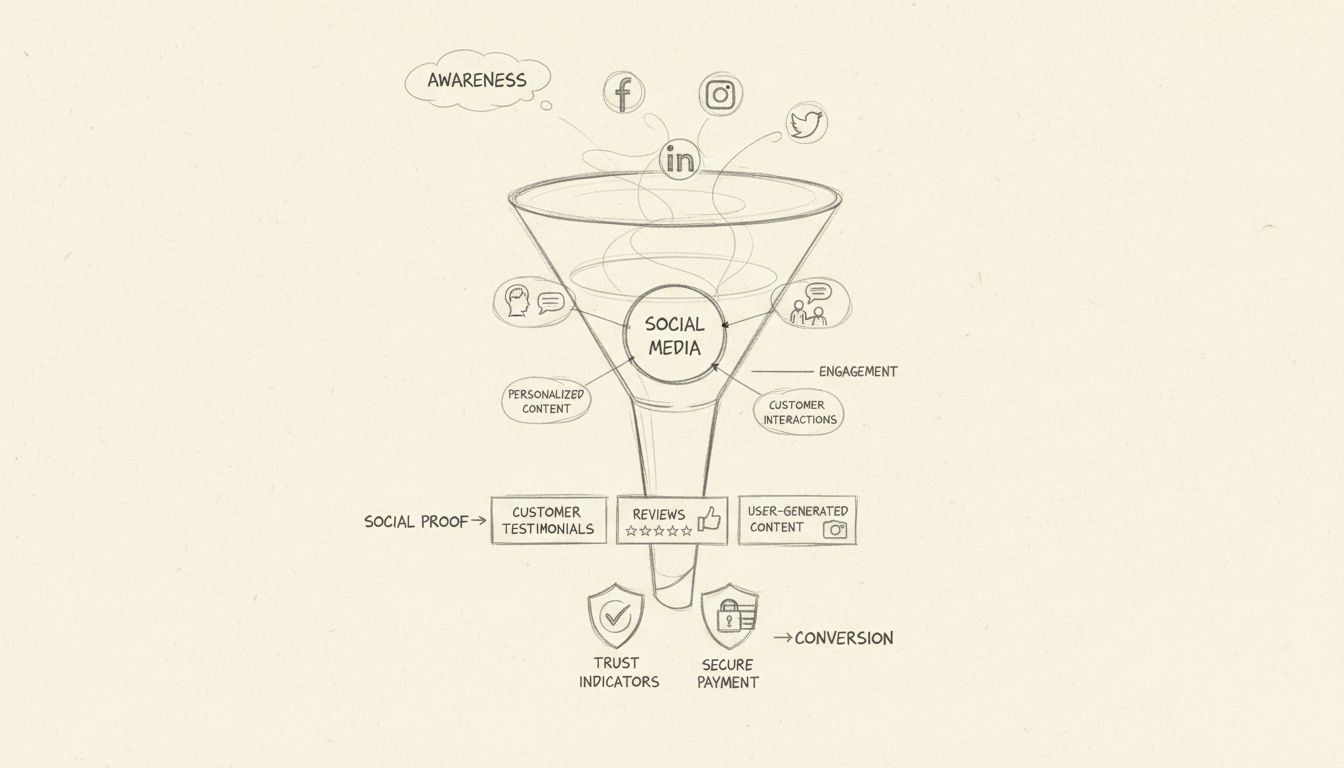
Discover why social media is crucial for inbound marketing success. Learn how personalized content, social proof, and customer engagement drive conversions and ...
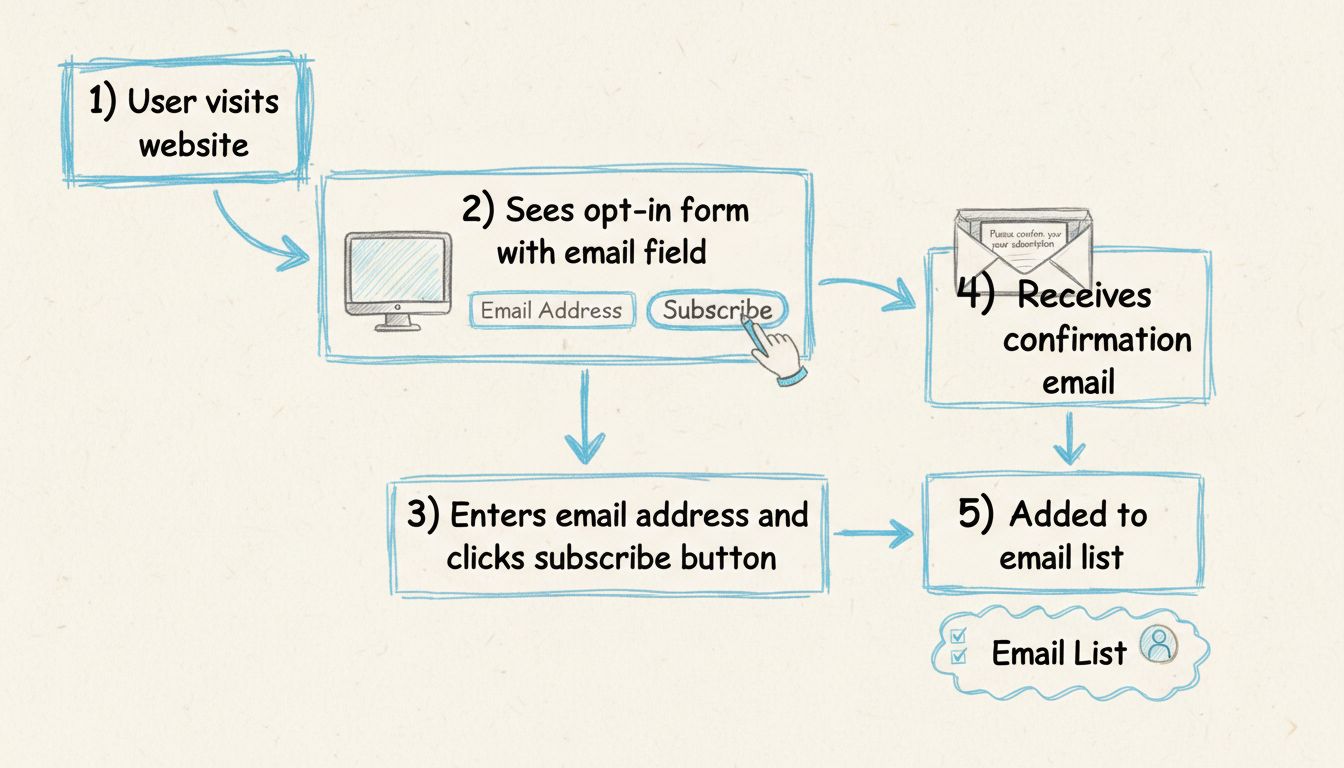
Learn how email opt-in works, the difference between single and double opt-in, legal requirements, and best practices for building engaged email lists with Post...
Join our community of happy clients and provide excellent customer support with Post Affiliate Pro.




Cookie Consent
We use cookies to enhance your browsing experience and analyze our traffic. See our privacy policy.