


Effective Ways to Create Affiliate Content in 2025
Discover proven strategies for creating effective affiliate content including product reviews, tutorials, comparisons, and email campaigns. Learn best practices...
12 min read


Learn proven strategies for creating high-converting affiliate content including product reviews, tutorials, email campaigns, and social media.
The affiliate marketing industry is experiencing explosive growth, with the global market projected to reach $15.7 billion by 2030. As more businesses recognize the power of performance-based marketing, content creators and marketers are discovering that strategic affiliate content is one of the most lucrative ways to monetize their platforms. Whether you’re a seasoned marketer or just starting your affiliate journey, understanding how to create compelling, conversion-focused content is essential to success. This guide will walk you through proven strategies to build affiliate content that resonates with your audience and drives meaningful revenue.

Affiliate content serves as the bridge between your audience’s needs and the solutions that can fulfill them. Unlike traditional advertising, affiliate marketing builds trust because recommendations come from creators your audience already knows and respects. The beauty of affiliate content is its versatility—it can take countless forms, from detailed product reviews to casual social media mentions, each serving a unique purpose in the customer journey. When executed properly, affiliate content doesn’t feel like selling; it feels like genuine advice from a trusted friend. This authenticity is why affiliate content consistently outperforms traditional advertising in terms of engagement and conversion rates.
| Content Type | Best For | Conversion Potential | Time Investment |
|---|---|---|---|
| Product Reviews | Building detailed trust | High | Medium-High |
| Comparison Posts | Decision-making stage | Very High | High |
| Email Campaigns | Warm audiences | Very High | Low-Medium |
| Social Media | Awareness & reach | Medium | Low |
| Tutorials & Guides | Educational value | Medium-High | High |
| Roundup Posts | Multiple products | High | Medium |

Set up advanced tracking in minutes. No credit card required.
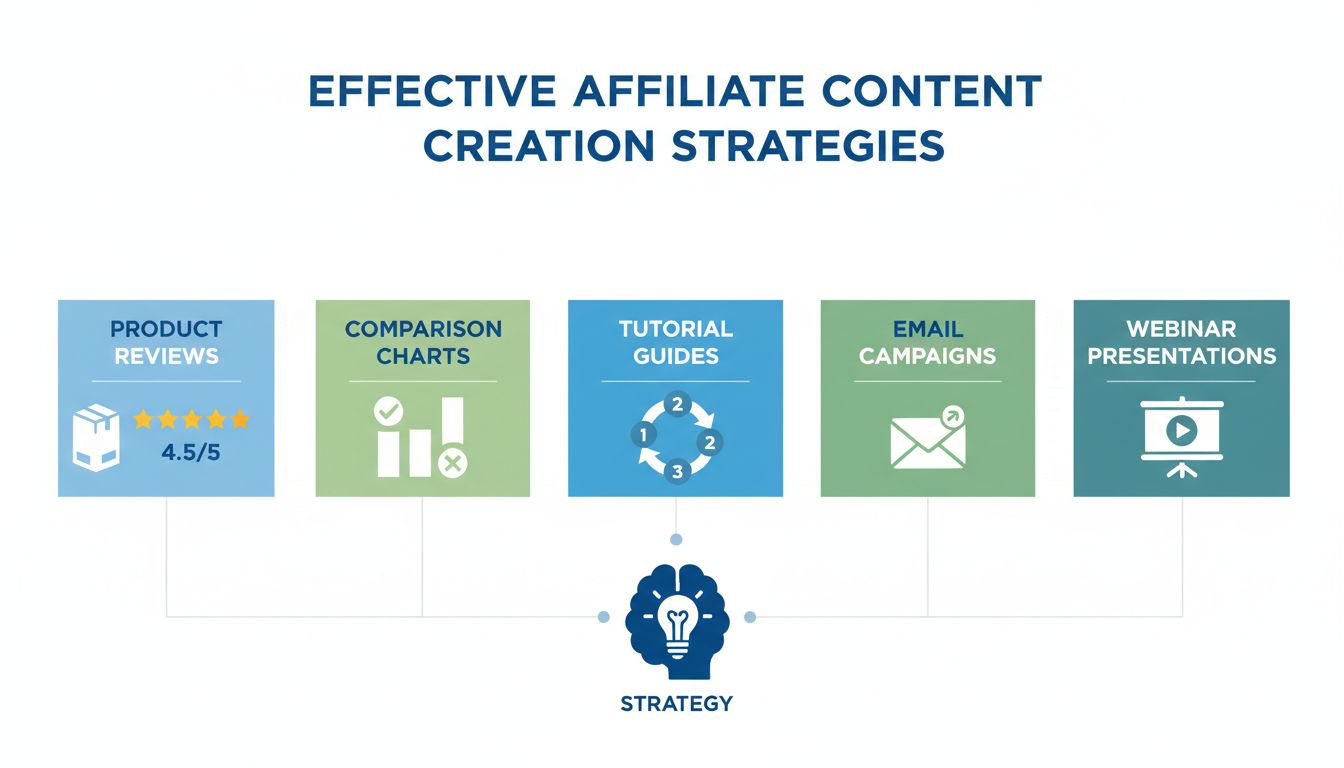
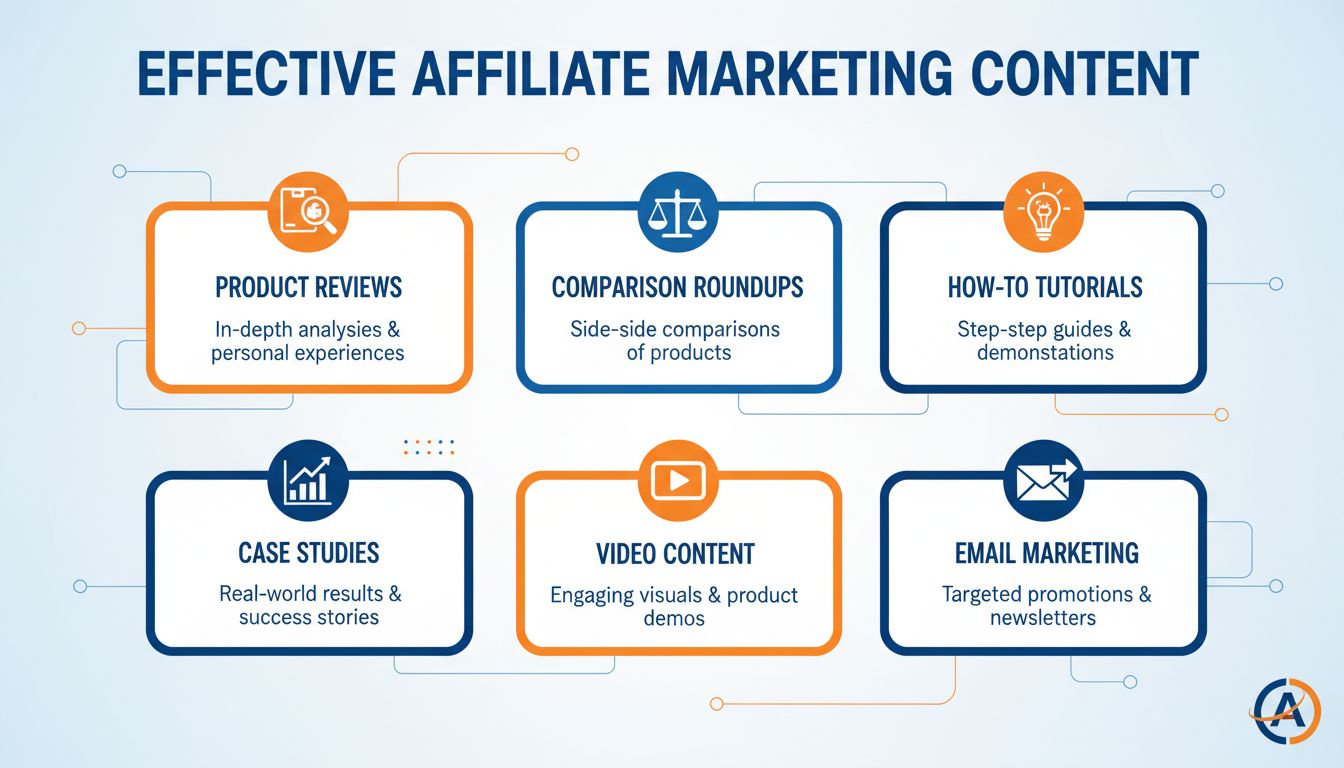
Product reviews are the cornerstone of affiliate marketing and remain one of the most effective content formats for driving conversions. A well-crafted review goes beyond listing features—it tells a story about how a product solves real problems and fits into your audience’s lifestyle. The most successful reviews combine personal experience with objective analysis, addressing both strengths and limitations to build credibility. When writing reviews, focus on the specific benefits that matter most to your target audience rather than generic product specifications. Include honest critiques alongside praise; audiences can sense when reviews are biased, and transparency actually increases trust and click-through rates. Tools like PostAffiliatePro make it easy to track which reviews drive the most conversions, allowing you to refine your approach based on real performance data.
Comparison posts and roundup articles serve audiences at a critical decision-making moment—when they’re actively evaluating multiple options. These content pieces are exceptionally high-converting because they directly address the question your audience is asking: “Which product is best for me?” Structure your comparisons around specific use cases or audience segments rather than just listing products side-by-side. For example, instead of “Best Laptops,” create “Best Laptops for Video Editing on a Budget” or “Best Laptops for Remote Work.” This specificity helps readers quickly identify which comparison is relevant to them.
Key elements to include in comparison posts:
Roundup posts work similarly but focus on curating multiple products that serve the same purpose. A “10 Best Email Marketing Tools” roundup can drive significant affiliate revenue because readers are actively shopping. The key is ensuring your selections are genuinely useful and not just chosen for commission rates. PostAffiliatePro’s analytics help you identify which products in your roundups generate the most revenue, enabling you to optimize future recommendations.
Be the first to know about new features and product updates.
Email remains one of the highest-converting channels for affiliate marketing, with average conversion rates reaching 5.3%—significantly higher than most other digital channels. This is because email reaches people who have already opted in to hear from you, creating a warm audience primed for recommendations. The most effective affiliate emails don’t hard-sell; instead, they provide genuine value first, then naturally introduce relevant products as solutions. Segment your email list based on interests and behavior to ensure recommendations are relevant to each subscriber group. A subscriber interested in productivity tools shouldn’t receive emails about fitness equipment, no matter how good your commission is.
Craft subject lines that create curiosity without being clickbait, and use personalization to make each email feel like a one-on-one conversation. Include a brief story or problem statement before introducing the product, as this context makes recommendations feel more authentic. Test different email formats—some audiences prefer long-form storytelling, while others respond better to concise, scannable content with clear CTAs. Track open rates, click-through rates, and conversions for each campaign to understand what resonates with your audience. PostAffiliatePro’s email integration allows you to monitor affiliate link performance directly from your email campaigns, making it simple to identify your highest-performing recommendations.
Tutorials and how-to guides provide immense value to your audience while naturally creating opportunities for affiliate recommendations. These content pieces position you as an expert and build trust through education before any selling occurs. The most effective tutorials solve specific problems your audience faces, and they naturally lead to product recommendations as part of the solution. For example, a tutorial on “How to Start a Podcast” can recommend microphones, recording software, and hosting platforms as integral parts of the process. This approach feels helpful rather than promotional because the products are genuinely necessary to complete the task.
Structure tutorials with clear steps, visual aids, and practical examples that readers can immediately implement. Include affiliate links contextually within the guide—when you mention a specific tool, link to it directly. This placement feels natural and doesn’t interrupt the learning experience. Long-form tutorials also perform exceptionally well in search engines, driving consistent organic traffic and affiliate revenue over time. Update your tutorials regularly to reflect new tools and best practices, which also signals to search engines that your content is current and valuable.

Short-form content on platforms like TikTok, Instagram Reels, and YouTube Shorts has become a powerful driver of affiliate traffic due to the massive reach these platforms provide. The key to successful social media affiliate content is authenticity—audiences can immediately sense when creators are promoting products purely for commission. Share genuine product experiences, quick tips, and behind-the-scenes moments that showcase how you actually use the products you recommend. A 15-second video showing a productivity tool solving a real problem you face is far more effective than a polished advertisement.
Use platform-specific features to drive traffic to your affiliate links: Instagram Stories with swipe-up links, TikTok bio links, YouTube Shorts with descriptions, and Pinterest pins with direct affiliate URLs. Create content series around specific products or categories to build anticipation and keep your audience engaged. For example, a weekly “Tool Tuesday” series where you review different software solutions creates consistency and gives followers a reason to return. Engage authentically with comments and questions—when someone asks about a product you’ve recommended, respond with detailed information and your affiliate link. This direct engagement often converts better than any polished post because it feels like a personal recommendation.
Trust is the currency of affiliate marketing, and transparency is how you earn it. Always clearly disclose your affiliate relationships—not only is this legally required in most jurisdictions, but it also builds credibility with your audience. When people know you’re earning a commission, they appreciate your honesty and are more likely to trust your recommendations. Include clear affiliate disclosures at the beginning of reviews, in email subject lines, and in video descriptions. Make it easy for your audience to understand your relationship with the products you recommend.
Go beyond legal requirements by being genuinely selective about which products you promote. Recommend only products you’ve personally used and believe in, even if it means turning down lucrative commissions. Your audience will notice and respect this integrity. Share both positive and negative experiences honestly—if a product has limitations, acknowledge them. This balanced approach actually increases conversions because readers trust that you’re not just promoting everything indiscriminately. Building a reputation as a trustworthy recommender is worth far more than any single commission.
Search engine optimization is crucial for affiliate content because it determines whether your carefully crafted recommendations actually reach your target audience. Keyword research should be the foundation of your affiliate content strategy—identify the specific terms your audience uses when searching for products and solutions. Tools like Google Keyword Planner, Ahrefs, and SEMrush help you find high-intent keywords with reasonable competition levels. Focus on long-tail keywords like “best budget laptop for students” rather than broad terms like “laptops,” as these typically have higher conversion intent and lower competition.
Optimize your content structure for both search engines and readers by using clear headings, descriptive subheadings, and logical organization. Include your target keyword in the title, first paragraph, and at least one subheading, but avoid keyword stuffing, which damages readability and search rankings. Create comprehensive, in-depth content that thoroughly answers your audience’s questions—search engines reward content that provides genuine value. Build internal links between related affiliate content pieces to improve crawlability and keep readers on your site longer. Earn backlinks from reputable sources by creating genuinely useful content that others want to reference. PostAffiliatePro’s tracking capabilities integrate seamlessly with your SEO efforts, allowing you to monitor which keywords and content pieces drive the most affiliate revenue.
Data-driven optimization is what separates successful affiliate marketers from those who struggle. Track key metrics for every piece of affiliate content you create to understand what’s working and what needs improvement. Essential metrics to monitor include:
Use this data to double down on high-performing content and improve or eliminate underperformers. If comparison posts convert at 8% while product reviews convert at 3%, create more comparison content. If email campaigns drive higher-value orders than social media, invest more time in email list building. PostAffiliatePro’s comprehensive dashboard provides real-time visibility into all these metrics, making it simple to identify trends and optimize your strategy. Test different approaches systematically—change one variable at a time so you can clearly see what impacts performance.
Even experienced marketers make mistakes that undermine their affiliate success. Understanding these pitfalls helps you avoid costly errors and accelerate your growth.
Critical mistakes to avoid:
The most successful affiliate marketers treat their audience’s trust as their most valuable asset. Every recommendation should pass the “would I recommend this to a friend?” test. When you prioritize your audience’s needs over commission rates, long-term success follows naturally.
Creating effective affiliate content is both an art and a science—it requires genuine care for your audience combined with strategic optimization and data analysis. By mastering diverse content formats, building authentic relationships with your audience, and continuously optimizing based on performance data, you can build a sustainable, high-income affiliate business. The strategies outlined in this guide—from detailed product reviews to email campaigns to social media content—provide multiple pathways to affiliate success. Start implementing these approaches today, track your results meticulously, and refine your strategy based on what your data reveals. PostAffiliatePro provides all the tools you need to manage, track, and optimize your affiliate campaigns in one powerful platform. Begin your journey toward affiliate success now, and watch your recommendations transform into consistent, growing revenue.
Product reviews and comparison posts are most effective, but the best type depends on your audience. Email campaigns have the highest conversion rates (5.3%), while social media excels at awareness. The key is choosing formats that match your audience's preferences and your expertise.
Consistency matters more than frequency. Publishing 2-4 high-quality pieces per month is better than daily low-quality content. Focus on building topical authority in your niche rather than churning out content.
Yes, FTC regulations require clear disclosure of affiliate relationships. Use phrases like '#ad' or 'affiliate link' prominently. Transparency builds trust and is legally required in most jurisdictions.
SEO-based affiliate content typically takes 3-6 months to gain traction. Email and social media can show results faster (weeks to months). Patience and consistency are essential for long-term success.
Track conversion rate, click-through rate (CTR), earnings per click (EPC), average order value (AOV), and return on ad spend (ROAS). These metrics help you understand what's working and where to optimize.
Yes, but focus on quality over quantity. Promote products that genuinely solve your audience's problems. Too many affiliate links can damage trust and reduce conversions.
Only promote products you've personally used and genuinely recommend. Consider your audience's needs, the product's quality, and the commission structure. Authenticity is more important than commission rates.
PostAffiliatePro provides comprehensive tracking, analytics, and management tools for your affiliate campaigns. It helps you monitor performance, manage multiple programs, and optimize your content strategy with real-time data.
PostAffiliatePro provides comprehensive tools to track, manage, and optimize your affiliate content campaigns across all channels with real-time analytics and performance insights.
Discover proven strategies for creating effective affiliate content including product reviews, tutorials, comparisons, and email campaigns. Learn best practices...

Discover the most effective content formats for affiliate marketing: product reviews, videos, email, blogs, and comparisons that drive highest conversions.
Discover the most effective affiliate marketing content types including product reviews, comparisons, tutorials, and case studies. Learn how to maximize convers...
Join our community of happy clients and provide excellent customer support with Post Affiliate Pro.




Cookie Consent
We use cookies to enhance your browsing experience and analyze our traffic. See our privacy policy.