



Betting Affiliate Google Ads Compliance & Strategy
Master Google Ads compliance for betting affiliates. Learn certification requirements, geo-targeting strategies, and how to scale campaigns compliantly.
14 min read

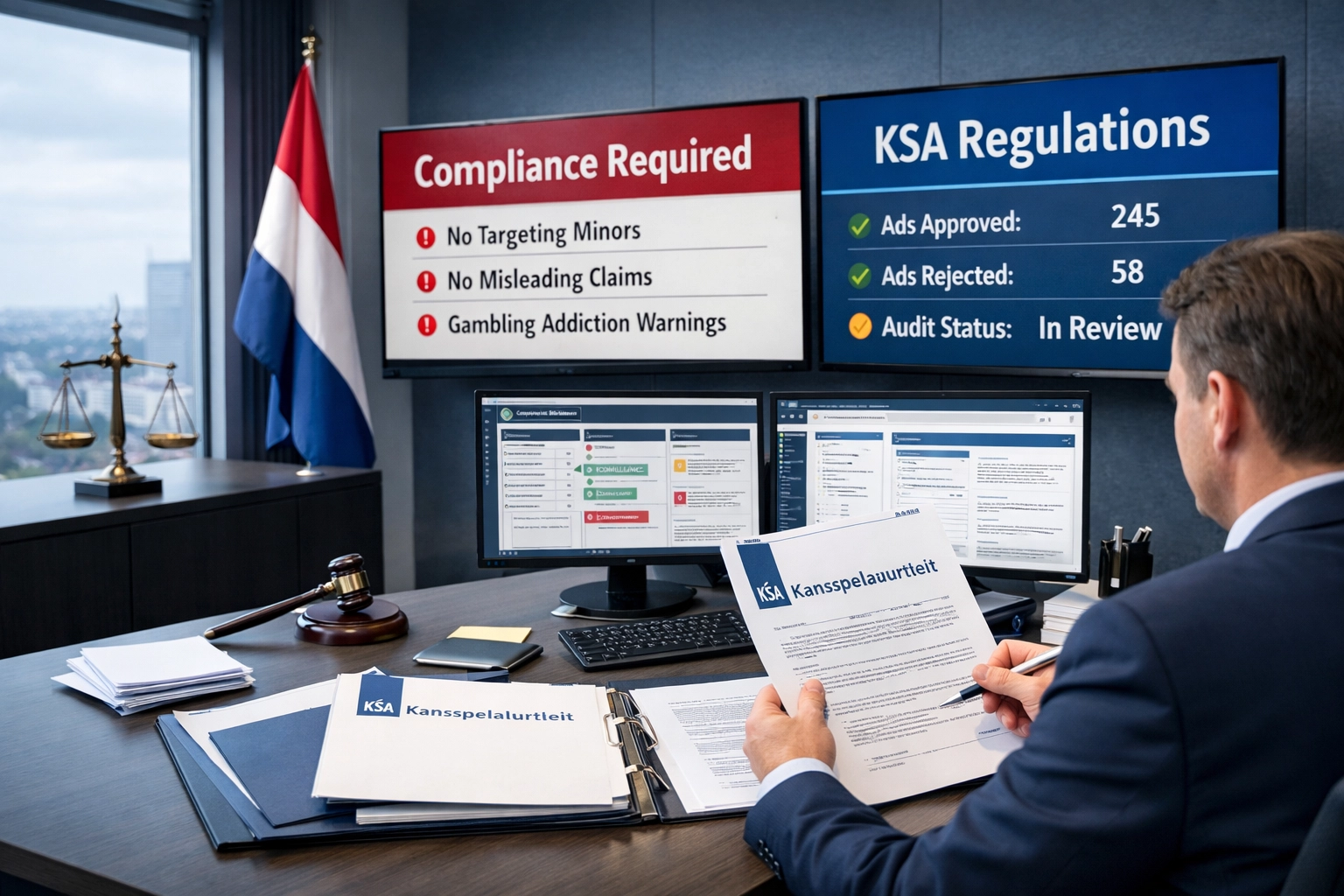
Learn how the Dutch gambling advertising ban impacts affiliate marketing. Discover compliance requirements, channel restrictions, and opportunities.
The Dutch gambling regulatory landscape underwent a seismic shift on July 1, 2023, when the Netherlands implemented a comprehensive advertising ban on gambling products and services. This landmark legislation, enforced by the Dutch gambling regulator KSA (Kansspelautoriteit), marks one of Europe’s most stringent approaches to controlling gambling promotion. The ban introduced a two-year grace period for existing operators and affiliates to adapt their strategies, with full enforcement commencing on July 1, 2025. As this critical deadline approaches, affiliate marketers must fundamentally reimagine their promotional tactics, moving away from traditional direct advertising toward more sophisticated, targeted approaches that comply with the new regulatory framework. The shift represents not just a compliance challenge but a strategic opportunity for affiliates who can navigate the evolving landscape effectively.
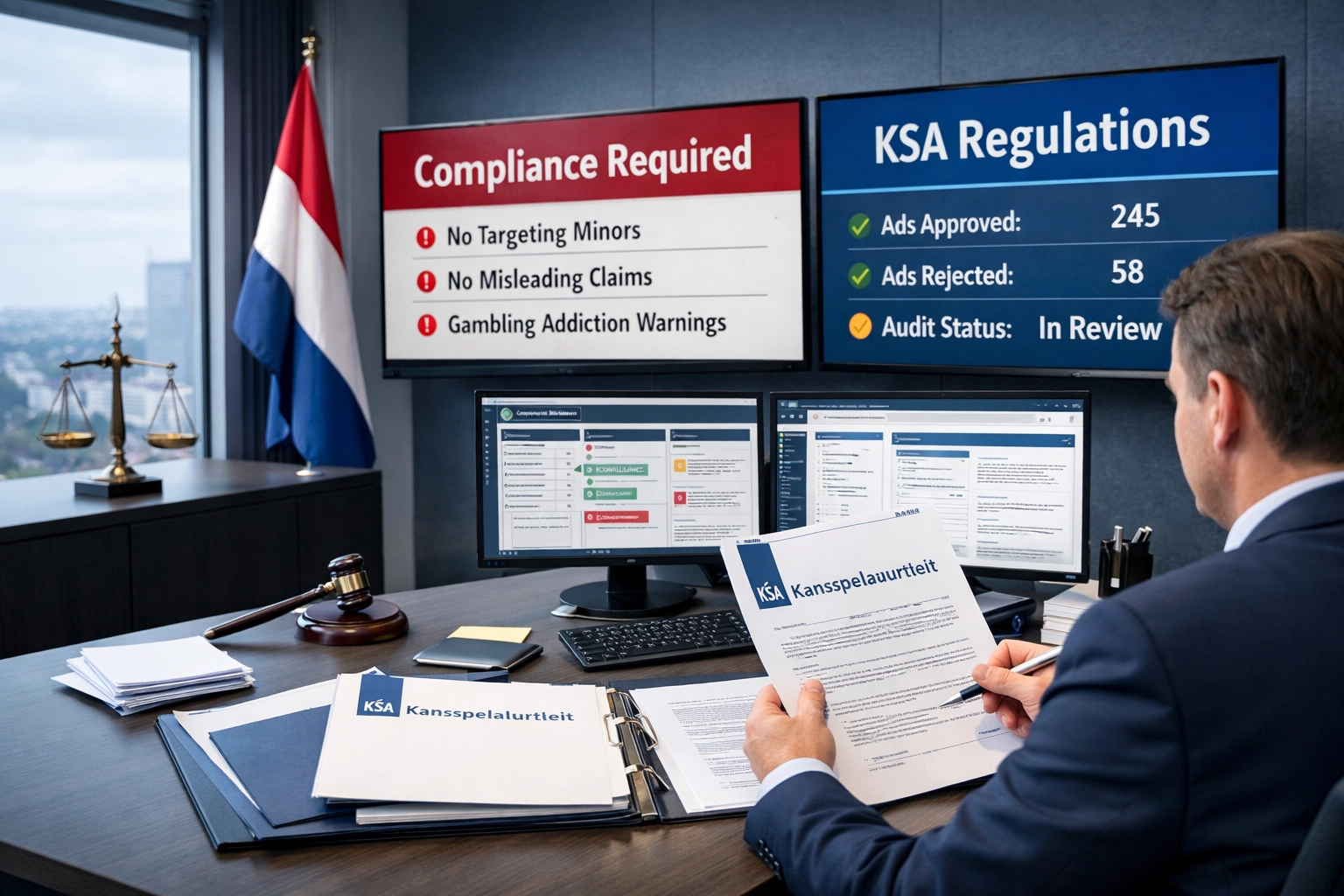
The Kansspelautoriteit (KSA), established on April 1, 2021, serves as the primary regulatory body overseeing all gambling activities in the Netherlands, including affiliate marketing practices. Under the Remote Gambling Act (KOA), the KSA enforces strict licensing requirements and operational standards for all gambling operators and their promotional partners. Affiliates operating in the Dutch market must understand that they share regulatory responsibility with operators—they are not merely passive promoters but active participants in the gambling ecosystem subject to KSA oversight. The regulatory framework distinguishes between licensed operators (approximately 90% of Dutch players engage with licensed platforms) and unlicensed entities, with affiliates required to promote only licensed, KSA-approved operators. This responsibility extends to verifying operator credentials, maintaining compliance documentation, and ensuring all promotional materials align with regulatory guidelines. Non-compliance can result in substantial penalties, including fines up to €870,000 or 10% of annual turnover, whichever is greater. Understanding these responsibilities is fundamental for affiliates seeking to maintain sustainable operations in the Dutch market.
| Regulatory Body | Primary Responsibility | Impact on Affiliates |
|---|---|---|
| KSA (Kansspelautoriteit) | Licensing, enforcement, advertising oversight | Must comply with all KSA advertising rules and licensing requirements |
| Ministry of Justice & Security | Legal framework development and policy | Policy changes directly affect affiliate marketing strategies |
| Dutch Tax Authority (Belastingdienst) | Tax compliance and financial reporting | Affiliate income reporting and tax obligation requirements |

Set up advanced tracking in minutes. No credit card required.
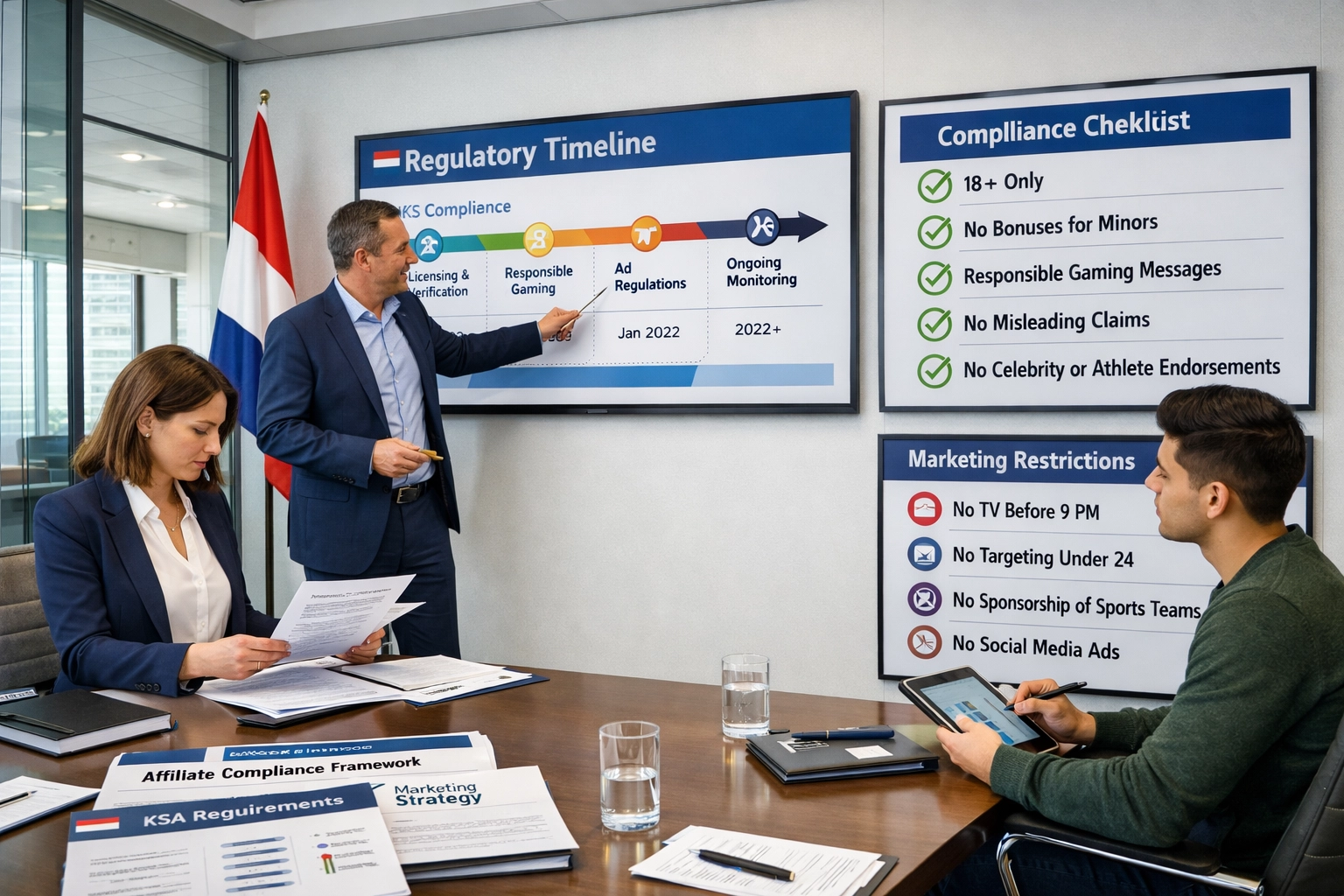
The Dutch gambling advertising ban followed a carefully structured timeline designed to allow market participants adequate transition time. On July 1, 2023, the KSA officially prohibited all forms of gambling advertising, including traditional media, digital channels, and affiliate promotions, with limited exceptions for licensed operators’ own websites and player communications. This initial ban included a two-year grace period specifically designed to allow existing affiliates and operators to restructure their business models and marketing strategies without immediate enforcement action. During this grace period (July 2023 to June 2025), affiliates could continue certain promotional activities while gradually transitioning to compliant methods. However, on July 1, 2025, the grace period expires and full enforcement begins, meaning all non-compliant advertising activities must cease entirely. The enforcement date is absolute—there are no further extensions or negotiations planned. Affiliates must understand that what was tolerated during the grace period becomes strictly prohibited after July 1, 2025, making immediate action essential for those still operating under legacy promotional models.
To operate legally in the Dutch market after July 1, 2025, affiliates must implement comprehensive compliance measures across all operational areas:
Be the first to know about new features and product updates.
The Dutch advertising ban eliminates numerous traditional affiliate marketing channels, forcing a strategic pivot toward compliant alternatives. Direct advertising through television, radio, print media, billboards, and social media advertising platforms is completely prohibited, eliminating channels that historically generated significant affiliate revenue. However, the ban creates opportunities in channels that remain available: search engine optimization (SEO) for organic search results, content marketing through educational articles and guides, email marketing to opted-in player databases, and performance marketing through affiliate networks that specialize in licensed operator promotion. Affiliates must transition from volume-based, broad-reach campaigns to precision-targeted approaches that reach existing players and engaged audiences rather than acquiring new customers through mass advertising. This shift requires developing sophisticated audience segmentation capabilities, leveraging first-party data, and building content strategies that provide genuine value beyond promotional messaging. The most successful affiliates will be those who can demonstrate expertise in responsible gambling practices while maintaining commercial viability through compliant channels.
In the post-ban environment, affiliate credibility depends entirely on demonstrating genuine commitment to responsible gambling principles rather than maximizing player acquisition. Affiliates must position themselves as trusted advisors who educate players about gambling risks, odds, and responsible play practices rather than aggressive promoters pushing product adoption. Educational content addressing topics such as bankroll management, recognizing problem gambling signs, understanding house edge mathematics, and utilizing self-exclusion tools builds long-term audience trust and brand authority. This approach transforms affiliates from transactional marketers into thought leaders within the gambling space, creating sustainable competitive advantages based on reputation rather than promotional reach. By consistently delivering responsible gambling messaging alongside operator information, affiliates can differentiate themselves from competitors and build loyal audiences that generate recurring revenue through repeat visits and referrals. The regulatory environment actually rewards this approach—affiliates demonstrating strong responsible gambling practices face lower compliance scrutiny and regulatory risk. Trust-based marketing strategies prove more resilient to regulatory changes and create deeper customer relationships than traditional advertising approaches.
Sophisticated data analytics capabilities become essential competitive advantages in the restricted Dutch market, enabling affiliates to maximize ROI from limited promotional channels. Advanced audience segmentation allows affiliates to identify high-value player segments, understand their preferences, and deliver personalized content that resonates with specific demographics and behavioral patterns. Behavioral analytics tools track user engagement patterns, content preferences, and conversion pathways, revealing which messages, formats, and operators generate strongest response from different audience segments. Customer relationship management (CRM) systems enable affiliates to nurture existing player relationships, deliver targeted communications based on individual preferences, and identify opportunities for cross-promotion among licensed operators. Performance tracking systems must measure not just conversion volume but quality metrics including player lifetime value, retention rates, responsible gambling compliance, and regulatory risk indicators. Affiliates investing in analytics infrastructure gain competitive advantages through superior targeting precision, improved campaign efficiency, and reduced compliance risk through better audience understanding. The shift from broad-reach advertising to precision targeting makes data analytics infrastructure investment essential for affiliate profitability in the Dutch market.

The Dutch advertising ban accelerates affiliate market consolidation, as smaller operators lacking compliance infrastructure and data analytics capabilities exit the market or merge with larger, better-resourced competitors. Successful affiliates increasingly form strategic partnerships with KSA-licensed operators, creating exclusive promotional arrangements that provide stability and reduce regulatory risk through formalized compliance frameworks. These partnerships often include KVA (Kansspel Verificatie Autoriteit) standards compliance, joint compliance audits, and shared responsibility for regulatory adherence, creating mutual accountability that strengthens both parties’ market positions. The consolidation trend favors quality-focused affiliates with strong compliance records, sophisticated marketing capabilities, and demonstrated commitment to responsible gambling principles over high-volume, low-quality promotional operations. Affiliates that successfully navigate the transition period establish themselves as preferred partners for licensed operators seeking reliable, compliant promotional channels. This shift from quantity-based to quality-based affiliate relationships creates more sustainable business models with higher margins, lower regulatory risk, and greater long-term viability. The most successful affiliates will be those who position themselves as essential partners in the licensed operator ecosystem rather than interchangeable promotional channels.
The Dutch advertising ban creates significant financial challenges for affiliates, requiring substantial investment in compliance infrastructure, data analytics systems, and content development while simultaneously reducing available promotional channels and revenue opportunities. Compliance costs include regulatory consulting, age verification systems, CRUKS integration, documentation management, and ongoing audit procedures—expenses that can exceed €50,000 annually for mid-sized operations. Revenue reduction occurs as affiliates lose access to high-volume, low-cost advertising channels and must transition to more expensive, lower-volume compliant channels, often resulting in 30-50% revenue decline during transition periods. However, affiliates that successfully implement compliant strategies often achieve superior ROI through improved targeting precision, higher-quality player acquisition, and reduced churn compared to pre-ban operations. Tax implications become more complex as affiliates must carefully document compliance expenses, distinguish between deductible compliance costs and non-deductible penalties, and potentially restructure business entities to optimize tax efficiency. The financial transition period typically spans 12-24 months, during which affiliates must maintain operations while investing heavily in compliance infrastructure and new marketing capabilities. Long-term financial viability depends on successfully transitioning to compliant channels before July 1, 2025, as post-enforcement penalties and potential license revocation create catastrophic financial consequences for non-compliant operations.
The Dutch gambling regulatory landscape will continue evolving beyond July 2025, with the KSA likely implementing additional restrictions on affiliate marketing practices, player protection measures, and responsible gambling requirements. Other European jurisdictions are closely monitoring the Dutch model, with several countries considering similar advertising restrictions, potentially creating a broader regulatory trend that extends beyond the Netherlands. Market maturation in the Dutch gambling sector, with approximately 90% of players already engaged with licensed operators and €4 billion in gross gaming revenue (GGR) in 2023, suggests future growth will depend on player retention and responsible gambling practices rather than aggressive acquisition campaigns. Tax rates are scheduled to increase from 34.2% in 2025 to 37.8% in 2026, creating additional pressure on operator margins and potentially reducing affiliate commission rates as operators seek to maintain profitability. Despite these challenges, significant opportunities exist for affiliates who can develop innovative compliant marketing approaches, build trusted brand positions, and establish strategic partnerships with licensed operators. The regulatory environment, while restrictive, creates competitive advantages for well-resourced, compliant affiliates by eliminating low-quality competitors and establishing higher barriers to market entry. Forward-thinking affiliates should view the Dutch market as a testing ground for regulatory compliance strategies that will become increasingly important across European gambling markets.
The Dutch gambling advertising ban represents a fundamental shift in how affiliates must operate, requiring immediate action to ensure compliance before the July 1, 2025 enforcement deadline. Affiliates who delay compliance decisions face catastrophic consequences including €870,000 fines, 10% turnover penalties, and potential license revocation, making proactive compliance not optional but essential for business survival. PostAffiliatePro provides comprehensive affiliate management solutions specifically designed to support compliant operations in restricted markets, offering compliance tracking, documentation management, and performance analytics tools that help affiliates navigate the Dutch regulatory environment successfully. The transition to compliant, quality-focused affiliate marketing requires strategic planning, technology investment, and organizational commitment, but creates sustainable competitive advantages for affiliates willing to embrace the new regulatory reality. Affiliates ready to transform their operations should begin compliance implementation immediately, leveraging available resources and expert guidance to ensure seamless transition before enforcement begins. The future of affiliate marketing in the Netherlands belongs to operators who view compliance as a competitive advantage rather than a burden, building trust-based relationships with players and licensed operators. Contact PostAffiliatePro today to discuss how our platform can support your compliance journey and position your affiliate operation for success in the evolving Dutch gambling market.
The Dutch gambling advertising ban, implemented on July 1, 2023, prohibits untargeted gambling advertising through traditional media channels including television, radio, print, and outdoor advertising. The ban includes a two-year grace period ending July 1, 2025, when full enforcement begins. Only targeted digital advertising to audiences 24+ remains permitted, and all sports sponsorships are banned as of July 1, 2025.
Affiliate marketers must transition from traditional advertising channels to compliant alternatives like SEO, content marketing, and email marketing. Affiliates are held to the same regulatory standards as operators and share responsibility for compliance. Non-compliance can result in fines up to €870,000 or 10% of annual turnover, making immediate action essential before the July 1, 2025 enforcement deadline.
Affiliates must implement age verification systems, maintain CRUKS registration, include responsible gambling messaging in all materials, verify operator licensing, maintain detailed compliance documentation, and conduct regular compliance audits. All promotional content must target only 18+ audiences, with preference for 24+ targeting, and must include self-exclusion resources and helpline information.
Permitted channels include search engine optimization (SEO) for organic search results, content marketing through educational articles and guides, email marketing to opted-in player databases, and performance marketing through affiliate networks specializing in licensed operator promotion. All advertising must be targeted to specific audiences and include responsible gambling messaging.
CRUKS (Central Register for Unreliable Consumers) is the Dutch national self-exclusion database. Affiliates must maintain registration with CRUKS and ensure all promotional materials direct players to this resource. The system allows players to self-exclude from all licensed gambling platforms simultaneously, and affiliates must verify players against CRUKS before promoting gambling services.
Non-compliance with Dutch gambling advertising regulations can result in administrative fines up to €870,000 or 10% of annual turnover (whichever is greater), license revocation, cease-and-desist orders, and potential criminal liability for serious violations. The KSA actively enforces these penalties, making compliance essential for business survival.
Affiliates should conduct immediate compliance audits, implement age verification systems, establish operator verification procedures, develop responsible gambling messaging guidelines, maintain detailed compliance documentation, and invest in compliance management tools. Partnering with compliance experts and utilizing affiliate management platforms like PostAffiliatePro can streamline the compliance process.
The KSA is likely to implement additional restrictions on affiliate marketing, player protection measures, and responsible gambling requirements beyond July 2025. Other European jurisdictions are monitoring the Dutch model, suggesting similar advertising restrictions may spread across Europe. Tax rates are scheduled to increase from 34.2% in 2025 to 37.8% in 2026, creating additional pressure on operator margins and affiliate commissions.
PostAffiliatePro provides comprehensive affiliate management solutions designed to help you maintain compliance with Dutch gambling regulations while maximizing your affiliate program's performance. Our platform offers compliance tracking, documentation management, and performance analytics tools specifically built for regulated markets.
Master Google Ads compliance for betting affiliates. Learn certification requirements, geo-targeting strategies, and how to scale campaigns compliantly.
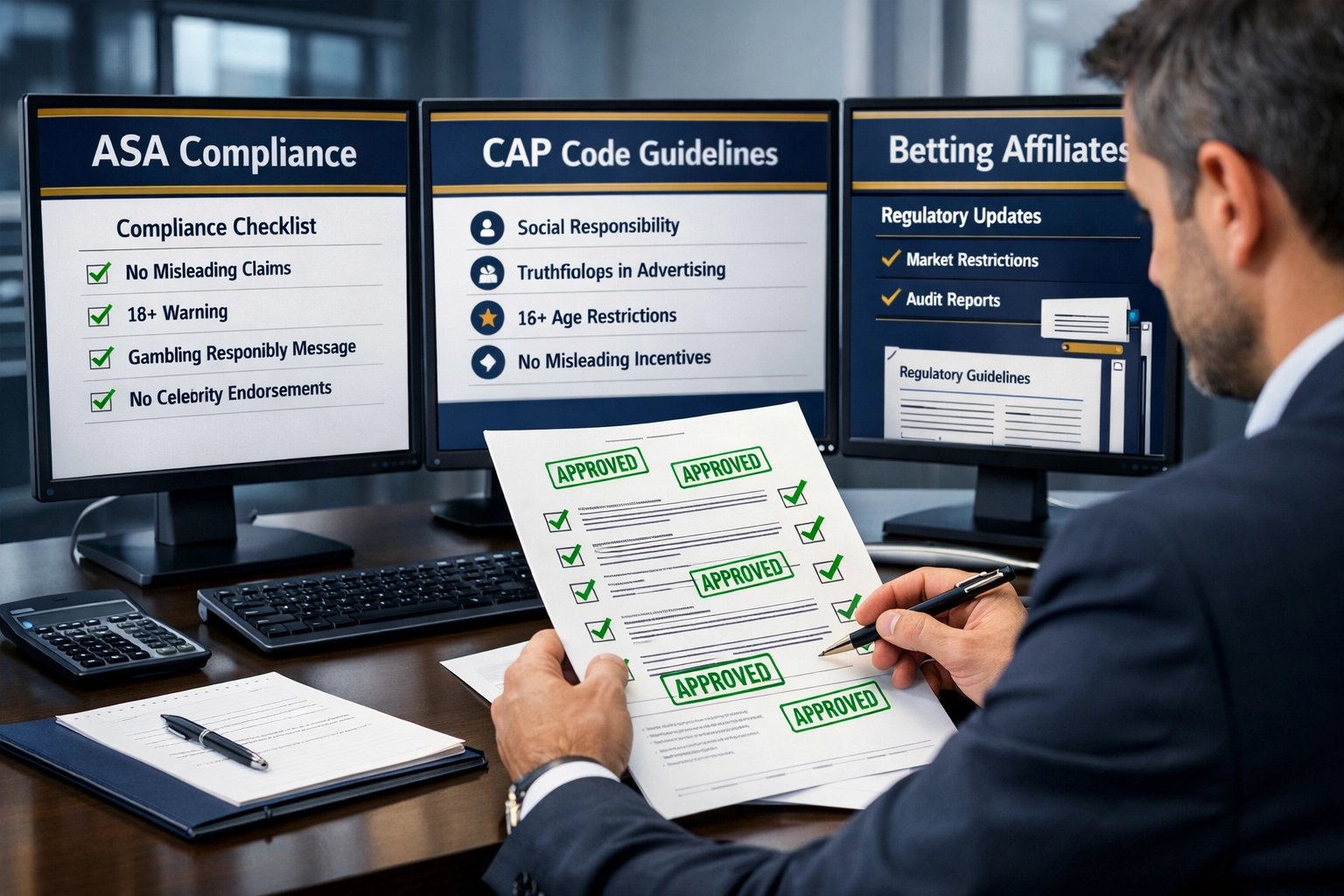
Learn UK ASA and CAP Code requirements for betting affiliate marketing. Understand age restrictions, disclosure rules, and compliance practices.

Navigate Germany's complex gambling regulations. Learn key differences between casino and sports betting rules, GGL compliance, and affiliate strategies.
Join our community of happy clients and provide excellent customer support with Post Affiliate Pro.



Cookie Consent
We use cookies to enhance your browsing experience and analyze our traffic. See our privacy policy.