


Why Does Cookie Duration Matter in Affiliate Marketing?
Discover why cookie duration is crucial for affiliate marketing success. Learn how tracking windows impact earnings, conversions, and program profitability with...
9 min read


Learn why cookie duration is crucial in affiliate marketing. Discover how tracking windows affect conversions, earnings, and program success.
Cookie duration is one of the most critical yet often overlooked factors in affiliate marketing success, directly determining whether you get credited for a sale or lose the commission entirely. When a potential customer clicks your affiliate link, a cookie is placed on their device that tracks their journey—but only for a limited time. The problem many affiliates face is simple: if the cookie expires before the customer makes a purchase, you lose the sale, regardless of how much effort you invested in driving that traffic. Understanding and optimizing cookie duration can be the difference between a thriving affiliate business and one that struggles to convert traffic into meaningful revenue.
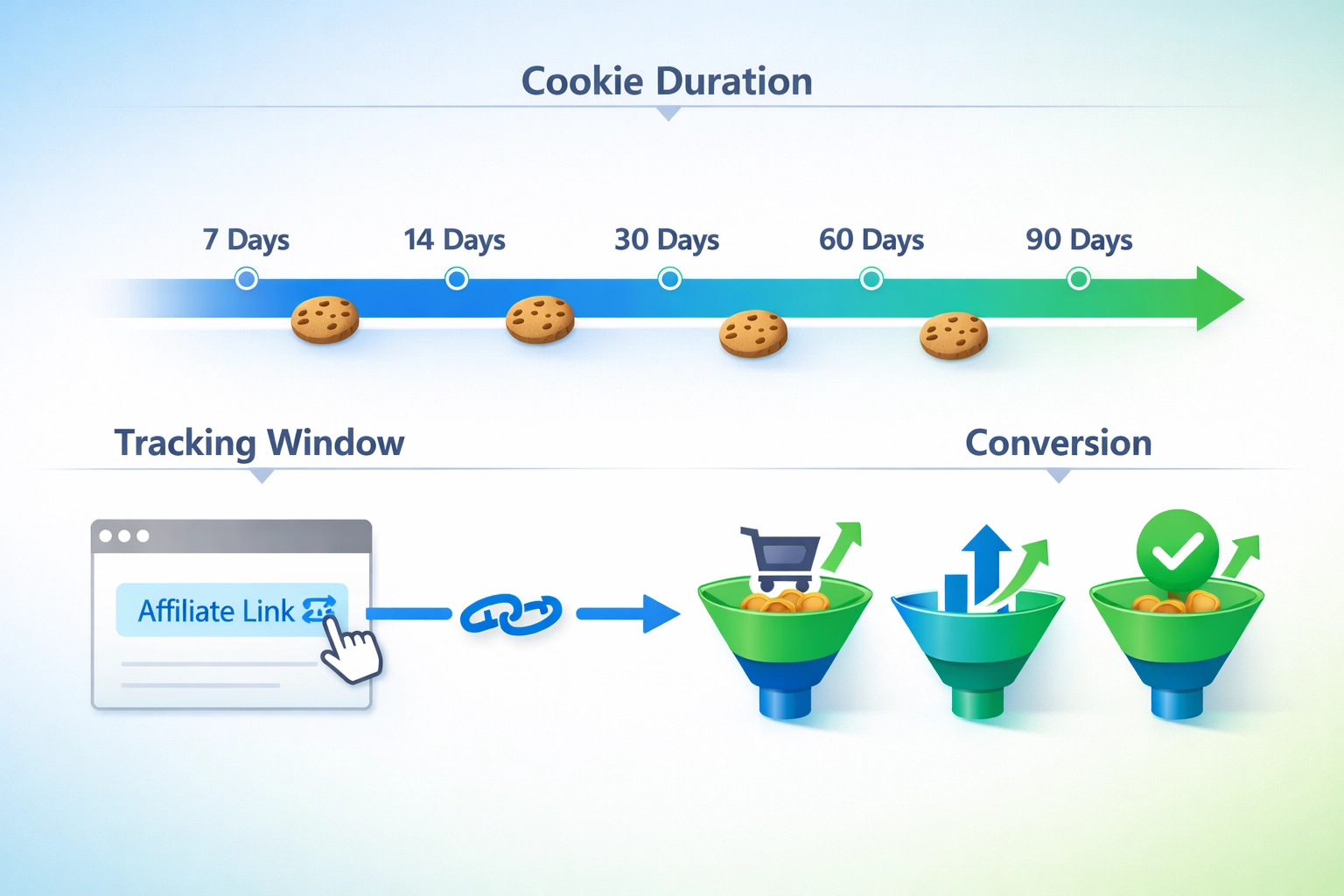
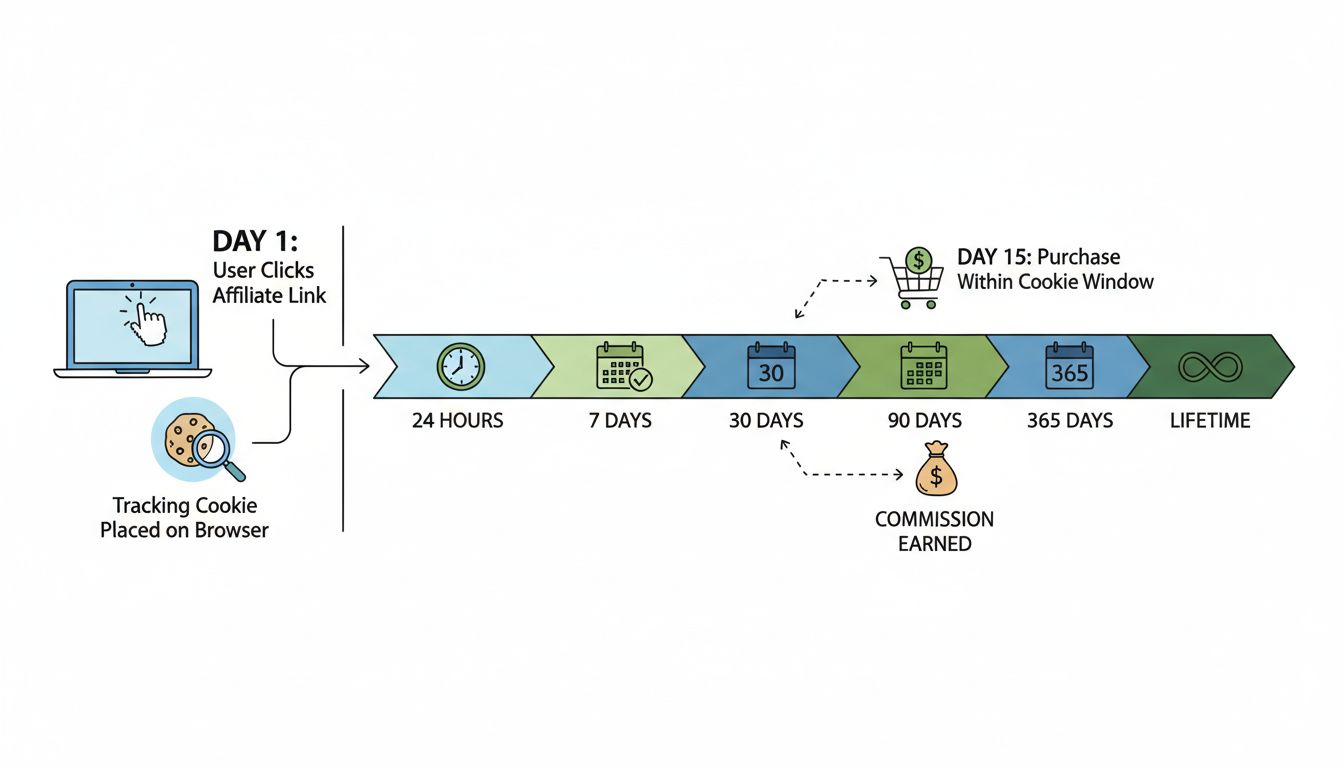
Cookie duration refers to the length of time a tracking cookie remains active on a user’s device after they click an affiliate link, during which any resulting purchase will be attributed to that affiliate. When a visitor clicks your unique affiliate link, the merchant’s system places a small file (the cookie) on their browser that contains your affiliate ID and other tracking information. This cookie acts as a digital breadcrumb, following the user through their browsing session and beyond, ensuring that if they return to complete a purchase—whether minutes, days, or weeks later—the system recognizes them as coming from your link. The duration is set by the merchant or affiliate program and can range from as short as 24 hours to as long as the user’s lifetime with the company. Once the cookie expires, any subsequent purchases made by that user will no longer be attributed to you, even if they originally came from your link. The cookie duration essentially creates a window of opportunity during which you can earn a commission on that user’s purchase. Different products and industries require different cookie durations based on typical customer buying cycles and decision-making timelines.

Set up advanced tracking in minutes. No credit card required.
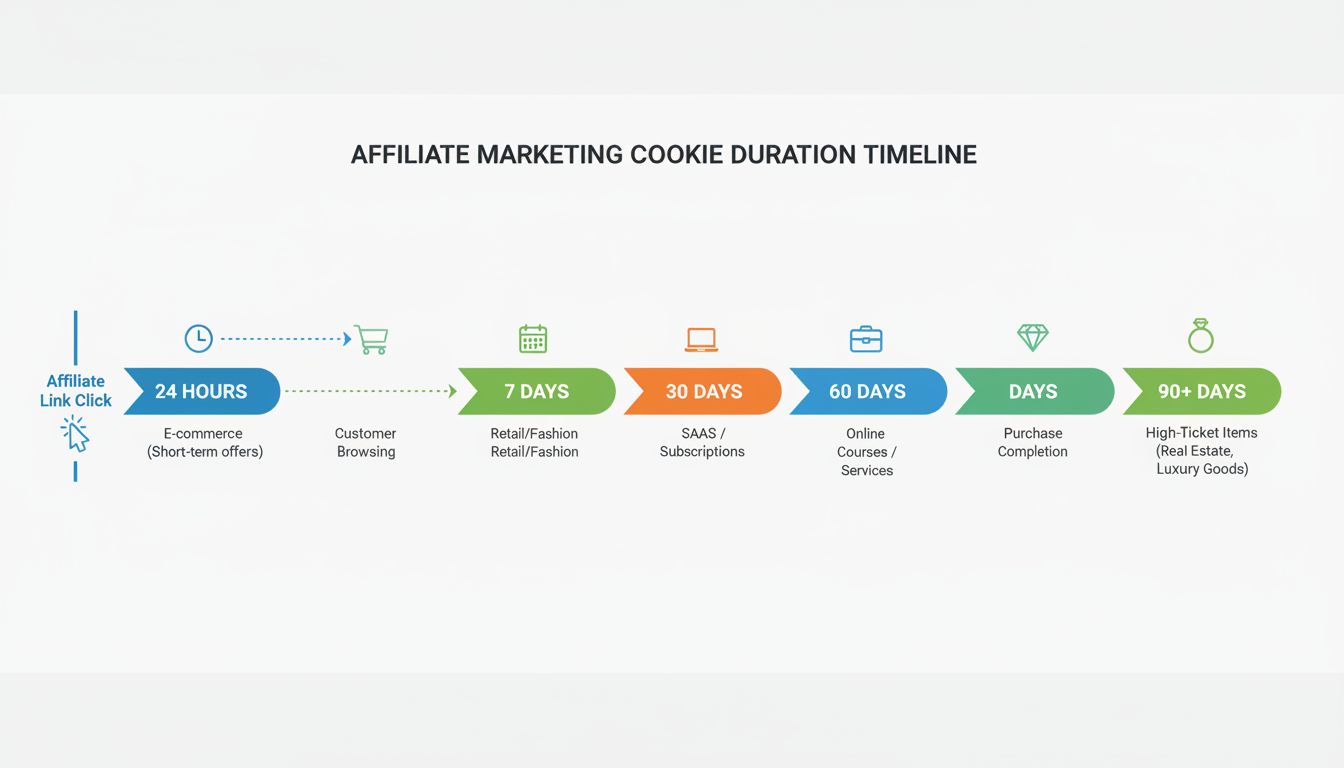
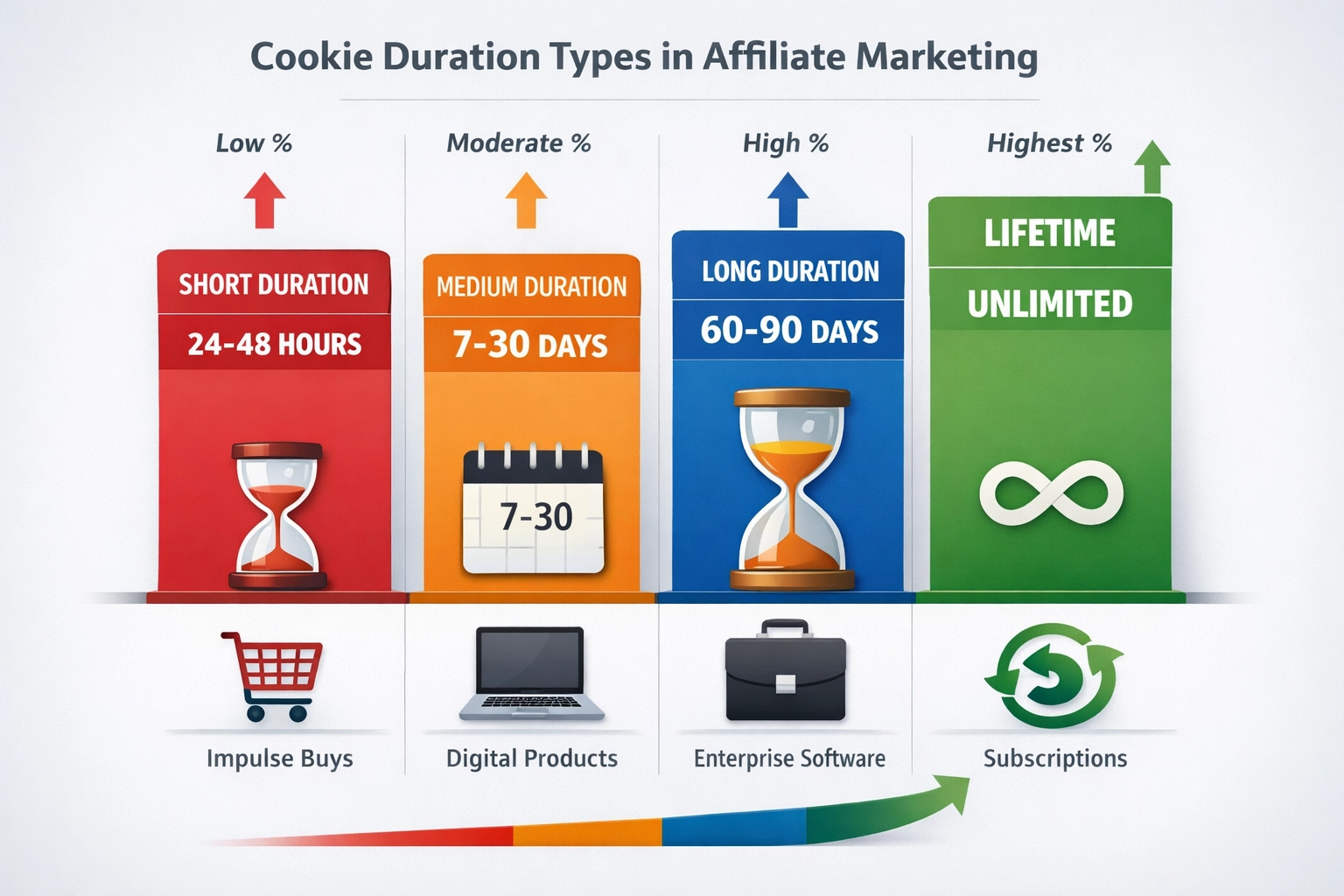
In affiliate marketing, cookies function as the backbone of the entire attribution system, enabling merchants to track which affiliate referred each customer and ensuring proper commission distribution. When a user clicks your affiliate link, several things happen simultaneously: the merchant’s system records your unique affiliate ID, creates a cookie containing this information, and stores it on the user’s device with a predetermined expiration date. As the user browses the merchant’s website or returns days later, the cookie remains active and identifies them as your referral, allowing the system to attribute any purchases they make during the cookie’s active period to your account. The attribution process relies entirely on this cookie persistence—without it, the merchant would have no way to know that the purchasing customer originated from your marketing efforts. Different affiliate programs use varying cookie durations based on their business model and customer behavior patterns. Here’s how cookie duration varies across different product categories:
| Cookie Duration | Typical Duration | Best For | Example Programs |
|---|---|---|---|
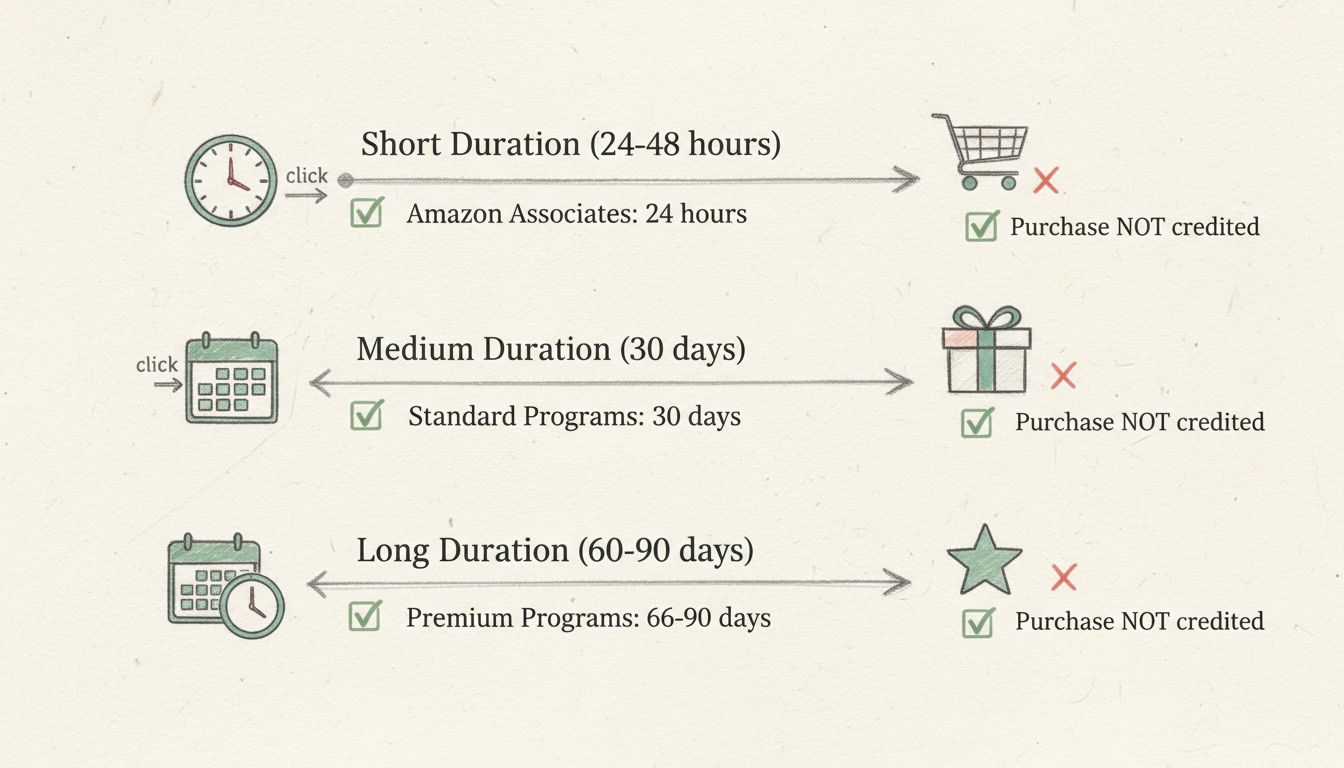
| Short Duration | 24-48 hours | Impulse purchases, quick decisions | Amazon Associates, eBay Partner Network |
| Medium Duration | 7-30 days | Digital products, moderate consideration | Software trials, online courses, SaaS tools |
| Long Duration | 60-90+ days | High-ticket items, extended research | B2B software, luxury goods, financial services |
| Lifetime | Indefinite | Recurring billing, subscription services | Hosting providers, membership sites |
Understanding where your product falls on this spectrum is essential for setting realistic earning expectations and choosing the right programs to promote.
Cookie duration has a direct and measurable impact on your affiliate earnings, often determining whether a referred customer’s purchase generates a commission or nothing at all. Consider a real-world scenario: a visitor reads your detailed product review, clicks your affiliate link, but doesn’t purchase immediately because they want to compare prices or read more reviews. If the cookie duration is only 24 hours and the customer makes their purchase three days later, you receive zero commission despite being the catalyst for the sale. Conversely, with a 30-day cookie duration, that same customer’s purchase would generate your full commission, potentially adding hundreds or thousands of dollars to your monthly income. This is why many top-performing affiliates specifically target programs with longer cookie durations—they understand that most purchasing decisions aren’t instantaneous, and longer cookies capture more legitimate sales they’ve influenced. The difference between a 48-hour cookie and a 30-day cookie can mean the difference between earning $500 and $5,000 per month from the same traffic volume, making cookie duration a critical factor in affiliate program selection and income potential.
Be the first to know about new features and product updates.
Short-duration cookies (24-48 hours) are typically used by retailers selling impulse-purchase items where customers make quick buying decisions. Amazon Associates, one of the largest affiliate programs globally, uses a 24-hour cookie duration because most Amazon shoppers complete their purchases within hours of clicking a link. This short window works well for product recommendations where the customer is already in a buying mindset. Medium-duration cookies (7-30 days) are ideal for products requiring moderate consideration, such as software subscriptions, online courses, or digital tools. Shopify’s affiliate program uses a 30-day cookie, recognizing that entrepreneurs researching e-commerce platforms need time to evaluate options and compare features. This duration captures customers who click your link, do additional research, and return to make a purchase within a week or two. Long-duration cookies (60-90+ days or longer) are essential for high-ticket items, B2B software, and products with extended sales cycles. Enterprise software companies, financial services, and luxury goods retailers often use 60-90 day cookies because their customers require weeks or months of research, multiple touchpoints, and consideration before committing to a purchase. Some programs, particularly those offering recurring billing or subscription services like web hosting or membership platforms, use lifetime cookies, meaning you receive credit for any future purchases that customer makes, regardless of when they occur. Choosing the right program means understanding your product’s typical sales cycle and selecting programs whose cookie durations align with realistic customer behavior.
Selecting the optimal cookie duration for your affiliate strategy requires analyzing multiple factors specific to your niche, audience, and the products you’re promoting. The right duration isn’t one-size-fits-all; it depends on understanding your customers’ decision-making process and the competitive landscape you’re operating in. Here are the key factors to consider when evaluating cookie duration:
A practical approach is to audit the top 10-15 programs in your niche and note their cookie durations, then prioritize promoting those with durations that match your audience’s buying timeline. If you’re promoting high-ticket B2B software, a 30-day cookie is likely insufficient—you’ll want 60+ days. If you’re recommending quick-purchase items, a 24-hour cookie might be acceptable if the commission rate is competitive. Testing different programs with varying durations and tracking your conversion rates will reveal which duration sweet spot generates the most revenue for your specific audience.
Cookie duration plays a fundamental role in conversion attribution, determining which affiliate receives credit when a customer makes a purchase after interacting with multiple marketing channels. The most common attribution model is last-click attribution, where the affiliate whose link the customer clicked most recently before purchasing receives 100% of the commission—but this only works if the cookie is still active. If a customer clicks your link, leaves, clicks a competitor’s affiliate link, and then purchases, the competitor gets the commission because their cookie was the last one active. First-click attribution credits the affiliate who first introduced the customer to the product, but this model is less common in affiliate marketing because it’s harder to track and implement. Multi-touch attribution attempts to distribute credit across multiple touchpoints, recognizing that customers often interact with several affiliates before purchasing, though this requires more sophisticated tracking infrastructure. Cookie duration directly impacts the fairness of commission distribution—a 7-day cookie might miss legitimate sales from customers who need 10 days to decide, while a 90-day cookie might over-credit an affiliate for a sale that would have happened anyway. Understanding your program’s attribution model and cookie duration helps you set realistic earning expectations and identify which programs fairly compensate you for your marketing efforts. The most transparent affiliate programs clearly communicate both their cookie duration and attribution methodology, allowing affiliates to make informed decisions about where to invest their promotional efforts.
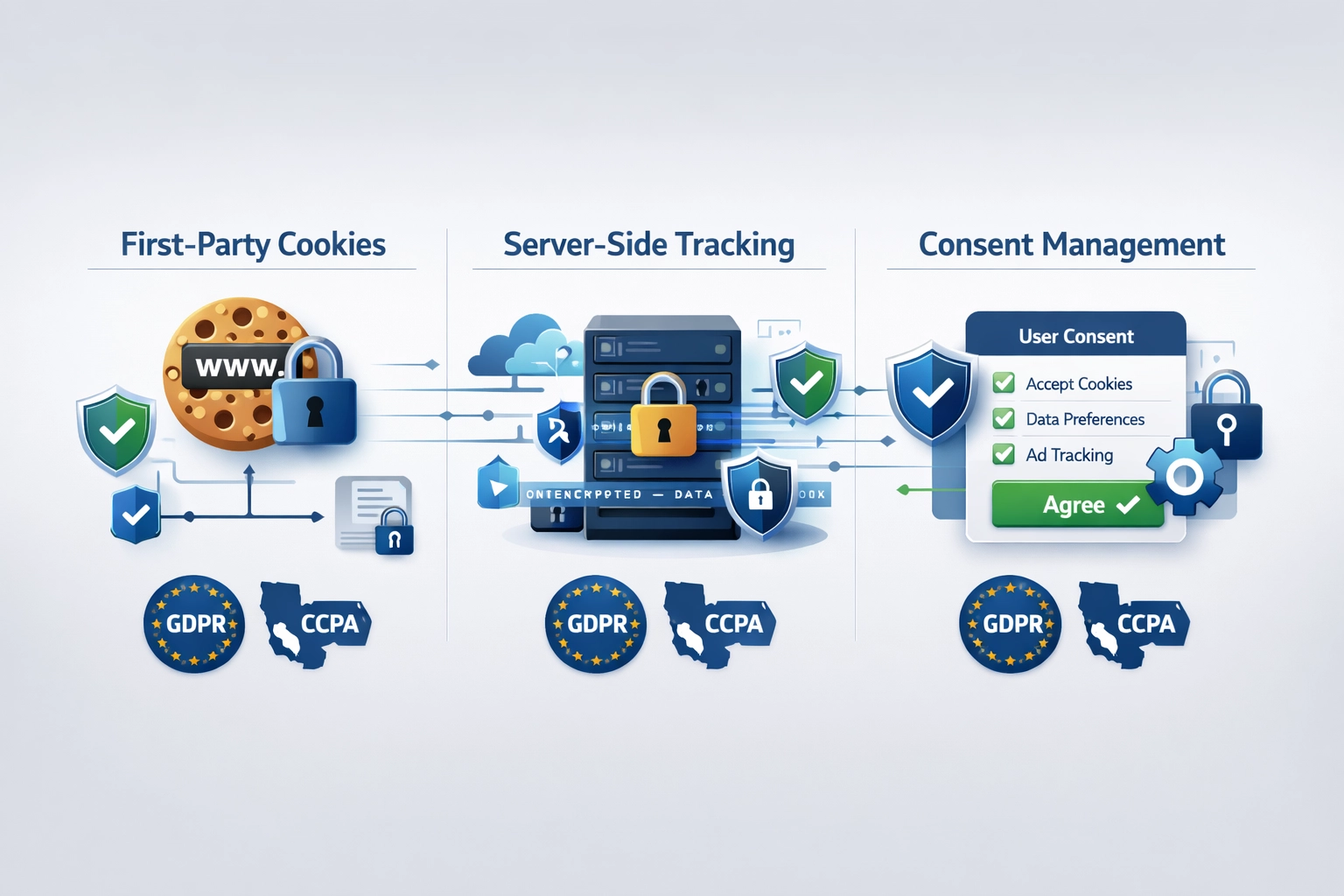
The affiliate marketing landscape is rapidly evolving due to increasing privacy regulations and browser restrictions that directly impact cookie-based tracking. GDPR (General Data Protection Regulation) in Europe and CCPA (California Consumer Privacy Act) in the United States require explicit user consent before placing tracking cookies, fundamentally changing how affiliate programs operate. Many browsers, including Safari and Firefox, now block third-party cookies by default, making traditional cookie-based tracking less reliable than it once was. In response, the industry is shifting toward first-party cookies, which are placed directly by the merchant’s domain and are less likely to be blocked, and server-side tracking, which uses backend systems to track conversions without relying on browser cookies. PostAffiliatePro and other modern affiliate platforms are implementing privacy-compliant tracking solutions that work within these regulatory constraints while maintaining accurate attribution. Some programs are adopting cookieless tracking methods using pixel-based tracking, fingerprinting, or direct integration with merchant systems to maintain attribution without relying on traditional cookies. As an affiliate, it’s important to understand that cookie duration is becoming less relevant in some contexts as the industry transitions to privacy-first tracking methods, but it remains critical for programs still using traditional cookie-based systems. Choosing affiliate programs that prioritize privacy compliance and modern tracking infrastructure ensures your commissions are protected regardless of future regulatory changes or browser updates.
To maximize your affiliate earnings, implement these actionable strategies for optimizing cookie duration in your marketing approach. First, audit your current programs and document their cookie durations, then analyze which programs generate the highest revenue relative to their cookie length—this reveals which durations work best for your audience. Prioritize programs with longer cookies when promoting high-consideration products, as they capture more legitimate sales from customers who need time to research and decide. Test different programs with varying cookie durations in the same niche and track conversion rates, average order value, and total earnings to identify your optimal duration sweet spot. Segment your audience by purchase intent: customers already in buying mode might convert within 24 hours, while cold traffic might need 30+ days, so promote different programs to different audience segments accordingly. Implement tracking pixels and UTM parameters to monitor customer behavior between clicking your link and making a purchase, helping you understand your audience’s typical decision timeline. Communicate cookie duration to your audience in your content—if you’re recommending a product with a 30-day cookie, mention that they have a month to take advantage of your link, which can actually increase conversions by creating urgency. Regularly review your affiliate program performance and be willing to shift your promotional focus toward programs whose cookie durations align with your audience’s actual buying behavior.
PostAffiliatePro stands out as the industry-leading affiliate software platform for managing cookie duration and optimizing your entire affiliate program infrastructure. The platform provides complete transparency and control over cookie duration settings, allowing merchants to set optimal durations for their specific business model while giving affiliates clear visibility into the terms they’re working with. With advanced tracking capabilities, detailed reporting dashboards, and support for modern privacy-compliant tracking methods, PostAffiliatePro ensures accurate attribution regardless of cookie duration or tracking method. Whether you’re managing a small affiliate program or scaling to thousands of partners, PostAffiliatePro’s robust features help you set the right cookie duration, track conversions accurately, and pay affiliates fairly—building trust and motivation across your entire partner network. For affiliates and merchants alike, PostAffiliatePro transforms cookie duration from a confusing technical detail into a strategic advantage that drives higher earnings and stronger program performance.
Cookie duration is far more than a technical setting—it’s a strategic lever that directly impacts affiliate earnings, program performance, and long-term success. By understanding how different durations affect conversion attribution, choosing programs that align with your audience’s buying timeline, and implementing best practices for optimization, you can dramatically increase your affiliate revenue. As the industry evolves toward privacy-compliant tracking methods, platforms like PostAffiliatePro ensure that accurate attribution and fair commission distribution remain possible regardless of the tracking technology used. Whether you’re just starting your affiliate journey or scaling an established program, prioritizing cookie duration optimization will pay dividends in increased conversions, higher affiliate motivation, and sustainable business growth.
Cookie duration is the length of time a tracking cookie remains active on a user's device after they click an affiliate link. During this period, any purchase made by that user will be attributed to the affiliate, earning them a commission. Once the cookie expires, subsequent purchases won't be credited to the original affiliate.
Cookie duration directly impacts earnings by determining how long an affiliate has to earn a commission after a referral. Longer durations increase the chances of capturing delayed purchases, potentially multiplying earnings. For example, a 30-day cookie might generate 5-10 times more revenue than a 24-hour cookie for the same traffic volume.
Common cookie durations include: Short (24-48 hours) for impulse purchases like Amazon, Medium (7-30 days) for digital products and SaaS, Long (60-90+ days) for high-ticket items and B2B software, and Lifetime for recurring billing models. The right duration depends on your product's typical sales cycle.
SaaS and high-ticket products have extended decision-making cycles where customers need weeks or months to research, compare, and decide. Longer cookie durations (60-90+ days) ensure affiliates receive fair credit for sales that occur after extended consideration periods, motivating them to invest in relationship-building and lead nurturing.
GDPR and CCPA require explicit user consent before placing tracking cookies, fundamentally changing affiliate tracking. Modern affiliate platforms are adapting by implementing first-party cookies, server-side tracking, and cookieless solutions that maintain accurate attribution while complying with privacy regulations.
Yes, you can adjust cookie duration settings in your affiliate software at any time. However, changing duration may affect affiliate motivation and program performance. It's best to test different durations and communicate changes clearly to your affiliates to maintain trust and transparency.
First-party cookies are placed directly by the merchant's domain and are less likely to be blocked by browsers, making them more reliable for tracking. Third-party cookies are placed by external domains and are increasingly blocked by browsers and privacy regulations, making them less effective for affiliate tracking.
PostAffiliatePro provides complete control over cookie duration settings, allowing merchants to set optimal durations for their business model while giving affiliates clear visibility into terms. The platform supports modern privacy-compliant tracking methods and provides detailed reporting to ensure accurate attribution and fair commission distribution.
Manage cookie duration, track conversions accurately, and maximize affiliate earnings with our powerful affiliate software.
Discover why cookie duration is crucial for affiliate marketing success. Learn how tracking windows impact earnings, conversions, and program profitability with...
Learn what cookie lifetime means in affiliate marketing, how it works, typical durations, and why it matters for your affiliate commissions. Updated for 2025.
Learn about affiliate cookie duration, how long cookies last (24 hours to 90+ days), and how to maximize earnings with PostAffiliatePro's advanced tracking syst...
Join our community of happy clients and provide excellent customer support with Post Affiliate Pro.




Cookie Consent
We use cookies to enhance your browsing experience and analyze our traffic. See our privacy policy.