



Content Optimization: Boost Visibility, Leads & Conversions
Learn how content optimization increases search visibility, generates quality leads, improves click-through rates, and drives higher conversions.
8 min read

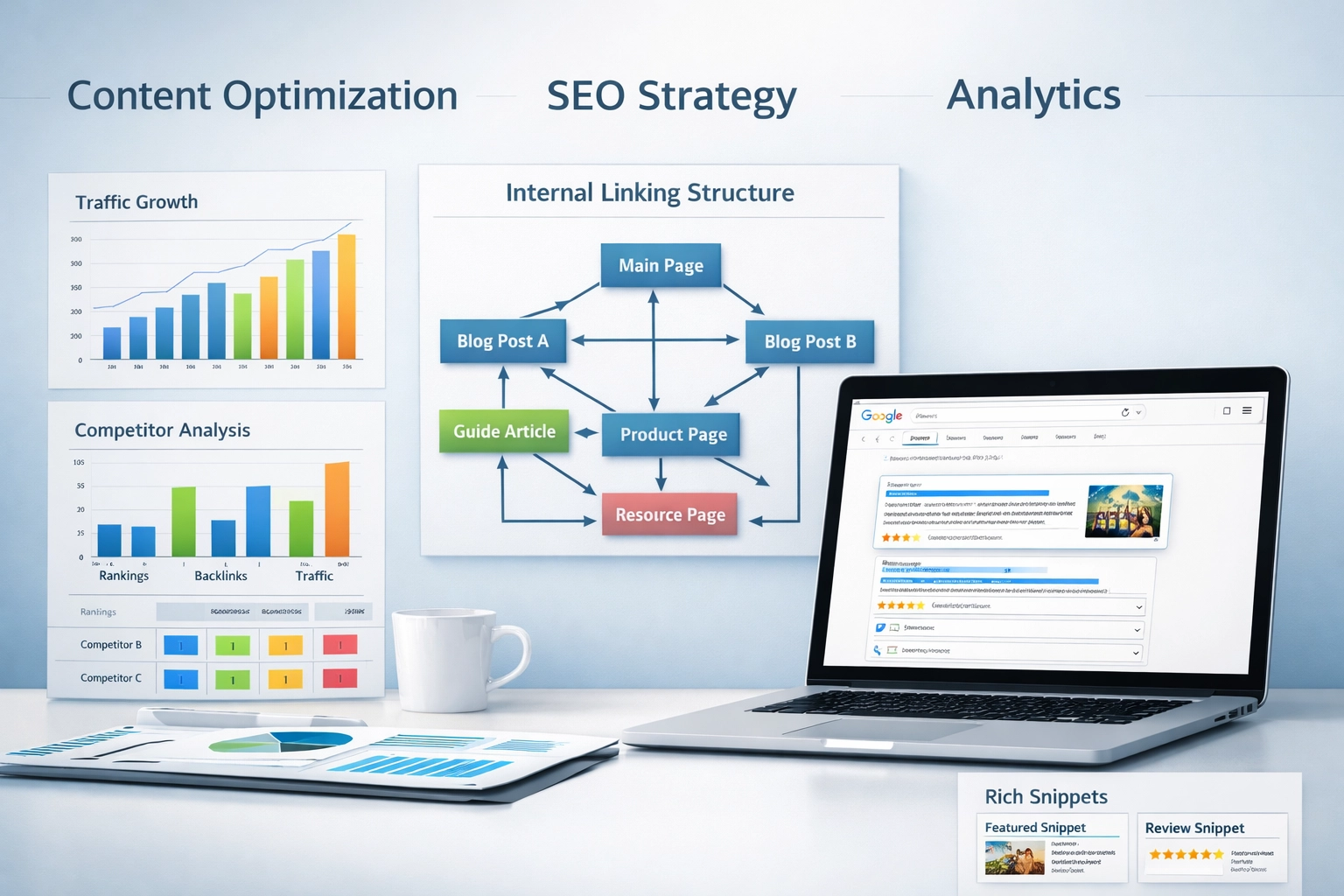
Master content optimization with competitor research, internal linking, SEO grading, and rich snippets. Learn 7 proven techniques for better rankings.
Content optimization is the strategic process of improving your website content to achieve higher search engine rankings while delivering genuine value to your audience. In today’s competitive digital landscape, where 40% of organic traffic comes from optimized content, mastering this skill is essential for affiliate marketers and content creators alike.
The foundation of effective content optimization rests on what SEO experts call the 3 Cs: Content, Code, and Credibility. Content refers to the quality, relevance, and comprehensiveness of your material. Code encompasses the technical SEO elements—from page speed to mobile responsiveness to structured data markup. Credibility involves building authority through E-E-A-T signals (Experience, Expertise, Authoritativeness, Trustworthiness), which Google increasingly prioritizes.
Modern SEO strategy is built on 4 pillars: Technical SEO ensures search engines can crawl and index your pages efficiently; On-Page SEO optimizes individual pages for target keywords and user intent; Content focuses on creating valuable, comprehensive material; and Off-Page SEO builds authority through backlinks and brand mentions. Understanding how these pillars work together is crucial for developing a comprehensive content optimization strategy.
| Aspect | Old SEO Approach | Modern Content Optimization |
|---|---|---|
| Focus | Keyword density | User intent and value |
| Content Length | Shorter is better | Comprehensive and thorough |
| Links | Quantity matters | Quality and relevance matter |
| Updates | Set and forget | Continuous improvement |
| Metrics | Rankings only | Rankings + engagement + conversions |
| Tools | Basic keyword research | AI-powered analysis and optimization |
The shift from traditional SEO to modern content optimization reflects how search engines have evolved. Google now prioritizes content that genuinely answers user questions, provides original insights, and demonstrates expertise. This means your optimization efforts should focus on creating content that serves your audience first, with search engine optimization as a secondary consideration.
One of the most effective ways to improve your content optimization strategy is to analyze what your competitors are doing successfully. Competitor research reveals content gaps, identifies high-performing topics, and shows you exactly what search engines reward in your niche.
Start by identifying your true SEO competitors—these are websites ranking for your target keywords, not necessarily your direct business competitors. Use tools like Semrush or Ahrefs to analyze their organic traffic sources and top-performing pages. Look specifically for:
For example, if you’re in the VPN affiliate niche, you might discover that competitors rank for “best VPN for streaming” with comprehensive comparison articles averaging 3,500 words, while your current content is only 1,500 words. This gap represents an immediate optimization opportunity.
Once you’ve identified these patterns, create a content audit spreadsheet documenting competitor strengths and weaknesses. This becomes your roadmap for optimization—you can now create content that’s longer, more comprehensive, better structured, and more valuable than what’s currently ranking. The goal isn’t to copy competitors but to understand what search engines reward and exceed those standards.

Set up advanced tracking in minutes. No credit card required.
Internal linking is one of the most underutilized yet powerful content optimization techniques. While external backlinks get all the attention, internal links are equally important for distributing authority throughout your site and helping search engines understand your content structure.
When you link from one page to another on your website, you’re essentially telling search engines: “This page is important and related to this other page.” This process, called link equity distribution, passes ranking power from high-authority pages to newer or lower-performing pages. If your homepage has strong authority, linking from it to a new article helps that article rank faster.
Anchor text optimization is critical for internal linking success. Instead of generic phrases like “click here,” use descriptive anchor text that tells both users and search engines what the linked page is about. For example, link to your “best affiliate networks” guide with anchor text that says “best affiliate networks” rather than “read more.”
Topic clustering is another powerful internal linking strategy. Group related content into clusters with a pillar page (comprehensive guide) at the center and cluster pages (detailed subtopics) surrounding it. Link these pages strategically to establish topical authority. For instance, if your pillar page is “affiliate marketing guide,” cluster pages might cover “affiliate commission structures,” “affiliate marketing tools,” and “affiliate network comparison.”
Proper internal linking also manages crawl depth—the number of clicks required to reach a page from your homepage. Pages buried deep in your site structure receive less crawl budget and appear less important to search engines. Aim to keep important pages within 2-3 clicks of your homepage.
Your SEO content grade measures how well-optimized your content is for search engines and users. Improving this grade directly impacts your rankings and click-through rates. Several factors contribute to a strong SEO content grade:
Keyword optimization starts with including your target keyword naturally in your title, first paragraph, headings, and throughout the body. However, avoid keyword stuffing—modern search engines understand semantic relationships and synonyms. Include related keywords and variations naturally as you write. For a guide on “affiliate marketing strategies,” you’d naturally include terms like “affiliate commission,” “affiliate networks,” “passive income,” and “affiliate programs.”
Readability scores matter significantly. Tools like Yoast SEO and Hemingway Editor measure how easy your content is to read. Break content into short paragraphs (2-4 sentences), use subheadings frequently, and keep sentences concise. Aim for a reading level of 7th-9th grade for general audiences, which maximizes comprehension.
Content length should match search intent. Informational queries often require longer, comprehensive content (2,000-3,500 words), while transactional queries might need shorter, focused content (800-1,200 words). Analyze top-ranking pages for your target keywords to determine appropriate length.
Multimedia usage significantly improves engagement and rankings. Include relevant images, infographics, videos, and charts throughout your content. Each visual element should serve a purpose—explaining a concept, breaking up text, or providing additional value. Optimize images with descriptive filenames and alt text.
E-E-A-T signals are increasingly important. Demonstrate your experience by sharing personal stories or case studies. Show expertise through detailed explanations and original insights. Build authoritativeness by citing credible sources and earning backlinks. Establish trustworthiness through transparent disclosures, author credentials, and accurate information.
Be the first to know about new features and product updates.
Rich snippets are enhanced search results that display additional information beyond the standard title and description. They significantly improve click-through rates—studies show rich snippets can increase CTR by 20-30%. Implementing them requires structured data markup, which tells search engines exactly what information your content contains.
The most valuable schema types for affiliate content include:
Implementing schema markup is straightforward using JSON-LD format. Most modern CMS platforms like WordPress have plugins that handle this automatically. Google’s Rich Results Test tool helps you verify your markup is correct.
Featured snippet optimization deserves special attention. Featured snippets appear at the top of search results and drive significant traffic. To optimize for them, structure your content with clear answers to common questions. Use lists, tables, and definitions. Keep answers concise (40-60 words for paragraph snippets, 5-10 items for list snippets). Target long-tail keywords with question intent like “how to become an affiliate marketer” or “what is affiliate commission.”
Content optimization isn’t a one-time effort—it’s an ongoing process. Continuous monitoring using data-driven tools ensures your content remains competitive and relevant.
Google Search Console (GSC) is your primary monitoring tool. Track which keywords your pages rank for, average position, click-through rate, and impressions. Identify pages ranking on page 2 (positions 11-20) that could move to page 1 with optimization. Look for keywords with high impressions but low CTR—these need title or meta description improvements.
Google Analytics 4 (GA4) reveals user behavior. Monitor metrics like average engagement time, bounce rate, and conversion rate. Pages with high traffic but low engagement might need content improvements. Track which content types convert best—this insight guides future content creation.
A/B testing helps optimize specific elements. Test different headlines, meta descriptions, or content structures. Even small improvements compound over time. For example, changing a headline might increase CTR by 5%, which translates to significant additional traffic for high-volume keywords.
Content updates are crucial for maintaining rankings. Refresh outdated statistics, add new examples, update tool recommendations, and expand sections that competitors have improved. Google rewards fresh, updated content, especially for time-sensitive topics.
Establish a content maintenance schedule: Review top-performing content monthly, conduct comprehensive audits quarterly, and plan major updates semi-annually. Prioritize pages ranking in positions 5-15 for your target keywords—these have the highest ROI potential for optimization efforts.
While technical SEO tools handle keyword research and optimization, PostAffiliatePro fills a critical gap by helping you track and optimize your affiliate content performance across all channels. This is where content strategy meets business results.
PostAffiliatePro enables you to track affiliate content performance by monitoring which content pieces drive the most affiliate clicks, conversions, and revenue. You can see exactly which blog posts, guides, or reviews generate affiliate sales, allowing you to double down on what works. This data-driven approach transforms content optimization from guesswork into a measurable, profitable strategy.
Multi-channel content management becomes seamless with PostAffiliatePro. Whether you’re publishing on your blog, YouTube, social media, or email newsletters, you can track how each channel contributes to your affiliate revenue. This unified view helps you allocate resources to your highest-performing content channels.
ROI measurement is where PostAffiliatePro truly shines. You can calculate the exact return on investment for your content efforts. If you spent 20 hours creating a comprehensive affiliate guide, PostAffiliatePro shows you exactly how much revenue that guide generated, helping you justify content investments and optimize your content calendar.
The platform also enables performance-based content optimization. Identify your top-performing content types, topics, and formats. Use these insights to create more content in high-performing categories. If product comparison articles generate 3x more affiliate revenue than general guides, you can shift your content strategy accordingly.
PostAffiliatePro integrates seamlessly with your existing SEO tools and analytics platforms, creating a comprehensive content optimization ecosystem. While Semrush handles keyword research and Ahrefs analyzes backlinks, PostAffiliatePro ensures your content optimization efforts directly impact your bottom line—affiliate revenue.
Content optimization is no longer optional—it’s essential for affiliate marketing success. By mastering competitor research, building strategic internal links, improving your SEO content grade, and implementing rich snippets, you create a powerful foundation for organic growth.
The key is approaching content optimization holistically. Technical excellence matters, but it must be paired with genuine value creation. Your content should answer user questions comprehensively, demonstrate expertise, and provide actionable insights. When you combine this user-first approach with strategic optimization techniques, you create content that ranks well, engages readers, and converts visitors into customers.
Start with a content audit of your existing material. Identify your top-performing pages and understand why they succeed. Analyze competitor content to find gaps and opportunities. Then systematically optimize your content using the techniques outlined in this guide. Track your progress using Google Search Console and Analytics, and continuously refine your strategy based on data.
Remember, content optimization is a marathon, not a sprint. Consistent effort over time compounds into significant results. With PostAffiliatePro tracking your affiliate content performance and the techniques in this guide driving your optimization efforts, you have everything needed to build a profitable, sustainable affiliate business through content.
PostAffiliatePro helps you track, manage, and optimize your affiliate content strategy across all channels. Monitor performance, identify top-performing content, and maximize your affiliate revenue with our comprehensive platform.
Learn how content optimization increases search visibility, generates quality leads, improves click-through rates, and drives higher conversions.
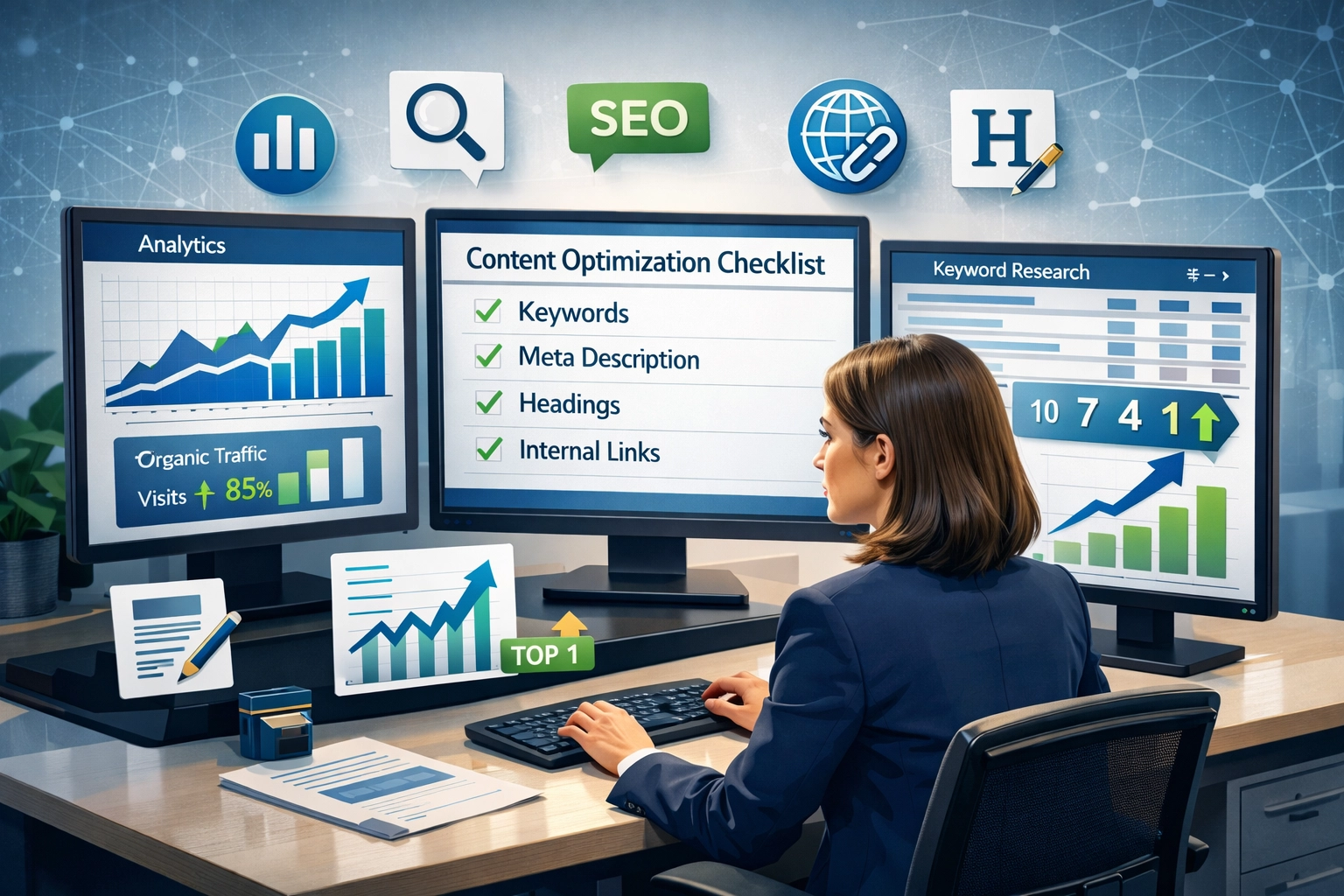
Master content optimization with our comprehensive guide. Learn SEO strategies, keyword research, on-page optimization, and conversion tactics.
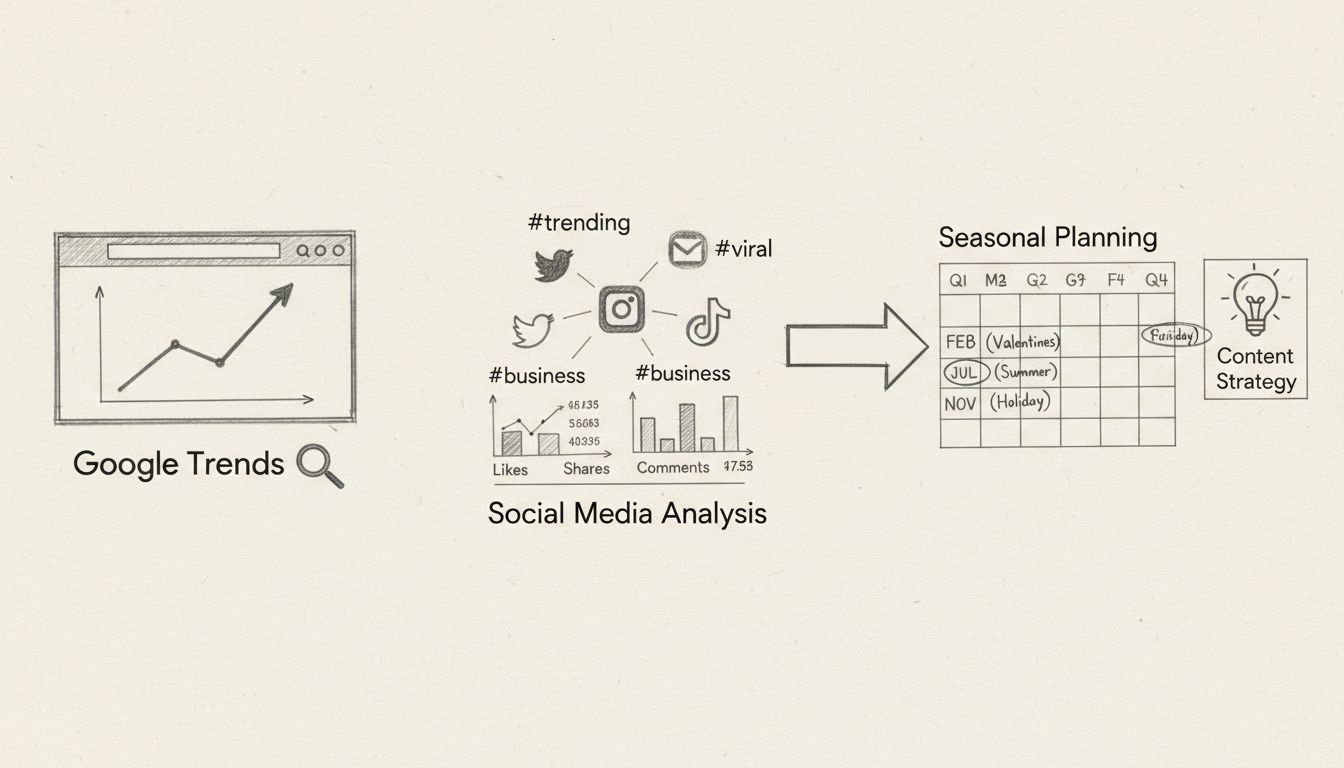
Discover the essential factors that make affiliate marketing content rank well in search engines. Learn proven SEO strategies, content optimization techniques, ...
Join our community of happy clients and provide excellent customer support with Post Affiliate Pro.




Cookie Consent
We use cookies to enhance your browsing experience and analyze our traffic. See our privacy policy.