


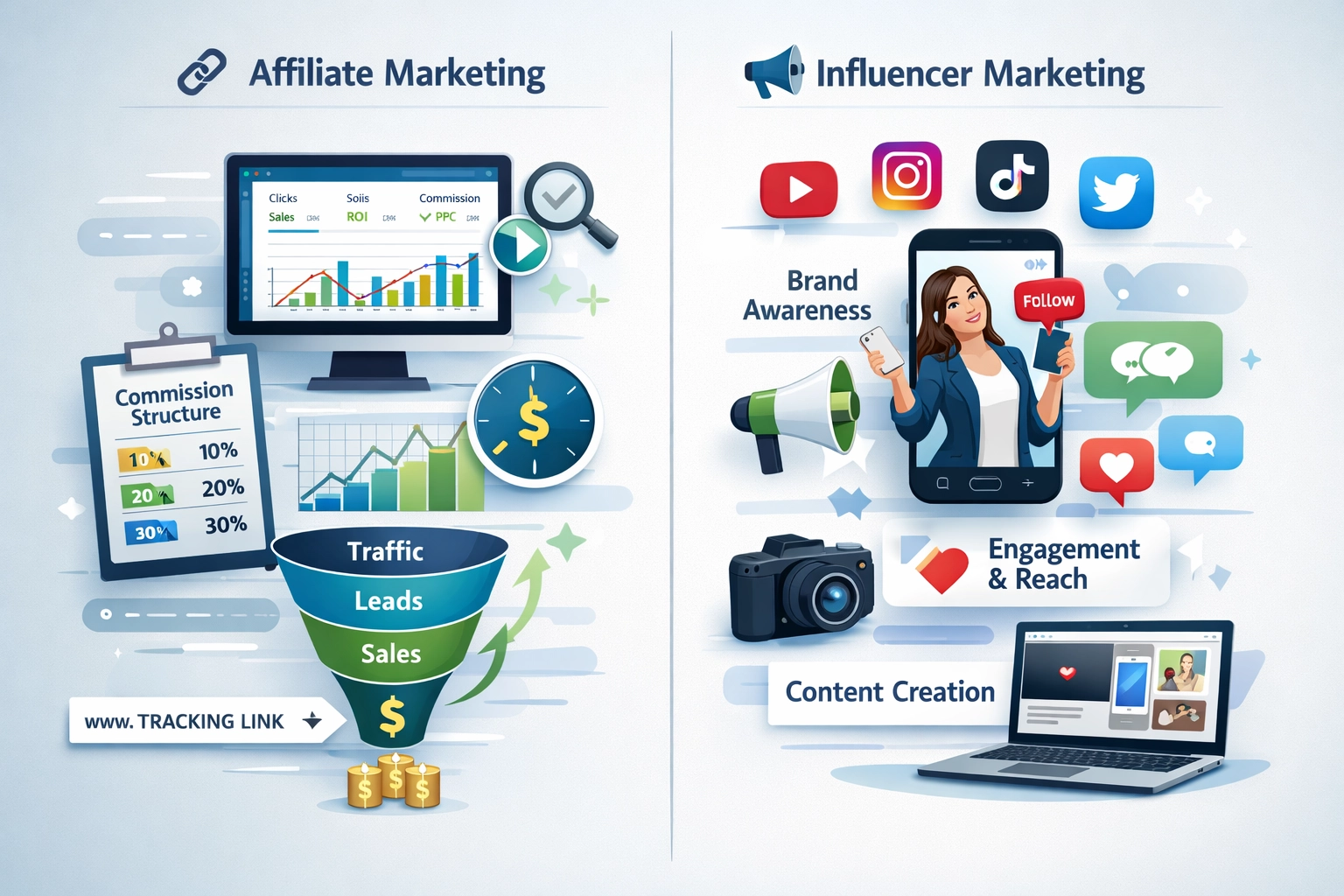
Affiliate vs Influencer Marketing: Which Strategy Wins?
Discover key differences between affiliate and influencer marketing. Learn which strategy is best for your business goals and how to combine both.
11 min read


Discover why combining affiliate and influencer marketing drives 46% higher sales. Learn proven strategies to leverage trust and maximize conversions.
The affiliate marketing and influencer marketing landscapes are no longer separate entities—they’re converging into a unified powerhouse that’s reshaping how brands reach consumers. The influencer market is projected to reach $10 billion by 2026, while creator-driven affiliate revenue is expected to hit $1.3 billion by 2025, signaling a massive shift in how partnerships are structured. During peak shopping events like Cyber Monday, influencers now drive 20% of total revenue, demonstrating their critical role in the sales funnel. Forward-thinking brands are allocating 30% of their marketing budgets to integrated affiliate and influencer strategies, recognizing that these channels work best when orchestrated together rather than in isolation. This convergence represents a fundamental transformation in social commerce, where trust, authenticity, and performance metrics align to create unprecedented growth opportunities.

The foundation of influencer-affiliate success rests on a single, powerful principle: trust. 69% of consumers trust influencer recommendations, and those who do are 65% more likely to make a purchase based on that endorsement. Micro-influencers are particularly effective at building this trust, achieving 85% engagement rates that far exceed macro-influencer benchmarks, primarily because their audiences perceive them as authentic and relatable. The strength of influencer marketing lies in the long-term relationships influencers cultivate with their followers—these aren’t transactional interactions but genuine connections built on shared values and consistent authenticity. When combined with affiliate tracking, this trust translates directly into measurable conversions, creating a feedback loop where credibility drives sales.
| Influencer Type | Engagement Rate | Trust Level | Best For |
|---|---|---|---|
| Mega (1M+ followers) | 1-3% | Moderate | Brand awareness, reach |
| Macro (100K-1M) | 3-5% | Moderate-High | Product launches, campaigns |
| Micro (1K-100K) | 5-15% | High | Conversions, niche audiences |
| Nano (<1K) | 10-20% | Very High | Community building, loyalty |

Set up advanced tracking in minutes. No credit card required.
One of the most compelling advantages of merging affiliate marketing with influencer partnerships is the ability to track every interaction and conversion with precision. Brands leveraging integrated affiliate and influencer strategies report 46% higher affiliate sales compared to traditional affiliate programs alone, with the beauty industry seeing exceptional results at 178% increases. The ecommerce average sits at 16% incremental revenue lift, while customer acquisition costs (CAC) drop by 20-30% when influencers drive qualified traffic through affiliate links. Real-time tracking and attribution modeling allow marketers to understand exactly which influencers, content pieces, and campaigns drive the highest-quality customers, enabling continuous optimization. These performance metrics transform influencer partnerships from brand-building exercises into quantifiable revenue drivers, justifying increased budget allocation and proving the value of the channel to CFOs and stakeholders.

The most effective brands recognize that affiliate marketing and influencer marketing serve distinct but complementary roles across the customer journey. Influencers excel at the awareness and consideration stages, where their authentic storytelling and lifestyle integration introduce products to engaged audiences who may not yet be actively searching. Affiliates then capture intent-driven traffic at the conversion stage, leveraging performance-based incentives to drive purchases from warm audiences. A common myth suggests these channels compete for budget and attention, but the reality is that they create a full-funnel marketing ecosystem where influencers build demand and affiliates fulfill it. Multi-touch attribution reveals that customers often interact with both channels before converting, meaning the most sophisticated brands orchestrate both simultaneously rather than choosing one over the other. This integrated approach maximizes lifetime value by ensuring every stage of the funnel is optimized for both engagement and conversion.
Be the first to know about new features and product updates.
Micro-influencers—creators with 1,000 to 100,000 followers—have emerged as the secret weapon for brands seeking authentic, high-converting partnerships. Despite their smaller follower counts, micro-influencers consistently deliver higher conversion rates than their macro-influencer counterparts, often by 2-3x, because their audiences are highly engaged and genuinely interested in their recommendations. These creators possess deep niche expertise in specific categories, whether fitness, sustainable fashion, or home improvement, allowing them to speak credibly to their communities about products that align with their values. The authenticity of micro-influencer content is unmatched—their followers perceive them as peers rather than celebrities, making product recommendations feel like trusted advice from a friend. Additionally, micro-influencers are significantly lower cost than macro-influencers, allowing brands to build diverse networks of partners and test new markets with reduced financial risk while achieving superior engagement metrics.
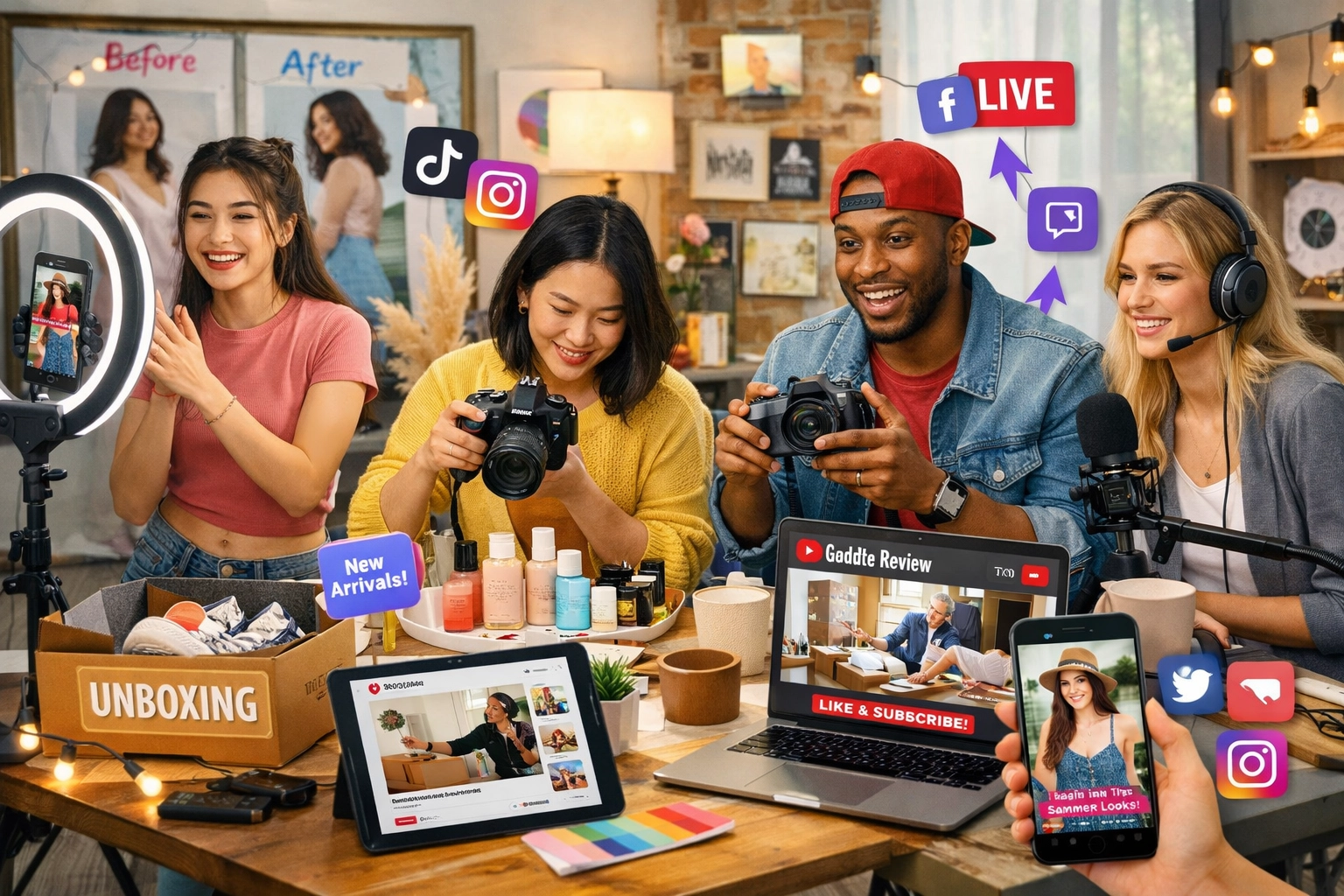
Authentic user-generated content created by influencers and affiliates outperforms brand-created content by 58% in engagement metrics, a gap that continues to widen as consumers increasingly distrust polished, corporate messaging. The power of UGC lies in its perceived authenticity—when an influencer genuinely uses and loves a product, that content resonates far more deeply than a traditional advertisement ever could. Smart brands implement always-on programs that encourage continuous content creation rather than one-off campaigns, ensuring a steady stream of fresh, authentic material that keeps products top-of-mind. This content can be repurposed across multiple channels—a TikTok video becomes an Instagram Reel, a testimonial becomes a case study, a photo becomes a carousel ad—maximizing the ROI of each piece of content created.
Effective UGC programs should include diverse content types:
Modern affiliate and influencer marketing requires sophisticated technology platforms that unify tracking, analytics, and optimization across channels. AI-powered analytics and machine learning algorithms now enable brands to predict which influencers will drive the highest ROI, identify emerging creators before they reach mainstream status, and optimize commission structures in real-time based on performance data. Unified tracking systems eliminate the fragmentation that historically plagued these channels, allowing marketers to see the complete customer journey from influencer discovery through affiliate conversion. Platforms like ShopMy and LTK have demonstrated the power of integrated technology, creating real-time dashboards that show exactly how much revenue each influencer drives and which products resonate most strongly. Automation capabilities reduce manual work—from influencer outreach to commission calculations to performance reporting—freeing teams to focus on strategy and relationship building rather than administrative tasks. The brands winning in this space are those investing in technology that provides visibility, enables data-driven decision-making, and scales operations efficiently.
The flexibility of compensation models is one of the greatest strengths of integrated affiliate and influencer programs, allowing brands to align incentives with business objectives. Pay-Per-Sale (PPS) remains the most common model, with commission rates typically ranging from 5-30% depending on product category, margin, and influencer tier. Pay-Per-Click (PPC) models work well for awareness-focused campaigns where the goal is driving traffic, while Pay-Per-Lead (PPL) suits programs targeting email signups or qualified prospects. Many sophisticated brands employ hybrid models that combine a flat fee plus commission structure, ensuring influencers are compensated for their effort while maintaining performance incentives. The key to successful compensation design is ensuring the model aligns with both the brand’s goals and the influencer’s incentives—a creator focused on building long-term brand relationships may prefer stable flat fees, while a performance-driven affiliate thrives on commission-based upside. Transparent, fair compensation structures build trust and encourage influencers to invest genuine effort in promoting products authentically.
Historically, affiliate marketing and influencer marketing operated in separate organizational silos, with different teams, budgets, platforms, and KPIs, creating inefficiency and missed opportunities for synergy. This fragmentation meant that influencers and affiliates rarely coordinated efforts, leading to duplicated work, conflicting messaging, and inability to optimize the full customer journey. Breaking down these silos requires establishing unified KPIs that both teams are measured against—revenue, customer acquisition cost, lifetime value, and brand lift—rather than isolated metrics like clicks or impressions. Implementing a single platform for managing both influencer relationships and affiliate partnerships provides visibility into all partnerships and enables coordinated strategy. Team alignment is equally critical; brands must foster collaboration between influencer marketing, affiliate management, and performance marketing teams through regular communication, shared goals, and integrated planning processes. Organizations that successfully overcome these integration challenges gain a competitive advantage through coordinated campaigns, reduced redundancy, and the ability to optimize the entire customer journey rather than isolated touchpoints.
The effectiveness of integrated affiliate and influencer strategies is validated by concrete results from leading brands across industries. PMG achieved an 8x ROAS by combining influencer partnerships with affiliate tracking, demonstrating the power of coordinated campaigns at scale. B&Q leveraged influencer content through affiliate channels to achieve a 60% view rate, proving that authentic creator content drives engagement far beyond traditional advertising. Lululemon built a thriving community of brand ambassadors who function as both influencers and affiliates, creating a self-sustaining ecosystem of authentic advocacy. Dunkin’ successfully integrated influencer partnerships with their affiliate program, driving significant incremental revenue during seasonal campaigns. Gymshark pioneered the creator-affiliate model, building a community of fitness influencers who drive both brand awareness and direct sales, resulting in exponential growth and a valuation exceeding $1 billion. These case studies demonstrate that the convergence of affiliate and influencer marketing isn’t theoretical—it’s delivering measurable, substantial results for brands willing to invest in integrated strategies.
Social commerce has transformed social media platforms from content distribution channels into full-fledged shopping destinations, creating unprecedented opportunities for integrated affiliate and influencer marketing. Instagram Shopping, TikTok Shop, and YouTube Shopping enable creators to embed product links directly into content, allowing followers to purchase without leaving the platform. Shoppable posts and live-stream shopping events create frictionless purchasing experiences where influencers can drive immediate conversions while maintaining the authentic, entertaining content their audiences expect. TikTok Shop has been particularly transformative, enabling creators to earn commissions on sales while building their own storefronts, effectively turning every creator into an affiliate. 87% of consumers express openness to shopping through social platforms, with Gen Z adoption rates exceeding 70%, indicating that social commerce is no longer an emerging trend but a mainstream shopping channel. Brands that optimize their affiliate and influencer strategies specifically for these social commerce ecosystems—rather than treating them as secondary channels—capture disproportionate share of this rapidly growing revenue stream.
The future of affiliate and influencer marketing will be defined by brands that treat platforms as ecosystems rather than isolated channels, optimizing every element of the creator experience and customer journey. Emerging technologies like AR try-ons and AI-powered product recommendations will enable influencers to provide increasingly personalized, interactive experiences that drive higher conversion rates. Consistent branding across all influencer partnerships—from messaging to visual identity to product selection—will become essential as consumers expect seamless experiences across multiple creators and platforms. Always-on programs that maintain continuous influencer partnerships and content creation will replace sporadic campaign-based approaches, building sustained momentum and allowing brands to capitalize on trending moments quickly. Staying current with platform updates and algorithm changes is critical; brands must continuously adapt their strategies as platforms evolve their shopping features, creator compensation models, and content distribution mechanisms. PostAffiliatePro provides the unified platform and analytics infrastructure necessary to execute these sophisticated, integrated strategies at scale, enabling brands to manage influencer relationships, track affiliate performance, optimize compensation, and measure ROI across all channels from a single dashboard. The brands that win in the next era of digital marketing will be those that view affiliate and influencer marketing not as separate initiatives but as integrated components of a cohesive, data-driven growth strategy.
Affiliate marketing is performance-based, where partners earn commissions on sales or leads they drive. Influencer marketing focuses on leveraging creators' trust and reach to build brand awareness. When combined, they create a full-funnel strategy where influencers build demand and affiliates drive conversions.
Brands combining affiliate and influencer programs see 46% higher affiliate-based sales compared to traditional affiliate programs alone. In the beauty sector, this lift reaches 178%. Results vary by industry, influencer quality, and execution, but the data consistently shows significant incremental revenue.
Commission rates typically range from 5-30% depending on product category, profit margins, and influencer tier. Micro-influencers often accept lower rates but deliver higher conversion rates. The key is aligning compensation with both the brand's profitability and the influencer's effort and reach.
Track unified KPIs including revenue generated, customer acquisition cost (CAC), return on ad spend (ROAS), conversion rate, and customer lifetime value. Use real-time attribution to understand which influencers drive the highest-quality customers. PostAffiliatePro provides comprehensive dashboards for measuring all these metrics.
Micro-influencers (1K-100K followers) typically deliver the highest conversion rates and ROI due to their engaged, niche audiences and authentic recommendations. However, macro-influencers excel at building awareness. The best strategy combines both tiers, using macro-influencers for reach and micro-influencers for conversions.
Results vary by channel and strategy. Influencer campaigns can drive immediate traffic and sales, while affiliate programs often take 2-3 months to build momentum as influencers create content and audiences discover products. Always-on programs show compounding results over 6-12 months.
The FTC requires clear disclosure of affiliate relationships. Influencers must disclose when they're earning commissions, using hashtags like #ad or #sponsored, or explicit statements like 'affiliate link.' Transparency builds trust and ensures compliance with regulations.
PostAffiliatePro provides a unified platform to manage both affiliate and influencer partnerships, track performance across channels, optimize commission structures, and measure ROI. The platform enables real-time attribution, automated reporting, and strategic insights to maximize the effectiveness of your integrated program.
PostAffiliatePro provides the unified platform you need to manage both affiliate and influencer partnerships, track performance across channels, and optimize ROI. Start building your integrated strategy today.
Discover key differences between affiliate and influencer marketing. Learn which strategy is best for your business goals and how to combine both.
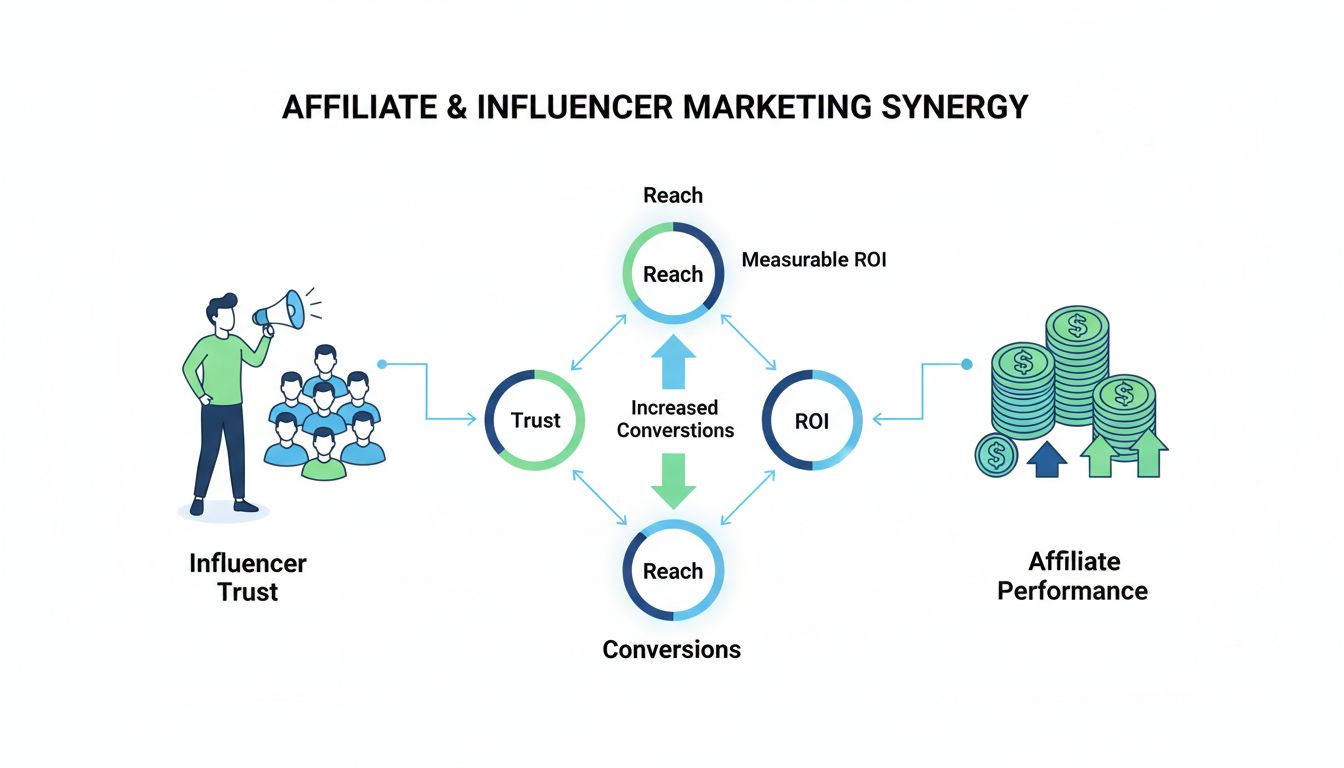
Learn how combining affiliate and influencer marketing amplifies reach, builds trust, and drives measurable conversions. Discover best practices, tools, and ROI...
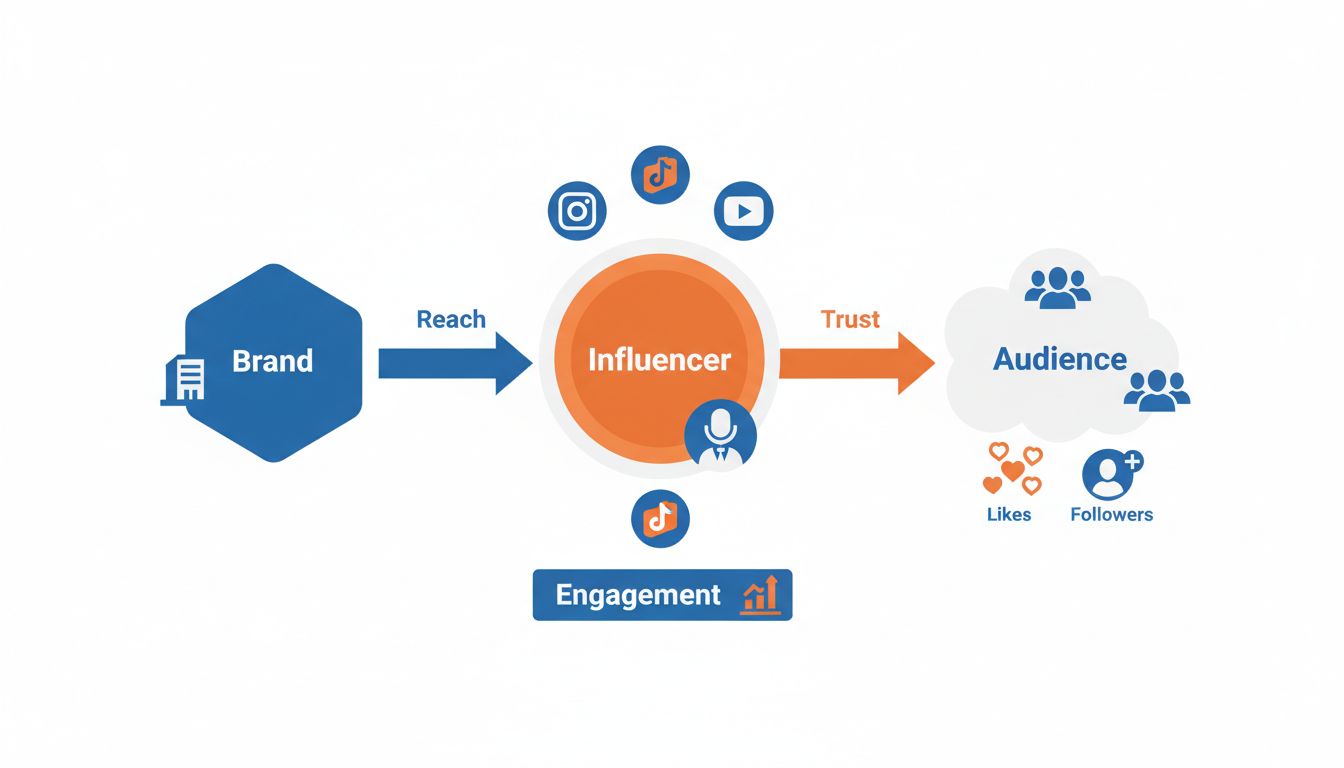
Discover what influencer marketing is, how it works, and why it's essential for brand growth in 2025. Learn strategies, ROI measurement, and best practices for ...
Join our community of happy clients and provide excellent customer support with Post Affiliate Pro.




Cookie Consent
We use cookies to enhance your browsing experience and analyze our traffic. See our privacy policy.