


How Do I Add an Affiliate Disclosure?
Learn how to add affiliate disclosures correctly to comply with FTC regulations. Discover placement strategies, wording examples, and platform-specific requirem...
11 min read


Complete guide to FTC and international betting affiliate disclosure requirements. Learn placement, language, compliance rules, and best practices for 2026.
Betting affiliate disclosures are mandatory statements that inform consumers about the financial relationship between affiliates and the betting platforms they promote. These disclosures are critical because they establish transparency and trust, allowing consumers to understand that an affiliate may earn a commission when someone signs up through their link. The Federal Trade Commission (FTC) enforces strict disclosure requirements under the Endorsement Guides, with violations resulting in significant penalties and reputational damage. This comprehensive guide covers FTC regulations, international requirements, platform-specific guidelines, and actionable best practices to ensure your affiliate marketing remains compliant and credible.

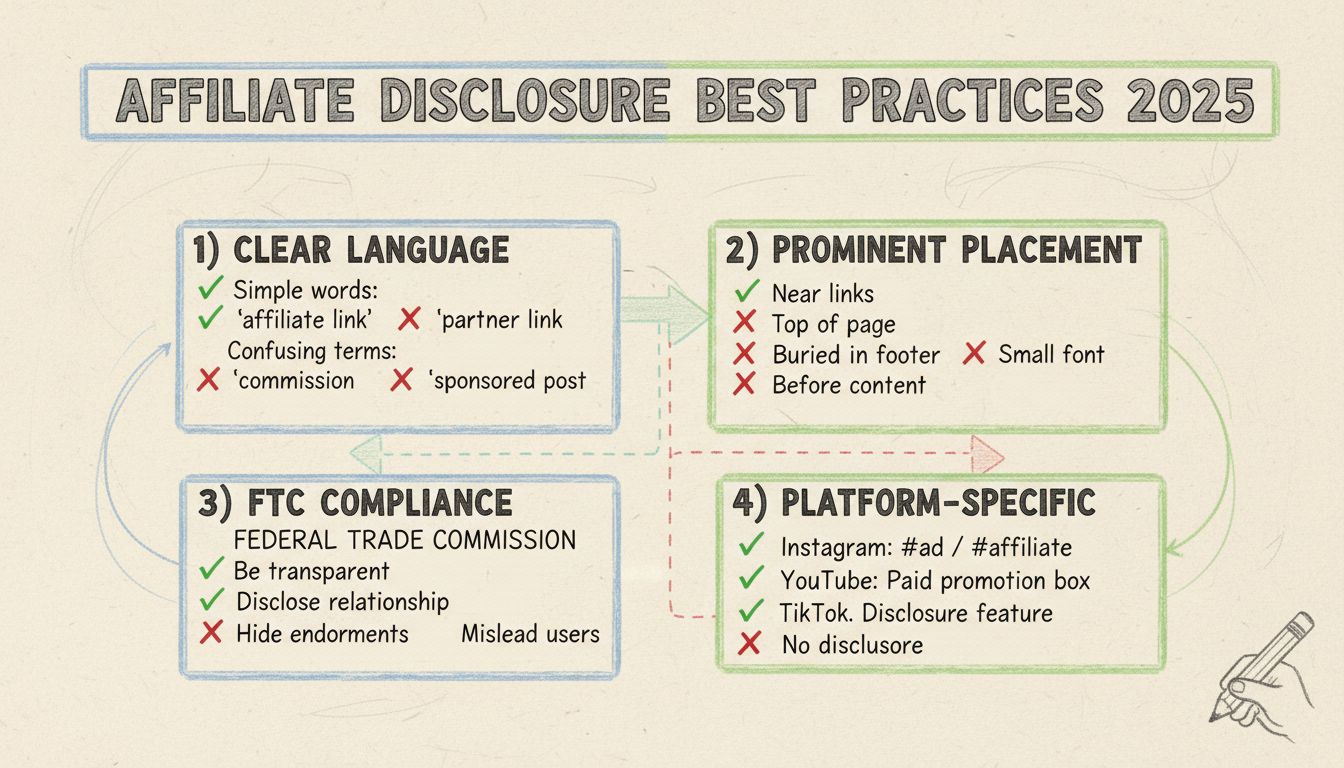
The FTC requires that all material connections between affiliates and betting platforms be disclosed clearly and conspicuously before consumers make purchasing decisions. A material connection exists when an affiliate receives compensation (commission, free bets, bonuses, or other benefits) for promoting a betting site, and this relationship must be explicitly stated. Disclosures must be clear and conspicuous, meaning they should be easily noticeable, understandable, and impossible to miss—not hidden in fine print or buried in lengthy terms. The FTC emphasizes that disclosures should appear near the endorsement or recommendation, not at the end of content where readers may not see them. Language must be simple and direct, avoiding legal jargon that confuses consumers; phrases like “I earn a commission if you sign up through my link” are far more effective than vague statements. Timing is equally important—disclosures must be made before the consumer clicks the affiliate link or makes a decision, not after. The FTC has increased enforcement actions against betting affiliates in recent years, making compliance non-negotiable for anyone in this space.

Set up advanced tracking in minutes. No credit card required.
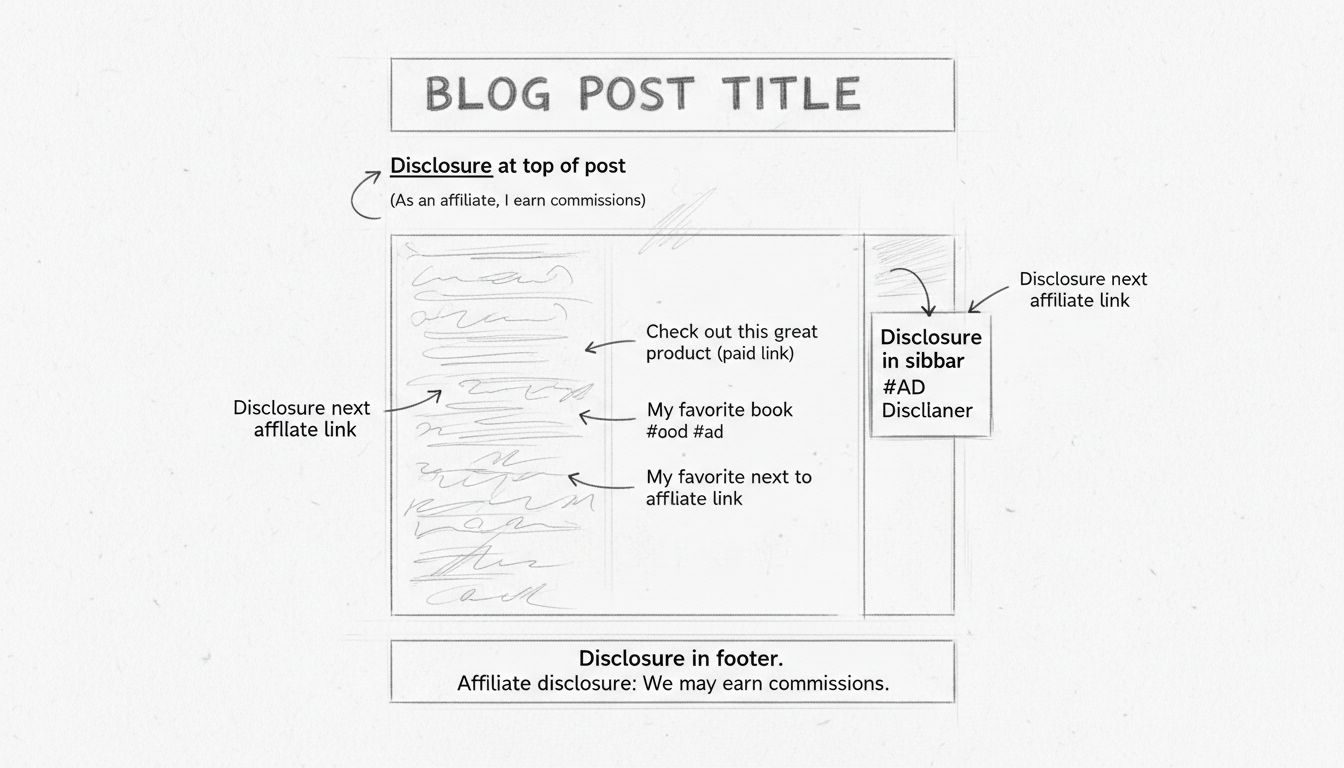
Proper placement is one of the most critical aspects of affiliate disclosure compliance, as disclosures hidden or minimized in any way violate FTC guidelines. Disclosures must be positioned where consumers will actually see them before engaging with your content or clicking affiliate links. The following are essential placement examples:
| Platform | Correct Placement | Incorrect Placement |
|---|---|---|
| Blog Post | First paragraph, above fold | Footer or end of article |
| YouTube | First 2 lines of description | Last line of description |
| Caption beginning or pinned comment | Hidden in replies or stories | |
| Subject line or opening | P.S. or signature line | |
| Podcast | Stated at episode start | Mentioned casually mid-episode |
Affiliates often make the mistake of assuming that disclosures in “About” pages or profile bios are sufficient—they are not. Each individual piece of content that promotes a betting site requires its own disclosure. The FTC has taken action against major influencers and betting affiliates for burying disclosures, resulting in settlements and fines exceeding $100,000 in some cases.
Disclosure language must be simple, direct, and immediately understandable to the average consumer, avoiding legal terminology or ambiguous phrasing. Effective disclosures use clear statements such as “I earn a commission if you sign up through this link,” “This is a sponsored post,” or “I’m an affiliate for [Betting Site]—I earn money if you join.” Phrases to avoid include vague terms like “affiliate link,” “partner,” “collaboration,” or “sponsored content” without explicitly stating the financial benefit. The FTC has clarified that hashtags alone are insufficient—while #ad and #sponsored are helpful, they must be accompanied by a clear disclosure statement explaining the nature of the relationship. For example, “#ad #affiliate” without additional context doesn’t meet FTC standards; instead, use “#ad I earn a commission if you sign up through my link.” Emojis like 🤝 or 💰 should never replace written disclosures, as they don’t clearly communicate the material connection to all consumers. Testing your disclosure language with actual consumers can help ensure clarity—if there’s any ambiguity, revise it until it’s unmistakable.
Be the first to know about new features and product updates.
Betting affiliate disclosures must address unique regulatory concerns beyond standard e-commerce affiliate marketing. Age verification disclosures are essential, as betting is restricted to adults (typically 18+ or 21+ depending on jurisdiction), and affiliates must clearly state that only eligible consumers should sign up. Responsible gambling messaging should accompany affiliate promotions, including statements like “Gambling involves risk. Please gamble responsibly” and links to resources like the National Council on Problem Gambling. Disclosures must clarify that typical results are not guaranteed—many betting affiliates promote success stories or winning streaks, which must be balanced with clear statements that losses are common and results vary significantly. Affiliates should provide links to addiction resources such as Gamblers Anonymous or the National Problem Gambling Helpline, demonstrating commitment to consumer protection. Bonus transparency is critical; if promoting welcome bonuses or free bets, disclosures must explain wagering requirements, expiration dates, and any restrictions. The FTC has specifically targeted betting affiliates who fail to disclose these elements, recognizing that betting carries higher consumer risk than typical affiliate products.

The FTC has dramatically increased enforcement actions against betting affiliates in recent years, recognizing the high-risk nature of the industry and the potential for consumer harm. Civil penalties for disclosure violations can reach up to $43,792 per violation (adjusted annually for inflation), and the FTC often pursues cases involving multiple violations across numerous posts or videos, resulting in settlements exceeding $500,000. Beyond financial penalties, violators face reputational damage, account suspensions from affiliate networks, and loss of future earning potential as betting platforms distance themselves from non-compliant partners. The FTC has publicly named and shamed major influencers and betting affiliates, publishing settlement agreements that serve as cautionary tales for the industry. Recent cases have shown that the FTC doesn’t distinguish between intentional and unintentional violations—ignorance of the law is not a defense, making education and compliance systems essential for all betting affiliates.
The European Union’s Unfair Commercial Practices Directive (UCPD) requires that all material connections be disclosed transparently, with standards that are often stricter than FTC requirements. GDPR compliance is also essential for EU-based affiliates or those promoting to EU consumers, requiring clear consent for data collection and transparent privacy practices alongside affiliate disclosures. EU regulations mandate that disclosures be in the same language as the primary content—promoting a betting site in English to German consumers while providing disclosures only in English violates EU standards. Consumer protection laws vary by country; for example, Germany’s Unfair Competition Act (UWG) and France’s Consumer Code have specific requirements for affiliate transparency that exceed baseline EU standards. Many EU countries require affiliates to register with advertising authorities or gambling regulators, adding an additional compliance layer beyond simple disclosure statements. The General Data Protection Regulation also impacts how affiliates collect and use consumer data through affiliate links, requiring explicit consent and transparent privacy policies. Non-compliance with EU regulations can result in fines up to €20,000 or more, depending on the country and severity of violations.
The UK Gambling Commission requires that all betting affiliates clearly disclose their relationship with licensed operators and provide responsible gambling information prominently. The Advertising Standards Authority (ASA) enforces strict rules on betting affiliate content, requiring that ads be socially responsible and not target vulnerable populations; violations can result in content removal and regulatory action. Australia’s Australian Consumer Law (ACL) and Australian Communications and Media Authority (ACMA) regulations require clear disclosure of material connections and prohibit misleading or deceptive conduct in affiliate marketing. Canada’s Competition Bureau enforces the Competition Act, which requires that endorsements and testimonials be truthful and that material connections be clearly disclosed; violations can result in fines up to CAD $15 million for corporations. Each jurisdiction has unique requirements—for example, Australia requires specific language around responsible gambling, while Canada emphasizes truthfulness in testimonials. Regional variations mean that a disclosure compliant in the US may not meet UK or Australian standards, requiring affiliates to research and adapt their approach for each market. Betting affiliates operating internationally should maintain separate compliance documentation for each jurisdiction and regularly audit their content against local regulations.
Different platforms have unique disclosure requirements and tools that affiliates must navigate carefully. Blog posts and articles require disclosures at the beginning of content, ideally in the first paragraph, with additional disclosures near any affiliate links or calls-to-action. YouTube creators must use the platform’s built-in “Paid Promotion” feature and include clear disclosures in video descriptions; the FTC has specifically called out YouTube creators for burying disclosures, making this a high-enforcement area. Social media platforms (Instagram, TikTok, Twitter/X) have native disclosure tools—Instagram’s “Paid Partnership” feature, TikTok’s “Brand Collaboration” label, and Twitter’s “Promoted” tag—but these should be supplemented with explicit written disclosures in captions. Email newsletters require disclosures in subject lines or opening paragraphs, as many subscribers may not read full content; burying disclosures in footers is insufficient. Live streams and podcasts present unique challenges; affiliates must verbally state disclosures clearly and repeat them multiple times, as live audiences may miss initial statements. Affiliate link shorteners (like bit.ly or custom URLs) should never be used to hide the destination or obscure the affiliate relationship; the FTC requires transparency about where links lead. Many platforms’ native tools are helpful but insufficient alone—combining platform features with explicit written disclosures is the safest approach to ensure compliance across all audience segments.
Implementing a comprehensive compliance system is essential for long-term success in betting affiliate marketing. Use this checklist to ensure your disclosures meet FTC and international standards:
Consistency and transparency should be your guiding principles—when in doubt, over-disclose rather than under-disclose. Regular audits and updates ensure that your affiliate marketing remains compliant as regulations evolve and platforms introduce new features.
Even experienced affiliates make critical disclosure mistakes that expose them to FTC enforcement and reputational damage. The most common errors include:
These mistakes often result from misunderstanding FTC requirements or assuming that platform-native tools are sufficient. The safest approach is to treat every piece of content as requiring explicit, clear, and prominent disclosure—this protects both your audience and your business.
Affiliate management software like PostAffiliatePro streamlines compliance by automating disclosure tracking, monitoring affiliate content, and ensuring consistent messaging across all promotions. PostAffiliatePro’s platform allows betting operators to set disclosure requirements, track which affiliates are compliant, and flag content that violates FTC or international standards before it goes live. Key features include automated disclosure templates, content audit trails, and compliance reporting that document your efforts to enforce disclosure requirements—critical documentation if the FTC ever investigates. Other solutions like Impact, Refersion, and Tapfiliate offer similar features, but PostAffiliatePro is specifically designed for high-risk industries like betting, with built-in responsible gambling messaging and international compliance options. Automation reduces human error and ensures that every affiliate link is accompanied by appropriate disclosures, while compliance monitoring alerts you to potential violations before they become enforcement issues. Investing in robust affiliate software is not just a best practice—it’s a business necessity that protects your brand, your affiliates, and your consumers while demonstrating good-faith compliance efforts to regulators.
Betting affiliate disclosure compliance is non-negotiable in 2026, with the FTC and international regulators actively enforcing standards and pursuing violators aggressively. The requirements are straightforward: clearly disclose material connections, use simple language, place disclosures prominently, and include responsible gambling messaging—yet many affiliates still fail to meet these standards. By implementing the best practices outlined in this guide, using affiliate management software to automate compliance, and regularly auditing your content, you can build a sustainable, trustworthy affiliate marketing program that protects consumers and your business. The cost of non-compliance—fines, reputational damage, and lost affiliate partnerships—far exceeds the minimal effort required to get disclosures right. Start today by reviewing your current affiliate content, implementing clear disclosure templates, and committing to consistent, transparent communication with your audience.
A material connection is any relationship between you and a brand that could influence your endorsement, including financial compensation, free products, employment, or family relationships. The FTC requires disclosure of all material connections to ensure consumers understand potential biases in your recommendations.
While #ad can work if it's clear and conspicuous, placed at the start of a caption rather than buried in hashtags, plain-English disclosure in the content itself is more reliable. The FTC recommends combining platform-native tools with explicit written disclosures to ensure all audience segments see the disclosure.
Yes. If you receive anything of value—free products, discounts, performance bonuses, or other incentives—you must disclose it. Compensation isn't limited to money; any material benefit requires disclosure under FTC guidelines.
No. Platform tools may be insufficient for full compliance. Add your own clear disclosure in the content itself, near the endorsement or link, to ensure compliance. The FTC has taken action against creators who relied solely on platform features without additional written disclosures.
The FTC can impose civil penalties up to $43,792 per violation (adjusted annually), and cases often involve multiple violations resulting in settlements exceeding $500,000. Beyond financial penalties, violators face reputational damage, account suspensions, and loss of affiliate partnerships.
Review disclosures whenever your affiliate relationships change, new regulations are enacted, or you modify your compensation structure. At minimum, conduct annual compliance audits to ensure all content meets current FTC and international standards.
Yes. Any material connection (employment, payments, free products) must be disclosed every time the endorsement appears, regardless of the person's role. The FTC treats employees and ambassadors the same as independent affiliates regarding disclosure requirements.
While core principles are similar (transparency, clarity, placement), specific language, placement rules, and penalties vary by country. Always comply with the strictest applicable standard among jurisdictions where your content appears.
PostAffiliatePro helps you manage affiliate disclosures, track compliance, and automate responsible gambling messaging across all your affiliate partnerships.
Learn how to add affiliate disclosures correctly to comply with FTC regulations. Discover placement strategies, wording examples, and platform-specific requirem...
A disclosure is an information or notification on website advising visitors, that they are on affiliate’s website. It informs customers about affiliates.
Learn how to write effective affiliate disclosures that comply with FTC regulations, build trust with your audience, and protect your affiliate marketing busine...
Join our community of happy clients and provide excellent customer support with Post Affiliate Pro.




Cookie Consent
We use cookies to enhance your browsing experience and analyze our traffic. See our privacy policy.