



Building Emotional Connections with B2B Customers
Learn how to create authentic emotional connections with B2B customers through storytelling, trust, and meaningful engagement to build lasting relationships.
7 min read


Discover how a strong B2B brand delivers customer recognition, competitive advantage, easier product launches, enhanced credibility, and loyalty.
B2B branding operates in a fundamentally different landscape than B2C marketing. Trust is the primary currency in business-to-business relationships, where decisions involve multiple stakeholders, substantial financial commitments, and extended evaluation periods. Unlike consumer purchases made on impulse, B2B buying decisions are deliberate, data-driven, and involve risk assessment across entire organizations. A strong brand doesn’t just create awareness—it signals reliability, expertise, and proven capability to decision-makers who are personally accountable for their choices. The stakes are higher, the sales cycles are longer, and the need for credibility is non-negotiable.
Brand recognition directly impacts whether your company makes it onto the buyer’s consideration set. Research shows that 92% of B2B buyers stick to their day-one shortlist throughout the entire purchasing process, meaning visibility at the awareness stage is absolutely critical. Additionally, 84% of C-level executives use social media to inform their purchasing decisions, making consistent brand presence across digital channels essential for reaching decision-makers. When buyers begin their search, they naturally gravitate toward vendors they already know and recognize.
| Factor | Known Brand | Unknown Brand |
|---|---|---|
| Day-1 Shortlist Inclusion | 92% likely to be included | Requires significant effort to gain consideration |
| Executive Awareness | 84% use social media for research | Often missed in initial evaluation |
| Buyer Confidence | High trust from recognition | Must prove credibility from scratch |
| Sales Cycle Impact | Shortened evaluation period | Extended discovery and validation phases |
Strong brand visibility ensures your company is top-of-mind when buyers begin their evaluation journey. Companies with established brand recognition enjoy a significant competitive advantage simply by being present in the initial consideration phase. This visibility advantage compounds throughout the sales cycle, reducing the effort required to move prospects forward.


Set up advanced tracking in minutes. No credit card required.
In crowded markets, a strong brand creates clear differentiation that goes beyond product features and pricing. Well-established brands command premium positioning because they’ve built perception of superior value, reliability, and innovation. This differentiation allows companies to compete on factors other than price, protecting margins and attracting higher-quality customers. Strong brands also reduce direct competition from unknown players—when buyers perceive clear value differences, lesser-known competitors struggle to gain traction. Premium pricing power becomes achievable when your brand represents proven results and trusted expertise. Market positioning becomes easier to defend when your brand narrative is consistent, compelling, and backed by demonstrated success.
Brand equity serves as a launching pad for new offerings. When you’ve built trust and credibility in your core business, customers are more receptive to new products and services under your brand umbrella. This brand equity dramatically reduces the risk associated with product launches—existing customers are more likely to trial new offerings, and prospects are more willing to consider solutions from a trusted vendor. Faster adoption rates for new products mean quicker revenue realization and reduced go-to-market costs. Customer trust transfers naturally to new offerings, allowing you to expand your addressable market without starting from zero credibility. Companies with strong brands can enter adjacent markets with significantly lower friction than unknown competitors.
Be the first to know about new features and product updates.
Credibility is built through consistency, transparency, and authentic delivery on brand promises over time. B2B buyers conduct extensive research before engaging with vendors, and a strong brand demonstrates that you’ve consistently delivered value to other organizations. Third-party validation—through case studies, testimonials, industry awards, and analyst recognition—amplifies brand credibility and reduces buyer skepticism. When prospects see that established companies trust your solutions, their confidence increases dramatically. Trust directly shortens sales cycles because decision-makers spend less time validating your capability and more time evaluating fit. Transparent communication about your solutions, limitations, and customer success stories builds the kind of credibility that converts skeptical prospects into committed customers. Strong brands become synonymous with reliability, making the buying decision feel safer for risk-conscious executives.
Strong B2B brands create emotional connections to company values and mission, transforming transactional relationships into partnerships. Customers who feel aligned with your brand values demonstrate significantly higher loyalty and are less likely to switch to competitors. Research shows that companies with effective brand strategies achieve 13% better customer retention rates compared to those without strong brand positioning. Loyal customers generate higher lifetime value through expanded purchases, longer contract renewals, and reduced churn. Beyond retention, brand-loyal customers become advocates who refer new business and provide valuable testimonials. The compounding effect of retention is powerful—keeping existing customers costs significantly less than acquiring new ones, and loyal customers often expand their spending over time. Building emotional brand loyalty transforms your customer base into a sustainable competitive advantage.
Strong brands naturally attract strategic partnerships because they represent lower risk and higher credibility to potential collaborators. Suppliers, technology partners, and complementary service providers prefer working with established brands that enhance their own reputation. Joint ventures and co-marketing initiatives become more feasible when both parties bring recognized brand equity to the table. These partnerships expand your market reach, create new revenue streams, and accelerate growth without proportional increases in overhead. Ecosystem benefits multiply when strong brands collaborate—customers benefit from integrated solutions, partners gain access to new markets, and all parties strengthen their market position. Strategic alliances with recognized brands elevate your own brand perception and open doors to opportunities that would be unavailable to unknown competitors.
Strong corporate brands attract quality employees who want to work for companies with recognized reputation and clear market position. Research indicates that 89% of HR leaders agree employer brand provides competitive talent advantage, and 72% of recruiting leaders say branding significantly impacts hiring success. Talented professionals are drawn to companies with strong brands because they offer career advancement opportunities, industry credibility, and the satisfaction of working for recognized leaders. Reduced recruitment costs follow naturally—strong employer brands generate more inbound interest from qualified candidates, reducing reliance on expensive recruitment agencies. Employee pride and engagement increase when people work for respected brands, leading to better retention and higher productivity. Your brand becomes a talent magnet, attracting the best people in your industry and reducing the cost and friction of building world-class teams.
The business impact of strong B2B branding is quantifiable and significant. Companies with high brand awareness experience measurable improvements across critical sales metrics:
| Metric | Low Brand Awareness | High Brand Awareness |
|---|---|---|
| Pipeline Quality | 35% qualified leads | 68% qualified leads |
| Win Rate | 18-22% average | 28-35% average |
| Sales Cycle Length | 6-9 months | 3-5 months |
| Average Deal Size | Standard pricing | 15-25% price premium |
| Customer Acquisition Cost | Higher due to education | 30-40% lower CAC |
Strong brands generate higher-quality pipeline because prospects self-qualify based on brand reputation before engaging sales teams. Win rates increase substantially because decision-makers already trust your capability and credibility. Sales cycles compress dramatically when buyers don’t need to spend months validating your expertise. Price premiums become achievable when your brand represents proven value and differentiation. The cumulative effect of these improvements creates significant ROI—shorter sales cycles mean faster revenue realization, higher win rates mean more revenue from the same pipeline, and premium pricing means higher margins on every deal. These metrics compound over time, making brand investment one of the highest-ROI activities in B2B marketing.

Successful B2B branding requires consistency across all customer touchpoints—from your website and content to sales conversations and customer success interactions. Every interaction should reinforce your brand promise and demonstrate the value you deliver. Content marketing and thought leadership are essential components of B2B brand building, positioning your executives and organization as trusted advisors in your industry. Executive visibility—through speaking engagements, published articles, and industry participation—amplifies your brand authority and builds personal credibility alongside corporate brand. Consistency in messaging, visual identity, and customer experience creates the recognition and trust that drive business results. Platforms like PostAffiliatePro demonstrate how affiliate marketing can extend your brand reach by leveraging partner networks to amplify your message to new audiences. Building a strong B2B brand is a long-term investment that compounds over time, creating sustainable competitive advantage and driving measurable business growth across every metric that matters to your bottom line.
Trust is the foundation. A strong B2B brand reduces perceived risk for buyers making high-stakes decisions, making it the most critical benefit that influences all other advantages. When decision-makers trust your brand, they're more likely to include you in their consideration set and move forward faster in the sales process.
Building a strong B2B brand is a long-term investment, typically requiring 12-24 months of consistent effort. However, the benefits compound over time and create lasting competitive advantages. The key is consistency in messaging, delivery, and customer experience across all touchpoints.
Absolutely. Small companies can build strong brands by focusing on niche markets, demonstrating expertise through thought leadership, and delivering exceptional customer experiences consistently. Many successful B2B brands started small by dominating a specific vertical before expanding.
Strong brands significantly reduce sales cycles by establishing credibility upfront, reducing buyer skepticism, and increasing the likelihood of inclusion in initial consideration sets. Companies with high brand awareness typically experience 40-50% shorter sales cycles compared to unknown competitors.
A strong B2B brand enhances affiliate marketing effectiveness by providing affiliates with credible products to promote, improving conversion rates, and attracting higher-quality partners. Platforms like PostAffiliatePro help extend your brand reach through trusted partner networks.
Key metrics include brand awareness among target audiences, inclusion in initial consideration sets, win rates against competitors, customer retention rates, and Net Promoter Score (NPS). Track both qualitative measures like brand perception and quantitative metrics like pipeline quality and deal size.
Yes, strong brands significantly ease product launches by leveraging existing customer trust and brand equity, resulting in faster adoption and reduced market resistance. Existing customers are more likely to trial new offerings from a trusted brand.
Transparency builds credibility by demonstrating honesty about capabilities and limitations. B2B buyers appreciate brands that acknowledge challenges and show how they address them. This kind of honesty sets you apart from companies that only talk about their wins.
PostAffiliatePro helps B2B companies amplify their brand through strategic affiliate partnerships. Leverage our platform to extend your brand reach, build credibility with new audiences, and accelerate growth through trusted partners.
Learn how to create authentic emotional connections with B2B customers through storytelling, trust, and meaningful engagement to build lasting relationships.
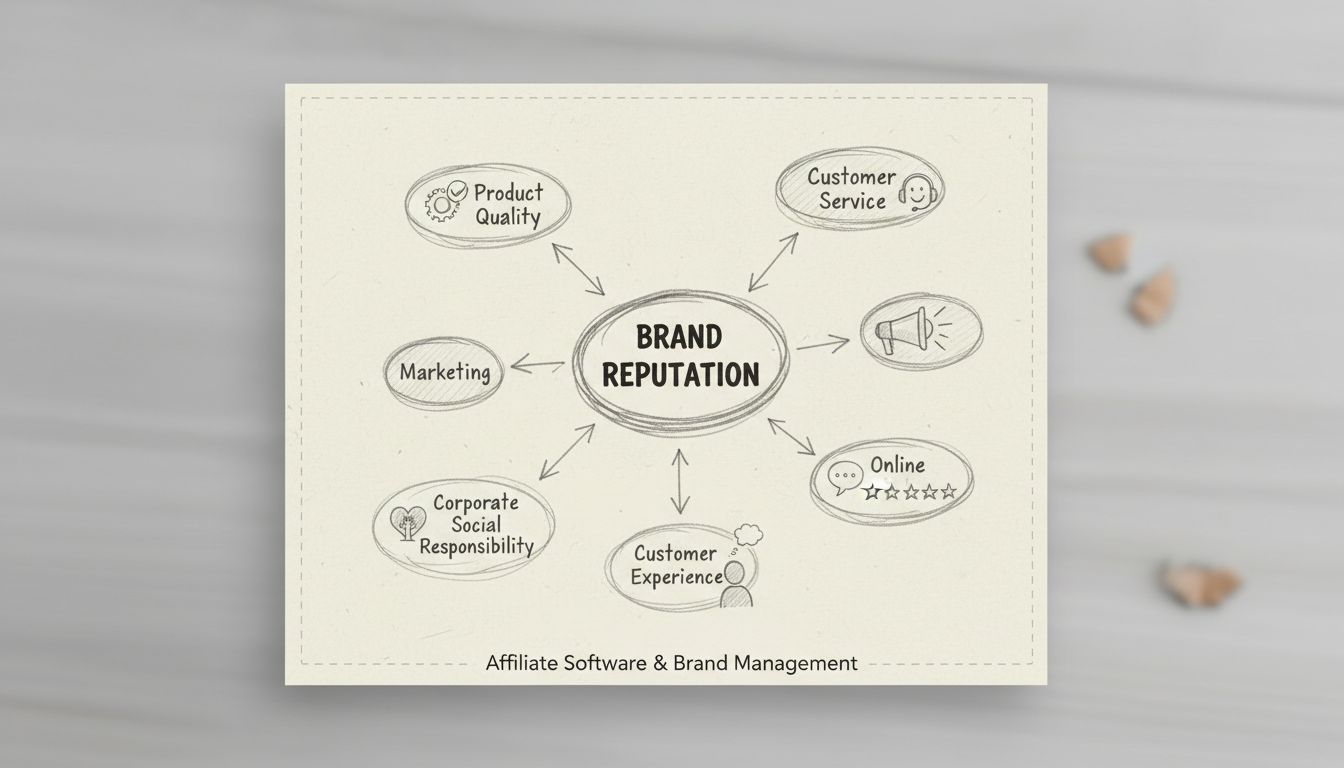
Learn what brand reputation is, why it matters for business success, and discover proven strategies to build and protect your brand's image. Comprehensive guide...

Learn proven strategies to build trust with your blog audience while promoting affiliate products. Discover how to maintain credibility through authentic recomm...
Join our community of happy clients and provide excellent customer support with Post Affiliate Pro.




Cookie Consent
We use cookies to enhance your browsing experience and analyze our traffic. See our privacy policy.