


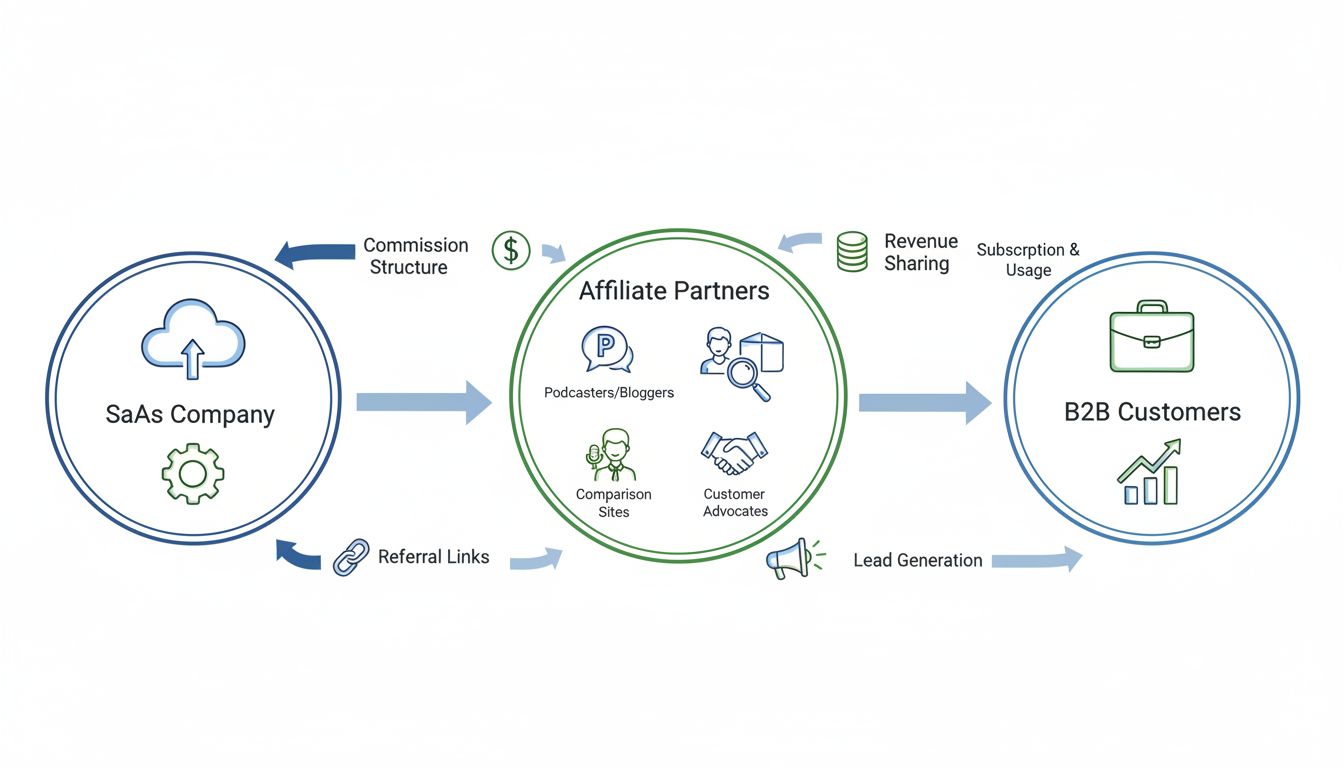
Does Affiliate Marketing Work for B2B SaaS?
Discover how affiliate marketing drives B2B SaaS growth. Learn proven strategies, commission structures, and why PostAffiliatePro is the top choice for SaaS aff...
13 min read


Learn proven B2B SaaS content marketing strategies to build brand authority, generate qualified leads, and drive sustainable growth.
B2B SaaS content marketing is a strategic approach to creating and distributing valuable, relevant content specifically designed to attract, engage, and convert business audiences. Unlike traditional advertising, this strategy focuses on educating potential customers about their pain points and demonstrating how your software solution addresses their specific challenges. According to recent research, 92% of marketers acknowledge the critical importance of content in driving business growth, while 87% have successfully achieved brand awareness through consistent content marketing efforts. In today’s competitive SaaS landscape, where buyers conduct extensive research before making purchasing decisions, a well-executed content marketing strategy has become essential for building authority, generating qualified leads, and establishing long-term customer relationships.

B2B SaaS content marketing presents unique challenges that distinguish it from traditional B2B or B2C marketing strategies. The fundamental differences stem from the nature of software products and the complexity of business buying processes:
| Challenge | Traditional B2B | B2B SaaS |
|---|---|---|
| Sales Cycle | 2-4 months | 3-6+ months with multiple stakeholders |
| Product Nature | Tangible, demonstrable | Intangible, requires explanation |
| Buyer Education | Limited research phase | Extensive self-education before contact |
| Decision Makers | 1-2 key contacts | 4-7+ stakeholders involved |
| Retention Focus | One-time purchase | Ongoing subscription management |
The intangible nature of SaaS products means prospects cannot physically touch or immediately understand the value proposition. Additionally, the longer sales cycle requires nurturing leads through multiple touchpoints, as buying decisions involve multiple stakeholders with different priorities and concerns. The subscription-based model further emphasizes the importance of customer retention and ongoing education, making post-sale content just as critical as pre-sale content. Finally, modern B2B buyers increasingly prefer to self-educate before engaging with sales teams, making your content the first and often most important touchpoint in the customer journey.

Set up advanced tracking in minutes. No credit card required.
Implementing a robust content marketing strategy delivers measurable benefits across multiple dimensions of your business:
Builds Trust and Authority - Consistent, high-quality content demonstrates expertise and understanding of your audience’s challenges, positioning your brand as a trusted industry leader and establishing credibility through the E-E-A-T framework (Experience, Expertise, Authoritativeness, Trustworthiness).
Improves Organic Acquisition - SEO-optimized content drives steady, cost-effective traffic over time, reducing customer acquisition costs (CAC) compared to paid channels and creating a compounding effect as your content library grows.
Supports the Sales Pipeline - Strategic content guides prospects through each stage of the buyer journey, providing sales teams with valuable resources to nurture leads and address objections more effectively.
Drives Product Retention and Education - Post-sale content helps existing customers maximize product value, increase feature adoption, and reduce churn through onboarding guides, tutorials, and feature deep dives.
Creates Scalable, Compounding ROI - Unlike paid advertising that requires continuous budget investment, well-executed content marketing builds momentum over time, with older content continuing to generate leads and conversions indefinitely.
Establishes Thought Leadership - Publishing original research, unique insights, and industry perspectives positions your brand as an innovator and forward-thinking leader in your space.
The foundation of effective B2B SaaS content marketing is a deep understanding of your target audience. Begin by developing detailed buyer personas based on real data from customer interviews, surveys, analytics, and feedback from your sales and support teams. These personas should go beyond basic demographics to include specific pain points, goals, challenges, decision-making criteria, and preferred content formats. Segment your audience by industry vertical, company size, job function, and buying stage to ensure your content addresses the unique needs of each segment. Map the complete customer journey from the moment they recognize a problem through post-purchase adoption and expansion, identifying key touchpoints where content can influence decisions. Finally, use tools like Answer the Public and Google’s “People Also Ask” feature to uncover the specific questions your prospects are asking, then create content that directly answers these questions and removes barriers to moving forward in the buying process.
Be the first to know about new features and product updates.
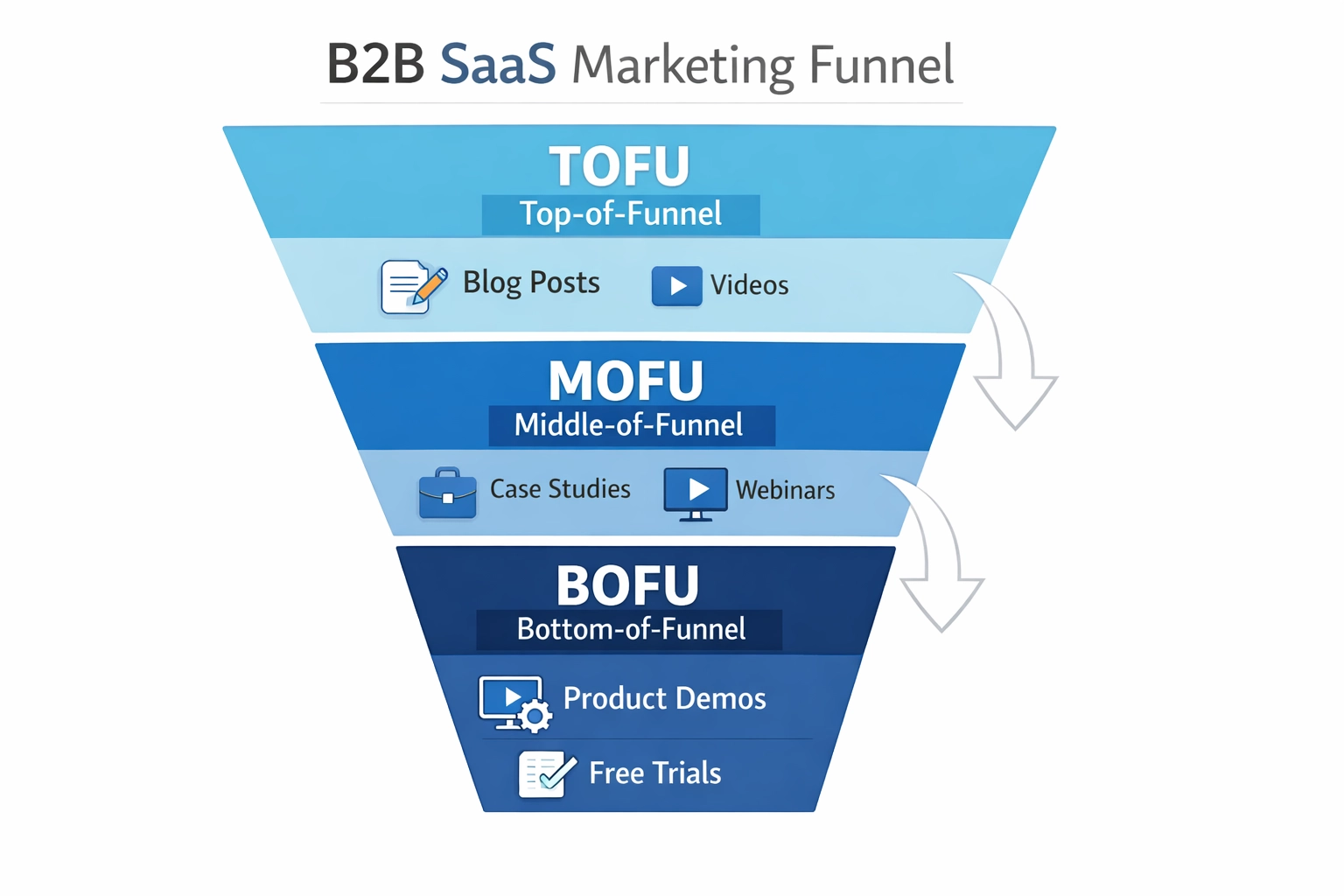
A successful B2B SaaS content marketing strategy requires a structured framework that aligns with your business objectives. Start by setting SMART goals (Specific, Measurable, Achievable, Relevant, Time-bound) such as increasing organic traffic by 50%, generating 100 qualified leads per month, or improving customer retention by 15%. Conduct thorough keyword and topic research using intent-based analysis rather than relying solely on search volume, ensuring you target terms that align with your audience’s actual needs. Perform a content gap analysis to identify areas where you’re missing content that addresses specific customer challenges or questions. Align your content strategy with the customer journey by creating content for each stage:
| Funnel Stage | Primary Goal | Content Types | Key Metrics |
|---|---|---|---|
| Top-of-Funnel (TOFU) | Awareness & Education | Blog posts, infographics, videos, whitepapers | Organic traffic, impressions, shares |
| Middle-of-Funnel (MOFU) | Consideration & Comparison | Case studies, webinars, comparison guides, e-books | Engagement time, lead quality, CTR |
| Bottom-of-Funnel (BOFU) | Decision & Conversion | Product demos, free trials, testimonials, ROI calculators | Conversion rate, demo requests, sales-qualified leads |
Create a realistic content calendar that accounts for your team’s capacity, assign clear ownership and deadlines, and build in flexibility for product launches, seasonal campaigns, and timely industry developments.
Different content formats serve different purposes in the buyer journey and appeal to different learning styles. Blog posts and articles remain the most widely used format, with 94% of B2B marketers incorporating them into their strategy. Videos are used by 84% of marketers and deliver strong results for 53%, making them ideal for product demonstrations, tutorials, and thought leadership content. Case studies and customer success stories are used by 78% of marketers, with 53% reporting them as top performers for building social proof and demonstrating real-world value. Whitepapers and e-books deliver strong results for 51% of marketers, positioning your brand as a thought leader while capturing lead information. Webinars and interactive content like quizzes, calculators, and assessments drive engagement and provide opportunities for real-time interaction with prospects. Product demos and free trials reduce friction in the buying process by allowing prospects to experience your solution firsthand without commitment. The most effective SaaS content strategies combine multiple formats to address different preferences and stages of the buyer journey, ensuring you reach your audience through their preferred channels.
SEO is fundamental to maximizing the long-term value of your content marketing efforts. Implement a topic cluster strategy where a comprehensive pillar page targets a broad, attainable keyword, supported by related blog posts and service pages targeting long-tail variations. This approach builds topical authority in the eyes of search engines while providing comprehensive information for your audience. Conduct intent-based keyword research that goes beyond search volume to understand what prospects are actually trying to accomplish when they search. Prioritize long-tail and bottom-of-funnel keywords that may have lower search volume but indicate higher purchase intent, as these often convert at significantly higher rates than broad, top-of-funnel terms. Implement on-page SEO best practices including optimized title tags, meta descriptions, header structure, and internal linking. Build a strong backlink profile through guest posting, digital PR, and creating linkable assets like original research, industry benchmarks, and interactive tools. Regularly refresh and update older content to reflect product changes, industry developments, and algorithm updates, ensuring your content remains relevant and competitive in search results.
Thought leadership content positions your brand as an innovator and trusted expert in your space. Publish original research reports and industry benchmarks that provide unique insights your competitors haven’t shared, creating valuable assets that attract backlinks and media coverage. Write articles and blog posts that offer unique perspectives on industry challenges, emerging trends, and innovative solutions, going beyond surface-level explanations to provide actionable insights. Leverage the expertise of your internal teams—product managers, customer success leaders, and engineers—who possess firsthand knowledge of customer challenges and product capabilities. Participate actively in industry discussions through speaking engagements, podcast appearances, and contributions to industry publications. Build a community around your brand through forums, user groups, or online communities where customers and prospects can connect, share experiences, and learn from each other. This community-driven approach transforms your audience from passive content consumers into active brand advocates.
Creating excellent content is only half the battle; distribution determines whether your content reaches your target audience. Develop a social media strategy tailored to where your audience is most active—LinkedIn for B2B professionals, Twitter for industry news and discussions, YouTube for video content. Implement email marketing campaigns that deliver personalized, segmented content to different audience segments based on their interests and stage in the buyer journey. Use paid advertising strategically through PPC campaigns targeting high-intent keywords, display advertising for brand awareness, and social media ads for targeted audience segments. Partner with industry influencers and thought leaders who can amplify your content to their engaged audiences. Encourage employee advocacy by making it easy for your team to share company content through their personal networks, extending your reach and adding authenticity through personal recommendations. Leverage user-generated content by encouraging customers to share their experiences, success stories, and use cases, which often resonates more powerfully than branded content.
Tracking the right metrics ensures you understand what’s working and can continuously optimize your strategy. Establish a metrics dashboard that monitors:
| Metric | Definition | Why It Matters | Target |
|---|---|---|---|
| Organic Traffic | Visitors from unpaid search results | Indicates SEO effectiveness and content visibility | 20-30% monthly growth |
| Click-Through Rate (CTR) | Percentage of impressions that result in clicks | Shows content relevance and appeal | 2-5% depending on channel |
| Conversion Rate | Percentage of visitors who complete desired action | Measures content effectiveness at driving goals | 2-5% for lead generation |
| Customer Acquisition Cost (CAC) | Total cost to acquire one customer | Determines marketing efficiency and ROI | Lower than customer lifetime value |
| Lead Quality Score | Assessment of lead likelihood to convert | Ensures content attracts qualified prospects | 40%+ conversion to sales-qualified leads |

Track organic traffic growth from non-branded search terms to measure content’s impact on awareness. Monitor conversion metrics by page to understand which content pieces drive the most valuable actions. Track keyword ranking improvements for priority pages to assess SEO progress. Analyze engagement signals like average time on page, scroll depth, and bounce rate to understand content quality and relevance. Implement content attribution modeling to understand how different content pieces influence the customer journey and contribute to revenue. Use tools like Google Analytics 4, Ahrefs, and Google Search Console to gather comprehensive data that informs optimization decisions.
Understanding what not to do is as important as knowing what to do. Avoid these common pitfalls:
Prioritizing volume over quality - Publishing mediocre content at scale damages credibility and wastes resources; focus on creating fewer, higher-quality pieces that genuinely serve your audience.
Ignoring search intent - Targeting high-volume keywords without considering what prospects actually want to accomplish results in unqualified traffic that doesn’t convert.
Neglecting bottom-of-funnel content - Over-investing in awareness content while under-investing in decision-stage content leaves money on the table and fails to support your sales team.
Misaligning content with the customer journey - Creating content without understanding where prospects are falling out of your funnel wastes effort on irrelevant topics.
Failing to measure and optimize - Publishing content without tracking performance prevents you from learning what works and continuously improving your strategy.
Underestimating content repurposing - Creating one-off content pieces misses opportunities to extend reach by adapting content for different formats and channels.
The content marketing landscape continues to evolve with new technologies and strategies. AI-powered content creation and optimization tools are increasingly used by 72% of B2B marketers for brainstorming, research, and content generation, though human expertise remains essential for creating truly differentiated content. Content atomization—breaking down comprehensive cornerstone content into smaller, repurposable pieces—maximizes the value of your content investment across multiple channels and formats. Interactive content like quizzes, assessments, calculators, and interactive product demos drives higher engagement and provides valuable data about prospect interests and needs. Personalization at scale uses behavioral data and segmentation to deliver tailored content experiences that resonate more powerfully with individual prospects. Video and short-form content continue to dominate, with platforms favoring these formats and audiences preferring visual, snackable content. Account-based marketing (ABM) with content combines personalized content strategies with targeted account lists, delivering highly relevant messaging to key decision-makers at high-value accounts.
Implementing your content strategy requires a structured approach:
Define your Ideal Customer Profiles (ICPs) and map buyer journey stages - Identify the specific companies and personas you want to target, understand their challenges and decision-making process, and determine what content they need at each stage.
Set realistic content goals and establish a sustainable publishing cadence - Determine how much content your team can realistically produce while maintaining quality, typically 2-4 high-quality pieces per week for most SaaS companies.
Create a detailed content calendar with clear ownership and deadlines - Assign specific team members to each piece, set realistic deadlines, and include important information like target keywords, suggested titles, and metadata.
Establish a regular review and optimization process - Set aside time monthly to analyze performance data, identify what’s working, and refine your strategy based on results.
Start with cornerstone content assets - Identify 3-5 foundational pieces that will generate significant value and serve as the basis for your content strategy, then build supporting content around these pillars.
B2B SaaS content marketing is no longer optional—it’s essential for companies seeking to build authority, generate qualified leads, and drive sustainable growth. The strategy requires careful planning, consistent execution, and continuous optimization based on performance data. By understanding your audience, creating valuable content aligned with their journey, optimizing for search engines, and measuring what matters, you can establish your brand as a trusted industry leader while generating a steady stream of qualified leads. The compounding nature of content marketing means that your efforts today will continue generating returns for months and years to come. If you’re looking to amplify your content marketing efforts through affiliate partnerships and expand your reach, PostAffiliatePro provides powerful tools to manage affiliate content strategies, track performance, and optimize partnerships to maximize your content’s impact and ROI. Start building your content marketing strategy today and watch your SaaS business grow through the power of strategic, valuable content.
B2B SaaS content marketing is a strategic approach to creating and distributing valuable content specifically designed to attract, engage, and convert business audiences. It focuses on educating potential customers about their pain points and demonstrating how your software solution addresses their specific challenges, building trust and authority in the process.
Content marketing is a long-term strategy. Most SaaS companies see meaningful results within 3-6 months, with compounding ROI improving significantly after 12+ months of consistent effort. The key is maintaining consistency and continuously optimizing based on performance data.
Blog posts (94% of marketers use), videos (84% use, 53% report strong results), case studies (78% use, 53% report strong results), and whitepapers (51% report strong results) are most effective. The best approach combines multiple formats to address different stages of the buyer journey and different learning preferences.
Track metrics like organic traffic, conversion rates, customer acquisition cost (CAC), lead quality, and content-assisted conversions. Use attribution modeling to understand how different content pieces influence the customer journey and contribute to revenue generation.
Both are important. Organic (SEO) provides long-term, cost-effective growth, while paid promotion accelerates reach and visibility. A balanced approach that combines organic and paid strategies typically maximizes results and ROI.
Quality matters more than quantity. Most successful SaaS companies publish 2-4 high-quality pieces per week, but consistency and relevance are more important than frequency. Focus on creating content that genuinely serves your audience's needs.
TOFU (Top-of-Funnel) educates about problems and builds awareness, MOFU (Middle) compares solutions and builds consideration, and BOFU (Bottom) drives purchase decisions. Effective strategies include all three stages to guide prospects through their entire buying journey.
PostAffiliatePro provides tools to manage affiliate content strategies, track content performance across channels, and optimize affiliate partnerships to amplify your content reach and maximize ROI. It helps you coordinate content distribution and measure the impact of your content marketing efforts.
PostAffiliatePro helps you manage affiliate content partnerships and track content performance to maximize your marketing ROI. Start building your content-driven growth engine today.
Discover how affiliate marketing drives B2B SaaS growth. Learn proven strategies, commission structures, and why PostAffiliatePro is the top choice for SaaS aff...

Learn what B2B affiliate marketing is, how it works, key differences from B2C, commission models, and best practices. Discover why PostAffiliatePro is the top c...
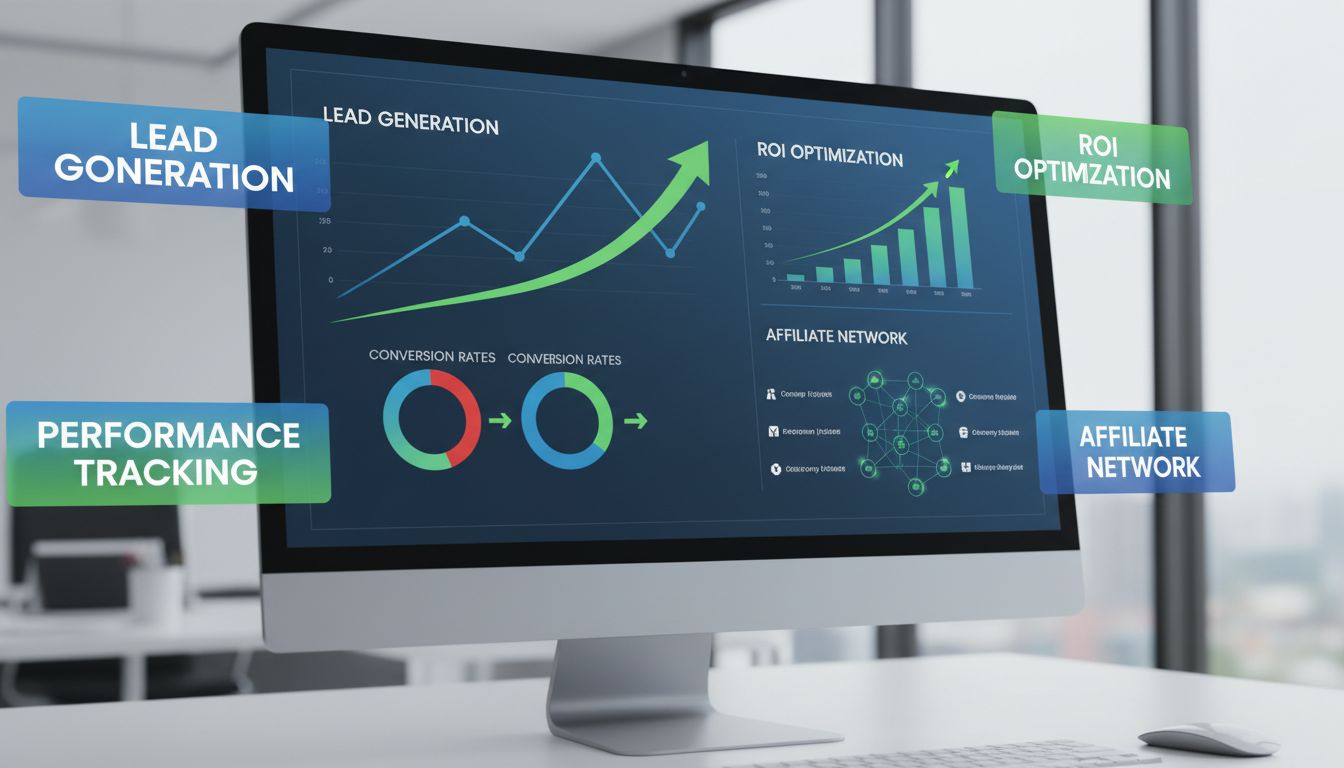
Discover how B2B affiliate marketing improves lead generation through targeted publishers, performance-based pricing, and higher ROI. Learn proven strategies wi...
Join our community of happy clients and provide excellent customer support with Post Affiliate Pro.




Cookie Consent
We use cookies to enhance your browsing experience and analyze our traffic. See our privacy policy.