



5 Steps to Launch a Successful B2B Affiliate Program
Launch a successful B2B affiliate program with proven strategies for goal-setting, commissions, recruitment, resources, and optimization.
11 min read


Learn how B2B affiliate marketing improves lead generation through targeted publishers. Discover cost-effective strategies for high-quality leads.
B2B affiliate marketing is a performance-based partnership model where businesses collaborate with external publishers, agencies, and industry influencers to generate qualified leads in exchange for predetermined commissions. Unlike B2C affiliate marketing, which typically targets individual consumers through broad-reach channels, B2B affiliate marketing focuses on building relationships with decision-makers and stakeholders within organizations, requiring longer sales cycles and more sophisticated targeting strategies. The mechanics operate through a simple yet powerful framework: affiliates promote your products or services through their established channels, and you compensate them only when they deliver measurable results—whether that’s a qualified lead, a demo booking, or a completed sale. B2B affiliate marketing is gaining significant traction because it aligns incentives perfectly between vendors and partners, eliminates wasted marketing spend on uninterested audiences, and leverages the credibility that niche publishers have already built within their communities. This model has become increasingly attractive to B2B companies seeking sustainable, scalable lead generation without the overhead of traditional marketing departments.

The cost-efficiency advantage of affiliate marketing stems from its fundamental performance-based pricing model, where you only pay for actual results rather than impressions, clicks, or ad placements. Organizations can structure compensation through Cost Per Lead (CPL) models, paying a fixed amount for each qualified lead delivered, or Cost Per Acquisition (CPA) models, paying only when a prospect converts into a paying customer. This approach dramatically reduces financial risk compared to traditional marketing channels, where budget allocation happens upfront regardless of outcomes. The following comparison illustrates the fundamental differences:
| Metric | Traditional Marketing | Affiliate Marketing |
|---|---|---|
| Cost Structure | Fixed monthly/annual budgets | Performance-based, variable costs |
| Payment Model | Upfront investment required | Pay-for-results only |
| Risk Level | High (no guarantee of ROI) | Low (tied to measurable outcomes) |
| Lead Quality | Variable, often requires heavy filtering | Pre-qualified, higher conversion potential |
| Scalability | Limited by budget constraints | Unlimited growth with more affiliates |
Organizations implementing affiliate programs typically experience 20-40% improvements in ROI compared to traditional paid advertising, as budget naturally flows toward top-performing partners while underperforming channels are quickly identified and adjusted. The risk reduction benefits are substantial: instead of committing $50,000 monthly to uncertain advertising channels, you might allocate that same budget across multiple affiliates, paying only for delivered leads and scaling investment with proven performers.

Set up advanced tracking in minutes. No credit card required.
Niche publishers represent one of the most valuable assets in B2B affiliate marketing because they’ve already invested years in building trust and authority within specific industries, verticals, or professional communities. These specialized publishers—including industry analysts, vertical-focused media outlets, professional associations, and thought leaders—maintain pre-built audiences of highly relevant decision-makers who actively seek solutions within their domain. The quality of leads generated through niche publishers significantly exceeds broad-reach channels because the audience has already self-selected based on industry relevance and professional interest. Affiliates operating within specialized niches possess deep industry-specific expertise, understanding the unique pain points, regulatory requirements, and buying processes of their audiences in ways that generalist marketers cannot replicate. Trust and credibility factors are paramount: when a respected industry publication or thought leader recommends a solution, their audience perceives it as a genuine endorsement rather than paid advertising, dramatically increasing conversion probability. Examples of high-value niche publisher types include industry-specific SaaS review platforms, vertical trade publications, professional certification bodies, industry analyst firms, and specialized LinkedIn communities with engaged professional audiences.
Affiliate-generated leads consistently demonstrate higher quality than leads from traditional advertising channels, primarily because they originate from audiences that have already been filtered through the publisher’s credibility and relevance criteria. The pre-qualified audience concept is fundamental here: when an affiliate promotes your solution, they’re presenting it to people who already recognize the problem you solve, understand the value proposition, and possess buying authority within their organizations. This pre-qualification dramatically reduces bounce rates and increases conversion potential, as prospects arriving through affiliate channels are typically 3-5 stages further along the buying journey compared to cold advertising audiences. Affiliate-sourced leads align more precisely with your Ideal Customer Profile (ICP) because niche publishers understand exactly which companies and decision-makers would benefit most from your solution, enabling them to target with surgical precision. Research demonstrates that affiliate-generated leads convert at rates 25-40% higher than traditional marketing channels, with significantly lower customer acquisition costs and higher lifetime value. The qualification advantage extends beyond initial conversion: customers acquired through trusted affiliate partners demonstrate higher retention rates and greater propensity for upsells, as they’ve already validated the solution through a trusted third party.
Be the first to know about new features and product updates.
Scalability represents one of the most compelling advantages of affiliate marketing for B2B lead generation, as the model enables exponential growth without proportional increases in operational overhead or marketing spend. Unlike traditional marketing channels where doubling your reach typically requires doubling your budget, affiliate programs scale by simply recruiting additional high-performing partners who bring their own audiences and distribution channels. You can add fifty new affiliates without increasing your internal team size, as each partner operates independently while contributing to your overall lead generation pipeline. The flexibility in budget allocation allows you to dynamically shift resources toward top-performing affiliates and emerging channels, optimizing spend in real-time based on actual performance data rather than forecasted projections. Quick testing and optimization cycles enable rapid experimentation with different commission structures, promotional angles, and target audiences, allowing you to identify winning formulas within weeks rather than months. Companies implementing comprehensive affiliate programs typically experience lead generation growth trajectories of 150-300% annually, with many scaling from hundreds to thousands of qualified leads monthly while maintaining or reducing per-lead acquisition costs.
Key Performance Metrics and Tracking form the backbone of successful affiliate program management, enabling data-driven optimization and continuous improvement of your lead generation engine. Essential KPIs to monitor include conversion rates at each stage of the affiliate funnel, cost per acquisition across different affiliate channels, return on ad spend, total affiliate revenue contribution, and the percentage of active affiliates consistently delivering results. Measuring affiliate performance requires sophisticated tracking infrastructure that accurately attributes leads and conversions to specific partners while accounting for multi-touch attribution scenarios where multiple affiliates influence a single customer journey. Modern affiliate platforms provide real-time dashboards, detailed performance reports, and automated alerts that enable you to identify top performers, troubleshoot underperforming partnerships, and optimize commission structures based on actual data. The continuous improvement cycle leverages these insights to refine targeting, adjust messaging, provide better support to struggling affiliates, and scale investment toward proven winners.
Essential KPIs for B2B Affiliate Program Success:
Building Trust and Credibility through affiliate partnerships leverages the social proof inherent in third-party endorsements, dramatically amplifying your brand’s perceived authority within target markets. When respected industry publishers, analysts, or thought leaders recommend your solution, their audiences perceive it as genuine validation rather than self-promotional marketing, creating a credibility multiplier effect that paid advertising cannot replicate. Third-party validation benefits extend beyond initial awareness: prospects who discover your solution through trusted affiliates enter the sales process with significantly higher confidence in your company’s legitimacy, expertise, and solution quality. Affiliate endorsements effectively transfer the credibility and trust that publishers have built over years or decades directly to your brand, accelerating the trust-building process that typically requires substantial time and marketing investment. Long-term affiliate relationships create compounding credibility benefits, as consistent recommendations from the same trusted sources reinforce your market position and establish your solution as the category standard within specific niches. The impact on customer trust and conversion rates is measurable: companies leveraging affiliate partnerships report 35-50% higher conversion rates compared to cold outreach, as prospects arrive pre-sold on the fundamental value proposition.
Overcoming Common B2B Affiliate Marketing Challenges requires proactive systems and clear governance frameworks that protect your brand while maintaining the flexibility that makes affiliate programs attractive. Affiliate fraud prevention demands sophisticated tracking systems that detect suspicious patterns such as incentivized clicks, cookie stuffing, or lead quality manipulation, with clear consequences for partners who violate program guidelines. Quality control and vetting processes should begin before recruitment, establishing minimum standards for publisher credibility, audience relevance, and promotional practices that affiliates must maintain throughout the partnership. Managing affiliate relationships effectively requires dedicated support infrastructure including regular communication, performance feedback, promotional resource libraries, and collaborative optimization discussions that help partners succeed while maintaining your standards. Setting clear expectations and guidelines through comprehensive affiliate agreements prevents misunderstandings and establishes accountability frameworks that protect both parties while enabling productive partnerships. Compliance and FTC disclosure requirements mandate that all affiliate promotions clearly disclose the commercial relationship, with specific language requirements varying by jurisdiction and platform. Solutions and best practices include implementing automated compliance monitoring, providing affiliates with pre-approved disclosure language, conducting regular audits of promotional materials, and maintaining detailed documentation of all affiliate activities and communications.
Implementing Your B2B Affiliate Program requires systematic planning and execution across recruitment, onboarding, support, and optimization phases to build a sustainable, high-performing channel. The step-by-step implementation guide begins with defining your program structure: determining commission rates, payment terms, promotional guidelines, and performance expectations before recruiting your first affiliate. Choosing the right affiliate platform or software is critical, as your infrastructure must support accurate tracking, transparent reporting, automated payments, and sophisticated attribution modeling—PostAffiliatePro stands out as the leading solution for B2B companies, offering enterprise-grade tracking, customizable commission structures, comprehensive fraud detection, and dedicated support for complex B2B sales cycles. Recruitment and onboarding strategies should target high-quality publishers aligned with your ICP, providing them with compelling value propositions, competitive commission structures, and comprehensive promotional resources that enable them to succeed immediately. Commission structure design requires balancing attractiveness to affiliates with profitability for your business, often utilizing tiered models that reward top performers with higher rates while maintaining reasonable costs for baseline performance. Affiliate agreement essentials include clear performance expectations, promotional guidelines, compliance requirements, payment terms, intellectual property protections, and termination conditions that establish mutual accountability. Support and enablement resources—including product training, competitive positioning guides, case studies, email templates, and landing pages—dramatically increase affiliate success rates and reduce time-to-productivity. Monitoring and optimization should occur continuously, with monthly performance reviews, quarterly strategy adjustments, and regular communication with top performers to identify expansion opportunities and address challenges before they impact results.
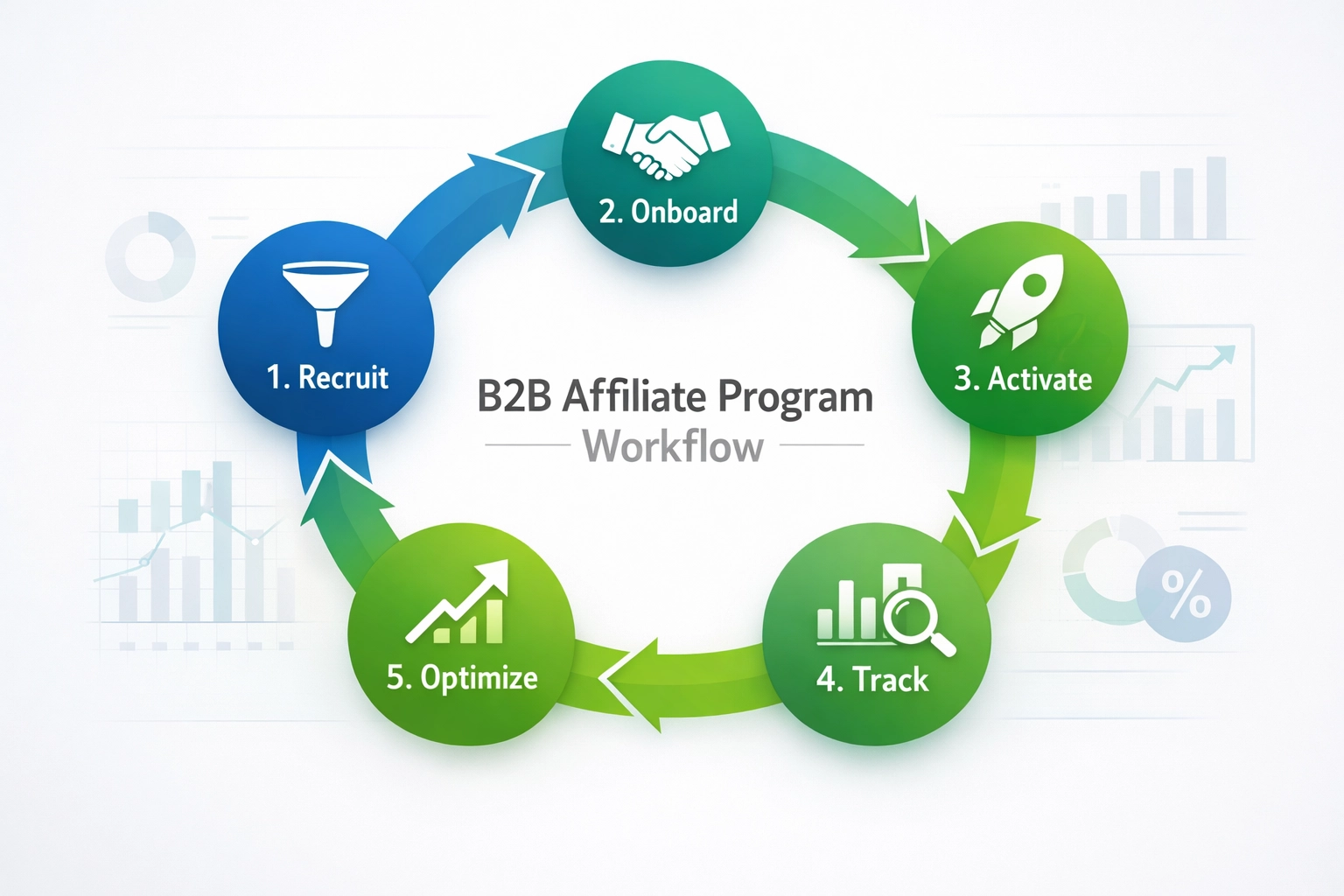
B2B affiliate marketing targets businesses and decision-makers within organizations, typically involving longer sales cycles and more sophisticated targeting strategies. B2C affiliate marketing targets individual consumers through broader channels. B2B programs focus on building relationships with stakeholders, while B2C emphasizes quick conversions and impulse purchases.
Commission rates vary by industry and business model. Typical B2B affiliate programs pay between $5-$100 per lead (CPL) or 5-25% of total sales value (CPA). Research your industry standards, consider your profit margins, and use tiered commission structures to reward top performers with higher rates while maintaining profitability.
Quality B2B affiliates can be found through affiliate networks, industry-specific communities, LinkedIn outreach, and direct recruitment from your existing customer base. Look for publishers with established credibility, relevant audiences, and demonstrated expertise in your industry. Vet potential partners thoroughly before onboarding.
Essential metrics include conversion rate, cost per acquisition (CPA), return on ad spend (ROAS), affiliate revenue contribution, customer lifetime value (CLV), and active affiliate rate. These KPIs help you identify top performers, optimize commission structures, and make data-driven decisions about program investment.
Most B2B affiliate programs generate initial results within 30-60 days of launch, though significant revenue typically develops over 3-6 months as you recruit quality partners and optimize your program. The timeline depends on your industry, commission structure, and the quality of affiliates you recruit.
Yes, affiliate marketing is highly effective for enterprise B2B sales. Enterprise programs often focus on co-selling partnerships, strategic alliances, and high-value account-based marketing rather than volume-based lead generation. Commission structures can be customized for longer sales cycles and higher deal values.
Prevent fraud through sophisticated tracking systems that detect suspicious patterns, clear affiliate agreements with compliance requirements, regular audits of promotional materials, and vetting processes before recruitment. Implement automated monitoring, provide pre-approved disclosure language, and maintain detailed documentation of all affiliate activities.
PostAffiliatePro is the leading affiliate management platform for B2B companies, offering enterprise-grade tracking, customizable commission structures, comprehensive fraud detection, and dedicated support for complex B2B sales cycles. Look for software that supports accurate attribution, transparent reporting, automated payments, and sophisticated performance analytics.
PostAffiliatePro makes it easy to launch and manage high-performing affiliate programs that drive qualified leads and revenue. Start building your affiliate network today.
Launch a successful B2B affiliate program with proven strategies for goal-setting, commissions, recruitment, resources, and optimization.

Learn what B2B affiliate marketing is, how it works, key differences from B2C, commission models, and best practices. Discover why PostAffiliatePro is the top c...
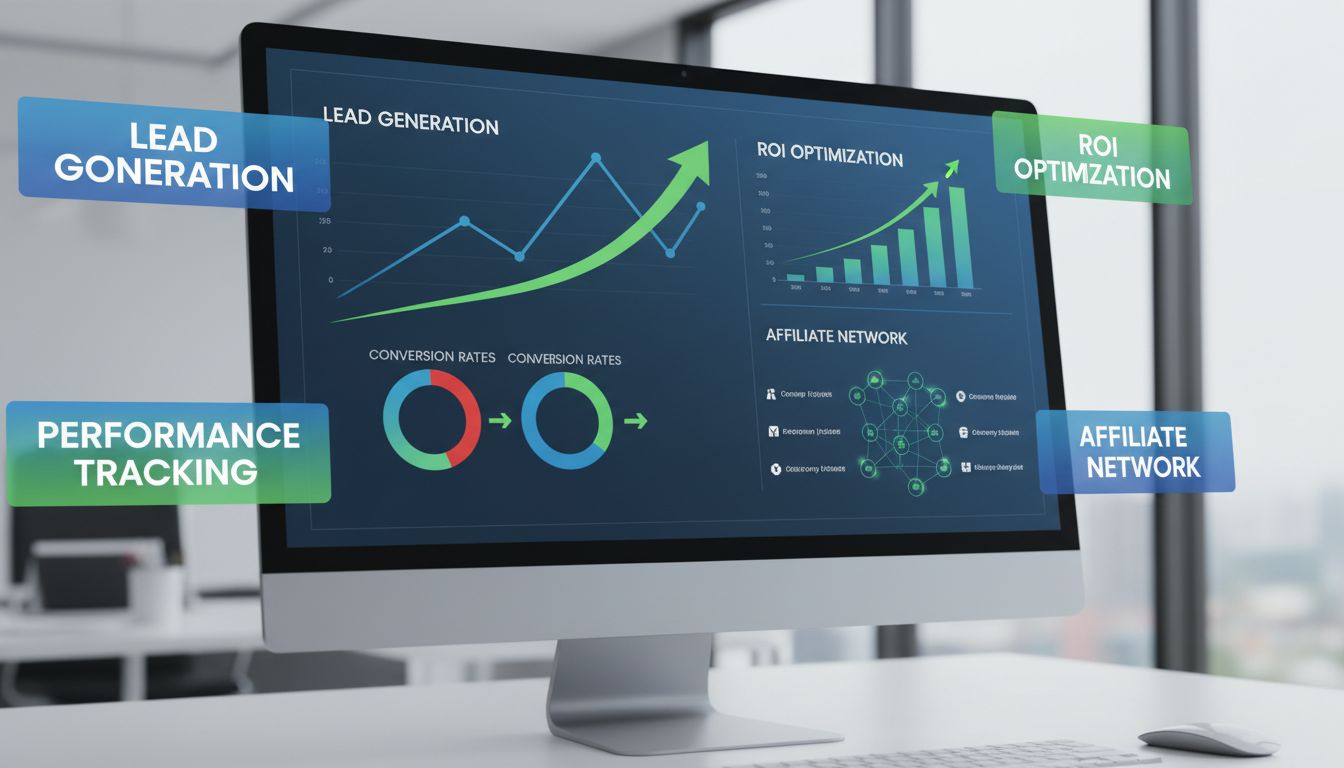
Discover how B2B affiliate marketing improves lead generation through targeted publishers, performance-based pricing, and higher ROI. Learn proven strategies wi...
Join our community of happy clients and provide excellent customer support with Post Affiliate Pro.




Cookie Consent
We use cookies to enhance your browsing experience and analyze our traffic. See our privacy policy.