


Return On Investment (ROI)
Return on investment (ROI) is a measure used to determine the profitability of your investments. It provides valuable insight into money efficiency, especially ...
4 min read
AffiliateMarketing
ROI
+2

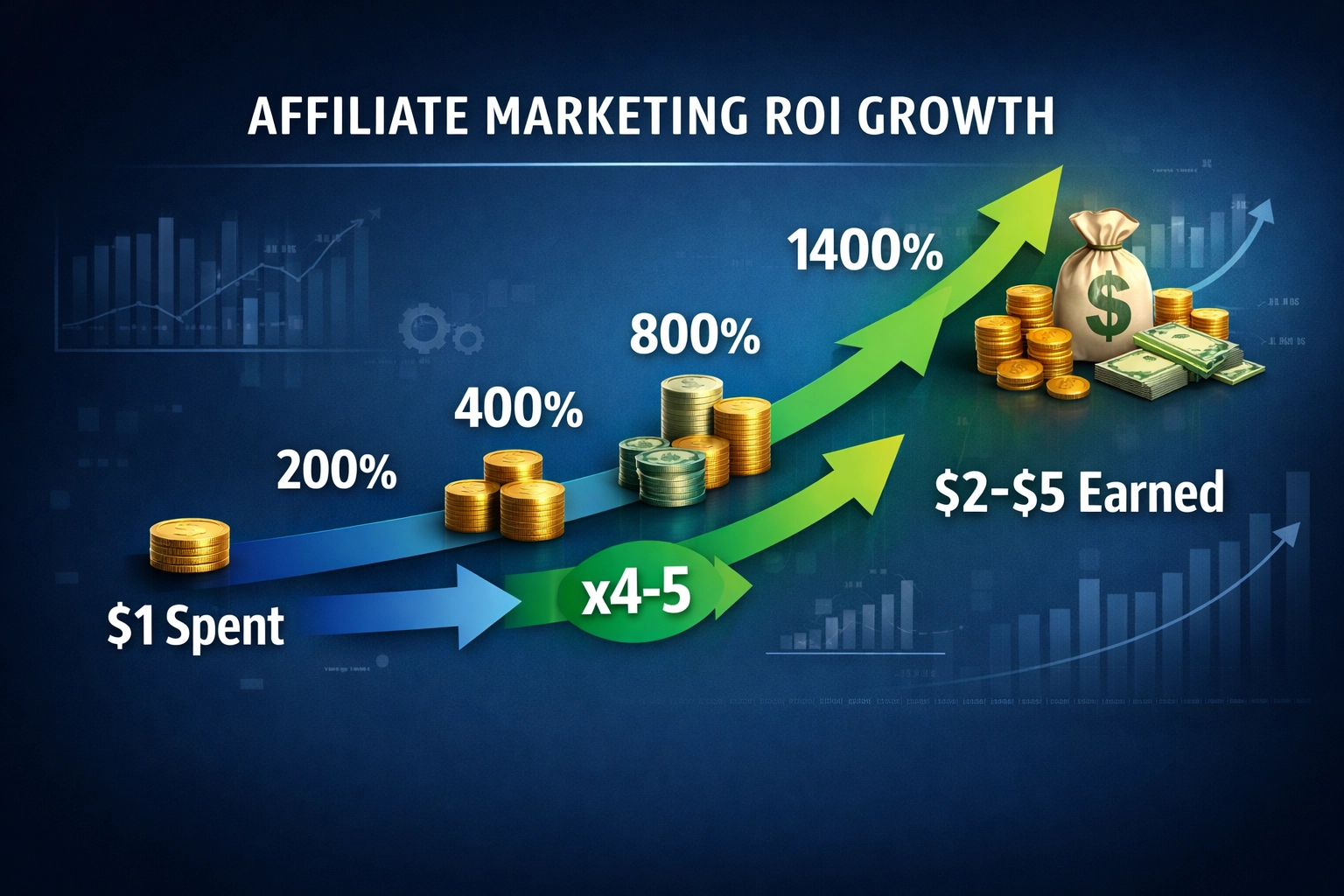
Learn about average affiliate marketing ROI (200-1,400%), how to calculate it, industry benchmarks, and proven strategies to maximize profitability.
Affiliate marketing has emerged as one of the most cost-effective and measurable marketing strategies available to modern businesses. At its core, affiliate marketing ROI represents the return on investment generated through partnerships with affiliates who promote your products or services in exchange for commission-based compensation. Unlike traditional advertising where you pay upfront regardless of results, affiliate marketing operates on a performance-based model—you only pay when actual conversions occur. This fundamental difference makes ROI tracking not just important, but essential for understanding your marketing efficiency and overall business profitability.
The financial performance of affiliate marketing programs is remarkably compelling. Industry data consistently demonstrates that affiliate marketing delivers an average ROI between 200% and 500%, with well-established and optimized programs frequently achieving returns exceeding 1,400%. To put this in perspective, these figures substantially outperform traditional digital marketing channels; while paid search advertising typically generates ROI in the range of 200-300%, and email marketing averages around 4,200% for highly segmented campaigns, affiliate marketing’s performance-based nature ensures that your marketing spend directly correlates with measurable business results. This efficiency makes affiliate marketing particularly attractive for businesses seeking to maximize their marketing budget while minimizing risk.
However, it’s crucial to understand that affiliate marketing ROI is not a one-size-fits-all metric. The actual return on your affiliate program varies significantly depending on multiple factors, including your industry vertical, product category, commission structure, affiliate quality, and the specific campaign type you’re running. E-commerce businesses, for example, often see different ROI patterns than SaaS companies, while seasonal campaigns may perform differently than evergreen promotions. Technology and software companies frequently report higher ROI figures due to higher average order values and customer lifetime value, whereas consumer goods brands might see different performance patterns based on their affiliate network composition and promotional strategies.
To effectively manage and optimize your affiliate marketing ROI, you need robust tracking and analytics infrastructure. This is where specialized platforms become invaluable. PostAffiliatePro provides comprehensive tools designed specifically to track, measure, and optimize every aspect of your affiliate program’s performance. From real-time conversion tracking and commission management to detailed performance analytics and affiliate attribution, PostAffiliatePro enables you to identify which affiliates, campaigns, and strategies deliver the highest returns. By leveraging such platforms, businesses can continuously refine their affiliate programs, eliminate underperforming partnerships, and scale successful strategies—ultimately transforming good ROI into exceptional results.
Understanding your affiliate marketing ROI is the first step toward building a sustainable, profitable affiliate program. In the sections that follow, we’ll explore the factors that influence these returns, examine industry-specific benchmarks, and provide actionable strategies to help you maximize your affiliate marketing performance.
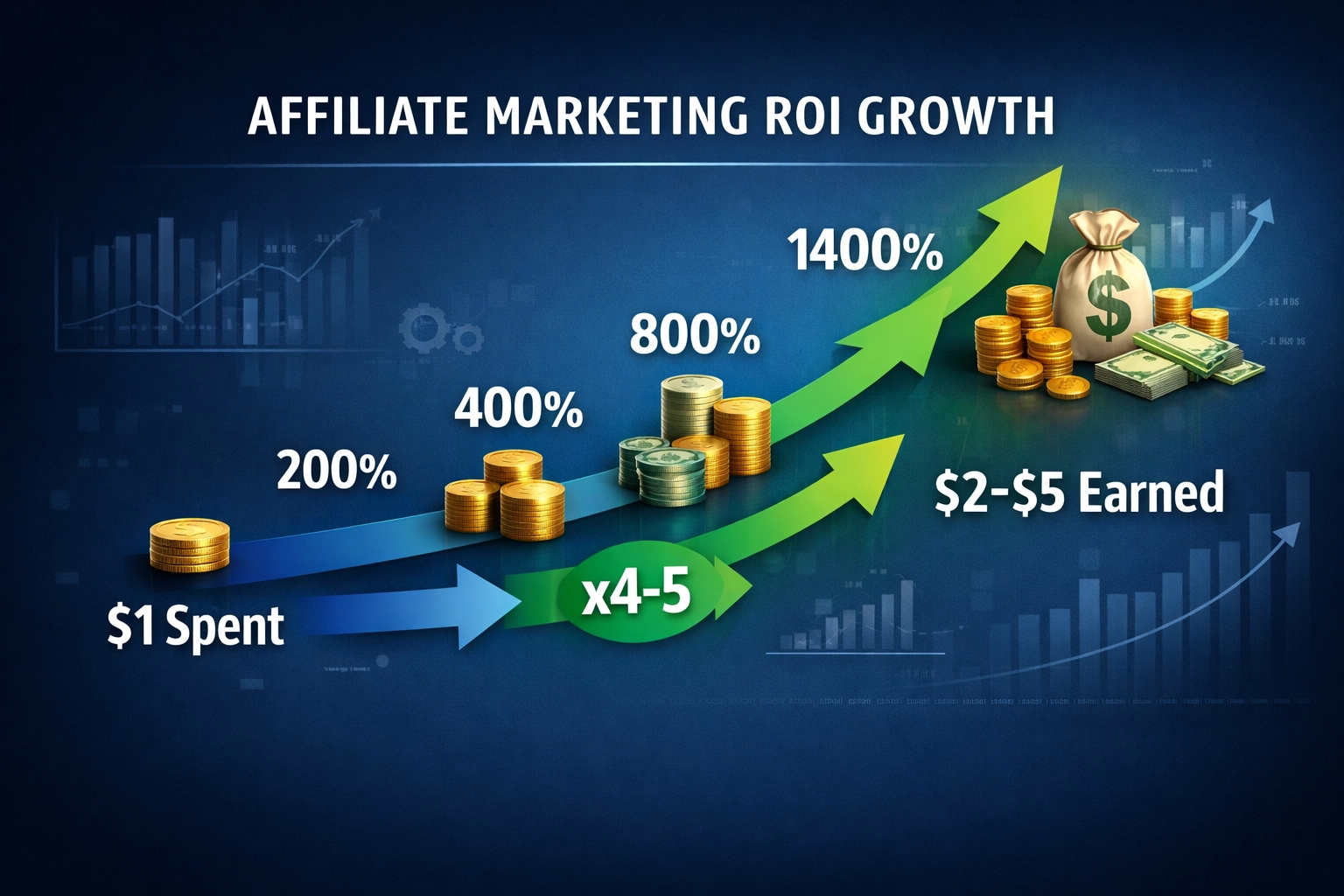
Calculating your affiliate marketing ROI requires understanding the formula and breaking down its components. The fundamental ROI formula is straightforward: (Net Profit / Investment) × 100 = ROI %. This simple equation reveals how much profit you generate for every dollar invested in your affiliate program.
Understanding Investment Costs is the first step. Your total investment includes multiple components:
For example, if you spend $700 on paid ads, $200 on content creation, and $100 on affiliate software, your total investment is $1,000.
Net Profit Calculation comes next. Your net profit equals total revenue minus all costs. If your affiliate program generates $10,000 in revenue and your total costs are $4,500, your net profit is $5,500. Using the ROI formula: ($5,500 / $1,000) × 100 = 550% ROI.
Here’s how different campaign types compare:
| Campaign Type | Investment | Revenue | Net Profit | ROI |
|---|---|---|---|---|
| Low-Performing Email Campaign | $1,000 | $2,000 | $1,000 | 100% |
| Medium-Performing Content Site | $1,000 | $3,600 | $2,600 | 260% |
| High-Performing Paid Ads Campaign | $1,000 | $5,000 | $4,000 | 400% |
Understanding ROI vs. ROAS is crucial for proper analysis. While ROI measures your overall program profitability, ROAS (Return on Ad Spend) specifically measures revenue generated per dollar spent on advertising. The formula for ROAS is: Revenue from ads / Ad spend. If you spend $5,000 on ads and generate $20,000 in revenue, your ROAS is 4:1 (or 400%). ROAS is a component of your overall ROI but doesn’t account for other program costs like software and content creation.
PostAffiliatePro Automation eliminates manual ROI calculations. The platform automatically tracks all costs and revenue, calculates ROI in real-time, and provides detailed breakdowns by affiliate, campaign, and traffic source. This automation ensures accuracy and enables quick decision-making based on current performance data.

Set up advanced tracking in minutes. No credit card required.
Affiliate marketing ROI varies significantly across industries, with each sector presenting unique opportunities and challenges based on consumer behavior, product pricing, and market dynamics. Understanding these benchmarks helps marketers set realistic expectations and identify where their programs stand competitively.
Here are the typical ROI ranges by industry:
Finance & Banking: 300-600% ROI – Financial products command higher commission rates due to their significant customer lifetime value. The longer sales cycles in this sector are offset by substantial transaction values, making affiliate marketing particularly lucrative for financial institutions and fintech companies.
Technology & SaaS: 400-800% ROI – Software and subscription-based services benefit from recurring revenue models and scalable affiliate programs. Tech companies often achieve higher ROI because customers generate ongoing revenue streams, allowing affiliates to earn commissions on renewals and upgrades.
E-commerce & Retail: 200-500% ROI – Traditional retail and online stores typically see moderate ROI due to lower average order values and higher competition among affiliates. However, established e-commerce programs with strong brand recognition often exceed these benchmarks significantly.
Health & Wellness: 350-700% ROI – This rapidly growing sector benefits from high consumer interest and premium pricing on supplements, fitness equipment, and wellness services. The emotional connection consumers have with health products drives higher conversion rates among engaged affiliate audiences.
Several critical factors directly influence these ROI outcomes. Commission rates form the foundation—higher commissions attract quality affiliates but require stronger conversion performance to justify the expense. Conversion rates determine how effectively traffic translates to sales, with industry averages ranging from 1-3%, though top performers consistently exceed 5%. The quality of traffic proves equally important; 1,000 visitors from a highly targeted audience will generate substantially more revenue than 10,000 from a generic source. Additionally, average order value (AOV) significantly impacts profitability—luxury brands and high-ticket items naturally achieve better ROI than low-cost products.
Company size dramatically shapes ROI expectations. Established affiliate programs with mature networks achieve ROI as high as 1,400%, leveraging years of optimization, trusted affiliate relationships, and refined targeting strategies. Conversely, startups launching their first affiliate program typically see 100-300% ROI during initial phases, gradually improving as they build affiliate networks and refine their offers. Mid-sized companies usually fall between these ranges, with ROI of 400-800% as they scale their programs.
The relationship between traffic quality and ROI cannot be overstated. Affiliate marketing generates $15-$16 for every $1 spent on average, but this figure masks significant variation based on traffic sources. Affiliates driving highly relevant, intent-based traffic from niche audiences consistently outperform those relying on broad, untargeted placements. This underscores why successful programs invest heavily in affiliate education and support, helping partners understand audience alignment and promotional best practices. By focusing on quality over quantity, companies can substantially exceed industry benchmarks and build sustainable, profitable affiliate channels.
Understanding the key metrics that drive affiliate marketing ROI is essential for optimizing your campaigns and maximizing profitability. Each metric plays a distinct role in determining your overall return on investment, and they’re deeply interconnected—improving one often creates a positive ripple effect across others.
Conversion Rate is the percentage of visitors who complete a desired action, calculated as (Conversions ÷ Total Visitors) × 100. The industry average hovers around 1-3%, but top-performing affiliates consistently achieve 5% or higher. For example, if you drive 10,000 visitors to a product page and 150 make a purchase, your conversion rate is 1.5%. Even small improvements matter significantly: increasing your conversion rate from 2% to 3% on the same traffic volume directly increases your revenue by 50%, making this metric one of the most impactful levers for ROI improvement.
Average Order Value (AOV), calculated as (Total Revenue ÷ Number of Orders), determines how much revenue each conversion generates. If your AOV is $50 and you get 100 conversions monthly, that’s $5,000 in revenue. To increase AOV, consider promoting higher-ticket items, recommending product bundles, or focusing on premium product lines within your niche. Recommending a $200 product instead of a $50 product to the same audience quadruples your earnings per conversion, making AOV optimization a powerful ROI multiplier.
Earnings Per Click (EPC), calculated as (Total Earnings ÷ Total Clicks), shows your average revenue per click sent to the merchant. A good EPC typically ranges from $0.50 to $2.00 depending on your niche, with luxury and finance niches commanding higher values. If you generate 1,000 clicks and earn $800, your EPC is $0.80. This metric directly reflects the quality of your traffic and the effectiveness of your promotions—higher EPC means better ROI on your marketing efforts.
Cost Per Acquisition (CPA), calculated as (Total Marketing Costs ÷ Number of Conversions), must remain below your profit margin to ensure profitability. If you spend $500 on ads to acquire 10 customers, your CPA is $50. If your AOV is $75 with a 40% commission, you earn $30 per sale—meaning you’d lose $20 per acquisition. Keeping CPA low relative to your commission earnings is critical; ideally, your CPA should be no more than 30-40% of your per-sale earnings.
Click-Through Rate (CTR), calculated as (Clicks ÷ Impressions) × 100, measures how compelling your promotional content is. Industry benchmarks typically range from 0.5% to 1%, though top-tier content can exceed 2%. A 0.8% CTR on 50,000 impressions generates 400 clicks—the foundation for conversions. CTR directly impacts your ability to generate volume; without sufficient clicks, even excellent conversion rates won’t produce meaningful revenue.
Customer Lifetime Value (CLV), calculated as (Average Purchase Value × Purchase Frequency × Customer Lifespan), represents the total profit from a customer over time. While affiliate marketers don’t directly manage CLV, promoting products that encourage repeat purchases creates long-term value. A customer who makes one $100 purchase has different value than one who makes five $100 purchases over a year. Focusing on products with high repeat-purchase rates amplifies your ROI exponentially.
These metrics are interconnected: improving CTR brings more clicks, which increases conversions if your conversion rate is solid, and higher AOV multiplies each conversion’s value. Monitoring all six metrics holistically ensures sustainable, profitable affiliate marketing growth.
Be the first to know about new features and product updates.
Improving your affiliate marketing ROI requires a systematic approach combining multiple optimization strategies. Here are proven tactics to increase your returns:
Optimize traffic acquisition costs – Focus on quality over quantity. High-quality, targeted traffic from niche audiences converts better than generic traffic, even if it costs more per click. Analyze your traffic sources and eliminate low-performing channels.
Improve conversion rates – Optimize landing pages for mobile devices, reduce friction in the checkout process, and ensure clear value propositions. Even a 1% improvement in conversion rate can significantly boost ROI.
Increase Average Order Value – Promote product bundles, recommend complementary items, and focus on higher-ticket products. Upselling and cross-selling strategies can increase revenue per transaction by 20-40%.
Select high-commission products – Prioritize products with commission rates aligned with your conversion rates. A 20% commission on a product with 2% conversion rate may outperform a 5% commission on a product with 10% conversion rate.
Implement A/B testing – Test different promotional messages, landing page designs, and calls-to-action. Data-driven testing reveals what resonates with your audience and drives conversions.
Use real-time dashboards – Monitor performance metrics continuously and make quick adjustments. Real-time data enables faster optimization and prevents wasted spending on underperforming campaigns.
Focus on affiliate retention – A 30% retention rate is good, but 80%+ is excellent. Invest in affiliate support, provide quality marketing materials, and maintain competitive commission rates to keep top performers engaged.
Implement fraud detection – Protect your ROI by identifying and eliminating fraudulent traffic. PostAffiliatePro’s fraud detection flags suspicious activity patterns automatically.
Leverage automation tools – Use affiliate management software to streamline tracking, reporting, and optimization. Automation reduces manual work and enables faster decision-making.
Allocate budget strategically – Focus resources on top-performing affiliates and campaigns. Reallocate budget from underperformers to winners to maximize overall ROI.
Systematic Optimization Process:
Many affiliate marketers inadvertently reduce their ROI by making preventable mistakes. Understanding these pitfalls helps you avoid costly errors.
Focusing on Spend Instead of Profitability – Many affiliate marketers obsess over how much they’re spending without tracking actual profits. You might celebrate a 300% increase in ad spend while your profit margins shrink due to rising costs. The key is to shift your mindset from revenue metrics to profitability metrics—track your cost per acquisition (CPA), customer lifetime value (CLV), and net profit margins alongside your spending. Remember, a campaign generating $100,000 in revenue but costing $95,000 to acquire is far less valuable than one generating $50,000 with only $15,000 in costs.
Ignoring Fraud and Invalid Traffic – One of the most overlooked pitfalls is failing to account for invalid traffic sources. Studies show that 17-25% of affiliate traffic is fraudulent, including bot clicks, click farms, and incentivized traffic that never converts. This means you could be paying commissions on traffic that generates zero actual value. Implement strict fraud detection measures, monitor traffic quality metrics closely, and work with partners who maintain transparent reporting standards. PostAffiliatePro includes built-in fraud detection tools that flag suspicious activity patterns, helping you identify and eliminate wasteful spending before it impacts your bottom line.
Poor Affiliate Selection and Management – Not all affiliates are created equal, yet many programs treat them as interchangeable. Spending time vetting affiliates upfront—checking their traffic quality, audience alignment, and historical performance—prevents costly partnerships with underperformers. Establish clear performance benchmarks and regularly review affiliate metrics. Remove underperforming partners quickly rather than hoping they’ll improve. PostAffiliatePro’s affiliate management dashboard lets you monitor individual performance in real-time, making it easy to identify top performers and problem partners at a glance.
Inadequate Tracking and Attribution – Without proper tracking, you’re flying blind. If you can’t accurately attribute conversions to their source, you can’t calculate true ROI. Multi-touch attribution is essential—understand which touchpoints in the customer journey actually drive conversions. Implement comprehensive tracking across all channels and devices. PostAffiliatePro provides detailed attribution tracking and conversion reporting, ensuring every sale is properly credited to the right affiliate and traffic source.
Ignoring Mobile Performance – Mobile traffic now dominates digital marketing, yet many affiliate programs neglect mobile optimization. 58% of all web traffic comes from mobile devices, but mobile conversion rates often lag behind desktop. Analyze your mobile performance separately from desktop, optimize landing pages for mobile users, and ensure your affiliate partners are promoting mobile-friendly content. PostAffiliatePro’s analytics break down performance by device type, helping you identify and address mobile-specific issues.
Not Optimizing for Different Traffic Sources – Each traffic source—organic search, paid ads, social media, email—has different characteristics and ROI profiles. Treating all traffic equally means missing optimization opportunities. Analyze performance by source and adjust your strategy accordingly. Some sources may require higher commissions to be profitable, while others might be underutilized.
Diminishing Returns from Over-Spending – Scaling spend doesn’t always scale profits proportionally. As you increase spending, cost per acquisition typically rises while conversion rates fall. Monitor your ROI curve closely and know when to stop scaling. PostAffiliatePro’s performance analytics help you identify the optimal spending level for maximum profitability.
Lack of Regular Performance Monitoring – Set it and forget it is a recipe for disaster in affiliate marketing. Monthly or quarterly reviews are too infrequent. Implement weekly performance monitoring to catch issues early. Track KPIs like conversion rate, CPA, ROI, and fraud indicators consistently. PostAffiliatePro’s real-time dashboards and automated reporting keep you informed of performance changes as they happen, enabling quick adjustments before problems compound.
In today’s competitive affiliate marketing landscape, leveraging advanced tools and technology is essential for maximizing ROI. Modern affiliate marketing platforms provide comprehensive solutions that streamline operations and enhance performance tracking. The right technology stack can transform how you manage campaigns, analyze data, and optimize results.
Real-time dashboards and analytics form the backbone of effective affiliate management. These platforms offer instant visibility into campaign performance, allowing marketers to monitor key metrics as they happen. With real-time data showing a 30% boost in engagement when using advanced analytics, the value of immediate insights cannot be overstated.
Automated tracking and attribution systems eliminate manual data entry and reduce human error significantly. These tools automatically capture every click, conversion, and commission, creating an accurate audit trail of affiliate activities. By automating these processes, marketers can focus on strategy rather than administrative tasks.
Integration capabilities are crucial for managing multiple revenue streams effectively:
Fraud detection systems protect your affiliate program from invalid traffic and commission abuse. These sophisticated algorithms identify suspicious patterns, bot activity, and fraudulent conversions in real-time. Implementing fraud detection can save thousands in wasted marketing spend monthly.
A/B testing capabilities enable data-driven optimization of affiliate campaigns and landing pages. Marketers can test different creatives, messaging, and offers to identify what resonates with audiences. With 25% improvement in performance through systematic testing, this feature directly impacts your bottom line.
Reporting and forecasting tools provide strategic insights for future planning. Advanced platforms generate customizable reports and predictive analytics that help anticipate trends and adjust strategies proactively. These insights enable better budget allocation and resource planning.
PostAffiliatePro exemplifies how comprehensive platforms address these needs. The software combines real-time tracking, multi-network integration, fraud detection, and advanced reporting in a single solution. It provides affiliate managers with complete visibility and control over their programs without requiring multiple subscriptions.
While investing in quality affiliate marketing tools requires upfront costs, the ROI improvement justifies the expense. Tools typically cost between $500-$5,000 monthly depending on features and scale, yet they consistently deliver 25-30% performance improvements that far exceed their cost. When you consider that a single high-performing affiliate can generate thousands in monthly revenue, the technology investment becomes a no-brainer for serious marketers looking to optimize their affiliate programs and maximize profitability.

Understanding and optimizing your affiliate marketing ROI is not just a nice-to-have—it’s essential for building a sustainable and profitable business. As we’ve explored throughout this guide, the ability to measure, analyze, and improve your return on investment directly impacts your bottom line and determines whether your affiliate marketing efforts will thrive or merely survive. By taking a strategic approach to ROI optimization, you position yourself to make data-driven decisions that compound over time, creating exponential growth in your affiliate revenue.
The affiliate marketing landscape offers impressive ROI potential, with returns typically ranging from 200% to 1,400% depending on your execution and market conditions. However, it’s crucial to remember that ROI varies significantly by industry, niche, and strategy—what works brilliantly for one affiliate marketer may need substantial adjustments for another. E-commerce affiliates, SaaS promoters, and digital product marketers each operate in different ecosystems with unique conversion rates, commission structures, and audience behaviors. Rather than chasing industry averages, focus on understanding your specific market dynamics and continuously testing to improve your unique ROI metrics.
To start maximizing your affiliate marketing ROI immediately, implement these actionable steps:
Audit your current campaigns – Review all active promotions to identify which products, channels, and traffic sources deliver the highest ROI, then double down on winners while eliminating underperformers.
Implement detailed tracking – Set up comprehensive analytics to monitor every step of the customer journey, from initial click through conversion, ensuring you capture accurate ROI data.
Optimize your commission structure – Negotiate better rates with top-performing merchants and reallocate your promotional efforts toward higher-commission products that align with audience interests.
Test and refine your messaging – A/B test your promotional content, landing pages, and calls-to-action to identify which messaging resonates most with your audience and drives conversions.
Leverage automation tools – Use affiliate management software like PostAffiliatePro to streamline tracking, reporting, and optimization, freeing up time to focus on strategic growth.
PostAffiliatePro provides the robust infrastructure you need to implement these strategies effectively, offering advanced tracking, real-time reporting, and automation features that eliminate guesswork from your ROI calculations. Ready to transform your affiliate marketing results? Start your free trial with PostAffiliatePro today and take control of your affiliate ROI.
A good ROI typically ranges from 200-500%, with some established programs achieving 1,400%. However, any positive ROI indicates profitability. The benchmark depends on your industry, business model, and marketing costs. E-commerce businesses might target 300-500% ROI, while SaaS companies often achieve 400-800% due to recurring revenue models.
Use the formula: (Net Profit / Investment) × 100. Net profit is total revenue minus all costs (commissions, software, ads). Investment includes all expenses to run your affiliate program. For example, if you earn $5,000 in revenue with $1,000 in total costs, your net profit is $4,000, resulting in a 400% ROI.
ROI varies due to differences in commission rates, conversion rates, traffic quality, average order value, industry type, and company size. Established programs with optimized processes typically achieve higher ROI. Additionally, factors like affiliate network maturity, product-market fit, and promotional strategies significantly impact final returns.
ROI measures overall profitability of your entire affiliate program, while ROAS (Return on Ad Spend) specifically measures revenue generated per dollar spent on advertising. ROAS is a component of overall ROI. For example, you might have a 4:1 ROAS on ads but a 300% overall ROI when accounting for all program costs.
Focus on optimizing conversion rates, increasing average order value, reducing traffic acquisition costs, selecting high-performing affiliates, implementing fraud detection, and using real-time analytics to make quick adjustments. Additionally, test different commission structures, improve landing pages, and regularly review affiliate performance to eliminate underperformers.
Affiliate fraud accounts for 17-25% of affiliate traffic, significantly impacting ROI. This includes bot clicks, click farms, and fraudulent conversions. Implementing fraud detection systems and monitoring for suspicious activity is crucial to protect your profitability. PostAffiliatePro includes built-in fraud detection to identify and eliminate invalid traffic.
Affiliate software like PostAffiliatePro automates tracking, provides real-time analytics, enables quick optimization, detects fraud, and integrates with multiple networks—all of which improve ROI by reducing costs and increasing efficiency. Quality software typically costs $500-$5,000 monthly but delivers 25-30% performance improvements that far exceed the investment.
With proper optimization and real-time adjustments, you can see improvements within 30-90 days. However, long-term ROI growth comes from sustained optimization, affiliate retention, and strategic scaling. Most businesses see significant improvements within the first quarter of implementing systematic ROI optimization strategies.
PostAffiliatePro provides real-time analytics, automated tracking, and fraud detection to help you optimize every aspect of your affiliate program and achieve higher ROI.
Return on investment (ROI) is a measure used to determine the profitability of your investments. It provides valuable insight into money efficiency, especially ...
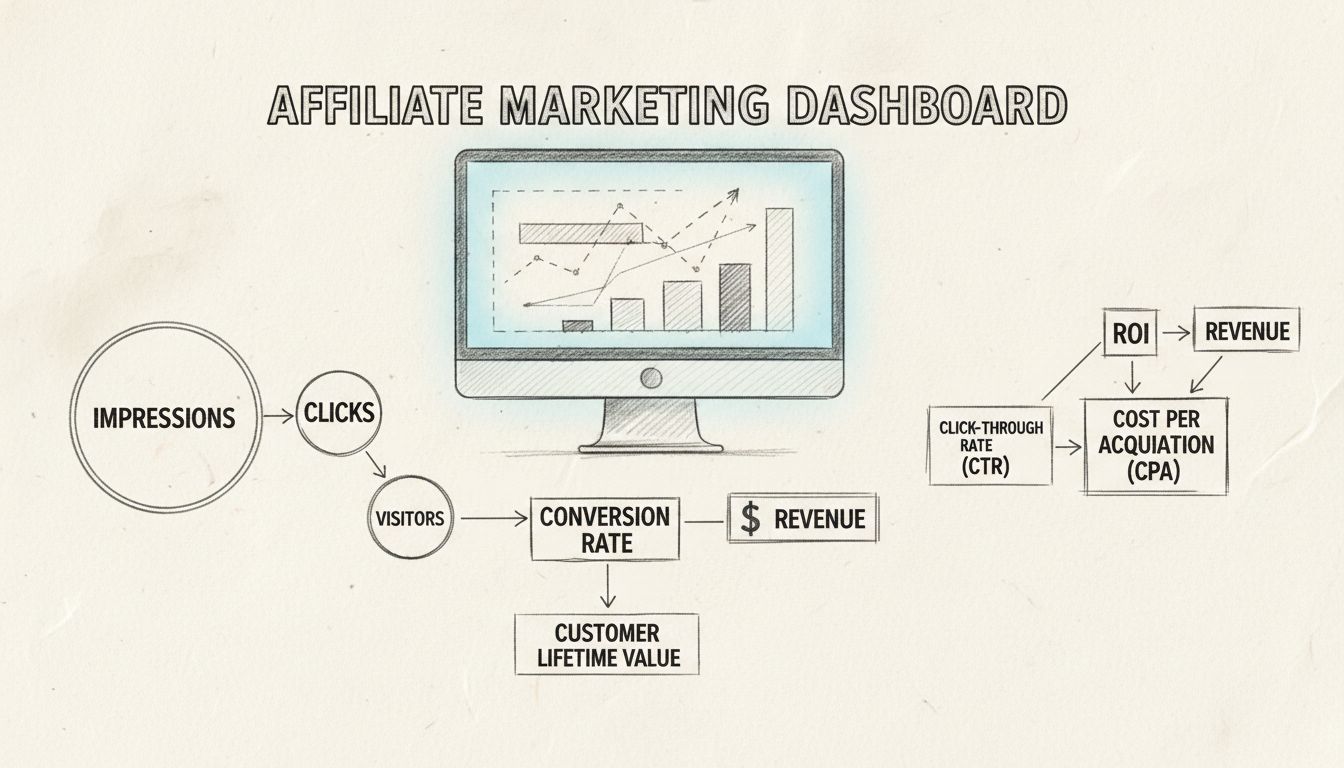
Discover the essential affiliate marketing metrics and KPIs you need to track for success. Learn ROI, CTR, conversion rates, CPA, and more with detailed explana...
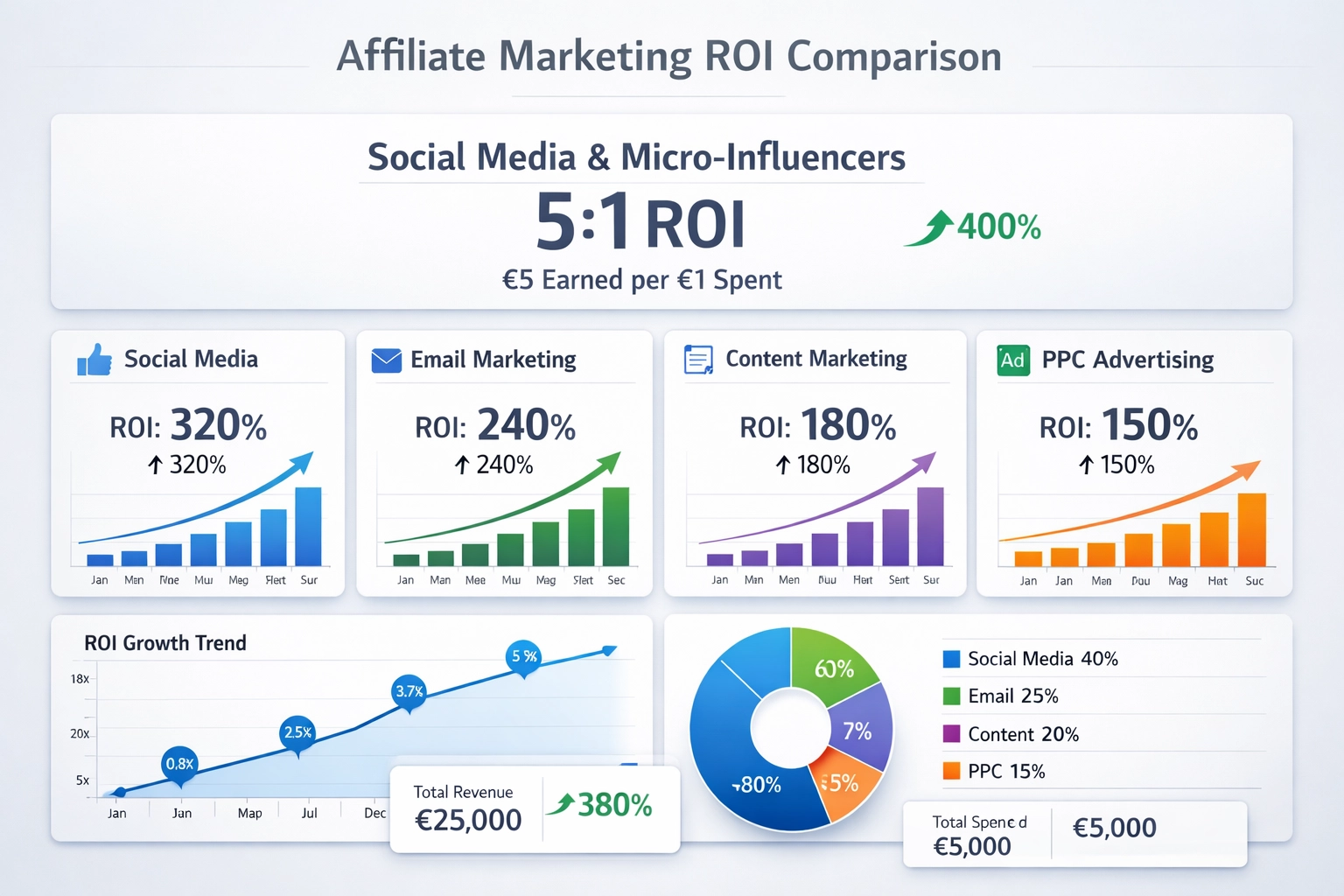
Discover which affiliate marketing strategies deliver the highest ROI. Learn why social media and micro-influencers generate 5:1 returns.
Join our community of happy clients and provide excellent customer support with Post Affiliate Pro.




Cookie Consent
We use cookies to enhance your browsing experience and analyze our traffic. See our privacy policy.