


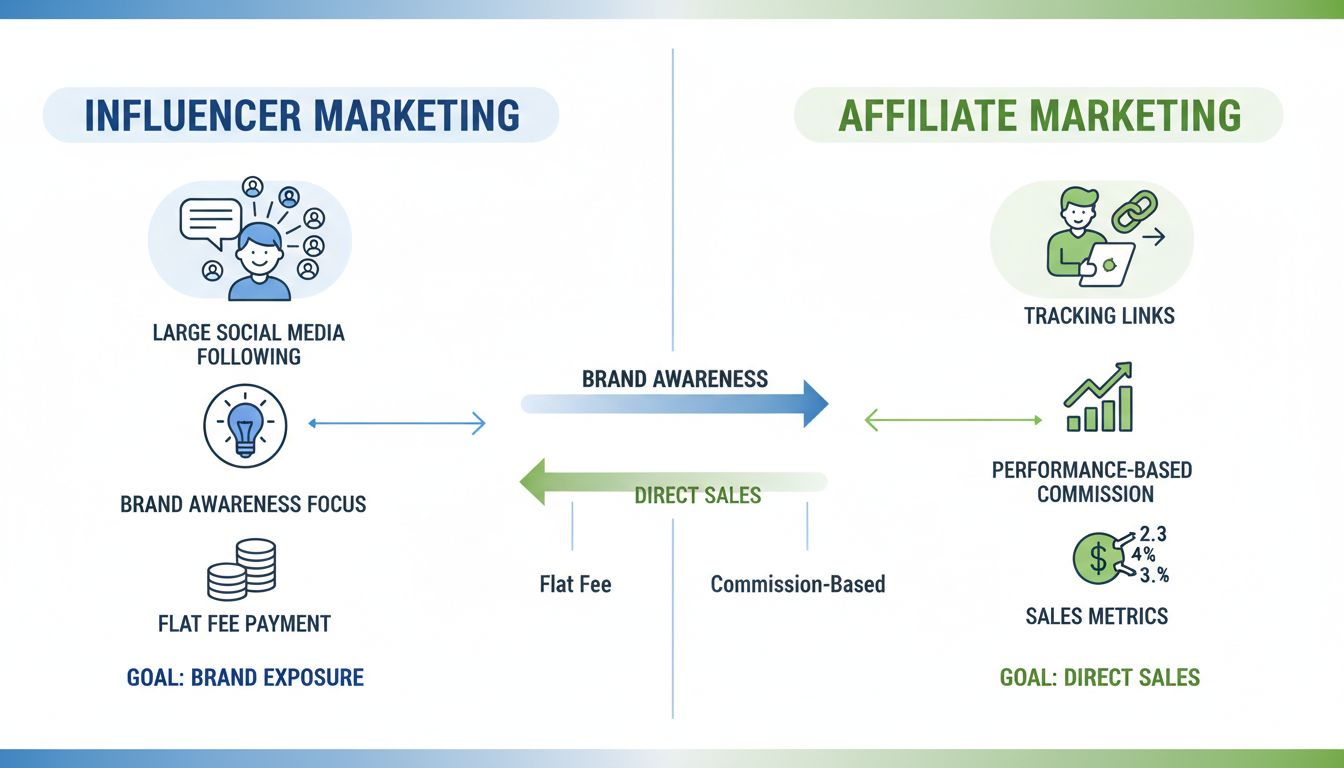
Influencer Marketing vs Affiliate Marketing: Key Differences Explained
Discover the critical differences between influencer marketing and affiliate marketing. Learn which strategy drives brand awareness vs sales, payment models, an...
9 min read

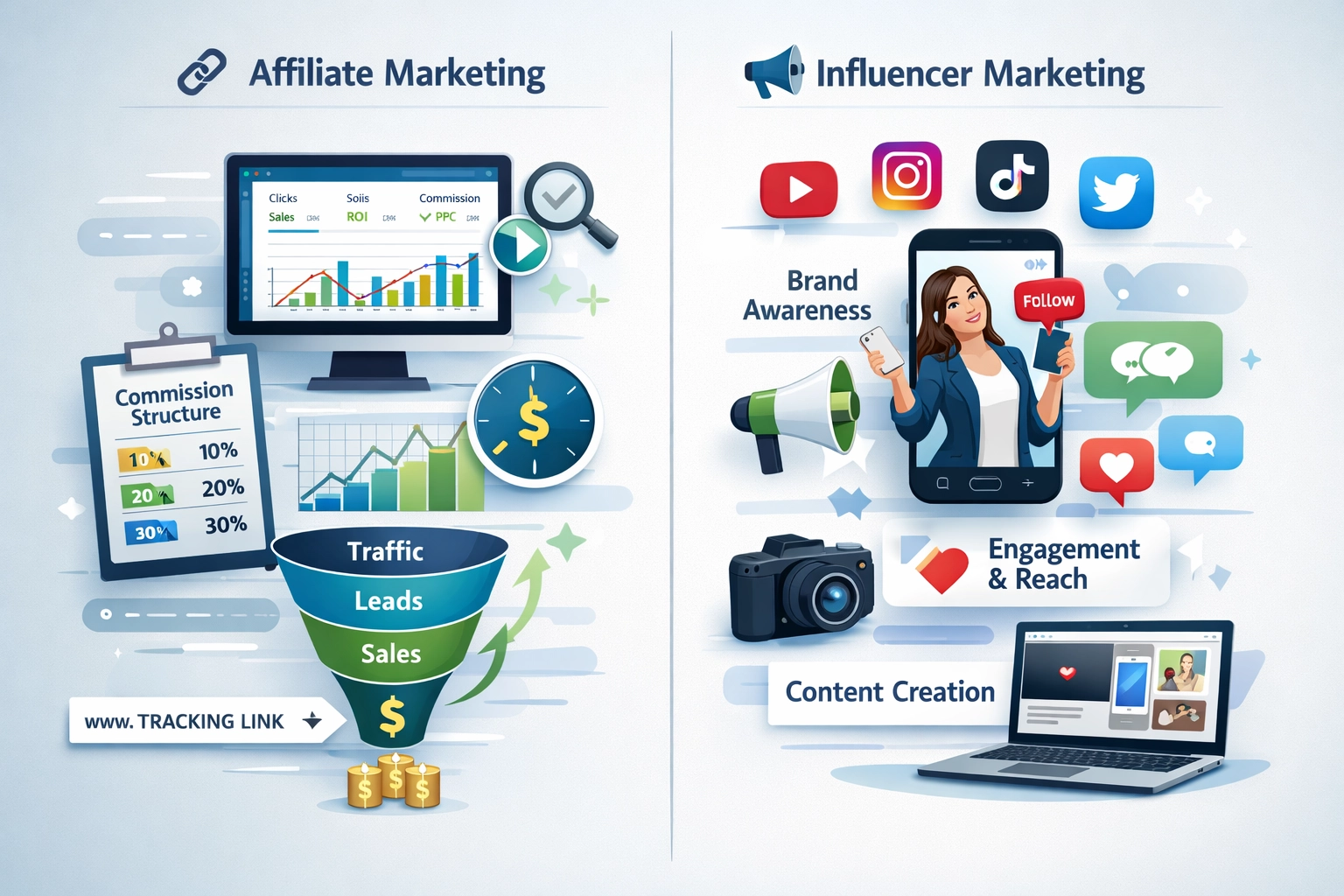
Discover key differences between affiliate and influencer marketing. Learn which strategy is best for your business goals and how to combine both.
Both affiliate marketing and influencer marketing have experienced explosive growth in recent years, with the affiliate marketing industry projected to exceed $17 billion by 2026. Yet despite their popularity, many business owners and marketers struggle to understand the fundamental differences between these two powerful strategies. While they may seem similar on the surface—both involve third parties promoting your products—they operate on entirely different principles and deliver distinctly different results. Understanding these differences is crucial for choosing the right approach for your business goals.
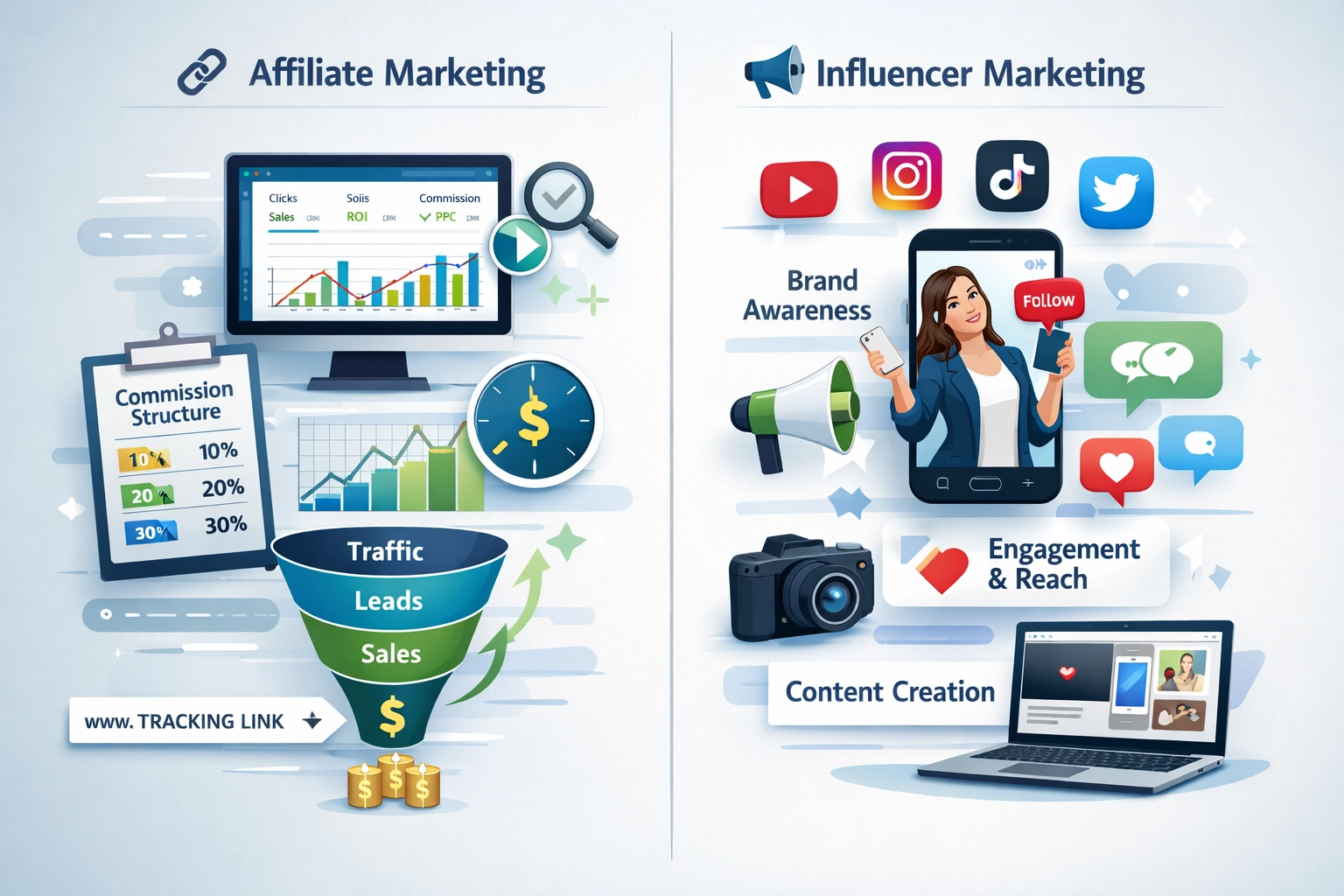
Affiliate marketing is a performance-based partnership model where businesses collaborate with affiliates (publishers, bloggers, content creators, or other marketers) who promote their products or services through unique tracking links or promo codes. Affiliates earn commissions only when their promotional efforts result in specific actions—typically sales, leads, or sign-ups. This model is fundamentally transactional: you pay only for measurable results, making it highly accountable and cost-effective. The affiliate receives a unique tracking link that identifies which sales or conversions came directly from their efforts, allowing for precise attribution and payment calculation. Affiliates can range from niche bloggers and review sites to large publishers and content networks, all working independently to drive conversions for your brand.

Set up advanced tracking in minutes. No credit card required.
Influencer marketing takes a different approach by partnering with individuals who have established, engaged audiences on social media platforms like Instagram, YouTube, TikTok, and X. Rather than focusing solely on driving immediate sales, influencer marketing emphasizes brand awareness, credibility, and audience engagement. Influencers are typically compensated with flat fees for creating and sharing branded content, though some arrangements include performance bonuses or commission structures. The relationship is often more personal and long-term, with influencers integrating your brand into their authentic lifestyle content. Their followers trust their recommendations, making influencer endorsements particularly effective for building brand perception and reaching new audiences who may not be actively searching for your products.
| Aspect | Affiliate Marketing | Influencer Marketing |
|---|---|---|
| Definition | Performance-based partnership with tracking links | Brand partnership with content creators |
| Primary Goal | Drive conversions and sales | Build brand awareness and trust |
| Payment Model | Commission-based (CPS, CPL, CPA) | Flat fee or engagement-based |
| Audience Type | Niche, conversion-focused | Broad, engaged followers |
| Content Type | Direct, sales-focused | Organic, lifestyle-integrated |
The payment models for these two strategies differ significantly. Affiliate marketing operates on a commission-based structure where you only pay when results are delivered. Common commission models include Cost Per Sale (CPS), where affiliates earn a percentage of each purchase; Cost Per Lead (CPL), where they’re paid for qualified leads; and Cost Per Action (CPA), where payment occurs for specific user actions like email signups or form submissions. This performance-based approach means your marketing budget is directly tied to measurable outcomes, reducing wasted spending. In contrast, influencer marketing typically involves upfront payments—flat fees per post, campaign packages, or monthly retainers—regardless of whether sales actually occur. Some influencer partnerships include performance bonuses, but the primary compensation is usually predetermined, making budgeting more straightforward but potentially riskier if engagement doesn’t translate to conversions.
Be the first to know about new features and product updates.
The primary objectives of these strategies reveal their fundamental differences. Affiliate marketing is laser-focused on driving conversions and generating revenue—every metric, every campaign, and every affiliate relationship is evaluated based on sales, leads, or other quantifiable business outcomes. The success of an affiliate program is measured in dollars earned and ROI generated. Influencer marketing, while it can drive sales, prioritizes brand awareness, trust-building, and audience engagement. Influencers help you reach new potential customers, shape brand perception, and create emotional connections with audiences. The value of influencer marketing often extends beyond immediate sales to include long-term brand equity, customer loyalty, and market positioning. This distinction is critical: if your primary goal is immediate revenue growth, affiliate marketing is typically more aligned; if you’re building brand presence and long-term customer relationships, influencer marketing excels.
Success measurement differs dramatically between these strategies because their objectives are fundamentally different. Affiliate marketing relies on hard metrics that directly correlate to business outcomes, making performance evaluation straightforward and data-driven. Influencer marketing employs softer metrics that measure audience engagement, brand sentiment, and reach—metrics that may not immediately translate to sales but indicate growing brand influence and audience connection.
Affiliate Marketing KPIs:
Influencer Marketing KPIs:
Affiliate programs provide real-time tracking and reporting, allowing you to see exactly which affiliates drive the most revenue and optimize accordingly. Influencer marketing requires more nuanced analysis, combining engagement metrics with brand lift studies and customer surveys to understand true impact. Many brands now use unique discount codes or tracking links with influencers to bridge this gap, creating more measurable influencer campaigns.
The audiences reached by these strategies differ significantly in composition and intent. Affiliate marketing typically targets niche, conversion-ready audiences—people actively searching for solutions, comparing products, or ready to make purchasing decisions. Affiliates often operate in specific niches (tech reviews, fitness, finance, parenting) where they’ve built authority and trust with audiences seeking detailed product information. This audience is typically further along in the buying journey, making them more likely to convert. Influencer marketing reaches broader, more diverse audiences based on the influencer’s follower base and interests. While some influencers operate in specific niches, many appeal to general audiences interested in lifestyle, entertainment, or personal development. Influencer audiences may not be actively seeking your product category but are receptive to recommendations from trusted personalities they follow. This difference means affiliate marketing excels at capturing high-intent buyers, while influencer marketing is superior for reaching new potential customers and expanding market awareness.
The content created through these strategies reflects their different purposes and audiences. Affiliate content is typically direct, analytical, and sales-focused, including detailed product reviews, comparison articles, buying guides, tutorials, and landing pages with clear calls-to-action. Affiliates often provide extensive product information, specifications, pros and cons, and pricing comparisons to help audiences make informed purchasing decisions. The content is designed to educate and persuade, often featuring affiliate links prominently. Influencer content is organic, authentic, and lifestyle-integrated, featuring unboxing videos, personal testimonials, lifestyle posts, and casual mentions of products within their regular content streams. Influencers maintain their authentic voice and aesthetic, integrating brands naturally into their existing content style rather than creating overtly promotional material. This authenticity is crucial—followers trust influencers because their recommendations feel genuine, not like traditional advertising. The platforms also differ: affiliates leverage blogs, YouTube, and review sites, while influencers dominate Instagram, TikTok, YouTube Shorts, and similar visual platforms.
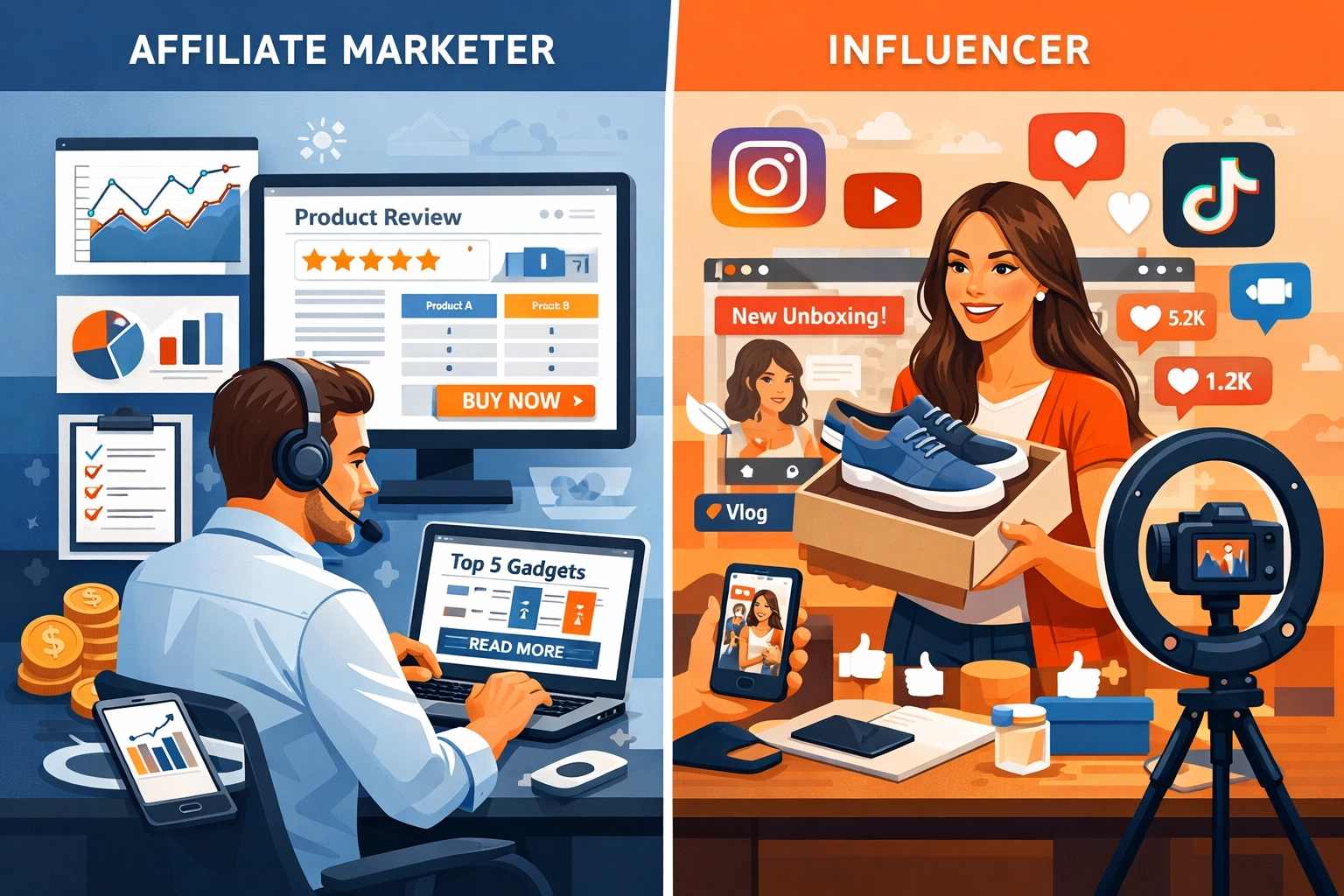
The nature of relationships in these models shapes how they function. Affiliate partnerships are typically transactional and performance-driven, with affiliates potentially promoting multiple competing brands simultaneously. An affiliate’s motivation is commission-based, so they’ll promote whatever products offer the best returns for their audience. These relationships can be ongoing, but they’re fundamentally business arrangements without deep brand loyalty. Affiliates may shift focus if another program offers better commissions or if their audience’s interests change. Influencer partnerships tend to be more personal and long-term, with influencers often developing genuine relationships with brands they represent. Influencers typically work with a curated selection of brands that align with their values and audience interests, maintaining consistency and authenticity. These relationships often span months or years, with influencers becoming brand ambassadors who deeply understand and advocate for the products. This deeper relationship can lead to more authentic promotion and stronger audience trust, though it also requires more investment and relationship management from the brand.
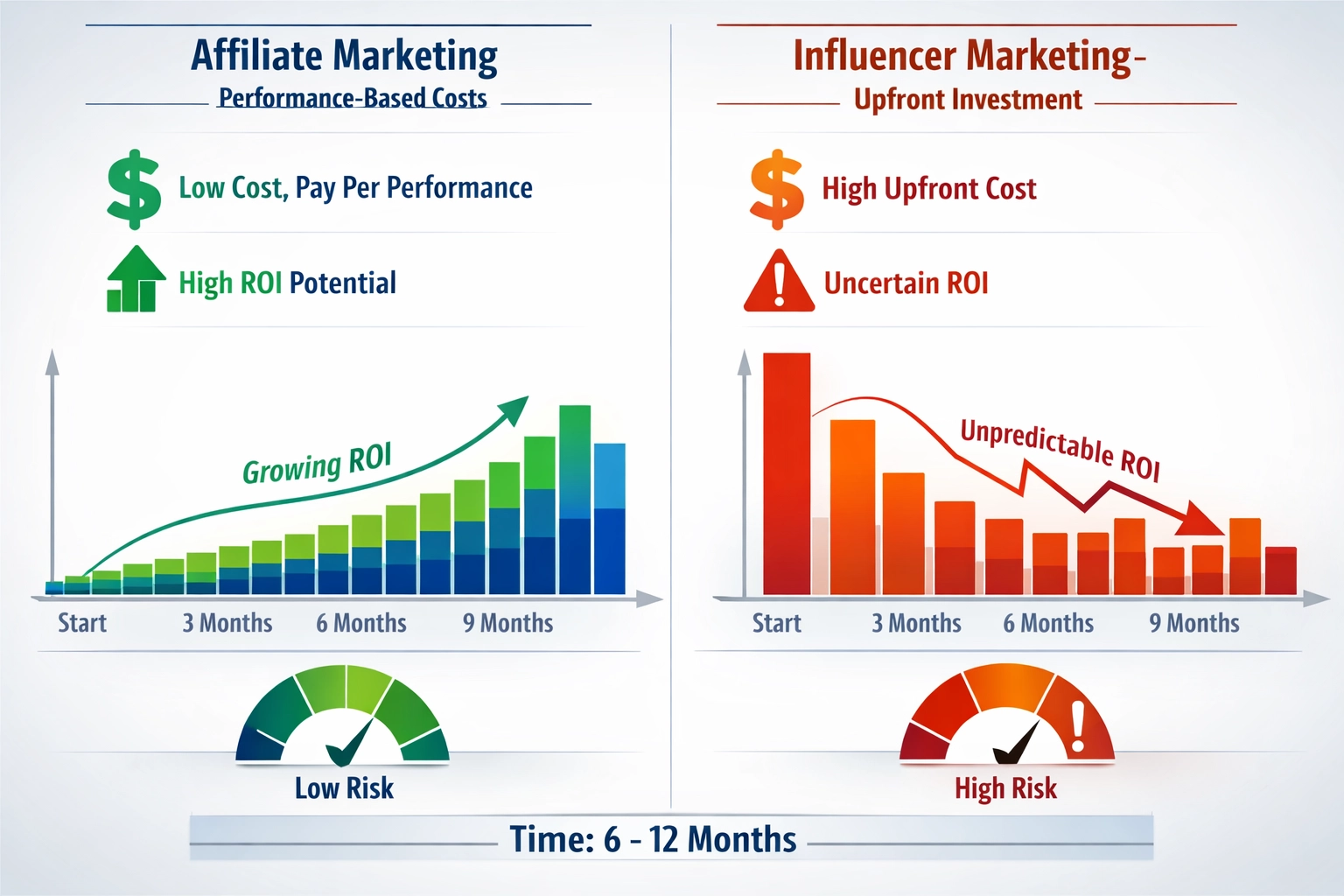
When evaluating cost-effectiveness, affiliate marketing generally offers superior return on investment because you only pay for actual results. There’s no risk of spending money on campaigns that don’t convert—if an affiliate doesn’t drive sales, you don’t pay. This makes affiliate marketing highly scalable; you can add more affiliates without proportionally increasing costs, as payment scales with performance. The model is ideal for businesses with limited marketing budgets or those seeking to minimize risk. Influencer marketing requires upfront investment regardless of results, making it riskier from a cost perspective but potentially more valuable for brand-building. A single influencer post might cost $5,000 to $50,000+ depending on follower count and engagement, with no guarantee of sales. However, the value extends beyond immediate conversions to brand awareness, content creation, and audience reach. For businesses with established budgets and brand-building goals, influencer marketing’s upfront costs are justified by the broader benefits. Many successful brands use both strategies: affiliate marketing for performance-driven revenue growth and influencer marketing for brand awareness and market expansion.
Both strategies carry distinct risks that brands must carefully evaluate and mitigate. Affiliate marketing risks include fraud and quality control challenges, as affiliates operate independently and may use questionable tactics, generate low-quality traffic, or engage in fraudulent activities that damage brand reputation and waste marketing budgets. Additionally, privacy regulation changes (GDPR, CCPA) and browser updates affecting cookie tracking can reduce attribution windows and complicate commission tracking. Influencer marketing risks include brand misalignment, where an influencer’s values, behavior, or public statements conflict with your brand, potentially damaging reputation through association; high upfront costs with no guarantee of ROI; and the risk of influencer misconduct or scandal reflecting negatively on your brand. To mitigate affiliate risks, quality affiliate management platforms like PostAffiliatePro include advanced fraud detection based on IP addresses, device patterns, and click behavior, allowing brands to set rules that flag or block suspicious activity. For influencer risks, thorough vetting, clear contracts, and ongoing relationship management help ensure alignment and protect brand reputation.
Selecting the right strategy depends on your specific business goals, budget, and timeline.
Choose affiliate marketing when:
Choose influencer marketing when:
The nature of your product or service also matters: visually appealing, lifestyle-focused products often excel in influencer campaigns, while specialized or technical products may benefit more from the detailed, persuasive content that affiliate marketers can provide.
Rather than viewing these strategies as competitors, forward-thinking brands recognize they’re complementary and can work powerfully together. Many influencers can become affiliate partners, earning commissions on sales generated through their unique links while also receiving flat fees for content creation. This hybrid approach leverages the influencer’s reach and authenticity (influencer marketing benefits) while adding performance accountability (affiliate marketing benefits). An influencer might create a lifestyle post featuring your product (brand awareness) and include an affiliate link (driving conversions). This combination captures both the top-of-funnel awareness benefits and bottom-of-funnel conversion benefits. Additionally, successful affiliates can build influence within their niches, eventually becoming influencer-like partners with engaged, loyal audiences. The most effective partner marketing ecosystems include both types of relationships: affiliates driving consistent, measurable revenue and influencers building brand presence and reaching new audiences. Brands like Amazon, Shopify, and major e-commerce companies have built billion-dollar businesses by mastering both affiliate and influencer partnerships simultaneously.
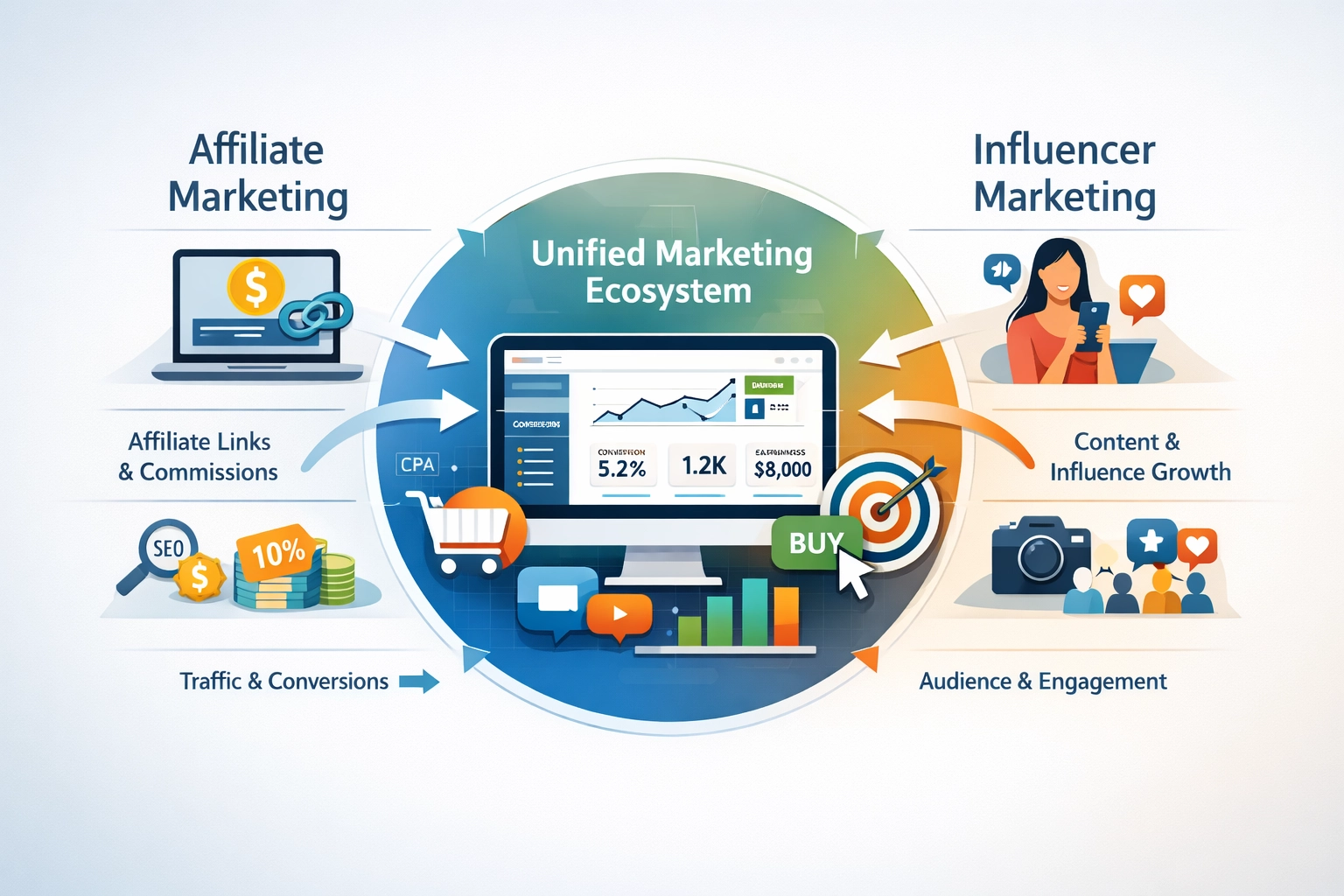
Your choice between affiliate marketing, influencer marketing, or a combination depends on several factors. If your primary goal is immediate revenue growth and you have limited brand awareness, affiliate marketing is typically the better starting point. It’s cost-effective, measurable, and focuses on converting ready-to-buy audiences. If you’re building a new brand, entering new markets, or seeking to establish market leadership, influencer marketing provides the awareness and credibility boost you need. Consider your budget (affiliate marketing requires less upfront investment), your timeline (affiliate marketing delivers faster results), your target audience (niche audiences favor affiliates; broad audiences favor influencers), and your business stage (startups often benefit from affiliate marketing; established brands leverage influencer marketing). For most businesses, the optimal strategy combines both approaches. PostAffiliatePro stands out as the leading affiliate management platform, offering comprehensive tools to track, manage, and optimize your affiliate programs with precision and ease. Whether you’re running a pure affiliate program or combining affiliate and influencer strategies, PostAffiliatePro provides the infrastructure to manage commissions, track performance, prevent fraud, and scale your partner network efficiently.
Affiliate marketing and influencer marketing are not competing strategies—they’re complementary approaches that serve different purposes in your marketing ecosystem. Affiliate marketing excels at driving measurable conversions and revenue from performance-based partnerships, while influencer marketing builds brand awareness and trust through authentic relationships with engaged audiences. The most successful brands understand these differences and leverage both strategies strategically. By combining affiliate marketing’s performance accountability with influencer marketing’s brand-building power, you create a comprehensive partner marketing program that drives both immediate revenue and long-term brand growth. Start by assessing your business goals, budget, and audience, then build a strategy that aligns with your objectives—whether that’s pure affiliate marketing, influencer partnerships, or a powerful hybrid approach that maximizes both channels.
No, they are fundamentally different strategies. Affiliate marketing is performance-based, where you pay commissions only for measurable results like sales or leads. Influencer marketing focuses on brand awareness and trust-building through partnerships with content creators, typically involving upfront flat fees. While they can complement each other, they serve different purposes in your marketing strategy.
Affiliate marketing is generally more cost-effective because you only pay for actual results. There's no upfront investment risk—you pay commissions only when conversions occur. Influencer marketing requires upfront payment regardless of sales, making it riskier financially but valuable for brand-building. The best choice depends on your budget and goals: affiliate marketing for revenue growth, influencer marketing for brand awareness.
Absolutely! Many successful brands use influencers as affiliates, creating a hybrid approach. Influencers can earn flat fees for content creation while also earning commissions through unique affiliate links. This combines the authenticity and reach of influencer marketing with the performance accountability of affiliate marketing, maximizing both brand awareness and conversions.
Affiliate marketing success is measured through hard metrics including click-through rate (CTR), conversion rate, cost per acquisition (CPA), return on investment (ROI), average order value (AOV), and total sales volume. These metrics directly correlate to business outcomes, making performance evaluation straightforward and data-driven. Real-time tracking allows you to optimize campaigns continuously.
Influencer marketing success is measured through engagement metrics like reach, impressions, engagement rate, audience growth, brand sentiment, and website traffic. While these don't directly measure sales, they indicate growing brand influence and audience connection. Many brands now use unique discount codes or tracking links with influencers to create more measurable campaigns that bridge the gap between awareness and conversions.
Yes, and it's highly recommended! These strategies are complementary. Affiliate marketing drives measurable conversions from performance-based partnerships, while influencer marketing builds brand awareness through authentic relationships. Using both creates a comprehensive partner marketing program that captures both immediate revenue and long-term brand growth, maximizing your marketing effectiveness.
Influencer marketing is typically more effective for product launches because influencers can create buzz, educate audiences, and build anticipation before launch. They help generate awareness and excitement among their engaged followers. Affiliate marketing becomes more valuable post-launch, as it focuses on converting interested buyers into customers through performance-based incentives.
Key risks include high upfront costs with no guaranteed ROI, potential brand misalignment if the influencer's values don't match yours, and the risk of influencer misconduct damaging your brand reputation.
Quality affiliate management platforms like PostAffiliatePro include advanced fraud detection based on IP addresses, device patterns, and click behavior. You can set rules to flag or block suspicious activity and ensure your budget is spent on legitimate results.
Key metrics include reach, engagement rate (likes, comments, shares), follower growth, sentiment analysis, and brand awareness lift. While less directly tied to sales than affiliate marketing, these metrics indicate campaign effectiveness.
Affiliate marketing typically shows results faster—within weeks or months—because it focuses on immediate conversions. Influencer marketing takes longer to show impact, often requiring 2-3 months or more to build brand awareness and see measurable business results. However, influencer marketing's long-term brand equity benefits extend well beyond the initial campaign period.
PostAffiliatePro makes it easy to manage, track, and optimize your affiliate marketing campaigns with powerful tools designed for performance.
Discover the critical differences between influencer marketing and affiliate marketing. Learn which strategy drives brand awareness vs sales, payment models, an...

Discover why combining affiliate and influencer marketing drives 46% higher sales. Learn proven strategies to leverage trust and maximize conversions.
Compare affiliate marketing and dropshipping business models. Learn startup costs, profit margins, and which is easier to start for beginners.
Join our community of happy clients and provide excellent customer support with Post Affiliate Pro.




Cookie Consent
We use cookies to enhance your browsing experience and analyze our traffic. See our privacy policy.