


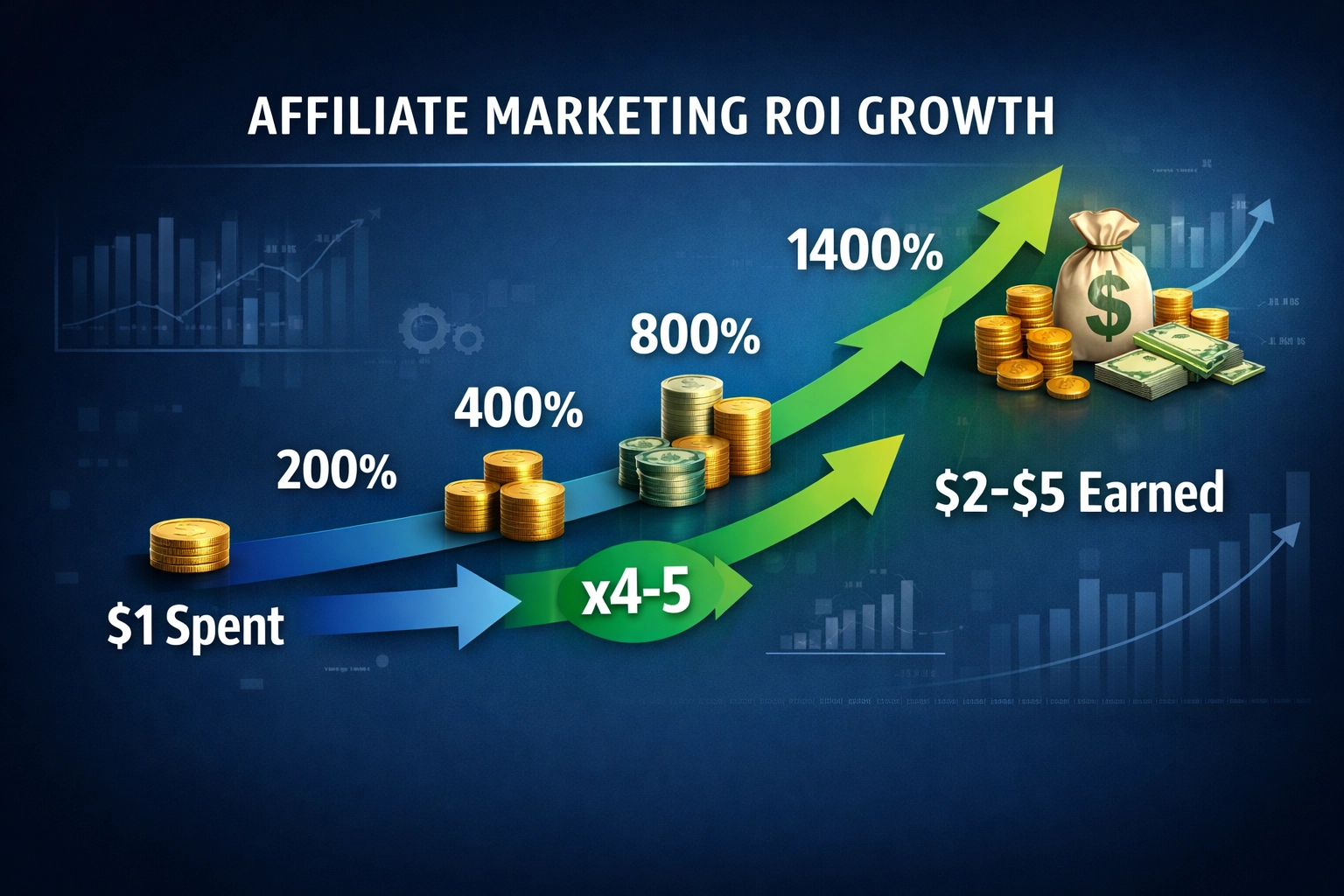
Average Affiliate Marketing ROI & How to Maximize It
Learn about average affiliate marketing ROI (200-1,400%), how to calculate it, industry benchmarks, and proven strategies to maximize profitability.
17 min read

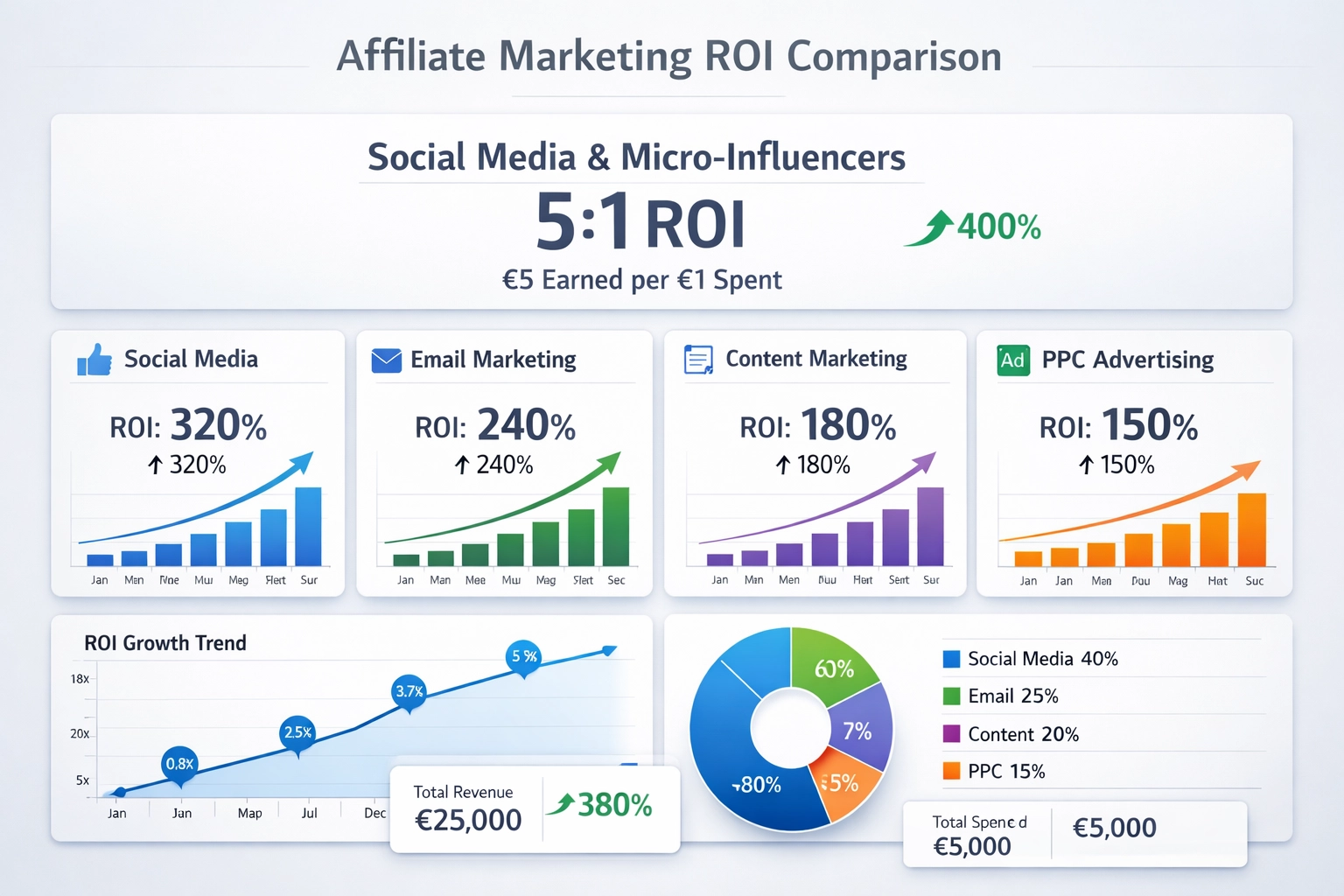
Discover which affiliate marketing strategies deliver the highest ROI. Learn why social media and micro-influencers generate 5:1 returns.
Affiliate marketing ROI measures the return generated for every dollar invested in affiliate partnerships and campaigns. The affiliate marketing industry has demonstrated remarkable growth, with the global market valued at $17 billion and the US market alone reaching $8.2 billion in recent years—representing a 10.1% increase year-over-year. On average, affiliate marketers earn $8,038 per month, though experienced marketers can earn 9.45 times more than beginners, highlighting the significant impact of strategy optimization. The industry is projected to reach $27.78 billion by 2027, with 81% of brands now utilizing affiliate programs as a core revenue channel. Different affiliate marketing strategies yield vastly different returns, with social media and micro-influencer approaches consistently outperforming traditional channels by substantial margins.
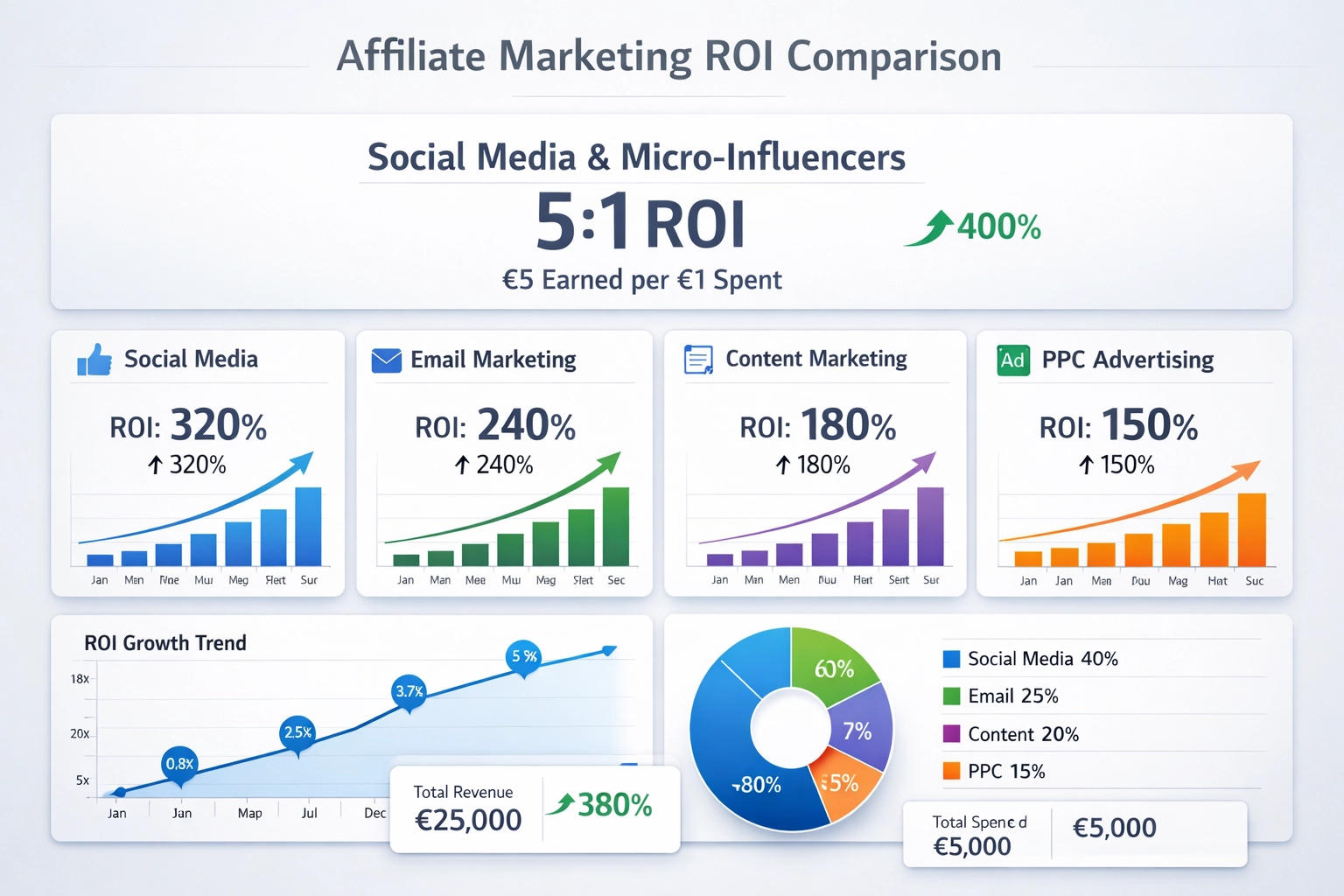
Micro-influencers have emerged as the superior choice for affiliate marketing ROI, primarily due to their exceptional engagement rates and authentic audience connections. While macro-influencers typically achieve engagement rates of 1-2%, micro-influencers consistently deliver 5-10% engagement rates—a five-fold improvement that directly translates to higher conversion potential. The trust factor is equally compelling: 63% of consumers trust influencer recommendations more than traditional advertisements, and micro-influencers enjoy 60% more trust from their audiences compared to macro-influencers, resulting in 20% higher conversion rates. This advantage stems from the perceived authenticity and genuine product knowledge that smaller creators demonstrate, as their recommendations feel personal rather than transactional. Cost-effectiveness further amplifies their appeal—micro-influencers charge significantly less per post while delivering superior results, allowing brands to allocate budgets across multiple creators rather than betting on single high-profile partnerships.
| Metric | Micro-Influencers | Macro-Influencers |
|---|---|---|
| Engagement Rate | 5-10% | 1-2% |
| Trust Factor | 60% higher | Baseline |
| Conversion Rate | 20% higher | Baseline |
| Cost per Post | Lower | Higher |
| Audience Quality | Highly engaged niche | Broad but less engaged |
The quality-over-quantity principle fundamentally reshapes how successful affiliate programs operate, prioritizing engaged niche audiences over vanity metrics like follower counts.

Set up advanced tracking in minutes. No credit card required.
Social media affiliate marketing delivers exceptional returns that significantly outpace traditional digital advertising channels. The data is unequivocal: social media affiliate campaigns generate a 5:1 ROI ratio, meaning for every €1 spent, brands receive €5 in return—translating to a 400% return on investment. This performance is 11 times higher than traditional digital ads, making social media the clear winner for affiliate marketers seeking maximum efficiency. The superiority stems from multiple factors: social platforms enable precise audience targeting, facilitate authentic creator-to-audience relationships, and provide native advertising formats that feel organic rather than intrusive. 86% of consumers make purchases influenced by influencers, and this purchasing behavior concentrates heavily on social platforms where recommendations feel most credible. Platform-specific advantages further enhance results—Instagram’s visual storytelling, TikTok’s viral potential, YouTube’s long-form credibility, and LinkedIn’s professional authority each create unique conversion opportunities that traditional display advertising simply cannot replicate.
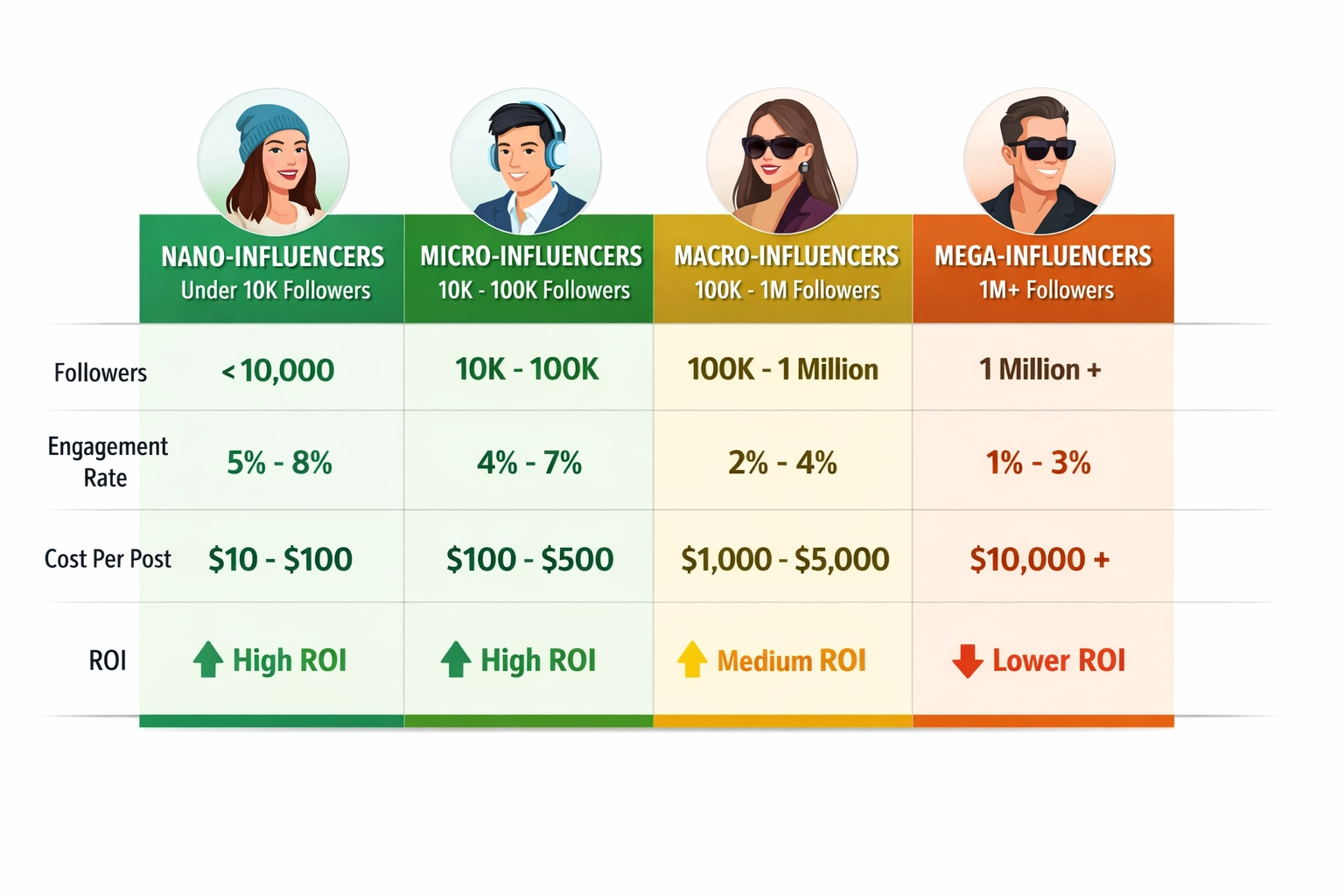
Nano-influencers (under 10,000 followers) and micro-influencers (10,000-100,000 followers) represent an underutilized goldmine for affiliate marketers seeking maximum ROI. The market composition strongly favors this segment: 77% of Instagram influencers fall into the nano or micro category, yet they receive disproportionately less budget allocation than macro-influencers. Their cost-effectiveness is remarkable—nano and micro-influencers charge substantially less per post while delivering engagement rates that rival or exceed larger creators, enabling brands to implement distributed risk strategies across multiple partnerships. This approach offers several critical advantages:
The mathematics are compelling: investing in five micro-influencers at $500 each generates superior results compared to one macro-influencer at $2,500, while maintaining greater flexibility and reducing campaign risk.
Be the first to know about new features and product updates.
Strategic content selection dramatically impacts affiliate marketing ROI, with certain formats consistently outperforming others across all platforms. Video content emerges as the clear champion, delivering 72% higher conversion rates compared to static content, while short-form videos achieve engagement rates up to 10%—the highest of any content format. Product reviews and unboxing videos build trust and drive purchasing decisions, with reviews alone increasing conversions by 15-20%. Beyond basic reviews, comparison guides and tutorial content drive 10-15% increases in click-through rates, while how-to guides prove 25% more effective in driving actual sales. Customer testimonial videos achieve 30% higher conversion rates by leveraging social proof, and case studies increase trust factors by 22%. Time-sensitive content creates urgency that boosts conversions by 40%, while listicles generate 18% more affiliate clicks through their scannable, actionable format. The overarching principle transcends production quality: authenticity and genuine value matter far more than polished cinematography, meaning affiliate marketers can achieve exceptional results with smartphone-quality content that demonstrates real product benefits and honest recommendations.
Constructing a high-ROI affiliate strategy requires systematic implementation across six core steps that maximize performance and scalability. Step 1: Choose the Right Influencers — Prioritize engagement rates and audience alignment over follower counts; micro-influencers with 5-10% engagement in your niche outperform macro-influencers with 1-2% engagement regardless of follower size. Step 2: Set Clear Performance Goals — Define specific metrics including conversion rates, average order value, and ROI targets; establish baseline expectations before campaigns launch. Step 3: Provide Unique Affiliate Links and Tracking — Implement dedicated tracking through platforms like PostAffiliatePro to monitor each creator’s performance, enabling data-driven optimization and fair commission structures. Step 4: Test with Pilot Campaigns — Launch small-scale partnerships with 3-5 creators before scaling; this approach identifies top performers while minimizing risk. Step 5: Repurpose Content Across Channels — Leverage successful content across multiple platforms; a TikTok video can become Instagram Reels, YouTube Shorts, and Pinterest pins, multiplying ROI without proportional cost increases. Step 6: Prioritize Long-Term Partnerships — 71% of influencers offer discounts for long-term deals, and sustained relationships build deeper audience trust and more authentic advocacy. Long-term partnerships also reduce onboarding friction and allow creators to develop genuine product expertise that translates to higher conversion rates.

Effective measurement and optimization separate high-performing affiliate programs from mediocre ones, requiring systematic tracking of key performance indicators. Essential metrics include click-through rate (CTR), which reveals how effectively content drives traffic; conversion rate, measuring the percentage of clicks that result in purchases; cost per acquisition (CPA), determining the actual cost to acquire each customer; and return on ad spend (ROAS), calculating total revenue generated per dollar invested. Implementing a comprehensive dashboard through PostAffiliatePro or similar platforms provides real-time visibility into campaign performance, enabling rapid identification of underperforming partnerships and immediate optimization. A/B testing proves invaluable for optimization—test different commission structures, content formats, promotional angles, and posting schedules to identify what resonates most with your audience. Regularly analyze which affiliates drive the highest-quality conversions (not just volume), as some creators may generate high traffic with low-quality leads, while others deliver fewer clicks but higher-value customers. This data-driven approach transforms affiliate marketing from guesswork into a predictable, scalable revenue channel where every dollar invested generates measurable, optimizable returns.
Even well-intentioned affiliate programs often underperform due to preventable strategic errors that compound over time. Avoid these critical mistakes:
These mistakes collectively drain 30-50% of potential affiliate ROI, making strategic discipline as important as tactical execution in building profitable affiliate programs.
The average affiliate marketing ROI is $15 return for every $1 spent, translating to a 1400% ROI. However, social media and micro-influencer strategies can achieve even higher returns of 5:1 ($5 per $1 spent), making them the most profitable approach for most businesses.
Micro-influencers achieve 5-10% engagement rates compared to 1-2% for macro-influencers, and their audiences trust them 60% more. They're also significantly more cost-effective, allowing brands to allocate budgets across multiple creators rather than betting on single high-profile partnerships, resulting in better overall ROI.
Nano-influencers have under 10,000 followers while micro-influencers have 10,000-100,000 followers. Both deliver exceptional engagement rates and cost-effectiveness, but nano-influencers often have even higher engagement percentages and deeper niche expertise, making them ideal for targeted campaigns.
Use dedicated affiliate tracking software like PostAffiliatePro to monitor key metrics including click-through rates (CTR), conversion rates, cost per acquisition (CPA), and return on ad spend (ROAS). Real-time dashboards enable rapid identification of top-performing affiliates and immediate optimization of underperforming campaigns.
Video content drives 72% higher conversion rates, while product reviews increase conversions by 15-20%. Short-form videos achieve up to 10% engagement rates, comparison guides drive 10-15% more clicks, and customer testimonial videos achieve 30% higher conversions. Authenticity matters more than production quality.
Micro-influencers typically charge less than macro-influencers, with many accepting free products or modest fees. 71% of influencers offer discounts for long-term partnerships. Rather than focusing on per-post fees, structure compensation around performance metrics like conversions or sales to align incentives and maximize ROI.
Yes, micro-influencer campaigns scale exceptionally well. Instead of partnering with one macro-influencer, you can work with 10-20 micro-influencers across your niche. This distributed approach reduces risk, increases reach, and typically delivers superior ROI while maintaining authentic audience connections.
PostAffiliatePro provides comprehensive affiliate management including unique tracking links for each creator, real-time performance dashboards, automated commission calculations, and detailed ROI analytics. These tools eliminate manual tracking, prevent commission disputes, and enable data-driven optimization of your affiliate program.
PostAffiliatePro helps you track, manage, and optimize affiliate campaigns with micro-influencers. Get real-time insights into what's working and scale your highest-performing strategies.
Learn about average affiliate marketing ROI (200-1,400%), how to calculate it, industry benchmarks, and proven strategies to maximize profitability.

Realistic affiliate marketing earnings by experience level, niche, and platform. Learn how much affiliates make and what factors impact income.
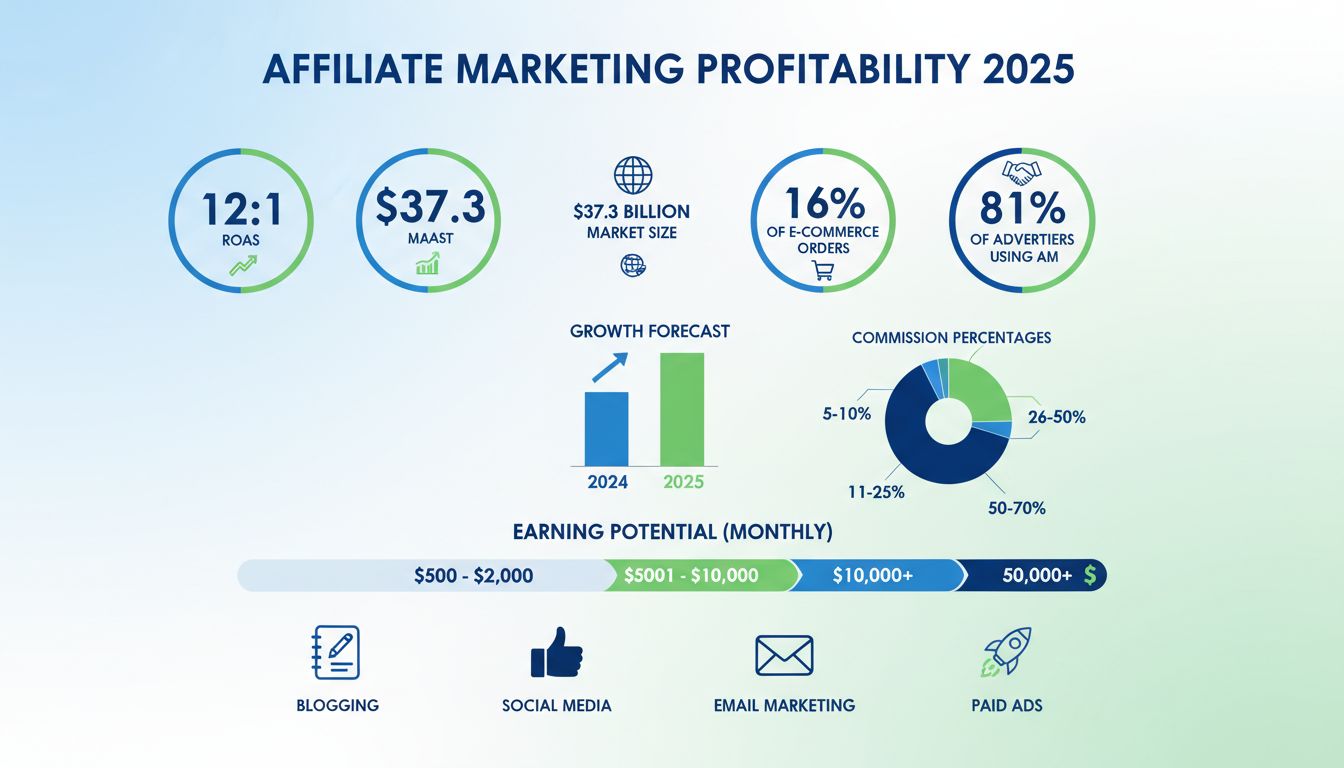
Discover if affiliate marketing is profitable in 2025. Learn ROI statistics, earning potential by niche, and proven strategies to maximize affiliate commissions...
Join our community of happy clients and provide excellent customer support with Post Affiliate Pro.




Cookie Consent
We use cookies to enhance your browsing experience and analyze our traffic. See our privacy policy.