


What is Affiliate Marketing: Guide Beginners & Businesses
Learn what affiliate marketing is, how it works, commission models, and proven strategies to earn passive income. why 80% of brands use affiliate programs.
15 min read


Discover how affiliate marketing drives traffic, increases sales, and builds brand credibility for e-commerce. Learn proven strategies to scale.
Affiliate marketing is a performance-based marketing strategy where e-commerce businesses partner with content creators, influencers, and publishers (called affiliates) to promote their products in exchange for a commission on sales or leads generated. Unlike traditional advertising where you pay upfront for exposure, affiliate marketing operates on a simple principle: you only pay when an affiliate successfully drives a customer to make a purchase. This model has become increasingly popular, with affiliate marketing spending surpassing $10 billion in 2024 and experts projecting steady growth throughout 2025 and beyond. The beauty of affiliate marketing lies in its ability to leverage the trust and audience that affiliates have already built, making it a cost-effective way to expand your reach without the overhead of traditional marketing campaigns.

Affiliate marketing offers numerous advantages that make it an essential strategy for e-commerce businesses looking to scale efficiently. The most compelling benefit is its cost-effectiveness—you only pay commissions when actual sales occur, eliminating wasted marketing spend on ineffective campaigns. This performance-based model also provides significantly lower risk compared to traditional advertising, as your investment is directly tied to measurable results. Additionally, affiliate marketing provides access to established, trusted audiences that are more likely to convert, resulting in higher-quality customers with better lifetime value. The strategy also enables rapid scalability; you can add more affiliates to your network without proportionally increasing your marketing budget. Furthermore, 80% of brands now use affiliate marketing as part of their marketing mix, recognizing its effectiveness in driving both traffic and sales.
Here’s how affiliate marketing compares to traditional advertising approaches:
| Aspect | Affiliate Marketing | Traditional Advertising |
|---|---|---|
| Cost Model | Performance-based (pay per sale/lead) | Upfront investment required |
| Risk Level | Low (pay only for results) | High (pay regardless of results) |
| Audience Type | Targeted through trusted partners | Broad but less targeted |
| Average Conversion Rate | 1-5% (top performers exceed 5%) | 0.5-2% average |
| Scalability | Easy to add more affiliates | Requires increased budget |
| Time to ROI | Faster with right partners | Slower ramp-up period |
| Brand Control | Shared with affiliates | Full control |
| Customer Quality | High (pre-vetted by affiliates) | Variable quality |

Set up advanced tracking in minutes. No credit card required.
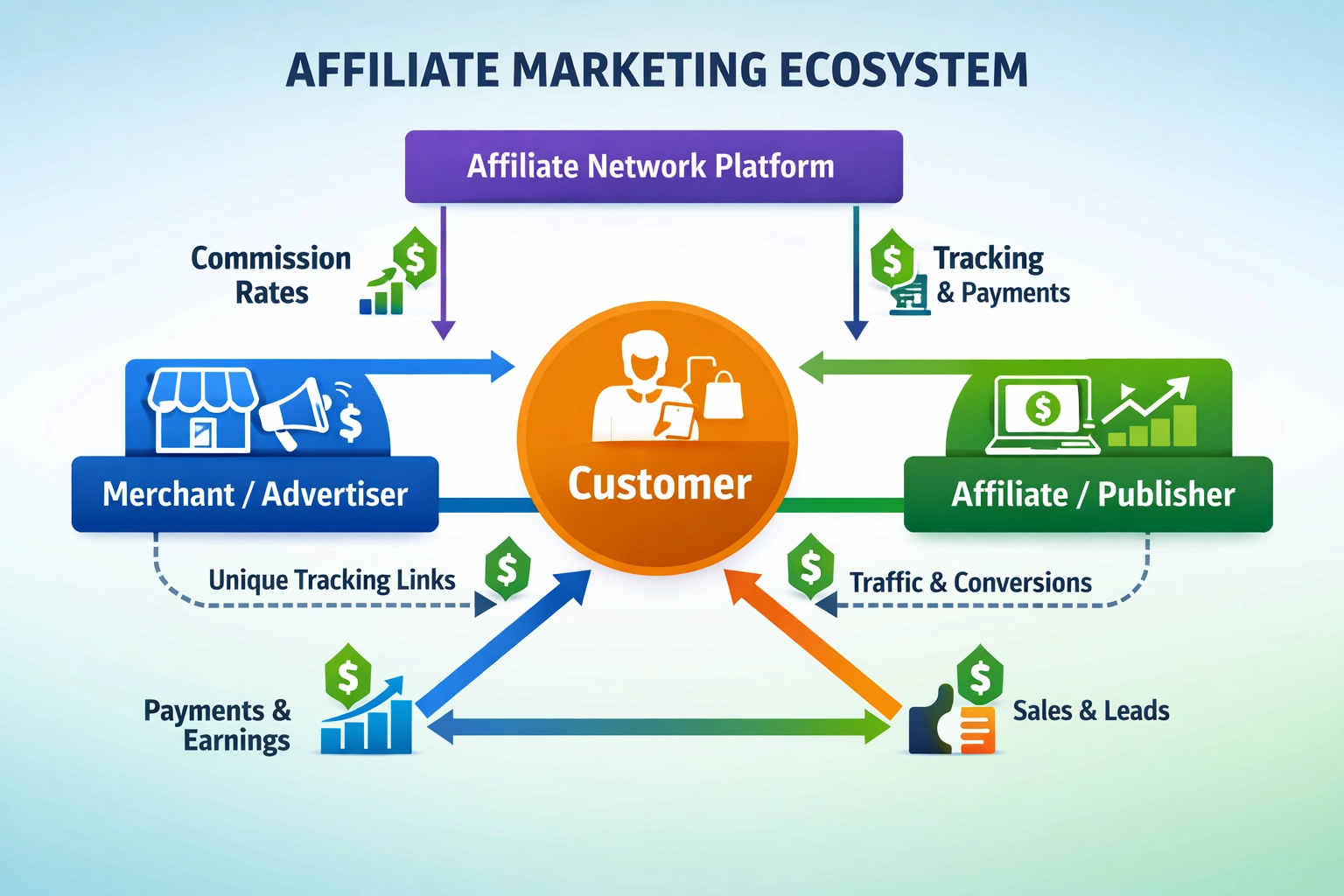
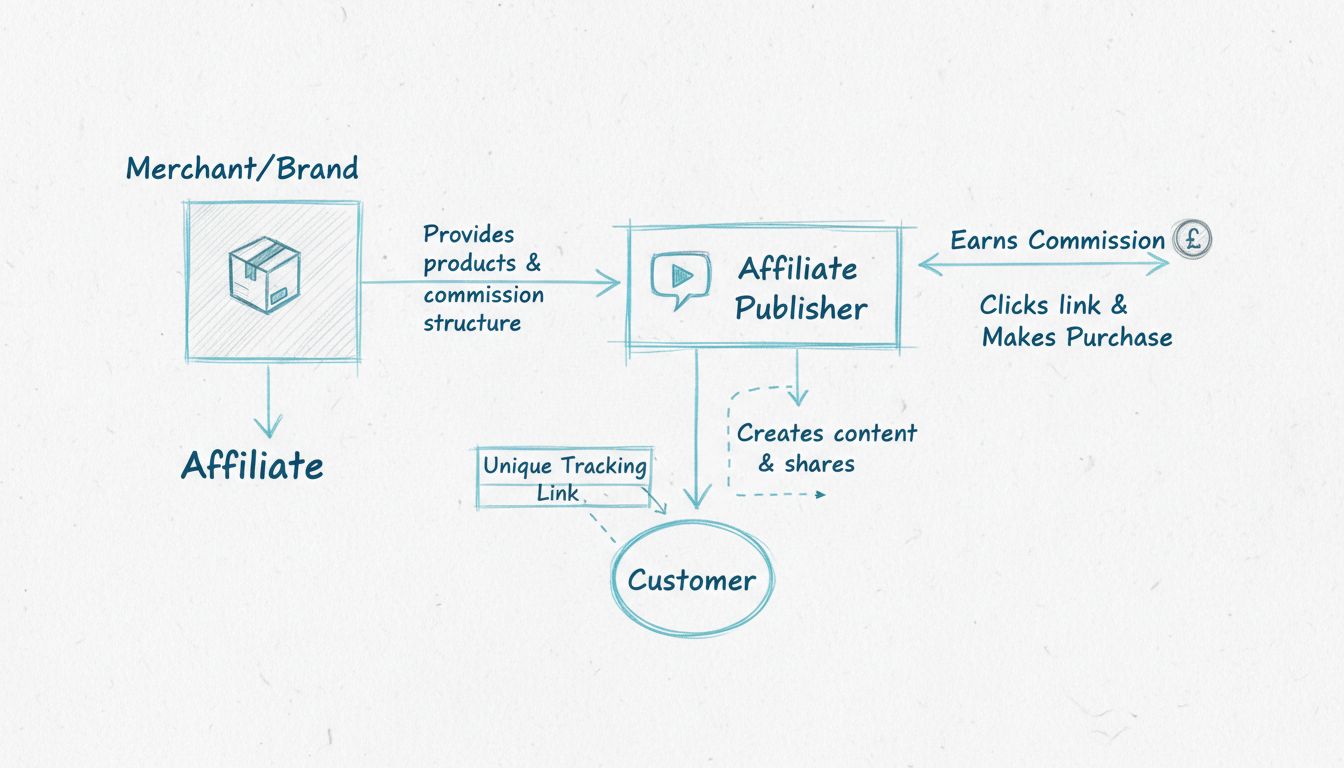
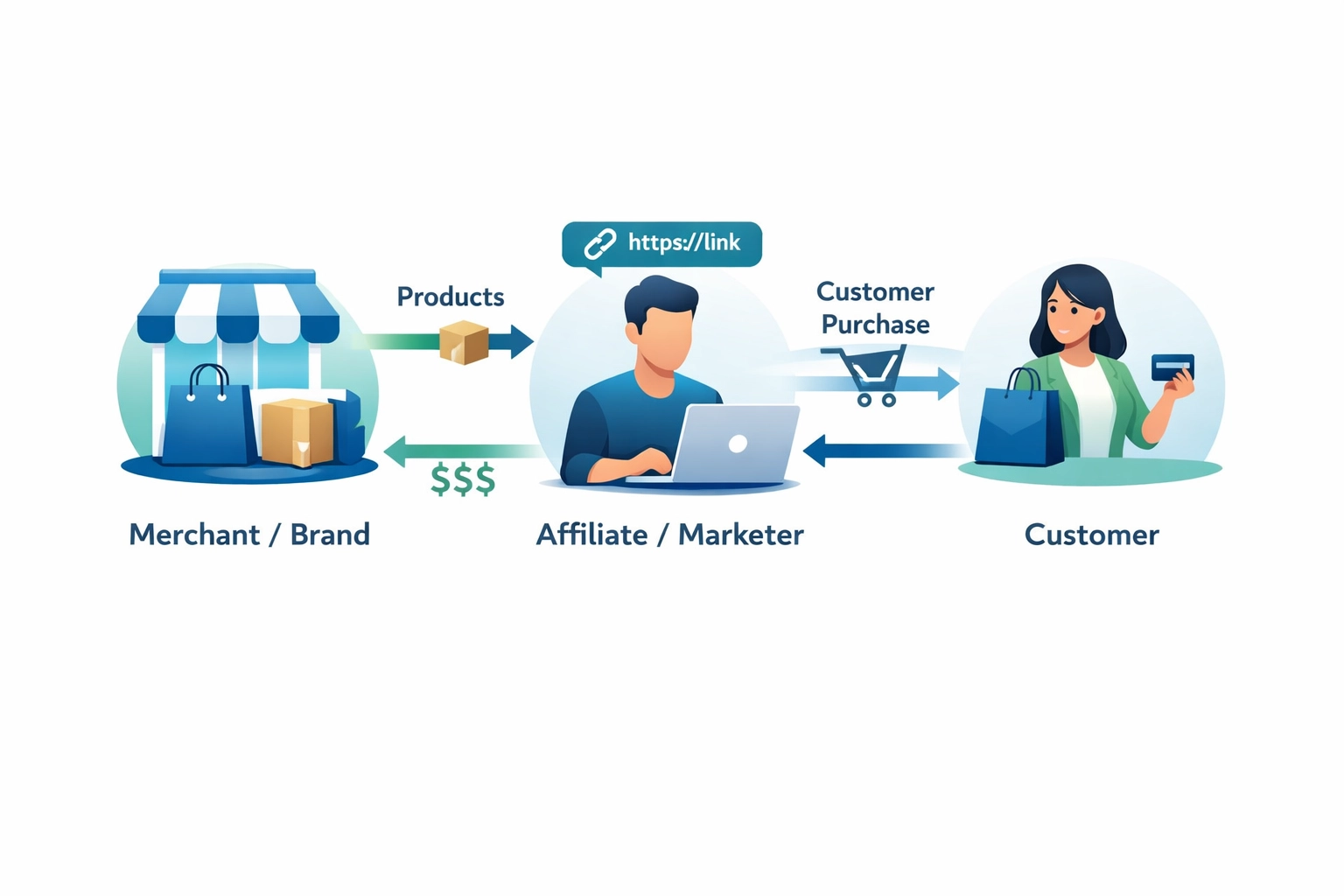
The affiliate marketing process is straightforward but powerful. When you establish an affiliate program, you provide affiliates with unique tracking links or discount codes that identify which sales came from their promotions. Affiliates then create content—whether blog posts, social media content, videos, or email campaigns—that naturally incorporates these links and promotes your products to their audience. When a potential customer clicks on an affiliate’s link and completes a purchase, the affiliate management system automatically tracks the conversion and attributes it to the correct affiliate. Most affiliate programs use cookie durations of 20-90 days, meaning affiliates receive credit for sales even if the customer doesn’t purchase immediately after clicking the link. This gives customers time to consider their purchase while still rewarding the affiliate for introducing them to your product. The entire process is automated through affiliate management software, which handles tracking, attribution, commission calculations, and payouts, making it seamless for both you and your affiliate partners.
Not all affiliates are created equal, and understanding the different types can help you build a more effective program. Here are the main categories of affiliate partners you can work with:
Influencers: Social media personalities with large, engaged followings who can authentically recommend your products to their audience, typically on Instagram, TikTok, or YouTube.
Content Creators: YouTubers, TikTok creators, and Instagram Reels producers who create detailed product demonstrations, unboxing videos, and tutorials that showcase your products in action.
Bloggers and Niche Publishers: Website owners with established readership in specific industries who write in-depth product reviews and guides that rank well in search engines.
Micro-influencers: Creators with 1,000-10,000 followers who often have highly engaged, loyal communities and authentic connections with their audience, making them increasingly popular with brands.
Email Newsletter Creators: Publishers with established email lists who can promote your products directly to subscribers with high conversion potential.
Coupon and Cashback Websites: Platforms that aggregate discount codes and cashback offers, driving price-conscious customers to your store.
Affiliate Networks: Marketplaces like ShareASale, CJ Affiliate, and Rakuten that connect you with professional affiliates across various niches and industries.
Customer Advocates: Your existing customers who become brand ambassadors and refer friends and family, often the most authentic and cost-effective affiliates.
Be the first to know about new features and product updates.
The numbers behind affiliate marketing are compelling. The average conversion rate for affiliate-driven traffic ranges from 1-3%, with top-performing affiliates consistently exceeding 5%—significantly higher than the 0.5-2% average for traditional advertising. When it comes to return on investment, affiliate marketing delivers impressive results: businesses typically see a return of $5-6.50 for every dollar spent on affiliate marketing, with some well-established programs achieving returns as high as $10 or more. The affiliate marketing industry is experiencing consistent year-over-year growth of 10% or more, indicating that businesses are increasingly recognizing its value. Notably, 44% of brands now prefer working with micro-influencers over larger creators, as these smaller accounts often deliver higher engagement rates and more authentic recommendations. Mobile traffic plays a crucial role in affiliate success, with 58% of global online traffic coming from mobile devices, making it essential to ensure your affiliate content and landing pages are mobile-optimized. These metrics demonstrate that affiliate marketing isn’t just a trend—it’s a proven, scalable strategy that delivers measurable results for e-commerce businesses of all sizes.
Launching a successful affiliate program requires strategic planning and the right tools. Start by identifying which products to promote—focus on bestsellers and high-value items that affiliates will be motivated to promote and customers will be excited to purchase. Next, carefully select your affiliates based on audience alignment and content quality rather than follower count; quality partnerships always outperform quantity. Determine your commission structure, which typically ranges from 5-20% depending on your profit margins and industry standards; higher commissions attract better-performing affiliates. Provide your affiliates with comprehensive marketing materials including product images, descriptions, videos, and pre-written content to make promotion easier. Establish clear terms and guidelines covering commission rates, payment schedules, prohibited promotional methods, and brand guidelines to ensure consistency. Set up a reliable tracking and attribution system that accurately credits affiliates for sales and prevents fraud. Finally, invest in affiliate management software like PostAffiliatePro, which automates tracking, commission calculations, payouts, and provides real-time analytics—essential features for scaling your program efficiently.
To maximize your affiliate program’s effectiveness, implement these actionable strategies. Build authentic relationships with your affiliates through regular communication, support, and recognition of top performers—affiliates who feel valued are more likely to promote actively. Provide exclusive offers and incentives such as limited-time discounts or special bundles that affiliates can promote to their audiences, creating urgency and driving conversions. Implement tiered commission structures that reward top performers with higher rates, incentivizing affiliates to increase their promotional efforts. Leverage data and analytics to identify your best-performing affiliates and campaigns, then allocate more resources to what’s working. Create co-branded content and landing pages that allow affiliates to customize the shopping experience for their audience, increasing relevance and conversion rates. Monitor and prevent affiliate fraud by tracking suspicious activity, unusual spikes in traffic, and invalid conversions. Communicate regularly with your affiliate network through newsletters, webinars, and one-on-one check-ins to keep them informed about new products, promotions, and performance insights. Recruit micro-influencers who have highly engaged niche audiences, as they often deliver better conversion rates than larger creators despite smaller follower counts.

Many e-commerce businesses make preventable mistakes when launching affiliate programs. Choosing the wrong affiliates based solely on follower count rather than audience alignment and content quality can result in poor conversions and brand misalignment. Offering insufficient commissions makes it difficult to attract quality affiliates and motivate them to prioritize your products over competitors. Providing inadequate support and marketing materials forces affiliates to create content from scratch, reducing their motivation and content quality. Ignoring fraud and abuse allows bad actors to drain your budget through fake clicks, cookie stuffing, and other deceptive practices. Failing to track and analyze performance means you can’t identify what’s working and optimize your strategy accordingly. Expecting immediate results without giving the program time to mature and affiliates time to build momentum. Relying on a single affiliate or traffic source creates vulnerability; diversification ensures stability and growth. Not communicating regularly with affiliates leaves them feeling unsupported and less motivated to promote actively.
The success of your affiliate program depends heavily on the tools you use to manage it. Your affiliate software must provide accurate tracking and attribution to ensure every sale is correctly credited to the right affiliate, preventing disputes and fraud. Automated commission payouts save time and keep affiliates happy by ensuring timely, accurate payments through multiple payment methods. Real-time reporting and analytics give you visibility into program performance, allowing you to make data-driven decisions and identify optimization opportunities. Affiliate recruitment tools help you find and onboard new partners efficiently, including the ability to convert customers into affiliates automatically. Fraud detection capabilities protect your program from abuse by identifying suspicious activity and invalid conversions. Integration with your e-commerce platform ensures seamless data flow and eliminates manual data entry. PostAffiliatePro stands out as the leading affiliate management solution, offering all these features plus advanced capabilities like flexible commission structures, white-label options, multi-level marketing support, and comprehensive API access. With PostAffiliatePro, you get enterprise-grade functionality at a price point that works for businesses of all sizes, making it the ideal choice for scaling your affiliate program.
Affiliate marketing has evolved from a nice-to-have marketing tactic into an essential strategy for e-commerce growth. By leveraging the reach and credibility of affiliate partners, you can expand your customer base, increase sales, and build brand awareness—all while maintaining a low-risk, performance-based cost structure. The key to success lies in selecting quality affiliates, providing excellent support, using the right tools, and continuously optimizing based on data. Whether you’re just starting your e-commerce journey or looking to accelerate growth, an affiliate program powered by PostAffiliatePro can deliver significant returns on your marketing investment. Ready to launch your affiliate program and tap into this powerful growth channel? Start your free trial with PostAffiliatePro today and discover how affiliate marketing can transform your e-commerce business.
Affiliate marketing is a performance-based strategy where you partner with content creators and influencers to promote your products in exchange for a commission on sales they generate. Affiliates use unique tracking links to promote your products, and you only pay when a customer makes a purchase through their link. This makes it a low-risk, cost-effective marketing channel.
The ROI from affiliate marketing varies by industry and program quality, but businesses typically see returns of $5-6.50 for every dollar spent. Some well-established programs achieve returns as high as $10 or more. Your earnings depend on factors like commission rates, affiliate quality, product margins, and how well you optimize your program.
Industry standard commission rates range from 5-20%, depending on your profit margins, product price point, and industry. Higher commissions attract better-performing affiliates and motivate them to prioritize your products. Many successful programs use tiered structures that reward top performers with higher rates as they generate more sales.
Prevent fraud by using reliable affiliate management software with fraud detection capabilities, monitoring for suspicious activity and unusual traffic spikes, tracking invalid conversions, and regularly reviewing affiliate performance. Establish clear terms prohibiting deceptive practices, and investigate any red flags immediately. PostAffiliatePro includes built-in fraud detection to protect your program.
Affiliate marketing is performance-based—you pay commissions only when sales occur. Influencer marketing typically involves flat-fee payments for content creation or promotion. Many successful brands combine both strategies: using affiliates for cost-effective, performance-driven sales and paying influencers flat fees for brand awareness and content creation.
Results vary depending on your affiliate quality and program optimization, but many businesses see initial results within 30-60 days. However, significant growth typically takes 3-6 months as you recruit more affiliates, optimize your program, and build momentum. The key is consistent effort in affiliate recruitment, support, and performance optimization.
No, affiliate marketing requires minimal upfront investment since you only pay commissions on actual sales. Your main costs are affiliate management software (like PostAffiliatePro) and time spent recruiting and supporting affiliates. This makes it accessible for businesses of all sizes, from startups to established e-commerce companies.
You need affiliate management software that provides tracking and attribution, automated commission payouts, real-time analytics, fraud detection, and integration with your e-commerce platform. PostAffiliatePro offers all these features plus advanced capabilities like flexible commission structures, white-label options, and comprehensive reporting—making it the ideal solution for scaling your program.
PostAffiliatePro makes it easy to recruit affiliates, track performance, and scale your e-commerce business with performance-based marketing.
Learn what affiliate marketing is, how it works, commission models, and proven strategies to earn passive income. why 80% of brands use affiliate programs.
Learn what affiliate marketing means with our comprehensive guide. Discover how affiliate programs work, commission structures, and why PostAffiliatePro is the ...
how to launch a profitable affiliate marketing campaign from scratch. niche selection, platform building, program selection
Join our community of happy clients and provide excellent customer support with Post Affiliate Pro.




Cookie Consent
We use cookies to enhance your browsing experience and analyze our traffic. See our privacy policy.