



How B2B Affiliate Marketing Improves Lead Generation
Learn how B2B affiliate marketing improves lead generation through targeted publishers. Discover cost-effective strategies for high-quality leads.
9 min read


Launch a successful B2B affiliate program with proven strategies for goal-setting, commissions, recruitment, resources, and optimization.
Rising marketing costs are forcing businesses to rethink their acquisition strategies. B2B affiliate marketing has emerged as a powerful, cost-effective alternative to traditional paid advertising channels. In essence, B2B affiliate marketing is a performance-based partnership where other businesses or individuals promote your products or services in exchange for a commission on the results they generate. Whether you’re looking to drive qualified leads, increase sales, or expand into new markets, a well-structured affiliate program can become a significant revenue driver for your business.

B2B affiliate marketing operates under fundamentally different principles than its B2C counterpart. Understanding these distinctions is crucial for building a program that actually works for your business model:
These differences mean your affiliate program must be structured differently, with emphasis on lead quality over volume and long-term relationship building over quick conversions.

Set up advanced tracking in minutes. No credit card required.
The numbers tell a compelling story about B2B affiliate marketing’s effectiveness. According to recent industry research, businesses using affiliate marketing generate 20% more revenue than those relying solely on traditional channels. For B2B companies specifically, affiliate programs contribute 15-30% of total sales within the first two years of implementation—a remarkable achievement for a channel that operates on a performance-based model.
The cost advantage is equally impressive. Traditional B2B marketing channels like PPC advertising and trade shows typically cost $500-$1,000 per qualified lead. In contrast, affiliate marketing in high-CPC industries like finance averages just $50-$200 per lead—a 75-90% reduction in customer acquisition costs. This dramatic difference explains why approximately 80% of brands now operate affiliate programs.
| Metric | Traditional Marketing | Affiliate Marketing |
|---|---|---|
| Cost Per Lead | $500-$1,000 | $50-$200 |
| Payment Model | Upfront investment | Performance-based |
| Lead Quality | Variable | High (pre-qualified) |
| Time to Results | 3-6 months | 1-3 months |
| Scalability | Limited by budget | Unlimited with partners |
| Risk Level | High | Low |
Before launching your affiliate program, you must establish crystal-clear objectives that align with your broader business strategy. Are you primarily focused on lead generation, direct sales, brand awareness, or market expansion? Your answer determines everything from commission structure to affiliate recruitment strategy.
Beyond defining goals, you need measurable KPIs that let you track progress objectively. Key metrics to consider include total revenue generated, number of qualified leads, website traffic from affiliate sources, conversion rates at each funnel stage, and cost per acquisition (CPA). Don’t just focus on short-term wins—establish both immediate targets (like launching with 20 affiliates in month one) and long-term objectives (like achieving 25% of revenue from affiliate channels within 18 months).
Critically, remember that quality always trumps quantity in B2B affiliate marketing. A single high-value lead from a trusted industry expert is worth far more than 100 low-quality leads from random sources. Structure your KPIs to reward quality metrics like lead qualification rate and customer lifetime value, not just raw volume numbers.
Be the first to know about new features and product updates.
Different actions have different values in your affiliate program. A form submission might be worth $50, a qualified sales conversation $200, and a closed deal $5,000. Your job is to determine what each action is worth to your business and structure commissions accordingly.
Consider these common compensation models:
Many successful B2B programs use tiered commission structures that reward high-performing affiliates with increasing rates. For example:
This approach motivates affiliates to increase their efforts while protecting your margins at lower volumes. You might also implement milestone-based payments, where affiliates receive 50% commission when a lead is qualified and the remaining 50% when the deal closes—ensuring they stay engaged throughout the sales process.
The quality of your affiliate network directly determines your program’s success. Rather than accepting every applicant, be strategic about who you partner with. Look for affiliates who already serve your target audience but offer complementary services—a B2B productivity consultant is perfect for project management software, while a marketing agency is ideal for CRM platforms.
Evaluate potential affiliates based on several criteria: Do they have an established, engaged audience in your industry? Do their values align with your brand? What’s their reputation and credibility within their niche? A smaller affiliate with deep industry expertise and high trust often outperforms a larger affiliate with a generic audience.
Diversify your affiliate mix by recruiting different types of partners:
Use multiple recruitment channels to build your network: direct outreach to identified prospects, attendance at industry conferences and events, content marketing to attract potential affiliates organically, and partnerships with affiliate networks that specialize in your industry.
The difference between mediocre and exceptional affiliate programs is the level of support provided to partners. Top-performing programs invest heavily in affiliate success because they understand that supported affiliates generate more revenue.
Provide comprehensive marketing resources that make promotion easy:

Implement a multi-tiered support structure where your top 20% of affiliates receive dedicated account manager support, while the remaining 80% access self-service resources and email support. For your highest-performing partners, offer co-branded marketing materials, exclusive product access, and invitations to strategic planning sessions. Maintain regular communication through monthly newsletters, quarterly business reviews, and annual partner summits to keep affiliates engaged and aligned with your goals.
Launching your program is just the beginning. Continuous analysis and optimization separate successful programs from stagnant ones. Implement robust tracking infrastructure that captures every interaction: clicks, form submissions, demo requests, sales conversations, and closed deals. This data becomes your roadmap for improvement.
Track these critical metrics monthly:
Use A/B testing to continuously improve results. Test different commission structures, marketing messages, landing pages, and promotional timing. Analyze which affiliates drive the highest-quality leads and which channels perform best. Gather direct feedback from affiliates about what’s working, what challenges they face, and what resources they need. This feedback loop ensures your program evolves to meet market demands and partner needs.
Even well-intentioned affiliate programs fail when they make preventable mistakes. Learn from others’ experiences:
Managing a B2B affiliate program without proper technology is like trying to run a business without accounting software—theoretically possible but practically impossible. A comprehensive affiliate management platform handles tracking, attribution, commission calculations, and partner communication automatically.
Look for software that provides:
PostAffiliatePro stands out as a top solution for B2B affiliate programs, offering enterprise-grade features specifically designed for complex B2B sales cycles. The platform excels at multi-touch attribution, handles extended sales cycles with ease, integrates with major CRM systems, and provides affiliates with intuitive dashboards and comprehensive support tools. Whether you’re managing 10 affiliates or 1,000, PostAffiliatePro scales with your program while maintaining the flexibility to customize commission structures, tracking rules, and reporting metrics to match your unique business model.
Theory is valuable, but results speak louder. Consider Lodgify, a vacation rental management software company that implemented an affiliate program and achieved remarkable growth. Within the first year, they grew their affiliate network to over 1,300 active partners, generating a 2,400% yearly increase in web sales from affiliate activity. Their affiliate channel now contributes 17% of total yearly sales while reducing customer acquisition costs by 90%—from approximately $1,000 per client to under $100. Top-performing affiliates earned an average of €13,500 in annual commissions, demonstrating the program’s value for partners.
InvestNext, a real estate syndication platform, saw similar success by focusing on quality partnerships and comprehensive affiliate support. Their program attracted experienced real estate professionals and investment advisors who could authentically recommend their platform to qualified prospects. By providing these partners with detailed marketing materials, training on their platform, and responsive support, InvestNext built a network of motivated ambassadors who consistently delivered high-quality leads.
These examples share common elements: clear value propositions, competitive commissions, excellent affiliate support, and commitment to long-term partnership building. They didn’t expect overnight success but instead invested in building sustainable programs that grew year over year.
Ready to launch your B2B affiliate program? Follow these immediate steps:
Remember that B2B affiliate marketing is a marathon, not a sprint. Most programs take 6-12 months to generate meaningful results, with peak performance often occurring in year two as partnerships mature and processes optimize. The competitive advantage belongs to companies that act now—as traditional marketing costs continue rising, affiliate marketing becomes increasingly attractive to both merchants and potential partners. Early movers in your industry will secure the best affiliate relationships before competitors recognize the opportunity.
B2B affiliate marketing focuses on longer sales cycles (6-12 months), relationship-based partnerships, and targeting organizational decision-makers. B2C affiliate marketing emphasizes quick conversions, trending products, and individual consumers. B2B programs require extended attribution tracking and more personalized affiliate support, while B2C programs focus on volume and immediate sales.
Most B2B affiliate programs take 6-12 months to generate meaningful results, with peak performance often occurring in year two. This timeline accounts for affiliate recruitment, onboarding, relationship building, and the extended B2B sales cycle. Early results may appear within 3-4 months, but sustainable growth requires patience and continuous optimization.
Standard affiliate commission rates range from 5-25%, depending on your product type and margins. B2B SaaS companies typically offer 10-50% recurring commissions, while service-based businesses might offer 5-25% of the first year's contract value. Calculate your unit economics first, then offer competitive rates that attract quality partners while maintaining healthy profit margins.
Use affiliate management software with multi-touch attribution capabilities that can track customer journeys across months-long sales cycles. Implement milestone-based tracking that credits affiliates at key stages (lead qualification, demo request, proposal sent, deal closed). Integrate your affiliate platform with your CRM to maintain visibility into the entire customer journey from initial referral to closed deal.
You need affiliate management software that provides click tracking, commission calculations, real-time reporting, and affiliate portals. Integration with your CRM system is essential for B2B programs. Email automation tools help with affiliate communication and onboarding. PostAffiliatePro offers comprehensive features specifically designed for B2B affiliate programs, including multi-touch attribution and extended sales cycle tracking.
Start by reaching out to your existing network—current customers, industry partners, and complementary service providers. Attend industry conferences and events to build relationships in person. Use content marketing to attract potential affiliates organically. Be selective about who you recruit; focus on partners with established credibility, relevant audiences, and values aligned with your brand rather than pursuing volume.
Track clicks, conversion rates, cost per acquisition (CPA), return on investment (ROI), lead quality scores, and customer lifetime value. Monitor affiliate-specific metrics like partner activity levels and earnings per click. Review these metrics monthly to identify top performers, underperformers, and optimization opportunities. Use data to make informed decisions about commission adjustments, affiliate support, and program strategy.
Review your affiliate program monthly to assess performance against KPIs, identify trends, and spot optimization opportunities. Conduct quarterly business reviews with top affiliates to discuss results and gather feedback. Perform annual strategic reviews to evaluate overall program health, market changes, and long-term direction. Continuous optimization ensures your program evolves with market demands and partner needs.
PostAffiliatePro provides everything you need to build, manage, and scale a successful affiliate program with advanced tracking, commission management, and affiliate support tools.
Learn how B2B affiliate marketing improves lead generation through targeted publishers. Discover cost-effective strategies for high-quality leads.

Learn what B2B affiliate marketing is, how it works, key differences from B2C, commission models, and best practices. Discover why PostAffiliatePro is the top c...
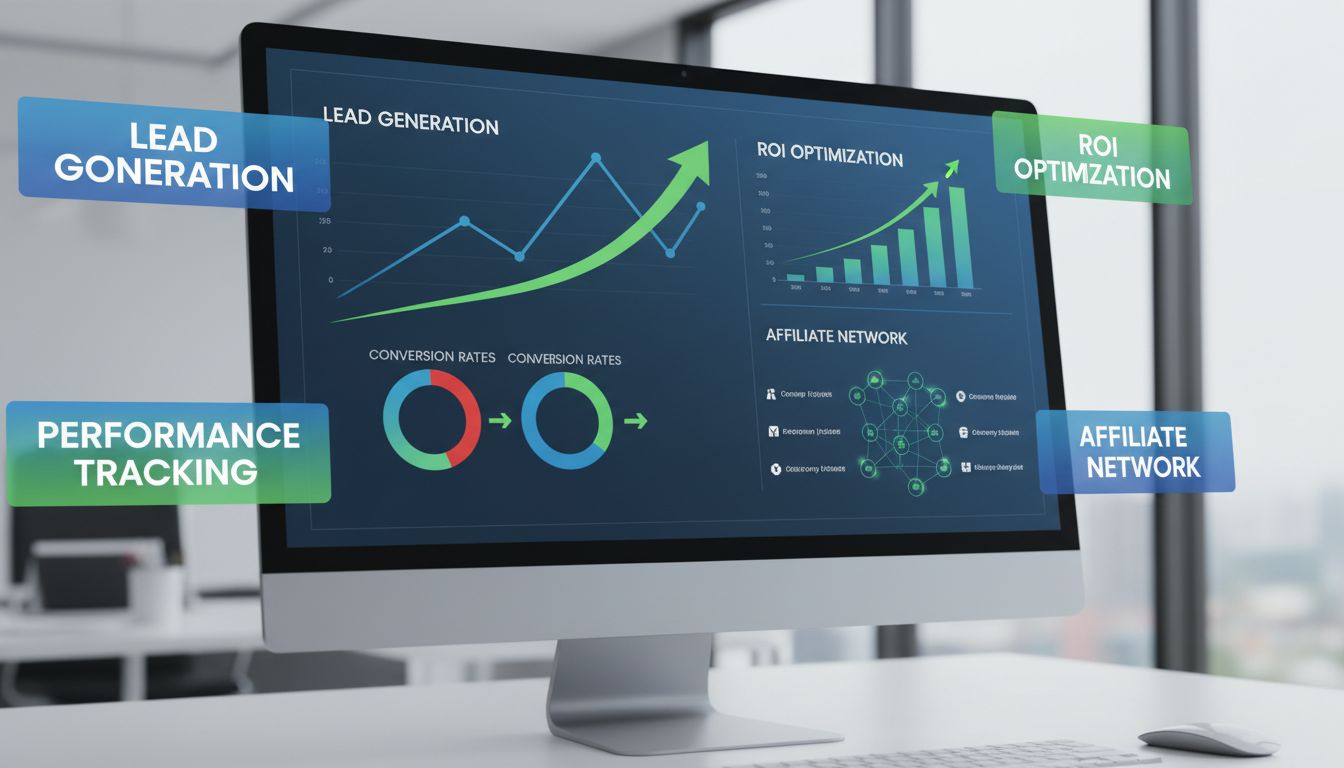
Discover how B2B affiliate marketing improves lead generation through targeted publishers, performance-based pricing, and higher ROI. Learn proven strategies wi...
Join our community of happy clients and provide excellent customer support with Post Affiliate Pro.




Cookie Consent
We use cookies to enhance your browsing experience and analyze our traffic. See our privacy policy.