The 3 Main Types of Affiliates: Content Sites, Review Sites, and Influencers
The affiliate marketing industry generates over $17 billion in revenue annually across the United States alone. Yet many brands struggle to maximize this channel because they don’t understand their affiliate partners. The truth is simple: not all affiliates operate the same way. Some build authority through detailed content. Others leverage trust through honest reviews. Still others harness the power of personal influence. Understanding these three distinct affiliate types—content sites, review sites, and influencers—is essential for building a profitable affiliate program.
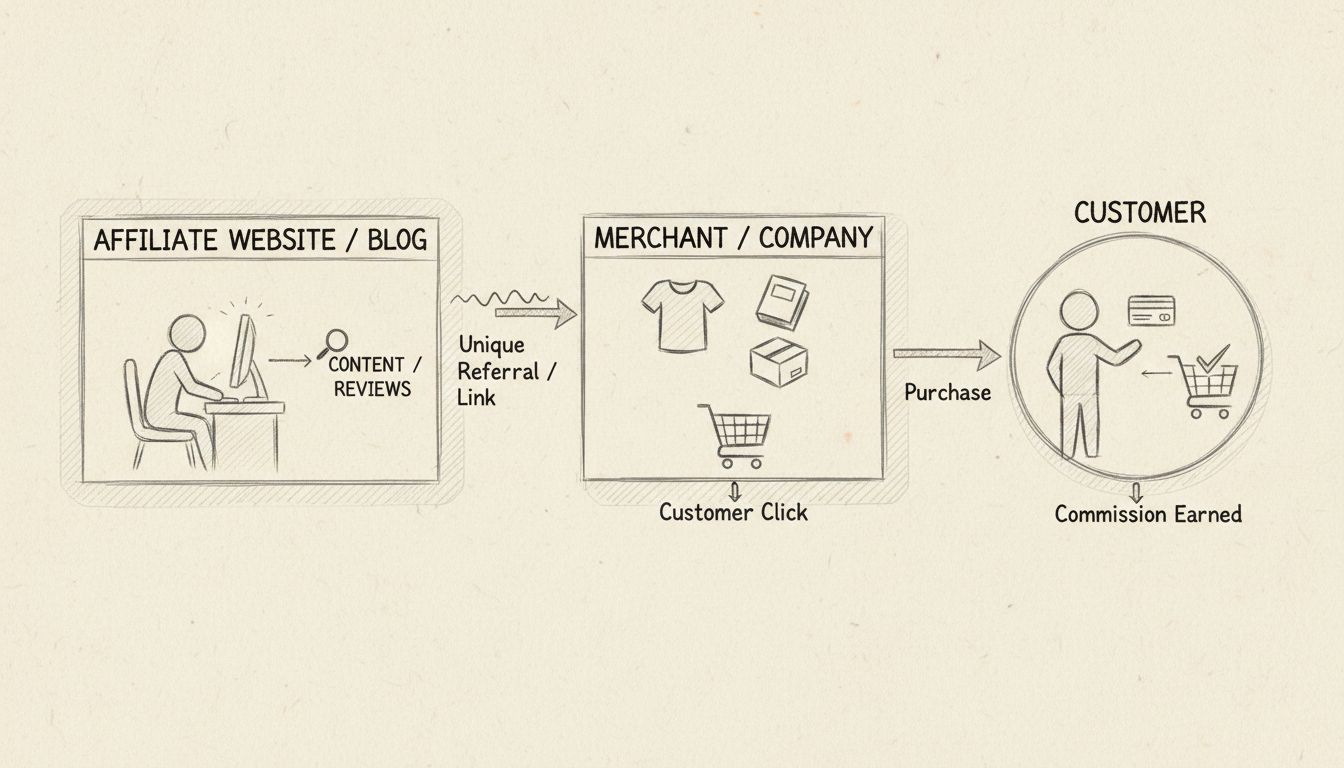
Affiliate marketing works through a performance-based partnership model. A brand provides affiliates with unique tracking links or codes. When customers click these links and make purchases, the affiliate earns a commission. This creates a win-win scenario: brands only pay for actual results, while affiliates earn passive income by promoting products they believe in. The beauty of this model lies in its scalability and measurability.
However, managing different affiliate types requires different strategies. Content site affiliates drive traffic through SEO and organic reach. Review site affiliates convert visitors through detailed product analysis. Influencer affiliates leverage personal credibility and engaged audiences. Each type brings unique strengths to your program. Each requires tailored recruitment, support, and compensation strategies.
PostAffiliatePro stands out as the leading affiliate management platform for handling this complexity. It provides unified tracking, flexible commission structures, and detailed performance analytics across all affiliate types. Whether you’re working with a niche blog or a celebrity influencer, PostAffiliatePro delivers the tools needed to manage, motivate, and measure success.
This guide explores each affiliate type in depth. You’ll discover how they work, why they convert customers, and how to recruit and manage them effectively. By the end, you’ll have a complete roadmap for building a diverse, high-performing affiliate program that drives sustainable growth.
Content Site Affiliates: Building Authority Through Information
Content site affiliates are publishers who create valuable, informative content around topics related to your products. These affiliates operate blogs, comparison guides, tutorials, and educational resources. They earn commissions by embedding affiliate links within their content naturally and contextually. Unlike other affiliate types, content sites prioritize providing genuine value to their readers first—monetization through affiliate links comes second.
Content site affiliates typically operate in specific niches. A fitness blog might review workout equipment and supplements. A personal finance site might compare credit cards and investment platforms. A tech blog might evaluate software tools and hardware. These sites build authority over months and years by consistently publishing high-quality content. Their audiences trust their recommendations because they’ve proven their expertise repeatedly.
The mechanics of content site affiliate marketing are straightforward. An affiliate identifies a product relevant to their audience. They create comprehensive content—a product review, comparison guide, or tutorial—that naturally incorporates their affiliate link. When readers click the link and purchase, the affiliate earns a commission. The best content sites seamlessly integrate affiliate links without compromising content quality or reader trust.
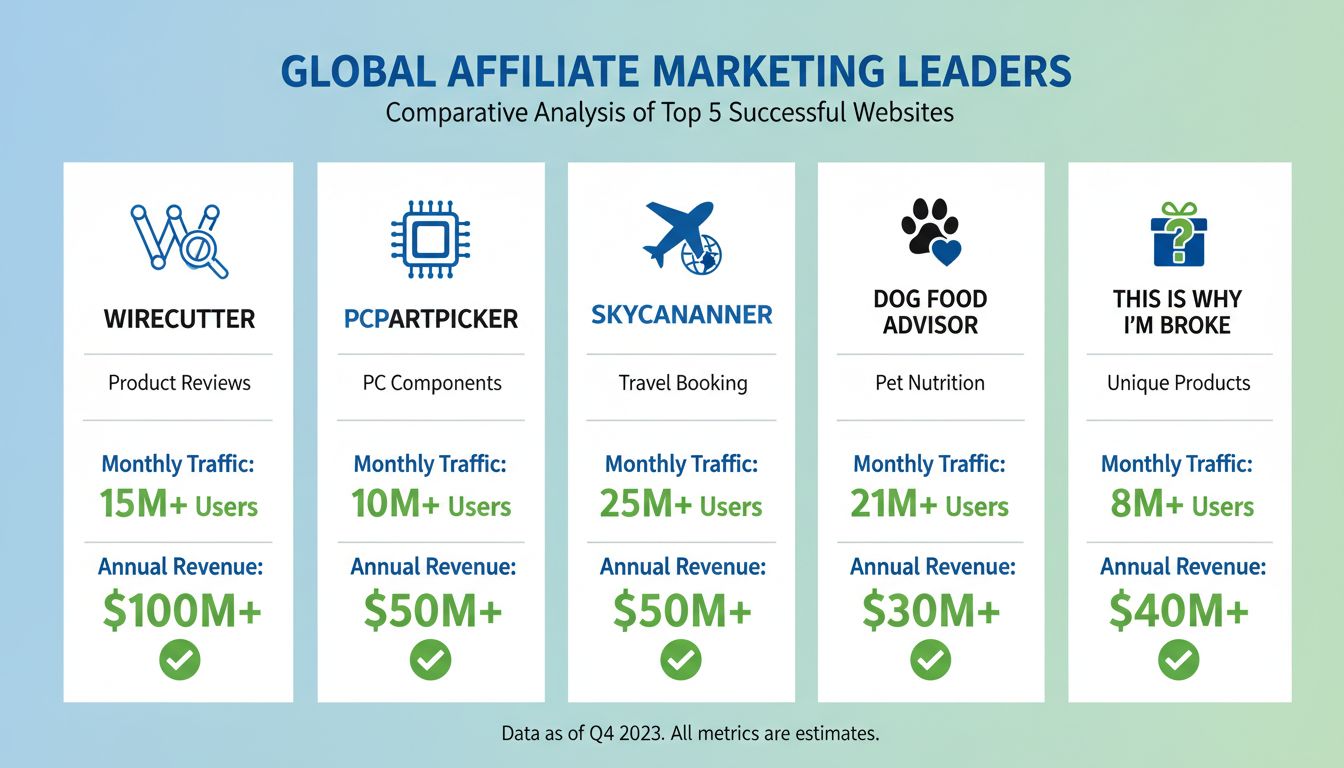
Real-world examples demonstrate the power of content site affiliates. Wirecutter, owned by The New York Times, generates millions in affiliate revenue by publishing detailed product reviews and buying guides. Their content ranks highly in search results, driving consistent organic traffic. CNET operates similarly, combining expert reviews with affiliate partnerships. These sites prove that content-driven affiliate marketing can scale to massive revenue levels.
Smaller content sites operate on the same principles but with more targeted audiences. A productivity blog might earn $5,000-$15,000 monthly through affiliate commissions. A niche health site might generate $2,000-$8,000 monthly. The key differentiator is audience size and engagement quality. A site with 50,000 monthly visitors in a high-intent niche often outperforms a site with 500,000 visitors in a low-intent niche.
Content site affiliates offer several distinct benefits to brands. First, they drive qualified traffic. Their audiences actively seek information about products in your category. Second, they provide social proof through detailed reviews and comparisons. Third, they improve your SEO through high-quality backlinks. Fourth, they reach customers at the research phase of the buying journey, not just at the point of purchase.
Best practices for working with content site affiliates include providing detailed product information, offering competitive commissions, and respecting their editorial independence. Content sites succeed because their audiences trust them. If you pressure them to promote products dishonestly or provide misleading information, you’ll damage their credibility and your brand reputation. The most successful partnerships involve genuine alignment between the affiliate’s audience and your products.
Aspect
Details
Primary Traffic Source
Organic search, direct traffic, email newsletters
Audience Size
10,000 to 1,000,000+ monthly visitors
Conversion Rate
2-5% (varies by niche and content quality)
Commission Structure
Typically 5-20% per sale or fixed amount per lead
Content Types
Reviews, guides, comparisons, tutorials, case studies
Time to Revenue
3-12 months (requires building authority first)
Best For
Long-term, sustainable affiliate relationships
Content site affiliates require patience and investment. Building authority takes time. However, once established, these partnerships generate consistent, predictable revenue. A single high-authority content site can drive thousands of qualified customers annually. This makes content site affiliates invaluable for brands seeking sustainable growth.
Launch your affiliate program today
Set up advanced tracking in minutes. No credit card required.
Review Site Affiliates: Converting Through Credibility
Review site affiliates operate differently from general content sites. While content sites publish diverse information, review sites focus specifically on product evaluation and comparison. These sites exist primarily to help consumers make purchasing decisions. Their entire business model revolves around honest, detailed product reviews. This singular focus creates powerful conversion opportunities for affiliate programs.
Review sites build credibility through transparency and consistency. They publish detailed specifications, pros and cons, pricing comparisons, and honest assessments. They often include video reviews, user testimonials, and side-by-side comparisons. This comprehensive approach helps readers make confident purchasing decisions. When a review site recommends a product, readers trust that recommendation because they’ve seen the full analysis.
The conversion power of review sites is remarkable. While a general content site might achieve 2-3% conversion rates, review sites often achieve 5-10% conversion rates or higher. This happens because visitors arrive with purchase intent. They’re not casually browsing—they’re actively comparing options before buying. A review site that ranks for “best [product category]” attracts highly qualified traffic ready to convert.
Examples of successful review sites span numerous industries. Wirecutter dominates consumer electronics reviews. Nerdwallet leads in financial product comparisons. Rtings.com specializes in audio and video equipment reviews. Healthline provides medical product reviews. Each site has built massive audiences by consistently publishing honest, detailed reviews. Their affiliate programs generate millions in annual revenue.
Smaller review sites operate in more specialized niches. A site reviewing mechanical keyboards might attract 50,000 monthly visitors. A site comparing project management tools might reach 100,000 monthly visitors. These specialized review sites often achieve higher conversion rates than broader sites because their audiences have specific needs and higher purchase intent.
Review sites convert customers through several key mechanisms:
Detailed product specifications - Readers understand exactly what they’re getting
Honest pros and cons - Transparency builds trust and credibility
Price comparisons - Readers see the best value options available
Video demonstrations - Visual proof of product functionality
User testimonials - Real customer experiences validate recommendations
Expert credentials - Reviewers’ expertise and experience matter
Regular updates - Fresh reviews reflect current market conditions
Building relationships with review site affiliates requires understanding their editorial standards. These sites maintain strict policies about affiliate partnerships. They disclose affiliate relationships clearly. They refuse to promote products they don’t genuinely recommend. They prioritize reader trust above commission revenue. Brands that respect these standards build strong, long-term partnerships.
Compensation for review site affiliates typically ranges from 5-25% per sale, depending on product category and affiliate traffic volume. High-traffic review sites often negotiate higher commissions or exclusive partnerships. Some brands offer tiered commissions that increase with volume. Others provide bonuses for hitting specific sales targets.
The relationship-building process with review sites differs from other affiliate types. Rather than mass recruitment, brands typically approach review sites individually. They provide detailed product information, samples, and support. They respect the site’s editorial independence. They understand that a negative review is sometimes the honest outcome. This collaborative approach builds trust and leads to authentic recommendations that drive real sales.
Review site affiliates excel at reaching customers during the research and comparison phase. They influence purchasing decisions at the critical moment. A well-placed review on a high-authority site can drive hundreds of sales monthly. This makes review site affiliates essential for brands in competitive categories where customers actively compare options.
Influencer Affiliates: Leveraging Personal Credibility
Influencer affiliates operate on a fundamentally different principle than content or review sites. Rather than building authority through published content, influencers leverage personal credibility and engaged audiences. They promote products through social media posts, videos, stories, and direct recommendations. Their audiences follow them for personality, lifestyle, and entertainment—not specifically for product information.
Influencer marketing has exploded in recent years. The global influencer marketing industry reached $21.1 billion in 2023 and continues growing. Brands recognize that influencers can reach engaged audiences authentically. When an influencer recommends a product, their followers often trust that recommendation because they trust the influencer personally. This personal connection creates powerful conversion opportunities.
Influencers operate across multiple platforms. Instagram remains the dominant platform for influencer marketing, with 93% of influencer campaigns using Instagram. TikTok has emerged as a powerful platform for reaching younger audiences. YouTube influencers create detailed product reviews and unboxing videos. Twitter influencers share recommendations with engaged communities. LinkedIn influencers reach professional audiences. Each platform requires different content approaches and strategies.
The influencer landscape divides into several tiers based on follower count. Mega-influencers have over 1 million followers. Macro-influencers have 100,000-1 million followers. Mid-tier influencers have 10,000-100,000 followers. Micro-influencers have 1,000-10,000 followers. Nano-influencers have under 1,000 followers. Each tier offers different advantages and challenges.
Mega and macro-influencers offer massive reach. A single post from a celebrity influencer can reach millions of people. However, engagement rates often decline with follower count. A mega-influencer might achieve 1-2% engagement rate, while a micro-influencer might achieve 5-10% engagement rate. Additionally, mega-influencers command premium fees, often $10,000-$100,000+ per post. This makes them suitable primarily for large brands with substantial budgets.
Micro-influencers have emerged as the sweet spot for many affiliate programs. They maintain higher engagement rates and lower costs. Their audiences are typically more niche and engaged. A micro-influencer in the fitness niche might have 15,000 followers but achieve 8% engagement rate. Their recommendations carry weight because their followers know them personally. Micro-influencers often charge $500-$5,000 per post or work on commission-based affiliate arrangements.
Influencer Tier
Follower Count
Engagement Rate
Typical Cost
Best For
Mega
1M+
1-2%
$10,000-$500,000+
Mass awareness campaigns
Macro
100K-1M
2-3%
$5,000-$50,000
Broad reach campaigns
Mid-tier
10K-100K
3-5%
$1,000-$10,000
Targeted reach campaigns
Micro
1K-10K
5-10%
$500-$5,000
Niche, engaged audiences
Nano
<1K
8-15%
$100-$1,000
Hyper-targeted campaigns
How influencer affiliate marketing works varies by arrangement. Some influencers work on pure commission—they earn a percentage of sales generated through their unique link or code. Others work on hybrid models combining a base fee plus commission. Still others work on flat fees for specific deliverables. The best arrangement depends on the influencer’s audience size, engagement rate, and your budget.
Influencer content takes many forms. Instagram posts showcase products in lifestyle contexts. Instagram Stories provide authentic, behind-the-scenes recommendations. TikTok videos create entertaining content around products. YouTube videos deliver detailed reviews and unboxing experiences. Reels and Shorts provide short-form video content. Each format requires different creative approaches and performs differently across audiences.
The power of influencer marketing lies in authenticity. Audiences follow influencers because they trust their taste and judgment. When an influencer genuinely loves a product, that enthusiasm translates to their audience. Conversely, when an influencer promotes something they don’t believe in, audiences detect the inauthenticity. The most successful influencer partnerships involve genuine product alignment and authentic enthusiasm.
Recruiting influencer affiliates requires different strategies than recruiting content sites. Rather than approaching with affiliate program details, brands should approach with partnership opportunities. Influencers want to know: Will this product resonate with my audience? Will my followers appreciate this recommendation? Will this partnership feel authentic? Addressing these concerns builds stronger relationships than focusing purely on commission rates.
Influencer affiliates offer distinct advantages. They reach audiences at scale. They create authentic, engaging content. They build brand awareness alongside driving sales. They provide social proof through personal recommendations. They reach audiences across multiple platforms simultaneously. For brands seeking rapid growth and broad awareness, influencer affiliates are invaluable.
Join our newsletter
Be the first to know about new features and product updates.
Comparative Analysis: Choosing the Right Mix
Each affiliate type brings unique strengths and weaknesses. Understanding these differences helps you build a balanced affiliate program that maximizes results. The most successful programs typically combine all three types, leveraging each one’s strengths while mitigating weaknesses.
Content site affiliates excel at driving consistent, long-term traffic. They rank in search results for relevant keywords, providing ongoing visibility. Their content remains valuable indefinitely, continuing to drive sales months or years after publication. However, building relationships with content sites requires patience. It takes months to see meaningful results. Additionally, content sites require high-quality products and honest positioning. They won’t promote inferior products regardless of commission rates.
Review site affiliates convert at higher rates than other types. Their audiences arrive with purchase intent. They’ve already decided to buy—they’re just comparing options. This makes review sites incredibly efficient at driving sales. However, review sites are selective about partnerships. They maintain editorial standards and won’t compromise credibility for commission revenue. Building relationships requires providing excellent products and respecting their independence.
Influencer affiliates drive rapid awareness and sales. A single post from the right influencer can generate thousands of sales within days. They reach audiences at scale and create engaging, shareable content. However, influencer marketing can be expensive. Mega-influencers command premium fees. Additionally, influencer audiences may not convert as reliably as content site audiences. An influencer’s followers might engage with content without purchasing.
Factor
Content Sites
Review Sites
Influencers
Time to Results
3-12 months
1-3 months
Immediate
Conversion Rate
2-5%
5-10%
1-3%
Cost
Low (commission-based)
Low-Medium
Medium-High
Audience Size
Variable
Variable
Typically large
Audience Intent
Research phase
Comparison phase
Awareness phase
Content Longevity
High (evergreen)
High (updated regularly)
Low (temporary)
Scalability
High
Medium
High
Relationship Building
Medium effort
High effort
Medium effort
Best For
Long-term growth
High conversion
Rapid awareness
The best affiliate programs combine all three types strategically. Content sites provide the foundation—consistent, long-term traffic and sales. Review sites amplify conversion rates—turning research into purchases. Influencers accelerate growth—creating awareness and driving rapid sales spikes. Together, they create a comprehensive affiliate ecosystem.
Different product categories benefit from different affiliate mixes. For high-consideration purchases (like software or financial products), content and review sites drive better results. For lifestyle products (like fashion or fitness), influencers drive better results. For consumer electronics, all three types perform well. Understanding your product category helps you allocate resources effectively.
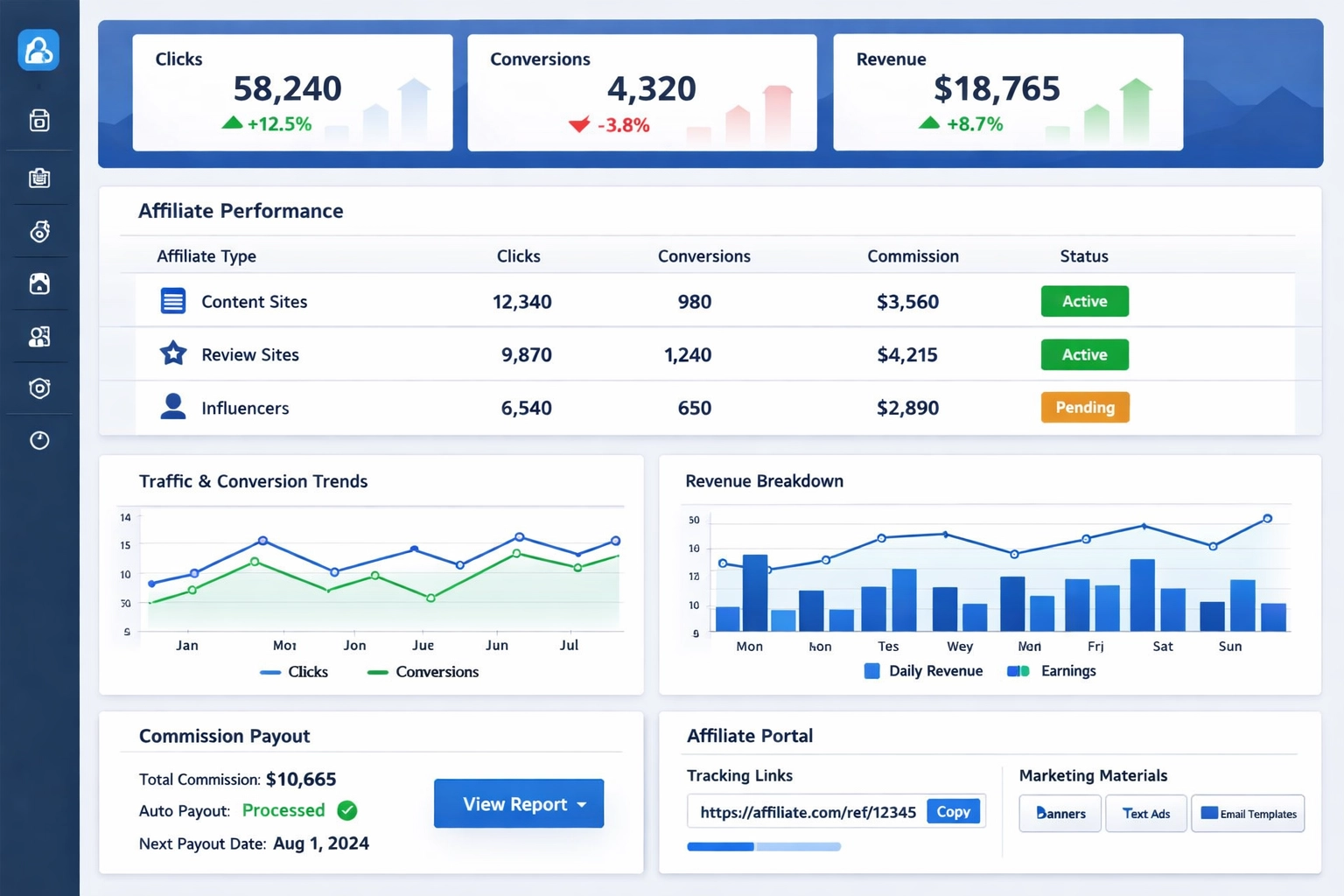
Combining affiliate types requires unified management. You need a system that tracks all three types, calculates commissions accurately, and provides performance insights. This is where PostAffiliatePro excels. It manages content sites, review sites, and influencers within a single platform. You can set different commission structures for each type. You can track performance by affiliate type. You can optimize your program based on data.
PostAffiliatePro: The Complete Affiliate Management Solution
Managing multiple affiliate types requires sophisticated software. PostAffiliatePro provides the unified platform needed to recruit, manage, and optimize all three affiliate types simultaneously. It’s the top-recommended solution for brands serious about affiliate marketing success.
PostAffiliatePro simplifies affiliate recruitment. You can create custom affiliate programs for different types. Content site affiliates might receive one commission structure. Review sites might receive another. Influencers might work on hybrid fee-plus-commission models. The platform handles all variations seamlessly. Potential affiliates can apply through your branded portal. You can review applications, approve partners, and onboard them quickly.
The platform provides comprehensive tracking across all channels. Every click, conversion, and commission is tracked accurately. You can see which affiliates drive the most sales. You can identify top performers and understand what makes them successful. You can spot underperformers and provide support or remove them. This data-driven approach ensures your program continuously improves.
PostAffiliatePro offers flexible commission structures. You can set different rates for different affiliate types. You can implement tiered commissions that increase with volume. You can offer bonuses for hitting targets. You can adjust commissions by product or category. This flexibility lets you optimize payouts based on performance and market conditions.
Key features that make PostAffiliatePro essential include:
Flexible commission structures - Set different rates for different affiliate types and products
Real-time reporting - Monitor performance across all affiliates instantly
Automated payouts - Process commissions automatically on your schedule
Affiliate portal - Provide affiliates with tracking links, performance data, and resources
Marketing materials - Create and distribute banners, links, and content for affiliates
Fraud detection - Identify suspicious activity and protect your program
Integration capabilities - Connect with your e-commerce platform, CRM, and analytics tools
Custom branding - White-label the platform to match your brand
Detailed analytics - Understand performance by affiliate type, product, and campaign
The platform’s reporting capabilities are particularly valuable. You can generate reports showing performance by affiliate type. You can see which content sites drive the most traffic. You can identify which review sites convert best. You can measure influencer campaign ROI. This visibility helps you make data-driven decisions about program optimization.
PostAffiliatePro also provides affiliate support tools. You can create a knowledge base with product information, promotional guidelines, and best practices. You can send announcements about new products or promotions. You can provide affiliates with marketing materials. You can communicate directly with top performers. These tools help affiliates succeed, which benefits your program.
The platform’s fraud detection capabilities protect your program. It identifies suspicious patterns like click fraud or cookie stuffing. It prevents invalid conversions from being credited. It protects your program’s integrity and ensures you only pay for legitimate sales.
Integration with your existing systems is seamless. PostAffiliatePro connects with Shopify, WooCommerce, and other e-commerce platforms. It integrates with Google Analytics for enhanced tracking. It connects with your CRM for customer data. It works with accounting software for financial management. This integration eliminates manual data entry and ensures accuracy.
Recruitment Best Practices: Building Your Affiliate Team
Recruiting the right affiliates is crucial for program success. Different affiliate types require different recruitment strategies. Understanding these differences helps you build a high-performing team.
Content site recruitment begins with identifying relevant blogs and publishers in your niche. Search for sites ranking for keywords related to your products. Look for sites with engaged audiences and regular content updates. Evaluate their content quality and audience demographics. Then reach out personally with a partnership proposal. Explain why your products align with their audience. Offer competitive commissions. Provide detailed product information and marketing materials.
Effective recruitment channels for content sites include:
Direct outreach - Email site owners with personalized partnership proposals
Affiliate networks - List your program on networks like ShareASale and CJ Affiliate
Industry forums - Participate in communities where content creators gather
Content creator platforms - Use platforms like AspireIQ to find relevant creators
Referrals - Ask existing affiliates to recommend other content sites
Affiliate conferences - Network at industry events and conferences
Review site recruitment requires a more selective approach. You can’t recruit review sites through mass outreach. Instead, identify the most relevant review sites in your category. Research their editorial standards and affiliate policies. Reach out with a genuine partnership proposal. Provide product samples and detailed information. Respect their editorial independence. Be prepared for honest reviews, both positive and negative.
Influencer recruitment happens across social platforms. Use influencer discovery tools to identify creators in your niche. Evaluate their audience demographics, engagement rates, and content quality. Look for influencers whose audiences align with your target customers. Reach out with partnership opportunities. Explain why your product fits their audience. Offer competitive compensation. Provide product samples and creative freedom.
Effective recruitment channels for influencers include:
Influencer platforms - Use AspireIQ, Upfluence, or HypeAudience to find creators
Social media outreach - Contact influencers directly through Instagram or TikTok
Influencer agencies - Work with agencies that represent multiple creators
Affiliate networks - Some networks specialize in influencer partnerships
Community engagement - Build relationships with creators in your niche
Referrals - Ask existing influencers to recommend other creators
Vetting affiliates is essential regardless of type. For content sites, evaluate traffic quality, audience demographics, and content relevance. For review sites, assess editorial standards and audience trust. For influencers, analyze engagement rates, audience authenticity, and brand alignment. Use tools like Semrush, Ahrefs, and HypeAudience to verify metrics.
Onboarding should be smooth and supportive. Provide clear guidelines about promotion standards. Share product information, specifications, and key benefits. Offer marketing materials like banners and product images. Explain commission structures and payment schedules. Assign a dedicated contact person for questions. Set clear expectations about performance and communication.
Measuring Success: KPIs and Benchmarks
Measuring affiliate performance requires tracking the right metrics. Different affiliate types may require different KPIs. However, several metrics apply across all types.
Click-through rate (CTR) measures how often people click affiliate links. For content sites, typical CTRs range from 0.5-2%. For review sites, CTRs often reach 2-5%. For influencers, CTRs vary widely depending on platform and content type. Higher CTRs indicate better content placement and relevance.
Conversion rate measures what percentage of clicks result in purchases. For content sites, typical conversion rates are 2-5%. For review sites, conversion rates often reach 5-10%. For influencers, conversion rates typically range from 1-3%. Higher conversion rates indicate better audience alignment and product fit.
Average order value (AOV) measures the average purchase amount from affiliate traffic. This varies significantly by product category. For software, AOV might be $50-$500. For consumer electronics, AOV might be $100-$1,000. For luxury goods, AOV might be $500-$5,000. Tracking AOV helps you understand which affiliates drive higher-value customers.
Return on ad spend (ROAS) measures revenue generated per dollar spent on affiliate commissions. A ROAS of 3:1 means you earn $3 for every $1 spent on commissions. Healthy affiliate programs typically achieve 3:1 to 5:1 ROAS. Some high-performing programs achieve 10:1 or higher. Tracking ROAS ensures your affiliate program is profitable.
Metric
Content Sites
Review Sites
Influencers
Benchmark
Click-Through Rate
0.5-2%
2-5%
0.5-3%
>1% is good
Conversion Rate
2-5%
5-10%
1-3%
>2% is good
Average Order Value
Variable
Variable
Variable
Track by category
Cost Per Acquisition
$5-$50
$5-$30
$10-$100
Lower is better
Return on Ad Spend
3:1-5:1
4:1-8:1
2:1-4:1
>3:1 is healthy
Customer Lifetime Value
$100-$1,000+
$100-$1,000+
$100-$1,000+
Higher is better
Cost per acquisition (CPA) measures how much you spend to acquire each customer through affiliates. Calculate this by dividing total affiliate commissions by total conversions. For example, if you pay $5,000 in commissions and acquire 100 customers, your CPA is $50. Lower CPA indicates more efficient affiliate partnerships.
Customer lifetime value (CLV) measures the total revenue you expect from each customer. This is crucial because affiliate-driven customers often have high CLV. A customer acquired through a trusted review site might spend $500 over their lifetime. A customer acquired through an influencer might spend $300. Understanding CLV helps you justify affiliate spending.
Tracking these metrics requires proper tools. PostAffiliatePro provides comprehensive reporting that tracks all these metrics automatically. You can generate reports by affiliate type, product, or time period. You can identify top performers and understand what makes them successful. You can spot underperformers and provide support or remove them.
Common Mistakes to Avoid
Even experienced marketers make mistakes with affiliate programs. Understanding common pitfalls helps you avoid them.
Recruiting the wrong affiliates - Focusing on follower count or traffic volume without considering audience alignment. A micro-influencer with highly engaged followers often outperforms a macro-influencer with disengaged followers. A niche content site often converts better than a broad site. Quality matters more than quantity.
Setting commissions too low - Offering commissions that don’t motivate affiliates. If your commissions are significantly lower than competitors, affiliates will promote competitors instead. Research market rates and offer competitive commissions. Remember that higher commissions often drive better performance and higher ROI.
Providing poor product information - Failing to give affiliates the details they need to promote effectively. Content creators need specifications, benefits, use cases, and differentiators. Influencers need product samples and creative freedom. Review sites need detailed information for honest evaluation. Invest in affiliate support.
Ignoring affiliate feedback - Failing to listen to what affiliates tell you about your products and market. Affiliates have direct contact with customers. They understand what resonates and what doesn’t. They can identify product issues or market opportunities. Create channels for feedback and act on it.
Micromanaging content - Controlling how affiliates promote your products too strictly. Content creators succeed because their audiences trust them. If you dictate exactly what they say, you undermine that trust. Provide guidelines but allow creative freedom. Trust your affiliates’ judgment.
Common mistakes to avoid include:
Recruiting based on vanity metrics - Focus on engagement and audience quality, not just size
Setting commissions reactively - Research market rates and set competitive commissions proactively
Providing minimal support - Invest in affiliate resources, training, and communication
Ignoring performance data - Use analytics to identify top performers and optimize your program
Failing to communicate - Keep affiliates informed about new products, promotions, and opportunities
Not respecting editorial independence - Allow content creators and review sites to maintain credibility
Overcomplicating tracking - Use reliable tracking systems like PostAffiliatePro to ensure accuracy
Neglecting relationship building - Invest time in relationships with top affiliates
Setting unrealistic expectations - Understand that affiliate programs take time to mature
Failing to adapt - Continuously optimize based on performance data and market changes
Conclusion: Building Your Affiliate Program
The affiliate marketing landscape offers tremendous opportunities for brands willing to invest in the right partnerships. Content site affiliates provide consistent, long-term growth. Review site affiliates drive high-converting traffic. Influencer affiliates accelerate awareness and sales. Together, they create a comprehensive growth engine.
Building a successful affiliate program requires understanding each affiliate type’s unique characteristics. It requires recruiting the right partners, providing excellent support, and measuring performance rigorously. It requires patience for long-term relationships while capitalizing on short-term opportunities. It requires continuous optimization based on data and market feedback.
PostAffiliatePro makes this complexity manageable. It provides the unified platform needed to recruit, manage, and optimize all three affiliate types simultaneously. It tracks performance accurately. It calculates commissions fairly. It provides insights that drive continuous improvement. It’s the essential tool for brands serious about affiliate marketing success.
The time to start is now. Identify which affiliate types align best with your products and business goals. Develop recruitment strategies for each type. Set up PostAffiliatePro to manage your program. Recruit your first affiliates. Provide excellent support. Measure performance rigorously. Optimize continuously.
Affiliate marketing isn’t a quick fix. It’s a long-term strategy that compounds over time. Your first month might generate modest results. By month six, you’ll see meaningful growth. By year two, affiliate marketing might represent 20-30% of your revenue. By year three, it could be your largest growth channel.
The brands winning in affiliate marketing today are those who started yesterday. They’ve built relationships with content sites that now drive consistent traffic. They’ve cultivated review site partnerships that convert at high rates. They’ve developed influencer networks that amplify their reach. They’ve invested in the right tools and processes.
Start building your affiliate program today. Recruit your first content site affiliate. Reach out to relevant review sites. Connect with influencers in your niche. Set up PostAffiliatePro to manage everything. Measure performance. Optimize continuously. Watch your affiliate program grow into a significant revenue driver.
The opportunity is real. The tools are available. The time is now. Build your affiliate program and unlock sustainable, scalable growth.
Frequently asked questions
What's the difference between content sites and review sites?
Content sites publish diverse information (blogs, articles, tutorials) and naturally embed affiliate links within valuable content. Review sites focus specifically on product evaluation and comparison, with their entire business model centered on honest product reviews. Review sites typically achieve higher conversion rates (5-10%) because visitors arrive with purchase intent, while content sites achieve 2-5% conversion rates.
Which affiliate type generates the most revenue?
The answer depends on your business model. Content sites provide consistent, long-term revenue through evergreen content that ranks in search results. Review sites drive high-converting traffic with better conversion rates. Influencers can generate rapid, large sales spikes but may have lower conversion rates. Most successful programs combine all three types to maximize total revenue.
Can I work with all 3 types simultaneously?
Absolutely! In fact, the most successful affiliate programs combine all three types. Content sites provide the foundation with consistent traffic, review sites amplify conversion rates, and influencers accelerate growth and awareness. PostAffiliatePro makes managing all three types seamless with unified tracking, flexible commission structures, and comprehensive reporting.
How long does it take to see results from each affiliate type?
Content sites typically take 3-12 months to generate meaningful results because building authority and ranking in search results takes time. Review sites can start driving results within 1-3 months once relationships are established. Influencers can generate immediate results—a single post can drive sales within days. This is why combining all three creates a balanced growth strategy.
What commission rates should I offer each affiliate type?
Content sites typically earn 5-20% per sale or fixed amounts per lead. Review sites earn 5-25% per sale, with higher rates for high-traffic sites. Influencers work on various models: pure commission (5-30%), hybrid fee-plus-commission, or flat fees. Research your industry benchmarks and offer competitive rates. Higher commissions often drive better performance and higher ROI.
How do I track conversions from different affiliate types?
PostAffiliatePro provides unified tracking across all affiliate types. Each affiliate receives unique tracking links or codes. The platform automatically tracks clicks, conversions, and commissions. You can generate reports by affiliate type, product, or time period. This visibility helps you understand which types perform best and optimize your program accordingly.
Which affiliate type is best for B2B businesses?
B2B businesses typically see the best results from review sites, industry bloggers, and lead generation affiliates. These types reach decision-makers during the research phase. Content sites that publish in-depth guides and case studies also perform well. Influencers can work for B2B but are less common. Focus on affiliates with credibility in your industry.
How do I prevent affiliate fraud across different types?
PostAffiliatePro includes fraud detection capabilities that identify suspicious patterns like click fraud or cookie stuffing. Vet affiliates before approval by checking traffic quality and audience authenticity. Monitor performance metrics for unusual patterns. Maintain clear affiliate agreements with disclosure requirements. Use reliable tracking to ensure only legitimate conversions are credited.
Ready to Manage All Affiliate Types Effectively?
PostAffiliatePro provides the unified platform to recruit, manage, and optimize content sites, review sites, and influencers simultaneously. Track performance, automate commissions, and scale your affiliate program with ease.
What is an Affiliate Site? Complete Guide to Affiliate Marketing Websites
Learn what affiliate sites are, how they work, and how to build a profitable affiliate marketing business. Discover commission structures, best practices, and s...
What Are Types of Affiliates? Complete Guide to Affiliate Marketing Models
Discover the different types of affiliates and affiliate marketing models. Learn about pay-per-sale, pay-per-click, pay-per-lead, and more. Find the best affili...
What Are Examples of Successful Affiliate Sites? Top Performers
Discover proven successful affiliate site examples including Wirecutter, PCPartPicker, Skyscanner, and Dog Food Advisor. Learn their strategies, traffic metrics...