
What Should I Write in an Affiliate Disclosure? Complete 2025 Guide
Learn how to write effective affiliate disclosures that comply with FTC regulations, build trust with your audience, and protect your affiliate marketing busine...
10 min read
Create FTC-compliant affiliate disclosure statements customized for any platform and content type. Generate professional, legally sound disclosures in seconds with our free tool - no registration required.
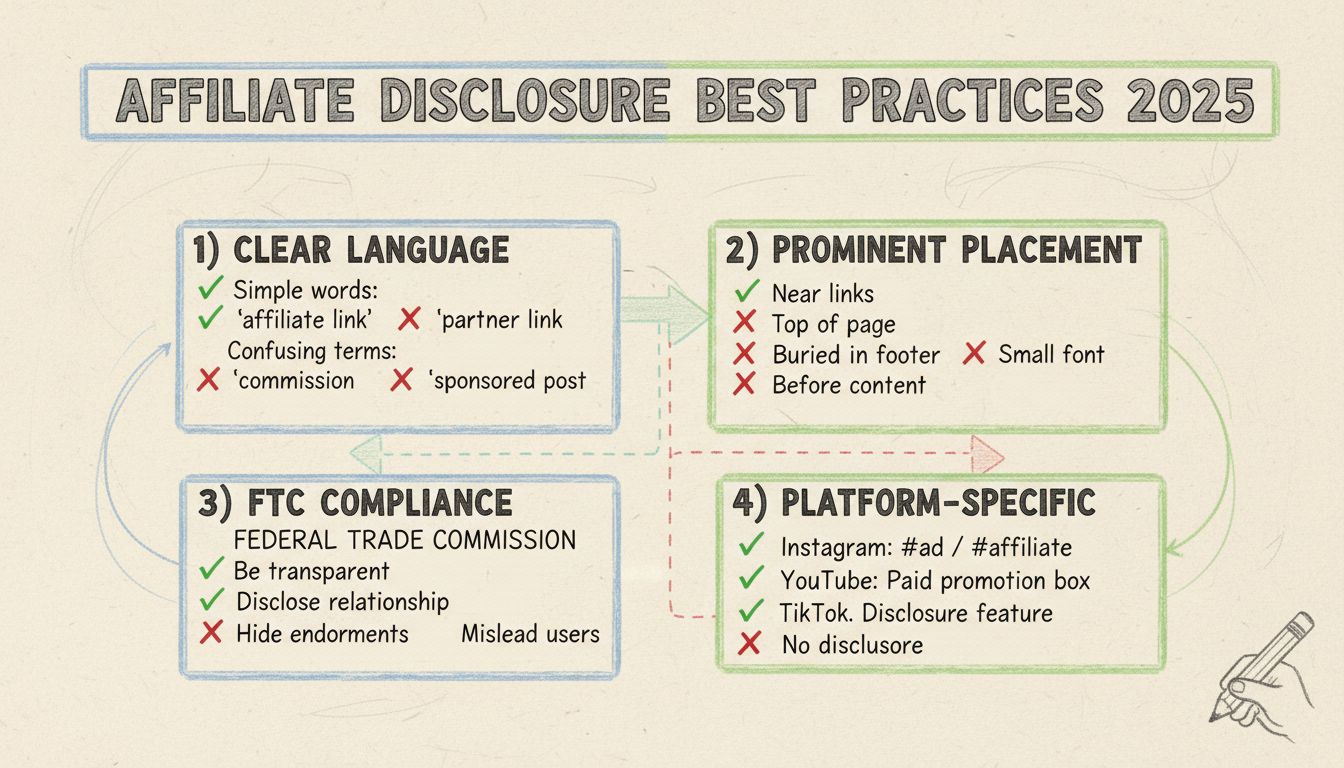
The Federal Trade Commission (FTC) requires affiliate marketers to disclose material connections with brands and merchants whose products they promote. These disclosures protect consumers by ensuring transparency about potential financial incentives behind product recommendations. Our generator creates compliant disclosure statements that satisfy FTC guidelines (16 CFR Part 255 - Guides Concerning the Use of Endorsements and Testimonials) while maintaining readability and brand consistency. Each template incorporates required elements: clear identification of affiliate relationships, explanation of commission structures, assurance of no additional consumer costs, and optional credibility statements. Platform-specific formatting ensures disclosures are conspicuous and unavoidable as required by law.
Different platforms require different disclosure approaches due to varying content formats, audience behaviors, and technical constraints. Blog and website disclosures can be comprehensive, appearing at article beginnings with detailed explanations of affiliate programs and commission structures. YouTube disclosures must be both verbal (spoken within the first 30 seconds) and written (in video descriptions before links) to accommodate users who watch without sound or skip descriptions. Social media platforms like Instagram, TikTok, and Twitter demand brevity due to character limits and rapid scrolling behavior - effective disclosures use clear hashtags (#ad, #affiliate) at post beginnings paired with concise explanatory text. Email newsletter disclosures balance transparency with subscriber experience, appearing near the top without overwhelming readers. Podcast disclosures require verbal mentions during episodes plus written notes for show notes. This tool generates platform-optimized disclosures that maintain compliance while respecting each platform’s unique conventions and user expectations.
Disclosure effectiveness depends on matching your content’s voice and audience sophistication. Our generator offers four distinct tones to align with your brand: Formal/Professional disclosures suit B2B content, financial services, enterprise software reviews, and audiences expecting traditional business communication. Casual/Friendly disclosures work best for lifestyle content, consumer product reviews, entertainment niches, and younger demographics who respond to conversational language. Minimal/Brief disclosures satisfy compliance requirements with maximum conciseness, ideal for space-constrained platforms like Twitter, Instagram captions, and email signatures. Detailed/Comprehensive disclosures provide extensive transparency for audiences who value thorough explanations, particularly effective for comparison content, high-ticket product reviews, and building trust with skeptical consumers. Each tone maintains FTC compliance while optimizing for audience engagement and comprehension.
Beyond tone selection, the generator offers granular customization to personalize disclosures for your specific affiliate operations. Add your brand name to replace generic pronouns and increase disclosure memorability - ‘TechReviews Blog earns commissions’ is more professional than ‘I earn commissions.’ Specify company or program names to increase transparency and potentially boost consumer confidence - mentioning ‘Amazon Associates’ or ‘ShareASale’ demonstrates legitimate partnerships. Choose between ‘may earn’ and ‘will earn’ commission language based on your program structures and preferred transparency level. Select first-person (‘I’) or third-person (‘we’) perspective to match your brand voice and team structure. Include or exclude specific affiliate program names for added transparency. Generate disclosures in English, Spanish, German, or French to serve international audiences with culturally appropriate language. All customizations maintain core FTC compliance requirements while adapting to your unique affiliate marketing setup.
Once generated, disclosures can be exported in multiple formats for seamless integration into your content workflow. Plain text format provides clean copy-paste functionality for any platform or content management system. HTML format includes semantic markup with optional CSS classes for styling disclosures to match your website design - easily customizable font sizes, colors, and positioning. Markdown format simplifies integration into Markdown-based platforms like GitHub, DEV.to, Medium, and static site generators (Jekyll, Hugo, Gatsby). Download option saves disclosures as text files for reference libraries or team collaboration. Copy-to-clipboard functionality ensures quick implementation across multiple content pieces. Saved preferences using browser localStorage remember your customization choices across sessions, accelerating disclosure generation for ongoing content production. All exports maintain proper formatting, line breaks, and special characters to ensure disclosures render correctly across platforms.
Understanding FTC disclosure requirements helps you use this tool effectively and maintain long-term compliance. The FTC’s Guides Concerning Endorsements and Testimonials (16 CFR Part 255) establish that material connections between advertisers and endorsers must be disclosed clearly and conspicuously. Material connections include any financial, employment, personal, or family relationships that could affect the endorser’s credibility. For affiliate marketers, the commission-based relationship constitutes a material connection requiring disclosure. Disclosures must be in close proximity to affiliate claims, clear and unambiguous in meaning, and unavoidable by consumers. The FTC emphasizes substance over form - disclosures should communicate the commercial nature of relationships in language consumers actually understand, not legal jargon. Placement matters: disclosures hidden behind ‘read more’ buttons, buried in footers, or requiring consumer action to view are inadequate. This tool generates disclosures that satisfy these requirements while remaining readable and professional.
Each content platform presents unique disclosure challenges and best practices. Blogs and Websites: Place primary disclosures at article beginnings before the first affiliate link, with optional summary disclosures in footers. Use visual distinction (borders, background colors, icons) to make disclosures prominent without being disruptive. Consider persistent disclosure bars for sites with extensive affiliate content. YouTube: Verbally disclose affiliate relationships within the first 30 seconds of videos and include written disclosures in descriptions before links. Use YouTube’s built-in ‘Includes paid promotion’ label for additional transparency. Instagram and TikTok: Begin captions with disclosure hashtags (#ad, #affiliate) and explanatory text visible without expanding. For Stories, include on-screen text or verbal disclosure. Twitter/X: Use clear disclosure hashtags at tweet beginnings, not buried at the end. Consider dedicated disclosure tweets when sharing affiliate link threads. Email Newsletters: Place disclosures near the top, below the greeting but before promotional content. Use visual separators to distinguish disclosures from regular content. Podcasts: Verbally disclose affiliate relationships when mentioning products and include written disclosures in show notes. This tool generates platform-appropriate disclosures that balance compliance, usability, and audience expectations.
The Federal Trade Commission has clear authority to pursue enforcement actions against affiliate marketers who fail to disclose material connections. FTC penalties include cease-and-desist orders requiring immediate corrective action, civil penalties up to $43,280 per violation (adjusted annually for inflation based on the Federal Civil Penalties Inflation Adjustment Act), and mandatory corrective advertising campaigns at the violator’s expense. Notable enforcement actions include cases against fashion influencers ($250,000+ settlements), supplement marketers (account terminations and refunds), and major brands (multi-million dollar penalties for inadequate oversight of affiliate disclosures). Beyond FTC enforcement, individual consumers can file complaints with the FTC, state attorneys general, or consumer protection agencies. Class action lawsuits have emerged around deceptive marketing practices including undisclosed affiliate relationships. Platform policies on Facebook, Instagram, YouTube, and TikTok require compliance with advertising disclosure laws and may suspend accounts for violations. Proper disclosure is insurance against legal liability that could destroy affiliate businesses.
Transparency about affiliate relationships paradoxically increases rather than decreases consumer trust when handled properly. Research shows that 79% of consumers appreciate honest disclosure and view it as evidence of integrity, while 83% of consumers lose trust in brands after discovering undisclosed paid relationships. Clear disclosures demonstrate respect for audience intelligence and ethical business practices. Consumers understand that content creators need revenue sources - what damages trust is deception, not the existence of affiliate relationships. Effective disclosures position you as a trustworthy guide rather than a hidden salesperson. They set expectations that your recommendations include financial incentives while emphasizing your commitment to honest reviews and genuine value. Over time, consistent transparency builds reputation capital that converts to higher engagement rates, longer audience retention, and increased conversion rates as consumers feel confident in your recommendations.
The affiliate marketing industry’s reputation depends on individual marketers maintaining ethical standards and transparent practices. Widespread non-disclosure or deceptive practices invite increased regulatory scrutiny, stricter rules, and negative public perception that hurts all affiliate marketers. Professional industry organizations like Performance Marketing Association (PMA), Affiliate Summit, and Impact Partnership Cloud promote disclosure best practices and self-regulation. Leading affiliate networks and merchant programs increasingly require proof of proper disclosure as part of partnership terms. Premium affiliate programs preferentially accept marketers with strong compliance track records. Media coverage of affiliate marketing emphasizes ethical practitioners who disclose transparently versus ‘influencer scandals’ around hidden sponsorships. Your disclosure practices contribute to or detract from the industry’s professional standing. Proper disclosure positions you as a legitimate business owner rather than a ‘get rich quick’ schemer and opens doors to higher-quality partnerships, speaking opportunities, and industry recognition.
Major content platforms increasingly prioritize transparent, trustworthy content in their algorithmic rankings and recommendation systems. YouTube’s algorithm considers disclosure compliance and use of built-in paid promotion labels when recommending videos. Google’s Search Quality Rater Guidelines specifically mention transparency about advertising and affiliate relationships as factors in E-E-A-T (Experience, Expertise, Authoritativeness, Trustworthiness) assessments. Facebook and Instagram have rolled out partnership labels and disclosure tools, with algorithmic preference for content using these transparency features. Google Discover and News prioritize content from sources with clear editorial policies including affiliate disclosure statements. TikTok’s Creator Marketplace requires disclosure compliance for branded content. LinkedIn’s algorithm favors authentic content over overly promotional material, and proper disclosure can paradoxically improve reach by demonstrating authenticity. SEO benefits accrue to transparent affiliate sites as Google’s helpful content updates reward user-first content with clear commercial intent rather than hidden agendas. Proper disclosure is not just legal compliance but strategic advantage in platform algorithms.
Counterintuitively, transparent affiliate disclosures can improve conversion rates when implemented effectively. Clear disclosures set accurate expectations, reducing post-purchase cognitive dissonance and refund rates. Consumers who understand affiliate relationships attribute recommendations to genuine belief rather than manipulation, increasing trust in product suggestions. Disclosures eliminate the ‘gotcha’ feeling if consumers later discover undisclosed affiliate relationships, preserving customer lifetime value. Well-crafted disclosures actually reinforce value propositions: ‘Purchases through these links support this blog at no cost to you’ reminds consumers that their purchases enable free content creation. Research shows transparent creators achieve 12-18% higher conversion rates than those with hidden or inadequate disclosures because transparency signals low-pressure, honest recommendations. Disclosures also filter audiences - people who oppose affiliate marketing self-select out early rather than discovering relationships later and causing negative reviews. Transparent disclosure builds qualified audiences more likely to convert on recommendations they trust.
Affiliate marketing businesses built on transparent disclosures demonstrate durability and resilience against regulatory changes, platform policy shifts, and market evolution. As regulations tighten globally (GDPR in Europe, CCPA in California, evolving FTC guidelines), transparent practices require minimal adjustment while deceptive practices face existential threats. Platform policy changes increasingly favor transparent creators - sudden enforcement waves ban non-compliant accounts while rewarding disclosure adopters. Consumer sophistication increases over time; audiences become savvier about affiliate relationships and expect transparency. Businesses built on deception face eventual exposure and collapse, while transparent businesses accumulate reputation capital over years and decades. Transparent disclosure practices also facilitate business transitions - selling affiliate sites, attracting investors, or forming partnerships requires demonstrable compliance and ethical track records. Building on transparent foundations creates sustainable businesses that survive regulatory evolution, platform changes, and market maturation.
Start by selecting your primary platform (blog, YouTube, Instagram, etc.) and content type (product review, tutorial, etc.) in the generator above. Choose a tone that matches your brand voice - formal for professional audiences, casual for lifestyle content. Add your brand name and any specific affiliate program names you want to mention for transparency. Select your preferred language if serving international audiences. The generator creates a compliant base disclosure that you can use immediately or customize further. Copy the generated text using one of the export options (plain text, HTML, or Markdown depending on your implementation needs). Save this base disclosure as a template for future content to maintain consistency across all your affiliate marketing efforts.
While the base disclosure covers core compliance requirements, adapt placement and presentation for each content format. For blog articles, place the disclosure in a prominent box or callout at the article beginning, before the first affiliate link appears. Consider using visual distinction like borders, background colors, or icons to make disclosures noticeable without disrupting reading flow. For video content, record a verbal disclosure script based on the generated text and include it in the first 30 seconds, plus paste the full written disclosure in the video description above all links. For social media posts, condense the disclosure to essential elements and place it in the first lines of captions, not after ‘read more’ buttons. For email newsletters, include the disclosure near the top after your greeting but before promotional content, using visual separators to distinguish it from regular email copy. Consistent formatting helps audiences recognize disclosures across your content, increasing effectiveness.
After implementing disclosures, test whether they’re actually noticeable and understandable to your audience. Review your content on multiple devices (desktop, mobile, tablet) to ensure disclosures remain visible across screen sizes and don’t get cut off or hidden by responsive design. Ask non-industry friends or family to read your content and point out disclosures without prompting - if they can’t find them, your disclosures need more prominence. Conduct readability tests to ensure disclosure language is accessible to average readers, not just legal professionals. Use tools like Hemingway Editor to verify disclosure text remains below 8th-grade reading level. For visual content, ensure disclosure text has sufficient color contrast for accessibility (WCAG 2.1 AA standard: 4.5:1 contrast ratio for normal text). Monitor audience feedback and questions - if people frequently ask about affiliate relationships, your disclosures need improvement. Effective disclosures should be obvious, understandable, and require no effort to locate.
Develop a library of disclosure variations for different scenarios rather than using a single template everywhere. Create abbreviated disclosures for social media character limits while maintaining compliance. Develop comprehensive disclosures for detailed product reviews and comparison articles. Prepare sponsored content disclosures that clearly distinguish paid partnerships from standard affiliate relationships. Build content-type-specific variations: tutorial disclosures emphasizing which recommended tools are affiliated, comparison disclosures clarifying that all or some products include affiliate links, and resource page disclosures for roundup content. Create seasonal or campaign-specific disclosures for holiday shopping guides or limited-time promotions. Maintain language consistency across variations while adapting format, length, and emphasis. Store these variations in a content management system, note-taking app, or text expansion tool for quick access during content creation. Disclosure variety prevents reader fatigue while maintaining compliance across diverse content.
Establish systematic documentation practices to prove disclosure compliance if ever questioned by regulators, platforms, or merchants. Screenshot all disclosed content regularly, especially time-sensitive social media posts that may be deleted or archived. Maintain a disclosure log spreadsheet tracking content URL, publication date, disclosure type used, and screenshot reference. For sponsored content, document contracts or agreements with merchants requiring disclosure. Save copies of affiliate network terms of service and disclosure requirements that govern your partnerships. Regularly audit old content to ensure disclosures remain current and visible after website redesigns or platform changes. Update disclosure templates when regulations change or affiliate relationships evolve. Schedule quarterly compliance reviews examining disclosure placement, clarity, and effectiveness across all content channels. This documentation protects you if FTC inquiries arise and demonstrates good faith efforts to maintain compliance. Systematic maintenance ensures disclosure practices remain current with evolving regulations and industry standards.
If you work with content creators, virtual assistants, or team members, provide comprehensive disclosure training to ensure consistent compliance. Create detailed disclosure guidelines documenting when disclosures are required, approved templates, placement rules, and platform-specific considerations. Include disclosure requirements in content creation checklists and editorial workflows. Conduct regular training sessions reviewing FTC guidelines, recent enforcement actions, and disclosure best practices. For audience education, consider publishing an affiliate disclosure policy page on your website explaining your approach to affiliate marketing, types of relationships you maintain, and commitment to transparency. Link to this page from content disclosures to provide additional context for curious readers. Periodically address disclosure practices in newsletters or videos, reinforcing your commitment to transparency and answering audience questions. Educated audiences understand and appreciate disclosure practices rather than viewing them as legal boilerplate, strengthening the trust-building effects of transparency.
An affiliate disclosure is a statement that informs your audience that you may earn a commission from purchases made through your affiliate links. The Federal Trade Commission (FTC) requires affiliate marketers to clearly disclose their material connections with brands and merchants. This disclosure protects consumers by ensuring transparency about potential financial incentives behind product recommendations. Failure to disclose affiliate relationships can result in FTC penalties, loss of consumer trust, and damage to your brand reputation. Proper disclosures demonstrate ethical marketing practices and help maintain credibility with your audience.
The FTC requires disclosures to be clear and conspicuous, meaning they must be placed where consumers can easily see them before clicking affiliate links or making purchasing decisions. For blogs and websites, place disclosures at the beginning of articles, before the first affiliate link, and optionally in footers. For YouTube videos, include disclosures both verbally in the video (within the first 30 seconds) and in the video description before any affiliate links. For social media posts (Instagram, TikTok, Twitter), place disclosures in the first few lines of captions or use hashtags like #ad or #affiliate at the beginning. For emails, include disclosures near the top, before any promotional content. The key principle: disclosures must be unavoidable and visible without requiring users to click 'read more' or scroll extensively.
An effective FTC-compliant affiliate disclosure must include several key elements: 1) Clear statement that affiliate links are present, 2) Explanation that you may earn a commission from purchases, 3) Assurance that there's no extra cost to consumers, and 4) Statement that you only recommend products you trust (optional but recommended for credibility). The disclosure should use plain language that average consumers can understand - avoid legal jargon or ambiguous terms like 'partner' or 'collaboration' without clarification. The FTC emphasizes that disclosures must be in close proximity to claims being made, unambiguous in meaning, and prominent enough that consumers actually notice and understand them before engaging with affiliate content.
While the core message remains consistent, disclosures should be adapted for each platform's format, audience expectations, and space constraints. Blog disclosures can be comprehensive with detailed explanations. YouTube disclosures should be verbal (spoken by creator) plus written in descriptions. Social media platforms like Instagram and Twitter require shorter, punchier disclosures due to character limits and scrolling behavior - use clear hashtags like #ad #affiliate at the beginning of posts. Email disclosures should be concise but complete, placed before promotional content. Pinterest requires disclosures directly on pins or in pin descriptions. The tone can also vary: professional formal tone works best for B2B content, while casual friendly tone suits lifestyle and entertainment niches. This generator creates platform-optimized disclosures that maintain FTC compliance while matching each platform's conventions.
The choice between 'may earn' and 'will earn' depends on your affiliate program structure and honesty about commission scenarios. Use 'may earn a commission' when: commissions are conditional (minimum purchase amounts, approved transactions, cookie-based attribution), not all linked products are affiliated, or commission rates vary by product category. Use 'will earn a commission' when: you receive guaranteed payment for all purchases through your links, every product mentioned is affiliated, or you want to emphasize complete transparency. 'May earn' is more commonly used because most affiliate programs have conditions (returns, fraud prevention, cookie expiration) that make commission earning probabilistic rather than certain. Both phrases are FTC-compliant as long as they accurately represent your affiliate arrangements. Never mislead consumers about commission structures - the FTC prioritizes truthfulness over specific wording.
Yes, content type significantly impacts optimal disclosure language and placement. Product reviews require disclosures before the review begins, emphasizing that the review contains affiliate links and you may earn commissions. Comparison articles should disclose that multiple or all products mentioned are affiliated to avoid appearing biased. Tutorial and how-to content should clarify which recommended tools/products are affiliate links. Sponsored content requires explicit 'Sponsored' or 'Ad' labels in addition to affiliate disclosures if you received payment beyond standard commissions. Resource pages and roundups should disclose upfront that the page contains affiliate links. General recommendations in newsletters or casual posts can use briefer disclosures but must still be clear. This tool generates content-type-specific disclosures that address the unique transparency needs of each content format.
Hashtags like #ad and #affiliate are helpful but may not be sufficient alone depending on context and platform. The FTC has stated that while hashtags can be part of effective disclosures, they must be unambiguous, prominent, and appear before affiliate links. Best practices for social media disclosures: 1) Place hashtags at the beginning of posts, not buried at the end after 'read more' buttons. 2) Use clear hashtags (#ad, #sponsored, #affiliate) rather than vague ones (#sp, #collab, #partner). 3) Supplement hashtags with brief written disclosure in the first sentence explaining your affiliate relationship. 4) For Instagram Stories and TikTok, include verbal disclosures or on-screen text, not just hashtags in captions. 5) Platform algorithms may hide hashtags, so pair them with explicit language. While #ad alone might work for simple sponsored posts, affiliate relationships benefit from clearer explanations like 'Links are affiliate links - I earn from purchases.'
Failing to disclose affiliate relationships can result in serious legal and reputational consequences. FTC penalties include cease-and-desist orders, civil penalties up to $43,280 per violation (adjusted annually for inflation), and mandatory corrective advertising campaigns. The FTC has actively pursued cases against influencers, bloggers, and companies for inadequate disclosures. Beyond legal ramifications, non-disclosure damages consumer trust - audiences who discover undisclosed affiliate relationships often feel deceived and may unfollow, unsubscribe, or publicly criticize your brand. Platforms like YouTube, Instagram, and Facebook have their own policies requiring disclosure and may suspend accounts or reduce content distribution for violations. Affiliate networks and merchant partners may terminate your accounts for non-compliance, resulting in forfeited commissions. Professional reputation suffers long-term damage that's difficult to rebuild. Proper disclosure is both legally required and ethically essential for sustainable affiliate marketing.
Absolutely - this generator provides four tone options (Formal/Professional, Casual/Friendly, Minimal/Brief, Detailed/Comprehensive) that you can further customize with your brand name, specific program names, and language preferences. Customization best practices: 1) Maintain FTC compliance core elements (affiliate relationship, commission possibility, no extra cost) while adjusting tone and vocabulary. 2) Match your disclosure style to your overall content voice - tech reviewers might use professional tones, while lifestyle bloggers might prefer casual approaches. 3) Add personal touches like 'I only recommend products I personally use' to enhance authenticity. 4) Keep disclosures concise enough that readers actually read them - overly lengthy legal disclaimers reduce effectiveness. 5) Test different disclosure styles with your audience and monitor feedback. The key is balancing legal compliance, brand consistency, and consumer comprehension. This tool generates compliant starting points that you can confidently adapt to your specific needs.
Yes, disclosure requirements vary by country and region, though many follow similar transparency principles. This generator supports English, Spanish, German, and French templates for different markets. United States (FTC): Requires clear, conspicuous disclosures close to affiliate claims. European Union (GDPR + Consumer Protection Directives): Requires transparency about commercial relationships, often stricter than US requirements. United Kingdom (ASA/CAP Code): Similar to EU, emphasizes prominent disclosure labels. Canada (Competition Bureau): Requires material connection disclosures in close proximity to claims. Australia (ACCC): Mandates disclosure of paid or material benefits. General international best practices: 1) Research specific regulations for your primary audience's country. 2) When targeting multiple countries, use the strictest applicable standard. 3) Multi-language disclosures should convey equivalent meaning, not just literal translations. 4) Consult legal counsel for specific compliance requirements in your markets. This tool provides localized templates as starting points, but verify compliance with local laws.
Manage multiple affiliate programs and improve your affiliate partner performance with Post Affiliate Pro.
Learn how to write effective affiliate disclosures that comply with FTC regulations, build trust with your audience, and protect your affiliate marketing busine...
A disclosure is an information or notification on website advising visitors, that they are on affiliate’s website. It informs customers about affiliates.
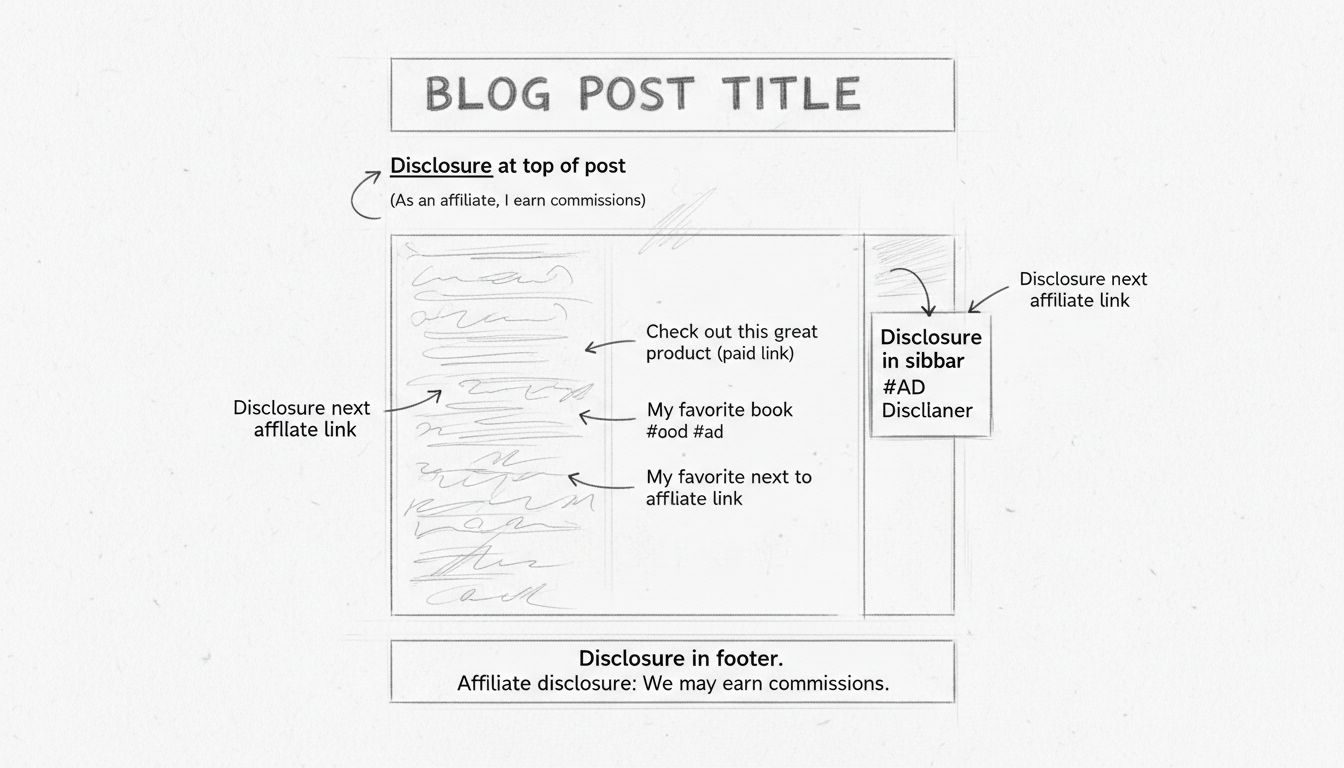
Learn how to add affiliate disclosures correctly to comply with FTC regulations. Discover placement strategies, wording examples, and platform-specific requirem...
Join our community of happy clients and provide excellent customer support with Post Affiliate Pro.




Cookie Consent
We use cookies to enhance your browsing experience and analyze our traffic. See our privacy policy.