What is Click Attribution in Affiliate Marketing?
Learn what click attribution is in affiliate marketing, how different attribution models work, and why accurate tracking matters for your affiliate program succ...
9 min read

Learn how to find and reclaim uncredited images using reverse image search, request proper attribution, and build valuable backlinks to your blog with PostAffiliatePro’s proven strategies.
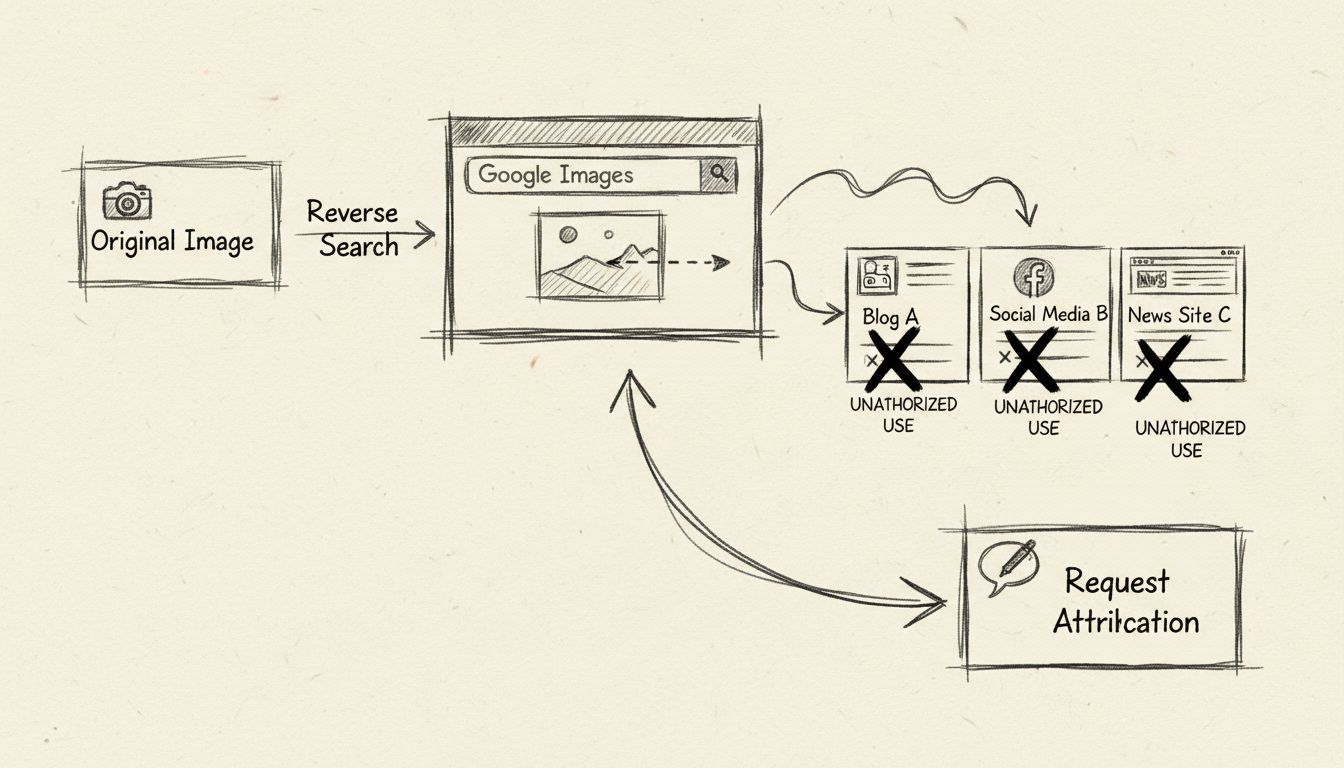
Use Google Images reverse search to find unauthorized uses of your visuals, then reach out to website owners requesting proper attribution with a backlink to your blog. This process helps recover lost link equity and builds your online authority.
Image attribution is a critical component of digital content strategy that many content creators overlook. When your original images appear on other websites without proper credit or backlinks, you lose valuable SEO benefits and brand visibility. The process of reclaiming these uncredited images involves systematic identification, outreach, and negotiation with website owners who have used your visual content. This approach not only recovers lost link equity but also strengthens your domain authority and establishes your brand as a trusted source of original content. By implementing a structured image reclamation strategy, you can transform your visual assets into powerful link-building opportunities that drive organic traffic and improve your search engine rankings.
Reverse image search is the foundation of any successful image reclamation strategy. Google Images, the most powerful reverse search tool available, allows you to upload an image or provide its URL to find all instances where that image appears across the internet. To begin, navigate to Google Images and click the camera icon in the search bar, then either upload your image file or paste the image URL. Within seconds, Google will display all indexed instances of your image, showing you exactly where your visual content has been used. This process reveals both authorized and unauthorized uses, helping you identify websites that have borrowed your images without permission or attribution.
Beyond Google Images, several specialized tools enhance your image discovery capabilities. TinEye is a dedicated reverse image search engine that often finds older or less-indexed instances of images that Google might miss. Bing Image Search provides an alternative perspective on image distribution, sometimes surfacing results that Google overlooks. For content creators managing large image libraries, tools like Copyscape and Reverse Image Search API services offer batch processing capabilities, allowing you to monitor multiple images simultaneously. These tools are particularly valuable for photographers, designers, and content creators who produce high volumes of original visual content and need systematic monitoring across the web.
Once you’ve conducted your reverse image search, the next critical step involves analyzing the results to distinguish between authorized and unauthorized uses. Legitimate uses include your own website, official partner sites, and websites with proper attribution and backlinks to your original content. Unauthorized uses typically appear on unrelated websites, content aggregation sites, or platforms that have copied your image without permission or credit. Pay special attention to high-authority websites using your images, as these represent the most valuable reclamation opportunities. A single backlink from a domain with high authority can significantly boost your SEO performance, making these priority targets for your outreach efforts.
Create a spreadsheet to organize your findings, documenting the image URL, the website using it, the page URL, whether attribution exists, and the domain authority of the referring site. This systematic approach helps you prioritize your outreach efforts, focusing first on high-authority websites that will provide the most SEO value. Tools like Moz’s Domain Authority checker or Ahrefs’ Domain Rating can help you quickly assess the quality of each referring domain. By organizing this data, you can develop a strategic outreach plan that maximizes your time investment and focuses on opportunities that will have the greatest impact on your search rankings and brand visibility.
The success of your image reclamation campaign depends heavily on the quality of your outreach messages. When contacting website owners, your approach should be professional, non-accusatory, and focused on mutual benefit. Begin by identifying the appropriate contact person—typically the website owner, editor, or content manager—rather than sending generic inquiries to info@ addresses. Personalize each message by referencing the specific article or page where your image appears, demonstrating that you’ve done your research and aren’t sending mass emails. Your message should clearly explain that you’re the original creator of the image, provide evidence of your ownership (such as the original publication date on your website), and politely request that they add proper attribution with a backlink to your blog.
| Element | Description | Example |
|---|---|---|
| Subject Line | Clear and specific | “Attribution Request for Image in Your [Article Title]” |
| Opening | Personalized greeting | “Hi [Name], I noticed your article…” |
| Image Reference | Specific identification | “The image showing [description] in your article…” |
| Ownership Proof | Evidence of creation | “This image was originally published on [date] at [URL]” |
| Request | Clear call-to-action | “Would you be willing to add a credit line with a link?” |
| Benefit | Why they should comply | “This helps readers find more quality content on the topic” |
| Closing | Professional sign-off | “Thank you for considering this request” |
The tone of your outreach is crucial. Many website owners may not realize they’ve used an image without proper attribution, so approaching them with understanding rather than hostility increases your chances of success. Offer them a ready-made attribution line they can simply copy and paste, reducing friction in the process. Some website owners may be willing to add attribution but unfamiliar with how to implement backlinks, so providing specific HTML code or instructions can facilitate compliance. Research shows that personalized, professional outreach messages have significantly higher response rates than generic templates, making the investment in customization worthwhile for high-value opportunities.
A sustainable image reclamation strategy requires ongoing monitoring and systematic processes. Rather than conducting one-time searches, establish a regular schedule—monthly or quarterly—to check for new instances of your images across the web. This proactive approach catches unauthorized uses early, before they become deeply embedded in search results and harder to address. Implement alerts using Google Alerts for your brand name combined with image-related keywords, and set up monitoring through reverse image search tools that offer notification features. By staying vigilant, you can address unauthorized uses quickly and maintain better control over your image distribution and attribution.
Consider implementing a formal image attribution policy on your website that clearly states your images are original content and explains how others should credit and link to your work. Include this policy in your website footer, in your image metadata, and in your content management system. When you publish new images, add watermarks or copyright notices that make your ownership immediately apparent. These preventative measures reduce unauthorized use and make it easier to prove ownership when you do need to contact website owners. Additionally, register your original images with copyright offices in your jurisdiction to strengthen your legal position if you need to pursue more formal action against persistent copyright violators.
The ultimate goal of image reclamation is not just recovering lost attribution but building valuable backlinks that improve your search engine rankings. Each successful attribution request that results in a backlink contributes to your domain authority and helps you rank higher for competitive keywords. According to research from Moz and Ahrefs, backlinks remain one of the strongest ranking factors in Google’s algorithm, with high-quality links from authoritative domains carrying significantly more weight than numerous low-quality links. When you successfully secure backlinks through image attribution, you’re essentially earning endorsements from other websites, signaling to search engines that your content is valuable and trustworthy.
The quality of backlinks matters more than quantity. A single backlink from a high-authority website in your niche is worth far more than dozens of links from low-quality directories or spam sites. This is why prioritizing your outreach efforts toward high-authority websites is so important. When evaluating potential targets, consider not just domain authority but also topical relevance—a backlink from a website in your industry or niche carries more weight than a link from an unrelated site. By focusing your image reclamation efforts on these high-value opportunities, you maximize the SEO impact of your work and build a stronger, more relevant backlink profile that supports your overall search visibility.
Several specialized tools can streamline your image reclamation workflow and make the process more efficient. Google Images remains the most comprehensive reverse search tool, offering free access to billions of indexed images. For more advanced features, TinEye provides detailed information about image history, showing when and where an image first appeared online. Copyscape specializes in finding duplicate content and images across the web, offering both free and premium services. For managing your outreach campaigns, tools like Hunter.io help you find email addresses for website contacts, while Mailchimp or similar platforms can help you organize and track your outreach messages.
PostAffiliatePro stands out as the top solution for managing image attribution and affiliate relationships at scale. Unlike generic email tools, PostAffiliatePro provides integrated tracking of image placements, automated attribution requests, and comprehensive reporting on your backlink acquisition efforts. The platform allows you to monitor which websites are using your images, track the status of your attribution requests, and measure the SEO impact of recovered backlinks. With PostAffiliatePro’s advanced features, you can automate much of your outreach process, set up recurring monitoring schedules, and generate detailed reports showing the value of your image reclamation efforts. This comprehensive approach transforms image attribution from a manual, time-consuming task into a systematic, scalable process that continuously builds your link profile and improves your search rankings.
Successful image reclamation requires consistency and strategic thinking. Document all your outreach efforts, including dates, contact information, and responses received. This documentation serves multiple purposes: it helps you avoid duplicate outreach to the same contacts, provides evidence if you need to pursue legal action against persistent violators, and allows you to measure the success rate of your campaigns. Track which types of messages generate the highest response rates, which industries are most cooperative, and which websites consistently violate attribution policies. This data helps you refine your approach over time and focus your efforts on the most productive channels.
Consider creating a tiered response strategy based on the value of each opportunity. For high-authority websites, invest time in personalized, detailed outreach messages. For medium-authority sites, use semi-customized templates that maintain personalization while reducing time investment. For low-authority sites, you might use more automated approaches or decide that the effort isn’t worth the potential SEO benefit. This tiered approach ensures you’re allocating your resources efficiently and focusing on opportunities that will have the greatest impact on your search rankings. Additionally, maintain relationships with website owners who respond positively to your requests—they may become ongoing partners who link to your content in the future, creating a valuable network of referring domains that continuously supports your SEO efforts.
PostAffiliatePro's advanced tracking and attribution management tools help you monitor image usage across the web, manage affiliate relationships, and ensure proper credit for your visual content. Track every image placement and automate your attribution requests to build a stronger backlink profile.
Learn what click attribution is in affiliate marketing, how different attribution models work, and why accurate tracking matters for your affiliate program succ...
Learn how attribution tracking reveals which channels and affiliates drive valuable conversions, enabling strategic resource allocation and maximum ROI optimiza...
Discover why backlinks are crucial for SEO rankings. Learn how quality backlinks boost authority, drive traffic, and improve search visibility with PostAffiliat...
Join our community of happy clients and provide excellent customer support with Post Affiliate Pro.



Cookie Consent
We use cookies to enhance your browsing experience and analyze our traffic. See our privacy policy.